Mid-century design: timeless, warm and still modern
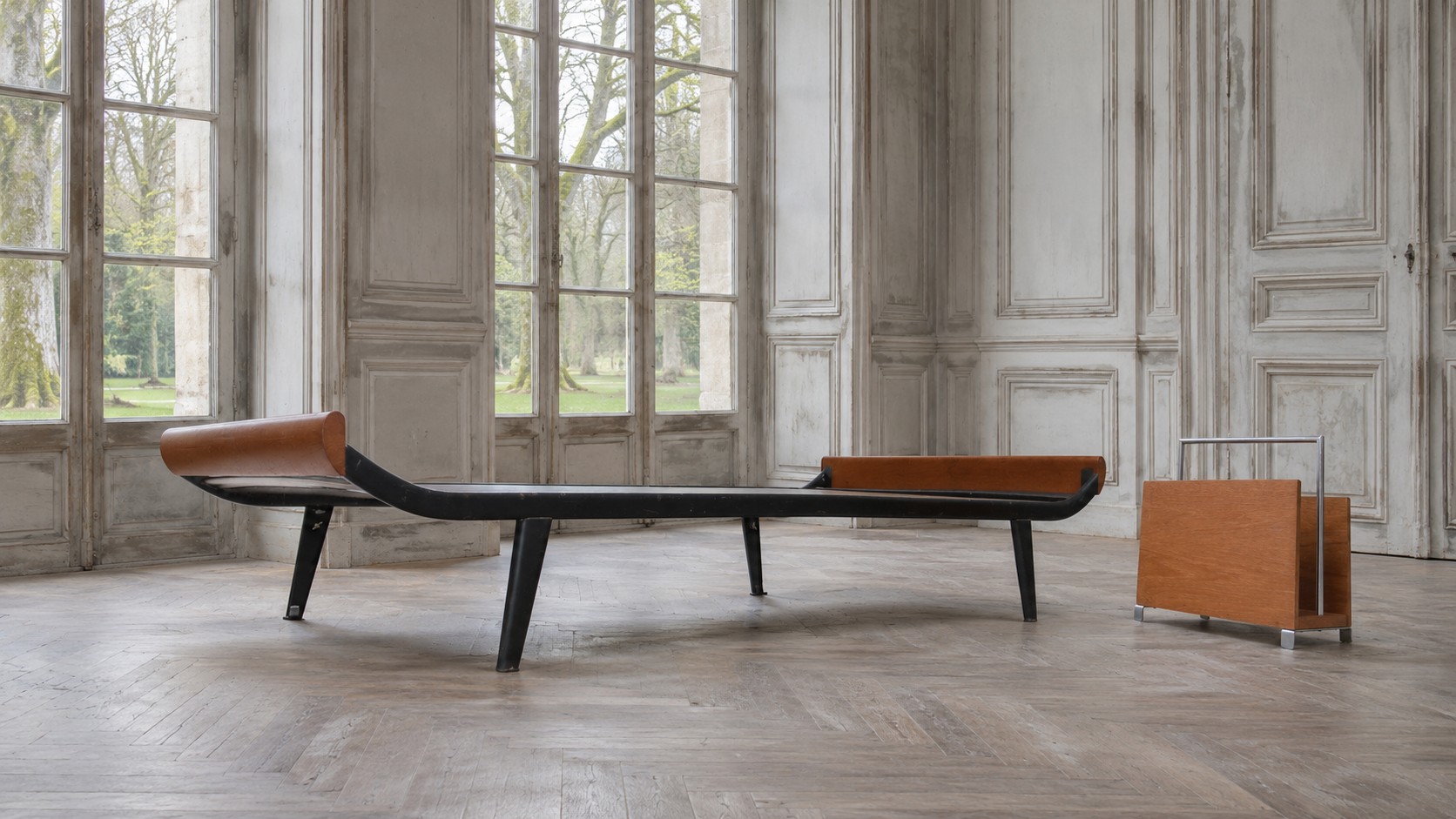
In this photo: Mid-Century Modern Cleopatra Daybed by Dick Cordemeijer, 1953 (€ 495) · Mid-Century Modern Magazine Rack, Teak and Chrome, 1960s (€ 90)
MID-CENTURY DESIGN
timeless, warm and still modern
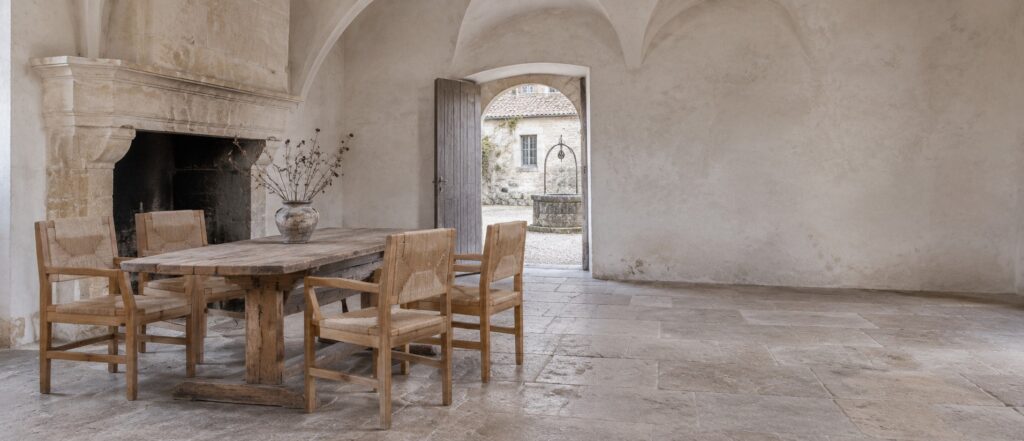
In this photo: Set of Four Mid-Century Modern Danish Dining Chairs, Papercord and Solid Pine (€ 1.195)
Mid-century design: timeless, warm and still modern
Some furniture never really seems to age. A chair from the 1960s can stand next to an old French table and still feel surprisingly current. A sleek wooden sideboard can stand in a modern house, but also in a room with lime-washed walls, brocante finds and art. That is exactly the strength of mid-century design.
It is clear, calm and functional, but rarely cold. The lines are often simple, the shapes well thought out and the materials warm. No superfluous ornament, no heavy display, but furniture that draws its strength from proportion, wood, construction and use.
Mid-century design has remained popular because it does something many new pieces of furniture no longer do: it combines elegance with everyday life.
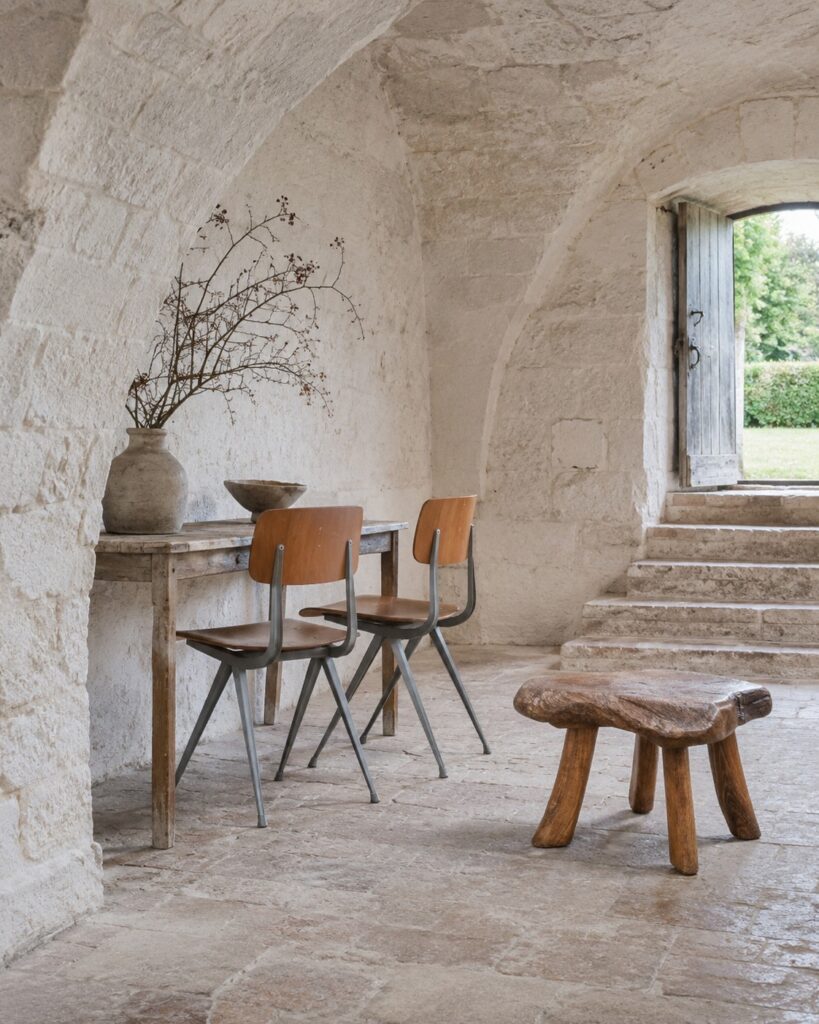
In this photo: Set of 2 Friso Kramer Result chairs – Ahrend de Cirkel, grey, 1960s · Mid-century hand-carved oak stool with live edge – 1950s (€ 245)
What is mid-century design?
Mid-century design roughly refers to furniture and interiors from the period from the 1940s through to the 1970s, with the emphasis on the 1950s and 1960s. It was a time when designers were looking for lighter, more practical and more modern furniture for ordinary homes.
You recognise the style by slender legs, clean lines, organic shapes and a good balance between function and beauty. Many pieces have an open, airy look. A cabinet doesn’t sit heavily on the floor, but often stands on slender legs. A chair isn’t massive, but has a clear shape. A table is simple, but exactly right in its proportions.
Materials play a major role. Think teak, rosewood, oak, beech, Pagholz, steel, leatherette, wool and leather. Wood in particular gives mid-century furniture its warmth. The design may be sleek, but the material ensures it never becomes cold.
Why does mid-century remain so good?
Mid-century furniture was often designed with an almost self-evident logic. It isn’t complicated, but it is good. A chair must be beautiful, but also comfortable to sit on. A sideboard must have style, but above all be practical. A table must be strong, but not clumsy.
That combination makes the style timeless.
Many mid-century pieces have just enough character without taking over the room. They are present, but not loud. That makes them easy to combine with other styles. A 1960s chair can bring calm next to a weathered brocante table. A sleek sideboard can give an old room more line. A set of vintage school chairs can instantly make a dining area more interesting without it feeling forced.
That is why mid-century design suits De Huiszwaluw so well. It has form, but not too much fuss. It is stylish, but usable. And it mixes beautifully with antiques, industrial pieces, art and wabi-sabi.
In this photo: Dutch Mid-Century Modern Daybed / Sofa, Netherlands, 1960s (€ 1.095) · Mid-Century Italian Opaline White Murano Table Lamp (€ 495)
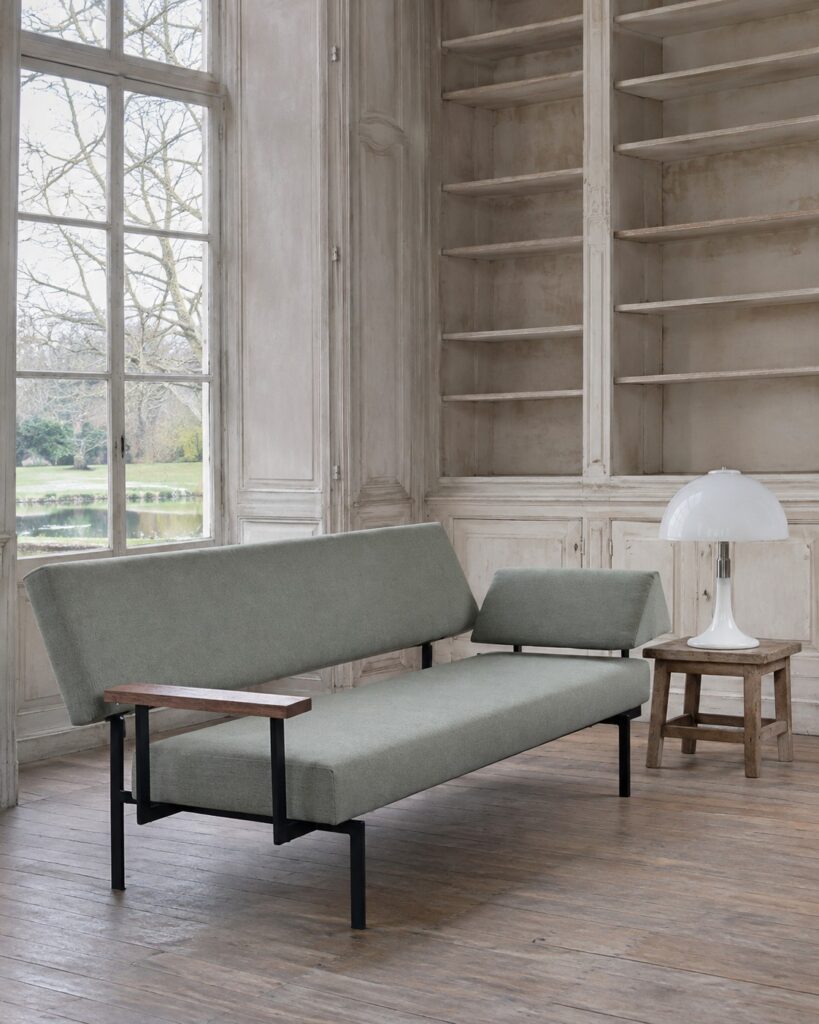
The power of good lines
Mid-century design is very much about line. A leg that is angled just enough. A backrest that flows beautifully. A cabinet that is exactly the right height. A chair that becomes almost graphic from the side.
That sounds like a small thing, but it makes an enormous difference.
A well-designed piece of furniture has calm. You can see that someone has thought about proportion. Not only about how the piece looks, but also about how it stands in a room. That is why mid-century pieces can instantly make an interior stronger. They bring order without becoming strict.
This works particularly well in combination with old, weathered materials. A lime-washed wall, a stone floor or a rough wooden table has character and irregularity. Add a sleek mid-century piece and the contrast makes both more beautiful. The old becomes less heavy. The modern becomes less slick.
In this photo: Vintage Presikhaaf chair – Pagholz and compass legs, 1960s (€ 50) · Westraven vase with handle – white speckled earthenware, Utrecht, 1960s–70s (€ 55)
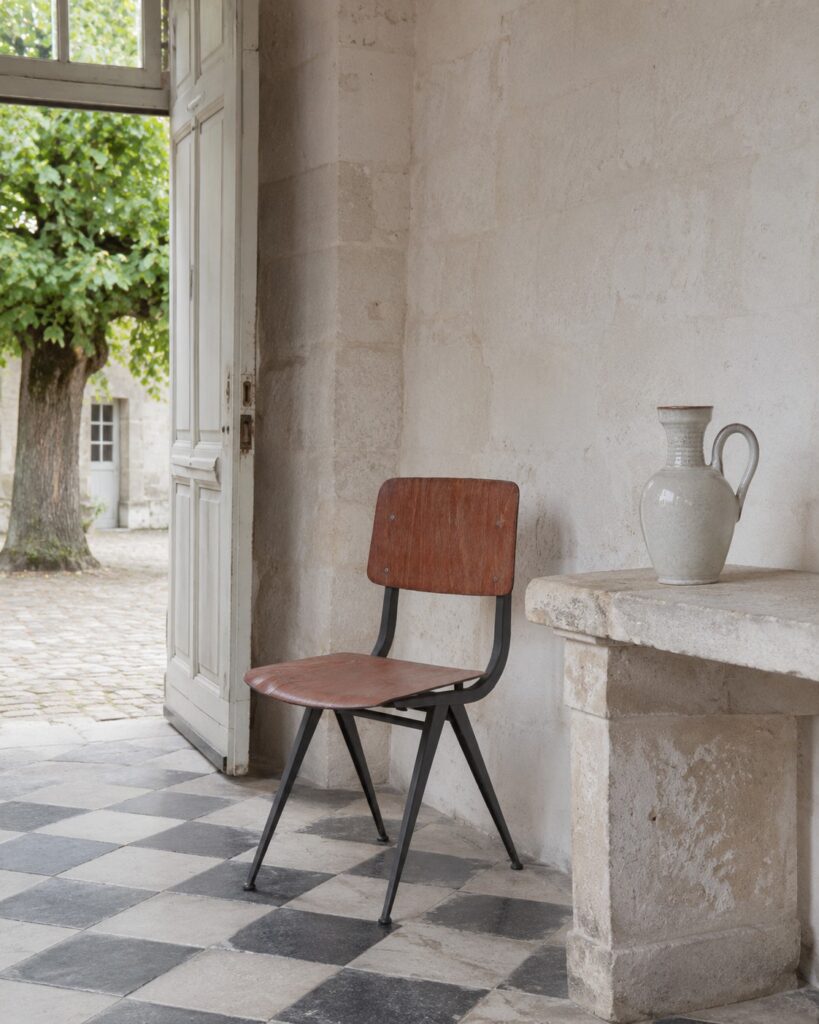
How do you combine mid-century without it becoming a matching set?
The biggest mistake in mid-century interiors is putting too much from the same period together. A teak cabinet, teak table, teak chairs, retro lamp, orange vase and graphic rug, and it quickly becomes a 1960s stage set.
It doesn’t have to be that way.
Mid-century design becomes much more exciting when you mix it. Put a sleek chair at an old French table. Combine a wooden sideboard with a rough art object. Above a mid-century cabinet, don’t hang a predictable retro print, but a sober painting or a large abstract work. Use ceramics, linen, stone or weathered metal to make the whole more earthy.
It is not about a retro interior. It is about an interior in which a good design gets its place.
One strong mid-century piece can be enough. A chair. A sideboard. A desk. A lamp. Let the piece breathe and don’t crowd it. Only then do you see how good the shape is.
What should you look for when buying mid-century furniture?
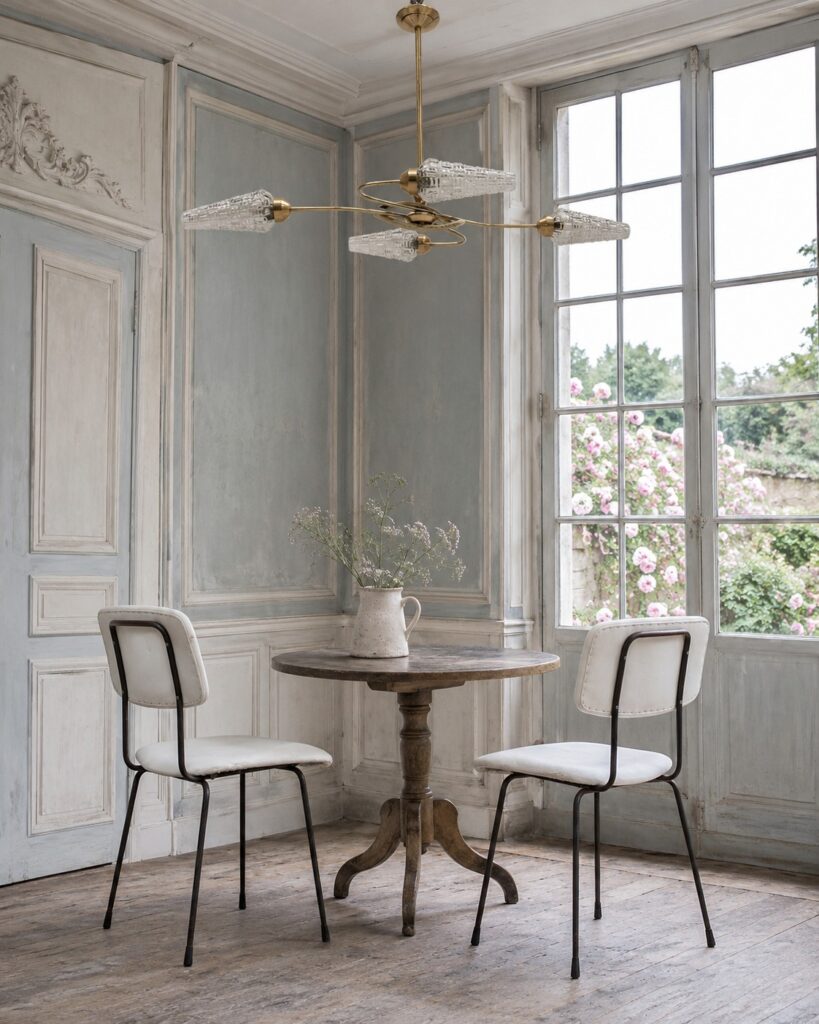
First of all, look at the construction. Much mid-century furniture was made to be used, but it now also has decades behind it. Check whether the legs are sturdy, whether the joints are loose and whether the drawers run smoothly.
With wooden furniture, veneer is important. Many beautiful vintage cabinets and tables have teak or rosewood veneer. That is not a problem; it is part of many designs from that period. But look out for loose edges, water rings, deep damage or areas where the veneer is missing. Small signs of use are often no problem. Major damage to the top or the corners can be trickier.
In this photo: Set of two Dutch Gispen 1231 chairs – A.R. Cordemeyer, circa 1960 (now only € 75 voor de set van twee stoelen) · Vintage brass pendant lamp with four glass shades – French style, 1950s–60s (€ 325)
With chairs, you look at the frame, the seat and the back. A little wear adds character, but sagging seats, cracked joints or poor repairs are less pleasant. With school chairs, Pagholz and metal frames, signs of use are often part of the charm, as long as the piece is still sturdy and usable.
Pay attention to size too. Mid-century furniture is often lower and airier than modern furniture. That is lovely, but always measure carefully. A sideboard may look perfect in a photo, but turn out too low, too long or too small in your room.
Mid-century in a warm interior
Mid-century is sometimes presented too sleekly. White walls, design classics, everything neatly spaced apart. Beautiful, but also a bit like a museum.
We love mid-century precisely when it is given warmth. Next to an old floor. Against a lime-like wall. With a brocante table, an industrial rack, a ceramic bowl or a painting that doesn’t perfectly “match”.
That is when it becomes interesting.
A good interior doesn’t have to show that everything comes from the same style period. It may feel as if it has grown. As if the occupant has collected pieces over the years that work together.
Mid-century design is a perfect base for that. It brings calm, line and form. It makes a room clearer. And precisely because it is so well designed, it can stand next to very different things.
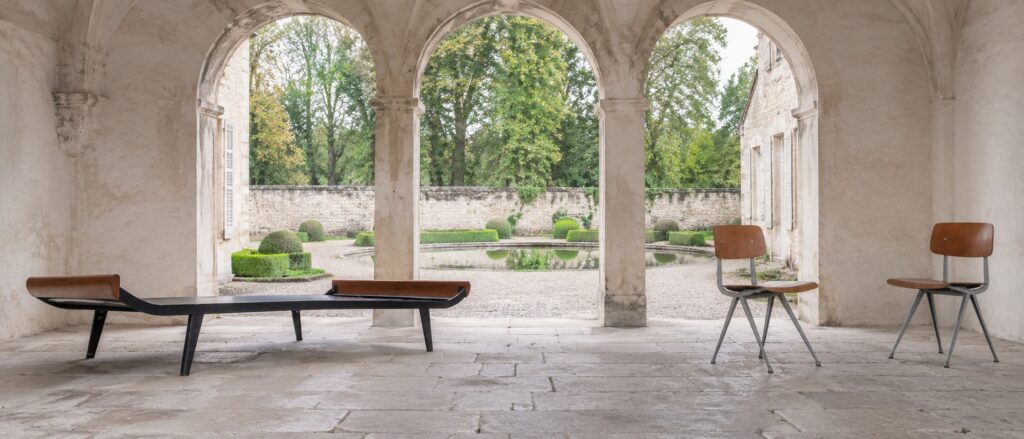
In this photo: Mid-Century Modern Cleopatra Daybed by Dick Cordemeijer, 1953 (€ 495) · Set of 2 Friso Kramer Result chairs – Ahrend de Cirkel, grey, 1960s
How would De Huiszwaluw apply mid-century?
We would never make mid-century too literal. No complete retro house, no 1960s stage play. Rather one or two strong pieces in a space with natural materials and character.
A sleek sideboard against a weathered wall. A set of Pagholz chairs at an old wooden table. A vintage desk with an industrial lamp. A slender armchair next to a large jug or a sober work of art.
That way mid-century design gets the room to do what it does best: provide structure without taking away atmosphere.
The most beautiful combination arises when clear design and time-worn material strengthen each other. One brings line, the other brings soul.
And it is exactly in between that an interior becomes exciting.
Now in our collection: mid-century
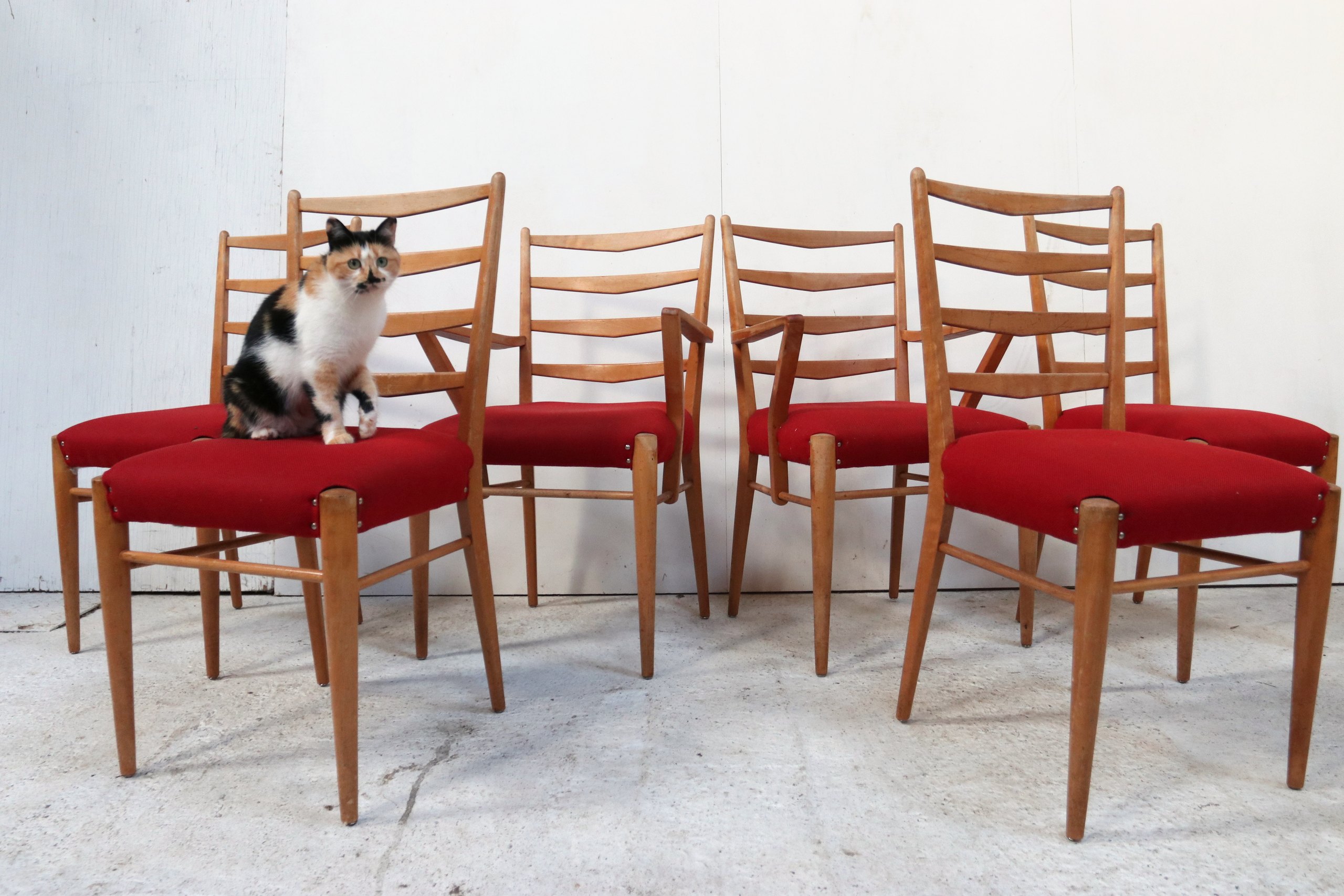 Set of 6 Pastoe ST09 ladder-back chairs – Cees Braakman, birch, 1950s (to be reupholstered)€ 495 voor de set van 6
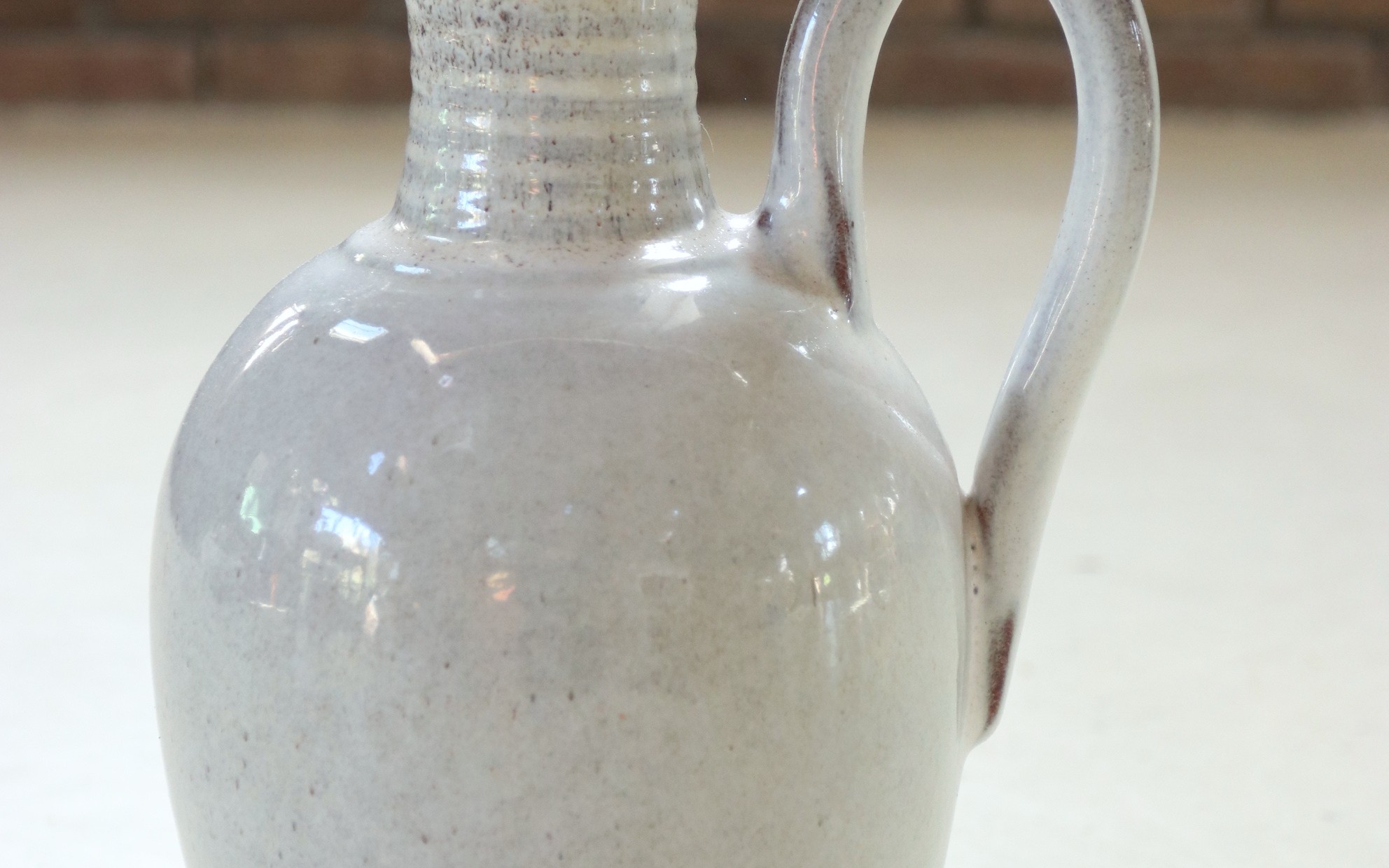 Westraven vase with handle – white speckled earthenware, Utrecht, 1960s–70s€ 55
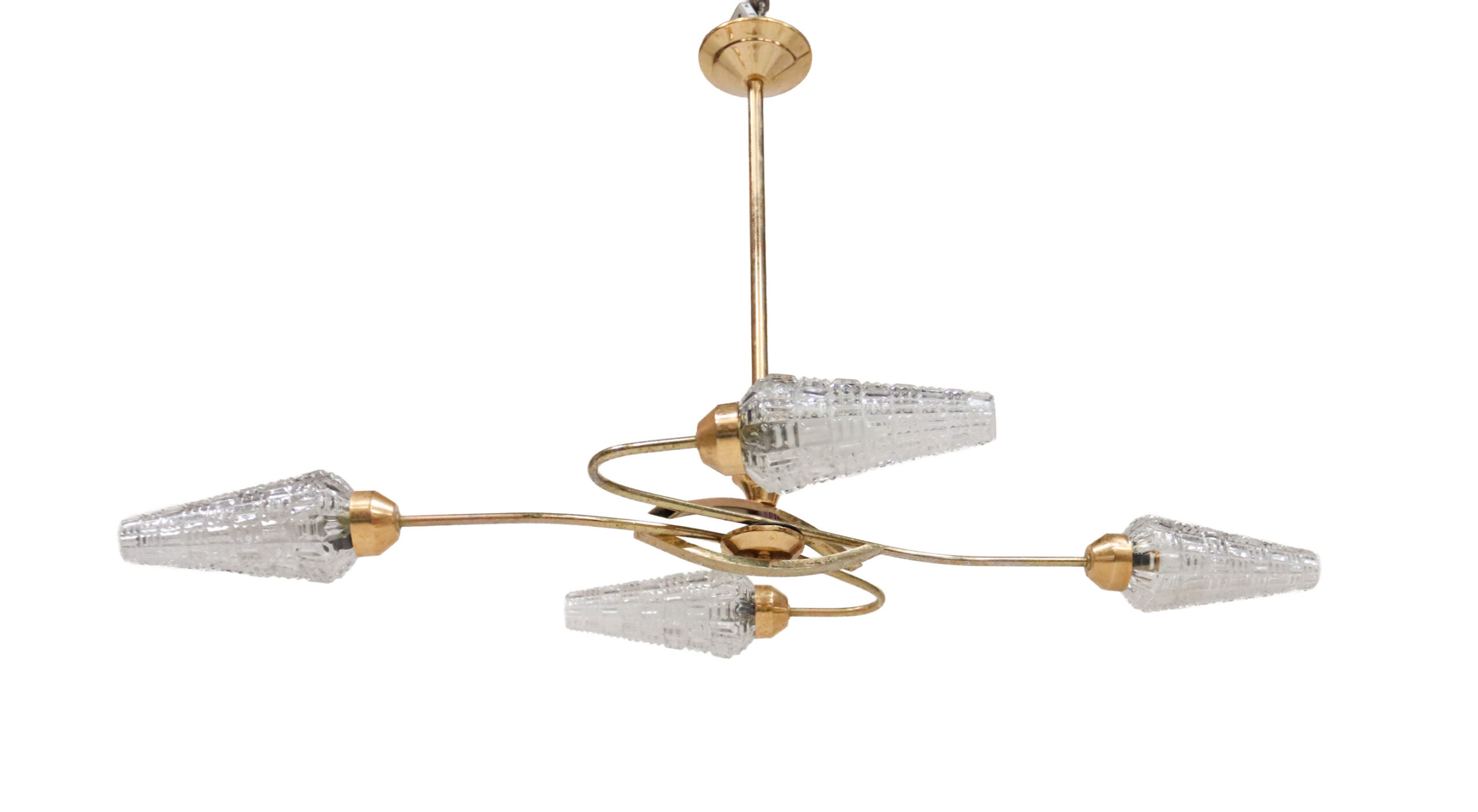 Vintage brass pendant lamp with four glass shades – French style, 1950s–60s€ 325
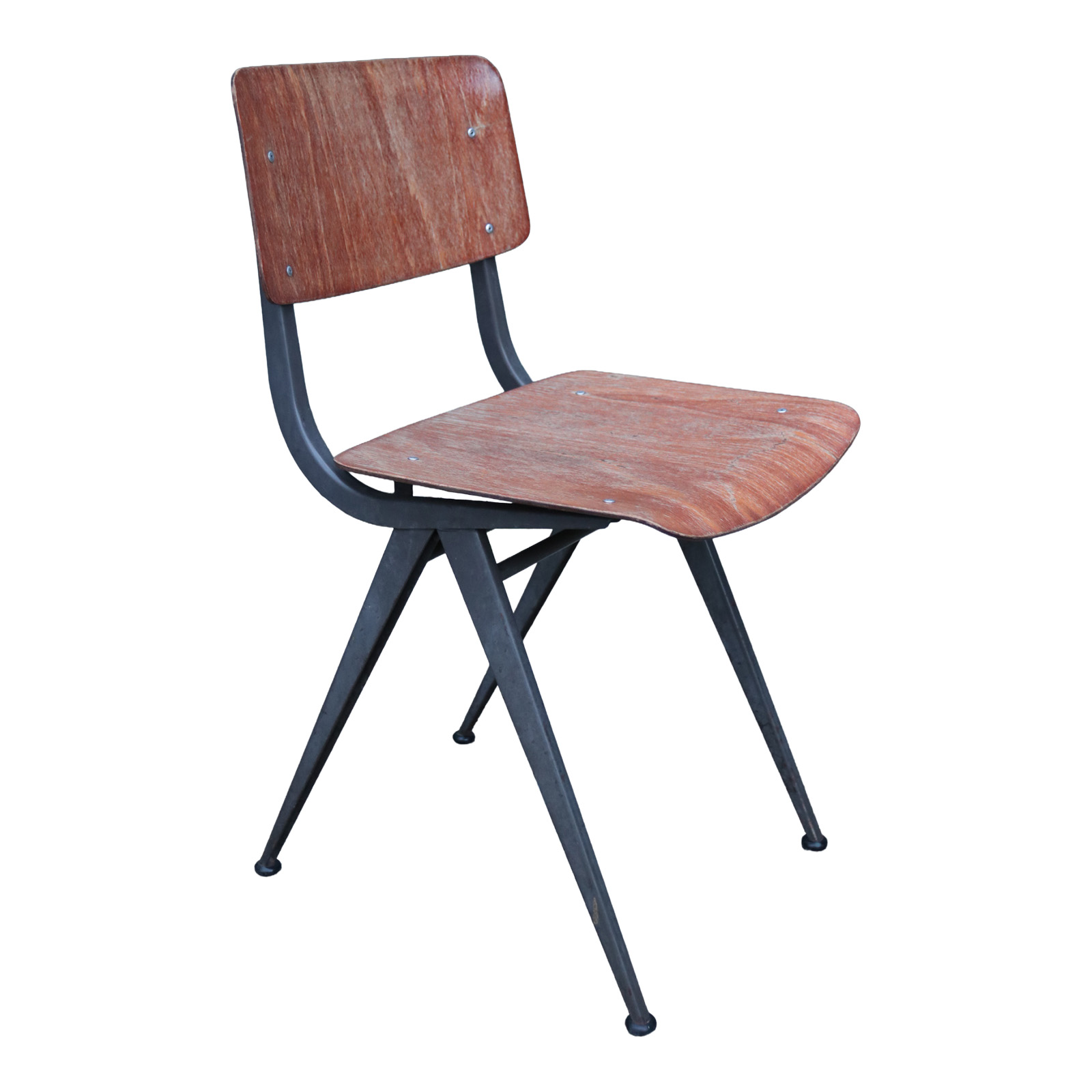 Vintage Presikhaaf chair – Pagholz and compass legs, 1960s€ 50
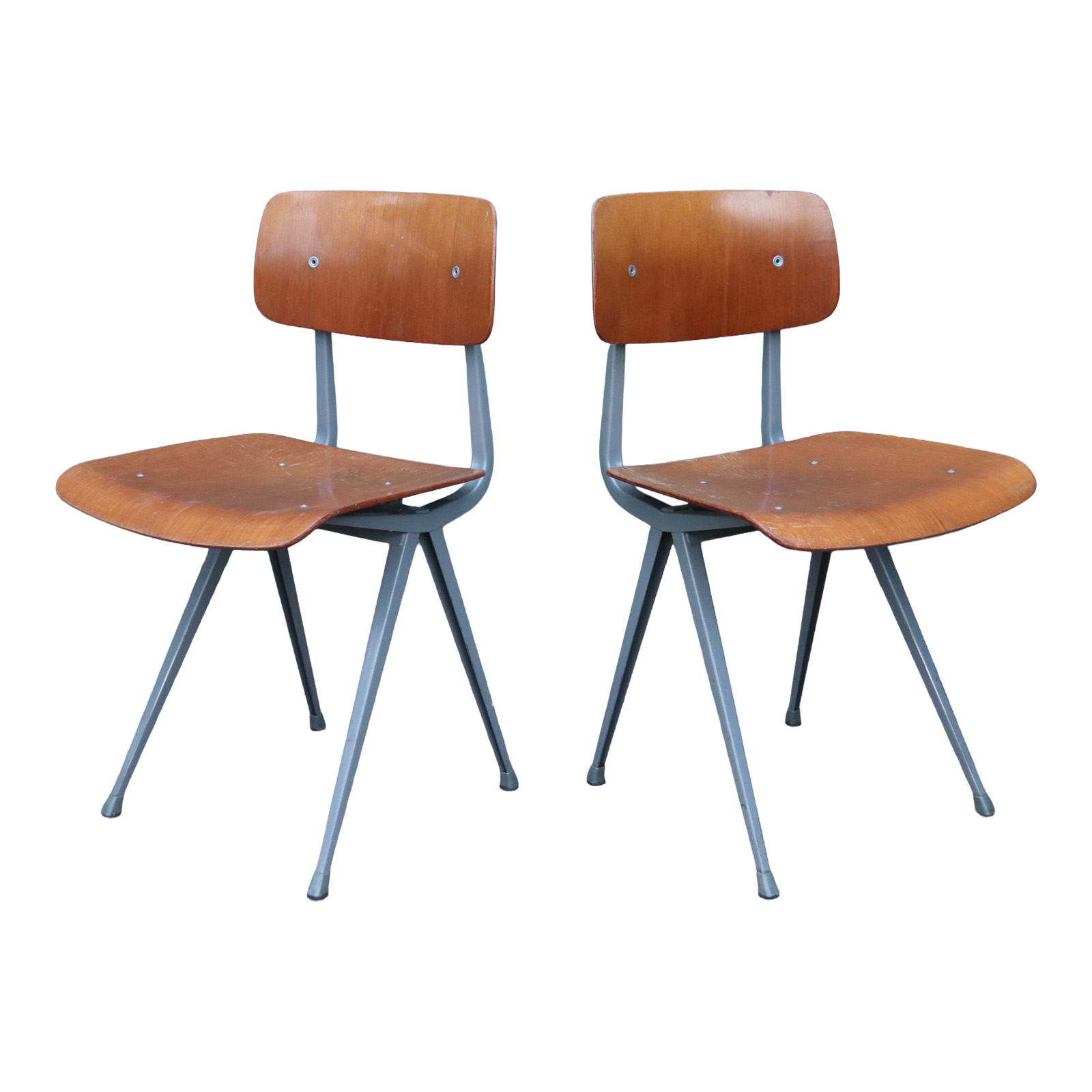 Set of 2 Friso Kramer Result chairs – Ahrend de Cirkel, grey, 1960s
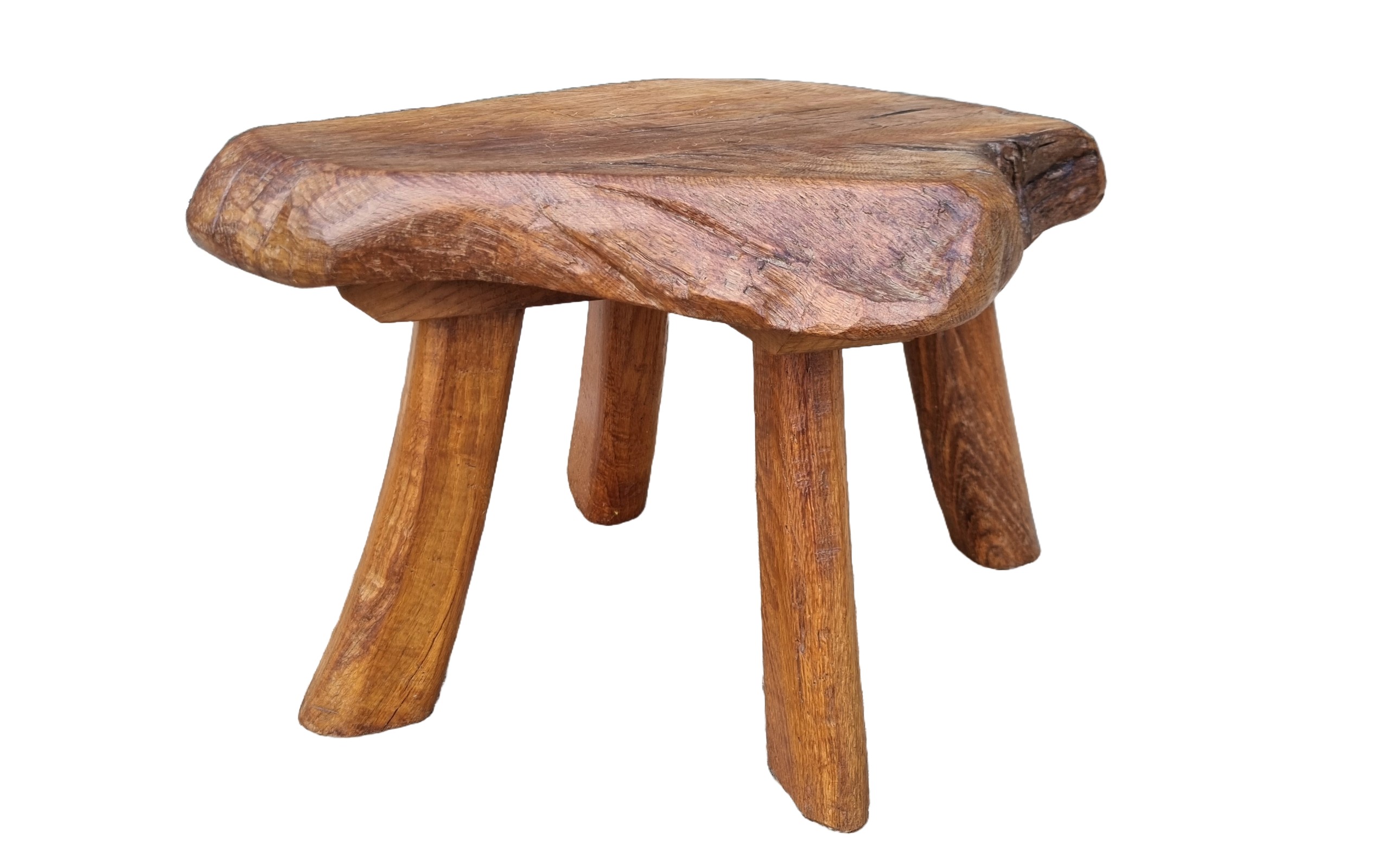 Mid-century hand-carved oak stool with live edge – 1950s€ 245
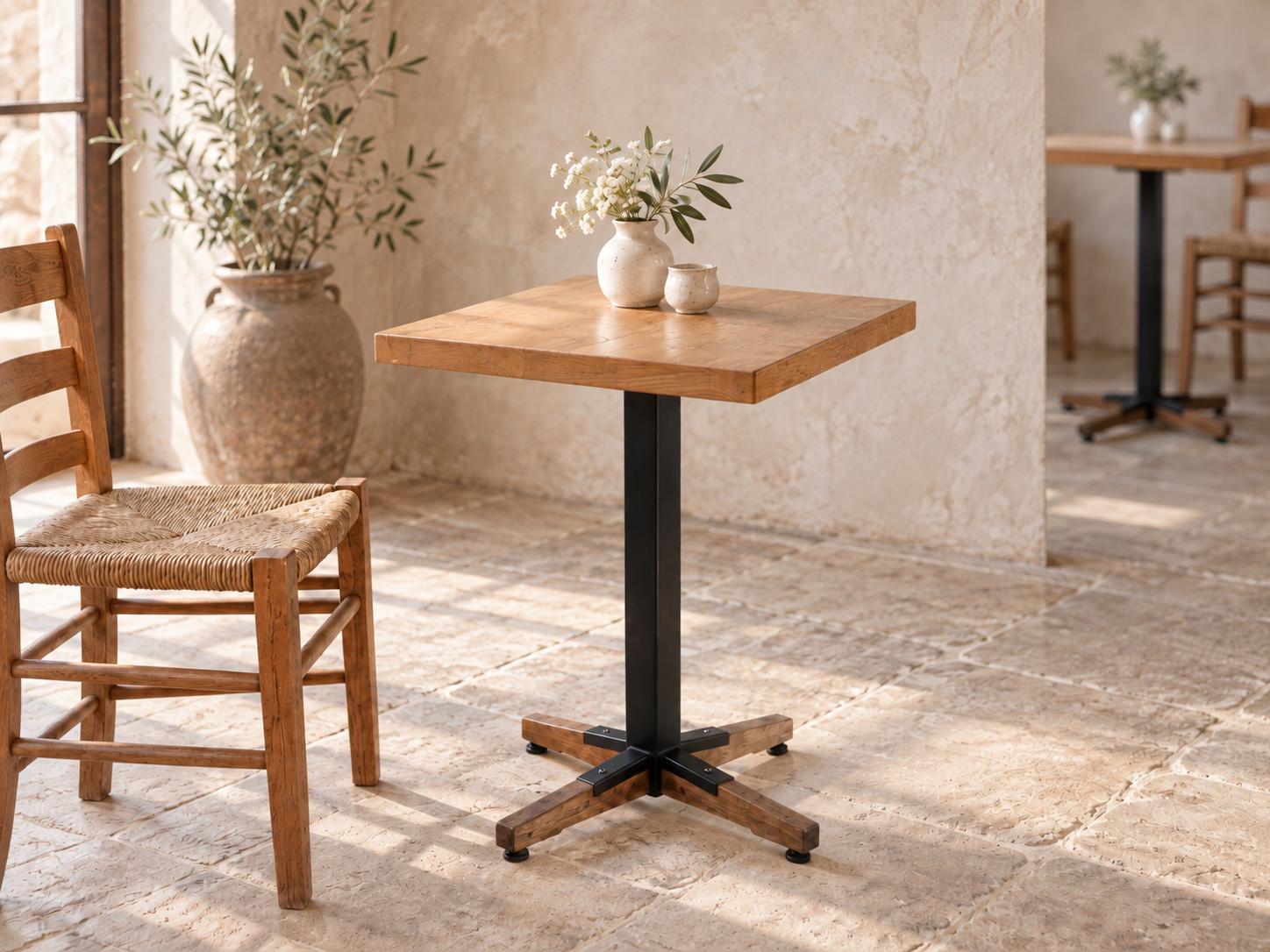 4 vintage oak café tables / bistro tables – wood & black metal€ 75 each
 Set of two Dutch Gispen 1231 chairs – A.R. Cordemeyer, circa 1960now only € 75 voor de set van twee stoelen
 Vintage-style plywood stacking chair – beech wood€ 55
 Dutch Mid-Century Modern Daybed / Sofa, Netherlands, 1960s€ 1.095
 Set of Four Mid-Century Modern Danish Dining Chairs, Papercord and Solid Pine€ 1.195
 Mid-Century Italian Opaline White Murano Table Lamp€ 495
 Mid-Century Modern Magazine Rack, Teak and Chrome, 1960s€ 90
 Mid-Century Modern Cleopatra Daybed by Dick Cordemeijer, 1953€ 495
 Mid-century Italian metal flower wall lamp€ 235
 Rare Mid-Century Design Rib Chair, 1980s€ 495
Previously in our collection
 Set of four French ladder-back chairs with rush seats – circa 1960sold
 Set of 2 vintage cabinets with reeded glass – warm wood & whitesold
 Lloyd Loom tub armchair in green – dated Nov. 1954sold
Read on about other styles
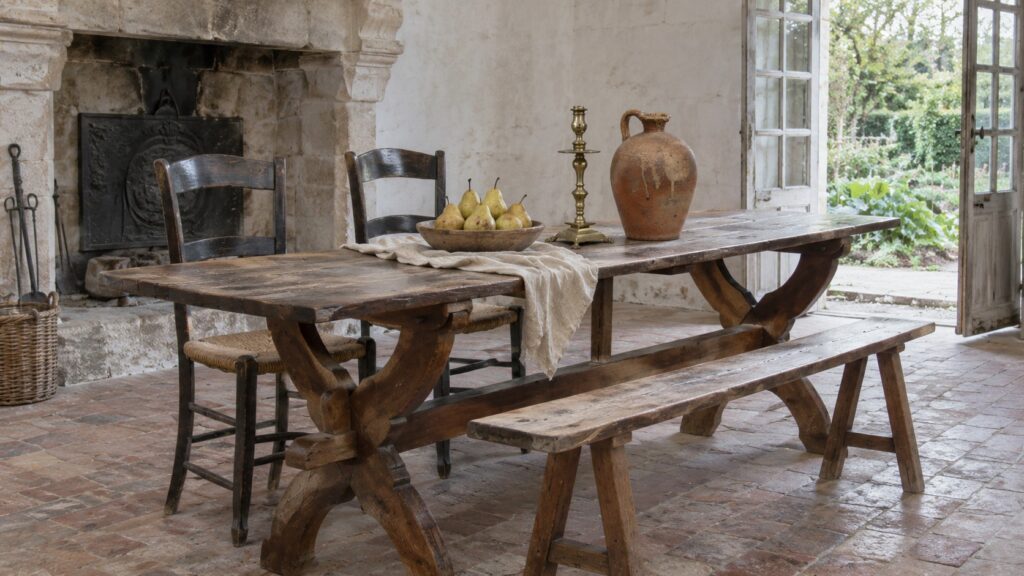 French countryFrench country living: wood, stone and the calm of country life
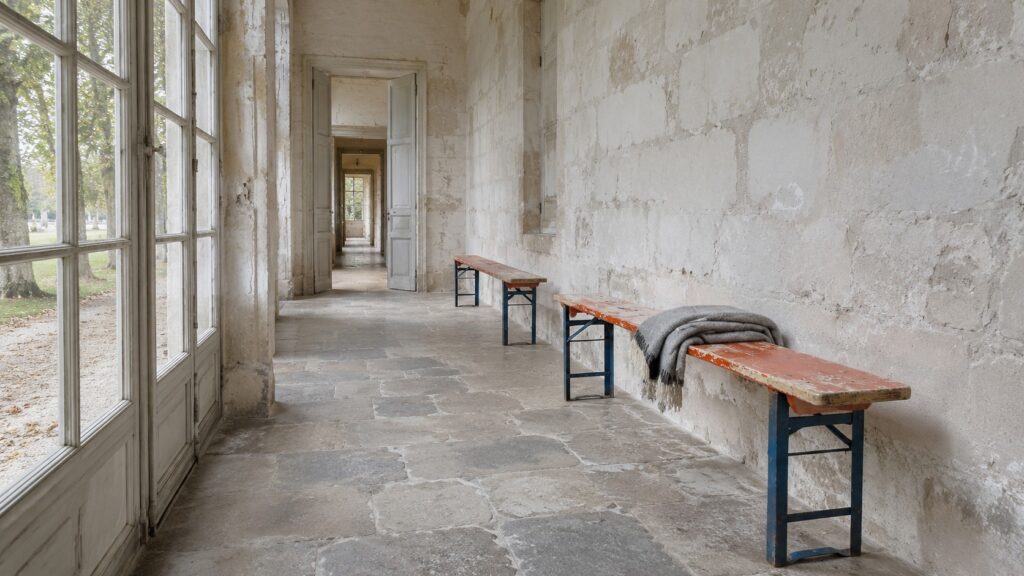 IndustrialIndustrial living: honest materials, clever shapes and a rough edge
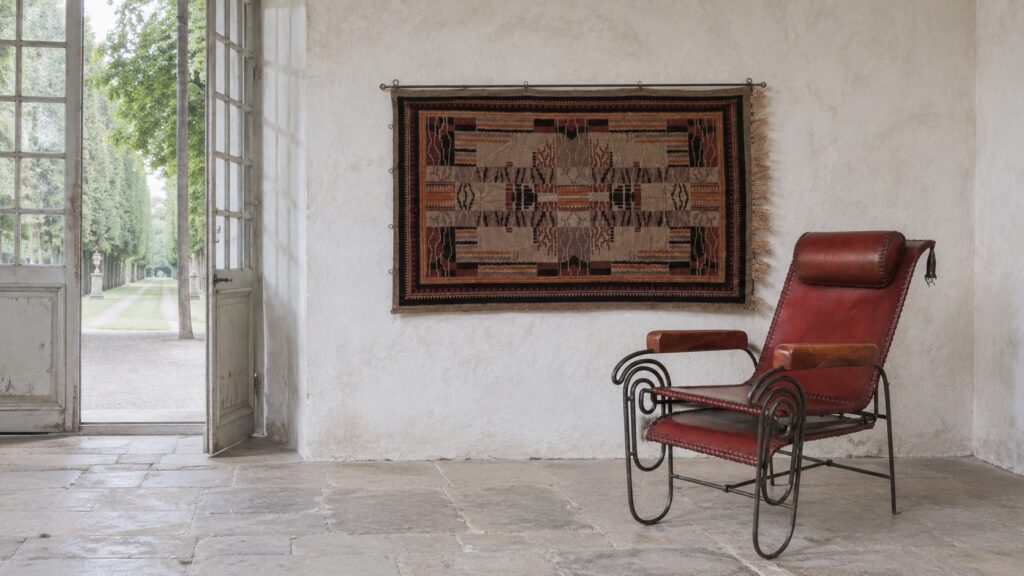 Art decoArt deco: clean lines, warm materials and a touch of daring
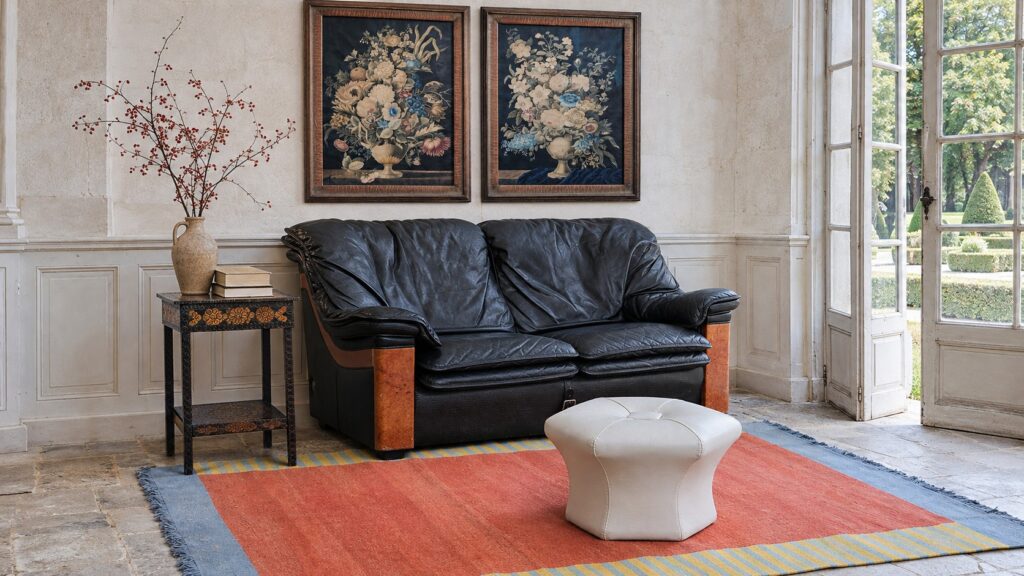 EclecticEclectic living: the art of mixing styles without chaos
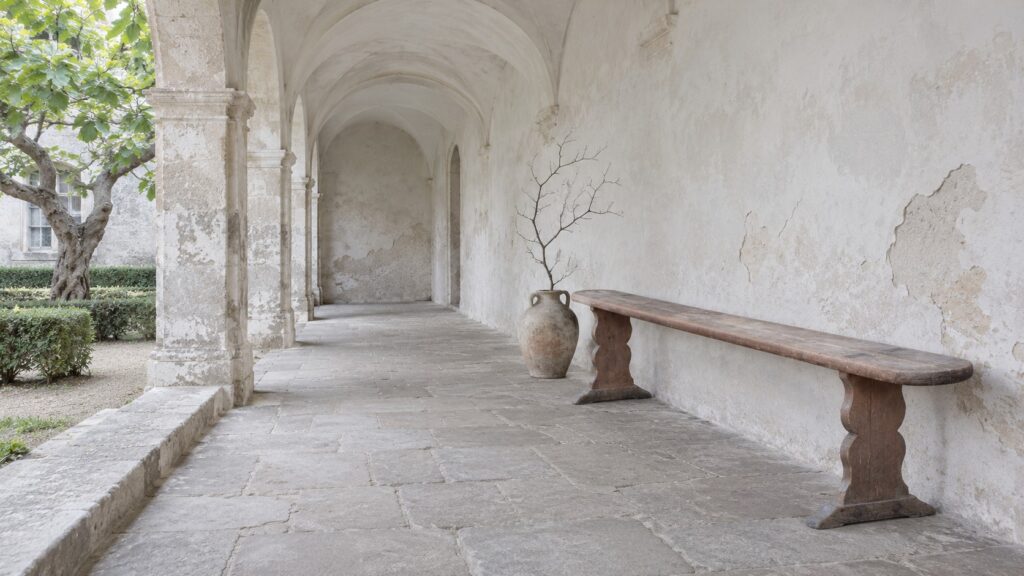 Wabi-sabiWhat is wabi-sabi living, and why does imperfection make an interior more beautiful?