French country living: wood, stone and the calm of country life
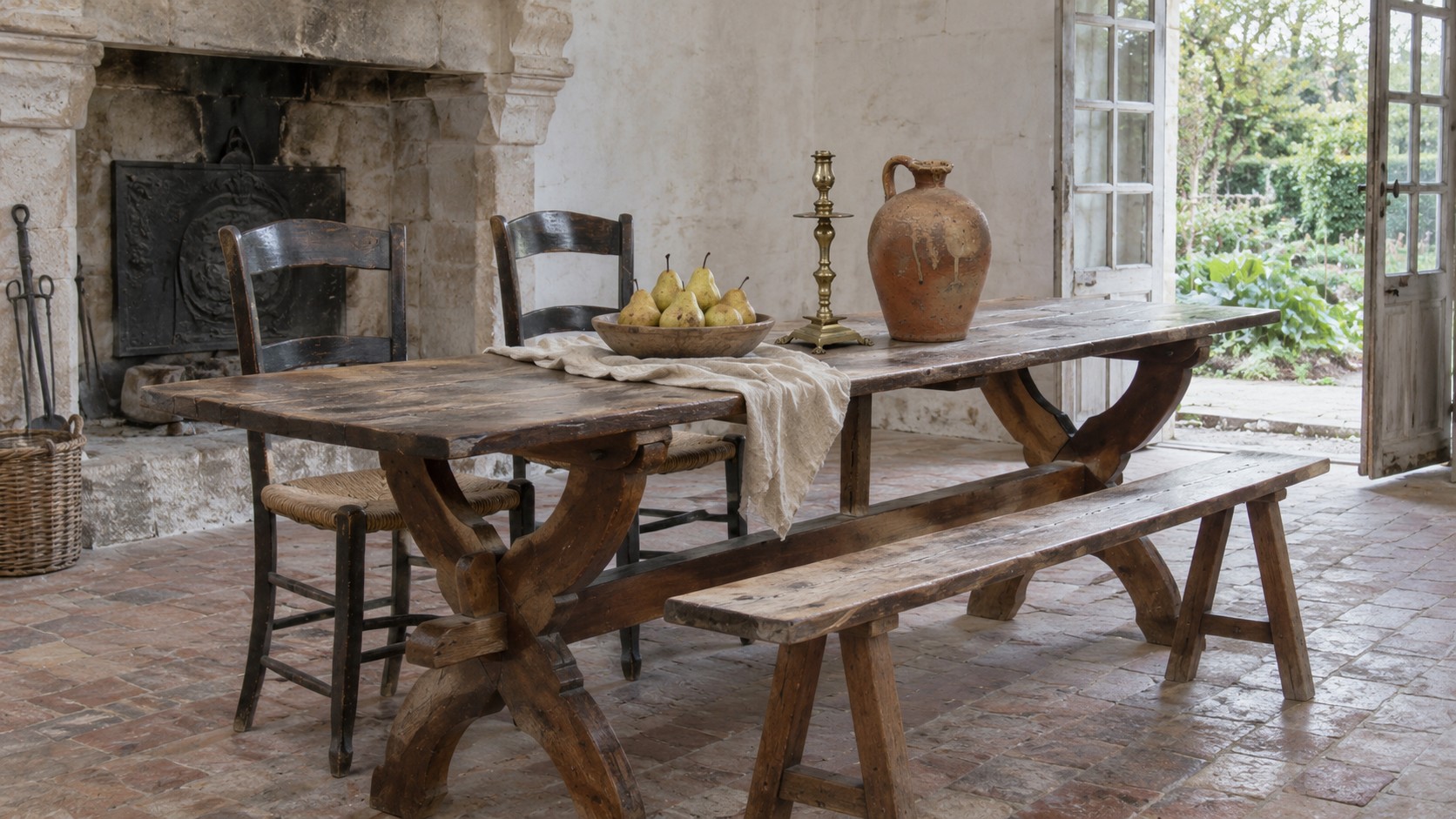
In this photo: 17th-century French oak monastery table / trestle table – 240 cm (€ 4.295) · French farmhouse bench on trestle legs – solid wood, early 20th century (€ 195 * GERESERVEERD / ON HOLD *) · Set of 2 French country chairs with rush seats (€ 295) · 17th-century French brass candlestick – circa 1690 (€ 345) · Stoneware jug with pouring spout – wood-fired French grès, 19th – early 20th century (€ 95)
FRENCH COUNTRY
wood, stone and the calm of country life
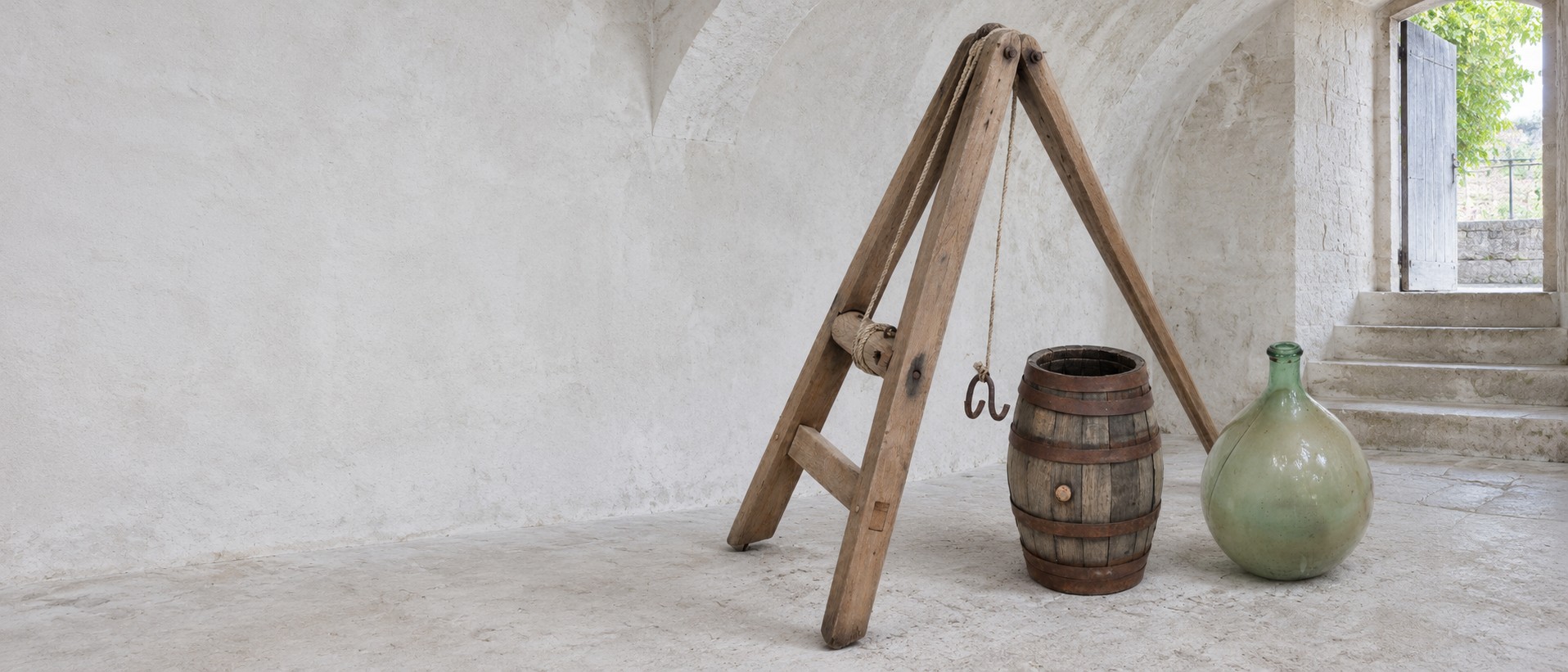
In this photo: Antique French oak barrel hoist with pulley, hook and small cask – around 1900 (€ 180) · Green glass demijohn – dame-jeanne, c. 1930–1960 (€ 85)
French country: wood, stone and the calm of country life
You know the feeling. A long table in a kitchen with thick walls. A bench that generations have slid along. A jug, a bottle of green glass, a chair with a rush seat. Nothing is new and nothing needs to impress.
That is French country living.
It is the style of the farmhouse, the village house and the outbuildings of the château: furniture and everyday objects made for daily life on the land. Sturdy, simple and made beautiful by use.
What is French country living?
French country is not a designed style. It grew out of what was at hand: wood from the region, stone from the quarry, earthenware from the potter in the next village. A farmhouse table was made for eating, working, butchering and ironing, so it had to be big and strong.
You recognise the style by natural materials and quiet colours. Oak, pine and walnut. Rush, linen and stoneware. Paint in off-white, grey-green and faded blue, often half worn away.
And by its scale. French farmhouse furniture is generous: a table of almost two and a half metres is no exception. A whole household had to fit around it.
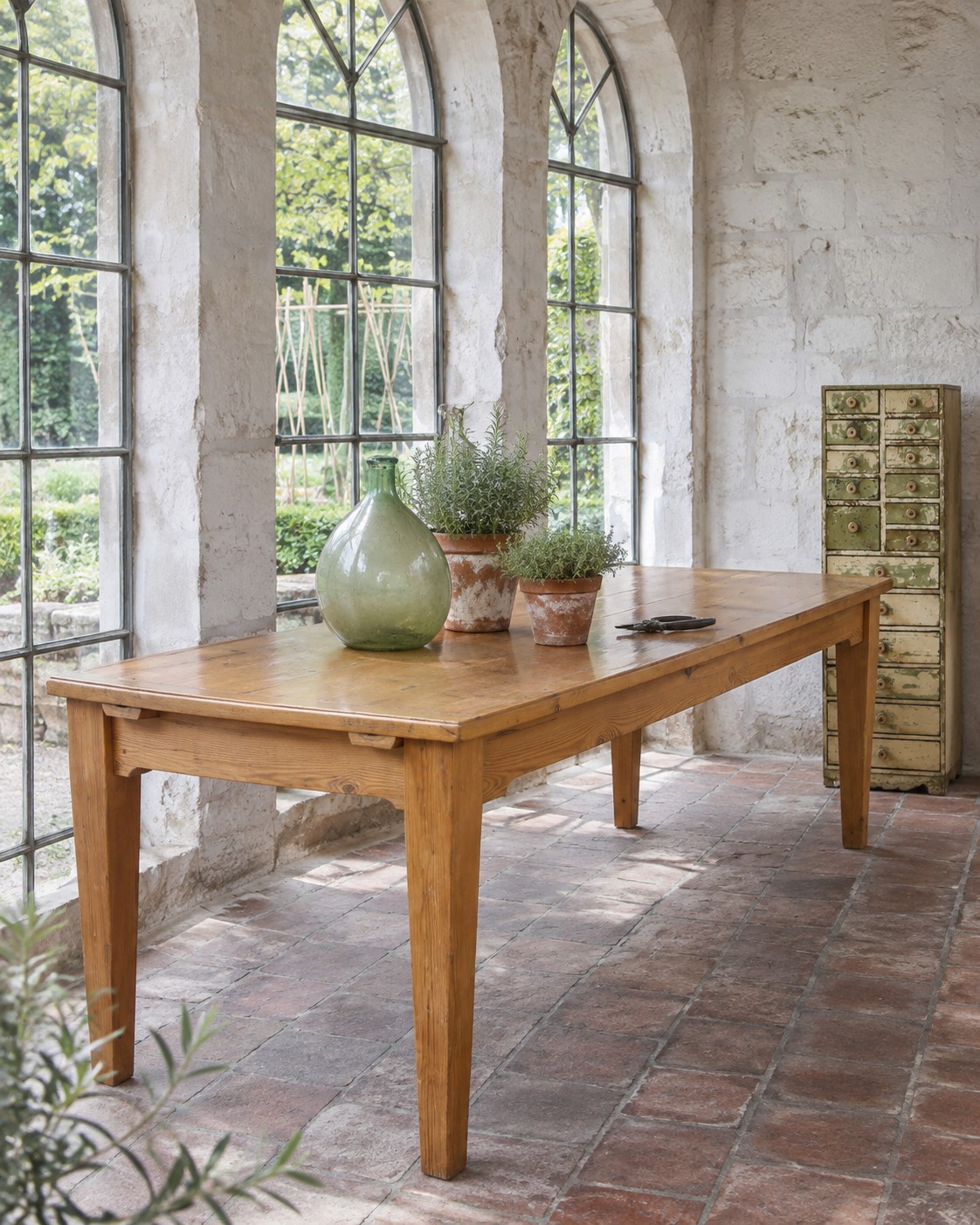
In this photo: Extra large pine farmhouse table – 238 cm, French country style, 20th century (€ 275) · Narrow chest with 18 small drawers – worn cream and green paint, c. 1900–1940 (€ 245) · Green glass demijohn – dame-jeanne, c. 1930–1960 (€ 85)
Why is French country so popular?
Because it brings calm. There is no hurry in this furniture. It was made slowly, used for a long time and asks nothing of you. A room with an old farmhouse table immediately feels like a place where you can stay seated.
Because it is timeless. A bench on trestle legs or a ladder-back chair looks as natural today as it did a hundred years ago. That is why it goes with so much: a sleek new house, an old farmhouse, an apartment in the city.
And because it is real. A jug with dripped ash glaze from a wood-fired kiln cannot be imitated. You can see where the fire passed.
The strength of wood, stone and use
The beauty of French country lies in the surface. A table top made soft by years of scrubbing. A seat board with a hollow where someone always sat. The edge of a step, the handle of a drawer.
We call that patina, and it is the only thing about a piece of furniture that you cannot buy or make. It only comes with time.
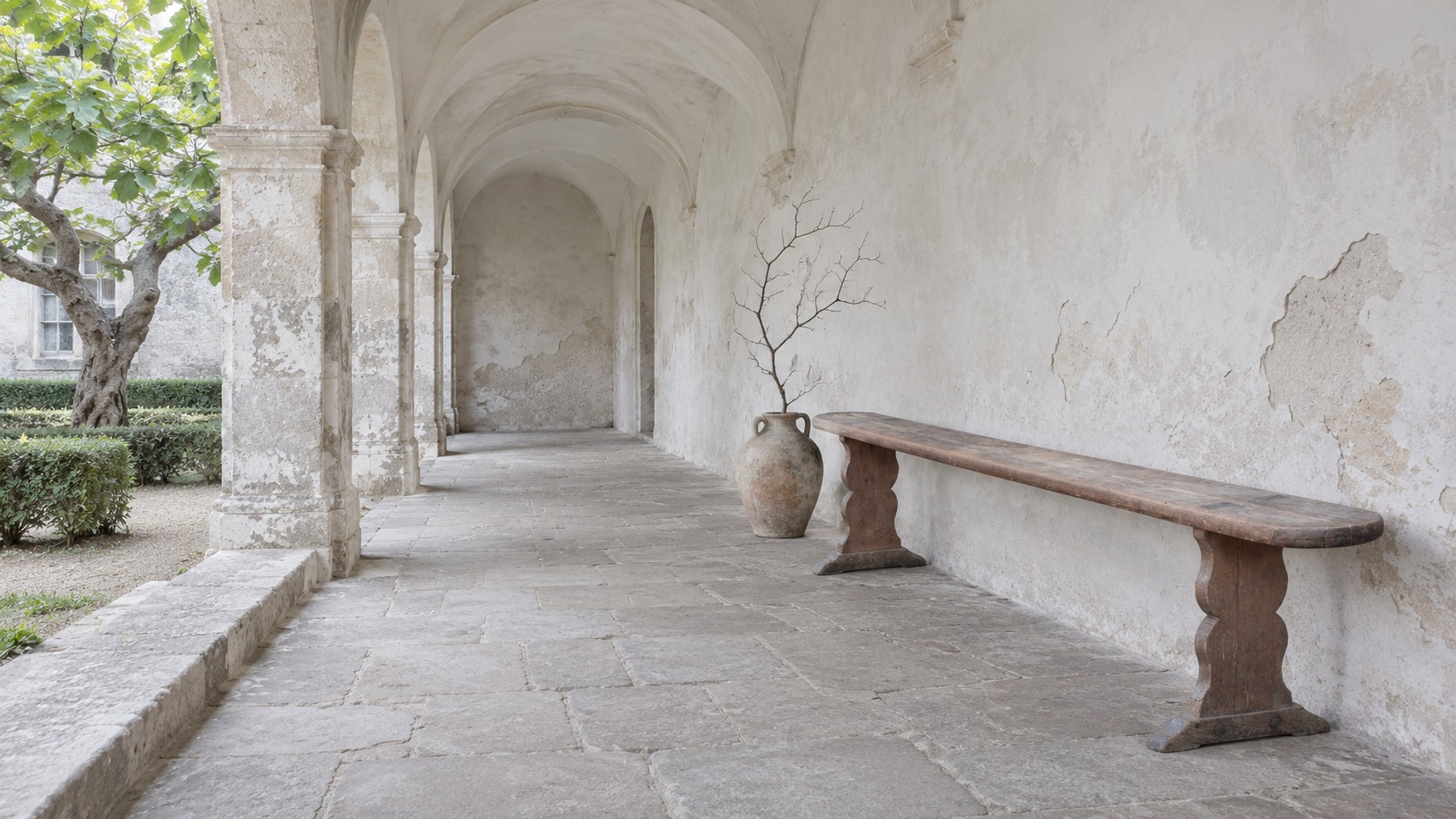
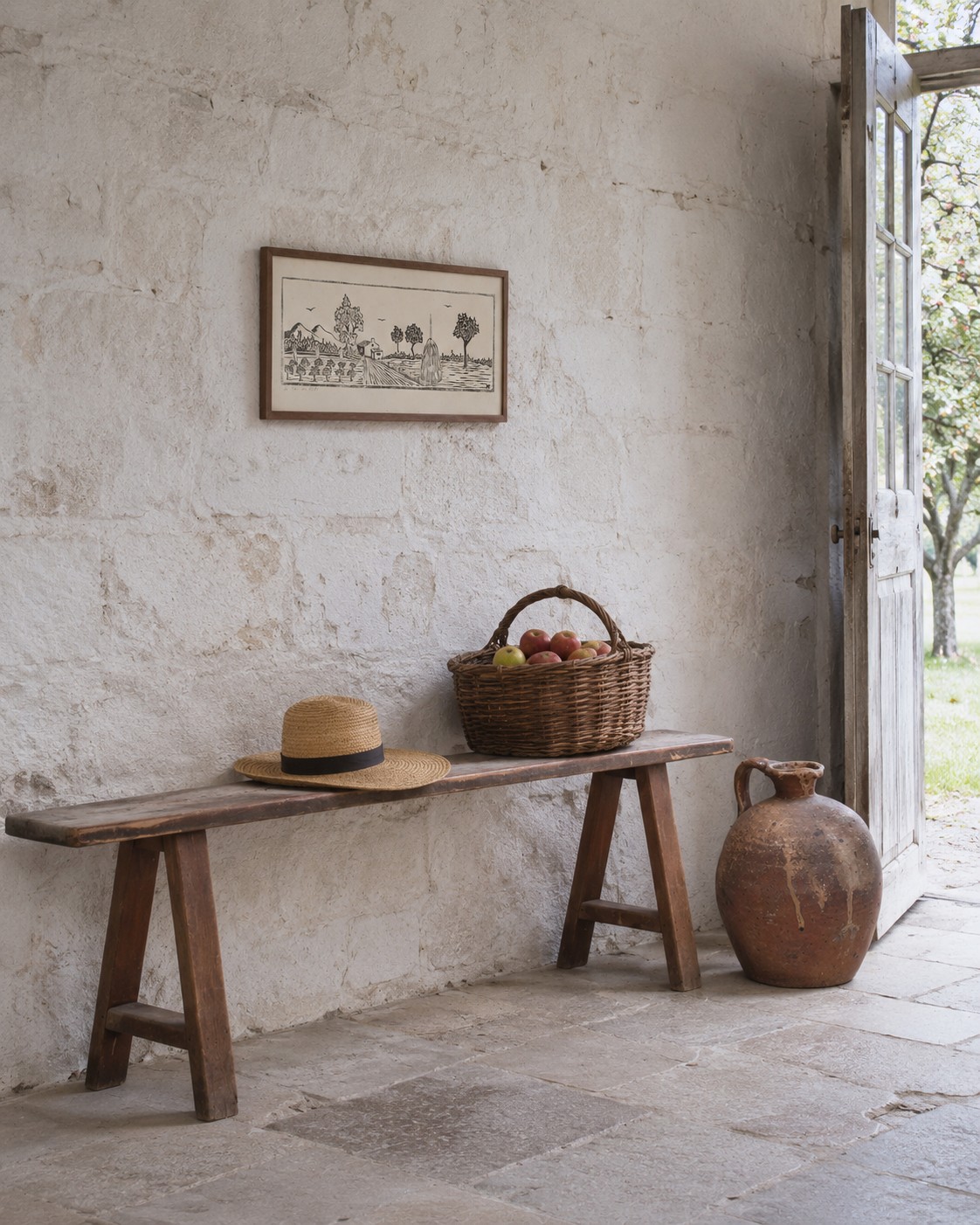
That is why a single farmhouse bench against a bare limewashed wall is already enough. The wood says plenty. A small woodcut above it, a jug beside it, and the hall is done.
In this photo: French farmhouse bench on trestle legs – solid wood, early 20th century (€ 195 * GERESERVEERD / ON HOLD *) · Stoneware jug with pouring spout – wood-fired French grès, 19th – early 20th century (€ 95) · Woodcut ‘Le Mas du Midi’ – landscape in the south of France, monogrammed JM (€ 40)
How do you combine French country without it becoming a brocante shop?
The danger of this style is too much. Too many baskets, too many jugs, too many signs with French words. Then it becomes a stage set.
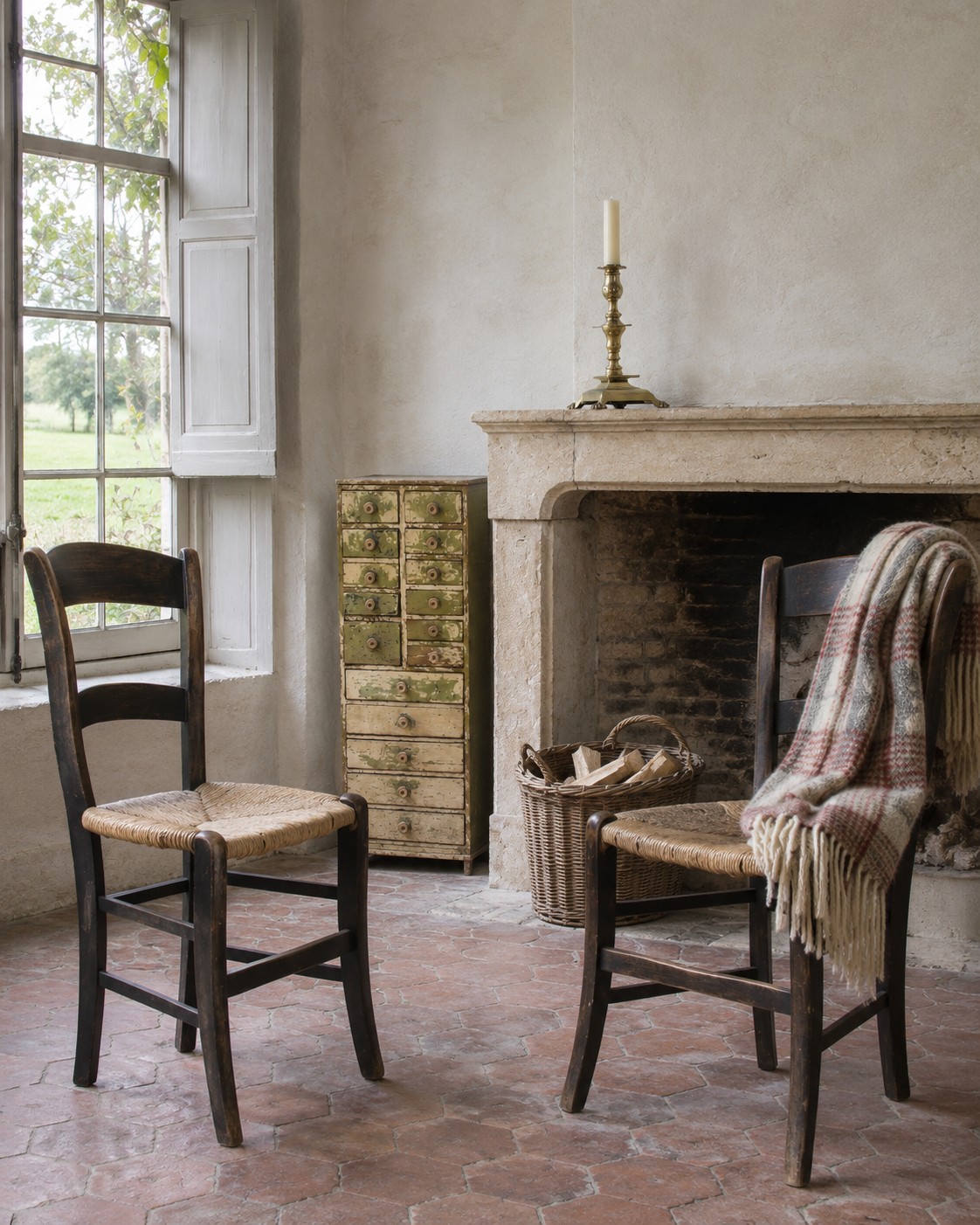
Choose a few large, quiet pieces instead and leave the rest out. Two rush-seated chairs by the fireplace. One brass candlestick on the mantel. A narrow chest of small drawers with worn paint in the corner. Such a room needs nothing more.
Combine old wood with light walls and plenty of daylight. And do not be afraid of something modern next to it: a sleek lamp or a contemporary sofa only makes the old pieces more beautiful.
In this photo: Set of 2 French country chairs with rush seats (€ 295) · 17th-century French brass candlestick – circa 1690 (€ 345) · Narrow chest with 18 small drawers – worn cream and green paint, c. 1900–1940 (€ 245)
What should you look for when buying French country?
Look at the wood. Solid wood with mortise-and-tenon joints and wooden pegs points to old handwork. Small repairs, a replaced rail or an added piece are part of furniture that has been used for centuries and are no objection, as long as it stands firmly.
With rush seats: feel whether the weave is still tight and intact. Having a seat re-rushed is possible, but it costs time and money.
With glass and earthenware: a demijohn or a stoneware jug may show signs of use, but check for cracks if you want to put water in it.
And measure. A table of 240 centimetres is wonderful, but it has to fit through the door and there must be room to walk around it.
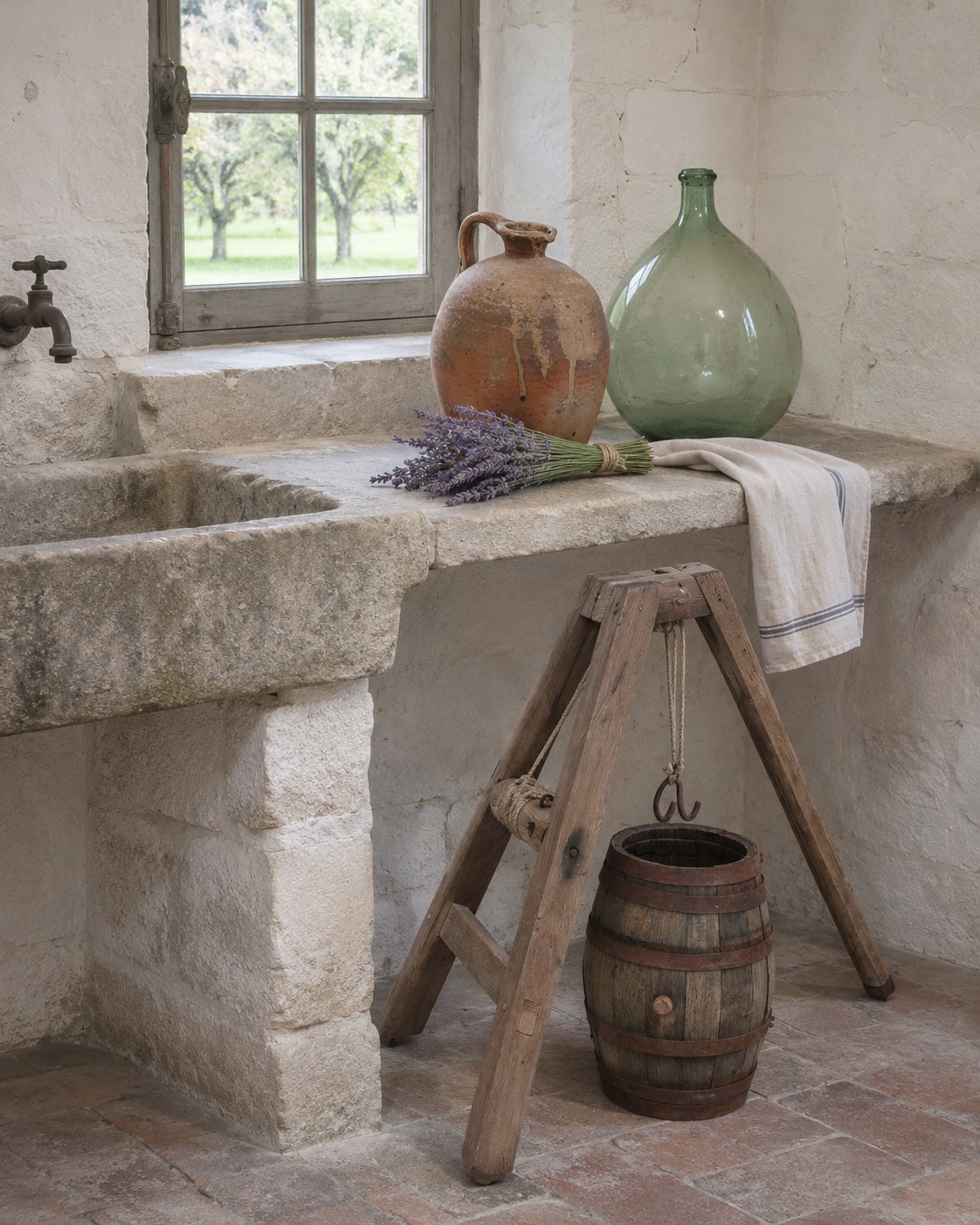
In this photo: Antique French oak barrel hoist with pulley, hook and small cask – around 1900 (€ 180) · Stoneware jug with pouring spout – wood-fired French grès, 19th – early 20th century (€ 95) · Green glass demijohn – dame-jeanne, c. 1930–1960 (€ 85)
French country in a light, calm interior
At De Huiszwaluw we love the sober side of French country. No frills and no roses, but wood, stone, glass and iron. The kitchen and the cellar rather than the salon.
Place a seventeenth-century refectory table in a light room with a stone floor and you need almost nothing else. A bench on one side, two chairs on the other, a candlestick and a jug on the top.
Tools belong here too. An oak barrel hoist from a wine cellar was never meant as an ornament, but with its pulley, hook and little barrel it has become a sculpture.
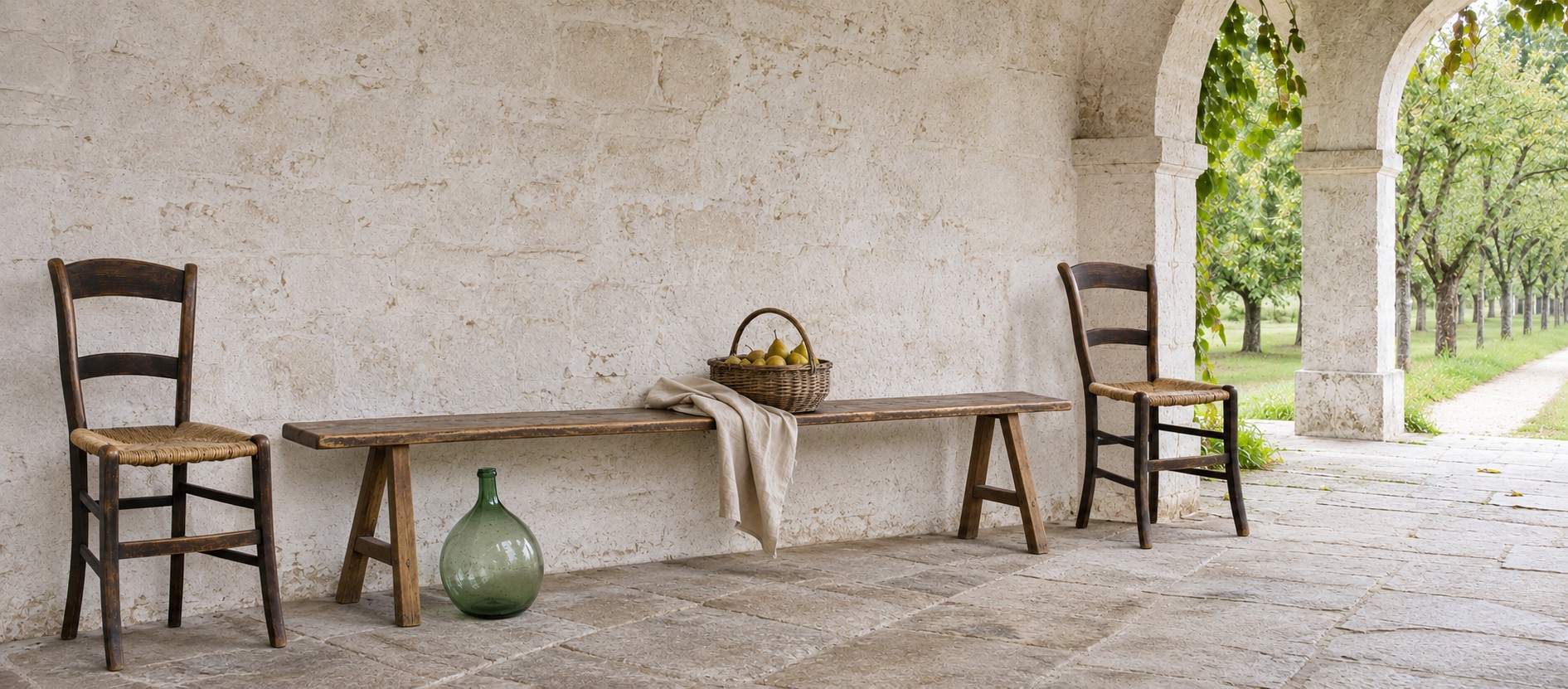
In this photo: French farmhouse bench on trestle legs – solid wood, early 20th century (€ 195 * GERESERVEERD / ON HOLD *) · Set of 2 French country chairs with rush seats (€ 295) · Green glass demijohn – dame-jeanne, c. 1930–1960 (€ 85)
How would De Huiszwaluw use French country?
We would start with the table. A long, old table is the heart of a French house, and everything around it follows naturally: benches, chairs that do not have to match, a candlestick.
Then a few things in glass and earthenware. A green demijohn on the floor or on the worktop, a jug with a branch in it.
And outside it simply continues. A bench against the wall, two chairs, a basket of fruit from the orchard.
That way it is not a picture from a magazine, but a home where life is allowed to slow down.
Now in our collection: French country
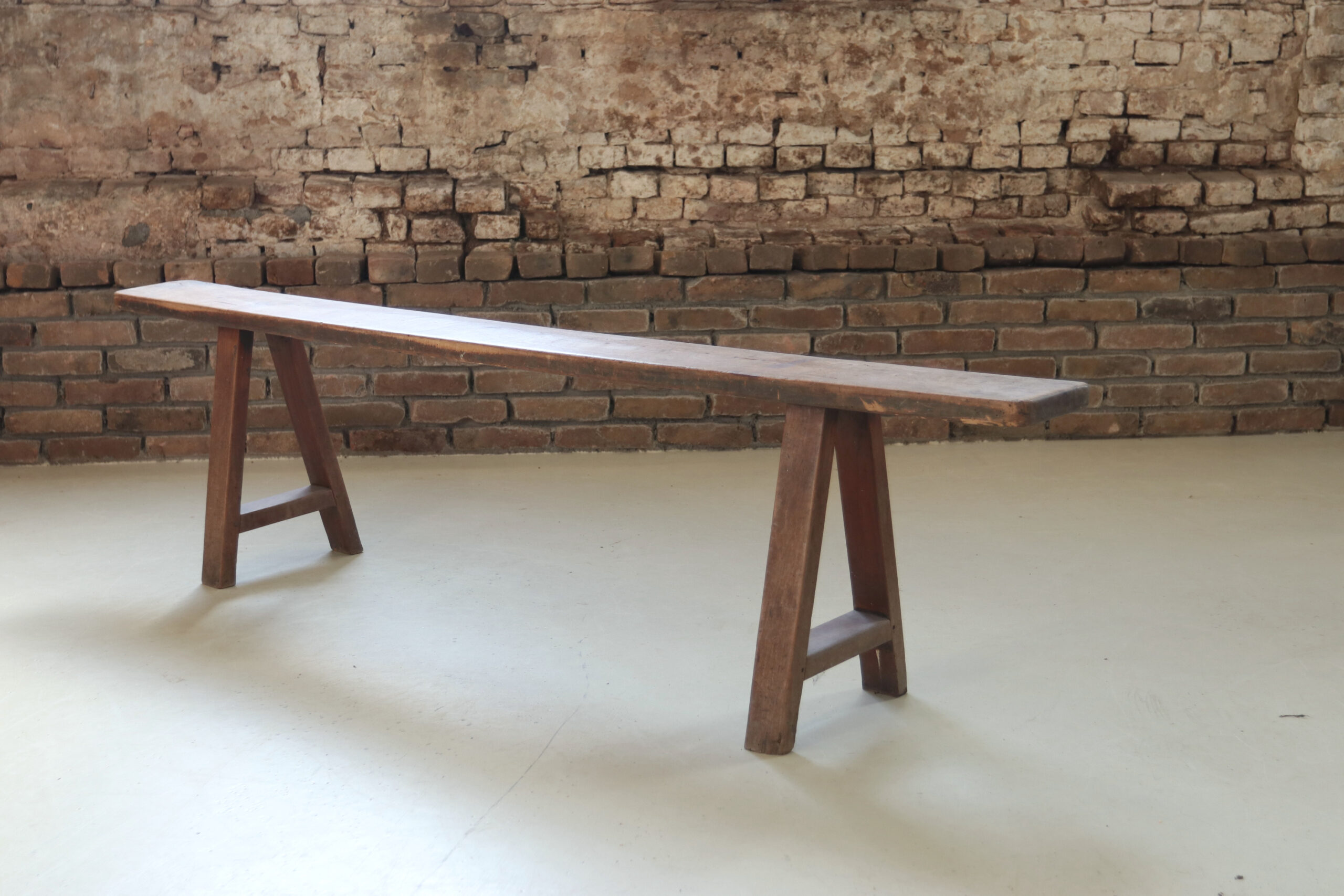 French farmhouse bench on trestle legs – solid wood, early 20th century€ 195 * GERESERVEERD / ON HOLD *
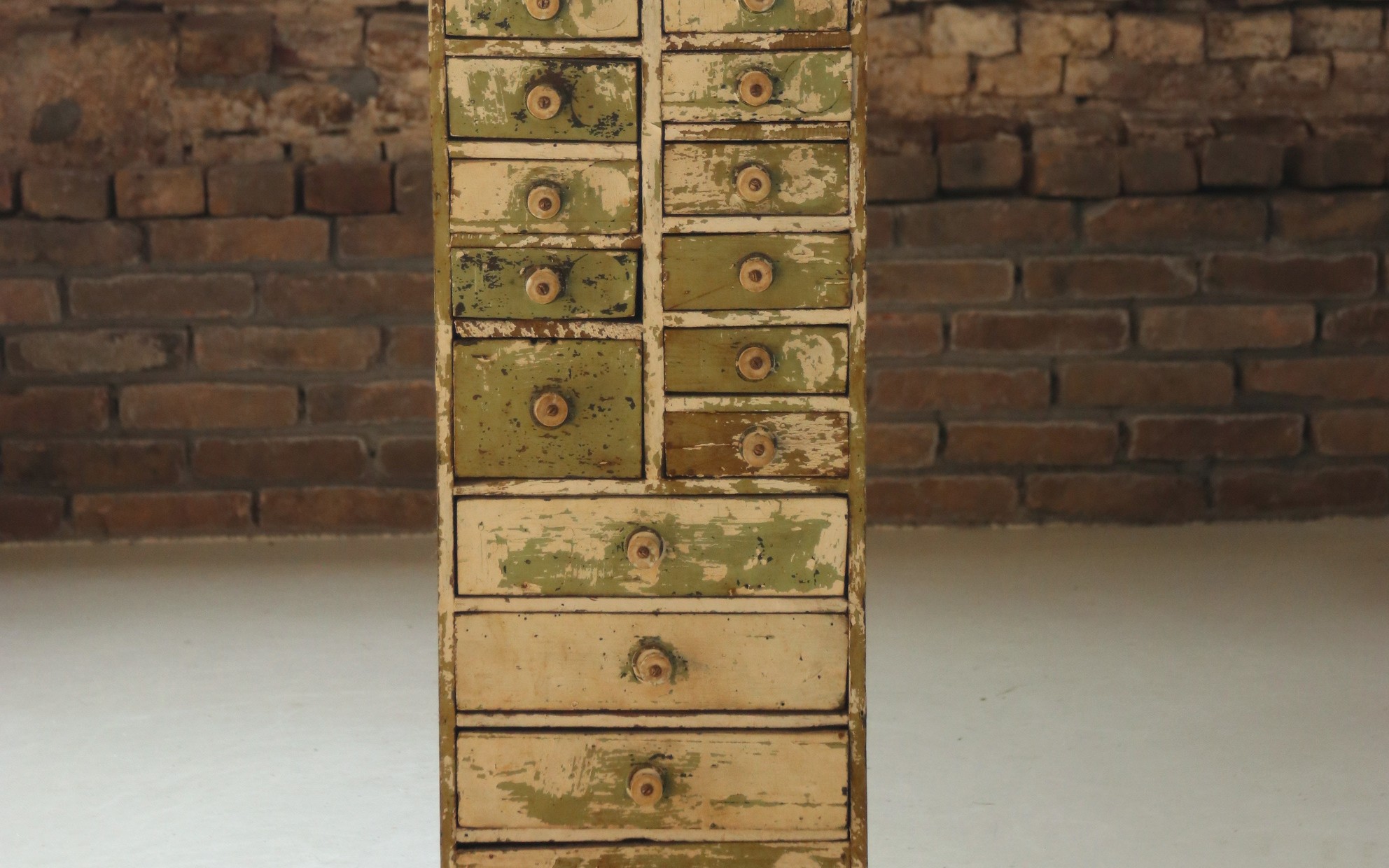 Narrow chest with 18 small drawers – worn cream and green paint, c. 1900–1940€ 245
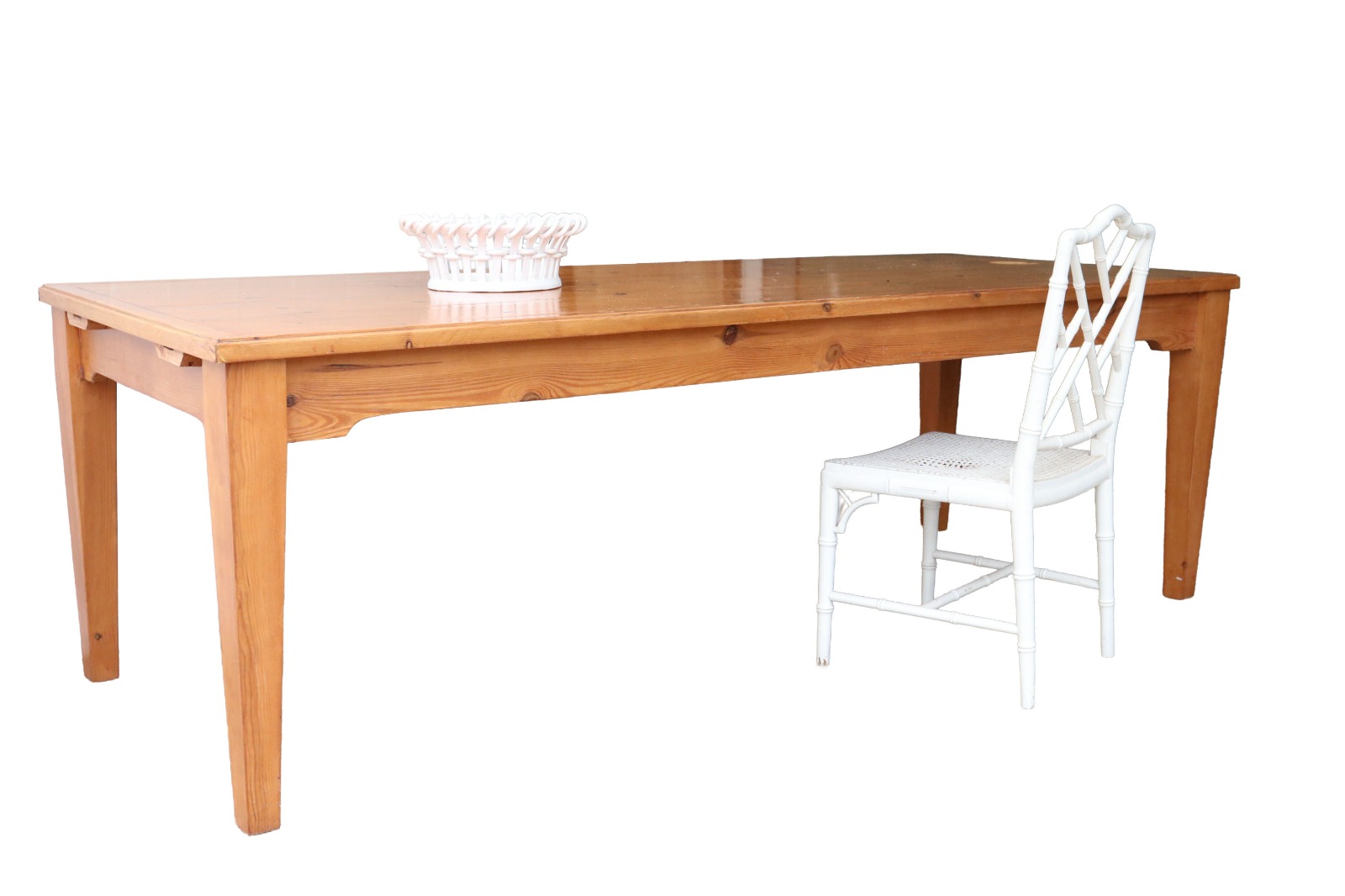 Extra large pine farmhouse table – 238 cm, French country style, 20th century€ 275
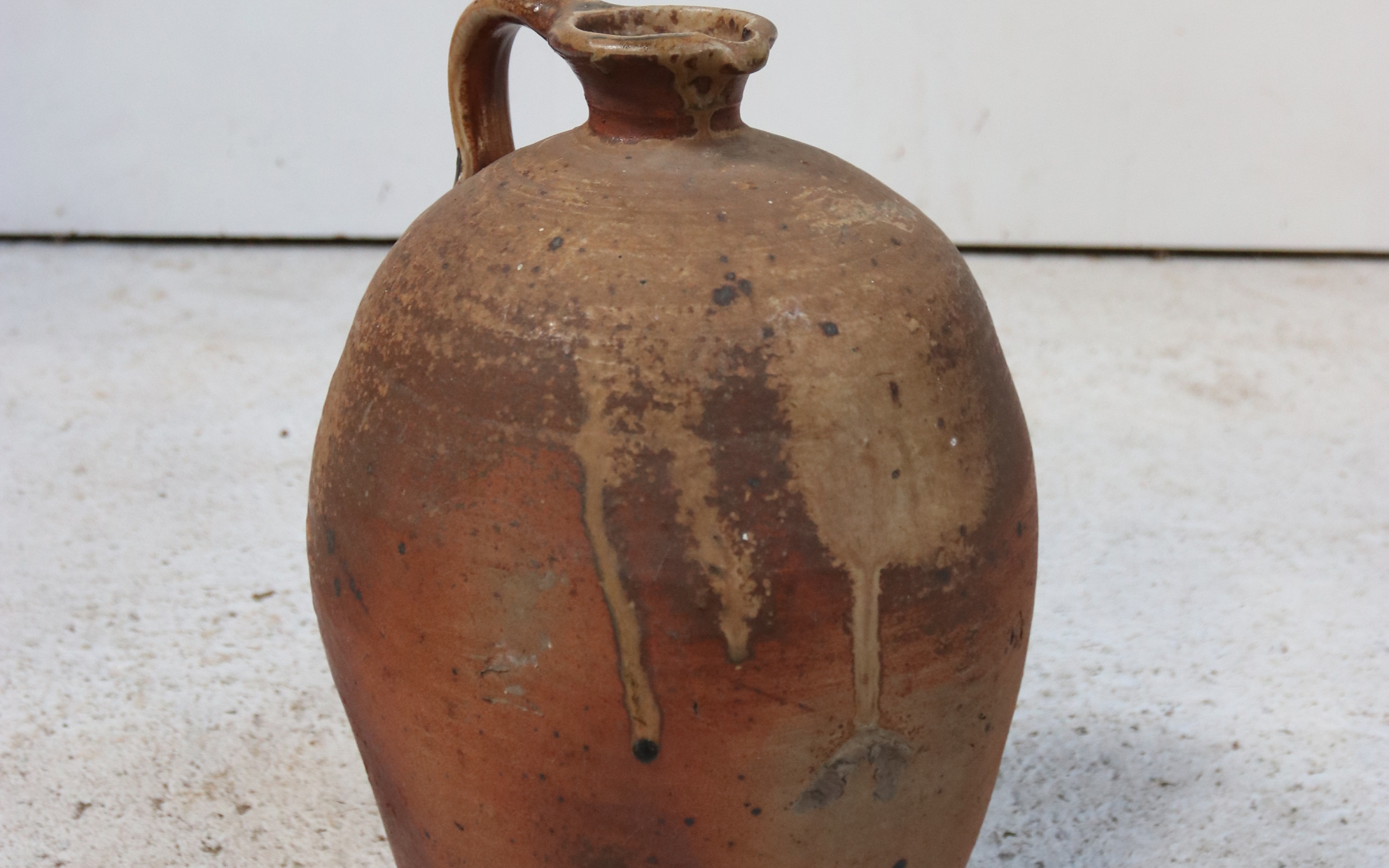 Stoneware jug with pouring spout – wood-fired French grès, 19th – early 20th century€ 95
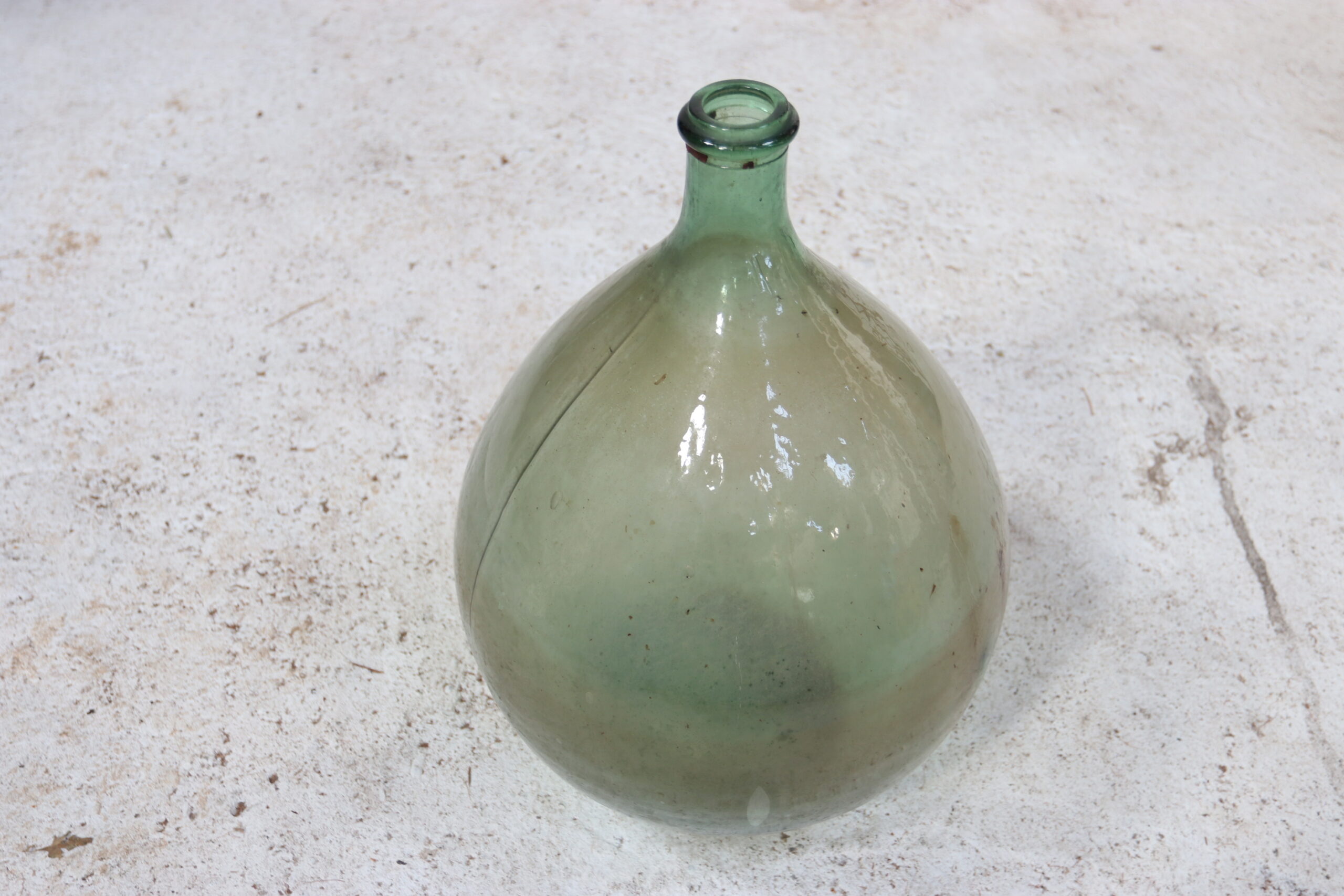 Green glass demijohn – dame-jeanne, c. 1930–1960€ 85
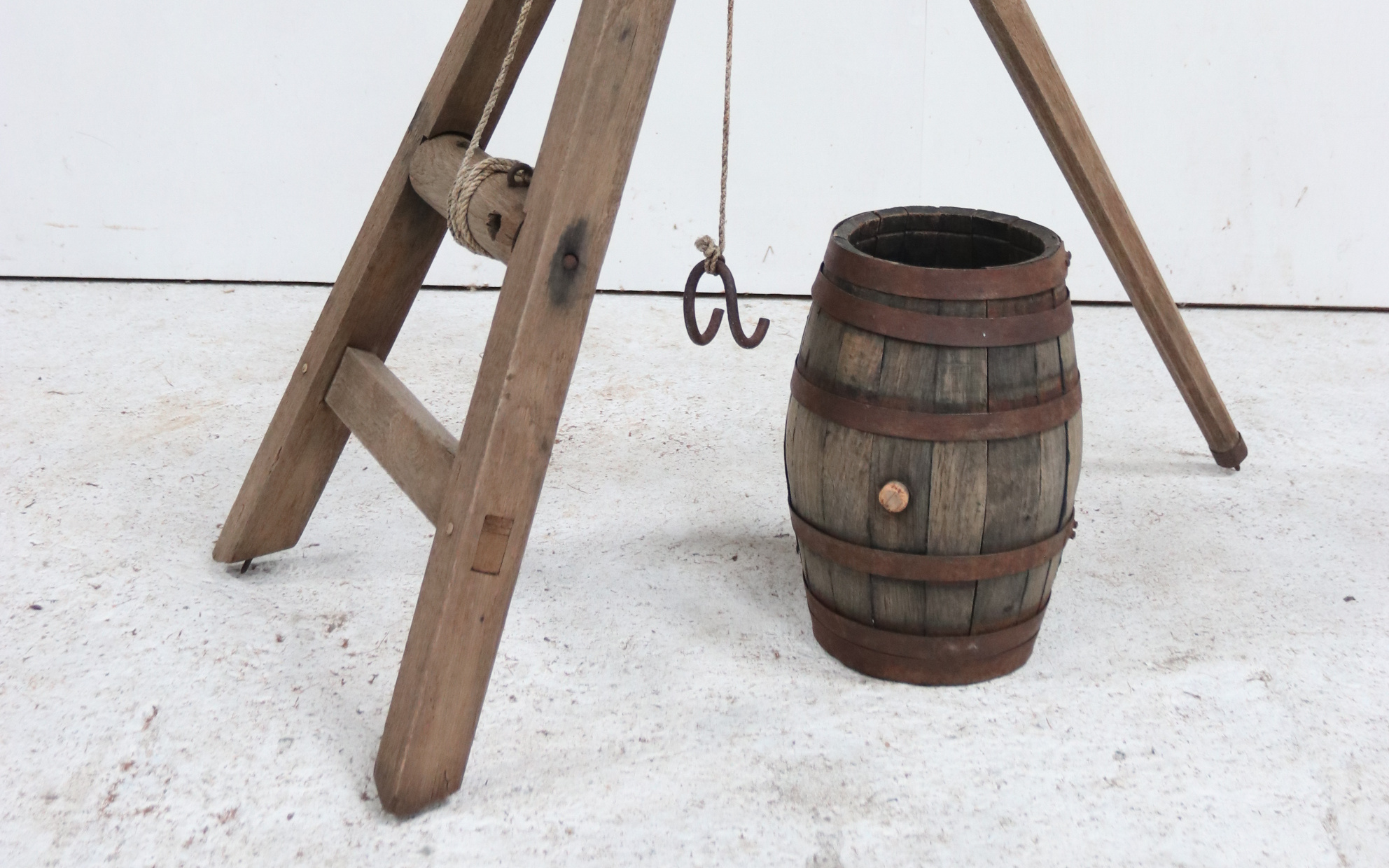 Antique French oak barrel hoist with pulley, hook and small cask – around 1900€ 180
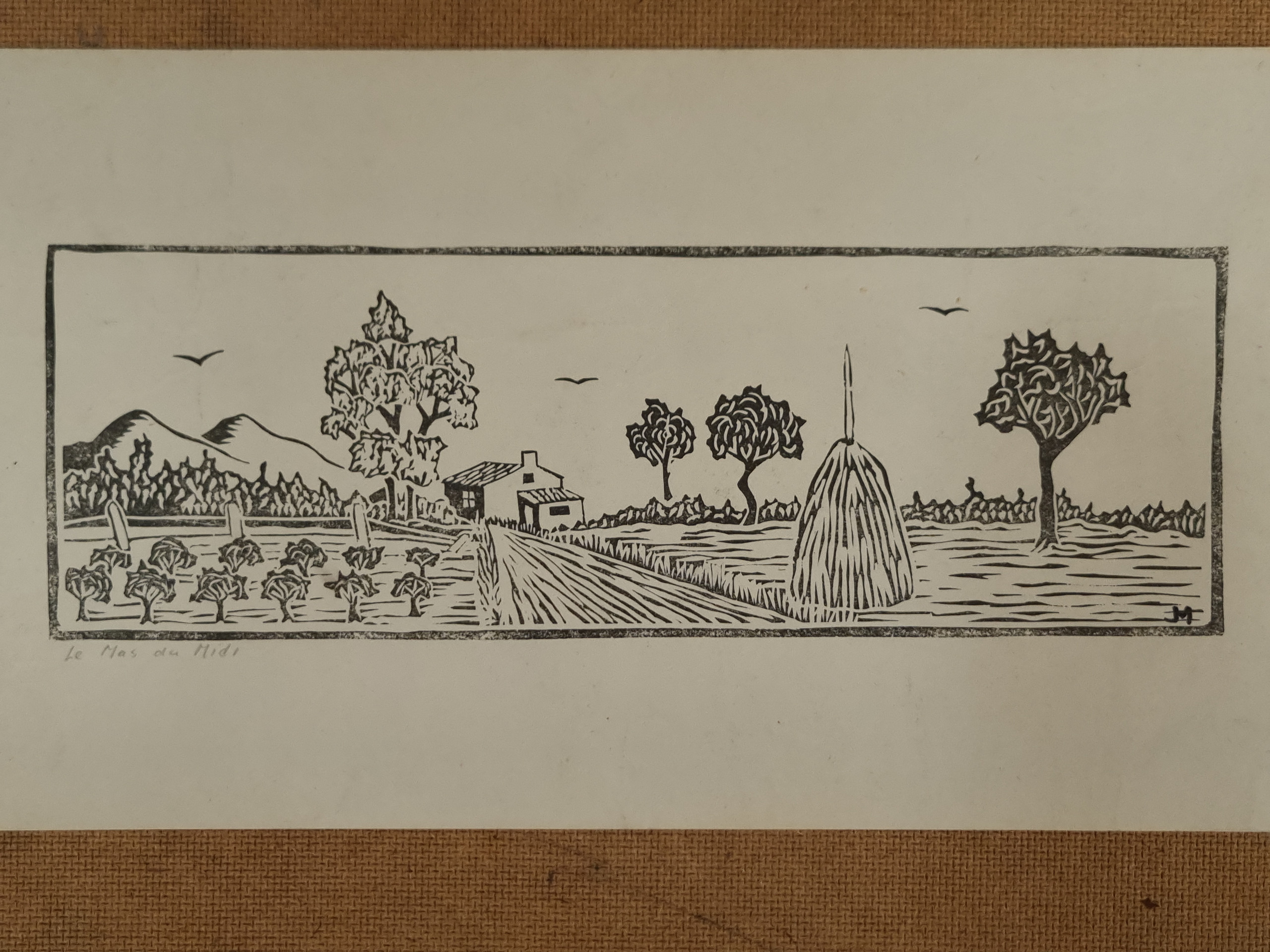 Woodcut ‘Le Mas du Midi’ – landscape in the south of France, monogrammed JM€ 40
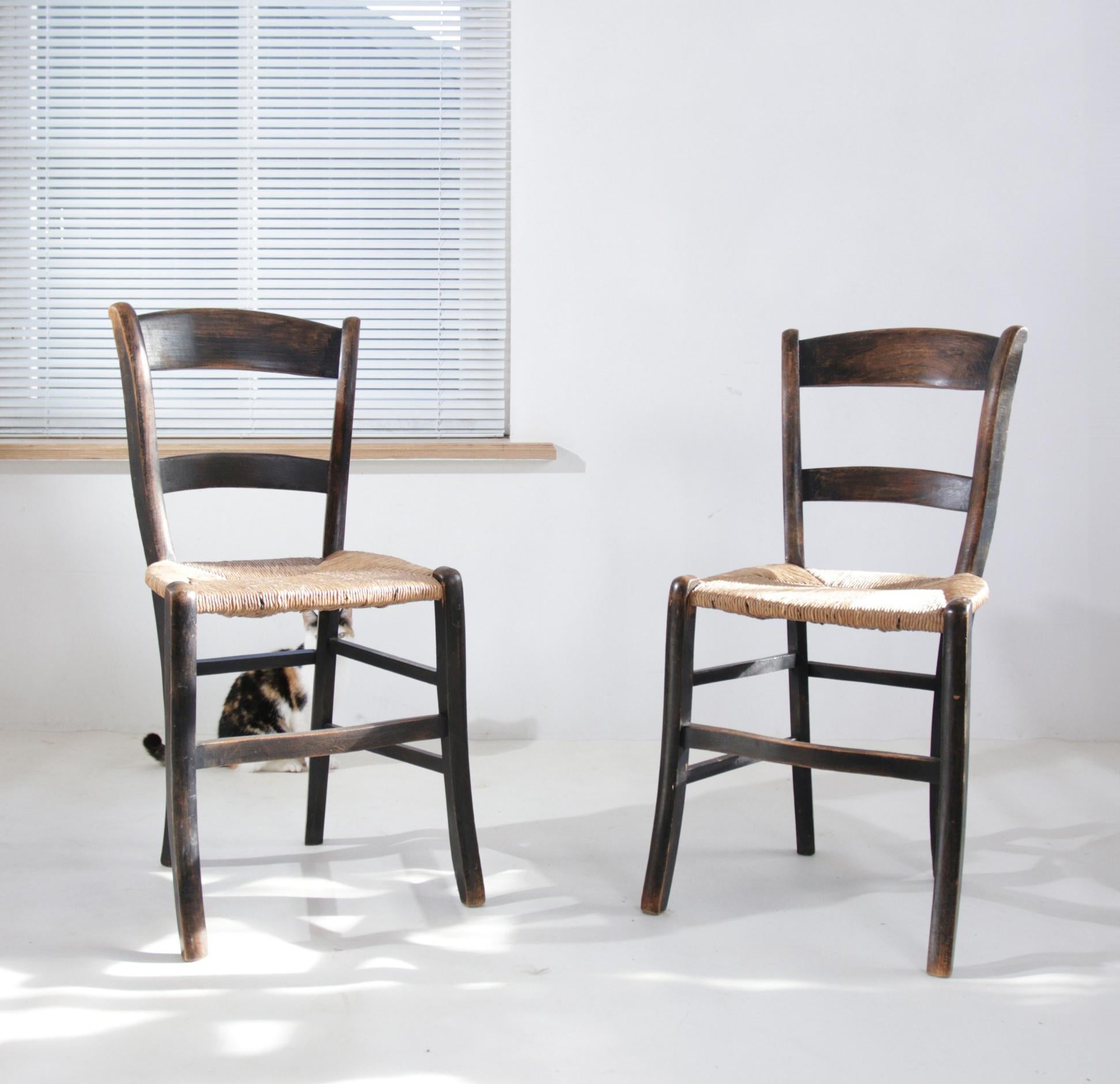 Set of 2 French country chairs with rush seats€ 295
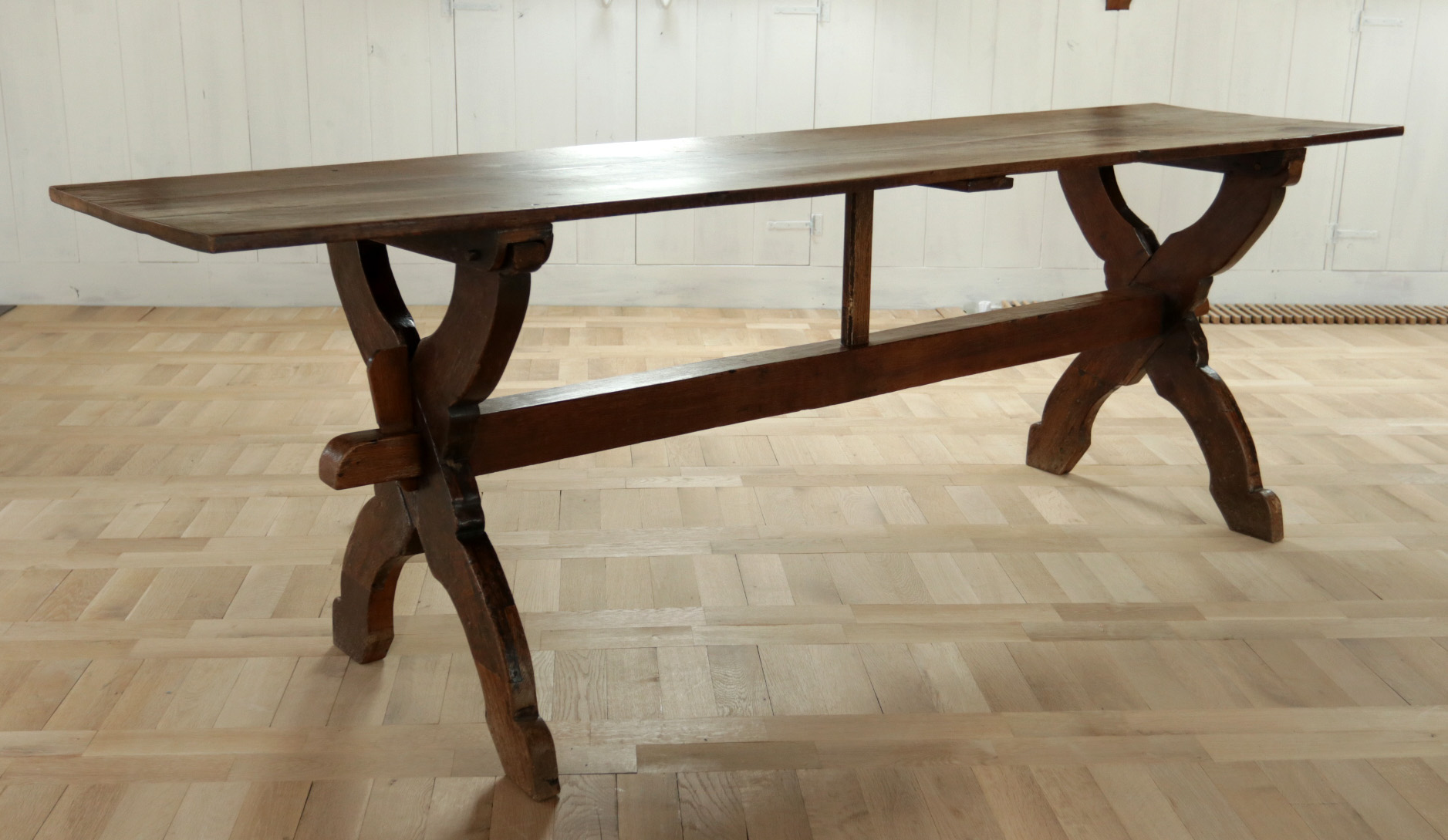 17th-century French oak monastery table / trestle table – 240 cm€ 4.295
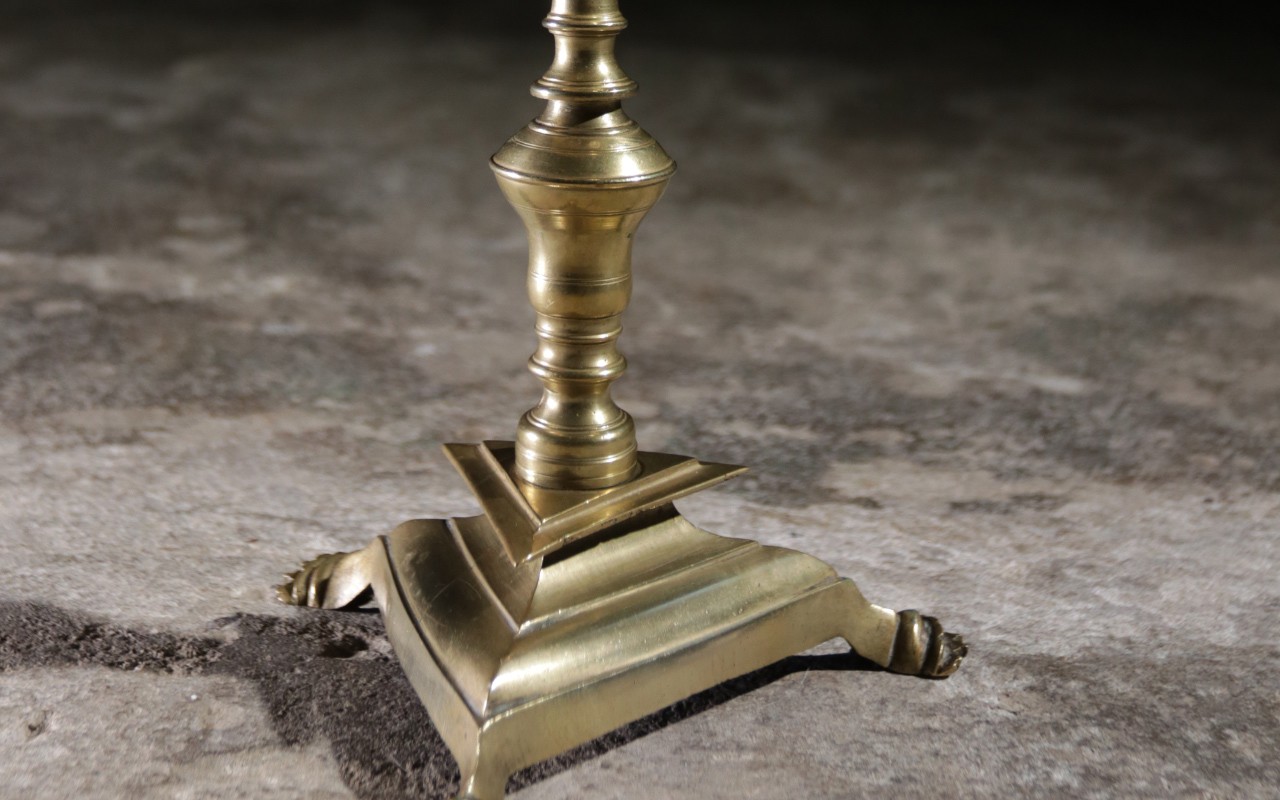 17th-century French brass candlestick – circa 1690€ 345
 French Neoclassical carved wood chandelier – circa 1950€ 295
 Long French wabi-sabi bench in weathered pine – circa 1900€ 595
Previously in our collection
 Long French wabi-sabi bench in weathered pine – circa 1900sold
 Set of four French ladder-back chairs with rush seats – circa 1960sold
Read on about other styles
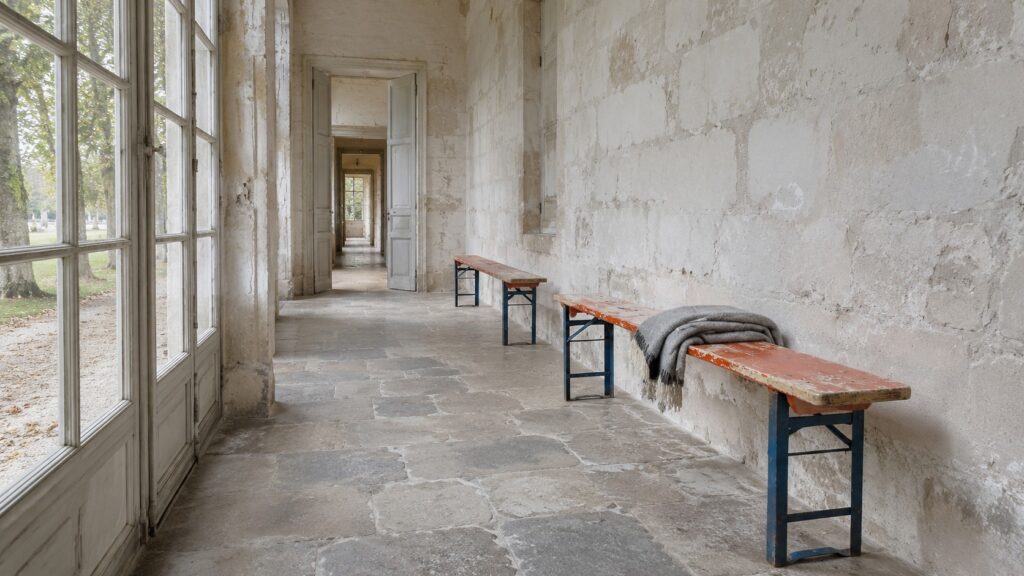 IndustrialIndustrial living: honest materials, clever shapes and a rough edge
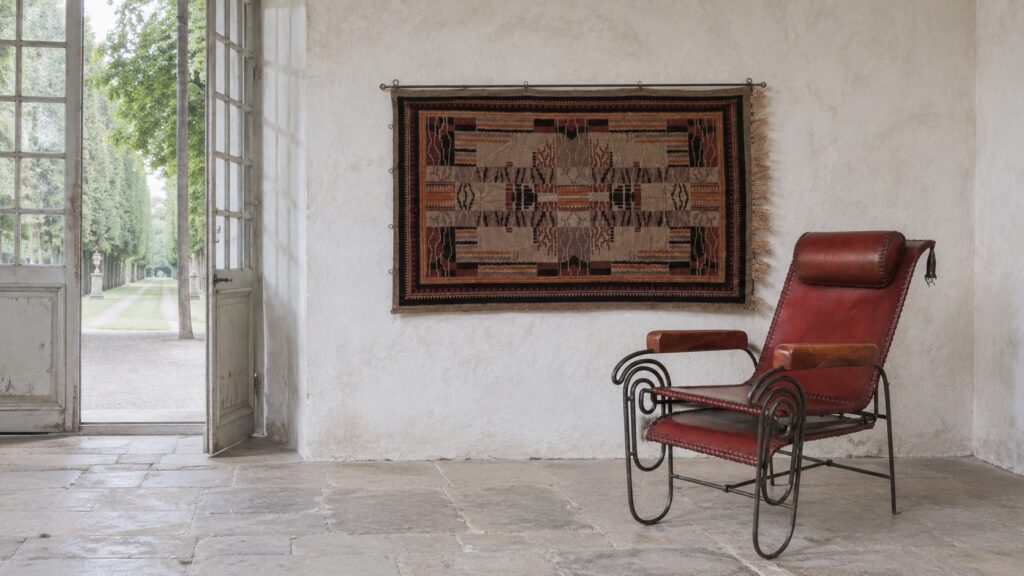 Art decoArt deco: clean lines, warm materials and a touch of daring
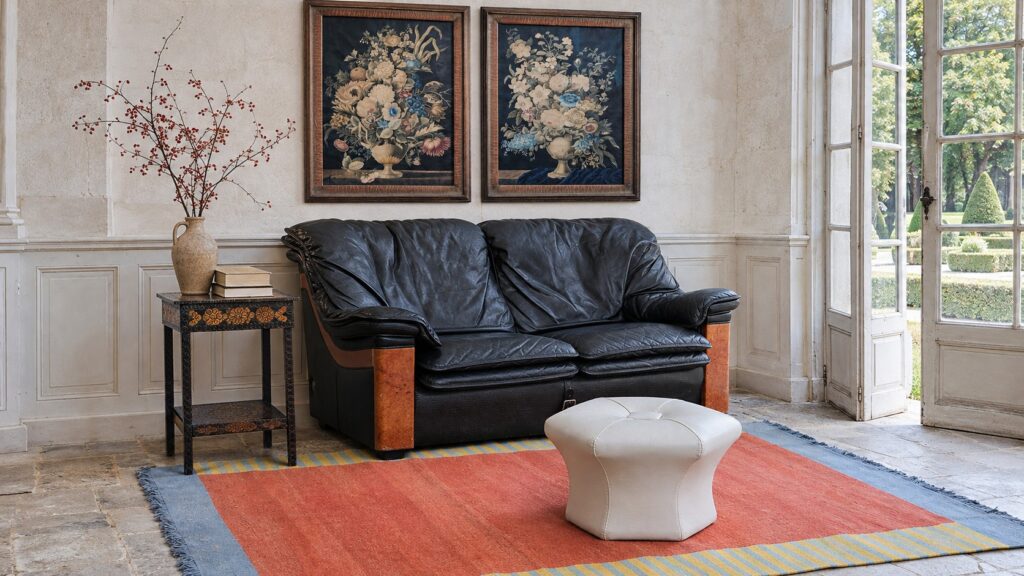 EclecticEclectic living: the art of mixing styles without chaos
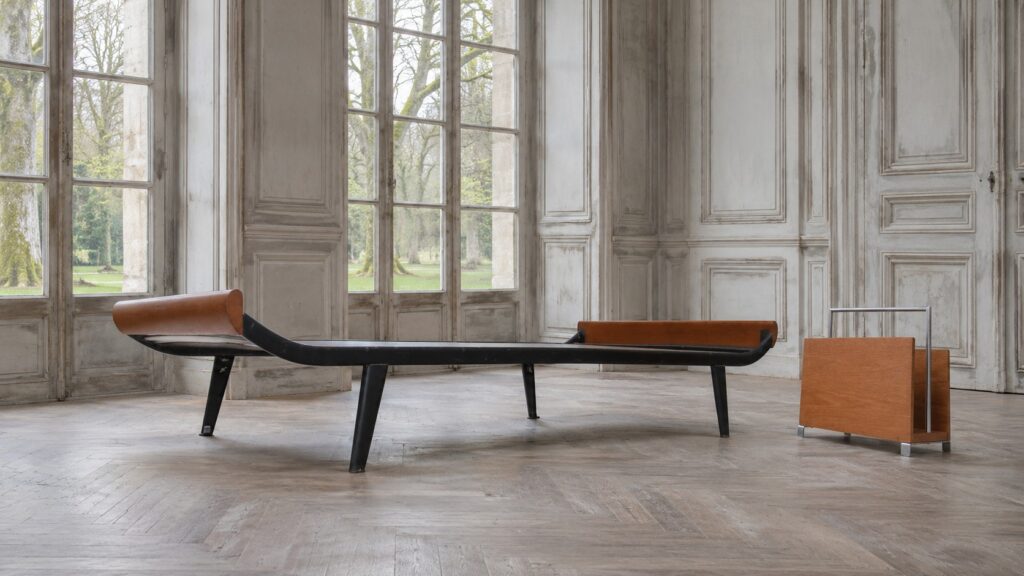 Mid-centuryMid-century design: timeless, warm and still modern
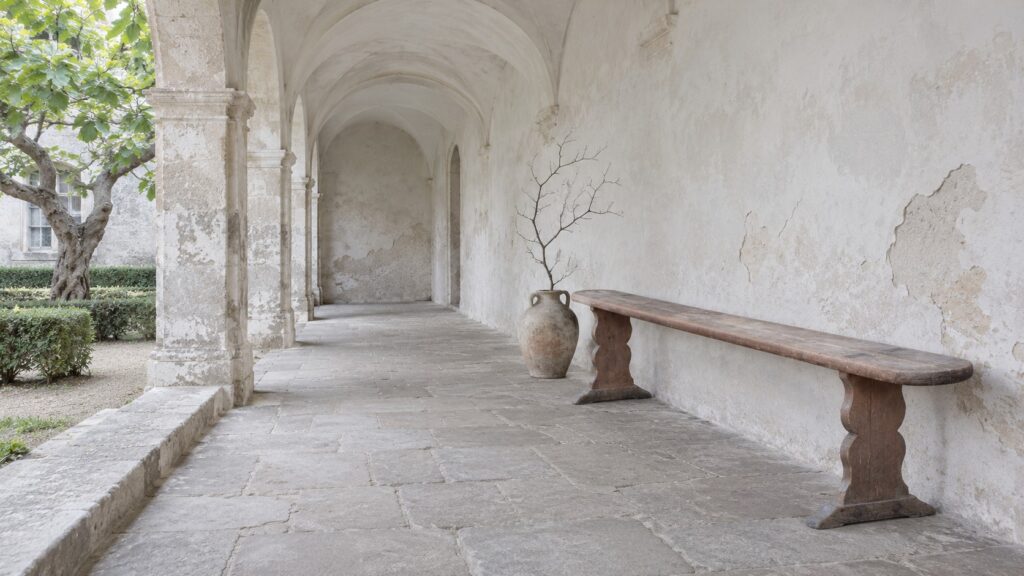 Wabi-sabiWhat is wabi-sabi living, and why does imperfection make an interior more beautiful?