Eclectic living: the art of mixing styles without chaos
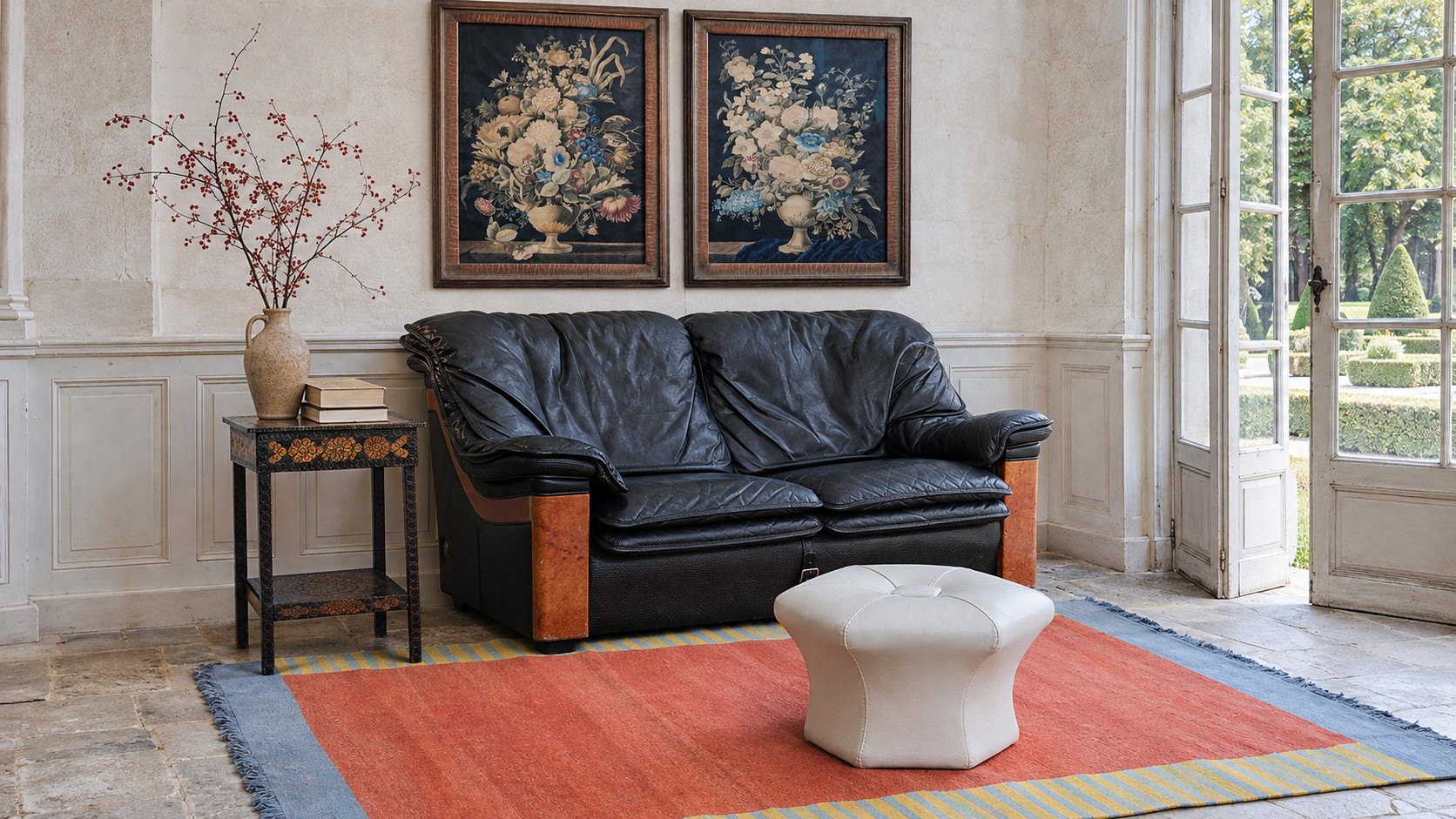
In this photo: Paolo Gucci for Formitalia – rare Italian two-seater sofa in black leather and burr wood, c. 1991 (€ 1.795) · Pair of Dutch Neoclassical flower still lifes, signed F.M. de Spaen née de Bylandt – 1809 (€ 1.195) · Decorated antique side table with elephant (€ 245) · Vintage hand-woven geometric rug, 1970s–80s (€ 375) · Sculptural hexagonal pouffe in white leatherette (now only € 50)
Eclectic living: the art of mixing styles without chaos
The most beautiful interiors are rarely copied neatly from a single style book. They are made up of finds, memories, contrasts and choices that don’t always seem logical, yet together they work. An old French table with mid-century chairs. An industrial lamp above a brocante worktop. A painting next to a sober cupboard. A weathered mirror in a modern room.
That is eclectic living.
Not simply putting everything together at random, but combining styles, periods and materials in a way that makes a space personal. A good eclectic interior doesn’t feel designed as a set. It feels collected. As if the occupants have found pieces over the years that mean something to them.
And that is exactly what makes it interesting.
What does eclectic living mean?
Eclectic living means mixing elements from different styles and eras. Antique next to modern. Industrial next to brocante. Mid-century next to wabi-sabi. Art next to utilitarian furniture. Sleek next to weathered.
But eclectic is not the same as messy.
A good eclectic interior certainly has calm, direction and coherence. It’s just that the coherence doesn’t come from everything being the same colour, style or period. It comes from a feel for proportion, material, colour and repetition.
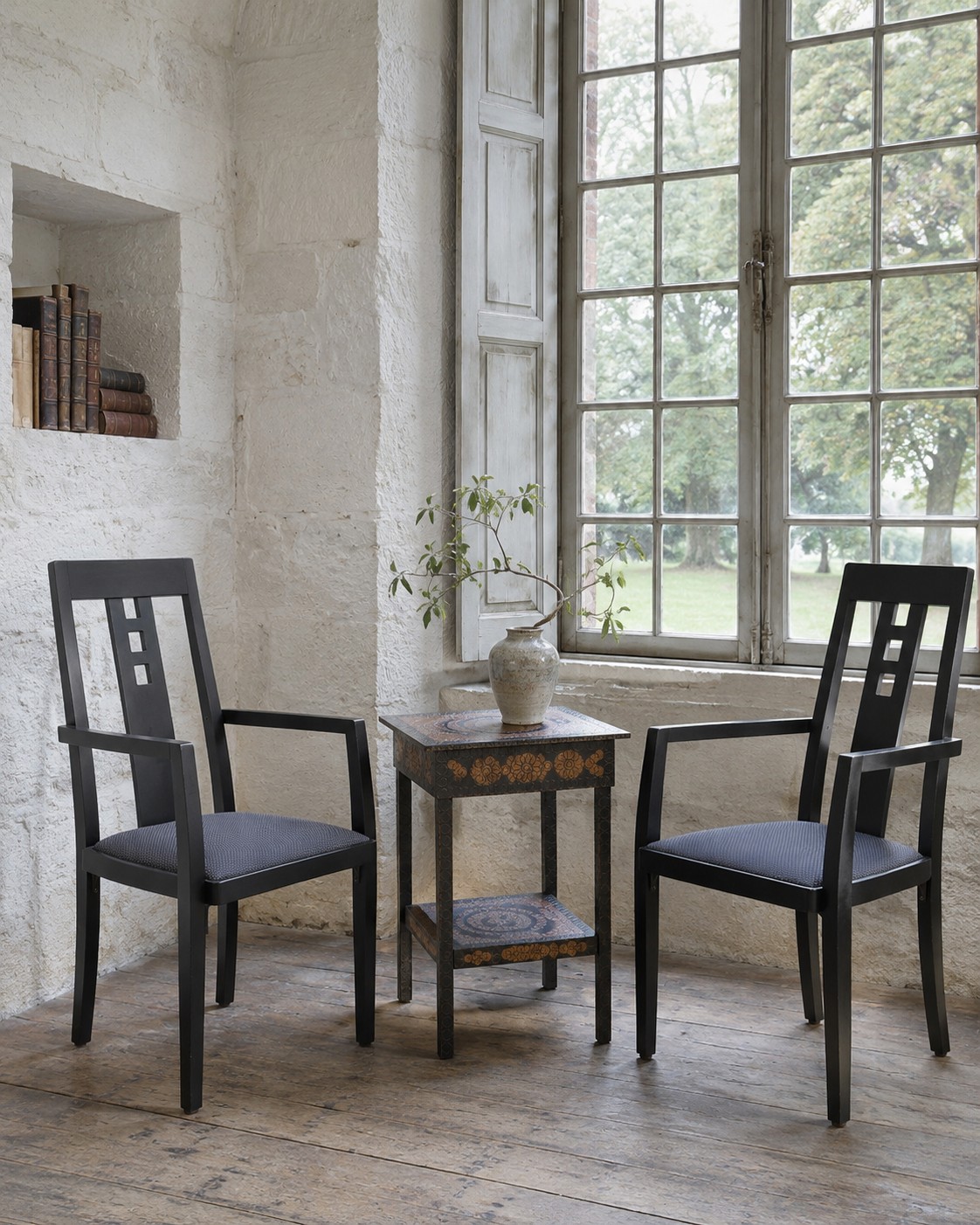
In this photo: Set of four Thonet 676 PF armchairs designed by Charles Rennie Mackintosh (€ 1.195) · Decorated antique side table with elephant (€ 245)
A room may surprise, but it shouldn’t shout. Your eye should be able to wander, but also have somewhere to land.
Why does a mix often work better than a single style?
An interior made up entirely of one style can quickly become flat. Everything may match, but it lacks tension. A completely mid-century interior can become too retro. Too much brocante can become twee. Too much industrial can become hard and cold. Too much wabi-sabi can become bare or beige.
It is the mix that prevents this.
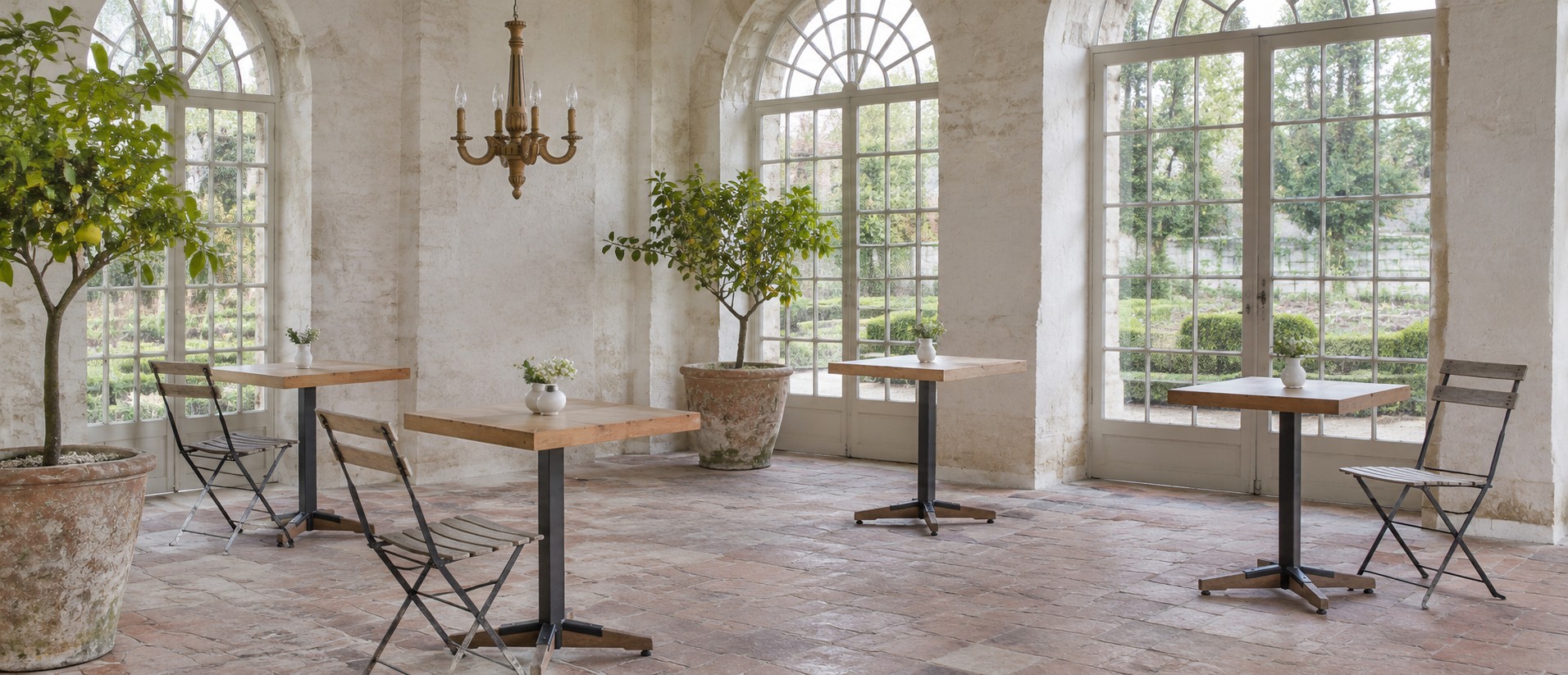
In this photo: 4 vintage oak café tables / bistro tables – wood & black metal (€ 75 each) · French Neoclassical carved wood chandelier – circa 1950 (€ 295)
Mid-century brings line. Brocante brings softness. Industrial brings sturdiness. Wabi-sabi brings calm. Art brings personality. Antiques bring history. A good interior uses these qualities together, without one style taking over.
That is why eclectic living suits houses with character so well. Old floors, lime-washed walls, wooden beams, rough stone, high ceilings or, on the contrary, small rooms: spaces like these often don’t ask for one perfect set of furniture. They ask for pieces that enter into a conversation with the space.
The base must be calm
The biggest mistake in eclectic living is thinking that anything goes. It doesn’t.
If you mix many styles, the base must be calm. Otherwise it becomes chaos. So choose a limited colour palette. Think natural tones, wood, black, off-white, stone, clay, brown, grey or soft earth tones. Not because colour isn’t allowed, but because the base has to hold the different pieces together.
Material also helps to bring calm. Let wood recur. Or black metal. Or ceramics. Or linen. Repetition makes separate finds become part of the same family.
An interior can be unexpected, but it shouldn’t feel as if everything has been put down at random.
In this photo: Large French mirror in architectural panel with gilt frame (€ 595) · Sculptural hexagonal pouffe in white leatherette (now only € 50)
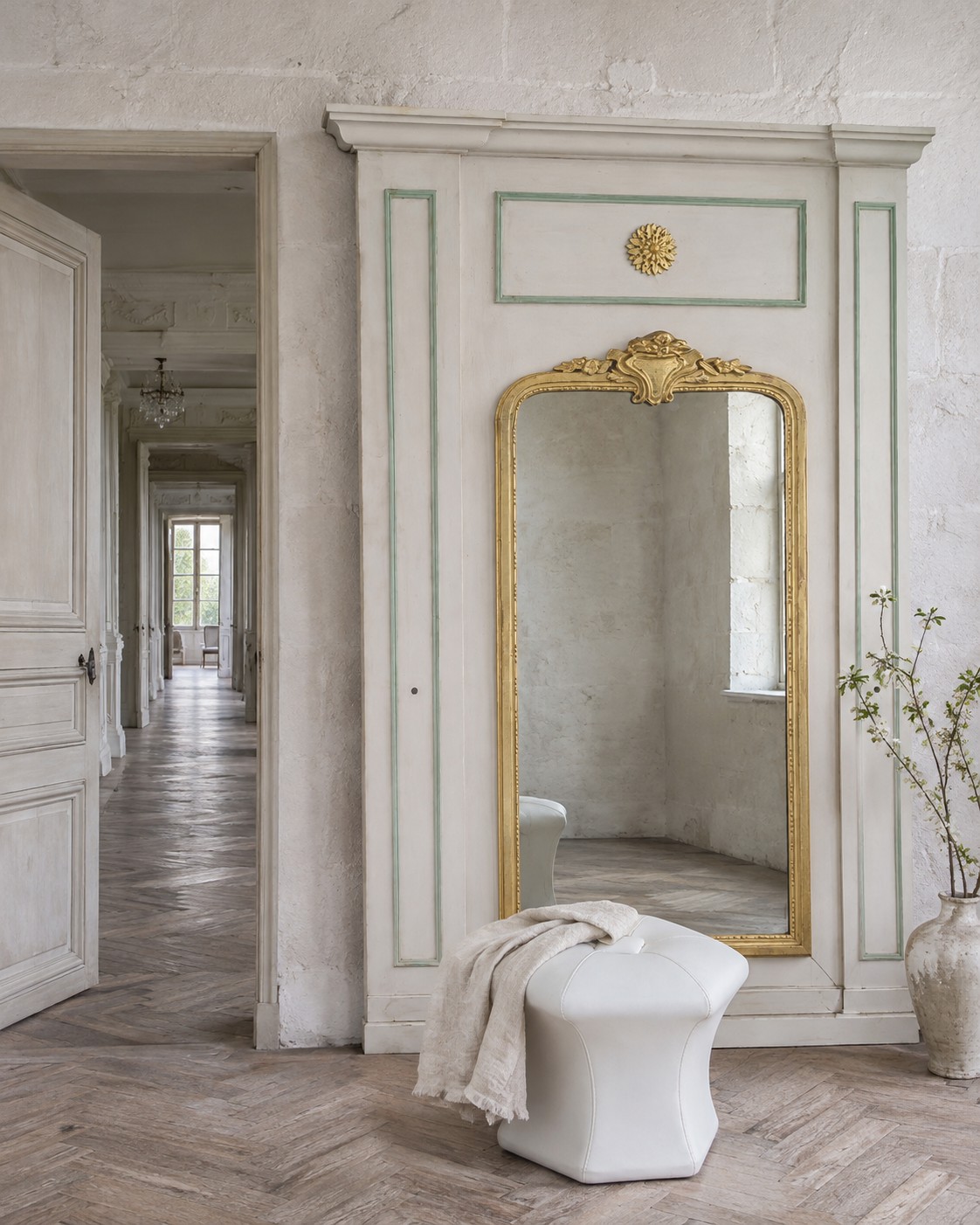
Contrast makes an interior exciting
Eclectic living is all about contrast. Without contrast an interior becomes tame. With too much contrast it becomes restless. The art lies in between.
Put a sleek chair with a rough table. A modern lamp next to an old cupboard. A sober wall behind an outspoken painting. An industrial workbench with soft linen curtains. A brocante mirror above a minimalist piece of furniture.
It is precisely because the pieces are different that they strengthen each other.
An old table looks older and richer next to a clean-lined design chair. A mid-century cabinet becomes warmer against a weathered wall. An industrial lamp becomes less harsh above wood or ceramics. A work of art gains more power when the rest of the room isn’t too busy.
That is the beauty of mixing well: one piece brings out the best in another.
Not everything has to be special
Some people only choose eye-catchers. A special table, special chairs, a special lamp, a striking rug, art on every wall, objects everywhere. Then there is no hierarchy any more. Everything demands attention and as a result you actually see nothing.
An eclectic interior needs ordinary pieces.
Calm furniture. Empty space. Simple materials. A wall that isn’t completely covered. A corner where nothing happens. That may sound dull, but it is exactly what gives the strong pieces room.
One good object can do more than ten small accessories. A cupboard with character. A chair with a beautiful line. A painting that changes the atmosphere. An old jug in the right place.
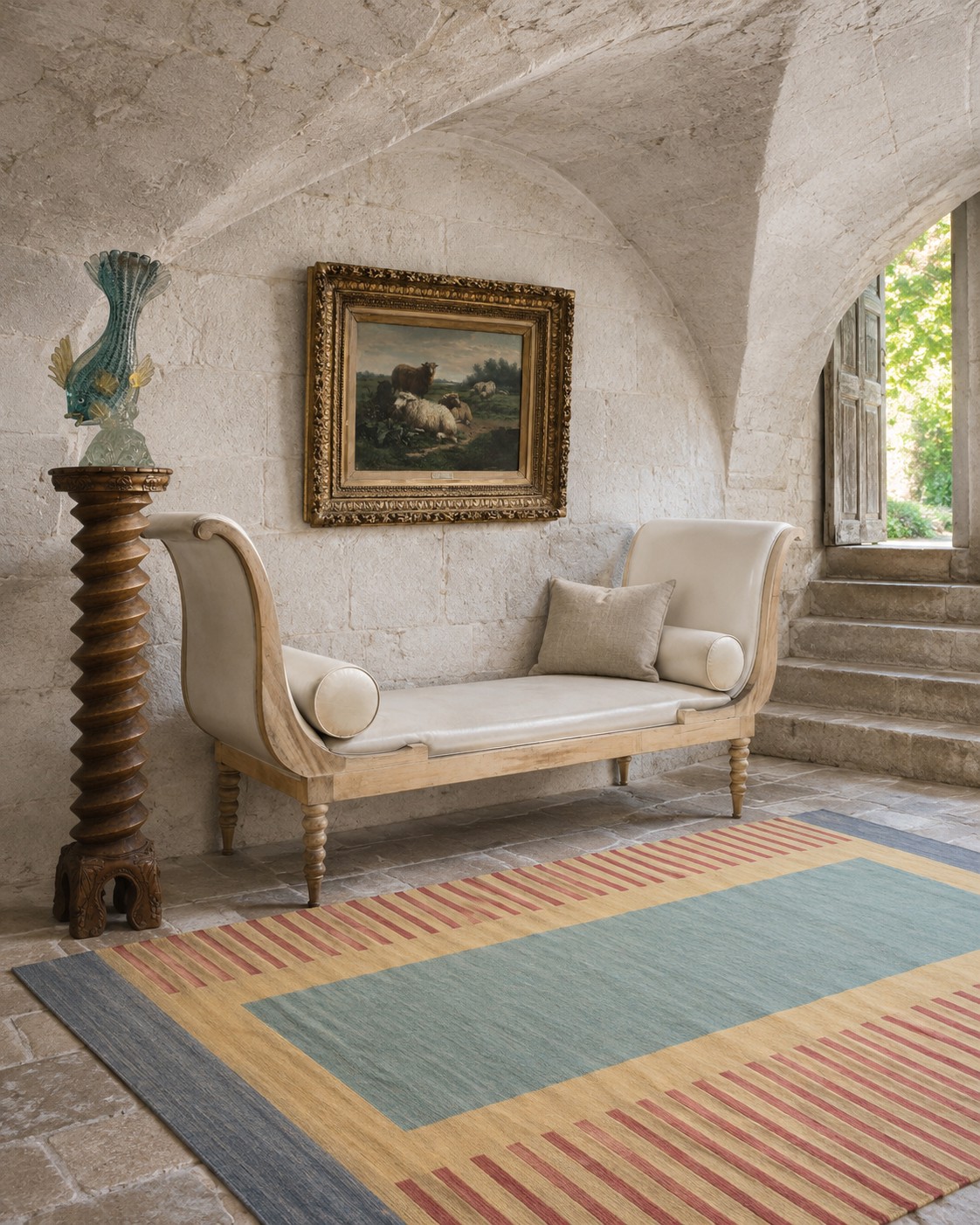
In this photo: Vintage chaise longue / daybed in bleached wood and white leather (€ 995) · Vintage hand-woven wool kilim / flatweave rug, 1970s–80s (€ 375) · Frans Lebret – Evening landscape with resting sheep – circa 1875 (€ 1.395) · Old French wooden plant column with carved grape motifs (€ 495) · Vintage glass fish sculpture (€ 75)
Let some things be quiet. Then the special pieces become stronger.
How do you prevent it from becoming messy?
Start with one anchor. That can be a table, a cupboard, a work of art, a rug or a lamp. Something that sets the tone. From that piece you can build further.
Then look at colour. Which tones are already in that anchor piece? Wood colour, black, stone, sand, green, rust, cream? Let one or two of those tones recur in the rest of the room.
Next, look at material. Do you have an old wooden table? Let wood recur somewhere else, but not exactly the same. Do you have black metal legs? Then a black lamp or a dark picture frame can help. Do you have a lot of rough materials? Add something soft: linen, wool, leather, fabric.
And perhaps most importantly: take things away as well. Eclectic living is not about lots of things. It is about well-chosen things.
Art makes it personal
Art is often the difference between a beautiful interior and an interior with soul. A painting, drawing, photograph, object or ceramic piece doesn’t have to match the sofa perfectly. Preferably not, in fact.
Art may chafe a little. It may add something you can’t immediately put into words. A dark painting in a light room. An abstract work above an old cupboard. A strange object on a sober table. That makes an interior less predictable.
In an eclectic interior, art is not an afterthought decoration. It is part of the story.
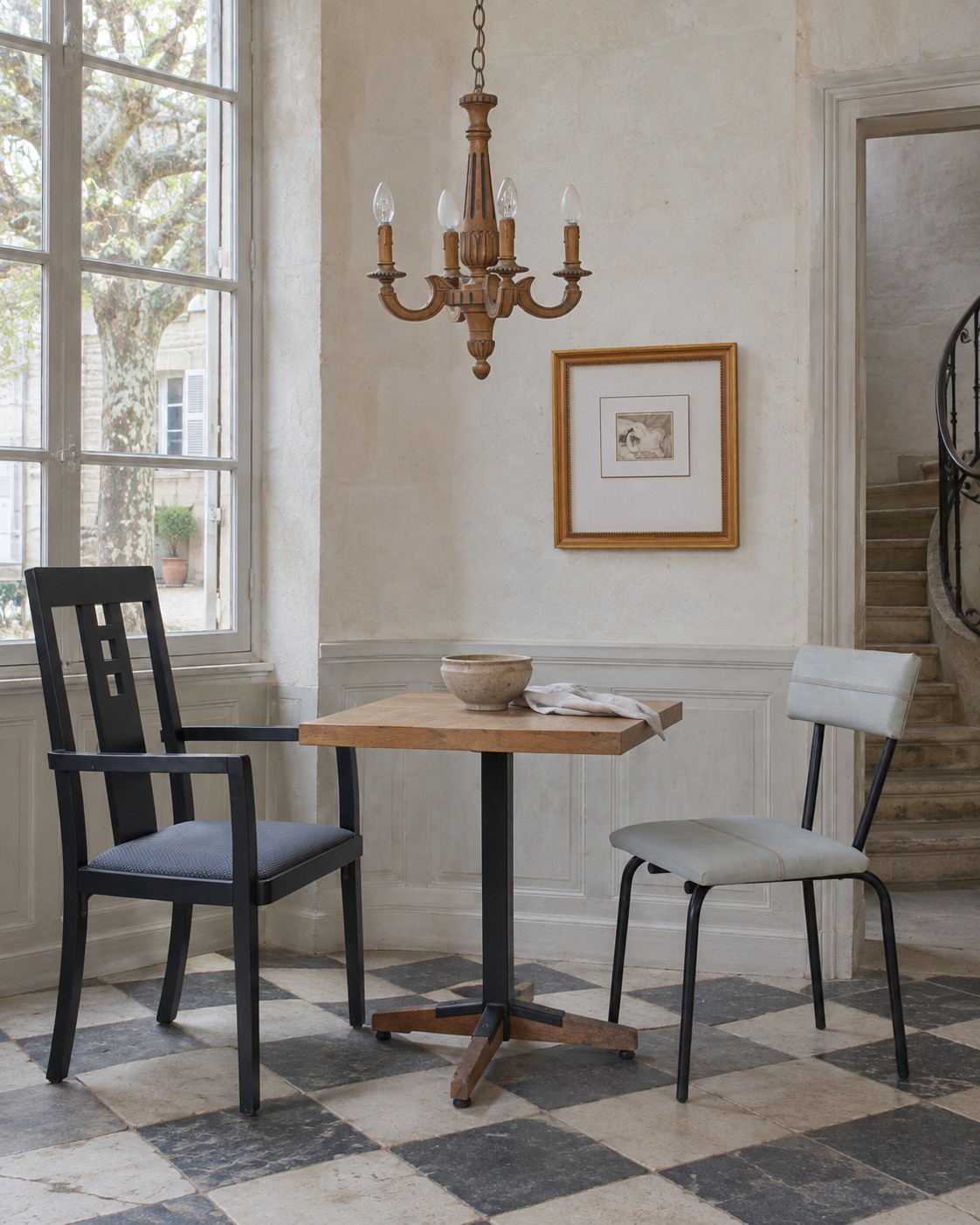
In this photo: 4 vintage oak café tables / bistro tables – wood & black metal (€ 75 each) · Set of four Thonet 676 PF armchairs designed by Charles Rennie Mackintosh (€ 1.195) · Custom-made vintage chair with denim upholstery (€ 35) · French Neoclassical carved wood chandelier – circa 1950 (€ 295) · Old engraving / print of a reclining woman – framed – 35 × 37 cm (€ 75)
What should you look for when buying eclectically?
Don’t buy something just because it’s “nice”. That is dangerous. Nice things pile up quickly and make an interior busy.
Look for strength instead. Does the piece have a good shape? Beautiful material? An interesting surface? Proportions that are right? Can you combine it with what you already have?
Think practically too. Does the size fit? Is it sturdy? Can you use it? Does it have enough space to work? A large piece of furniture with character needs breathing room. A small object, on the other hand, can become stronger in a calm spot.
And don’t buy everything at once. An eclectic interior may grow. In fact, it often gets better when it isn’t finished in one go.
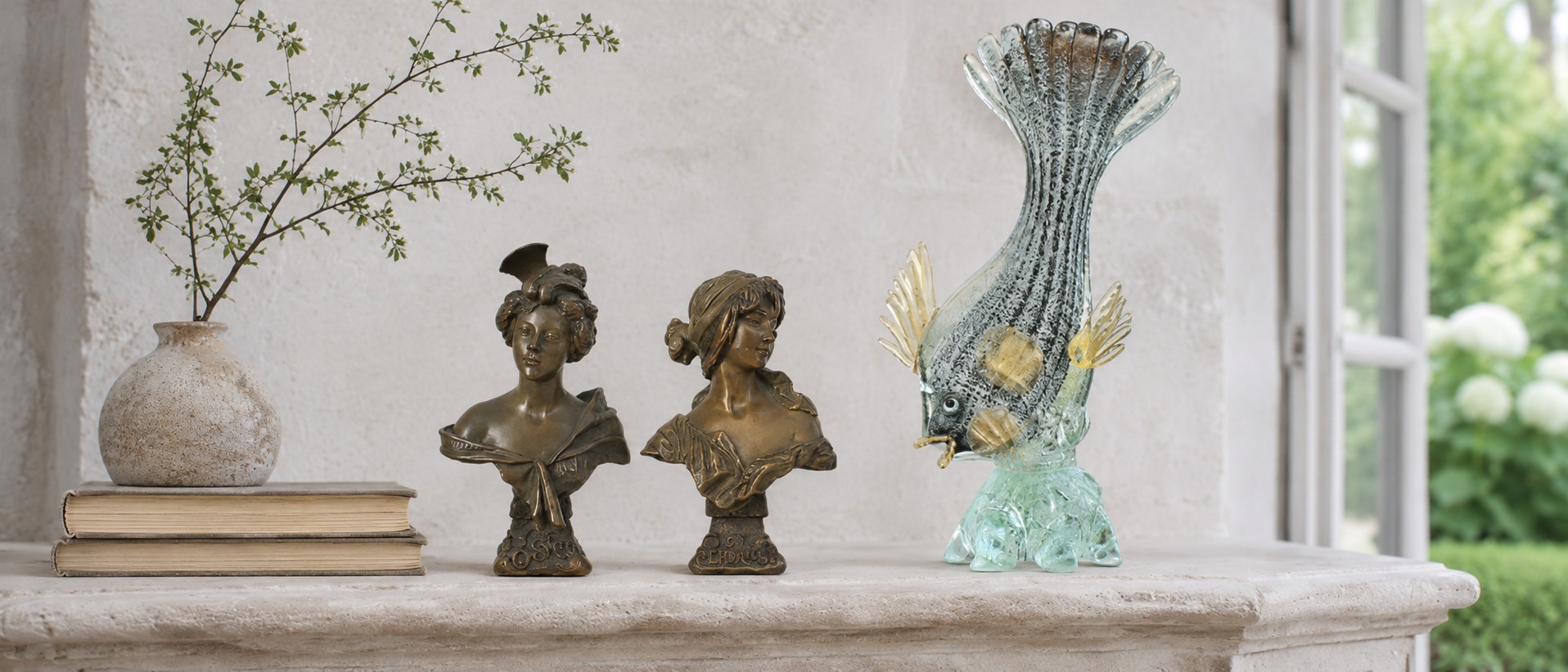
In this photo: French Art Nouveau bronze bust ‘Carmen’ by Emmanuel Villanis – circa 1900 (€ 895) · French Art Nouveau bronze bust ‘Cendrillon’ by Emmanuel Villanis – circa 1900 (€ 895) · Vintage glass fish sculpture (€ 75)
How would De Huiszwaluw apply eclectic living?
We would start with a calm, natural base. Lime-like walls, wood, stone, linen, soft tones. Then we would choose a few strong pieces from different worlds.
An old French table as the anchor. Mid-century chairs for line. An industrial lamp for sturdiness. A brocante cupboard or mirror for softness. A work of art to make the space personal. Perhaps a ceramic jug, a sober object or a bench with patina.
Not everything has to belong together. It has to strengthen each other.
That is the core of eclectic living: you are not looking for a perfect match, but for a good conversation between pieces. Old with new. Sleek with weathered. Rugged with soft. Quiet with outspoken.
An eclectic interior is not neatly thought out. It is collected, shifted, chosen and sometimes cleared out again.
And that is exactly why it feels real.
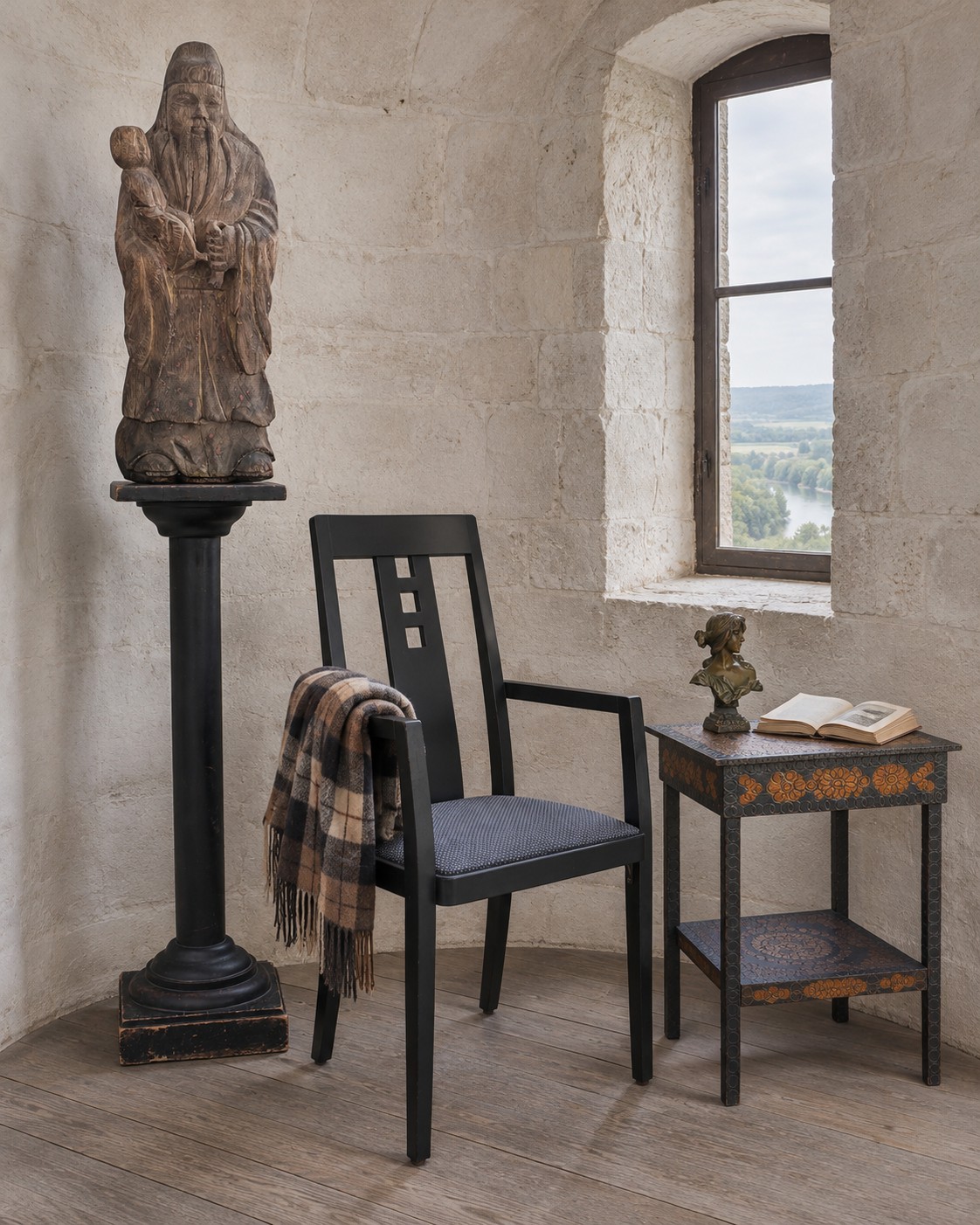
In this photo: French black-patinated pedestal with time-worn patina – circa 1880 (€ 345) · Large antique Chinese wooden sculpture with child – wabi-sabi (€ 345) · Set of four Thonet 676 PF armchairs designed by Charles Rennie Mackintosh (€ 1.195) · Decorated antique side table with elephant (€ 245) · French Art Nouveau bronze bust ‘Cendrillon’ by Emmanuel Villanis – circa 1900 (€ 895)
Now in our collection: eclectic
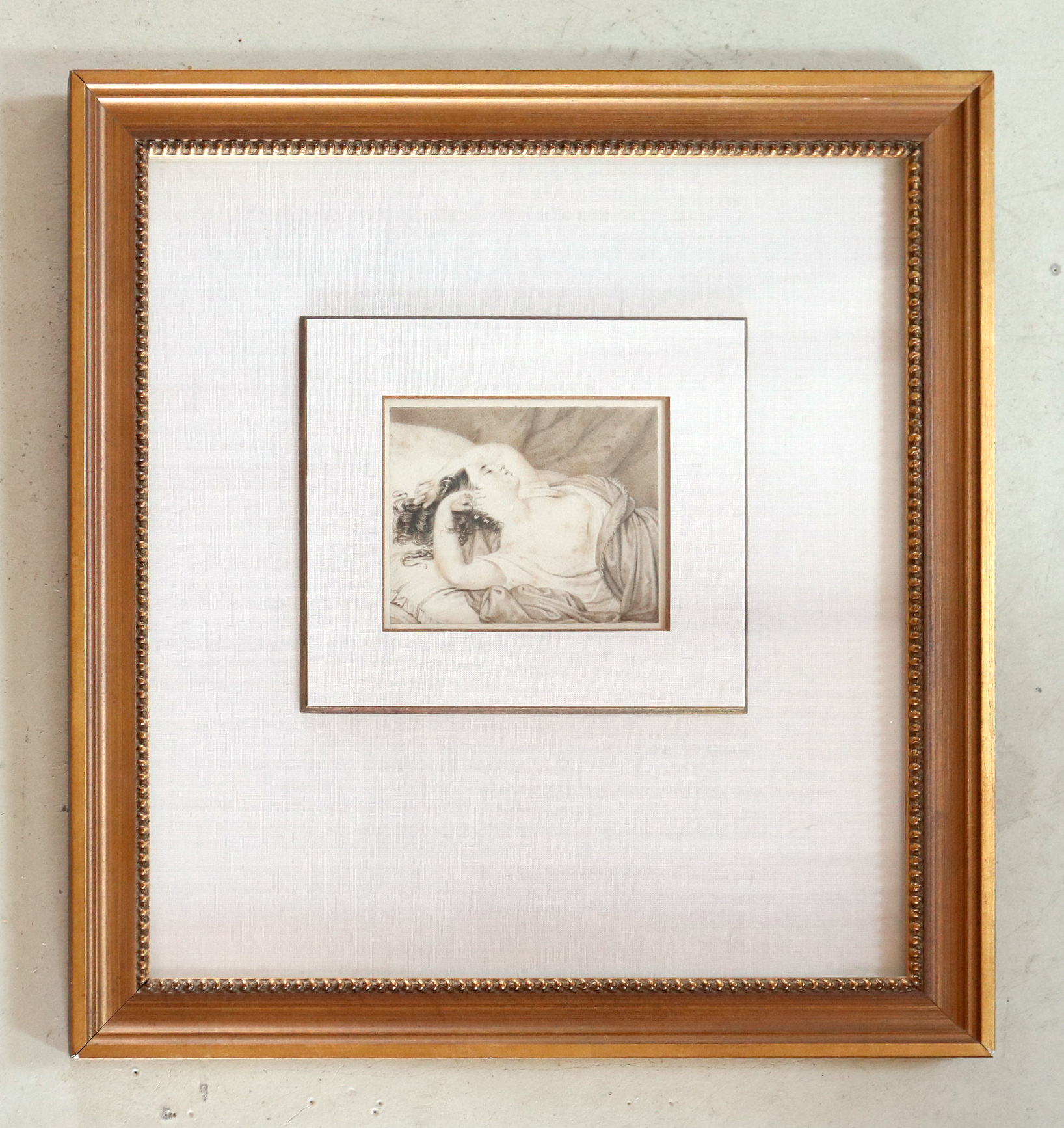 Old engraving / print of a reclining woman – framed – 35 × 37 cm€ 75
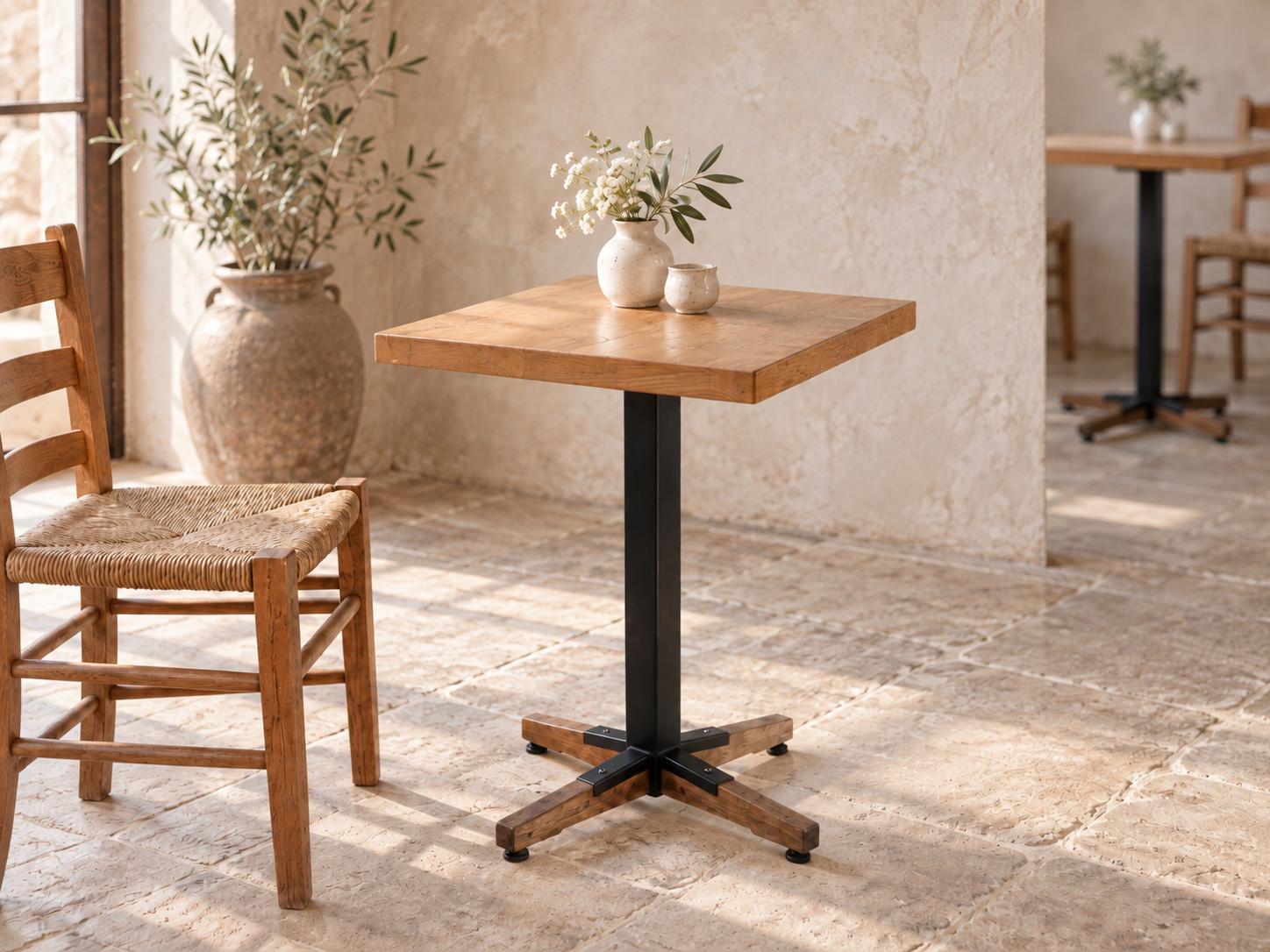 4 vintage oak café tables / bistro tables – wood & black metal€ 75 each
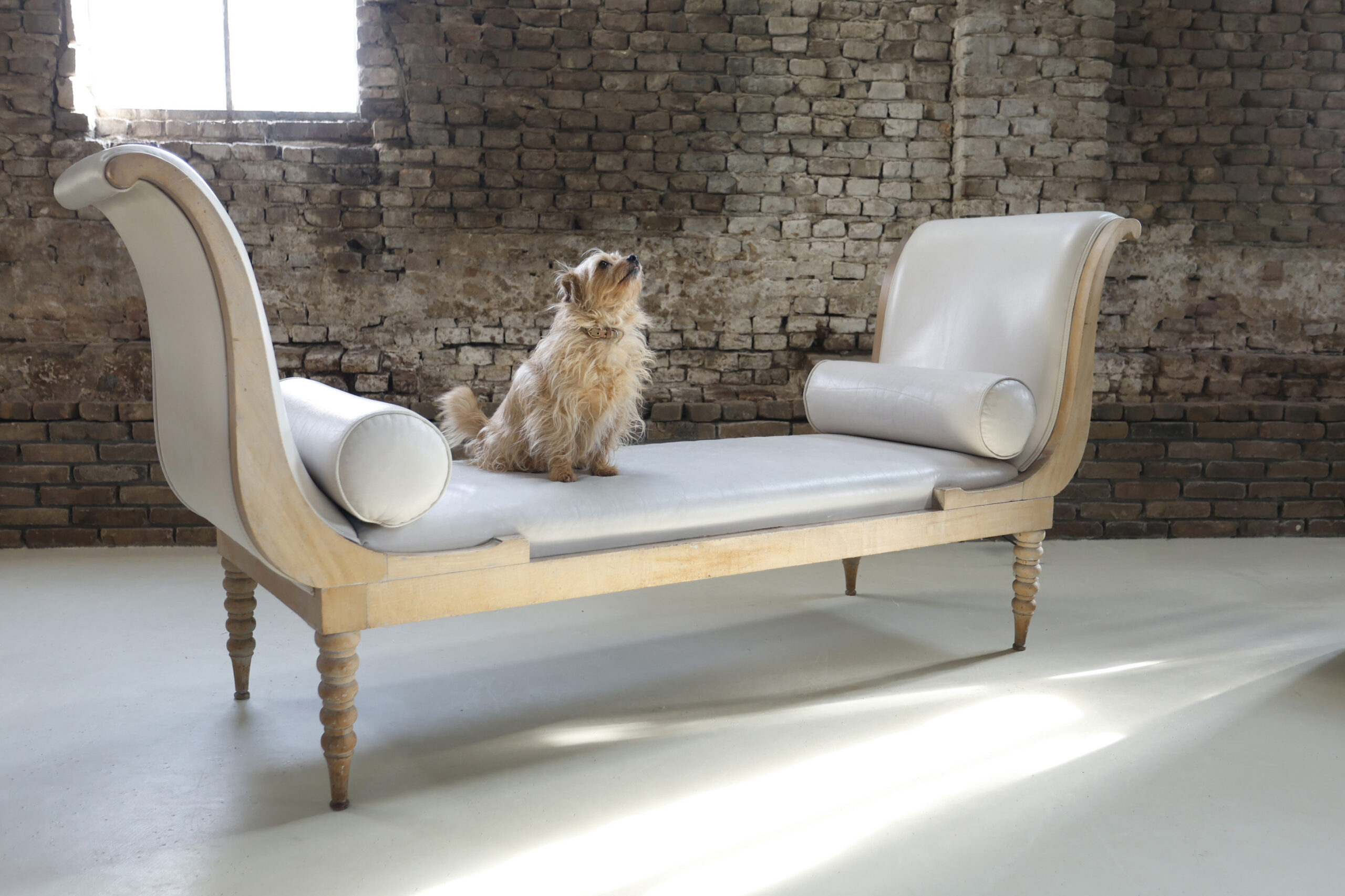 Vintage chaise longue / daybed in bleached wood and white leather€ 995
 Old French wooden plant column with carved grape motifs€ 495
 Decorated antique side table with elephant€ 245
 Vintage glass fish sculpture€ 75
 Custom-made vintage chair with denim upholstery€ 35
 Sculptural hexagonal pouffe in white leatherettenow only € 50
 Vintage hand-woven geometric rug, 1970s–80s€ 375
 Vintage hand-woven wool kilim / flatweave rug, 1970s–80s€ 375
 Large French mirror in architectural panel with gilt frame€ 595
 Paolo Gucci for Formitalia – rare Italian two-seater sofa in black leather and burr wood, c. 1991€ 1.795
 Set of four Thonet 676 PF armchairs designed by Charles Rennie Mackintosh€ 1.195
 French Neoclassical carved wood chandelier – circa 1950€ 295
 Large antique Chinese wooden sculpture with child – wabi-sabi€ 345
 Long metal bench with tubular seat€ 85
 Frans Lebret – Evening landscape with resting sheep – circa 1875€ 1.395
 Pair of Dutch Neoclassical flower still lifes, signed F.M. de Spaen née de Bylandt – 1809€ 1.195
 French black-patinated pedestal with time-worn patina – circa 1880€ 345
 French Art Nouveau bronze bust ‘Carmen’ by Emmanuel Villanis – circa 1900€ 895
 French Art Nouveau bronze bust ‘Cendrillon’ by Emmanuel Villanis – circa 1900€ 895
Previously in our collection
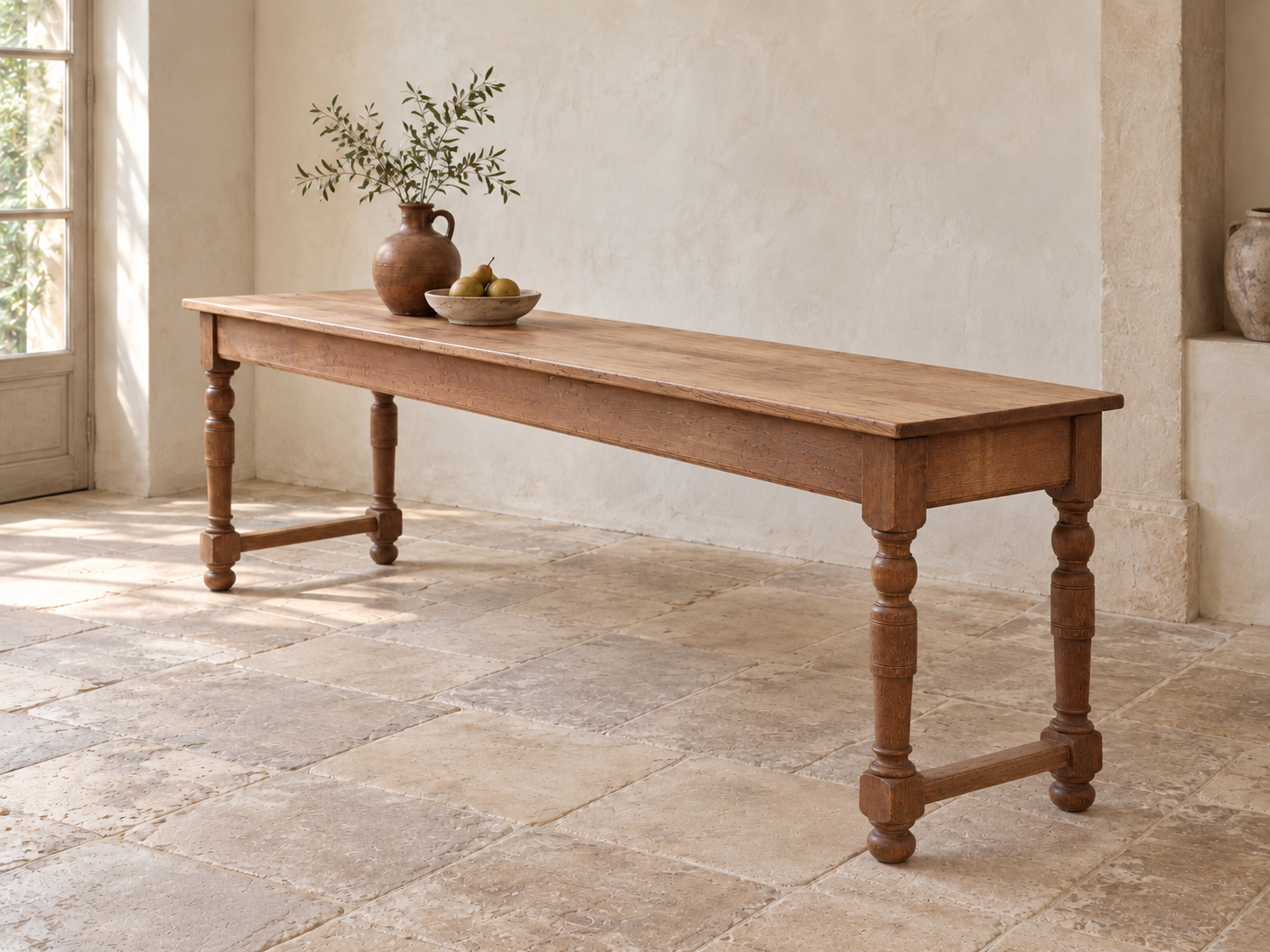 Long old oak table with turned legs – 239 cmsold
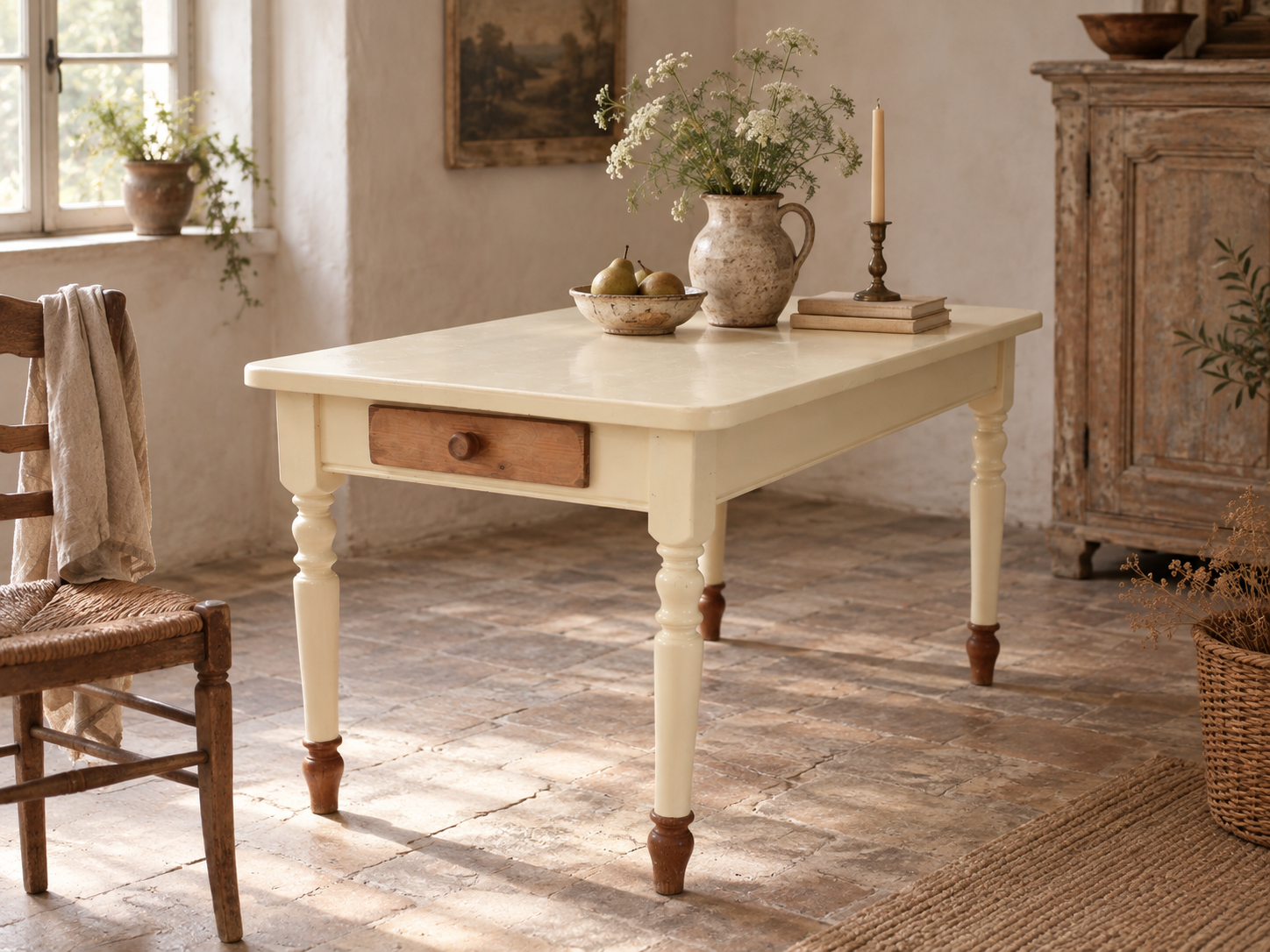 Country-style brocante table in cream with drawer and loose extension leafsold
 Antique French table with marble top and drawersold
 Eclectic Empire-style table lamp, 1950ssold
Read on about other styles
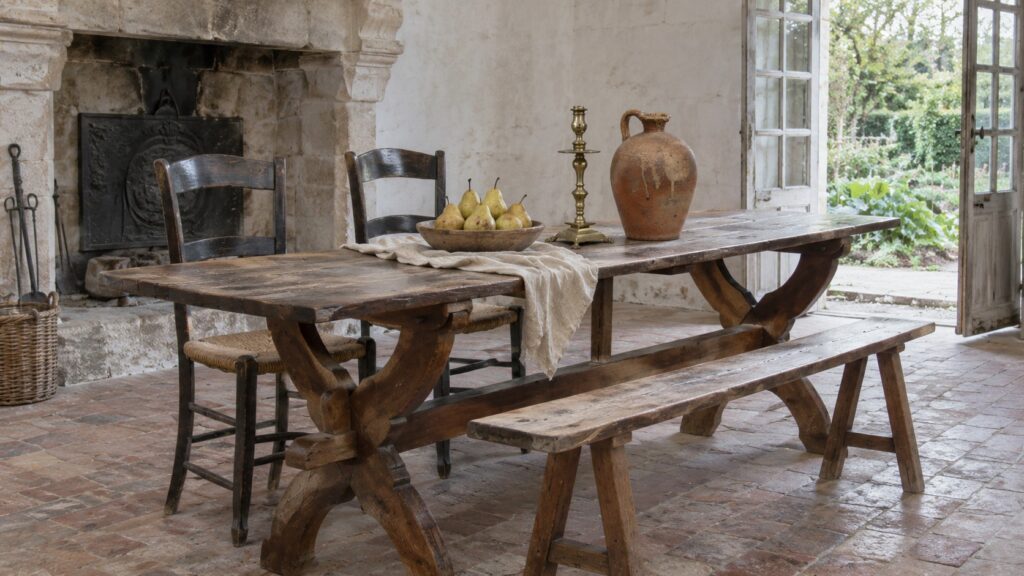 French countryFrench country living: wood, stone and the calm of country life
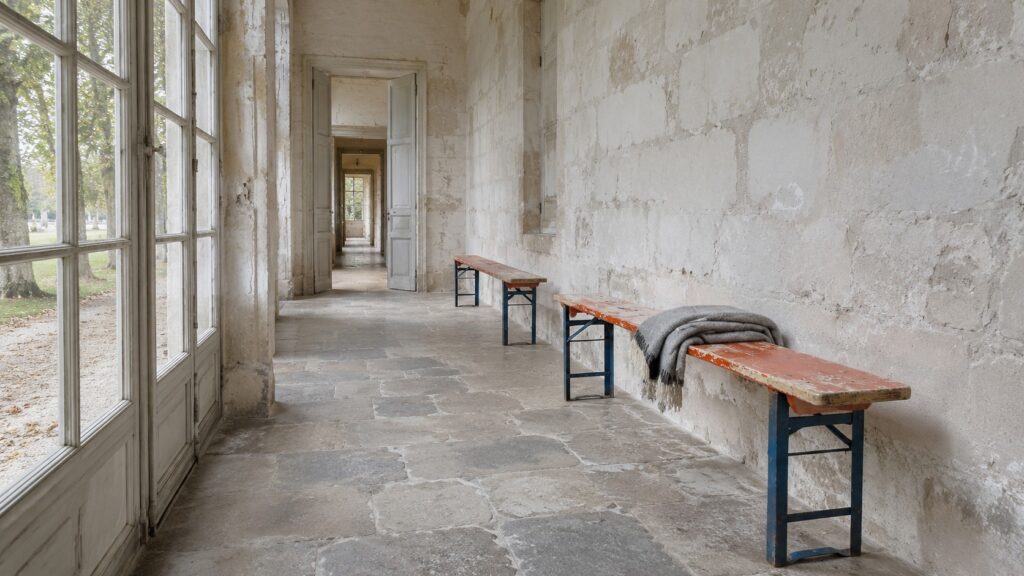 IndustrialIndustrial living: honest materials, clever shapes and a rough edge
 Art decoArt deco: clean lines, warm materials and a touch of daring
 Mid-centuryMid-century design: timeless, warm and still modern
 Wabi-sabiWhat is wabi-sabi living, and why does imperfection make an interior more beautiful?