Eclectisch wonen: de kunst van stijlen mengen zonder chaos
Eclectisch wonen: de kunst van stijlen mengen zonder chaos
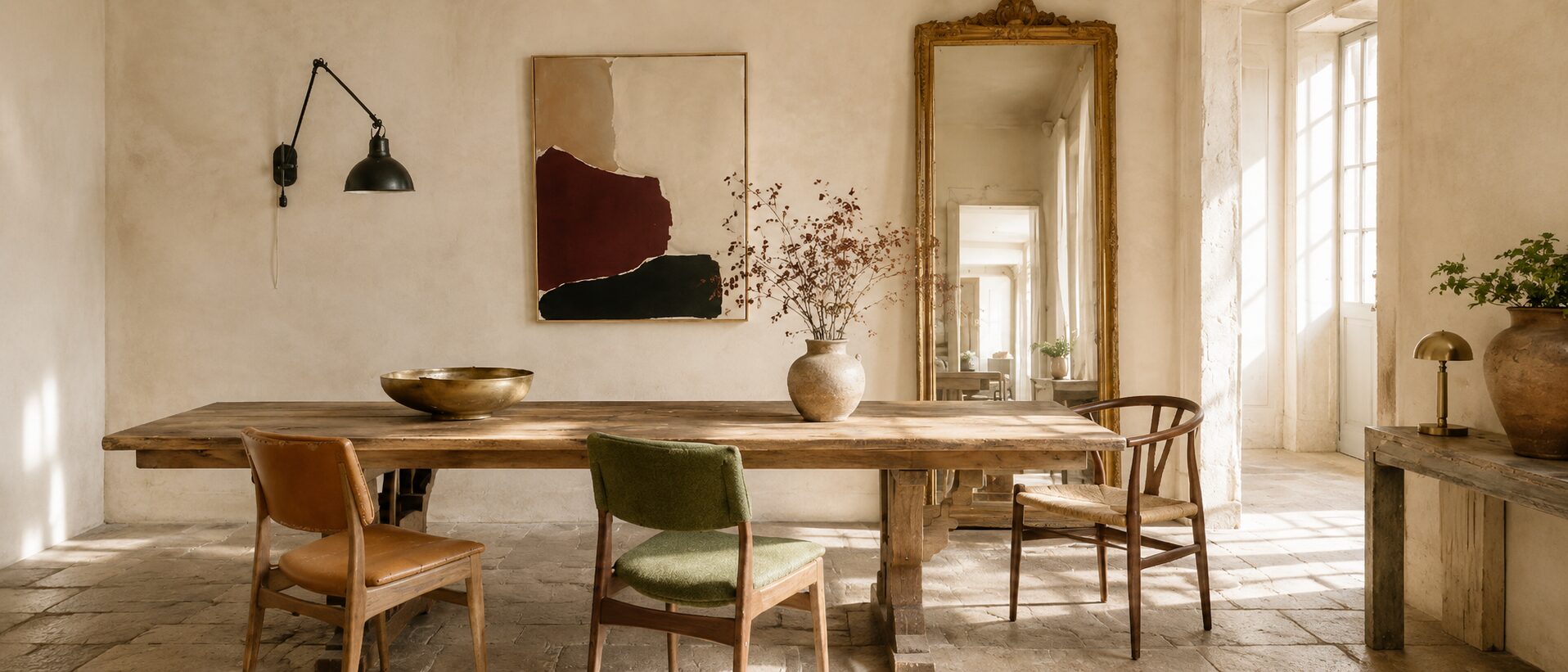
De mooiste interieurs zijn zelden netjes uit één stijlboekje gekopieerd. Ze bestaan uit vondsten, herinneringen, contrasten en keuzes die niet altijd logisch lijken, maar samen toch kloppen. Een oude Franse tafel met mid-century stoelen. Een industriële lamp boven een brocante werkblad. Een schilderij naast een sobere kast. Een verweerde spiegel in een moderne ruimte.
Dat is eclectisch wonen.
Niet zomaar alles door elkaar zetten, maar stijlen, periodes en materialen zo combineren dat een ruimte persoonlijk wordt. Een goed eclectisch interieur voelt niet bedacht als een set. Het voelt verzameld. Alsof de bewoners door de jaren heen stukken hebben gevonden die iets met hen doen.
En juist daardoor wordt het interessant.
Wat betekent eclectisch wonen?

Eclectisch wonen betekent dat je elementen uit verschillende stijlen en tijden met elkaar mengt. Antiek naast modern. Industrieel naast brocante. Mid-century naast wabi-sabi. Kunst naast gebruiksmeubels. Strak naast verweerd.
Maar eclectisch is niet hetzelfde als rommelig.
Een goed eclectisch interieur heeft wel degelijk rust, richting en samenhang. Alleen komt die samenhang niet doordat alles dezelfde kleur, stijl of periode heeft. Hij ontstaat door gevoel voor verhouding, materiaal, kleur en herhaling.
Een ruimte mag verrassen, maar moet niet schreeuwen. Je oog moet kunnen dwalen, maar ook ergens kunnen landen.
Waarom werkt een mix vaak beter dan één stijl?
Een interieur dat volledig uit één stijl bestaat, kan snel vlak worden. Alles klopt misschien, maar het mist spanning. Een compleet mid-century interieur kan te retro worden. Te veel brocante kan tuttig worden. Te veel industrieel kan hard en koud worden. Te veel wabi-sabi kan kaal of beige worden.
Juist de mix voorkomt dat.

Mid-century brengt lijn. Brocante brengt zachtheid. Industrieel brengt stevigheid. Wabi-sabi brengt rust. Kunst brengt persoonlijkheid. Antiek brengt geschiedenis. Een goed interieur gebruikt die kwaliteiten door elkaar, zonder dat één stijl alles overneemt.
Dat is waarom eclectisch wonen zo goed past bij huizen met karakter. Oude vloeren, kalkmuren, houten balken, ruwe stenen, hoge plafonds of juist kleine kamers: zulke ruimtes vragen vaak niet om één perfecte set meubels. Ze vragen om stukken die met de ruimte in gesprek gaan.
De basis moet rustig zijn
De grootste fout bij eclectisch wonen is denken dat alles kan. Dat is niet zo.
Als je veel stijlen mengt, moet de basis juist rustig zijn. Anders wordt het chaos. Kies daarom voor een beperkt kleurenpalet. Denk aan naturel, hout, zwart, gebroken wit, steen, leem, bruin, grijs of zachte aardetinten. Niet omdat kleur niet mag, maar omdat de basis de verschillende stukken bij elkaar moet houden.
Ook materiaal helpt om rust te brengen. Laat hout terugkomen. Of zwart metaal. Of keramiek. Of linnen. Herhaling zorgt ervoor dat losse vondsten toch familie van elkaar worden.
Een interieur mag best onverwacht zijn, maar het moet niet voelen alsof alles toevallig is neergezet.

Contrast maakt een interieur spannend
Eclectisch wonen draait om contrast. Zonder contrast wordt een interieur braaf. Met te veel contrast wordt het onrustig. De kunst zit daartussen.
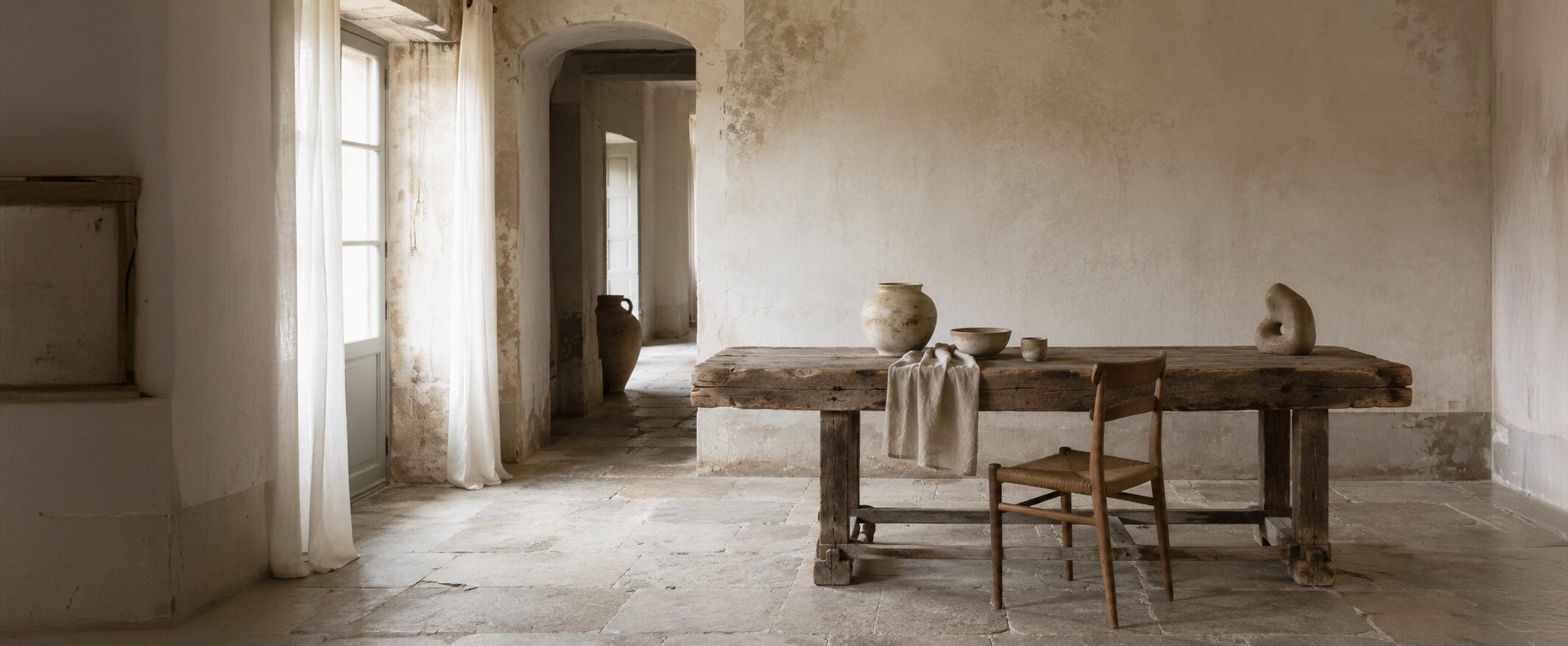
Zet een strakke stoel bij een ruwe tafel. Een moderne lamp naast een oude kast. Een sobere muur achter een uitgesproken schilderij. Een industriële werkbank met zachte linnen gordijnen. Een brocante spiegel boven een minimalistisch meubel.
Juist doordat de stukken verschillend zijn, versterken ze elkaar.
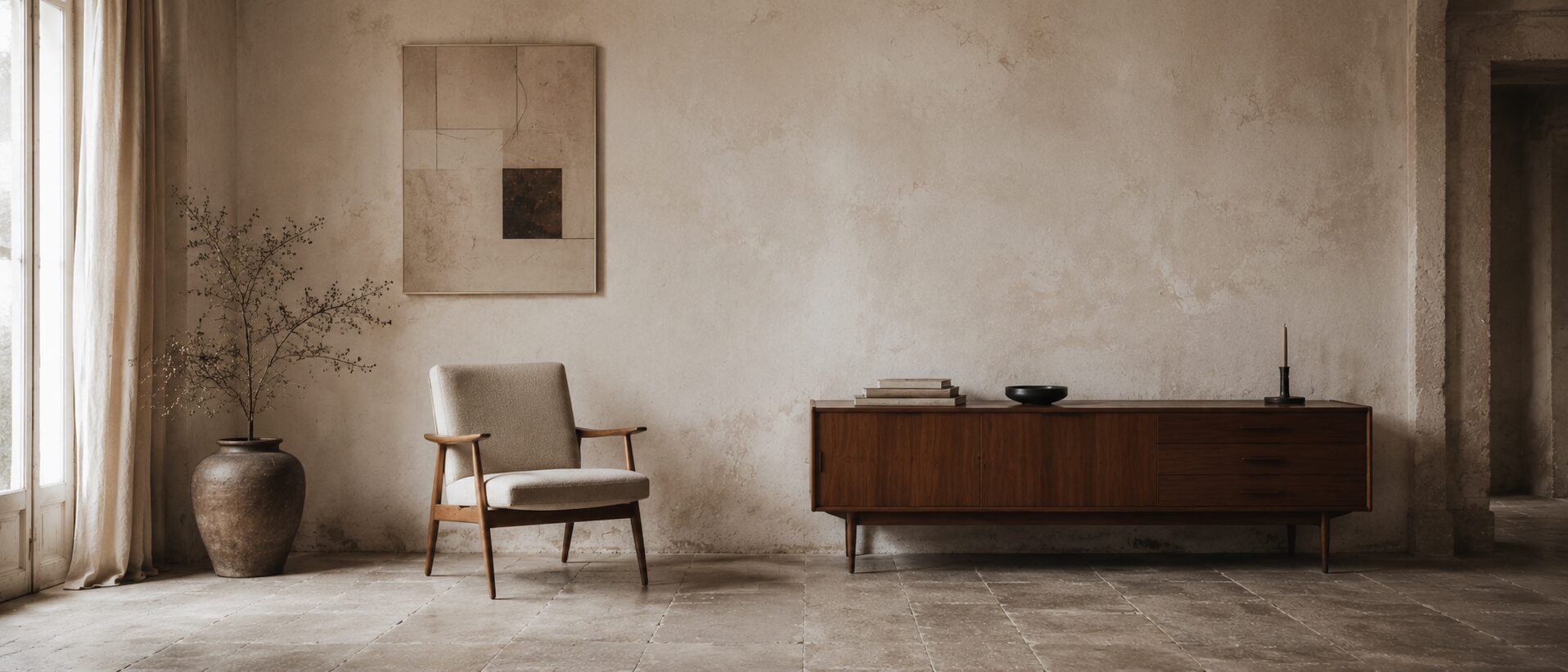
Een oude tafel lijkt ouder en rijker naast een heldere designstoel. Een mid-century kast wordt warmer tegen een verweerde muur. Een industriële lamp wordt minder hard boven hout of keramiek. Een kunstwerk krijgt meer kracht als de rest van de ruimte niet te druk is.
Dat is het mooie van goed mengen: het ene stuk laat het andere beter uitkomen.
Niet alles hoeft bijzonder te zijn

Er zijn mensen die alleen maar blikvangers kiezen. Een bijzondere tafel, bijzondere stoelen, bijzondere lamp, opvallend kleed, kunst aan elke muur, overal objecten. Dan is er geen hiërarchie meer. Alles vraagt aandacht en daardoor zie je eigenlijk niets meer.
Een eclectisch interieur heeft gewone stukken nodig.
Rustige meubels. Lege ruimte. Eenvoudige materialen. Een muur die niet vol hangt. Een hoek waar niets gebeurt. Dat klinkt misschien saai, maar juist daardoor krijgen de sterke stukken ruimte.
Eén goed object kan meer doen dan tien kleine accessoires. Een kast met karakter. Een stoel met een mooie lijn. Een schilderij dat de sfeer verandert. Een oude kruik op de juiste plek.
Laat sommige dingen stil zijn. Dan worden de bijzondere stukken sterker.
Hoe voorkom je dat het rommelig wordt?
Begin met één anker. Dat kan een tafel zijn, een kast, een kunstwerk, een vloerkleed of een lamp. Iets dat de toon zet. Vanuit dat stuk kun je verder bouwen.
Kijk daarna naar kleur. Welke tinten zitten al in dat ankerstuk? Houtkleur, zwart, steen, zand, groen, roest, crème? Laat één of twee van die tinten terugkomen in de rest van de ruimte.
Kijk vervolgens naar materiaal. Heb je een oude houten tafel? Laat hout nog ergens terugkomen, maar niet exact hetzelfde. Heb je zwarte metalen poten? Dan kan een zwarte lamp of een donker schilderijlijstje helpen. Heb je veel ruwe materialen? Voeg iets zachts toe: linnen, wol, leer, stof.
En misschien het belangrijkste: haal ook dingen weg. Eclectisch wonen gaat niet over veel spullen. Het gaat over goed gekozen spullen.
Kunst maakt het persoonlijk

Kunst is vaak het verschil tussen een mooi interieur en een interieur met ziel. Een schilderij, tekening, foto, object of keramisch stuk hoeft niet perfect bij de bank te passen. Liever niet zelfs.
Kunst mag een beetje wringen. Het mag iets toevoegen dat je niet meteen kunt benoemen. Een donker schilderij in een lichte ruimte. Een abstract werk boven een oude kast. Een vreemd object op een sobere tafel. Dat maakt een interieur minder voorspelbaar.
In een eclectisch interieur is kunst geen decoratie achteraf. Het is onderdeel van het verhaal.
Waar let je op als je eclectisch koopt?
Koop niet alleen omdat iets “leuk” is. Dat is gevaarlijk. Leuke dingen stapelen zich snel op en maken een interieur druk.
Let liever op kracht. Heeft het stuk een goede vorm? Mooi materiaal? Een interessante huid? Een verhouding die klopt? Kun je het combineren met wat je al hebt?
Denk ook praktisch. Past de maat? Is het stevig? Kun je het gebruiken? Heeft het genoeg ruimte om te werken? Een groot meubel met karakter heeft lucht nodig. Een klein object kan juist sterker worden op een rustige plek.
En koop niet alles tegelijk. Een eclectisch interieur mag groeien. Sterker nog: het wordt vaak beter als het niet in één keer af is.

Hoe zou De Huiszwaluw eclectisch wonen toepassen?
Wij zouden beginnen met een rustige, natuurlijke basis. Kalkachtige muren, hout, steen, linnen, zachte tinten. Daarna kiezen we een paar sterke stukken uit verschillende werelden.
Een oude Franse tafel als anker. Mid-century stoelen voor lijn. Een industriële lamp voor stevigheid. Een brocante kast of spiegel voor zachtheid. Een kunstwerk om de ruimte persoonlijk te maken. Misschien een keramische kruik, een sober object of een bankje met patina.

Niet alles hoeft bij elkaar te horen. Het moet elkaar versterken.
Dat is de kern van eclectisch wonen: je zoekt geen perfecte match, maar een goed gesprek tussen stukken. Oud met nieuw. Strak met verweerd. Stoer met zacht. Stil met uitgesproken.
Een eclectisch interieur is niet netjes bedacht. Het is verzameld, verschoven, gekozen en soms ook weer leeggehaald.
En precies daardoor voelt het echt.