What is wabi-sabi living, and why does imperfection make an interior more beautiful?
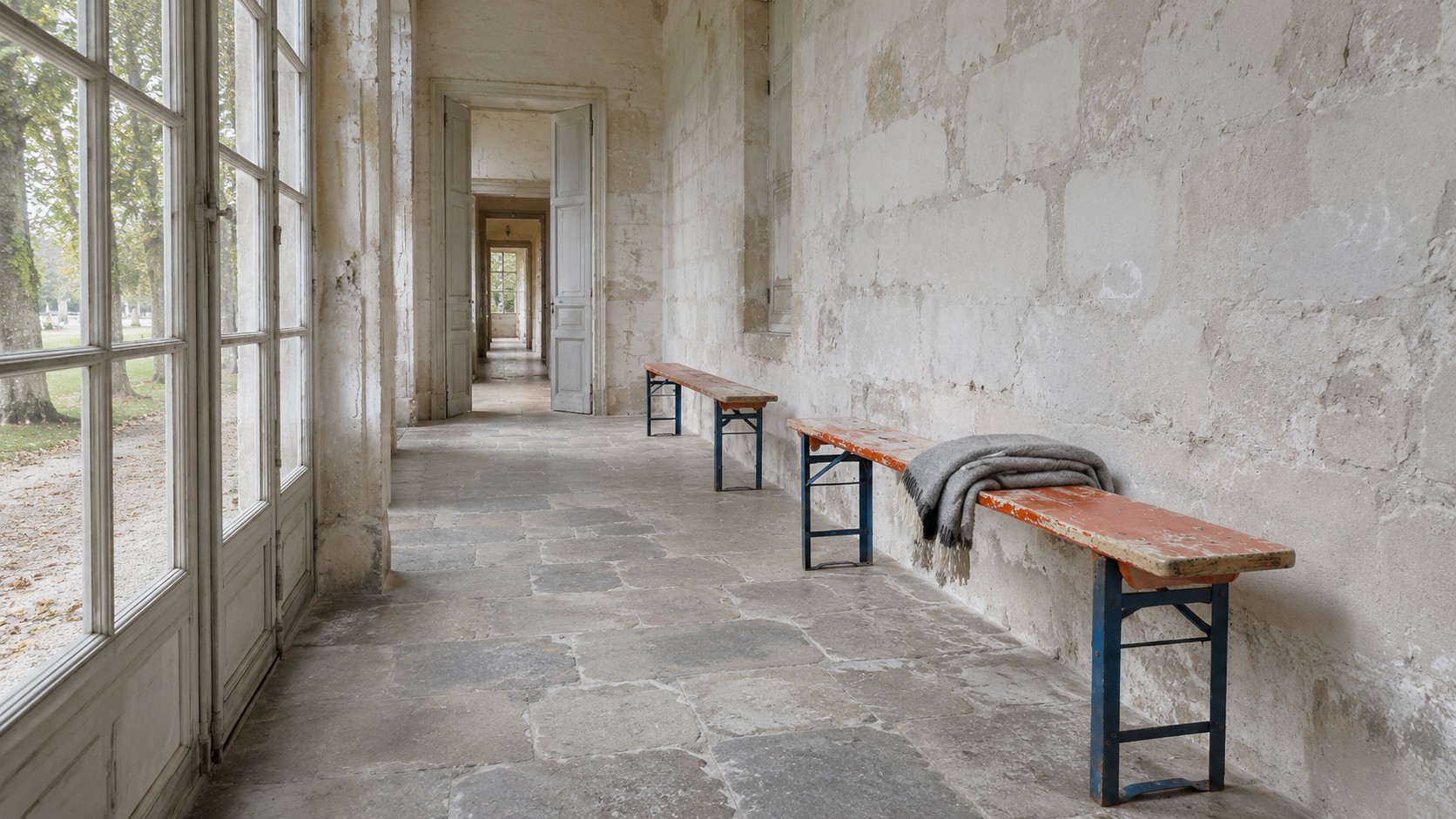
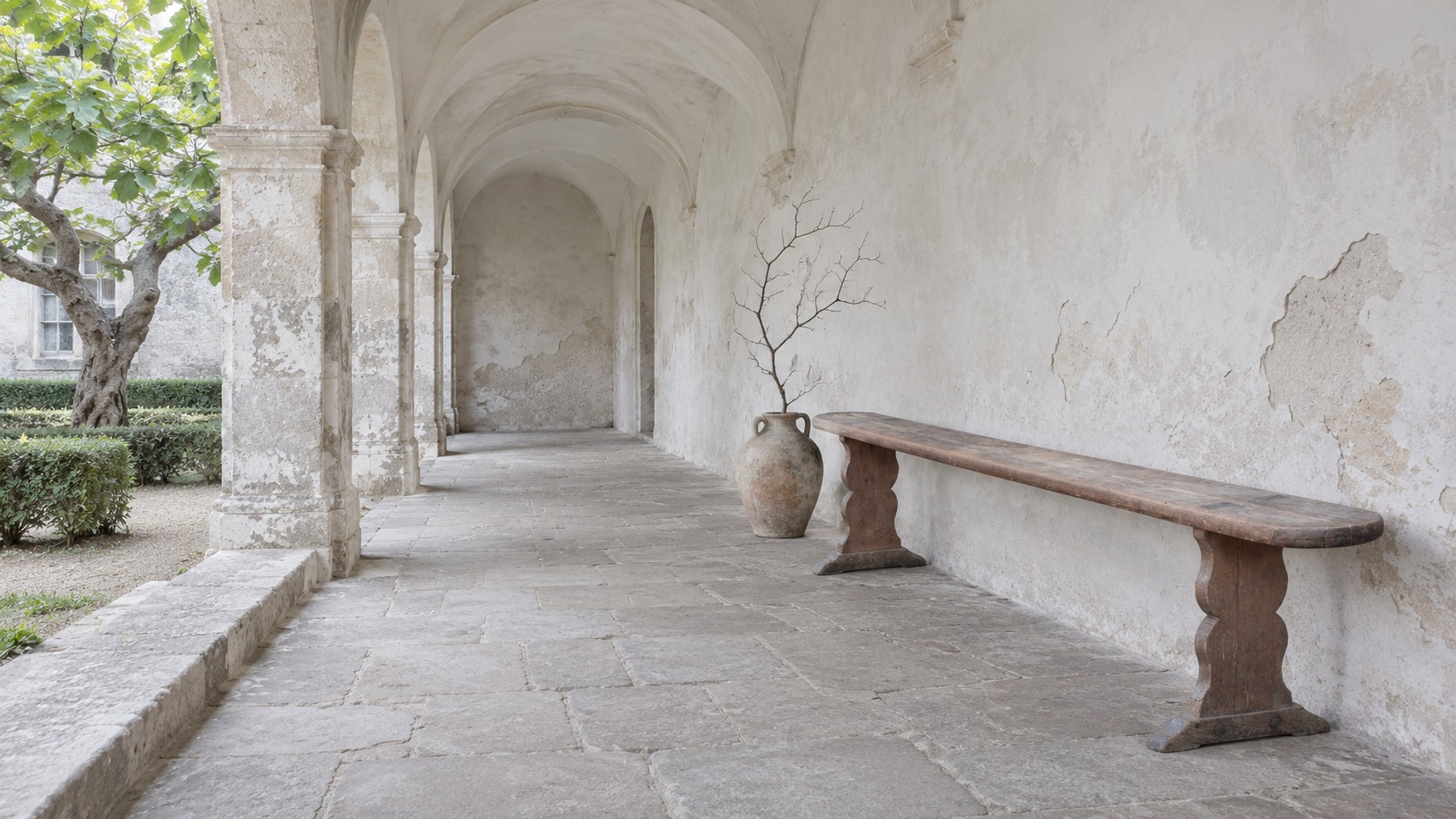
In this photo: Long French wabi-sabi bench in weathered pine – circa 1900 (€ 595)
WABI SABI
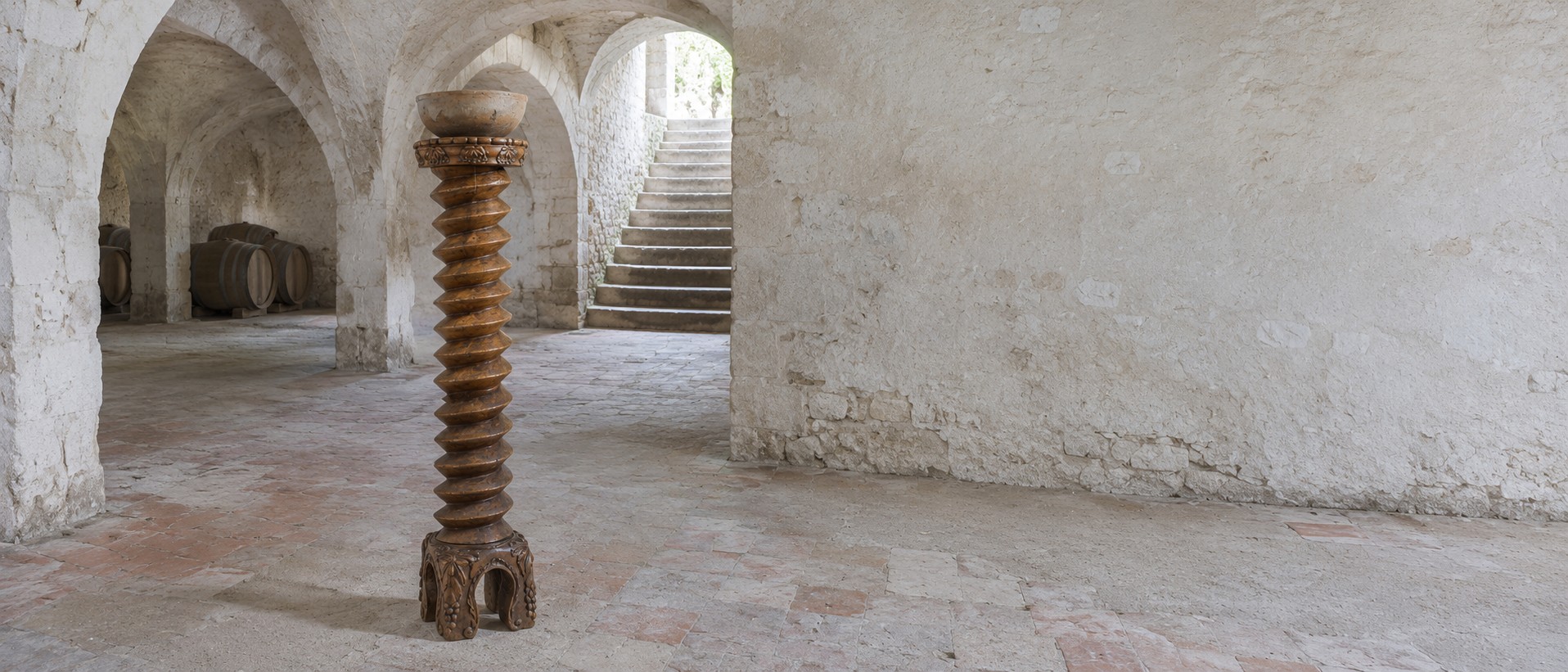
In this photo: Old French wooden plant column with carved grape motifs (€ 495)
What is wabi-sabi living, and why does imperfection make an interior more beautiful?
There are interiors that impress immediately because everything matches. The sofa goes with the rug, the lamp with the table, the colours are coordinated, the accessories are in exactly the right place. And yet such an interior can sometimes lack something. It is beautiful, but not exciting. Well kept, but not personal. As if no one ever really lives there. Wabi-sabi living is about exactly the opposite.
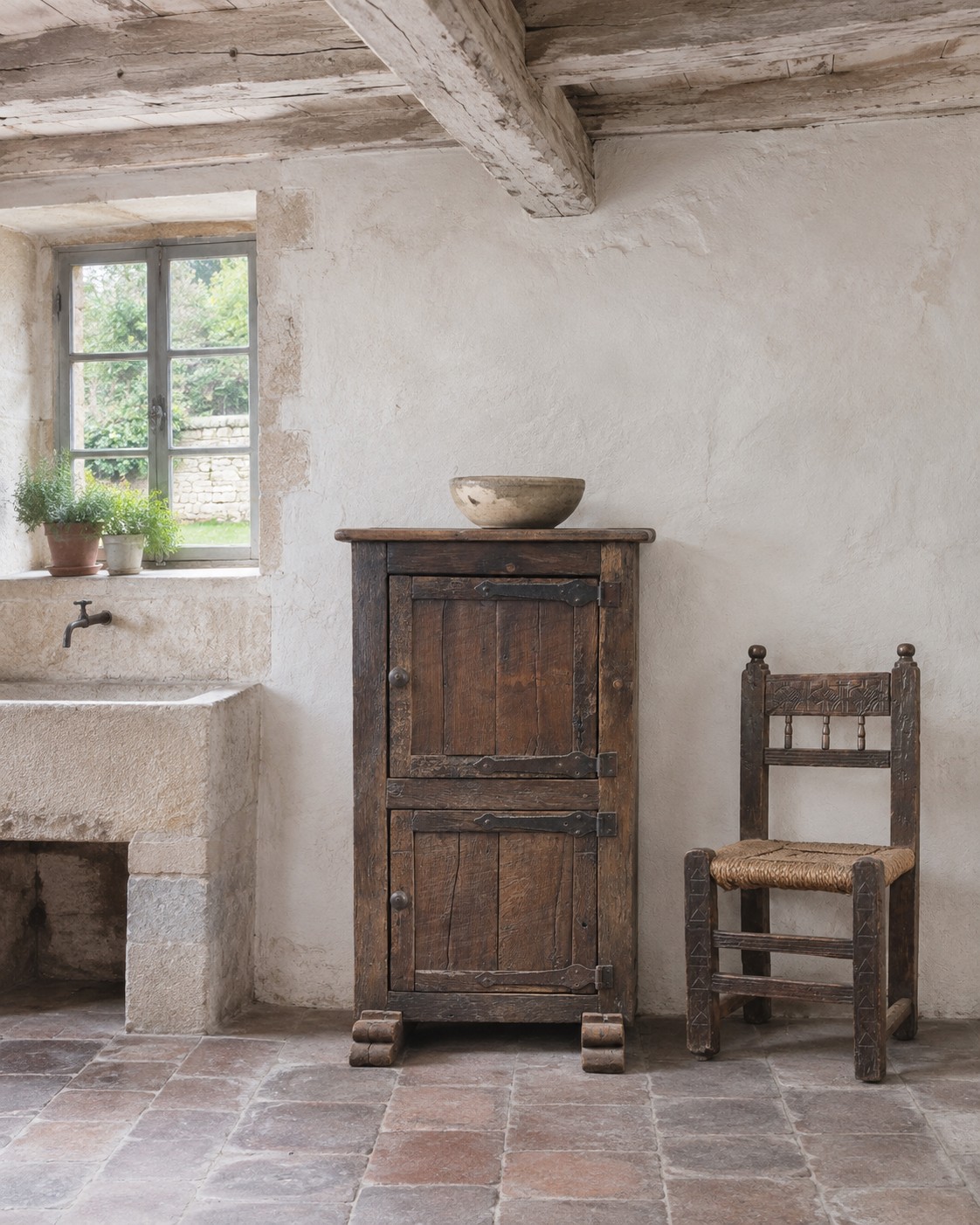
In this photo: 18th Century or Earlier German Primitive Cabinet on Sledge Feet with Hand-Forged Hardware (€ 635) · 17th-century farmhouse chair with carved motifs – wabi-sabi (€ 275)
Not about perfection, but about authenticity. Not about new, smooth and flawless, but about materials that have been through something. A wooden table with wear along the edge. An old jug with an irregular shape. Lime on the wall, linen that creases, stone that has become softer over the years. Things that don’t try hard to be beautiful, but are beautiful precisely because of that.
What does wabi-sabi actually mean?
Wabi-sabi is a Japanese way of seeing. It is about beauty in simplicity, transience and imperfection. That may sound rather heavy, but in an interior it is very recognisable.
A wabi-sabi interior feels calm, earthy and time-worn. Not empty, not cold, not styled down to the last detail. It has stillness, but also warmth. You see materials such as wood, stone, ceramics, linen, wool, lime paint and weathered metal. Colours are often subdued: sand, chalk, clay, grey, brown, black, off-white.
In this photo: Brutalist oak fireside chair – wabi-sabi armchair (€ 245)
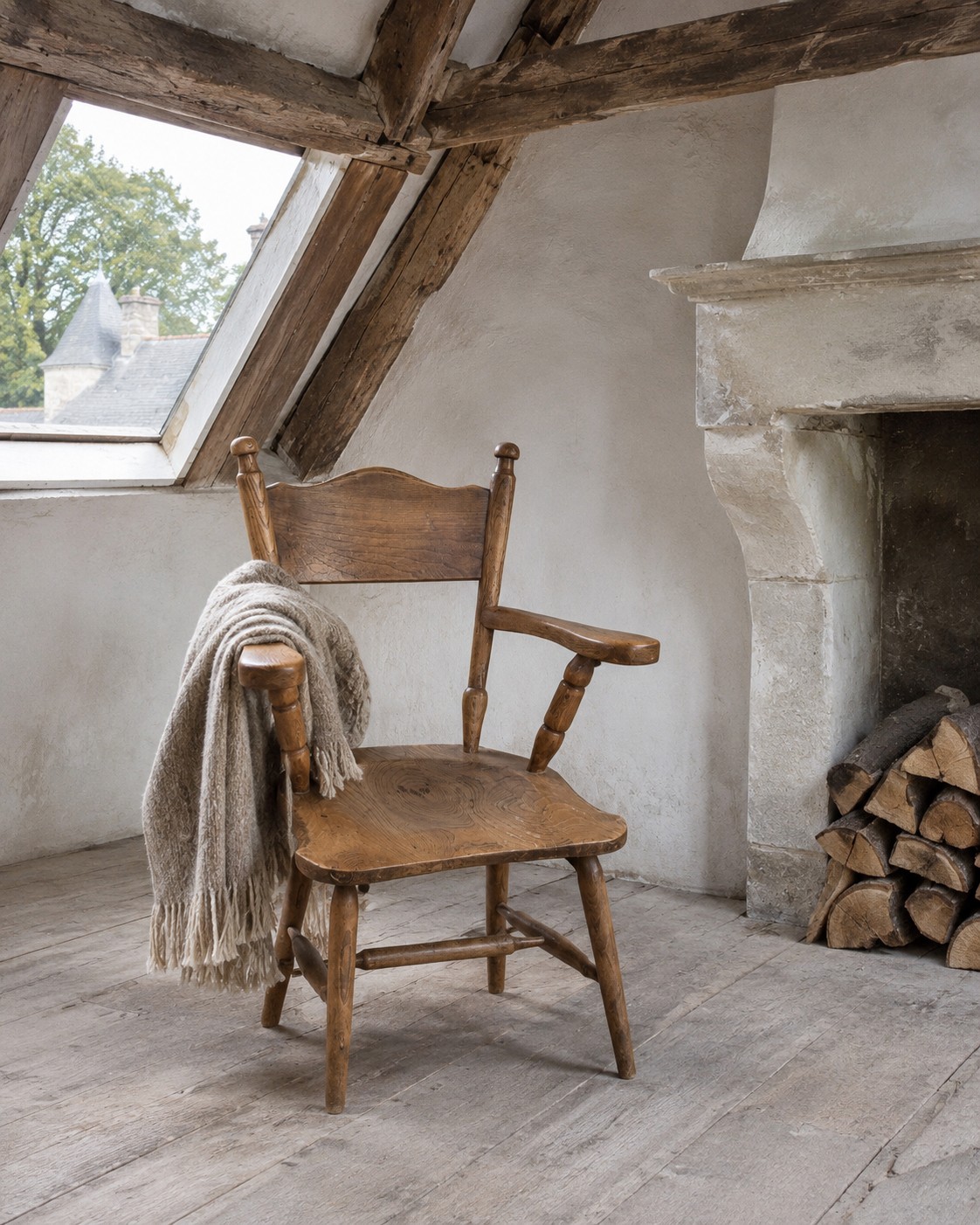
But the most important thing isn’t in the colour chart. It is in the feeling.
A wabi-sabi interior says: it doesn’t all have to be new, straight, sleek and finished. A crack, a stain, a dent, a discolouration or a worn edge can actually make an object more beautiful. Not because damage is necessarily beautiful, but because you can see that something is real.
Patina is not damage
At De Huiszwaluw we love things that time has passed over. An old French table with a worktop full of marks. A cupboard whose paint is no longer even everywhere. A chair with wood that has softened in colour through hands, sunlight and use.
We call that patina.
Patina is the difference between old and worn out. A piece of furniture can have signs of use and still be strong, valuable and beautiful. In fact, those marks are often exactly what make the piece special. They give depth. You sense that the piece didn’t come out of a box yesterday, but comes from somewhere.
That is exactly why vintage, brocante and antiques suit wabi-sabi living so well. They naturally bring layers with them. You don’t have to create atmosphere; it is already in the object.
In this photo: Old Dutch wooden bench with woven seat (€ 395)
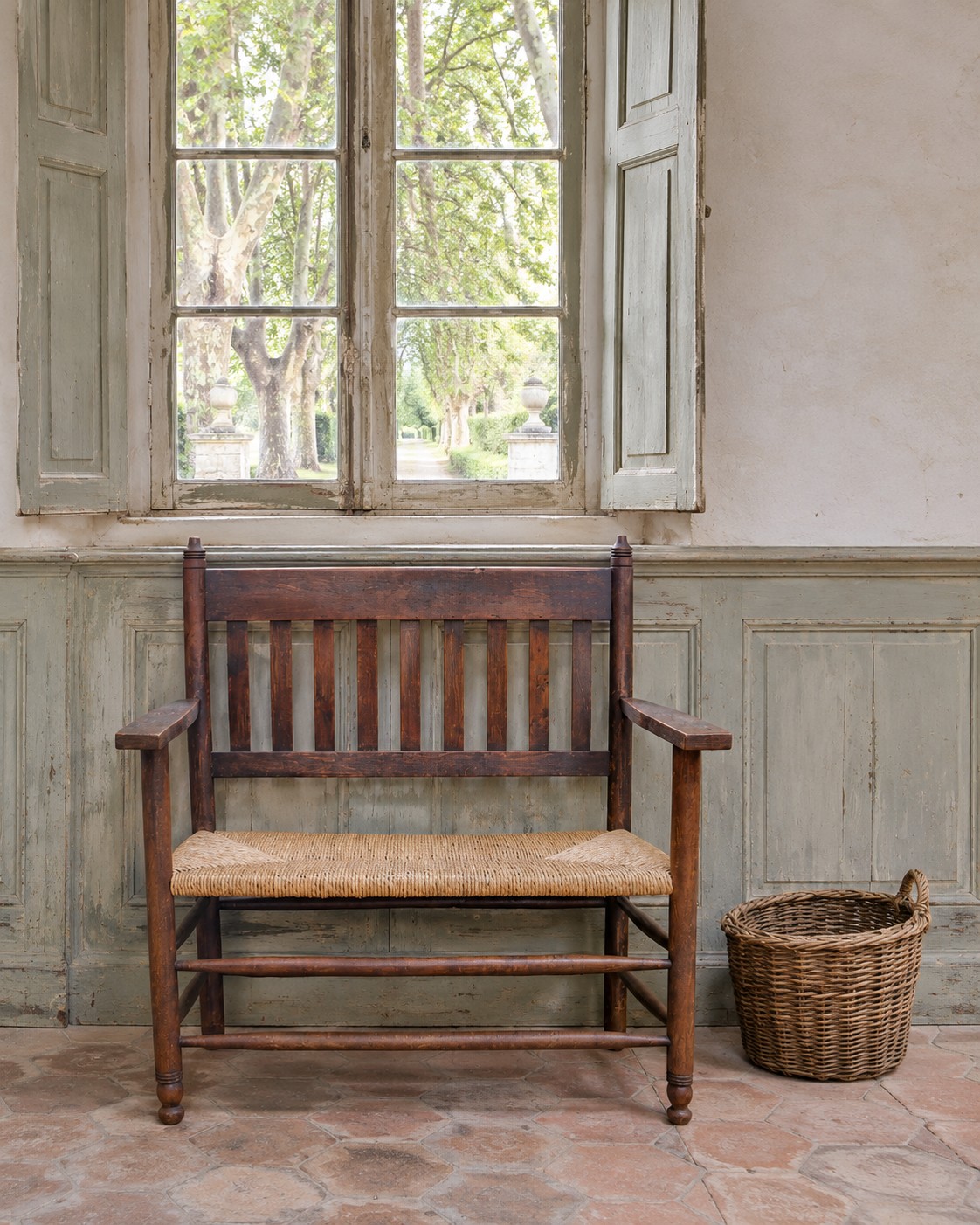
Calm is not the same as dull
One pitfall of wabi-sabi is that it becomes too bare. Beige wall, beige sofa, beige vase, beige rug, and then nothing really happens any more. Then it isn’t stillness, but boredom.
A good wabi-sabi interior needs contrast.
Put rough next to soft. Dark next to light. Sleek next to organic. A heavy wooden table becomes more exciting with a sober design chair. A simple lime-washed wall comes to life with an old painting or a sculptural object. A weathered cupboard becomes more beautiful when there isn’t too much around it.
The secret is in the dosage. Not everything has to be special. One strong piece can be enough to give an entire room character.
How do you combine wabi-sabi with other styles?
Wabi-sabi works well precisely because it isn’t a rigid style. It is more of an underlayer, a way of choosing.
With mid-century design, wabi-sabi gains more line and form. Think of a sober 1960s wooden cabinet against a lime-like wall, or a sleek chair at an old French table. The contrast between clear design and time-worn material makes both stronger.
With brocante, wabi-sabi gains romance, but without being twee. Choose one weathered table, an old mirror or a sober cupboard rather than lots of small knick-knacks. Keep the base calm and let the old piece speak.
With industrial living, wabi-sabi gains sturdiness. Steel, workbenches, old lamps and school furniture can be beautiful next to linen, ceramics and wood. It prevents industrial from becoming too hard or cold.
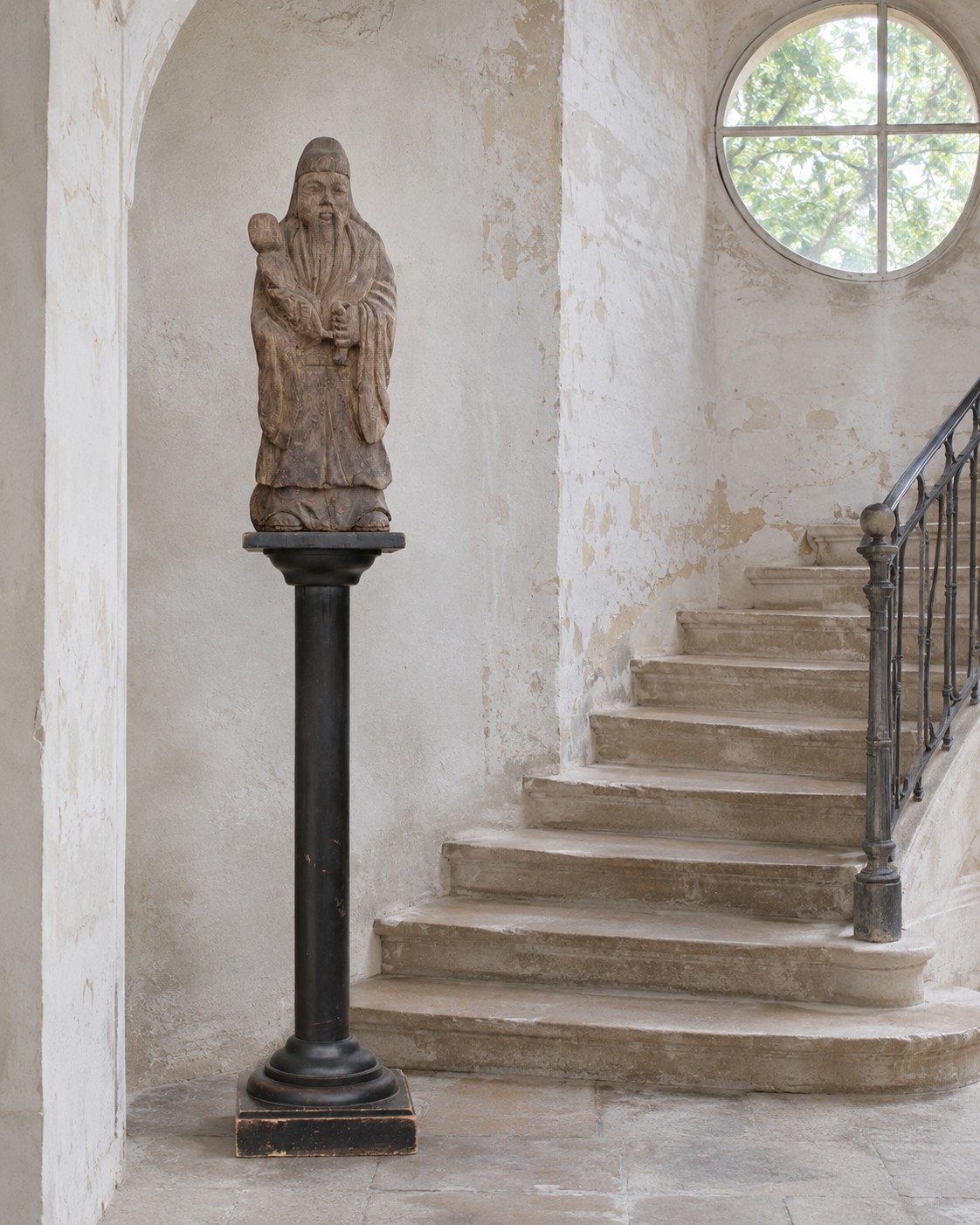
In this photo: French black-patinated pedestal with time-worn patina – circa 1880 (€ 345) · Large antique Chinese wooden sculpture with child – wabi-sabi (€ 345)
With art, wabi-sabi becomes personal. A painting, an object or a ceramic piece can break the stillness in a room. Not everything has to be functional. Sometimes a room needs something you keep looking at.
What should you look for when buying wabi-sabi pieces?
Don’t just buy something because it is old. Old is not automatically beautiful.
Look at the material. Real wood, stone, ceramics, linen, leather and metal often become more beautiful with time. Plastic and veneer can also be interesting, but call for a more critical eye.
Look at the shape. A simple object must have good proportions. A table may be rough, but its size and line must be right. A cupboard may show wear, but must still stand strong.
Look at use. A scratch is usually no problem. Woodworm, instability, a musty smell or poor construction are. Patina is beautiful, but a bad buy remains a bad buy.
And perhaps most importantly: don’t buy too quickly. A good piece must do something. You must want to keep looking at it. Not because it shouts, but because it has presence.
How would De Huiszwaluw apply wabi-sabi?
Not as an all-beige interior. Not as a trendy corner. And certainly not as a showroom in which everything supposedly has to be “pure” and “zen”.
We would start with one time-worn piece of furniture. For example an old wooden table, a sober cupboard, a weathered bench or an object with a strong shape. Around it we build calm: a light wall, natural materials, not too much colour, not too many accessories.
In this photo: 17th-century farmhouse chair with carved motifs – wabi-sabi (€ 275)
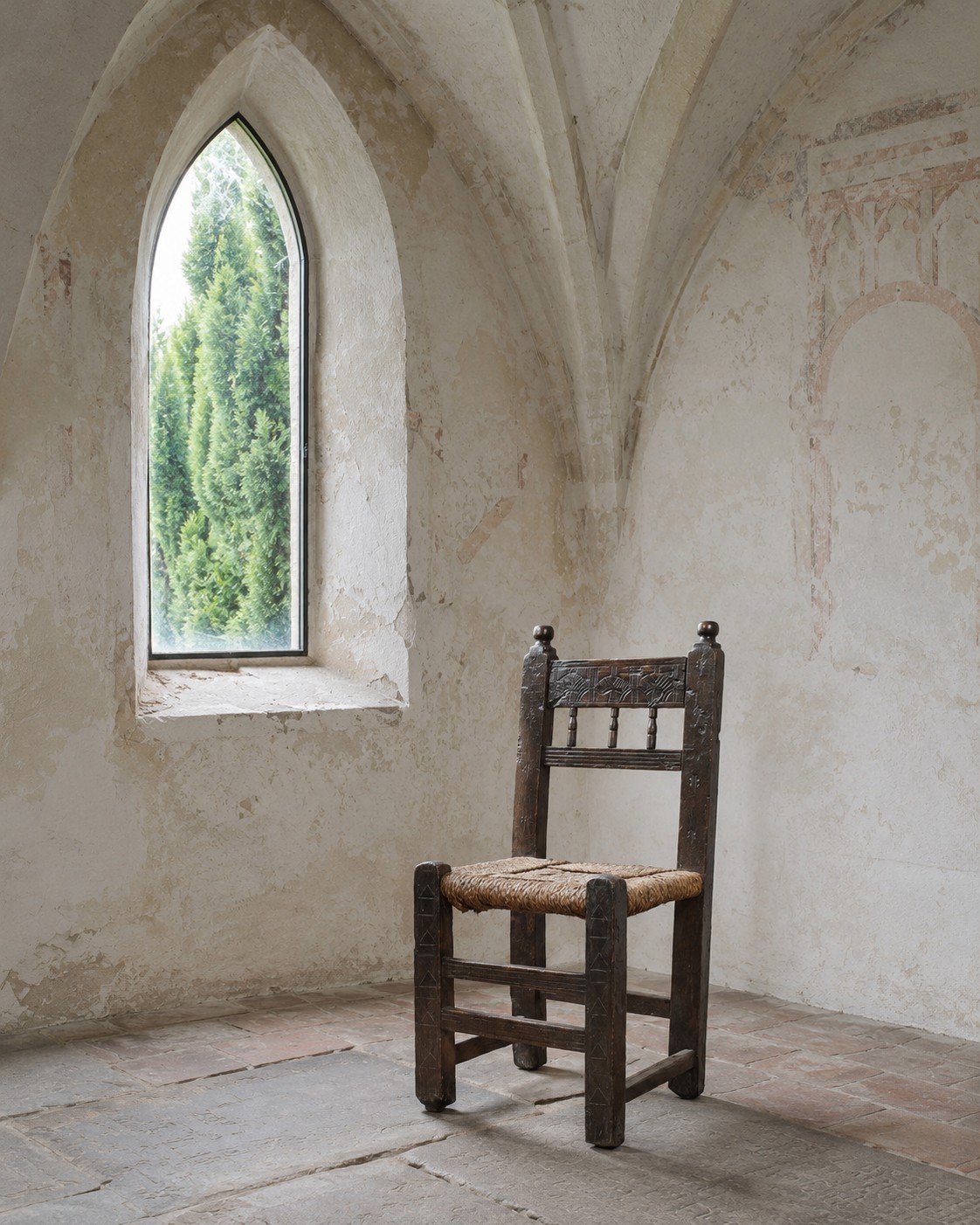
Then we add tension. A mid-century chair. An industrial lamp. A painting. A bowl. Something dark. Something unexpected.
Because an interior with character doesn’t come about by buying everything in the same mood. It comes about by looking carefully. By sensing when something is right. By choosing pieces that strengthen each other, precisely because they don’t come from the same story.
Ultimately, wabi-sabi living is not about perfect styling. It is about making room for things that are real.
And that may be why it remains so appealing.
In a world where so much is new, smooth and fast, a time-worn interior feels like breathing.
Now in our collection: wabi-sabi
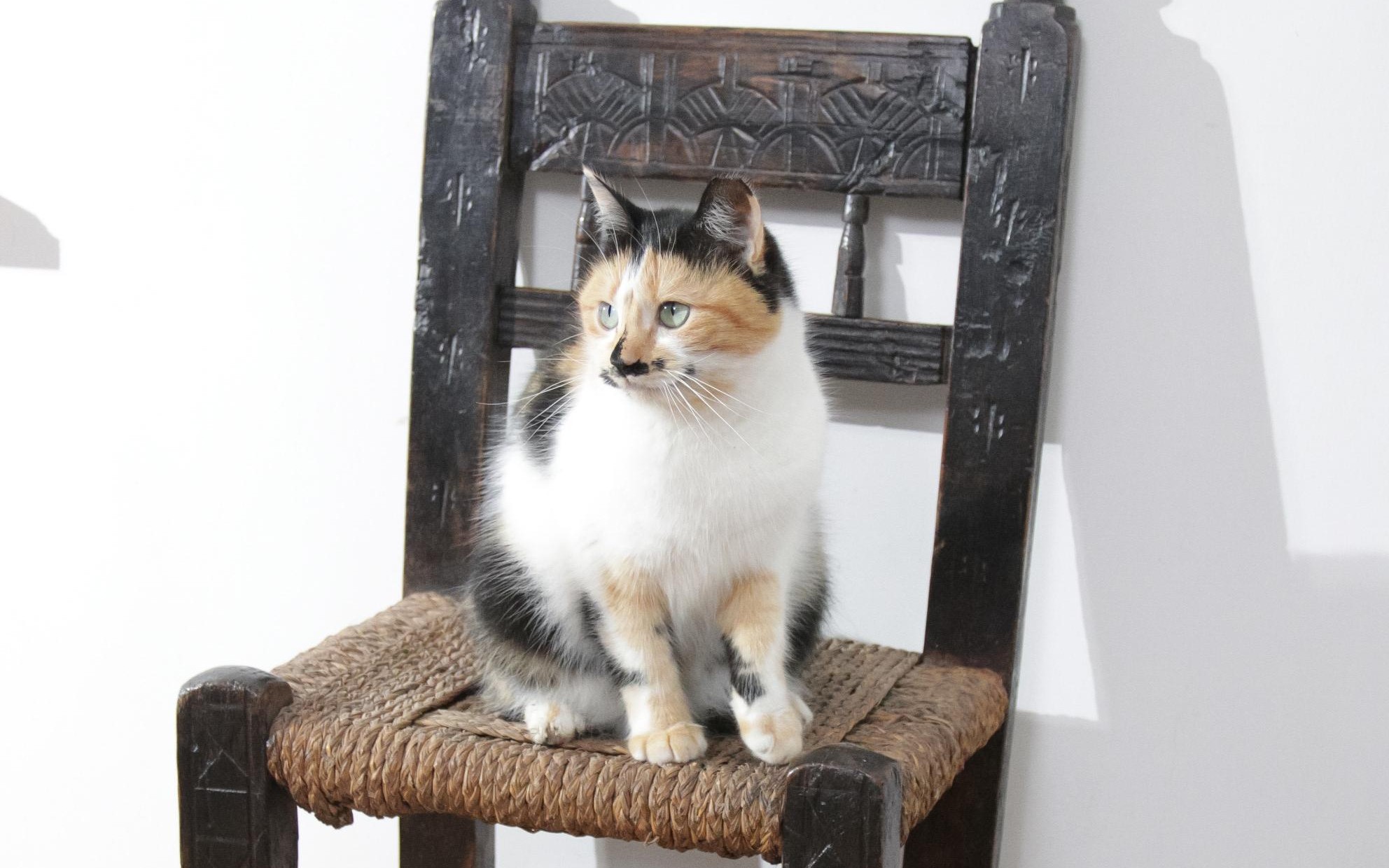 17th-century farmhouse chair with carved motifs – wabi-sabi€ 275
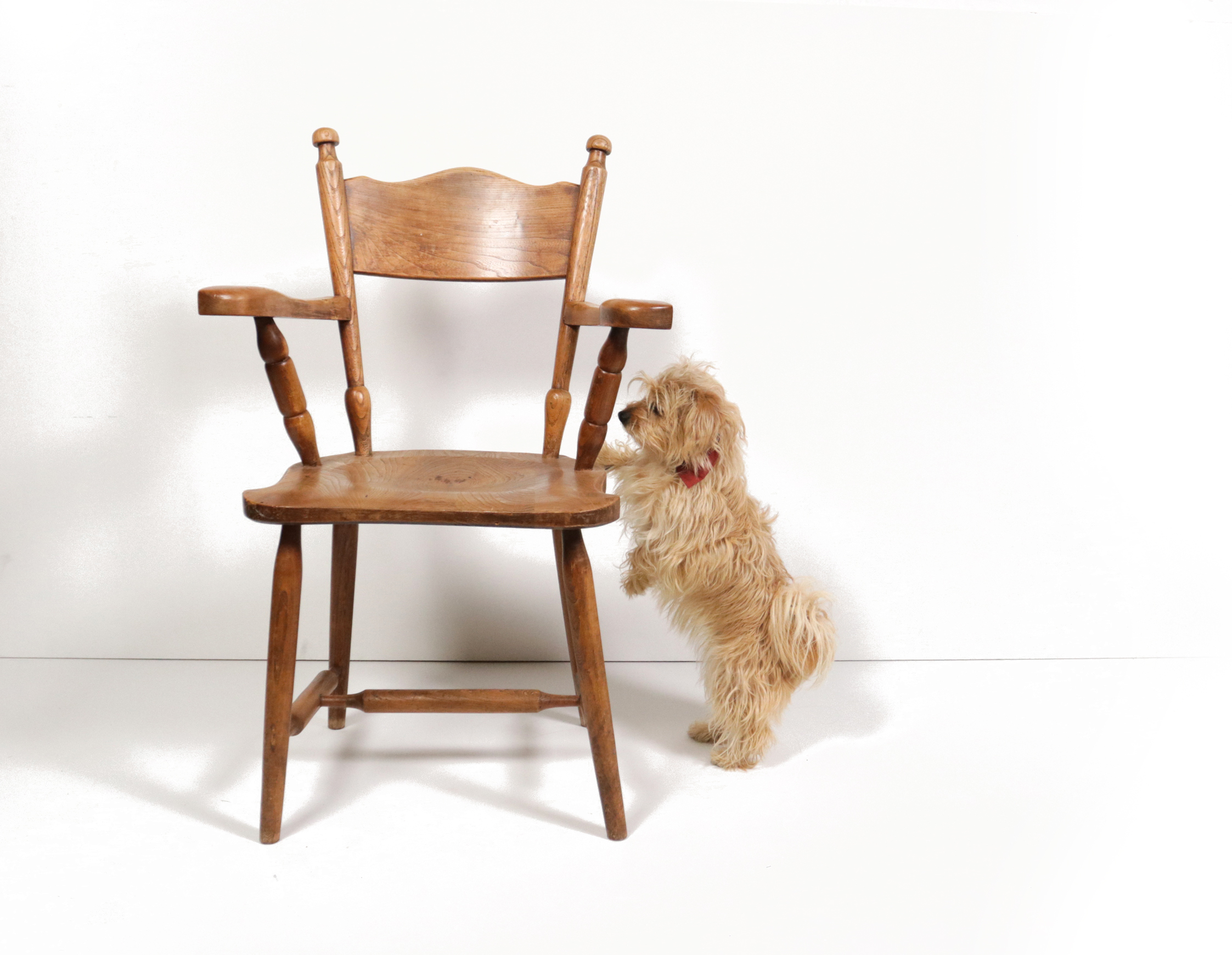 Brutalist oak fireside chair – wabi-sabi armchair€ 245
 Old French wooden plant column with carved grape motifs€ 495
 Decorated antique side table with elephant€ 245
 Set of four sculptural pine dining chairs – 1970s€ 195 voor de set
 Pander desk from circa 1920€ 995
 Vintage hand-woven geometric rug, 1970s–80s€ 375
 Vintage hand-woven wool kilim / flatweave rug, 1970s–80s€ 375
 Large French mirror in architectural panel with gilt frame€ 595
 Old Dutch wooden bench with woven seat€ 395
 French Neoclassical carved wood chandelier – circa 1950€ 295
 Long French wabi-sabi bench in weathered pine – circa 1900€ 595
 Large antique Chinese wooden sculpture with child – wabi-sabi€ 345
 Long metal bench with tubular seat€ 85
 Pair of Dutch Neoclassical flower still lifes, signed F.M. de Spaen née de Bylandt – 1809€ 1.195
 Large sculptural burr wood coffee table – circa 1970€ 945
 French black-patinated pedestal with time-worn patina – circa 1880€ 345
 18th Century or Earlier German Primitive Cabinet on Sledge Feet with Hand-Forged Hardware€ 635
 Batch of vintage school chairs, light beige matt€ 37,50 each
 Large Heavy Wabi-Sabi Chinese Wooden Sculpture€ 345
 Wabi-Sabi Perfect Imperfect 19th Century French Horse with Real Horse Skin€ 495
Previously in our collection
 Old French wine or cider press screw on basesold
 Long French wabi-sabi bench in weathered pine – circa 1900sold
 Set of four French ladder-back chairs with rush seats – circa 1960sold
 Set of 6 Brutalist Oak Raw Spanish Dining Chairssold
Read on about other styles
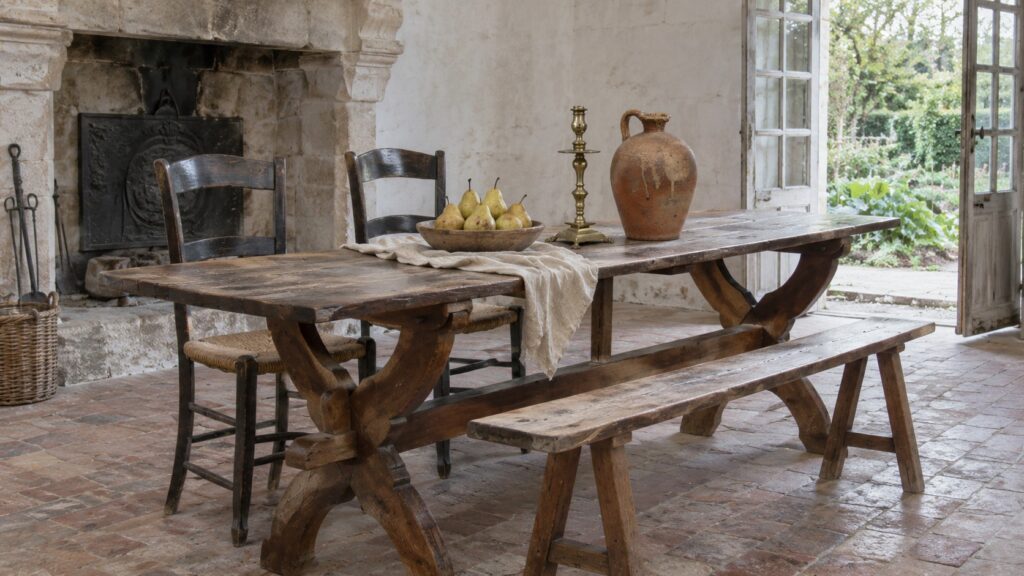 French countryFrench country living: wood, stone and the calm of country life
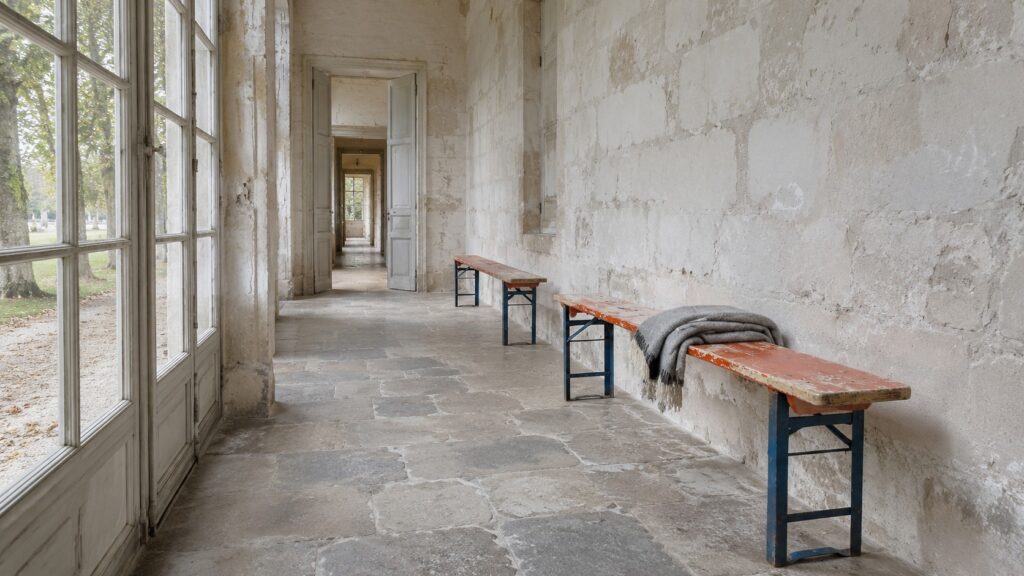 IndustrialIndustrial living: honest materials, clever shapes and a rough edge
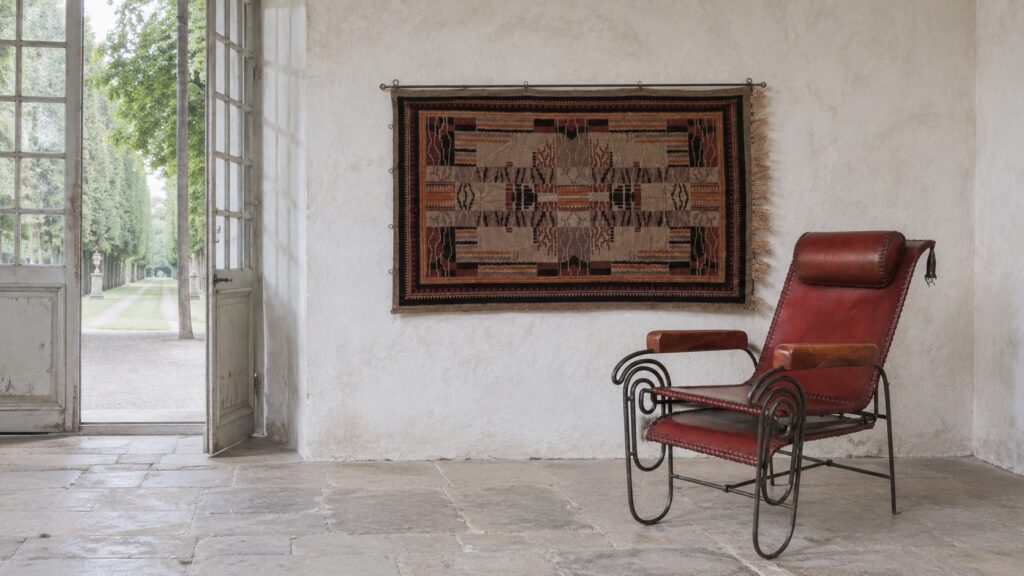 Art decoArt deco: clean lines, warm materials and a touch of daring
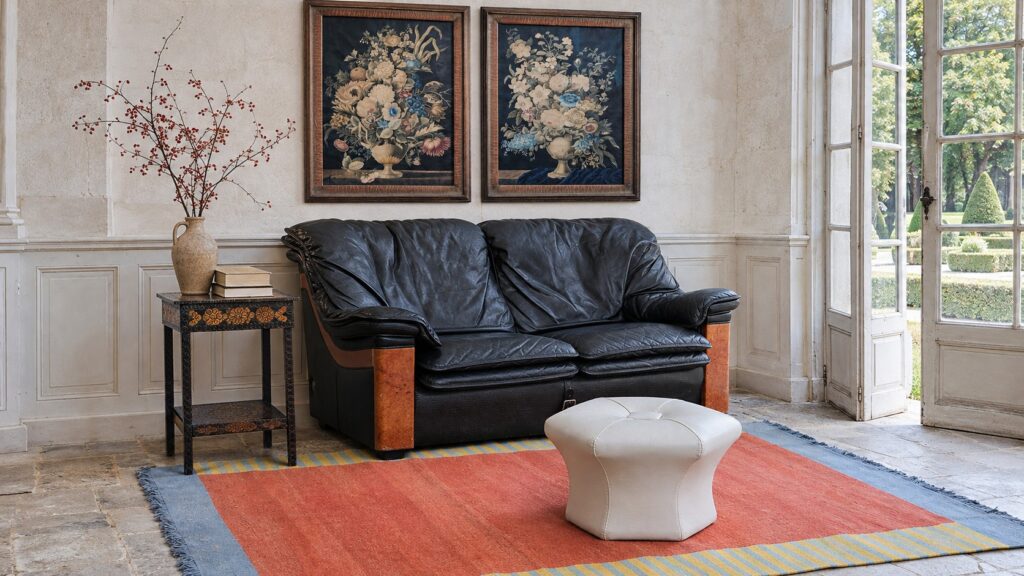 EclecticEclectic living: the art of mixing styles without chaos
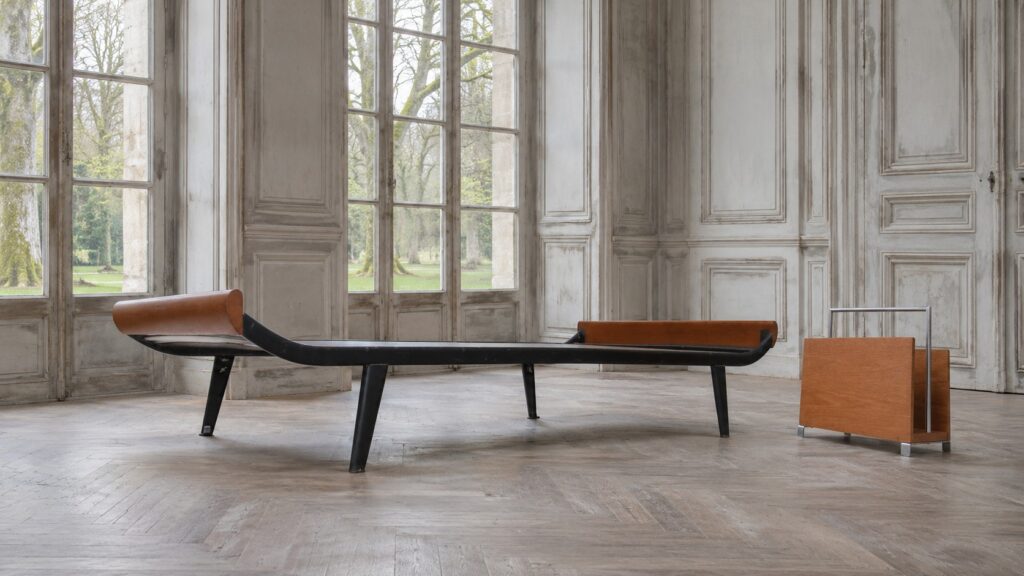 Mid-centuryMid-century design: timeless, warm and still modern