Balinees art deco houtsnijwerk slapend reekalf met origineel verkoopetiket – Pita Maha-periode, jaren 30
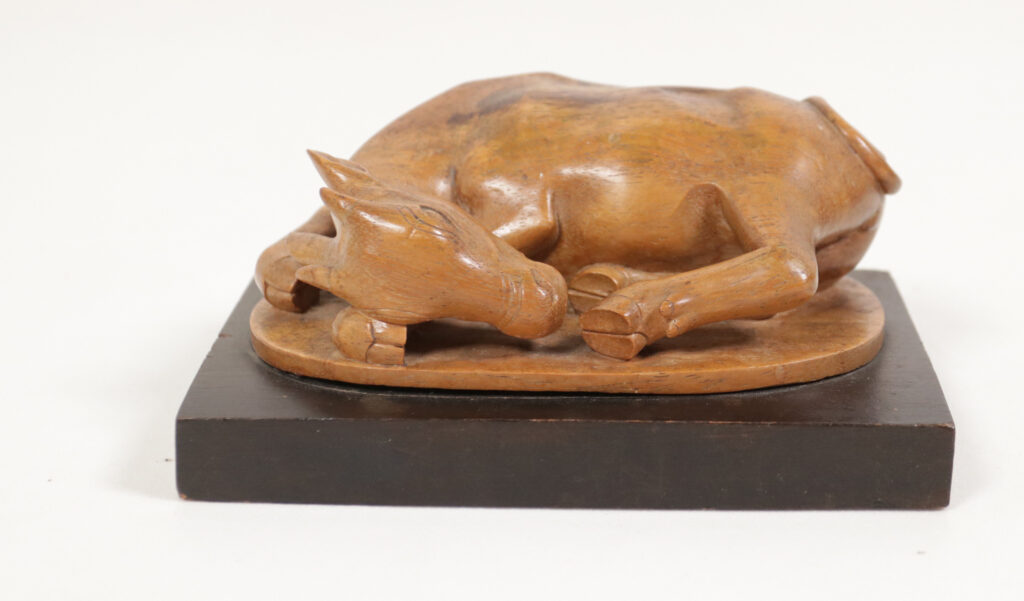
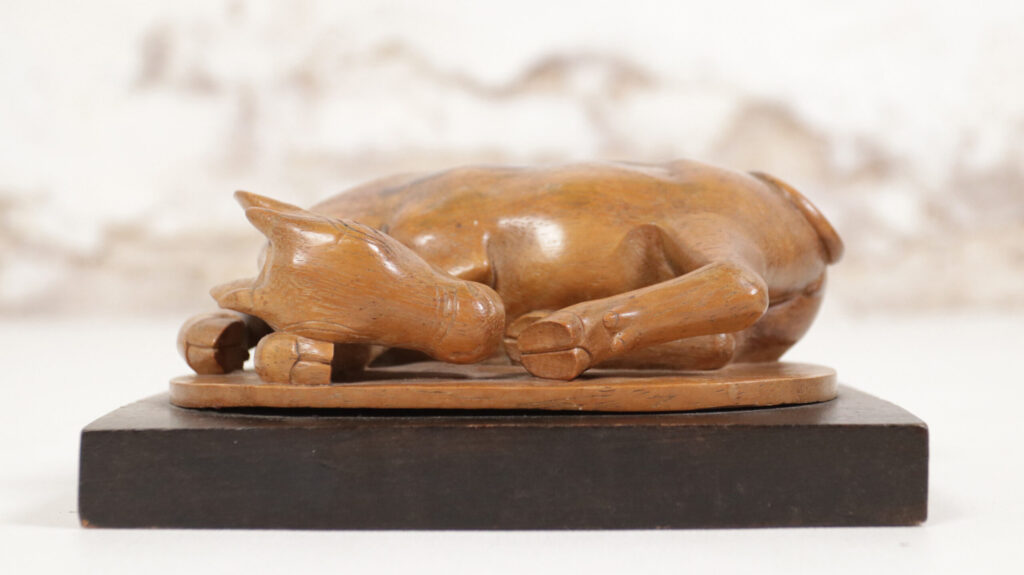
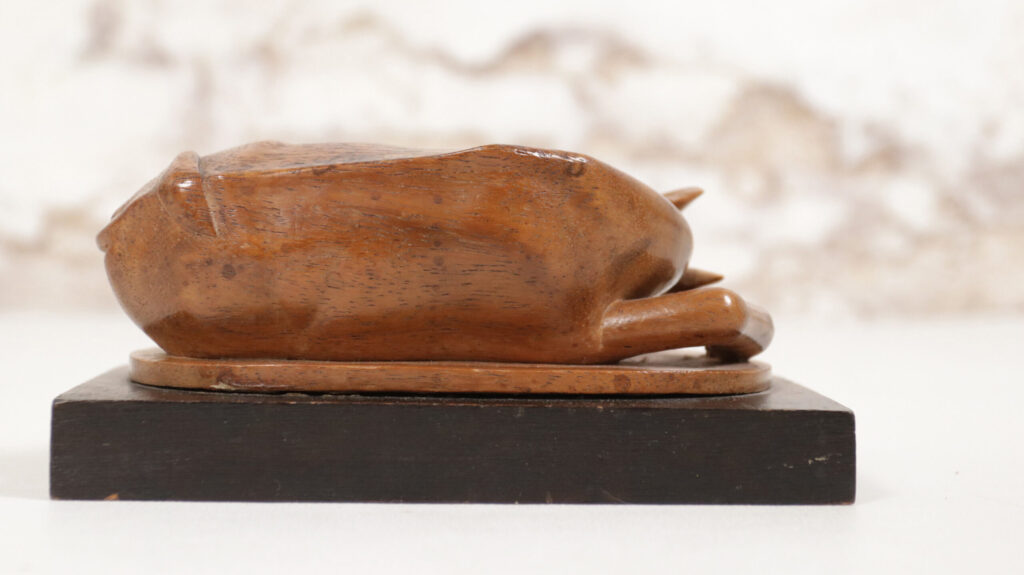
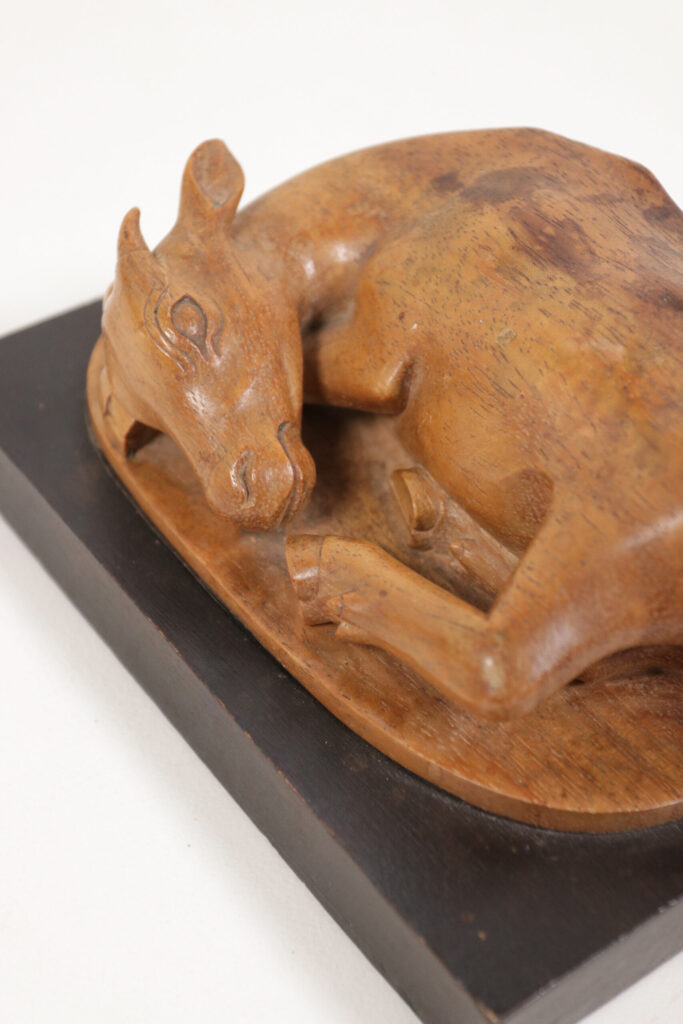
Houtsnijwerk slapend reekalf in Balinese art deco stijl
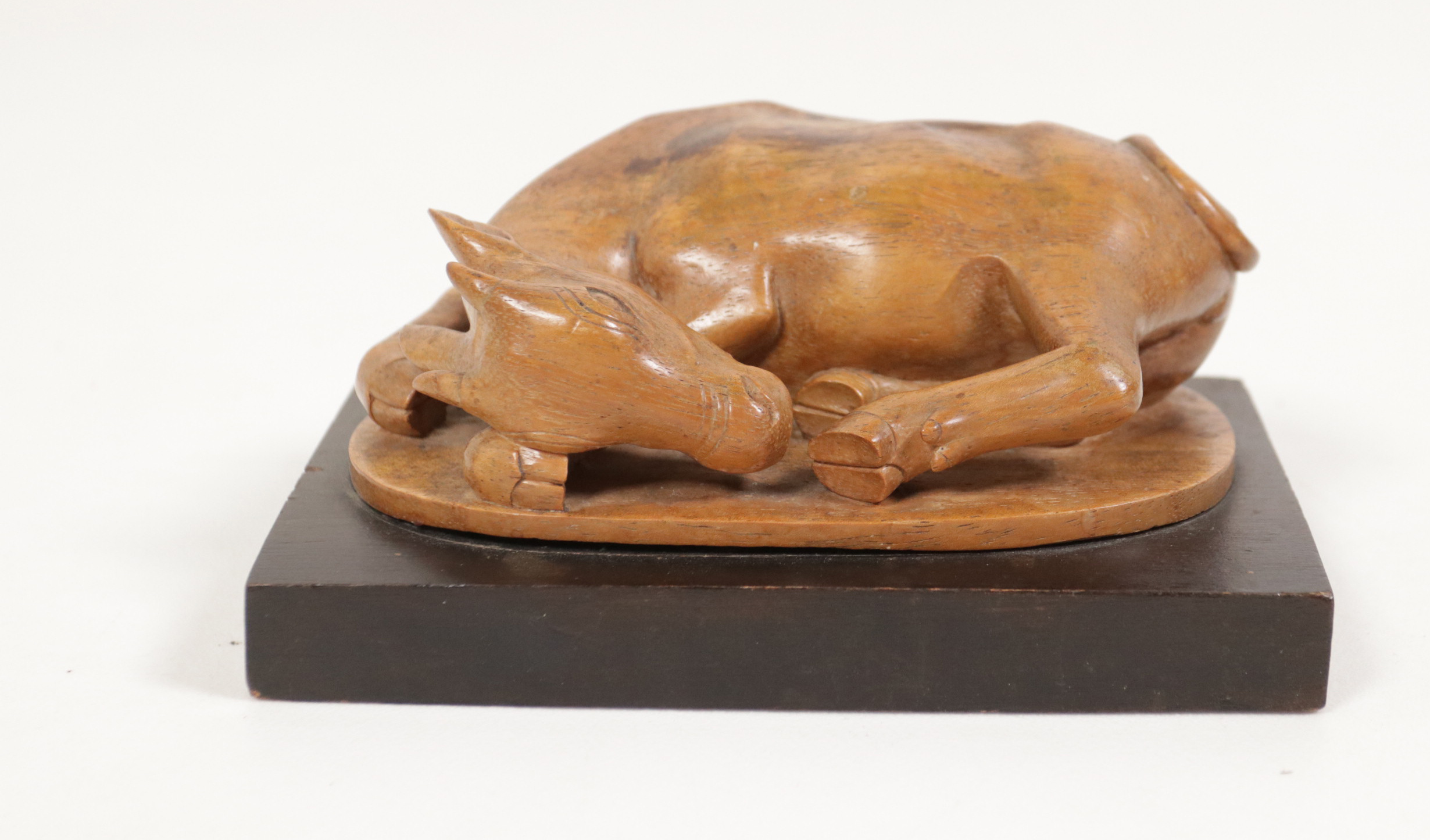
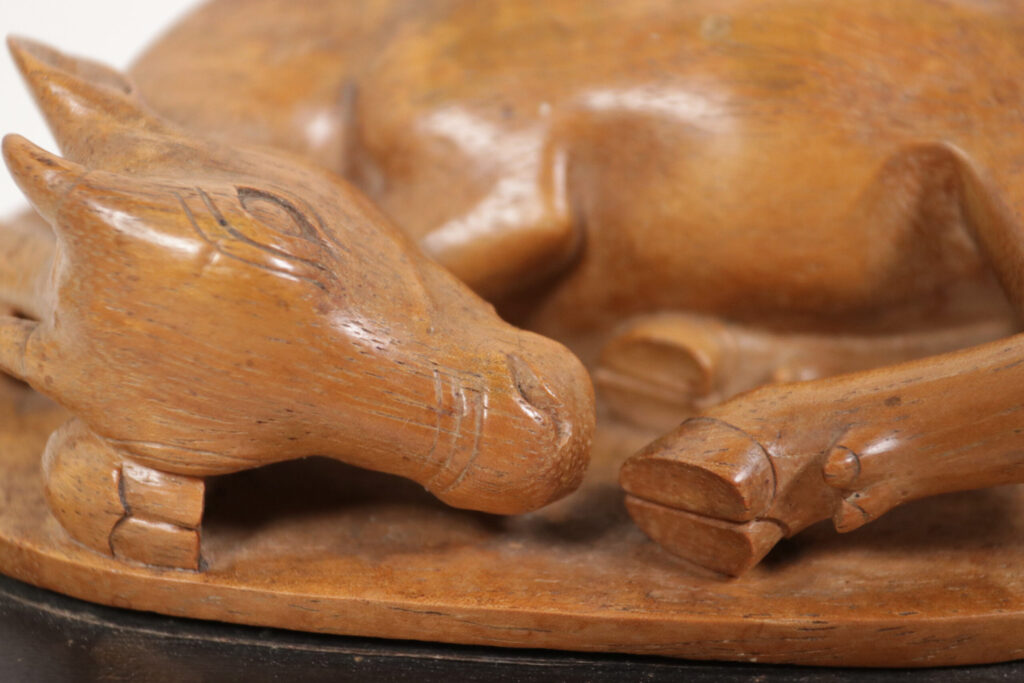
Een ontroerend Balinees houtsnijwerk van een opgerold, slapend reekalf (kijang). De kop rust op de voorpootjes, de lijnen zijn zacht en gestileerd. Het beeld is uit één stuk warm, lichtbruin hout gesneden en staat op een zwarte houten sokkel. Stijl en uitvoering zijn kenmerkend voor de Balinese art deco houtsnijkunst uit de jaren 30, de tijd van Pita Maha, toen herten een geliefd onderwerp waren. Het originele verkoopetiket onder de voet bevestigt die datering (zie hieronder).
Waarom wij dit beeld kozen
Het is zo’n klein beeld waar je telkens weer naar kijkt. De maker heeft met heel weinig lijnen de rust van een slapend dier gevangen. Zulke beelden kwamen in de jaren 30 tot 50 mee naar Nederland met reizigers en Indische families.
Stijl en interieur
Mooi op een boekenplank, bijzettafel of schouw in een art deco, koloniaal, wabi sabi of eclectisch interieur. Samen met het beeld van de luwak, van dezelfde herkomst, een mooi duo.
Herkomst en etiket
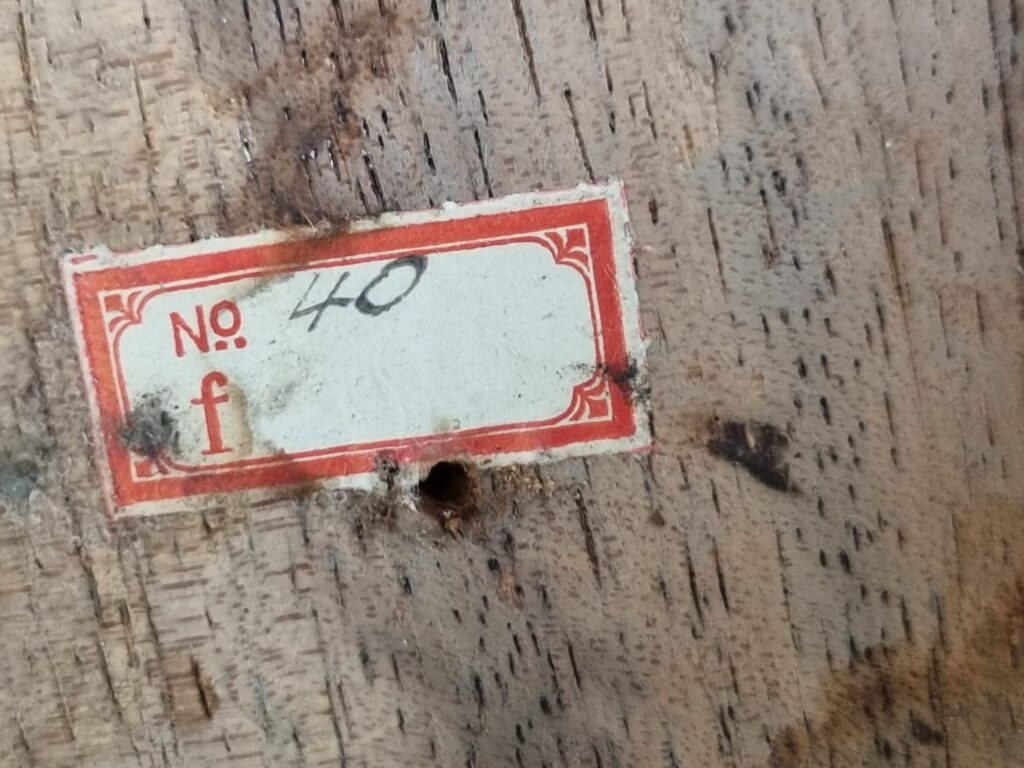
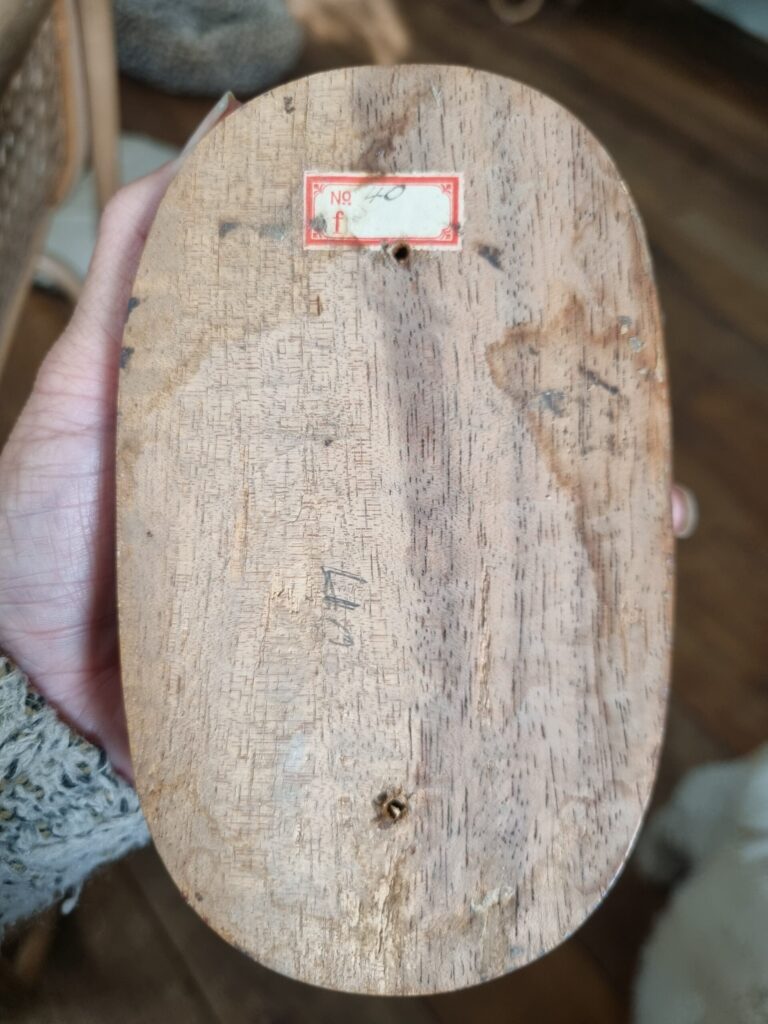
Onder de ovale voet zit nog het originele verkoopetiket: een klein, rood omrand label met voorgedrukt “No.” en “f”, met de hand ingevuld met nummer 40. De “f” staat voor gulden. Het etiket hoort bij een systeem van catalogusnummer en prijs. Precies hetzelfde type etiket komt voor op beelden die verkocht werden op de verkooptentoonstellingen van de Balinese kunstenaarsvereniging Pita Maha. Die tentoonstellingen werden tussen 1936 en 1941 gehouden in onder meer Batavia, Bandoeng en Jogjakarta, bij de plaatselijke Kunstkringen. Herten waren een geliefd onderwerp: zo stond er op de catalogus van de tentoonstelling in Batavia van februari 1939 een houtsnijwerk van een hert op de omslag.
Het etiket wijst er dus op dat dit beeld in de jaren 30 via zo’n Pita Maha-verkooptentoonstelling is verkocht. We zoeken nog uit in welke catalogus nummer 40 voorkomt. Zodra we dat weten, vermelden we de tentoonstelling en, indien bekend, de maker hier.
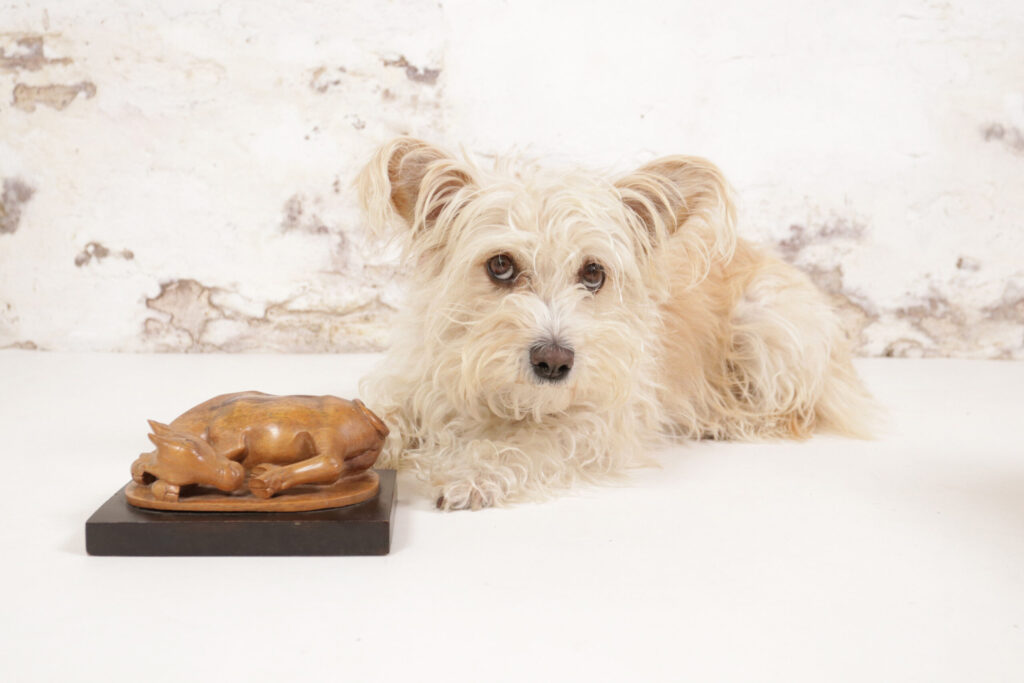
Afmetingen: breedte 16 cm, diepte 10,6 cm, hoogte 7,5 cm
Materiaal: tropisch hardhout, zwarte houten sokkel
Periode: jaren 30 (vóór 1942)
Herkomst: Bali, Indonesië; origineel verkoopetiket No. 40, van het type dat werd gebruikt op de Pita Maha-verkooptentoonstellingen
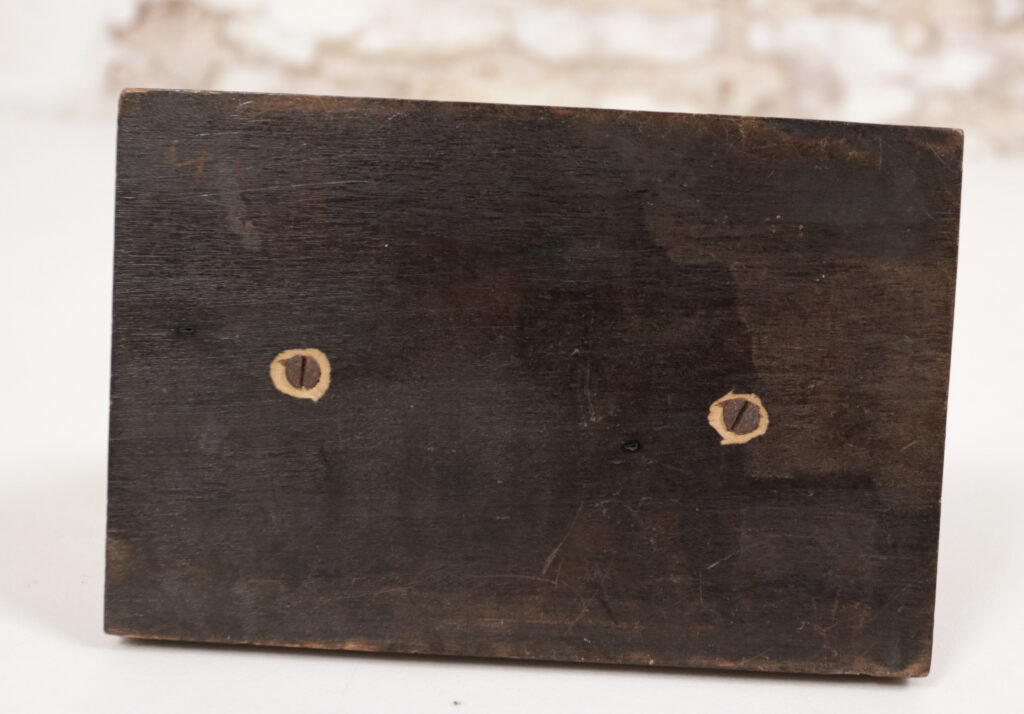
Conditie: goed. Geen scheuren of losse delen zichtbaar. Lichte gebruikssporen, een paar kleine donkere vlekjes in het hout en enkele minuscule deukjes. De sokkel is met twee schroeven bevestigd (met houten plugjes).
Wordt geveild, neem contact op als u t.z.t. geïnformeerd wilt over de veiling.
English description
Balinese Art Deco wood carving of a sleeping fawn with original sale label – Pita Maha period, 1930s
A touching Balinese wood carving of a curled-up, sleeping fawn (kijang). The head rests on the front legs; the lines are soft and stylised. The sculpture is carved from a single piece of warm, light brown wood and mounted on a black wooden base. Style and execution are characteristic of Balinese Art Deco wood carving of the 1930s, the era of Pita Maha, when deer were a favourite subject. The original sale label under the base supports this dating (see below).
Why we chose this piece
It is one of those small sculptures you keep coming back to. With very few lines, the carver captured the calm of a sleeping animal. Carvings like this came to the Netherlands in the 1930s to 1950s with travellers and Indo-Dutch families.
Style and interior
Lovely on a bookshelf, side table or mantelpiece in an Art Deco, colonial, wabi-sabi or eclectic interior. Together with the luwak carving, which comes from the same source, it makes a beautiful duo.
Provenance and label
Under the oval base the original sale label is still present: a small, red-bordered label with a printed “No.” and “f”, filled in by hand with number 40. The “f” stands for guilder (florin). The label belongs to a system of catalogue number and price. Exactly the same type of label is found on carvings sold at the sales exhibitions of the Balinese artists’ association Pita Maha. These exhibitions were held between 1936 and 1941 in Batavia, Bandoeng and Jogjakarta, among other places, at the local Kunstkring art societies. Deer were a popular subject: the catalogue of the Batavia exhibition of February 1939, for example, featured a wood carving of a deer on its cover.
The label therefore indicates that this carving was sold in the 1930s through one of these Pita Maha sales exhibitions. We are still researching in which catalogue number 40 appears. As soon as we know, we will add the exhibition and, if known, the maker here.
Dimensions: width 16 cm, depth 10.6 cm, height 7.5 cm
Material: tropical hardwood, black wooden base
Period: 1930s (before 1942)
Origin: Bali, Indonesia; original sale label No. 40, of the type used at the Pita Maha sales exhibitions
Condition: good. No cracks or loose parts visible. Light signs of use, a few small dark spots in the wood and some tiny dents. The base is attached with two screws (with wooden plugs).
To be auctioned. Please contact us if you would like to be informed about the auction.
Vraag over dit item?
Wil je meer weten over dit product, de prijs, beschikbaarheid of transport? Mail ons gerust. We zien dan meteen over welk item je vraag gaat.
Mail over dit item →