

Rohé was the largest rattan furniture factory in Noordwolde, the wickerwork village near Wolvega in the Dutch province of Friesland. The company settled there in 1919 and closed in 1997. Its rattan chairs and cradles from the 1950s and 1960s stood in countless Dutch living rooms.
A village that weaves
Weaving began in Noordwolde around 1825, when a German peat worker taught the villagers to make baskets from willow rods. Later that century the minister Hendrik Edema van der Tuuk saw cane chairs from Germany in an Amsterdam shop and decided that Noordwolde could make them too. In 1908 a state wickerwork school opened, the Rijksrietvlechtschool, with a three-year course.
Rohé in Noordwolde
In 1919 the Rohé firm settled in the village, in Noordwolde-Zuid. Herman Rohé was director of the cane furniture factory. The rattan came from Indonesia and replaced the willow rods, because it is tougher and more flexible.
Rohé grew large after the Second World War, when rattan furniture came into fashion. The factory added a department for cradles and one for wooden furniture, and became the village’s biggest employer.
Rattan on a steel frame
Rohé and the other large factory in the village, Gebr. Jonkers, worked with Danish and Dutch designers, among them the well-known Dirk van Sliedregt (1920–2010). At first he drew chairs made entirely of rattan. In the early 1950s he came up with the combination of rattan and a frame of steel tube. It suited the clean-lined taste of the time, was praised by the Goed Wonen foundation and was a great success.
Decline and the end
In the 1970s the furniture trade collapsed. Indonesia also stopped exporting rattan, to protect its own industry. Gebr. Jonkers had to close in the 1980s; Rohé held out until 1997.
The wickerwork school had already closed in 1969. Since 2001 its building has housed the Nationaal Vlechtmuseum, the Dutch national wickerwork museum. The museum’s showpiece is the Rohé chair 149, of rattan on a tubular steel frame.
How to recognise a Rohé
A Rohé is made of rattan: sturdy, round stems, not fine cane. The lines are round and flowing. Pieces from after 1952 often stand on a black base of steel tube with white caps under the legs. Always check that the bars are still intact. With us you find the pieces from the period itself, with the life that comes with them. We ship worldwide.
Written by De HuiszwaluwRohé Noordwolde
There is nothing by Rohé Noordwolde for sale at the moment. Below you can see what we have had before.
20 pieces by Rohé Noordwolde found a new home
 Set of 4 Dirk Van Sliedregt Rattan Chairs Black Legs Rohe NoordwoldeSold
 Vintage Design Rattan Side Table Rohé Dirk van SliedregtSold
 Vintage Dutch Design Rohe Rattan Lounge Chair with Sheepskin, 1960s, No. 2Sold
 Vintage Dutch Design Rohe Rattan Lounge Chair with Sheepskin, 1960sSold
 Vintage Design Rattan Side Table Rohe Dirk van SliedregtSold
 Vintage Design Rohe Rattan Snake Plant Holder, 1960sSold
 Retro Vintage Rohe Super Armchair from the 1950sSold
 Retro Vintage Rohe Noordwolde Super Armchair, 1960sSold
 Retro Vintage Dirk van Sliedrecht Rohe Bar Stool, 1960sSold
 Retro Vintage Rohe Noordwolde Rattan and Metal Armchair, 1960sSold
 Retro Vintage Stool, Dirk van Sliedregt, Rohe, Low, 1960sSold
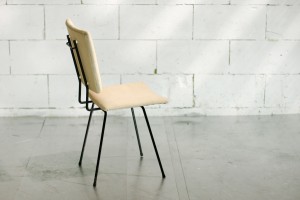 Retro Vintage Rohe Wire Frame Chair, 1950sSold
 Retro Vintage Rohe Superb Design Chair 1960sSold
 Retro Vintage Rohe Armchair Rattan 1960sSold
 Retro Vintage Rohe Armchair or Bucket Chair 1960sSold
 Retro Vintage Rohe Rattan Armchair and Coffee TableSold
 Retro Vintage Rohe Armchair with Table with Top RugSold
 2 Retro Vintage Rohe Armchairs 1960sSold
 Retro Vintage Rohe Bucket Chair with Small TableSold
 Retro Vintage Rohe ArmchairSold
Looking for something by Rohé Noordwolde?
Let us know. We buy every week and will tell you when something comes in. We ship worldwide.