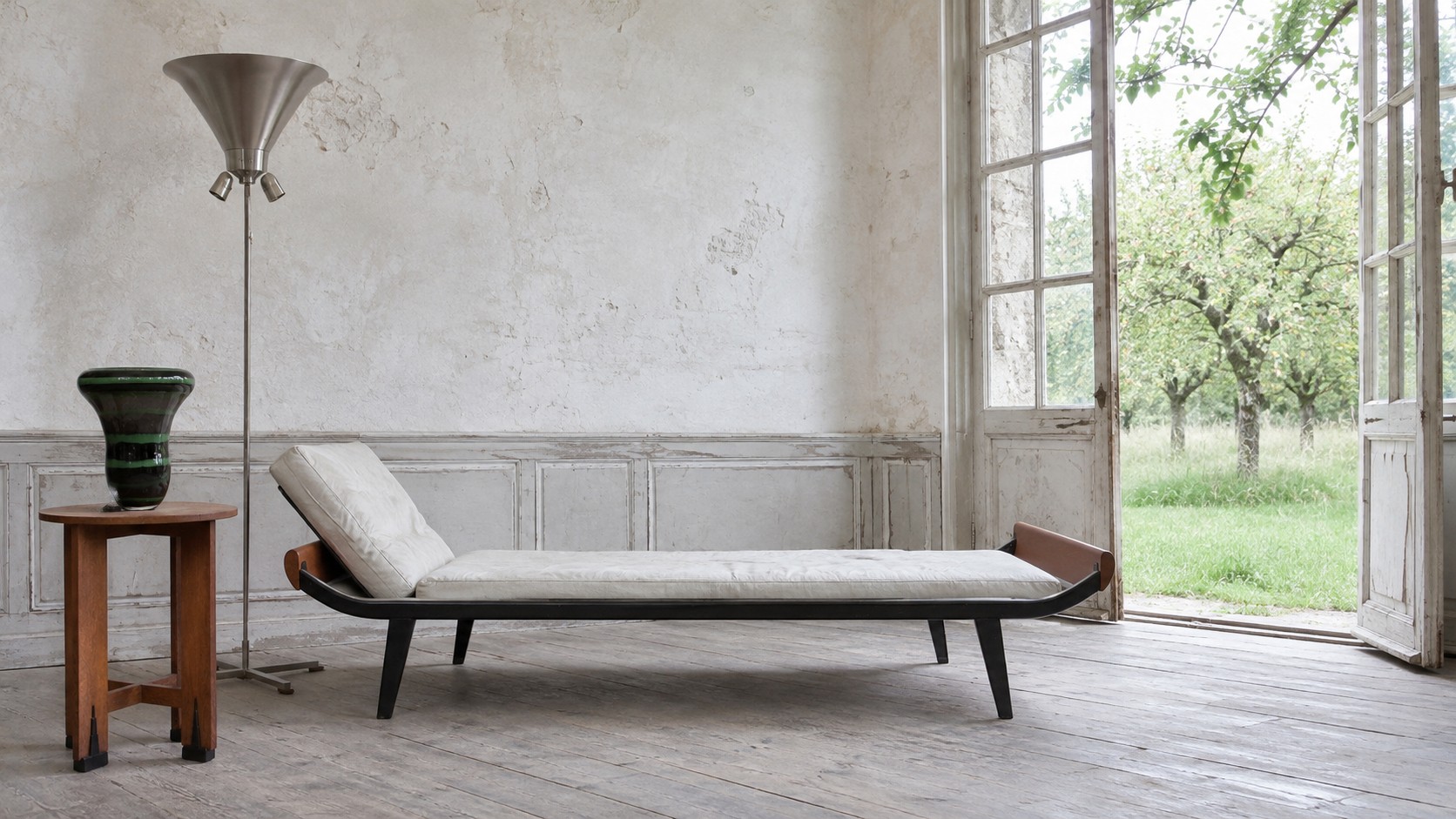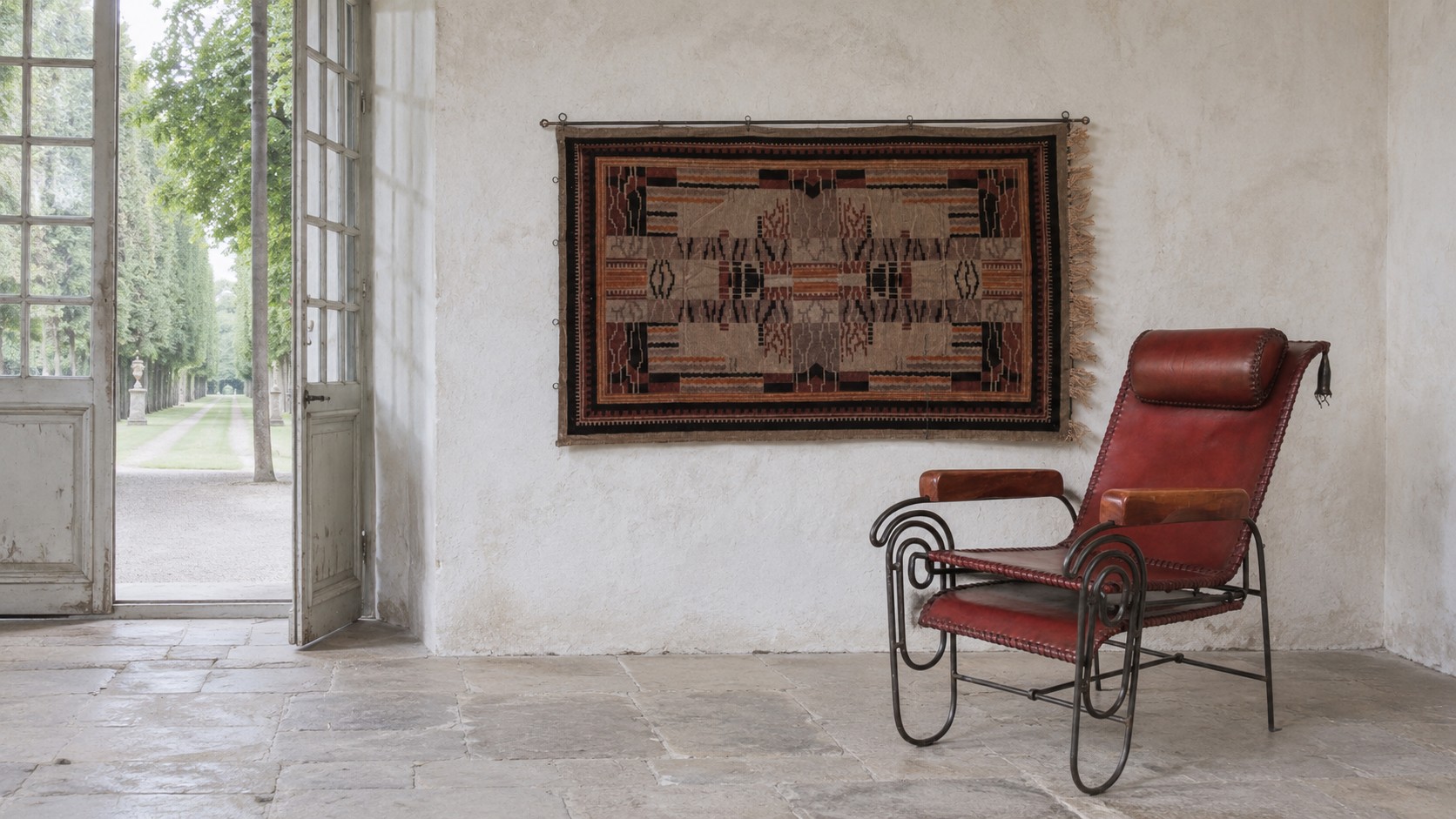
Postmodern & Memphis at home: colour, form and a wink
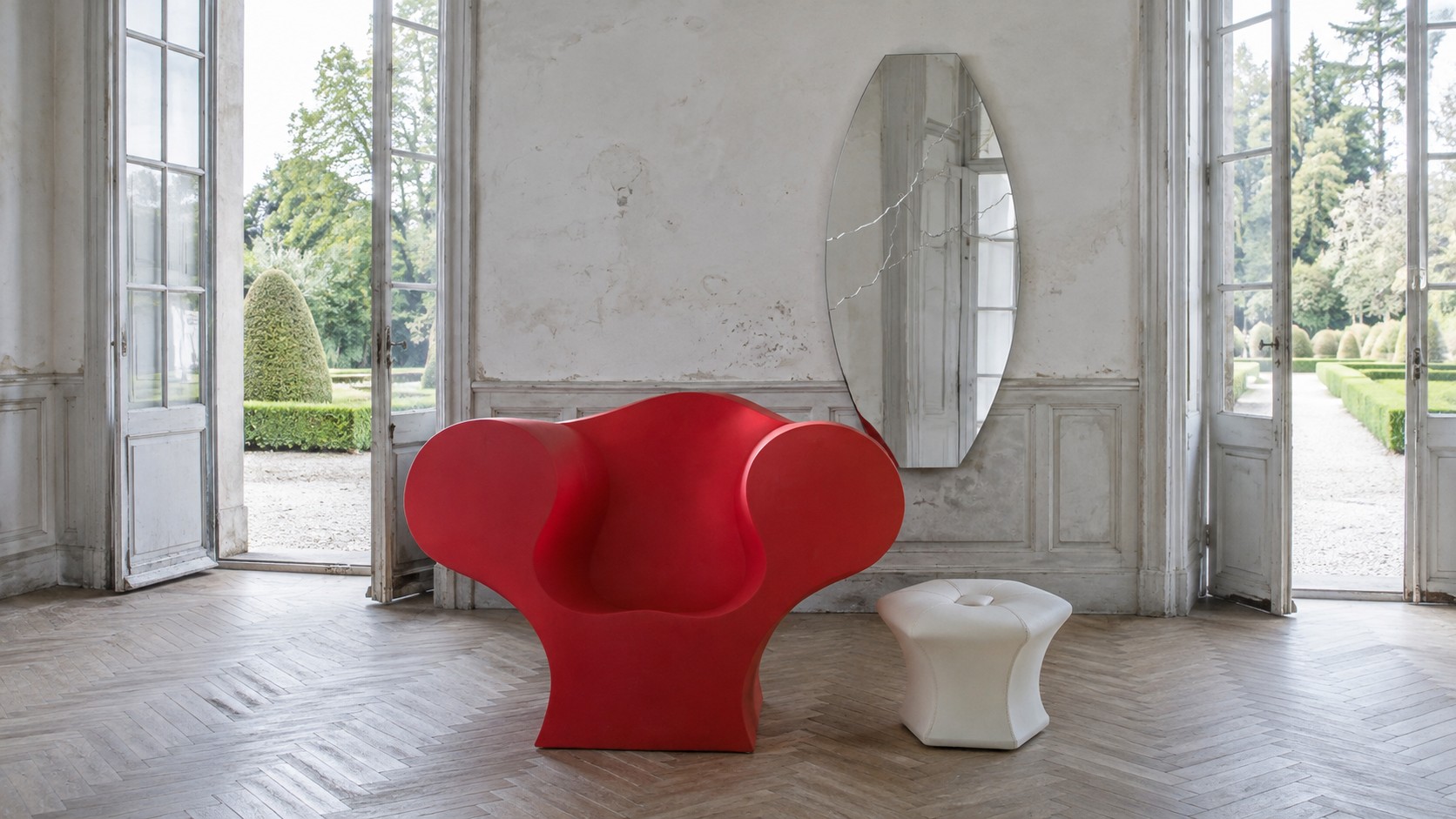
In this photo: Ron Arad ‘The Big Easy’ armchair for Moroso – red sculpture for home and garden (€ 695) · Rimadesio Italian Design Mirror “Broken”, Signed (€ 395) · Sculptural hexagonal pouffe in white leatherette (now only € 50)
Postmodern & Memphis at home: colour, form and a wink
From Memphis Milano to Ron Arad: design from the 1980s that wakes up a calm interior.
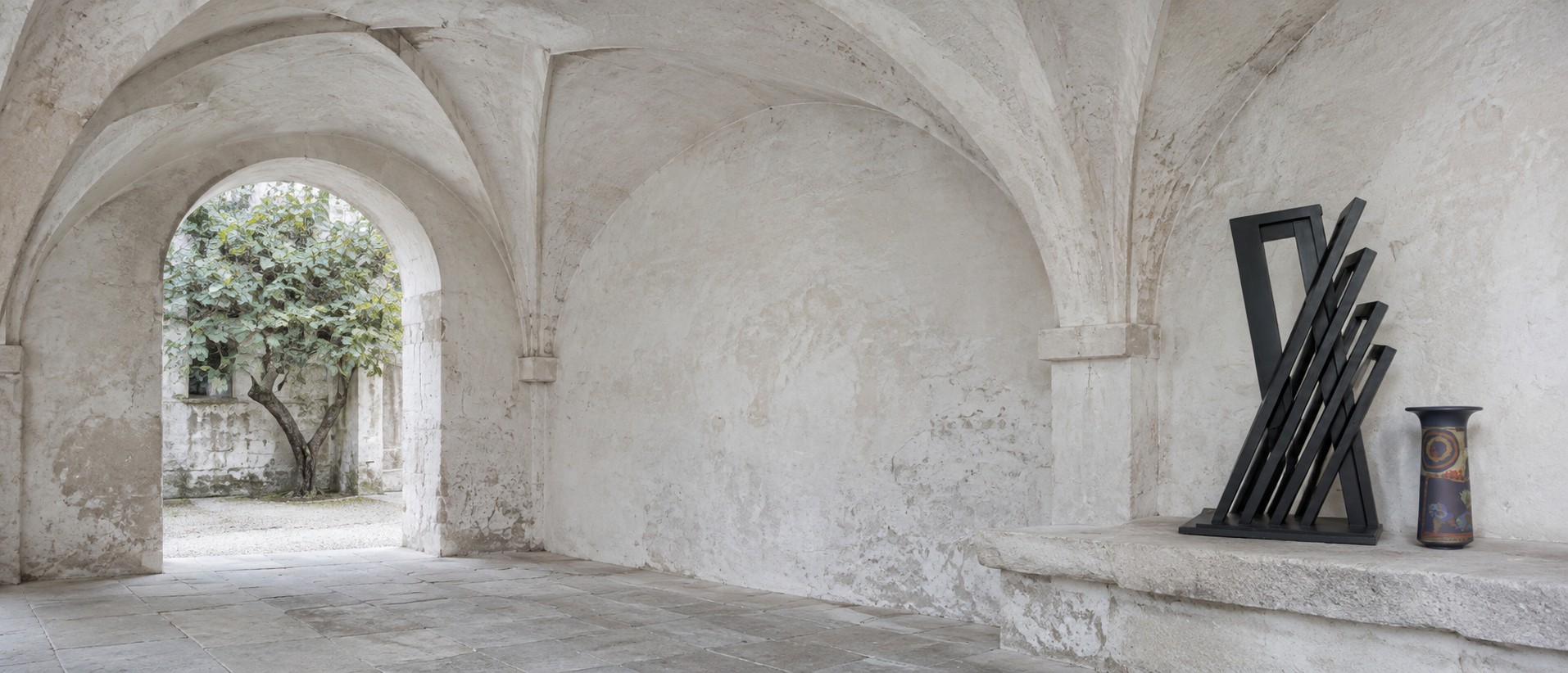
In this photo: Architectural Lamp from the 1980s, Fedon R. (€ 295) · Vintage design Rosenthal Gilbert Portanier vase, 1980s (€ 195)
Postmodern and Memphis: design that breaks the rules
After decades of clean, functional and above all serious design, a counter-movement emerged around 1980. Designers had had enough of grey and beige. Furniture was allowed colour again, an odd shape, a joke. That is postmodernism: design that does not take itself too seriously.
Its best-known expression is Memphis, the group around Ettore Sottsass in Milan. But the postmodern interior is broader: the sculptural leather of De Sede, the steel and glass of Belgo Chrom and the curved plastic of Ron Arad belong to it as well.
In this article you can read where the style comes from, why it is back and how to use it without turning your home into a stage set. The images show pieces from our own collection; click on a piece to view it.
What is postmodern design and what is Memphis?
Modernism searched for the one right form: functional, honest, without decoration. Postmodern designers found that too limiting. The American architect Robert Venturi summed it up with ‘Less is a bore’. History, ornament, colour and humour were allowed back.
In Italy this led first to Studio Alchimia (1976) and then to Memphis. Ettore Sottsass founded the group at the end of 1980; in 1981 the first collection was shown in Milan. Bright colours, patterned laminate and skewed shapes caused a shock. The name comes from a Bob Dylan song that was playing that evening.
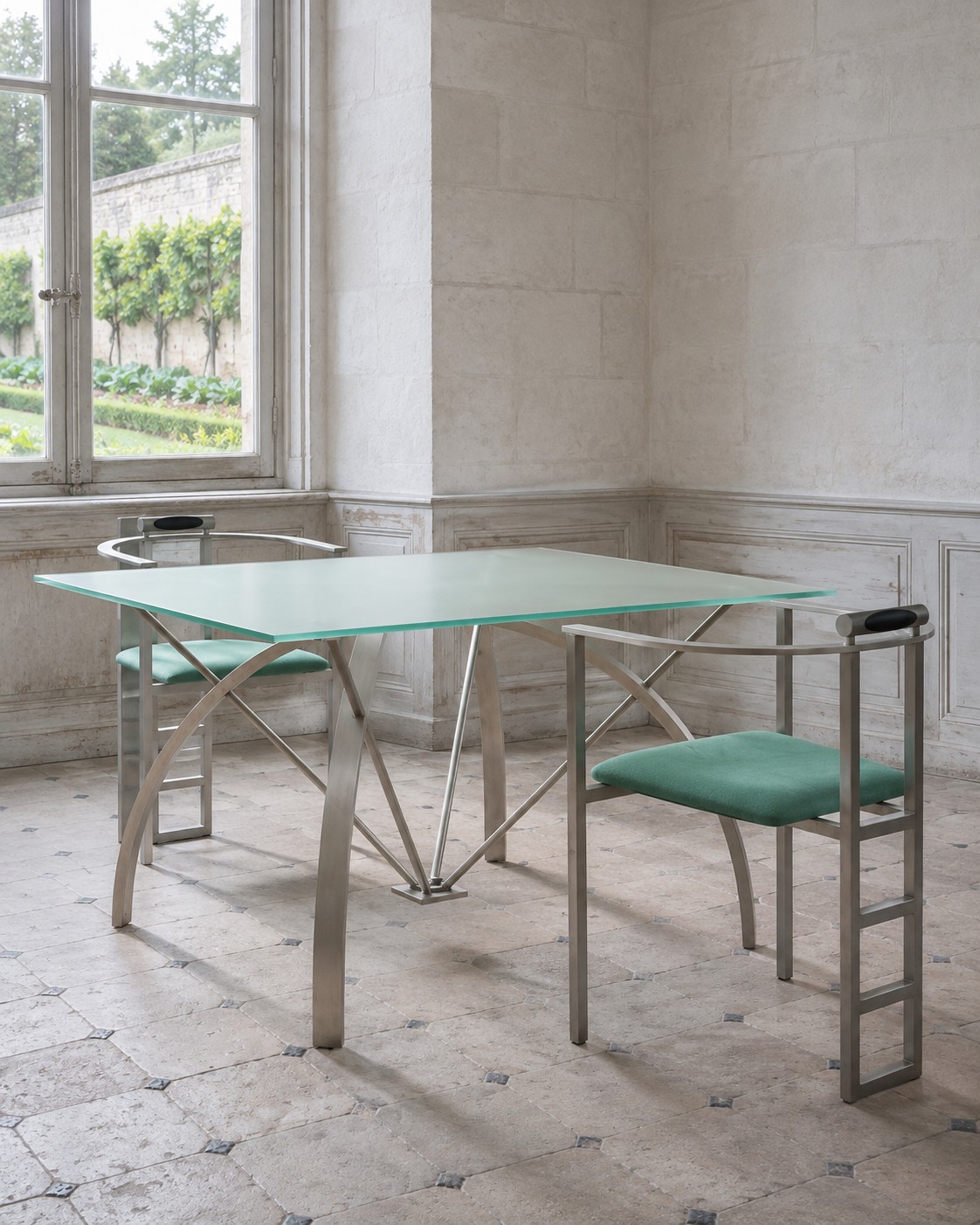
The style spread far beyond Milan. The Belgo Chrom dining table in the photo, with its curved steel base and glass top, still dates from the 1970s; the two chairs in green Alcantara and stainless steel are from the 1980s. Together they show how shine and colour took over the dining room.
In this photo: Top Design Belgo Chrom Dining Table (€ 745) · Memphis Style Belgo Chrom Chairs, Stainless Steel and Green Velvet, 1980s (€ 315)
Why is Memphis so popular again?
After years of white, grey and natural tones, there is an appetite for colour again. A generation that knows the 1980s only from photographs is discovering how cheerful and free that design was.
It also suits the way we furnish now: fewer sets, more individual pieces with character. One postmodern chair does for a room what a painting does. You do not need a whole interior for it.
And the pieces are scarce. Many designs were made in small runs, and what was once discarded as too wild is now sought after. Good examples by a known designer become harder to find every year.
The strength of postmodern design: form as a statement
A postmodern piece of furniture is an image first and an object of use second. The form says something: a back like a shield, an armrest like a wing, a leg where you do not expect one.
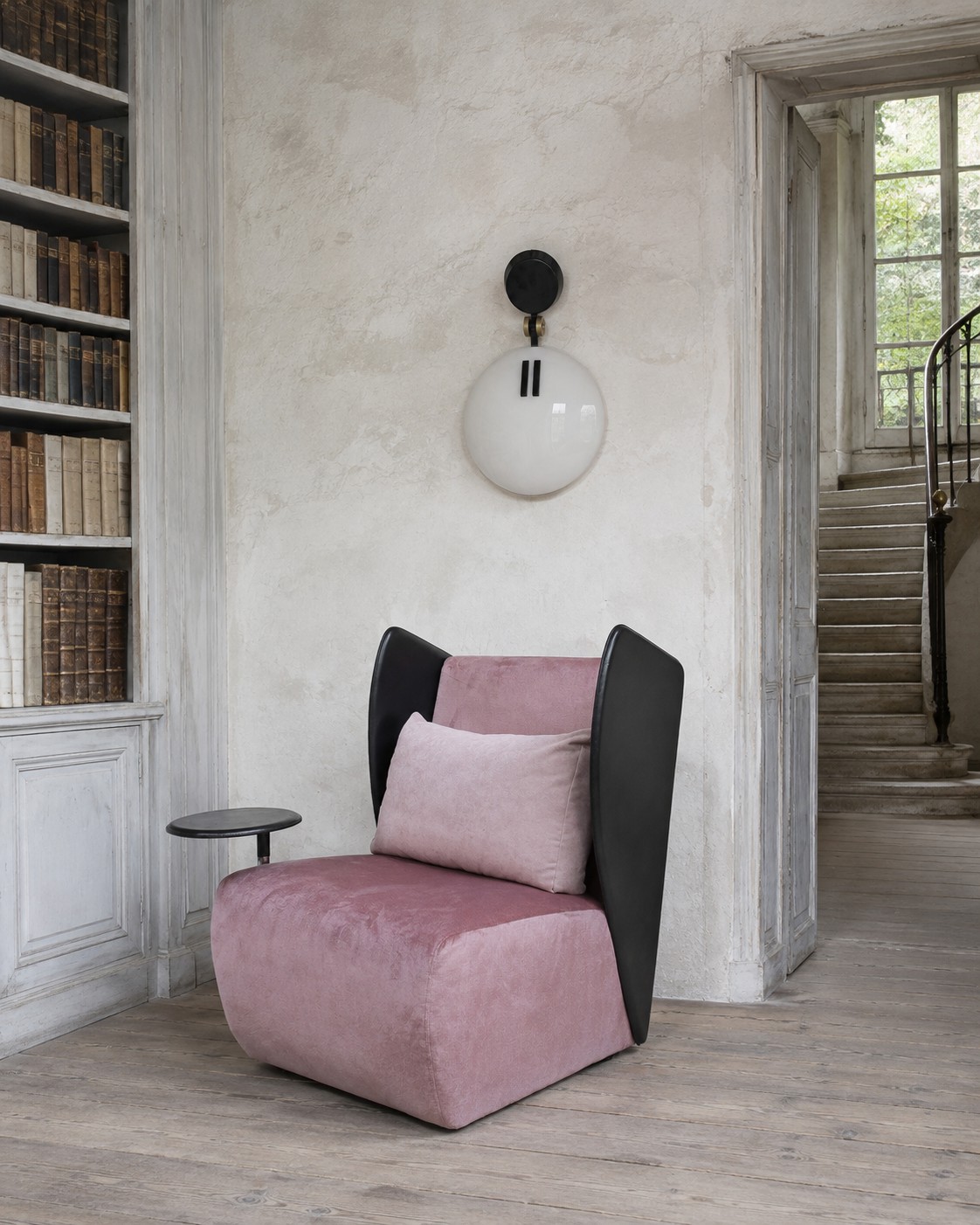
The chair by Augusto Mandelli and Walter Selva for Salmistraro shows this well. Black leather sections enclose a seat in pink velvet; the chair is 99 centimetres high and has a different silhouette from every angle. Place it free in the room, not in a corner.
Above it hangs the wall lamp by Bruno Gecchelin for Oluce from the 1980s: a white glass shade with two black vertical elements. A lamp like this is both lighting and a graphic sign on the wall. The wiring has not been checked; have it inspected by an electrician.
In this photo: 1980s Italy Memphis Style, Salmistraro, Augusto Mandelli, Walter Selva (€ 795) · Bruno Gecchelin design wall lamp for Oluce – 1980s (€ 295)
How do you combine postmodern design without creating a film set?
The pitfall of this style is too much. Five colours, three patterns and four odd shapes in one room turn it into a film set. So choose one or two outspoken pieces per room and keep the rest quiet.
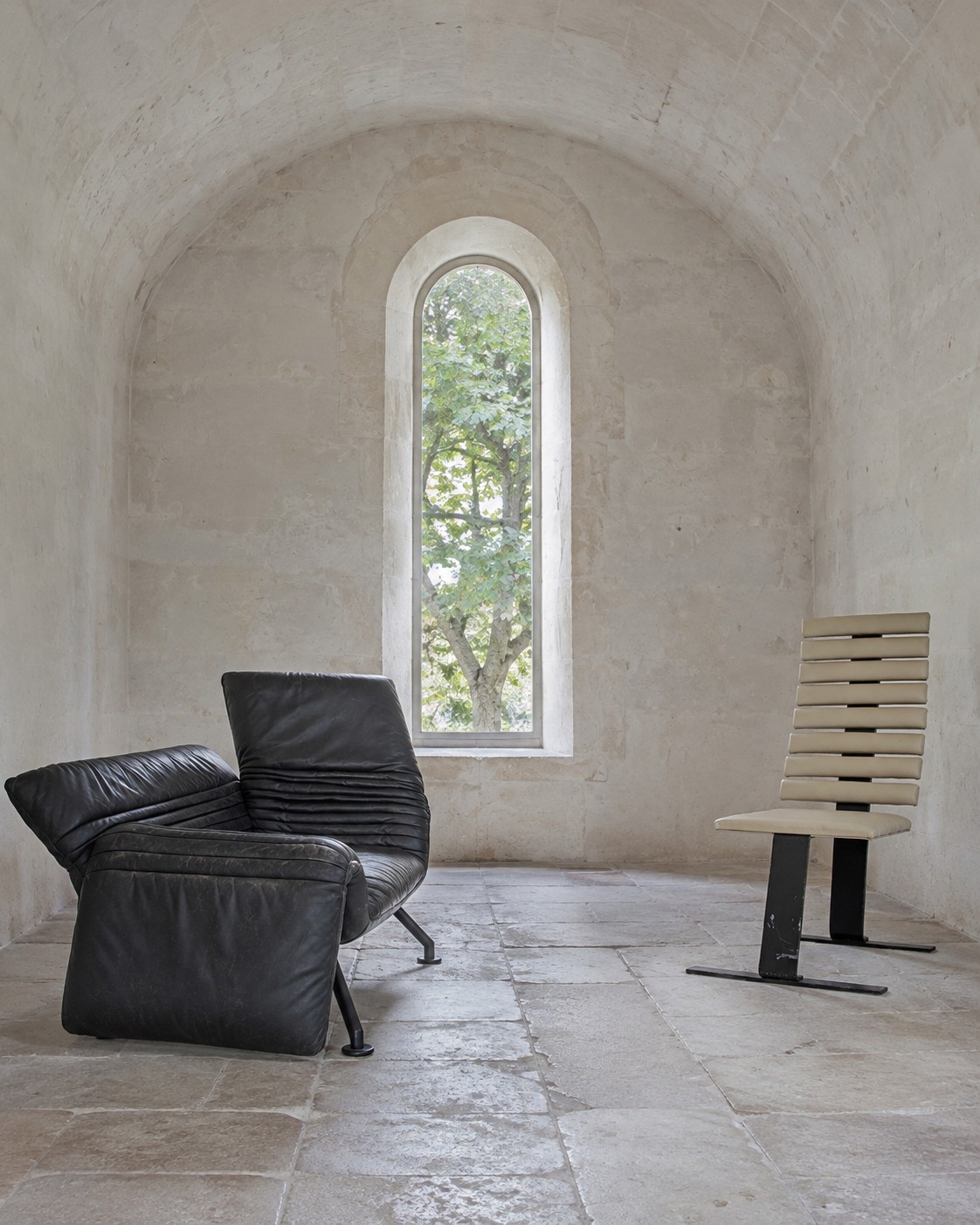
Black helps. The De Sede DS-142 by Winfried Totzek from 1988 is black leather and has a back and armrests that adjust independently, from armchair to daybed. The design is as headstrong as Memphis, but the colour keeps it calm.
Opposite stands the Rib armchair from the 1980s, with a base of black coated sheet steel and ribs in beige leatherette. Two sculptural chairs, little colour, plenty of space around them: this is how postmodern design becomes almost serene.
In this photo: De Sede DS-142 armchair / daybed – black leather, Winfried Totzek, 1980s (€ 1.950) · Rare Mid-Century Design Rib Chair, 1980s (€ 495)
What to look for when buying postmodern design
Start with the designer and the manufacturer. A name such as Sottsass, Arad or Gecchelin, or a manufacturer such as Moroso, Oluce, De Sede or Rosenthal, determines a large part of the value. Look for labels, stamps and signatures.
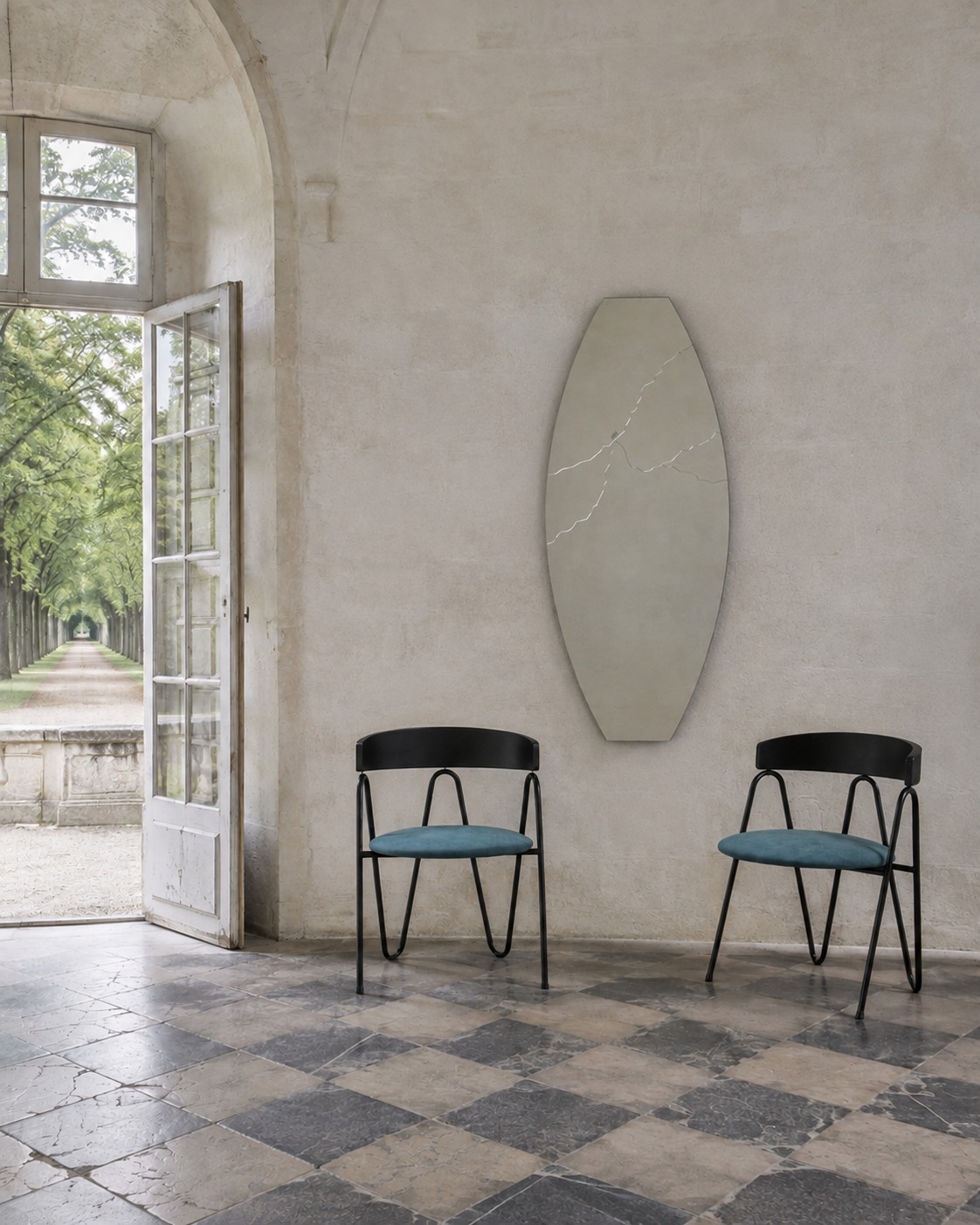
If the maker is unknown, look at the form and the condition. The Memphis Milano style chairs in the photo carry no name, but they do have a pronounced 1980s shape. They have been reupholstered in blue-green fabric; a seller should always mention that.
Check upholstery and surfaces. Alcantara, velvet and leatherette wear at the edges; plastic can discolour and laminate can lift at the corners. Always ask what is original and what has been replaced later.
With mirrors and glass, look at the edges and the signature. The ‘Broken’ mirror by the Italian firm Rimadesio is signed and measures 130 centimetres high by 57 centimetres wide: narrow enough for a hall, large enough to carry a wall.
And mind the overall size. Postmodern armchairs are often wider than you think. Measure the spot and allow for space around it, because these pieces need air to come into their own.
In this photo: 5 Memphis Milano style chairs, 1980s (€ 845) · Rimadesio Italian Design Mirror “Broken”, Signed (€ 395)
Postmodern and Memphis in a light, calm interior
Colour works best against a calm background. Against limewash, stone and weathered wood, a red armchair or a pink chair becomes a painting. The old wall makes the new design stronger, and vice versa.
Think in sculptures. Place the pieces well apart, as in a gallery, and leave the floor between them empty. Then you see the form of each piece and the colours do not fight each other.
Repeat one colour in a second place, for example the black of leather in a lamp or a frame. That is enough to create coherence without it looking contrived.
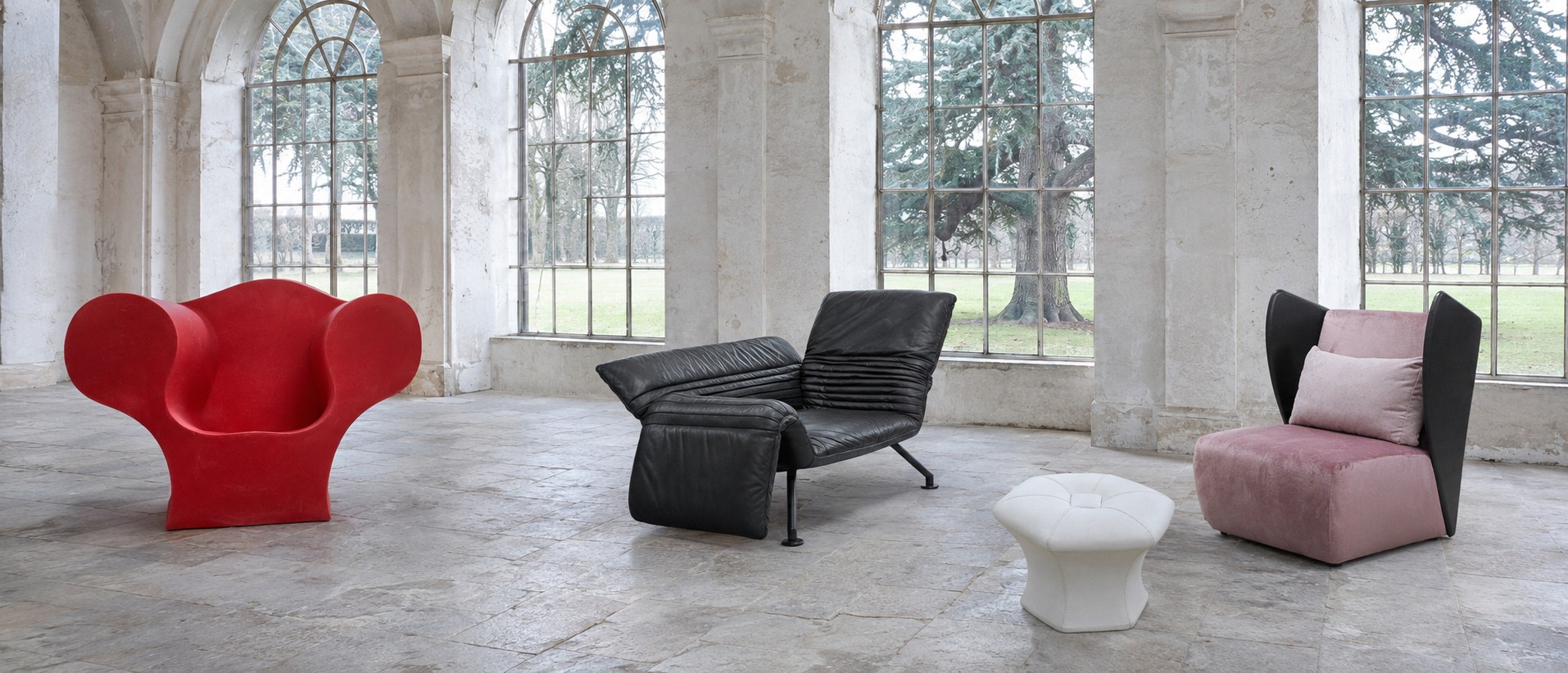
In this photo: Ron Arad ‘The Big Easy’ armchair for Moroso – red sculpture for home and garden (€ 695) · De Sede DS-142 armchair / daybed – black leather, Winfried Totzek, 1980s (€ 1.950) · 1980s Italy Memphis Style, Salmistraro, Augusto Mandelli, Walter Selva (€ 795) · Sculptural hexagonal pouffe in white leatherette (now only € 50)
How would De Huiszwaluw use postmodern and Memphis design?
We would start with The Big Easy by Ron Arad for Moroso. The form goes back to the steel armchair Arad made in 1988; this red plastic version is a design from 1991. It is 133 centimetres wide and can be used indoors and outdoors.
Next to it a small, light piece as a counterweight: the hexagonal pouf in white leatherette, 35 centimetres high, or the Rimadesio mirror on the wall. That gives the red company without competition.
On a shelf or windowsill we would place one decorated object, such as the slender vase by Gilbert Portanier for Rosenthal, next to the architectural lamp in black coated wood from the 1980s. The wiring of that lamp has not been checked either; have it inspected by an electrician.
Below you can see the postmodern and Memphis design currently in our collection. Stock changes; pieces that have been sold can be found under ‘Previously in our collection’.
Now in our collection: postmodern & Memphis
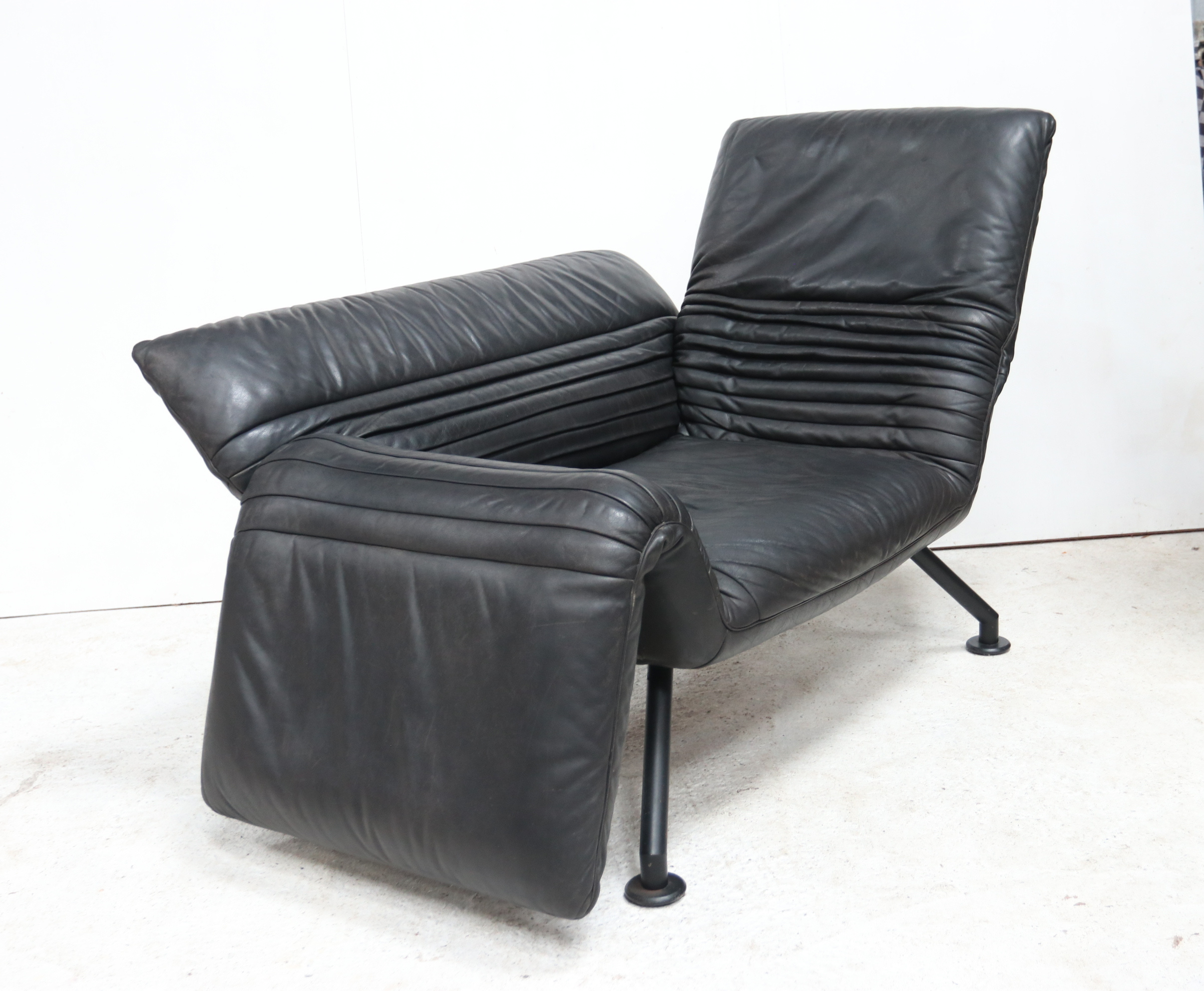 De Sede DS-142 armchair / daybed – black leather, Winfried Totzek, 1980s€ 1.950
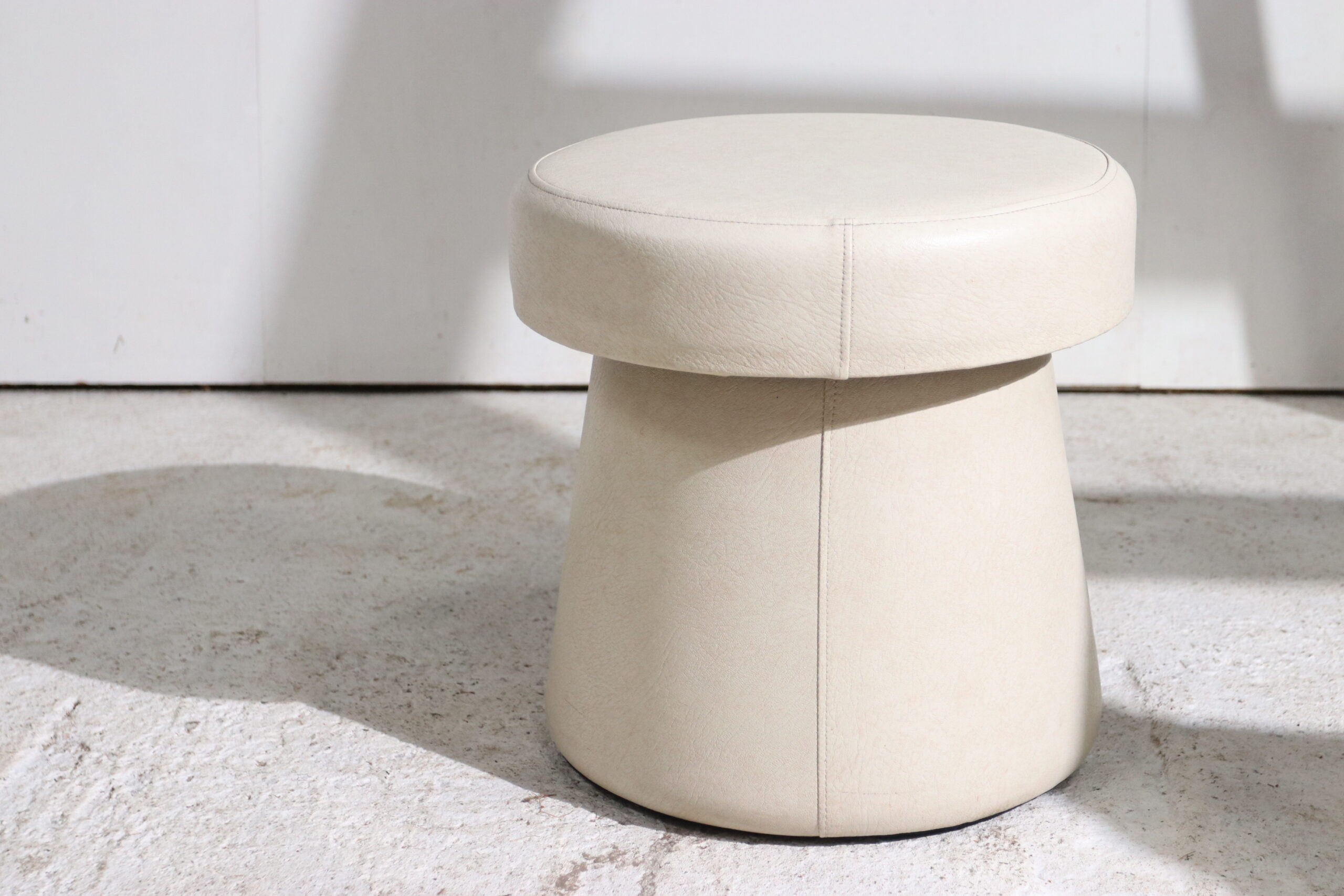 Cream leather pouffe with storage – mushroom shape, vintage€ 95
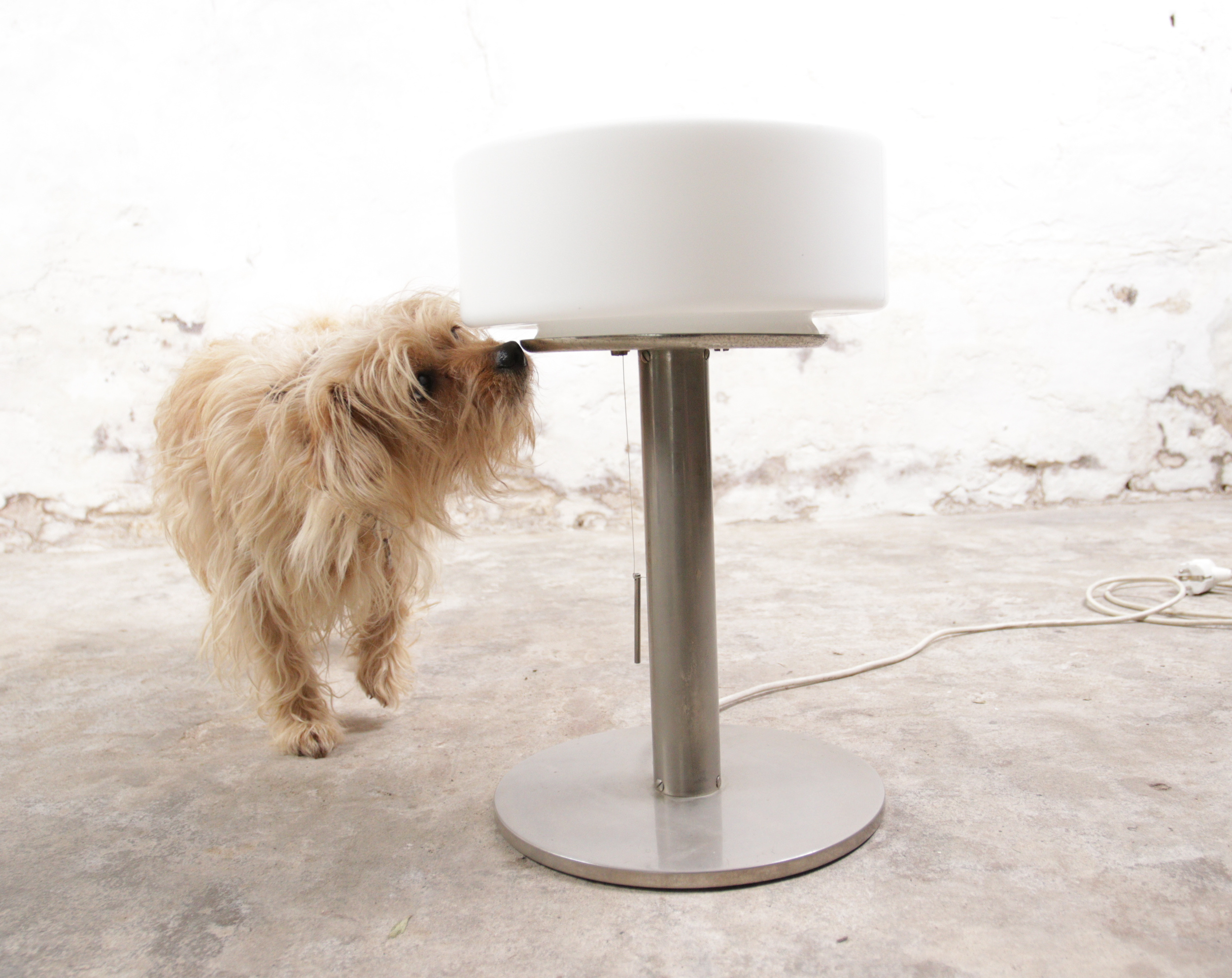 Temde table lamp with opaline glass shade and stainless steel base – 1970s€ 295
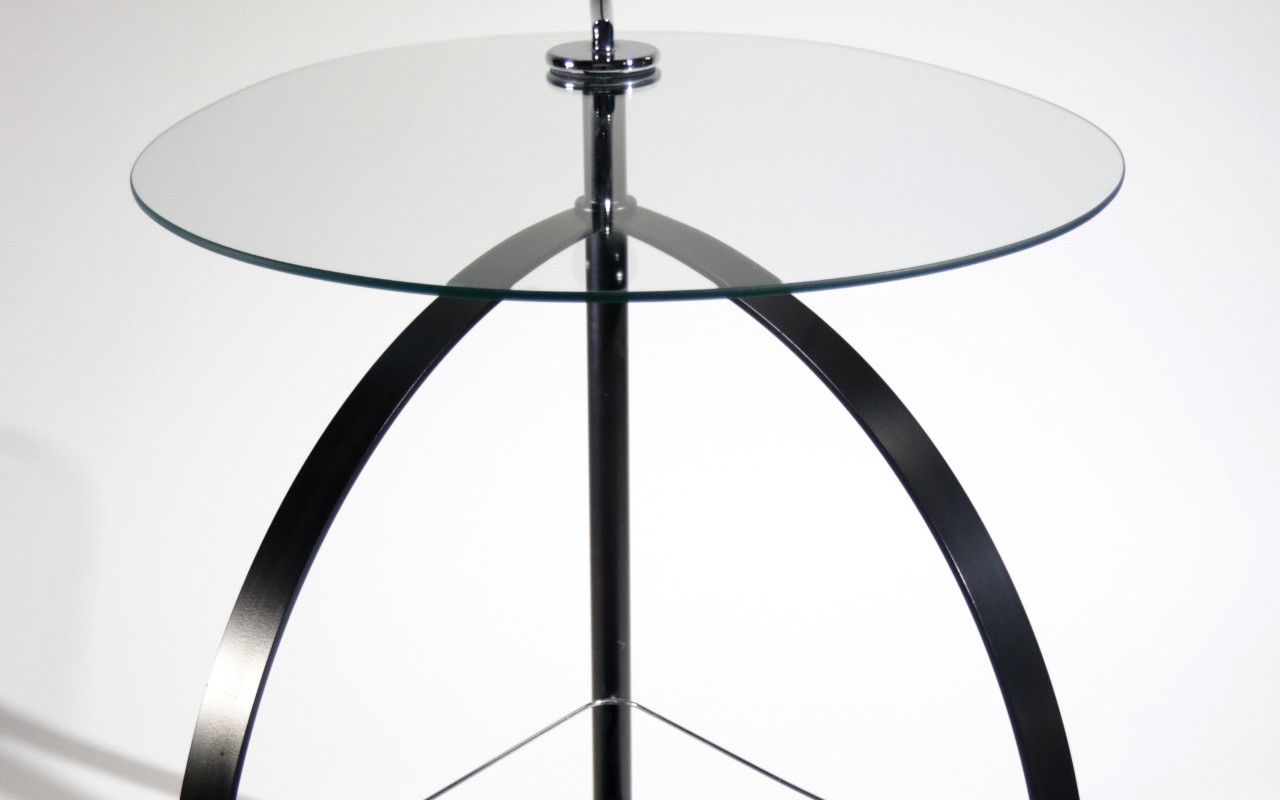 Vintage serving trolley in Bauhaus style with glass top€ 445
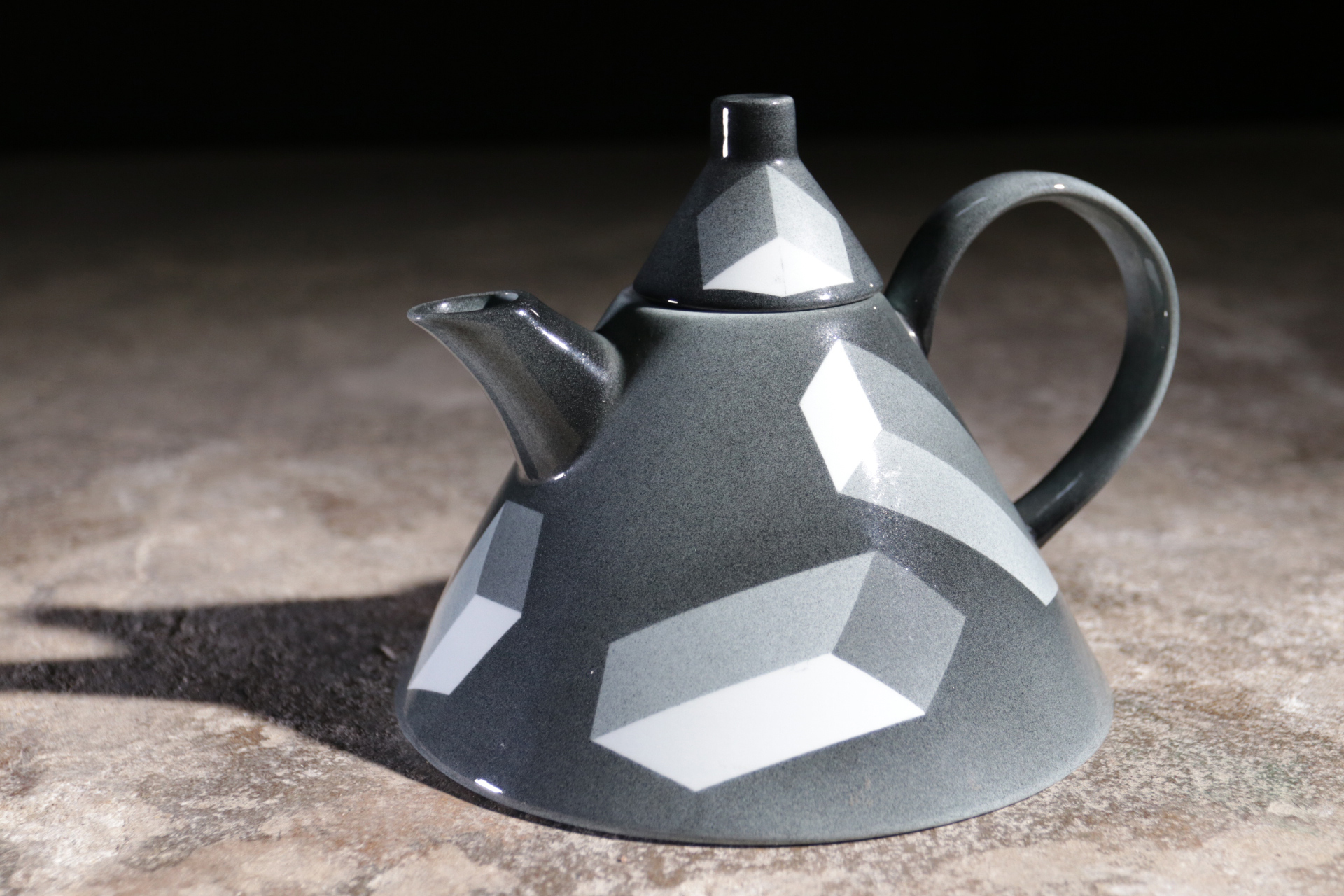 Rörstrand ‘Atlantis’ teapot by Rolf Sinnemark – Memphis style, 1984€ 245
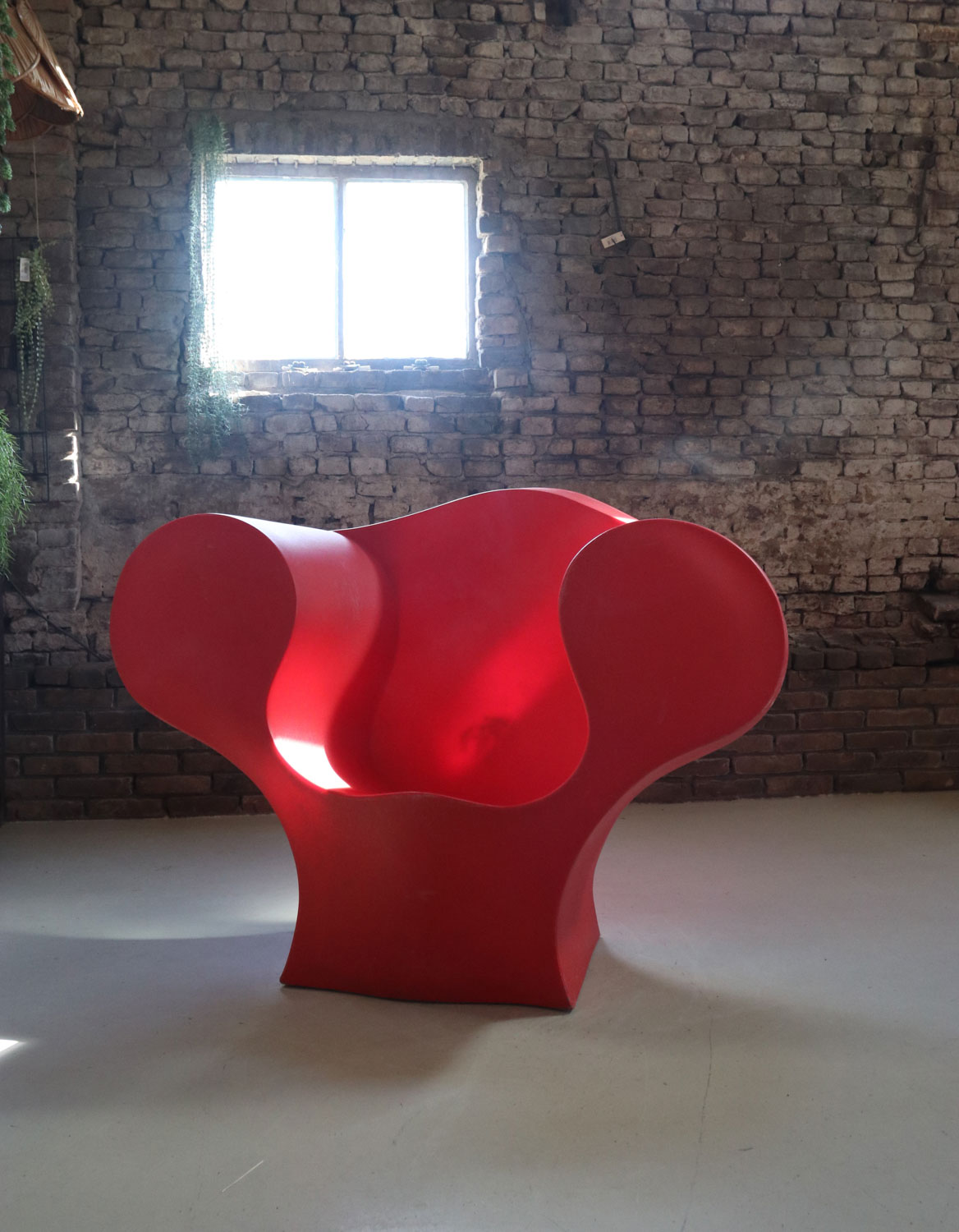 Ron Arad ‘The Big Easy’ armchair for Moroso – red sculpture for home and garden€ 695
 Sculptural hexagonal pouffe in white leatherettenow only € 50
 Vintage hand-woven geometric rug, 1970s–80s€ 375
 Vintage hand-woven wool kilim / flatweave rug, 1970s–80s€ 375
 Set of four Thonet 676 PF armchairs designed by Charles Rennie Mackintosh€ 1.195
 Bruno Gecchelin design wall lamp for Oluce – 1980s€ 295
 Rimadesio Italian Design Mirror “Broken”, Signed€ 395
 Architectural Lamp from the 1980s, Fedon R.€ 295
 Set of 9 Stackable Paolo Favaretto & Airborne Assisa Chairs, 1986€ 595
 Set of Six P08 Folding Chairs by Justus Kolberg for Tecno, Italy€ 995
 1980s Italy Memphis Style, Salmistraro, Augusto Mandelli, Walter Selva€ 795
 Set of 16 Erik Magnussen ‘Magnus’ Chairs for Paustian, Stackable€ 295 per stoel
 Jimmy Car Katwijk chairs, mint green and chrome, Sept. 1992€ 45
 5 Memphis Milano style chairs, 1980s€ 845
 Vintage design HESTRA Tord Björklund ‘Jeans’ folding chair, 1991€ 445
 Rare Mid-Century Design Rib Chair, 1980s€ 495
 Vintage design Rosenthal Gilbert Portanier bowl, 1980s€ 145
 Vintage design Rosenthal Gilbert Portanier vase, 1980s€ 195
 Vintage design Belgo Chrom chairs, Memphis style, grey€ 295
 Belgo Chrom Chairs, Memphis Style, Set of 4€ 595
 Top Design Belgo Chrom Dining Table€ 745
 Memphis Style Belgo Chrom Chairs, Stainless Steel and Green Velvet, 1980s€ 315
Previously in our collection

Read on about other styles
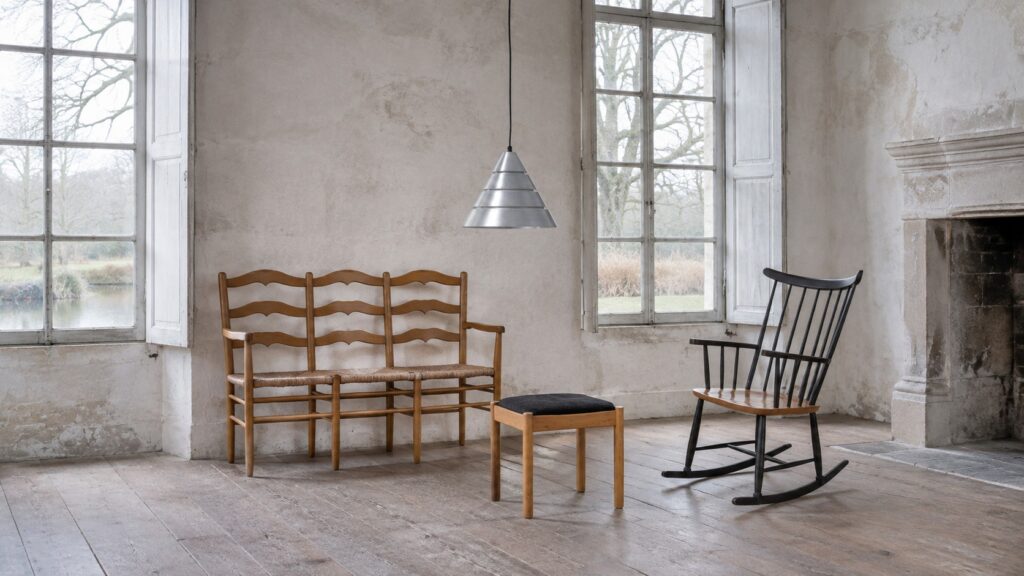 Scandinavian designScandinavian design at home: light wood, calm and simplicity
 BohemianBohemian at home: free, warm and full of stories
 Dutch designDutch design at home: sober, clever and surprisingly warm
 Classic antiquesClassic antiques at home: centuries old, and made to last
 Art nouveauArt nouveau interior: lines that grow like plants
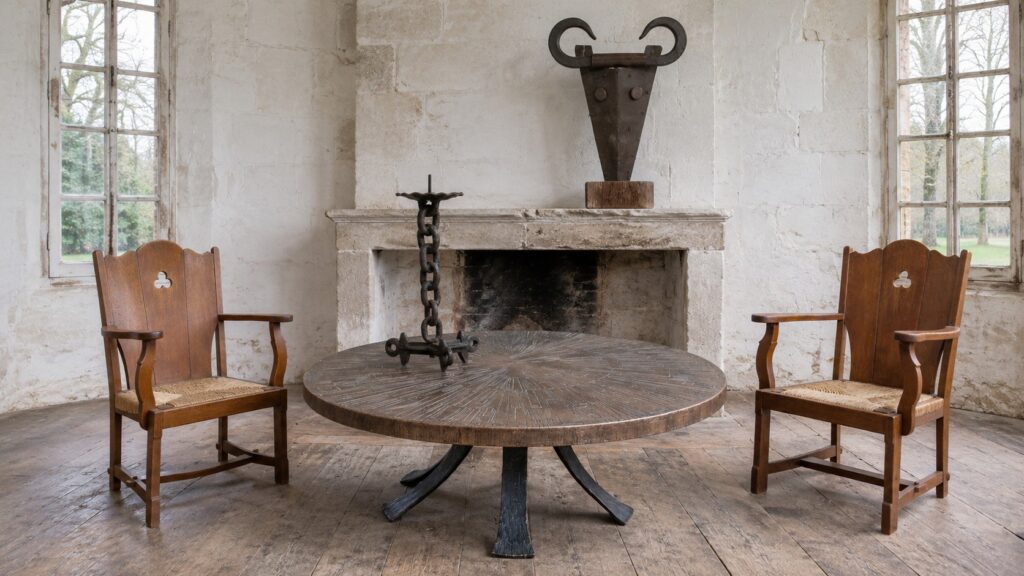 BrutalismBrutalism at home: heavy wood, raw iron and shapes with weight
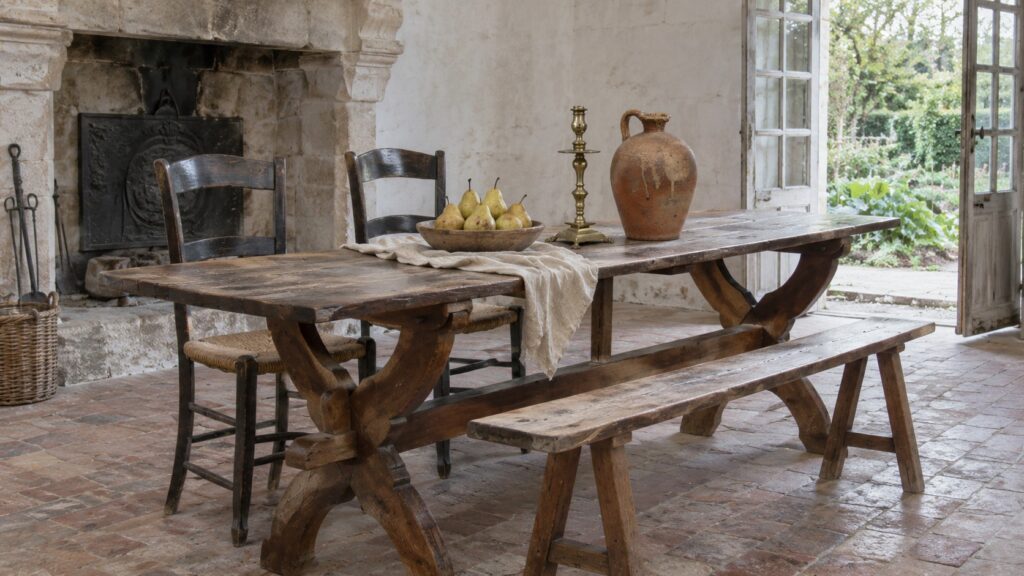 French countryFrench country living: wood, stone and the calm of country life
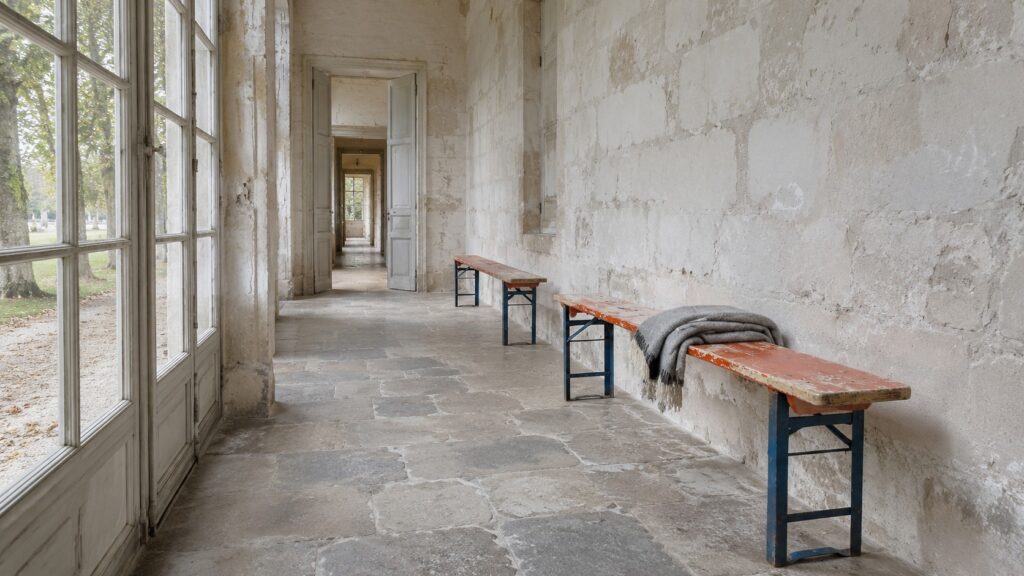 IndustrialIndustrial living: honest materials, clever shapes and a rough edge
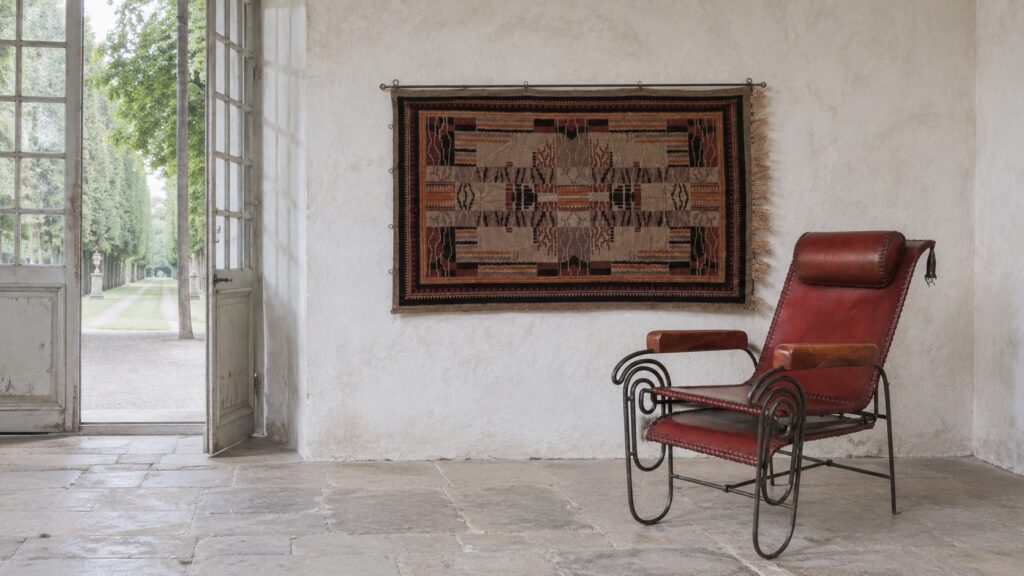 Art decoArt deco: clean lines, warm materials and a touch of daring
 Mid-centuryMid-century design: timeless, warm and still modern
 Wabi-sabiWhat is wabi-sabi living, and why does imperfection make an interior more beautiful?