Dutch design at home: sober, clever and surprisingly warm
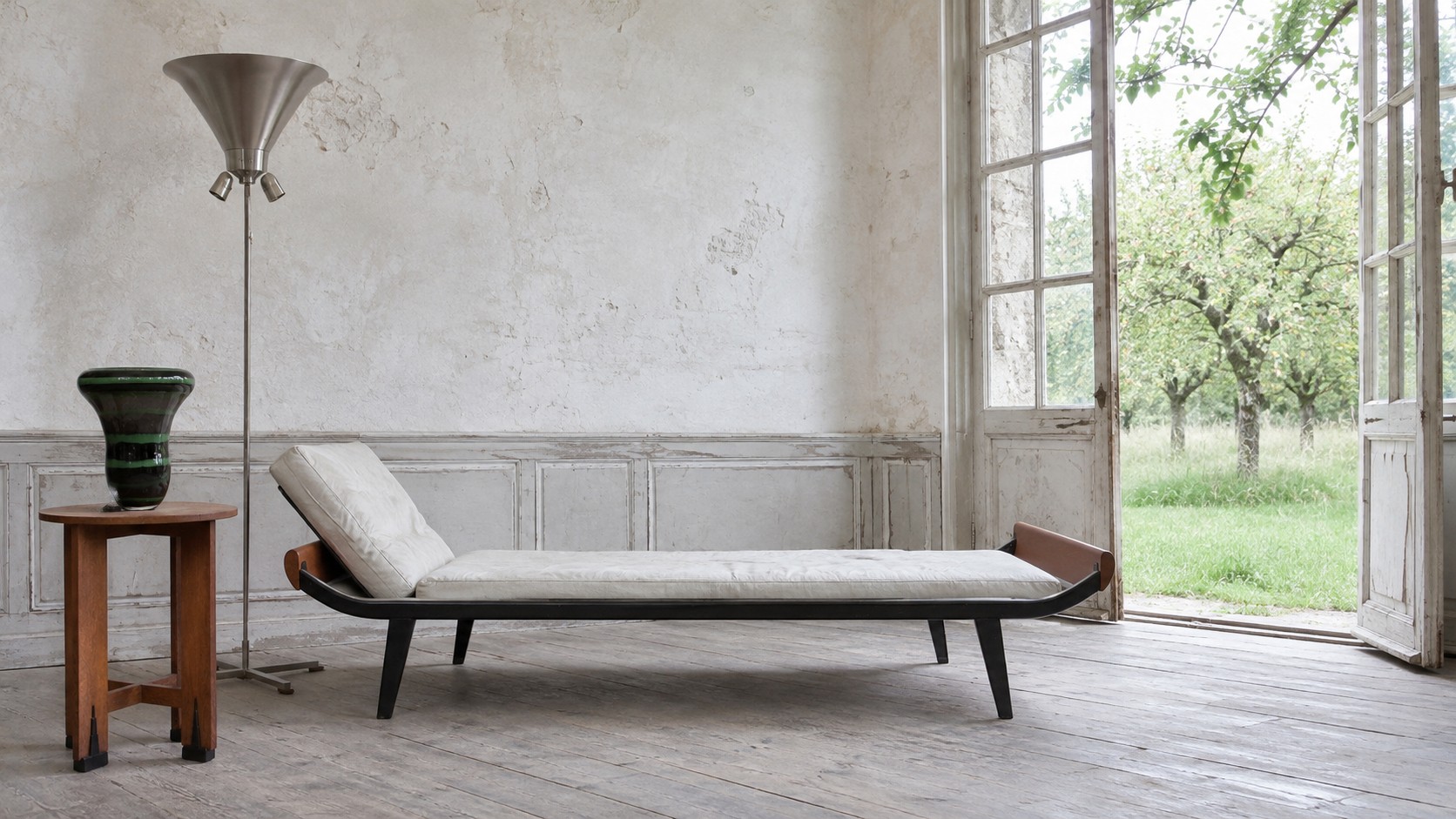
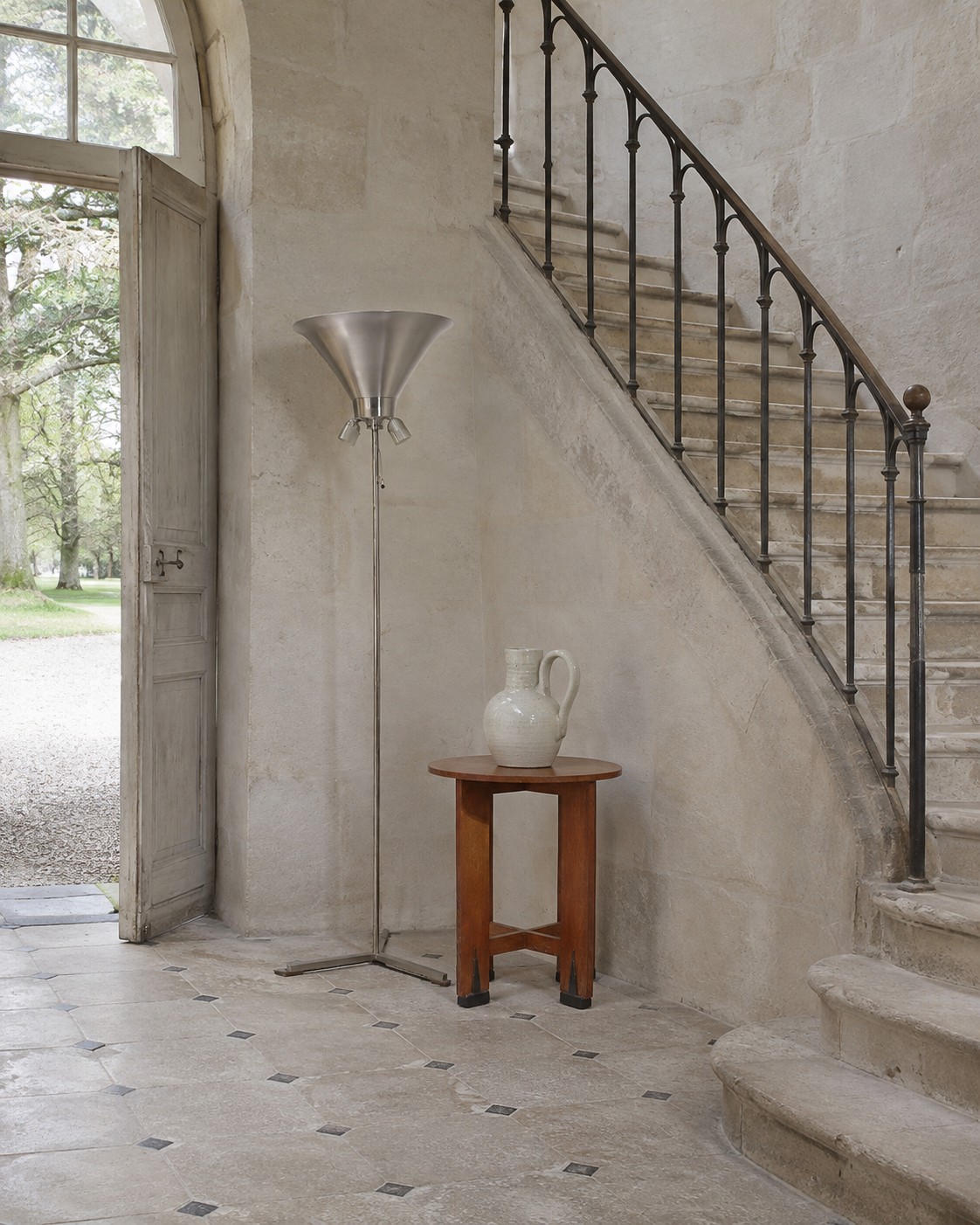
In this photo: Mid-Century Modern Cleopatra Daybed by Dick Cordemeijer, 1953 (€ 495) · Vintage Dutch Design W. Hagoort Floor Lamp Model 353 (€ 645) · Round oak side table – Amsterdam School style, 1920s–30s (€ 395) · Large Dutch Design Vilma Henkelman Unica Leerdam Art Glass Vase, 1989 (€ 395)
Dutch design at home: sober, clever and surprisingly warm
From the Amsterdam School to Friso Kramer: Dutch design that gives an interior calm and character.
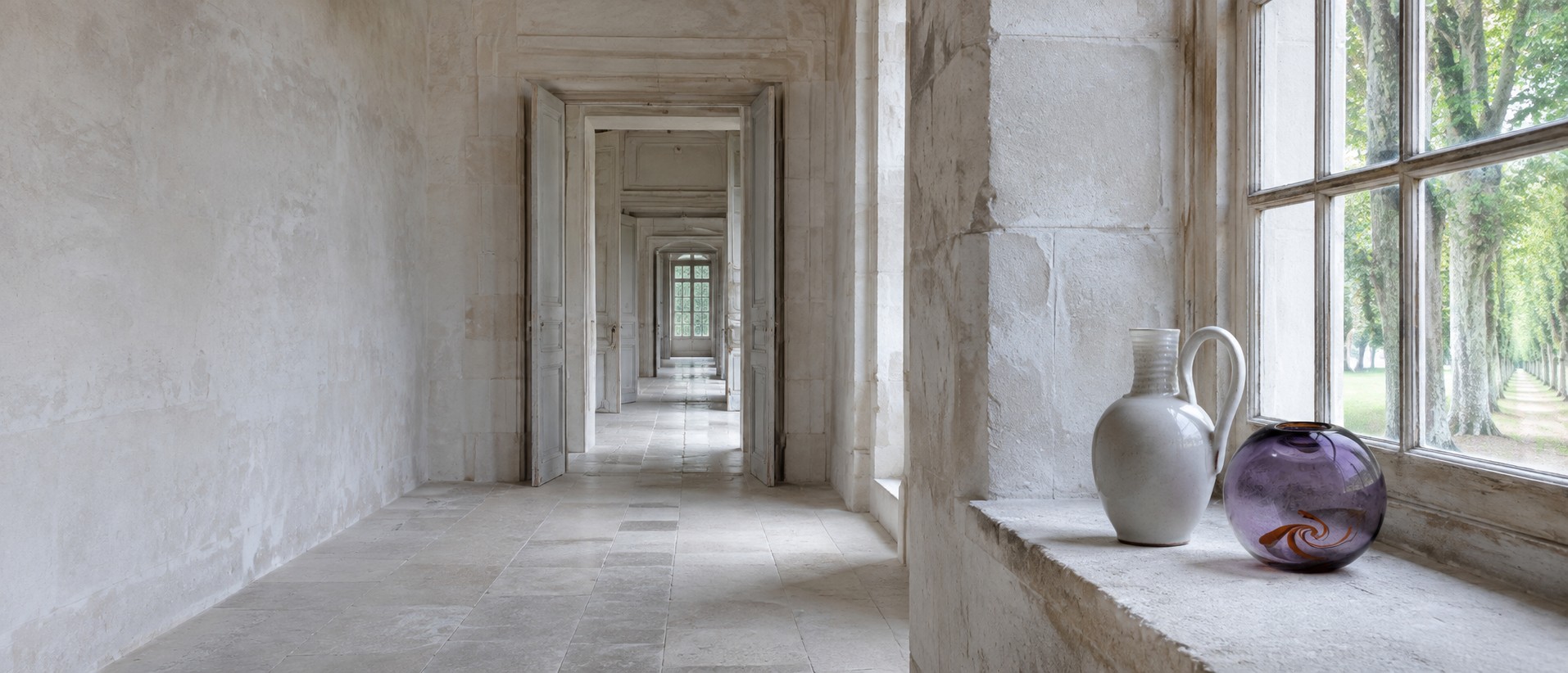
In this photo: Westraven vase with handle – white speckled earthenware, Utrecht, 1960s–70s (€ 55) · Unica design thick-walled vase by Roel Olivier, Leerdam glass (€ 130)
Dutch design: objects with an idea behind them
You rarely recognise Dutch design by its decoration. You recognise it by an idea: a chair that is nothing more than it needs to be, a lamp that does exactly what it should, a vase in which the maker tried something new. It is design that thinks first and takes shape afterwards.
That sounds strict, but at home it works differently. Oak, bent steel, thick glass and glazed earthenware only improve with age. Next to old walls and a weathered floor, Dutch design gains a certain softness.
In this article you can read where Dutch design comes from, why it is in demand again and how to combine it. The images show pieces from our own collection; click on a piece to view it.
What is Dutch design?
Dutch design is not a style with fixed features but a way of designing: sober, functional, often with a touch of humour. Its roots lie in the early twentieth century. The Amsterdam School (roughly 1910 to 1930) made expressive furniture in dark oak, while De Stijl, from 1917, looked for straight lines and primary colours.
After the war, design became more matter-of-fact. The Goed Wonen foundation, set up in 1946, wanted affordable, honest furniture for everyone. Manufacturers such as Gispen, Pastoe, Ahrend and Auping worked with designers like Friso Kramer, Wim Rietveld, Cees Braakman and Dick Cordemeijer.
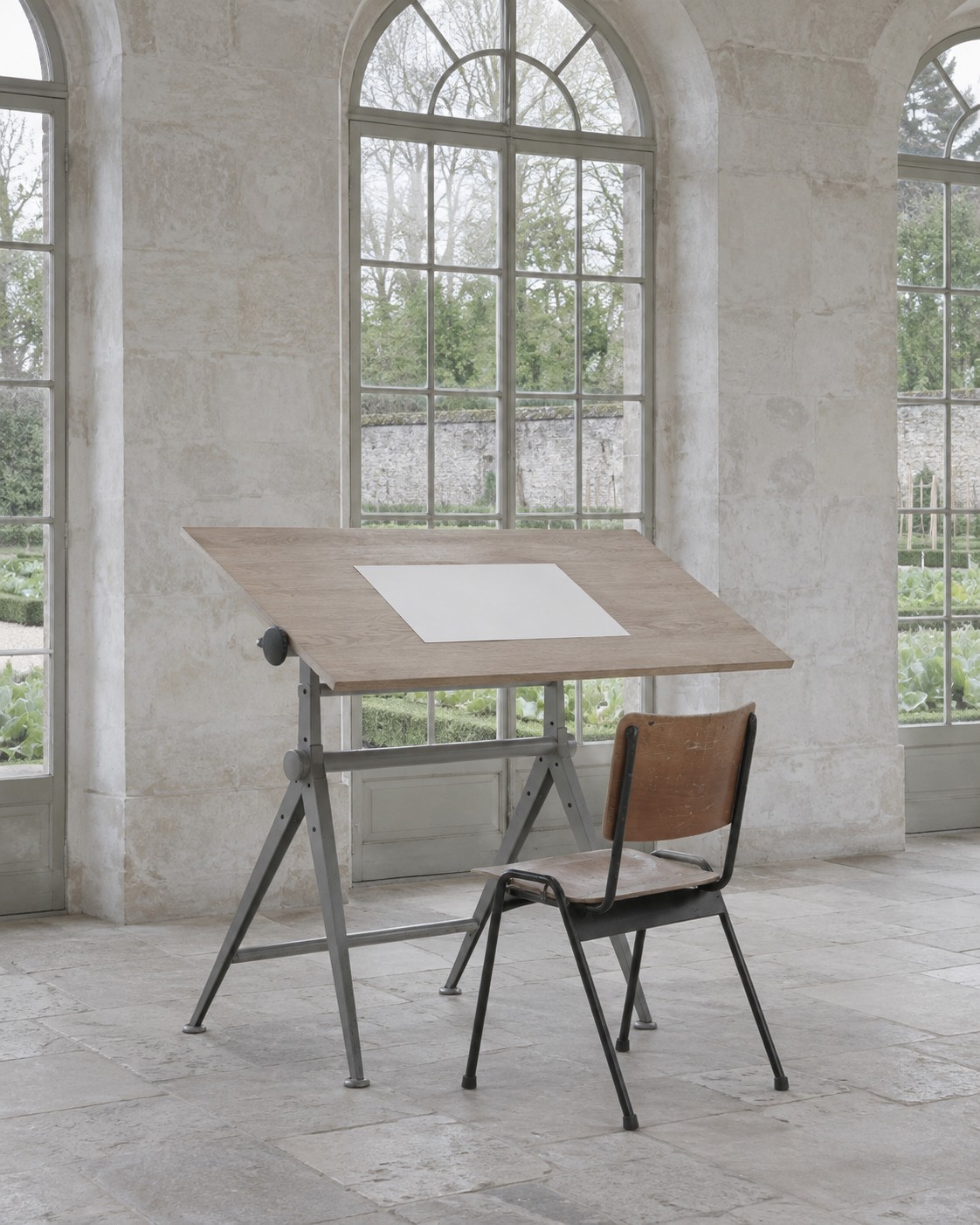
The Reply drafting table in the photo is a textbook example. Friso Kramer and Wim Rietveld designed it in 1959 for Ahrend de Cirkel: a steel base, an adjustable top and not one part too many. The Ahrend Comfort chair in front of it comes from the same world.
In this photo: Friso Kramer & Wim Rietveld Reply drawing table XL – Ahrend de Cirkel, 1959 (€ 555) · Vintage Ahrend ‘Comfort’ chairs in makoré wood, c. 1966 (€ 95 each)
Why is Dutch design so sought after again?
Dutch design suits the way many people want to live now: with fewer things, but with pieces that mean something. A design with a name, a date and a story gives an interior more depth than something that merely looks good.
Then there is the quality. This furniture and lighting was made for schools, offices and families, and therefore made to last. What has survived sixty years of use can manage another sixty.
And it is from here. Anyone who brings home a piece by Leerdam, Pander or Ahrend brings in a piece of Dutch history. Collectors abroad have known this for a long time; appreciation in the Netherlands is growing too.
The strength of Dutch design: material and simplicity
Dutch design shows what something is made of. Steel stays steel, oak stays oak, and glass may be thick and heavy. Nothing is hidden behind veneer or curls; the construction is often the ornament.
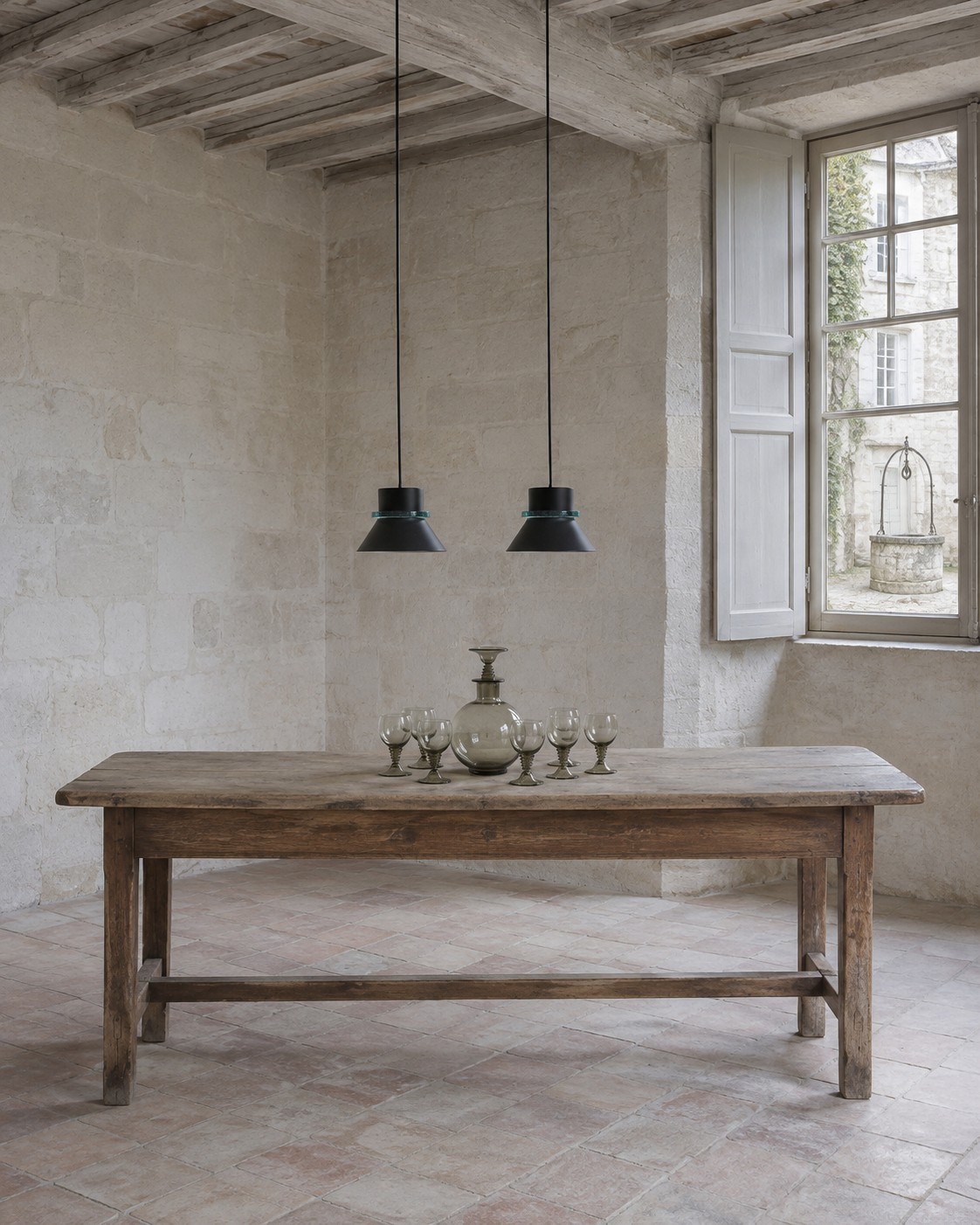
The same goes for smaller objects. The Leerdam glassworks and the Kristalunie in Maastricht invited artists to design tableware and unique pieces. The Traditie decanter with seven glasses in the photo was designed by W.J. Rozendaal in 1932–1933 for the Kristalunie: clean, light and still perfectly usable.
Above it hang two pendant lamps by Hiemstra Evolux, black with a turquoise glass ring. They are small, but two in a row above a table do a great deal. The wiring of these lamps has not been checked; always have it inspected by an electrician.
In this photo: Set of 2 vintage Hiemstra Evolux pendant lamps – black with turquoise glass ring (€ 395 voor de set) · Art Deco Traditie decanter with 7 glasses by W.J. Rozendaal – Kristalunie, 1932–1933 (€ 195)
How do you combine Dutch design without it turning into an office?
Much Dutch design was once made for offices and schools. Put too much of it together and a room soon feels businesslike. The answer is contrast: one clean-lined piece next to something old, something soft or something made by hand.
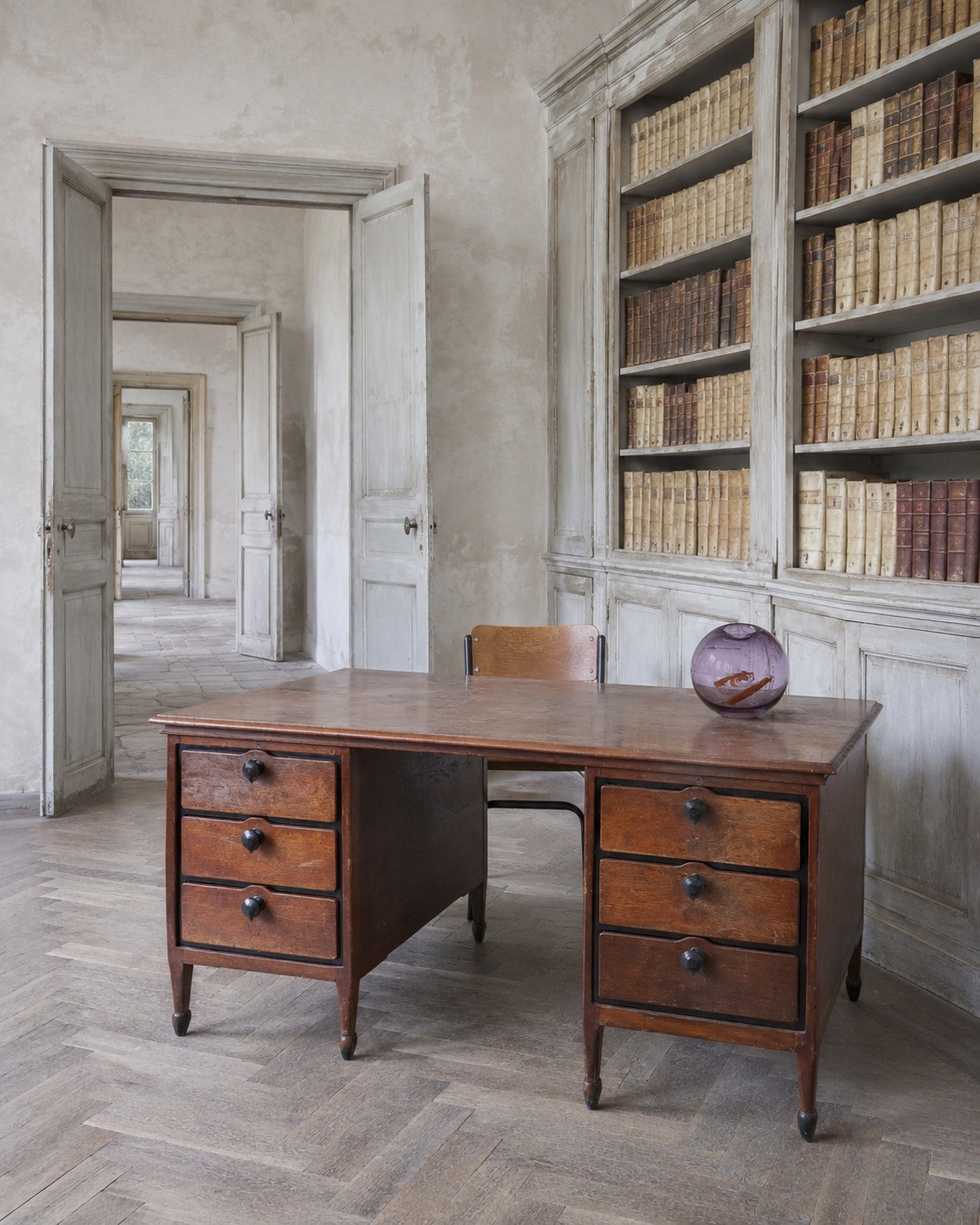
The desk by H. Pander & Zonen from around 1920 is such a counterweight. It is oak, large and solid, and stands at the transition from art nouveau to early art deco. With an Ahrend Comfort chair from the 1960s behind it, you see two generations of Dutch design strengthening each other.
Then add one object that brings colour. The thick-walled vase by Roel Olivier for the Leerdam glassworks, dark purple with a dark yellow star in the base, is enough. A desktop like this needs nothing more.
In this photo: Pander desk from circa 1920 (€ 995) · Vintage Ahrend ‘Comfort’ chairs in makoré wood, c. 1966 (€ 95 each) · Unica design thick-walled vase by Roel Olivier, Leerdam glass (€ 130)
What to look for when buying Dutch design
Look at the maker first. Many pieces are marked: a label under a chair, a stamp in a drawer, a signature under a vase. Leerdam Unica pieces are signed; Westraven earthenware carries a mark on the base.
Then look at the condition, and be honest about what you like. Signs of use belong to furniture that has served for decades. A resprayed frame or a new top makes a piece usable, but also takes away some of its history.
With glass and earthenware, check for chips, hairlines and limescale. Hold a vase up to the light and run a finger along the rim. Small irregularities from the making process are normal in mouth-blown glass.
With lamps, the technical side matters. The model 353 floor lamp by W. Hagoort from the 1960s stands on wenge feet and looks good even without a shade. The wiring has not been checked; have it inspected by an electrician before connecting the lamp.
And measure. The round oak side table in Amsterdam School style is only 50 centimetres wide and 65 centimetres high, the white Westraven vase on it 31 centimetres. In a photo everything looks larger or smaller than it is; that is why the dimensions are listed with every piece on our site.
In this photo: Round oak side table – Amsterdam School style, 1920s–30s (€ 395) · Westraven vase with handle – white speckled earthenware, Utrecht, 1960s–70s (€ 55) · Vintage Dutch Design W. Hagoort Floor Lamp Model 353 (€ 645)
Dutch design in a light, calm interior
Dutch design needs space. Against a light, matt wall you read the line of a steel frame or the curve of a backrest far better than in a full room. Limewash, stone and weathered wood are the ideal background.
Keep the number of pieces small and give each its own place. A daybed by the window, a desk on the other side, one lamp and one vase: a large room needs no more to feel finished.
Choose colours that are already in the pieces: the grey of steel, the warm tone of teak and oak, the green and black of glass. Then nothing else has to be added.
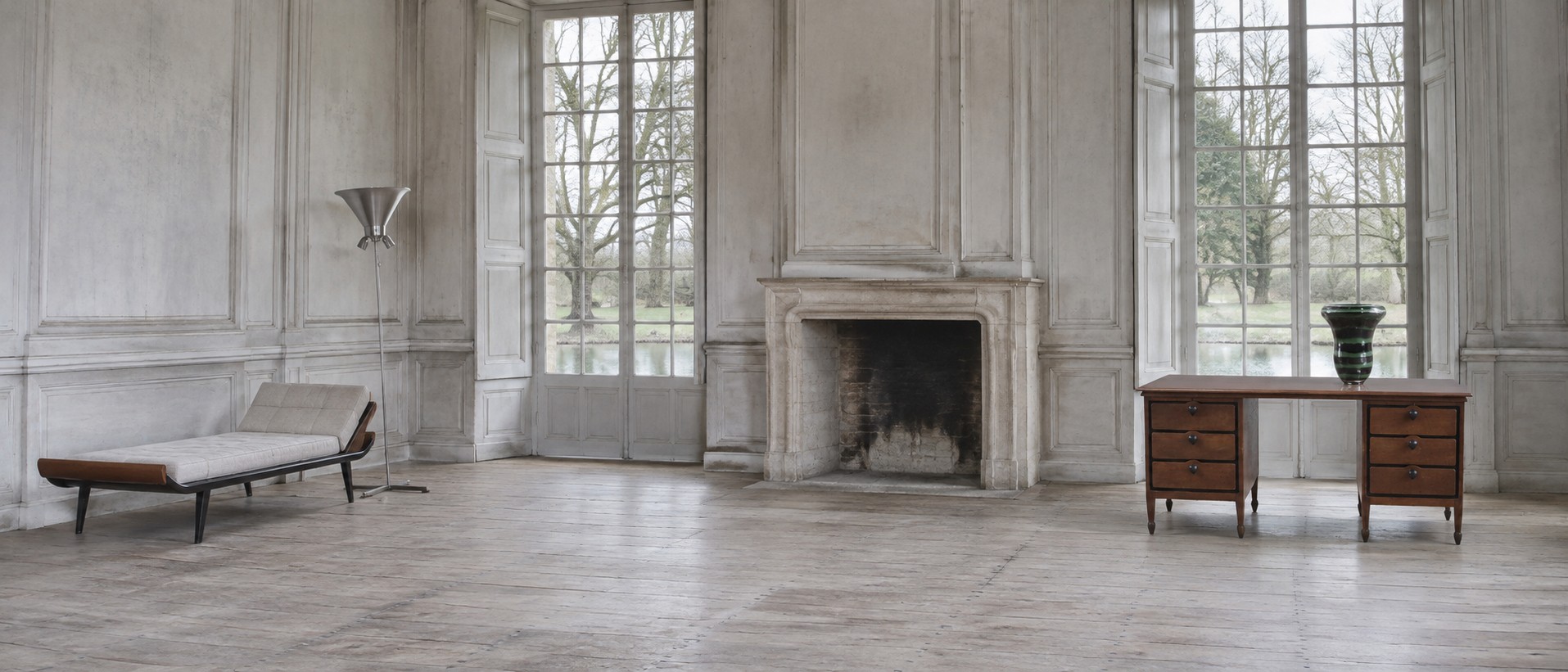
In this photo: Mid-Century Modern Cleopatra Daybed by Dick Cordemeijer, 1953 (€ 495) · Vintage Dutch Design W. Hagoort Floor Lamp Model 353 (€ 645) · Pander desk from circa 1920 (€ 995) · Large Dutch Design Vilma Henkelman Unica Leerdam Art Glass Vase, 1989 (€ 395)
How would De Huiszwaluw use Dutch design?
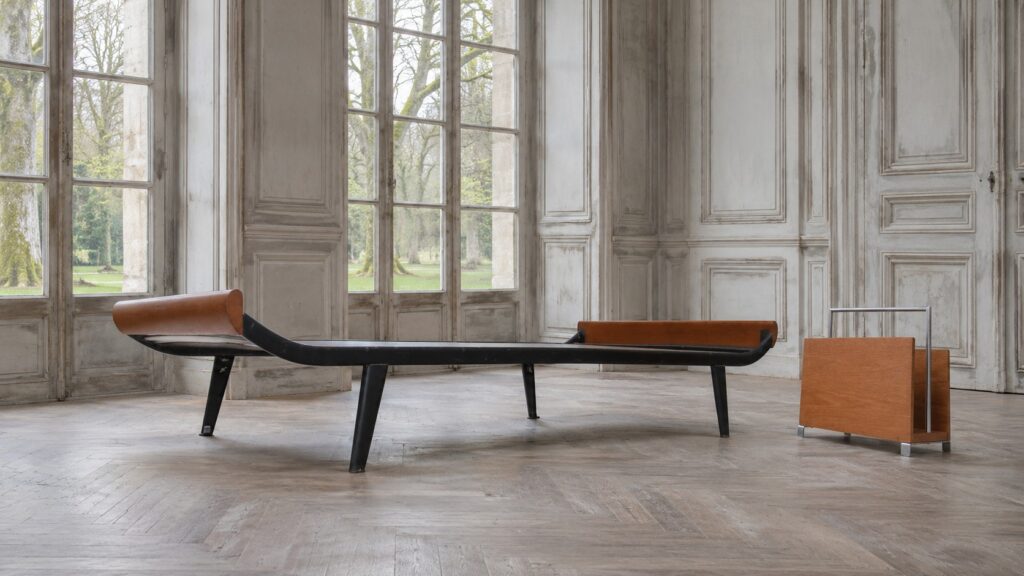
We start with one piece the room revolves around. The Cleopatra daybed that Dick Cordemeijer designed for Auping in 1953 is ideal: low, light and attractive from every side. It stands free in the room, not pushed against a wall.
Next to it we place something older and heavier, such as the Pander desk or the side table in Amsterdam School style. That dark oak makes the steel of the 1950s warmer, and vice versa.
Glass and earthenware come last. The large Unica vase by Vilma Henkelman for Leerdam from 1989, black and green with small gold flecks, deserves a place of its own. A piece like this is a work of art, not decoration.
Below you can see the Dutch design currently in our collection. Stock changes; pieces that have been sold can be found under ‘Previously in our collection’.
Now in our collection: Dutch design
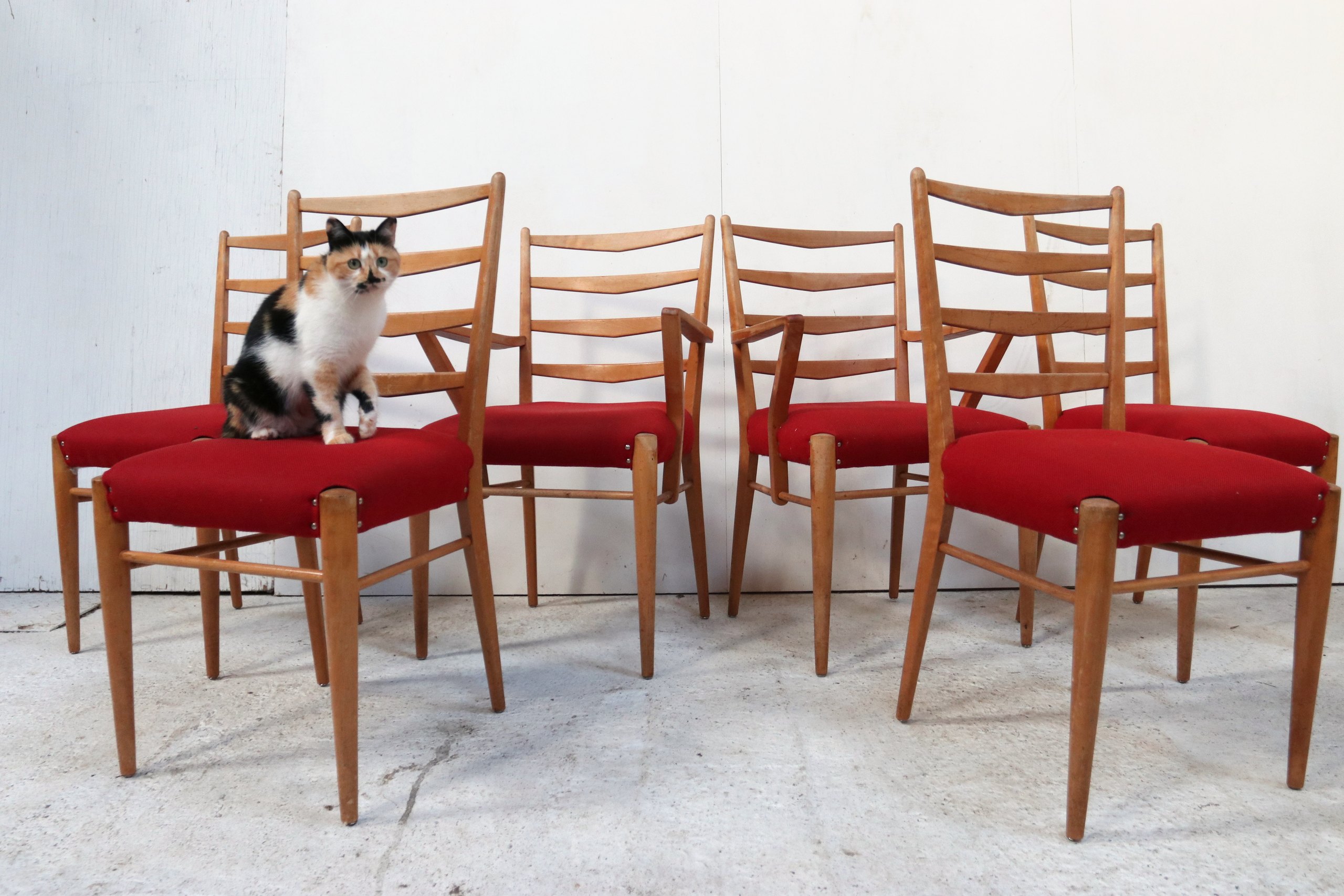 Set of 6 Pastoe ST09 ladder-back chairs – Cees Braakman, birch, 1950s (to be reupholstered)€ 495 voor de set van 6
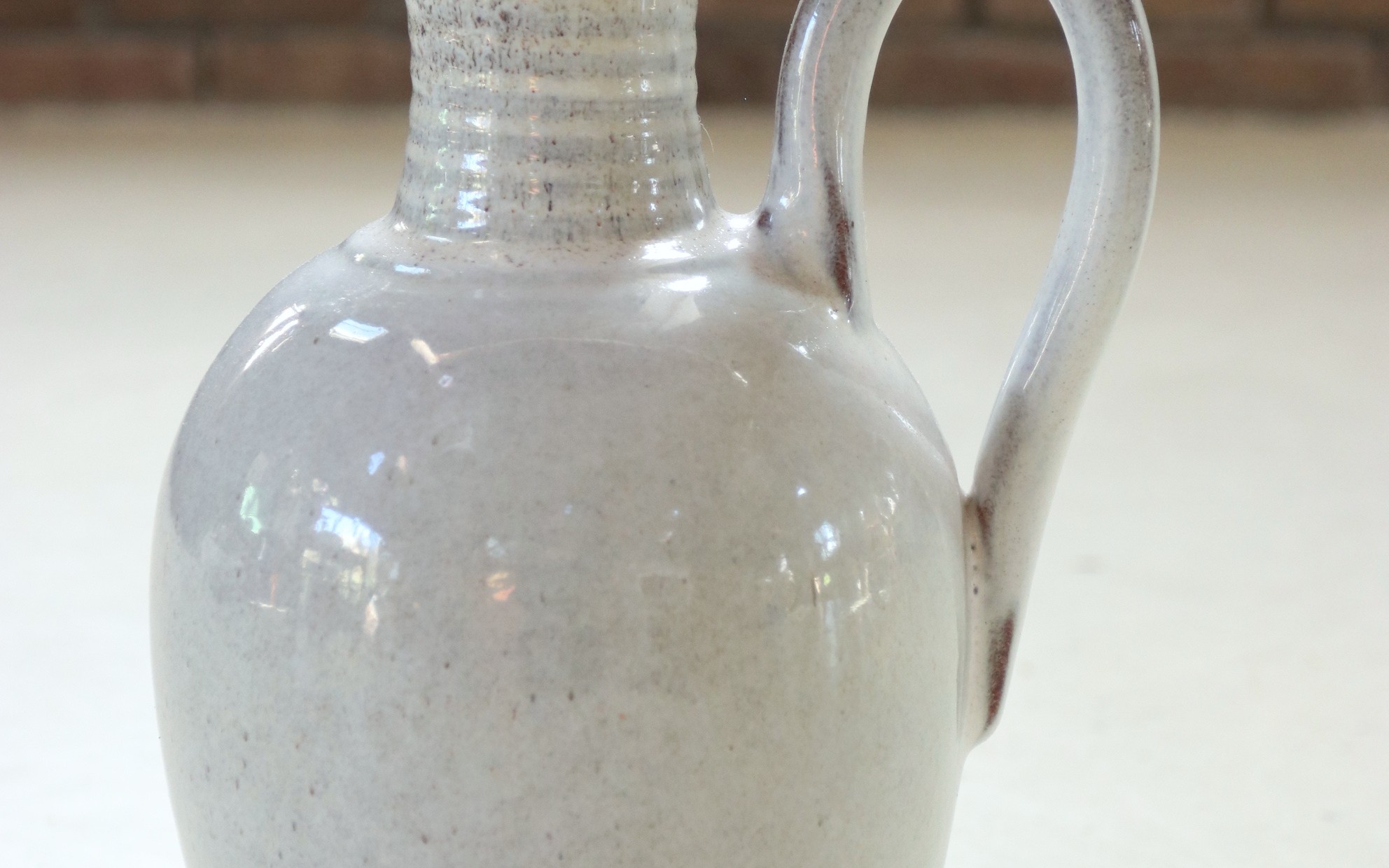 Westraven vase with handle – white speckled earthenware, Utrecht, 1960s–70s€ 55
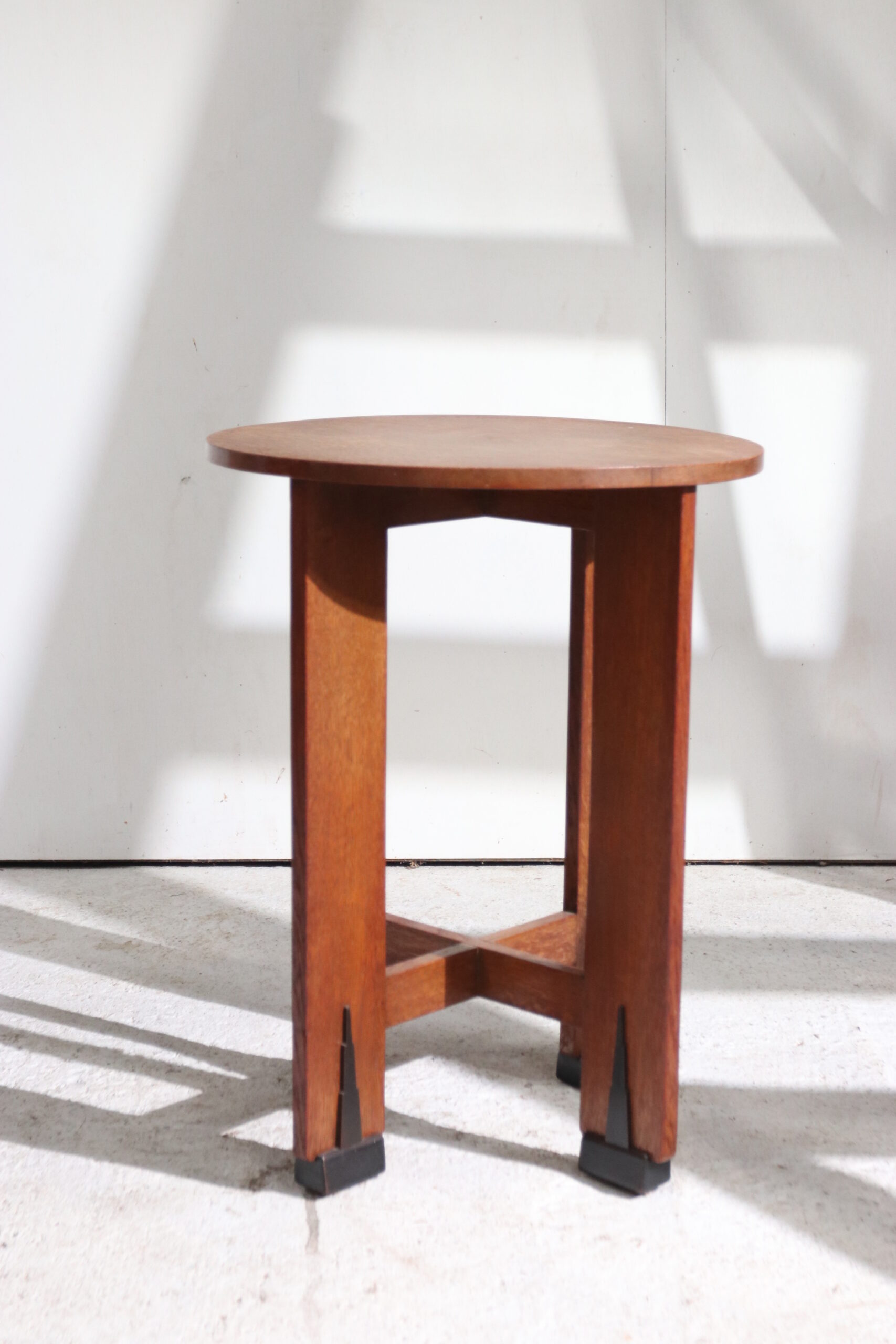 Round oak side table – Amsterdam School style, 1920s–30s€ 395
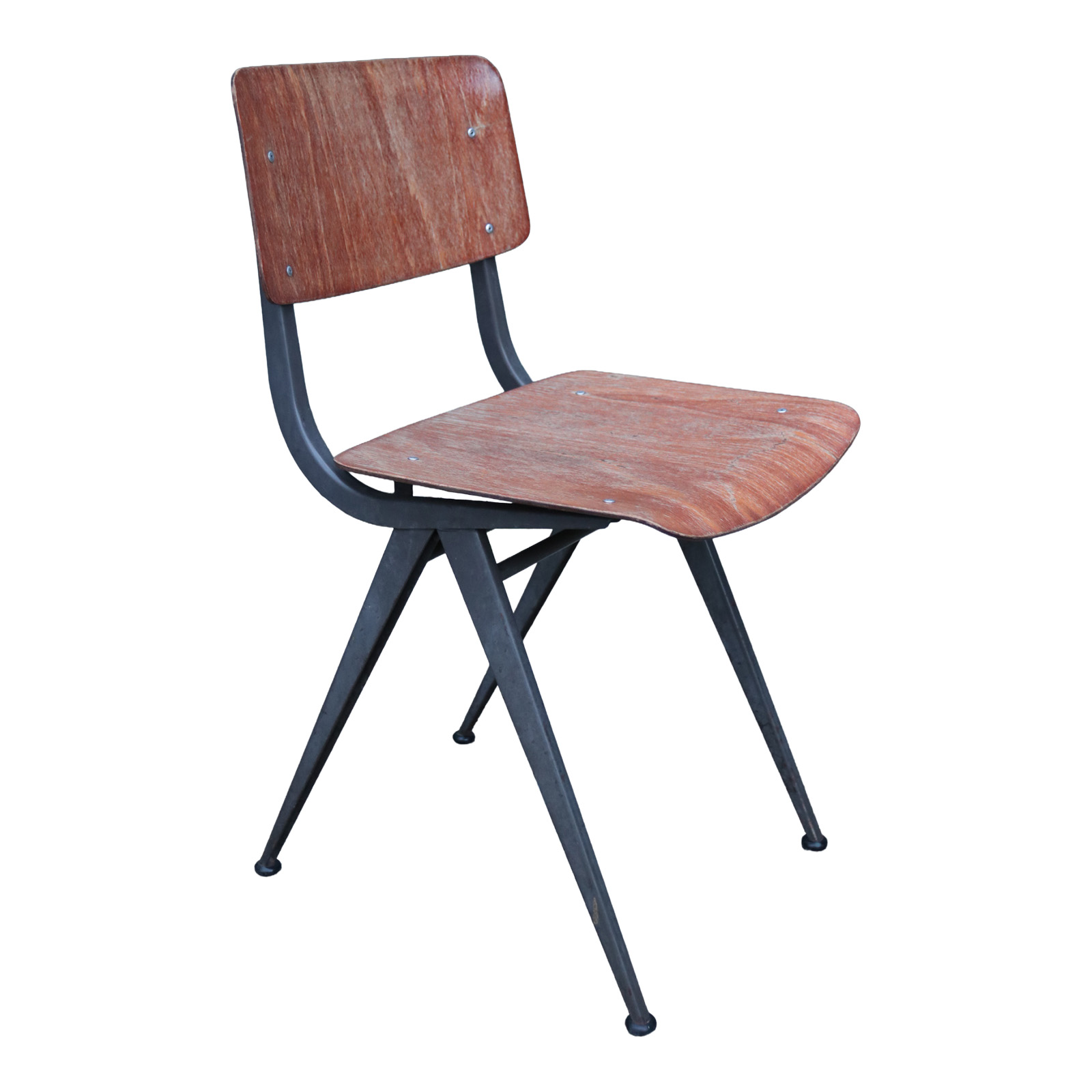 Vintage Presikhaaf chair – Pagholz and compass legs, 1960s€ 50
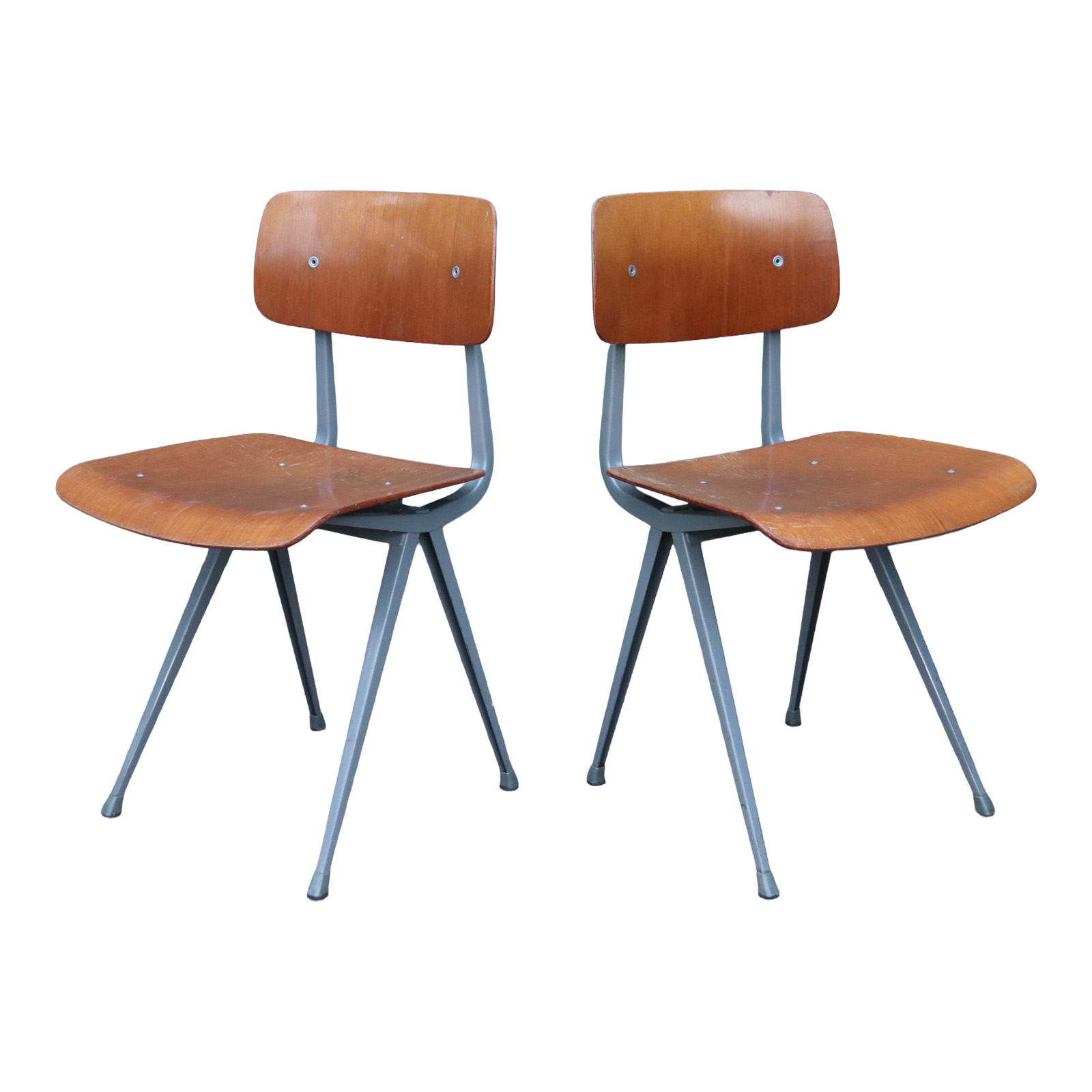 Set of 2 Friso Kramer Result chairs – Ahrend de Cirkel, grey, 1960s
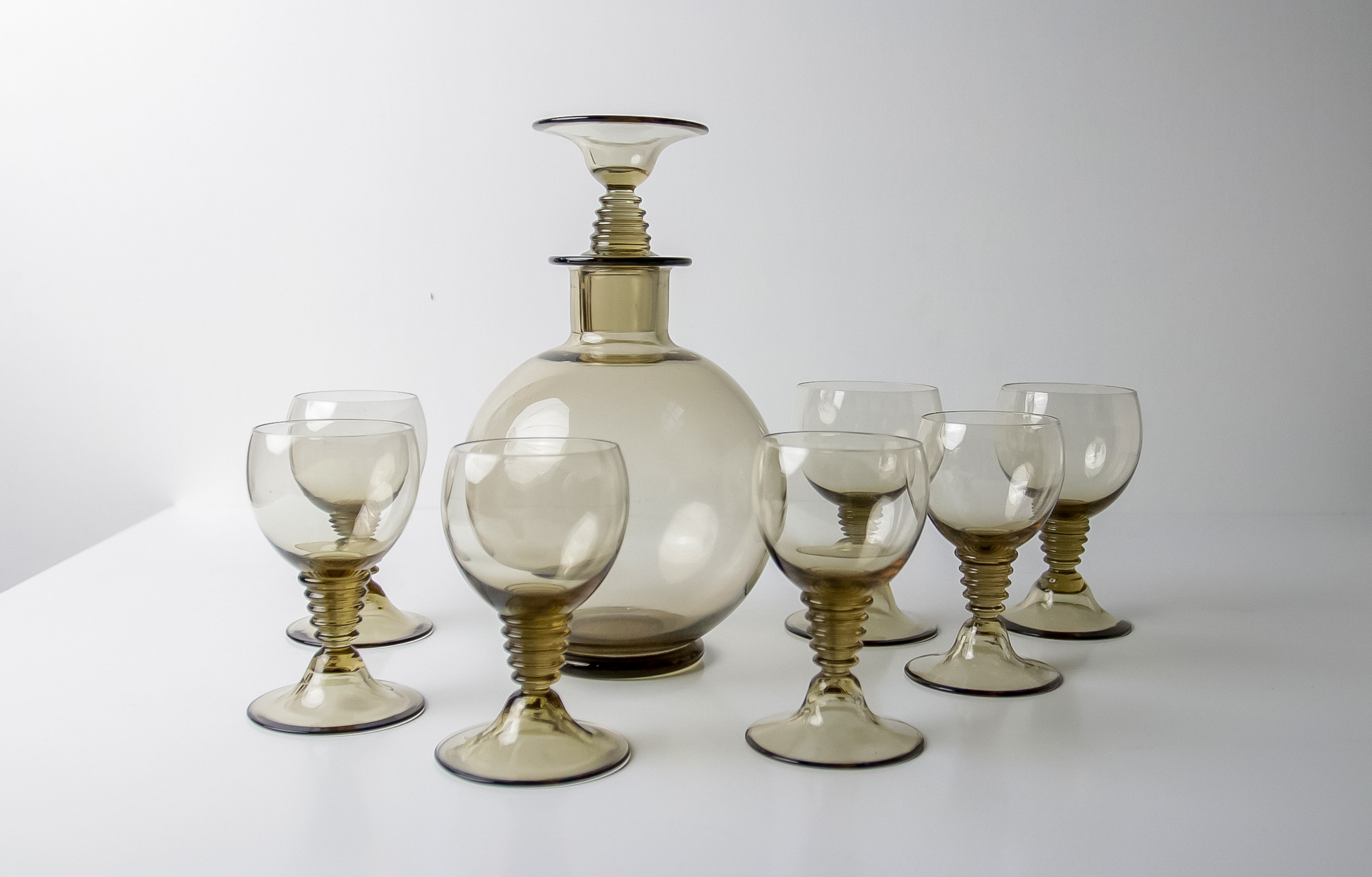 Art Deco Traditie decanter with 7 glasses by W.J. Rozendaal – Kristalunie, 1932–1933€ 195
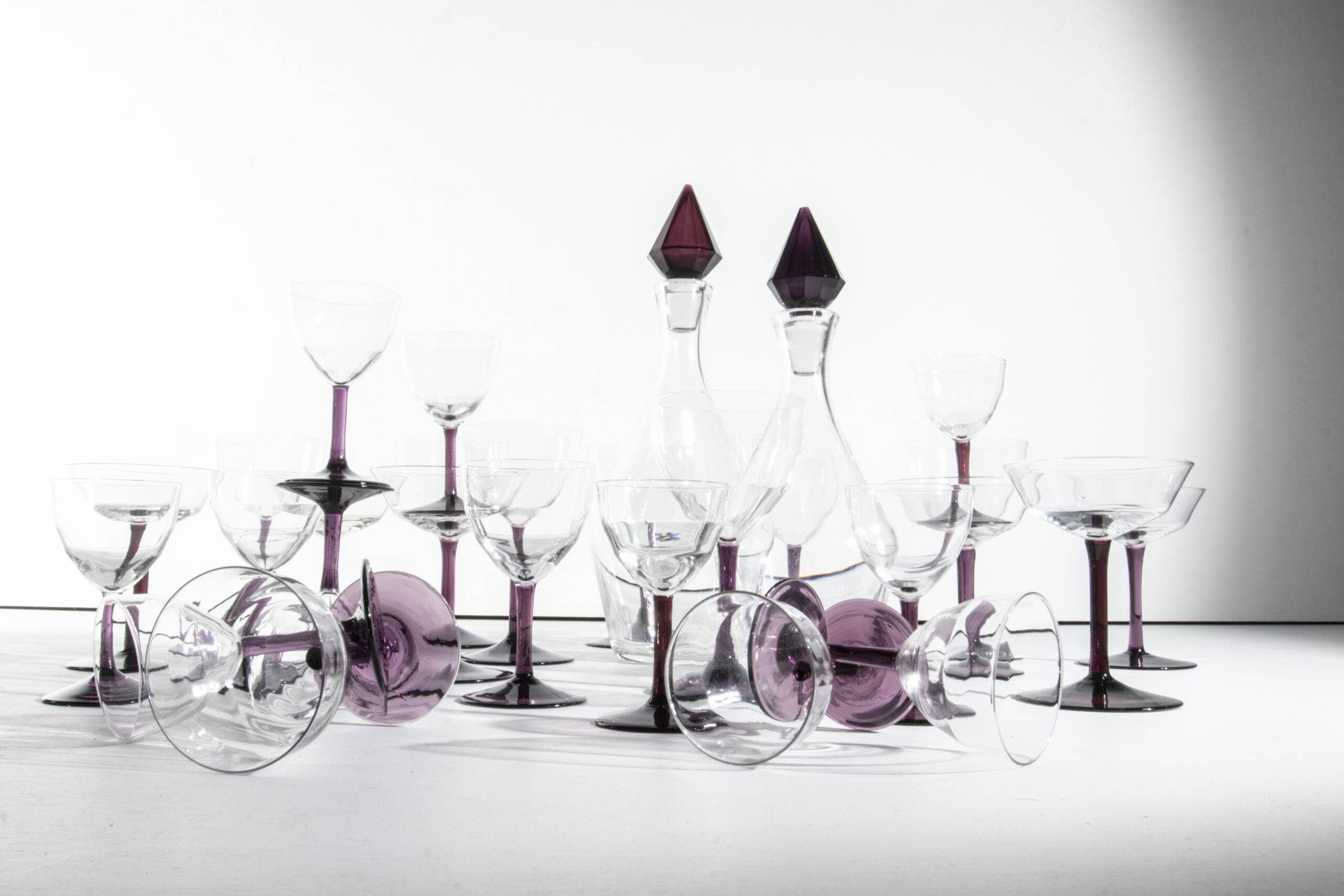 26-piece glass service Logos & Narkissos by W.J. Rozendaal – Kristalunie Maastricht, 1929€ 695
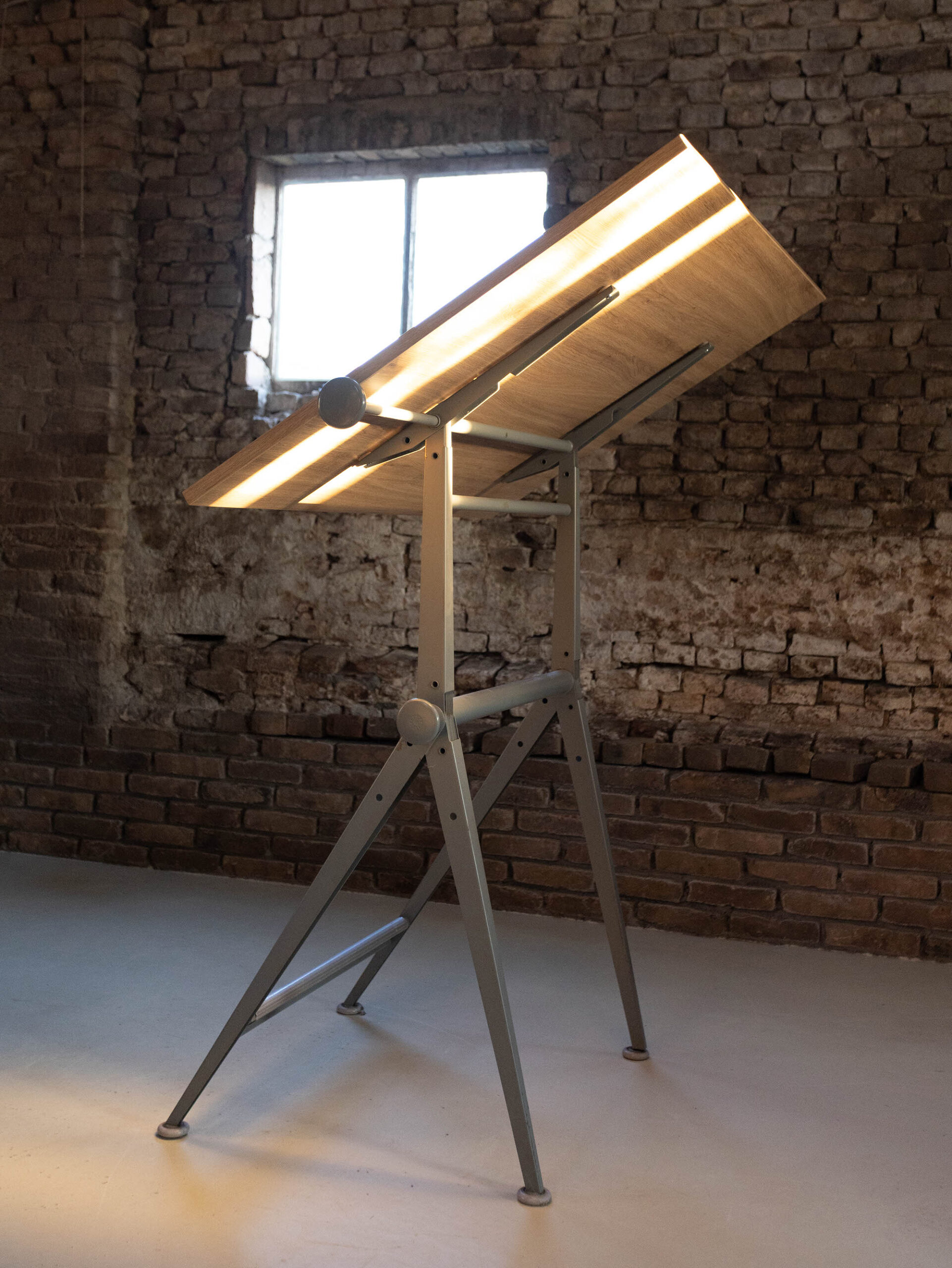 Friso Kramer & Wim Rietveld Reply drawing table XL – Ahrend de Cirkel, 1959€ 555
 Pander desk from circa 1920€ 995
 Set of two Dutch Gispen 1231 chairs – A.R. Cordemeyer, circa 1960now only € 75 voor de set van twee stoelen
 Vintage Ahrend ‘Comfort’ chairs in makoré wood, c. 1966€ 95 each
 Set of 2 vintage Hiemstra Evolux pendant lamps – black with turquoise glass ring€ 395 voor de set
 Set of 7 Art Deco “Traditie” W.J. Rozendaal 1932–33 Decanter and 6 Glasses€ 195
 Large Dutch Design Vilma Henkelman Unica Leerdam Art Glass Vase, 1989€ 395
 Mid-Century Modern Cleopatra Daybed by Dick Cordemeijer, 1953€ 495
 Vintage Dutch Design W. Hagoort Floor Lamp Model 353€ 645
 Industrial vintage Friso Kramer Ahrend Facet table, black frame€ 695, afhankelijk van afmeting en conditie
 Wim Rietveld Oase Ahrend 2-Seater Sofa, Vintage Design, Rare€ 995
 Industrial vintage Facet dining table by Friso Kramer€ 695, afhankelijk van afmeting en conditie
Read on about other styles
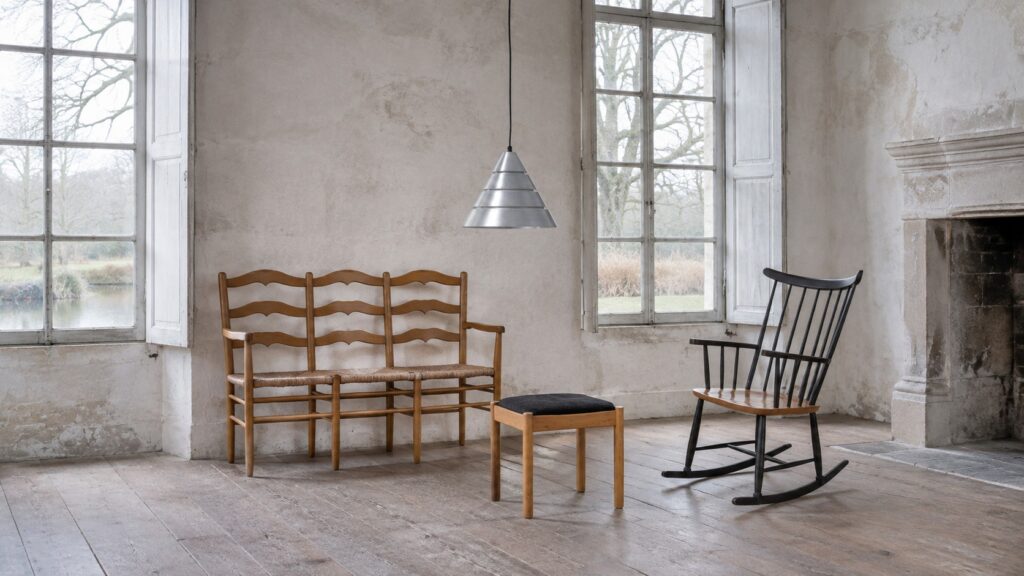 Scandinavian designScandinavian design at home: light wood, calm and simplicity
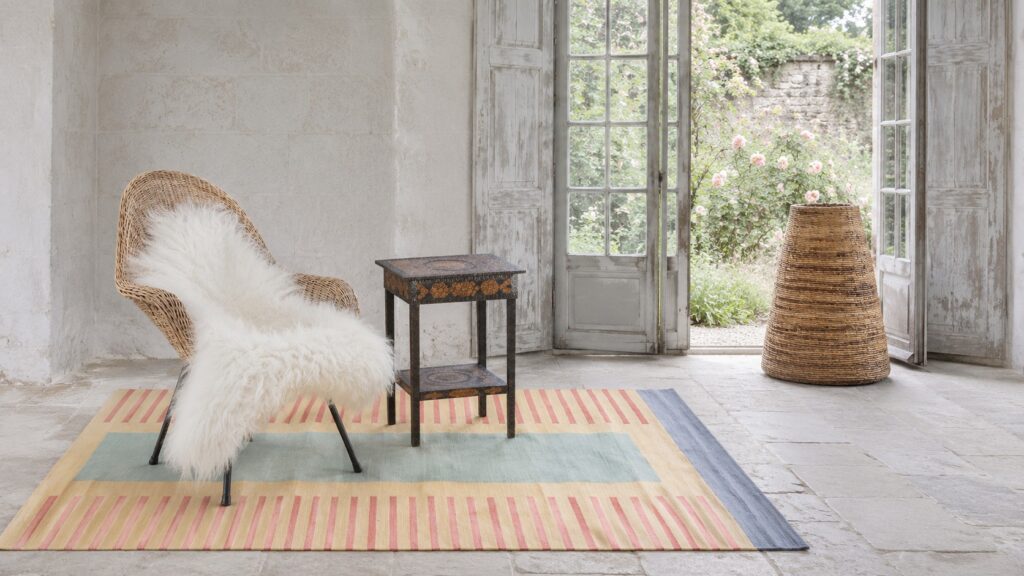 BohemianBohemian at home: free, warm and full of stories
 Postmodern & MemphisPostmodern & Memphis at home: colour, form and a wink
 Classic antiquesClassic antiques at home: centuries old, and made to last
 Art nouveauArt nouveau interior: lines that grow like plants
 BrutalismBrutalism at home: heavy wood, raw iron and shapes with weight
 French countryFrench country living: wood, stone and the calm of country life
 IndustrialIndustrial living: honest materials, clever shapes and a rough edge
 Art decoArt deco: clean lines, warm materials and a touch of daring
 Mid-centuryMid-century design: timeless, warm and still modern
 Wabi-sabiWhat is wabi-sabi living, and why does imperfection make an interior more beautiful?