Art nouveau interior: lines that grow like plants
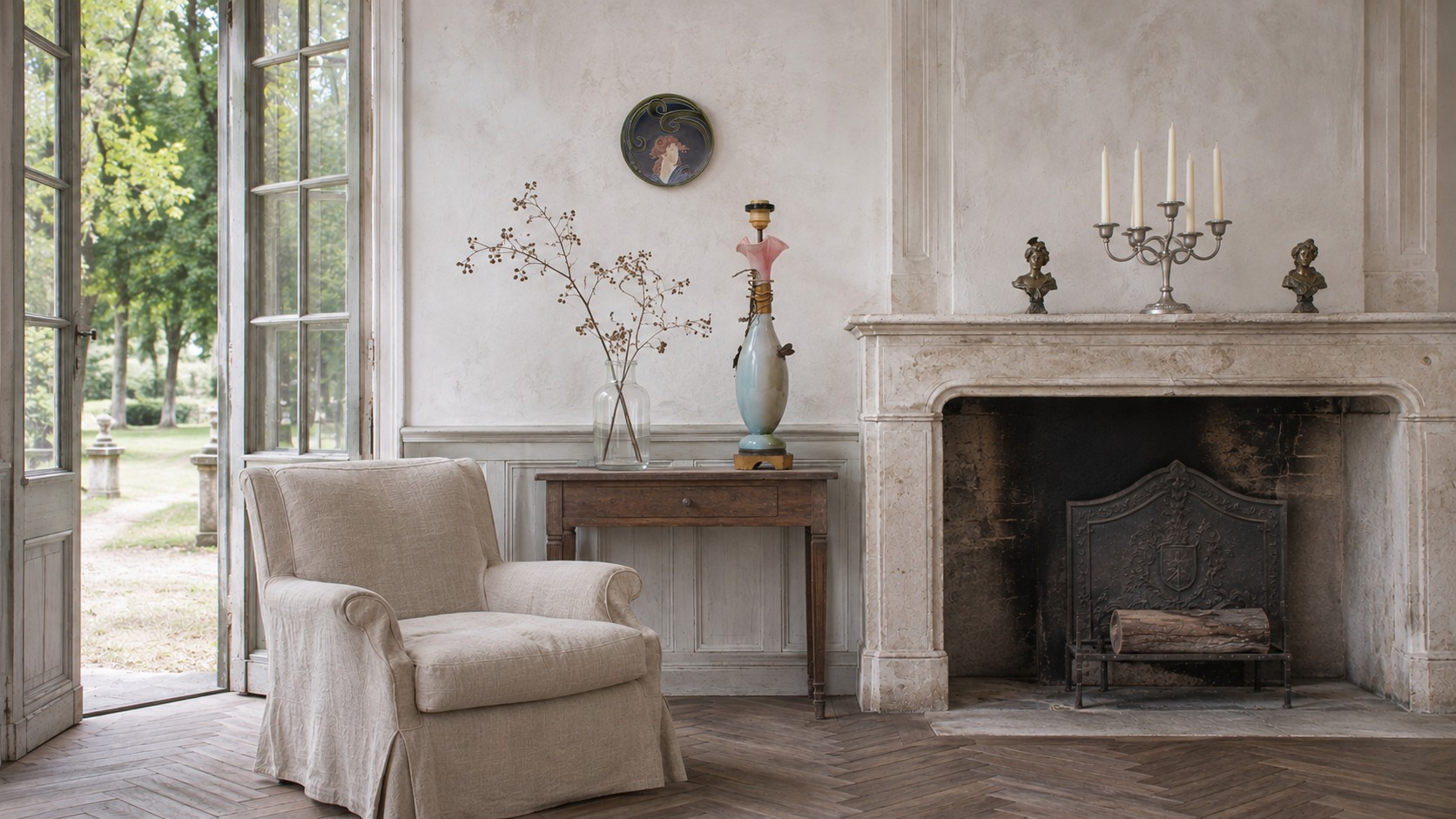
In this photo: Art Nouveau table lamp with bronze fly and hop leaves – Jugendstil vase lamp (€ 495) · English Art Nouveau candelabrum with 5 arms – silver-plated (€ 95) · French Art Nouveau bronze bust ‘Carmen’ by Emmanuel Villanis – circa 1900 (€ 895) · French Art Nouveau bronze bust ‘Cendrillon’ by Emmanuel Villanis – circa 1900 (€ 895) · French majolica Art Nouveau wall plate – Jugendstil, circa 1900 (€ 245)
Art nouveau
Lines that grow like plants
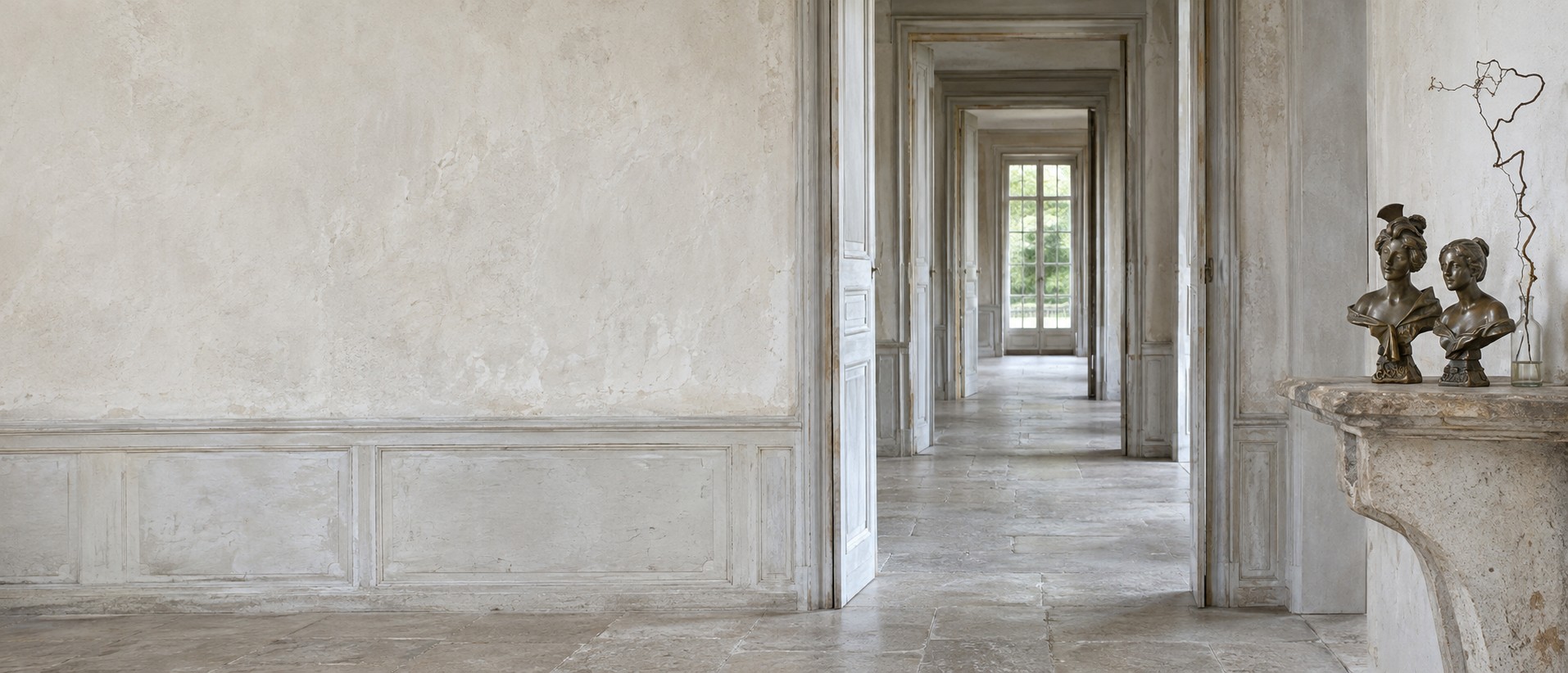
In this photo: French Art Nouveau bronze bust ‘Carmen’ by Emmanuel Villanis – circa 1900 (€ 895) · French Art Nouveau bronze bust ‘Cendrillon’ by Emmanuel Villanis – circa 1900 (€ 895)
What is art nouveau?
Art nouveau is the style of around 1900: roughly from 1890 to 1910. It was a deliberate break with the nineteenth century, in which every piece of furniture imitated an older style. Designers wanted something new, and they found it outdoors: in stems, leaves, flowers, insects and flowing hair.
The name comes from the Paris gallery L’Art Nouveau, which art dealer Siegfried Bing opened in 1895. In Germany the same movement is called Jugendstil, after the magazine Jugend, published in Munich from 1896. In the Netherlands people spoke of Nieuwe Kunst.
The high point was the Paris World Exhibition of 1900. In the same year the city got Hector Guimard’s metro entrances, and in Brussels Victor Horta’s Hôtel Tassel had by then been standing for seven years. From building to teaspoon: everything was allowed to be art.
Why is art nouveau so loved again?
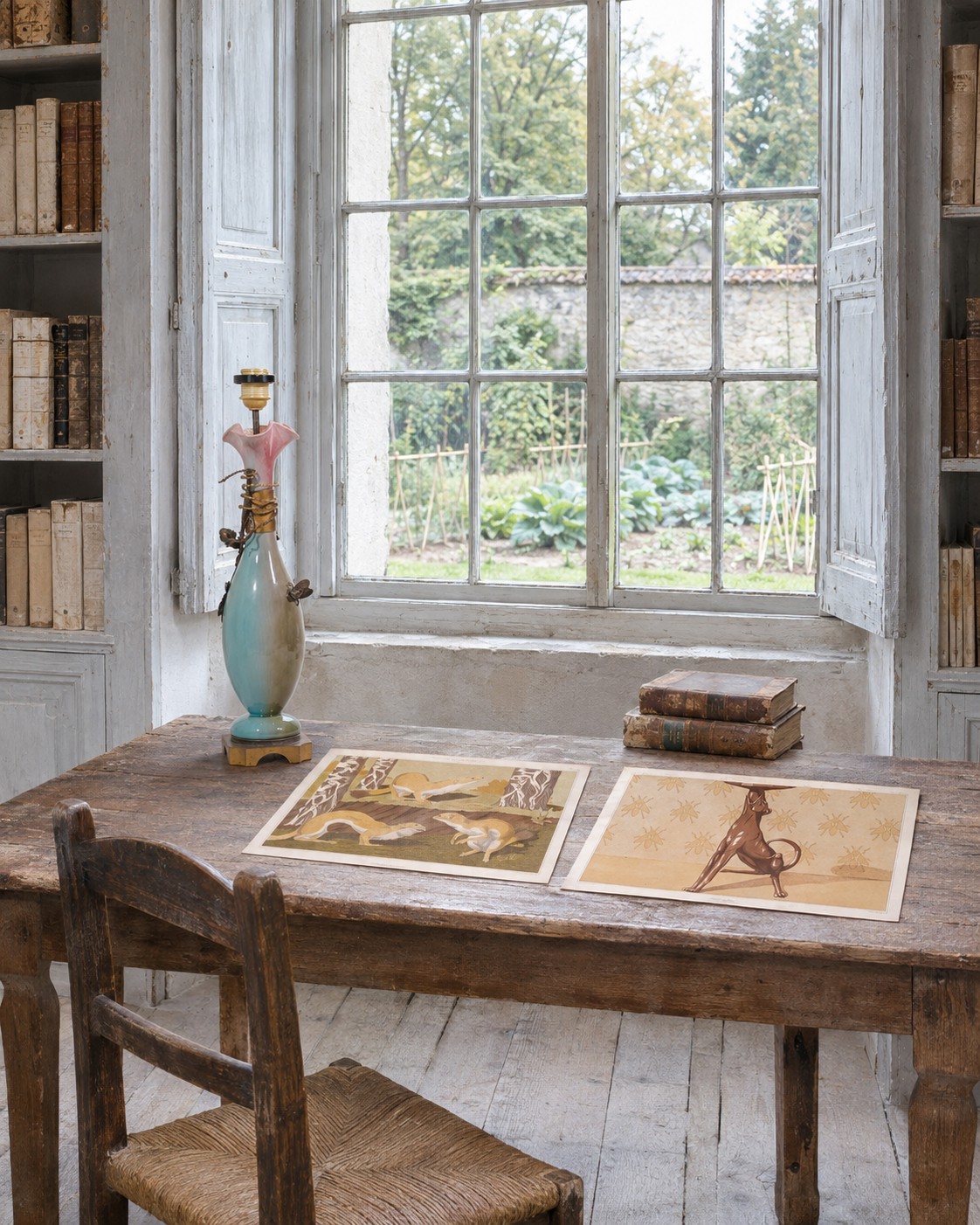
Art nouveau is handwork, and it shows. At a time when much looks sleek and the same, a line drawn by hand stands out at once. You look at it longer.
Take the lithographs by Maurice Pillard Verneuil from the portfolio L’animal dans la décoration of 1897. Ermines, bees and a dog are reduced to rhythm and plane, in soft colours. They are loose sheets of 46 by 34.4 centimetres, intended as examples for designers. Now they are the artwork themselves.
Next to them stands a table lamp 59 centimetres high, with hop leaves, a glass flower shade and a bronze fly on the base. You could not make up such a detail today. The wiring of old lamps has not been checked by us; always have it inspected by an electrician.
In this photo: Art Nouveau lithograph ‘Hermines vulgaires’ – M.P. Verneuil, L’Animal dans la décoration, 1897 (€ 85) · Art Nouveau lithograph with dog candlestick, bees and copper frieze – M.P. Verneuil, 1897 (€ 85) · Art Nouveau table lamp with bronze fly and hop leaves – Jugendstil vase lamp (€ 495)
The strength of art nouveau: line, nature and craft
The heart of art nouveau is the line. No right angle where a curve will do: the famous whiplash line runs on into a door handle or the arm of a candelabra. Form and decoration are one.
Nature is the model, but never literally. A lily becomes a lampshade, a dragonfly a brooch, a woman’s head with flowing hair the rim of a plate. Émile Gallé in Nancy turned it into glass, others into bronze, silver and earthenware.
And then the craft. Majolica with thick, glossy glaze, cast bronze with a warm patina, silver-plated metal that has gone matt from a hundred years of polishing. The material is allowed to show its age.
How do you combine art nouveau without it becoming a museum?
Art nouveau is rich in form. Put it together in a dark room with wallpaper and plush, and you get a museum gallery. The secret is space: a piece with a lot of line needs a calm background.
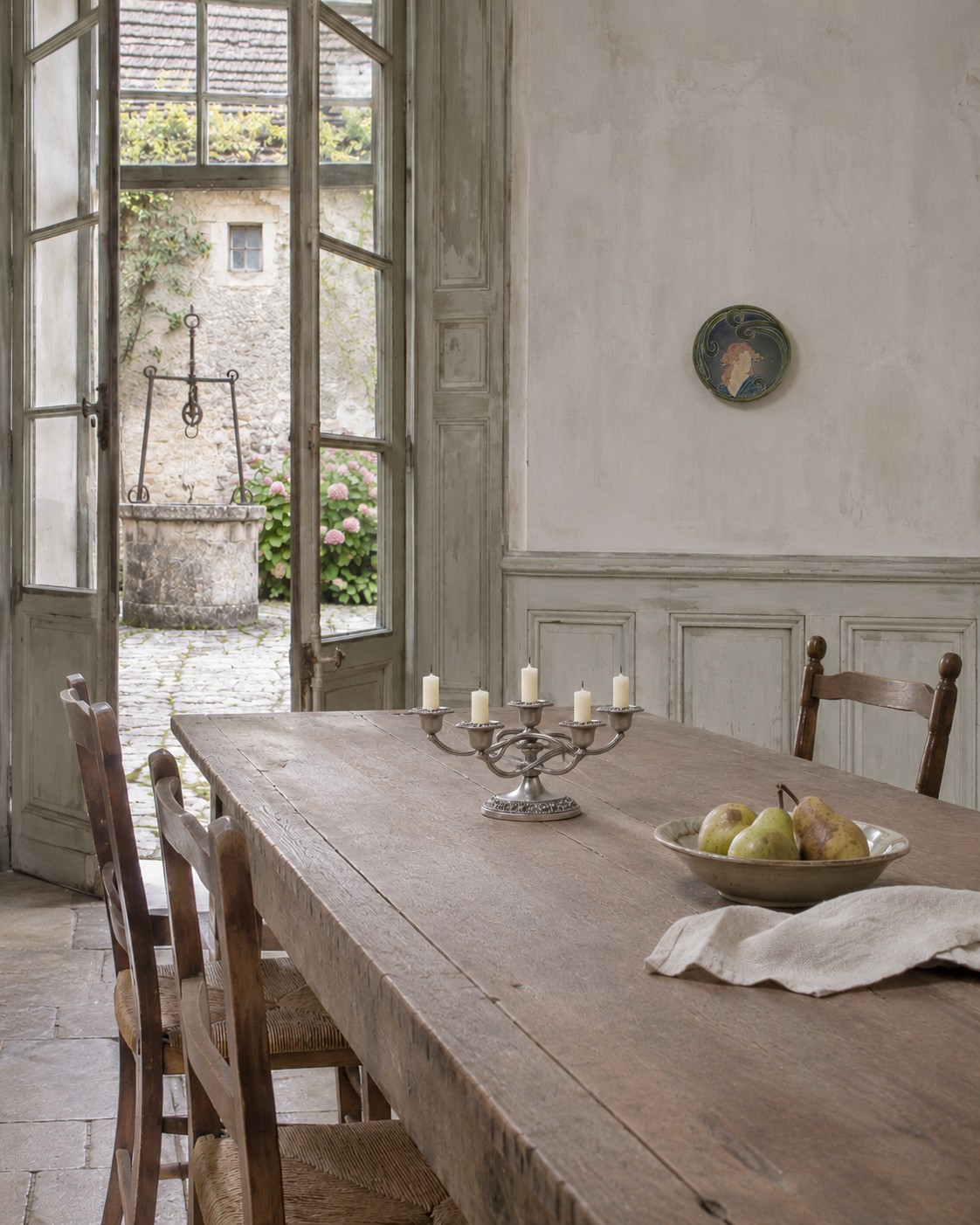
On a long, bare wooden table, an English silver-plated candelabra with five arms is enough. It is only 29 centimetres high and 32 centimetres wide, so at table you simply look over it. On the wall hangs one French majolica wall plate of 27 centimetres with a woman’s head.
It need not be more than that. Simple chairs, linen, a bowl of fruit. The flowing arms of the candelabra stand out precisely because everything around them is straight and still.
In this photo: English Art Nouveau candelabrum with 5 arms – silver-plated (€ 95) · French majolica Art Nouveau wall plate – Jugendstil, circa 1900 (€ 245)
What to look for when buying art nouveau
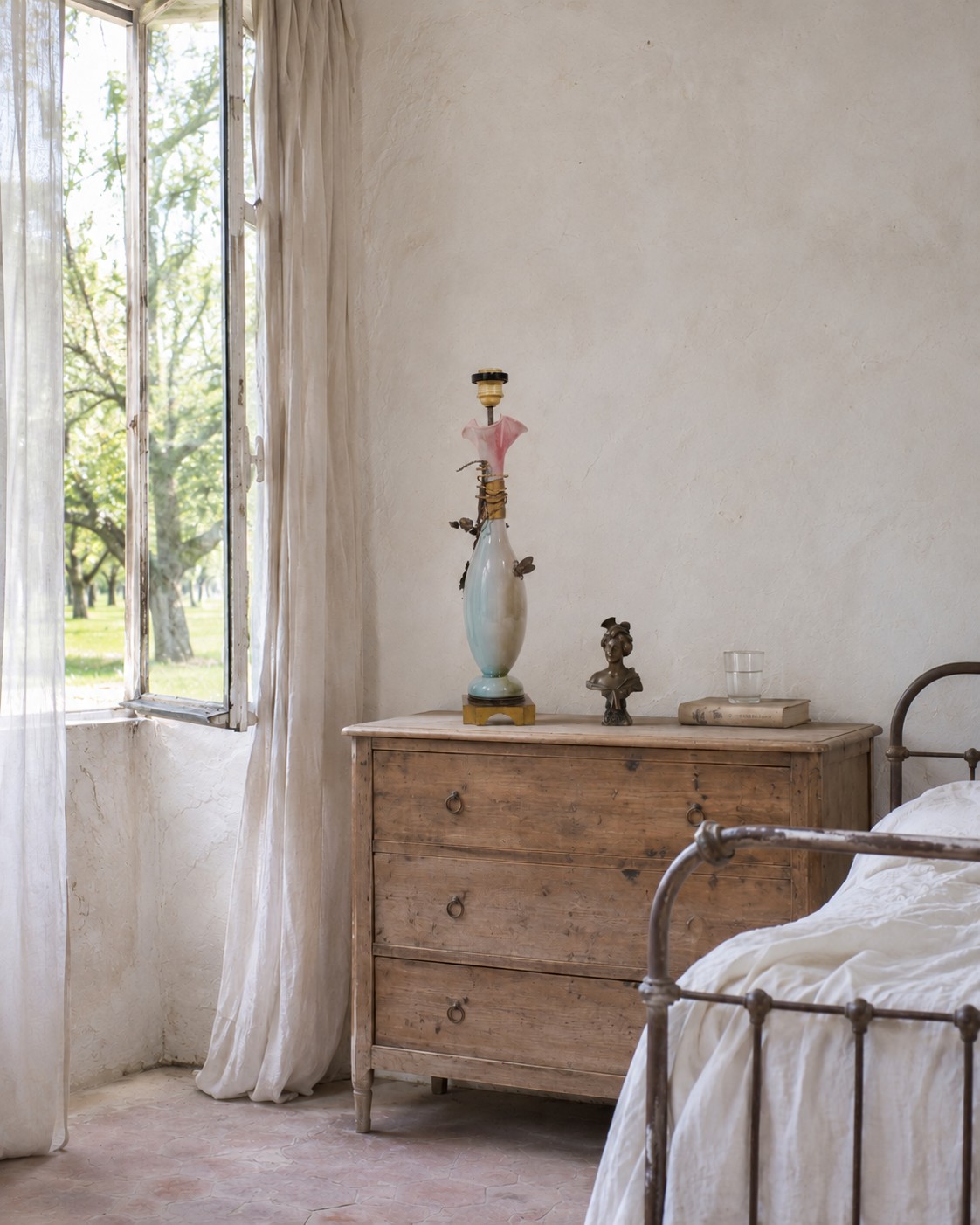
Look first at the quality of the line. In a good piece a curve runs on fluently, without a kink. Casting is crisp, on the back and in the details too.
Look for a signature, a foundry stamp or a model number. The bronze busts by Emmanuel Villanis, such as Carmen and Cendrillon, carry his name and the title on the base. They are small, 16 and 15 centimetres high, and for that very reason easy to place: on a chest of drawers, next to a lamp.
With earthenware, watch for hairlines and restorations; with silver-plated metal, for wear on the high points; and with prints, for damp and discolouration. Signs of use are part of it, but you want to know what you are buying. That is why our descriptions always state the condition precisely.
In this photo: Art Nouveau table lamp with bronze fly and hop leaves – Jugendstil vase lamp (€ 495) · French Art Nouveau bronze bust ‘Carmen’ by Emmanuel Villanis – circa 1900 (€ 895)
Art nouveau in a light, calm interior
Art nouveau and light go well together. Against a limewashed wall a silhouette becomes a drawing: the arms of a candelabra, the profile of a bust, the stem of a lamp.
Choose a calm surface. Old wood, limestone, linen. No gloss, no pattern that competes with the piece.
A loose lithograph does not need a heavy frame straight away. Lean the sheet against the wall on a side table, like Verneuil’s eagles here in the hall. Next to the candelabra and the small Cendrillon it makes a still life of three heights.
Take the colours of the piece itself as your guide. The soft terracotta and green of the print, the grey of silver-plated metal, the brown of bronze: nothing needs to be added.
And leave the door open. Art nouveau comes from the garden, and with green in the background it falls into place at once.
In this photo: Art Nouveau lithograph ‘Aigles’ – eagles, M.P. Verneuil, L’Animal dans la décoration, 1897 (€ 65) · English Art Nouveau candelabrum with 5 arms – silver-plated (€ 95) · French Art Nouveau bronze bust ‘Cendrillon’ by Emmanuel Villanis – circa 1900 (€ 895)
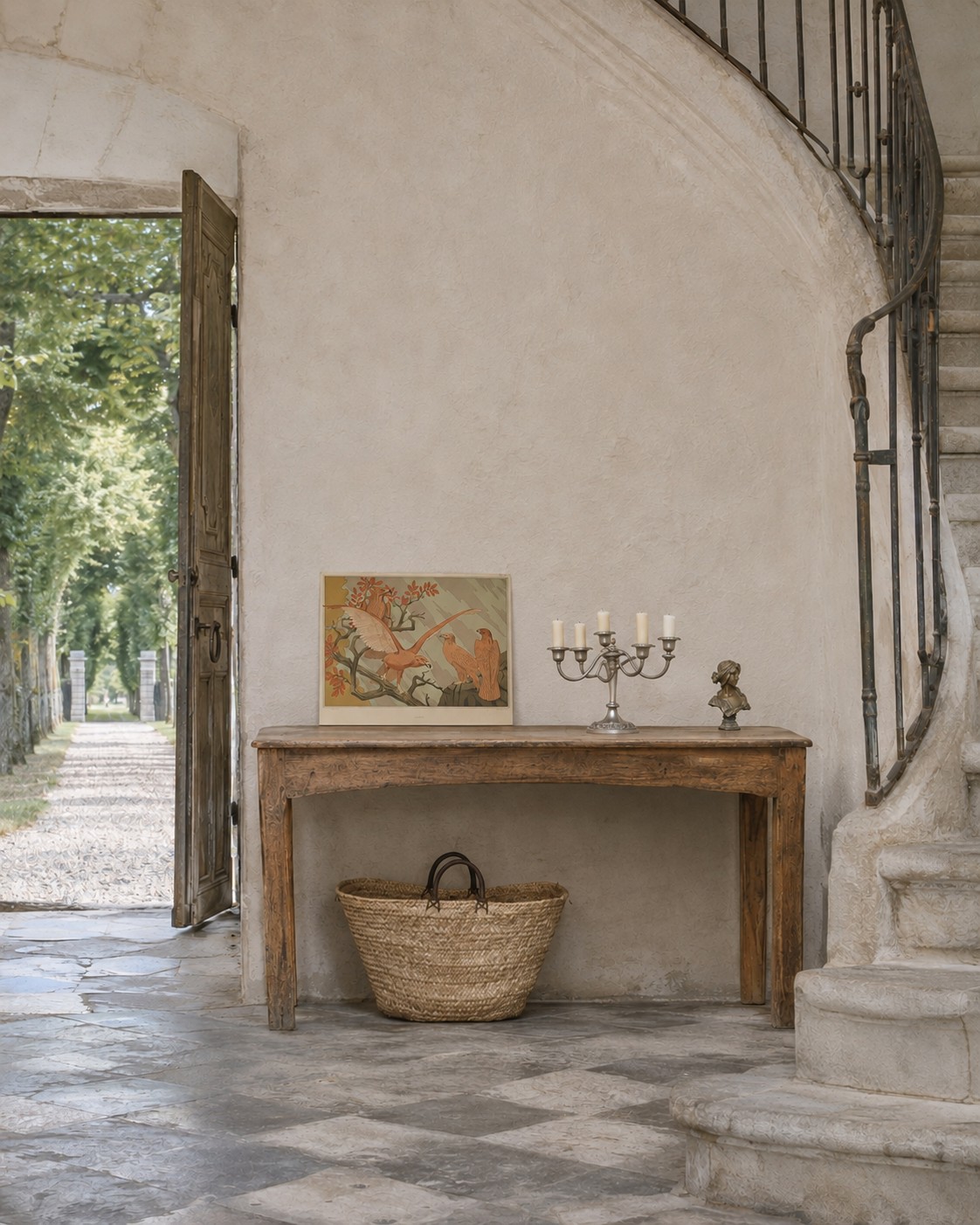
One piece is enough
You do not need a Horta house to enjoy art nouveau. The style was made for the small object: a lamp, a plate, a candelabra, a print.
One good piece changes a corner. A bust on a pile of books, a wall plate above a door, a lamp on a bedside table. It is the spot where your eye lingers for a moment.
If you have more, put them together on one table, with space between them. Then you see the family: the same line in glass, bronze, silver and paper.
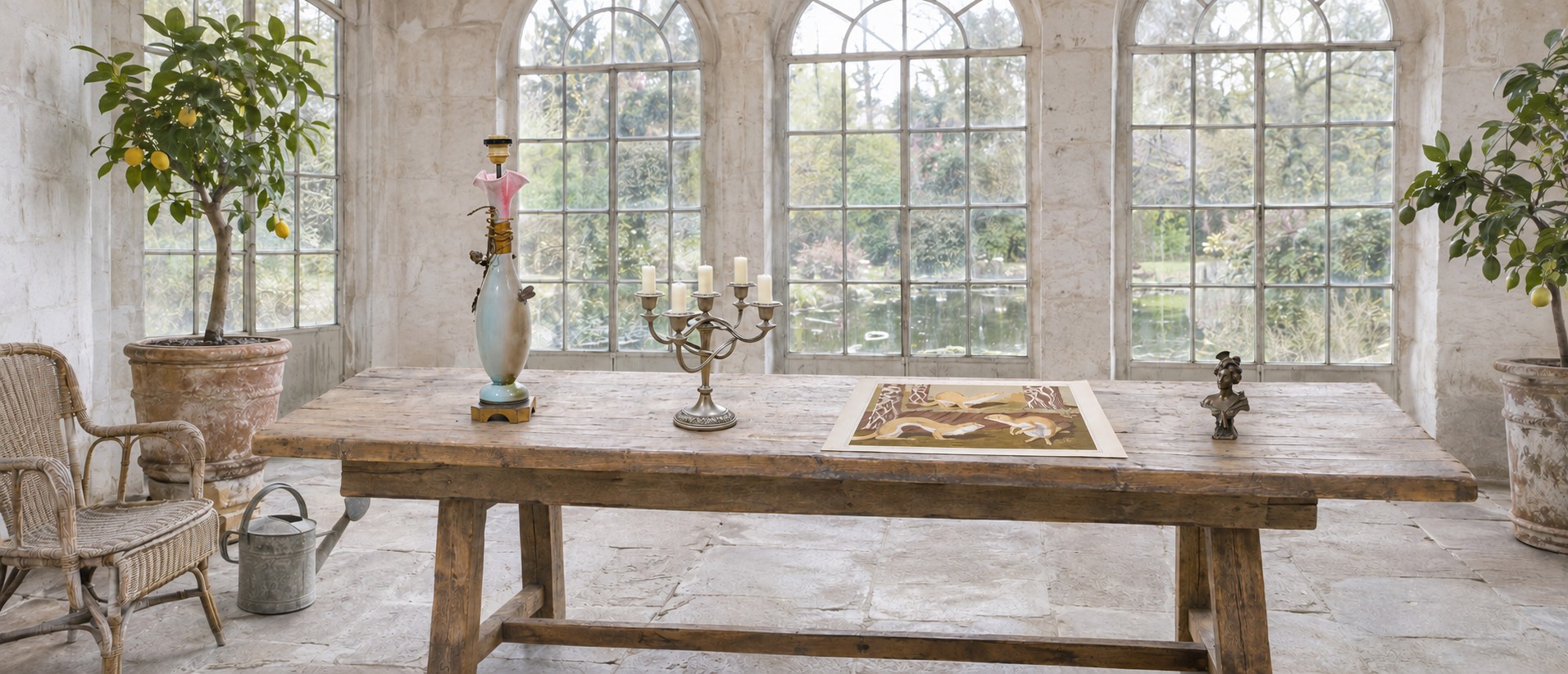
In this photo: Art Nouveau table lamp with bronze fly and hop leaves – Jugendstil vase lamp (€ 495) · English Art Nouveau candelabrum with 5 arms – silver-plated (€ 95) · Art Nouveau lithograph ‘Hermines vulgaires’ – M.P. Verneuil, L’Animal dans la décoration, 1897 (€ 85) · French Art Nouveau bronze bust ‘Carmen’ by Emmanuel Villanis – circa 1900 (€ 895)
How would De Huiszwaluw use art nouveau?
We like to place art nouveau in an old house with light walls and a view of the garden. Few things, plenty of daylight, and then one piece that may have all the attention.
We combine it with simple, honest furniture: a farmhouse table, a linen armchair, an iron bed. The style needs that calm.
And we mix. An art nouveau lamp next to a sleek vase from the 1930s, a Verneuil above a chair from the 1960s. The line of 1900 holds its own with everything.
Below you can see which art nouveau pieces we currently have in the collection. Each piece is for sale once; what is gone will not come back like this.
Now in our collection: art nouveau
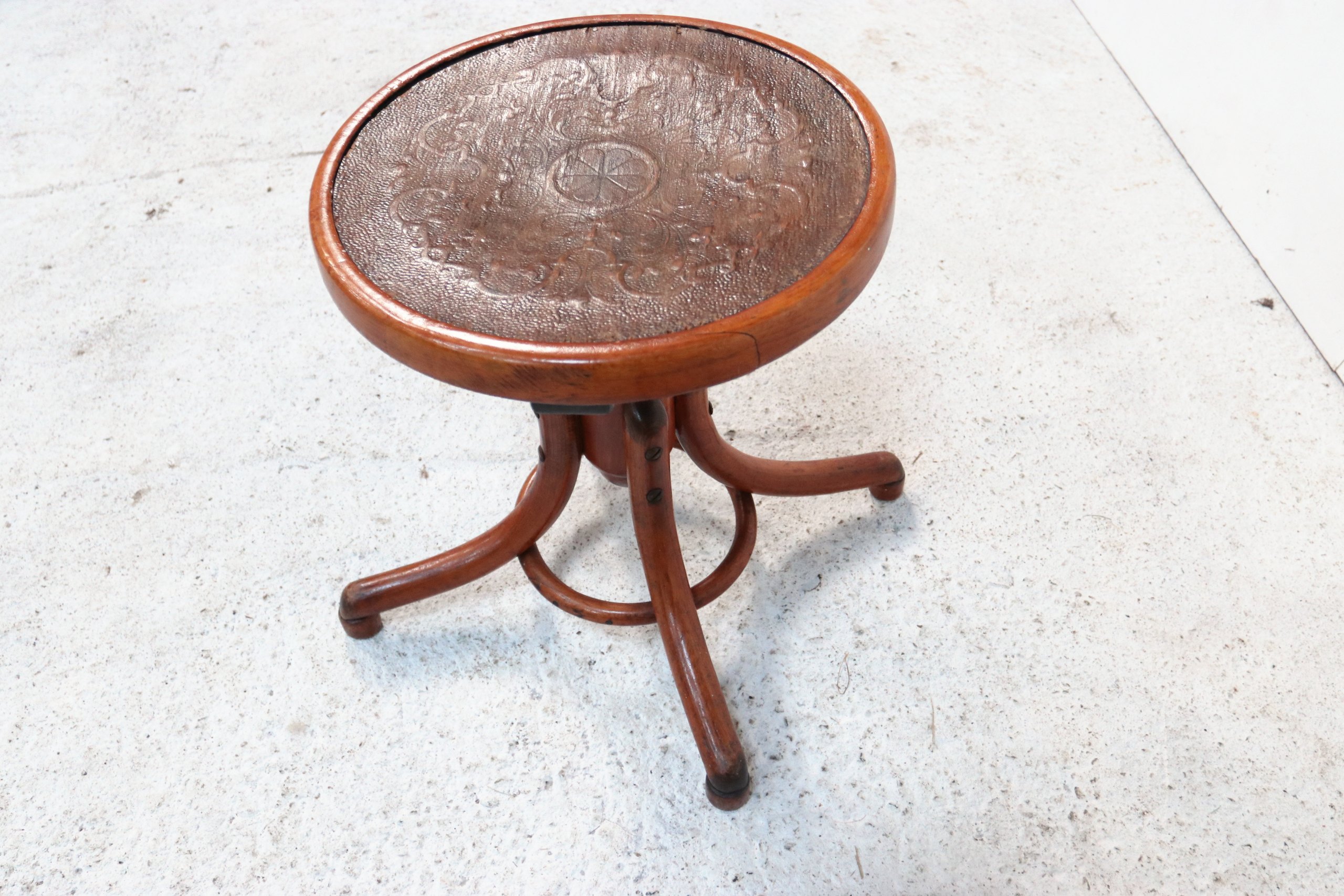 Antique bentwood piano stool – adjustable swivel stool with pressed seat, Thonet style, c. 1900–1920€ 295
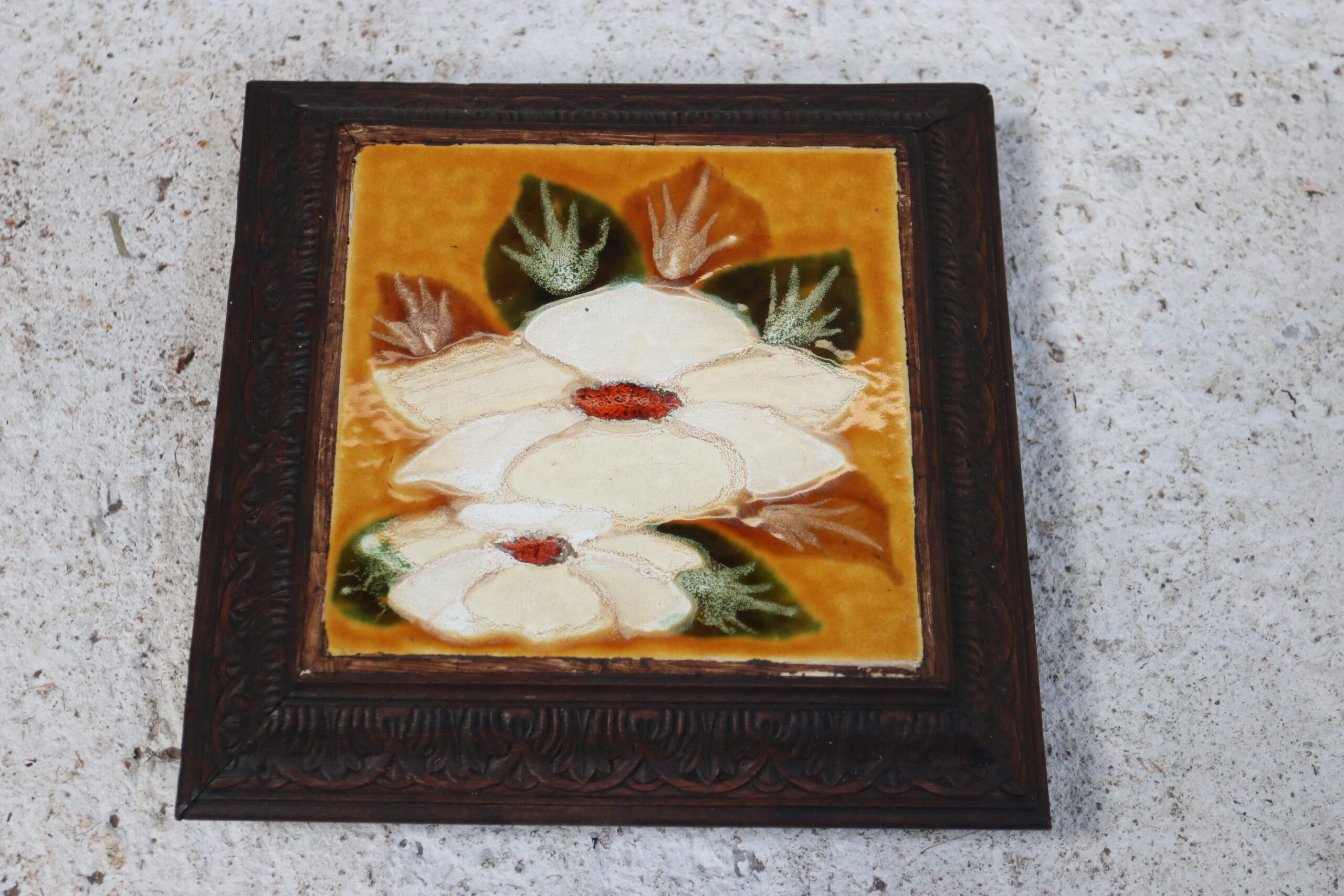 Trivet with majolica flower tile in carved frame – Art Nouveau style, early 20th century€ 49
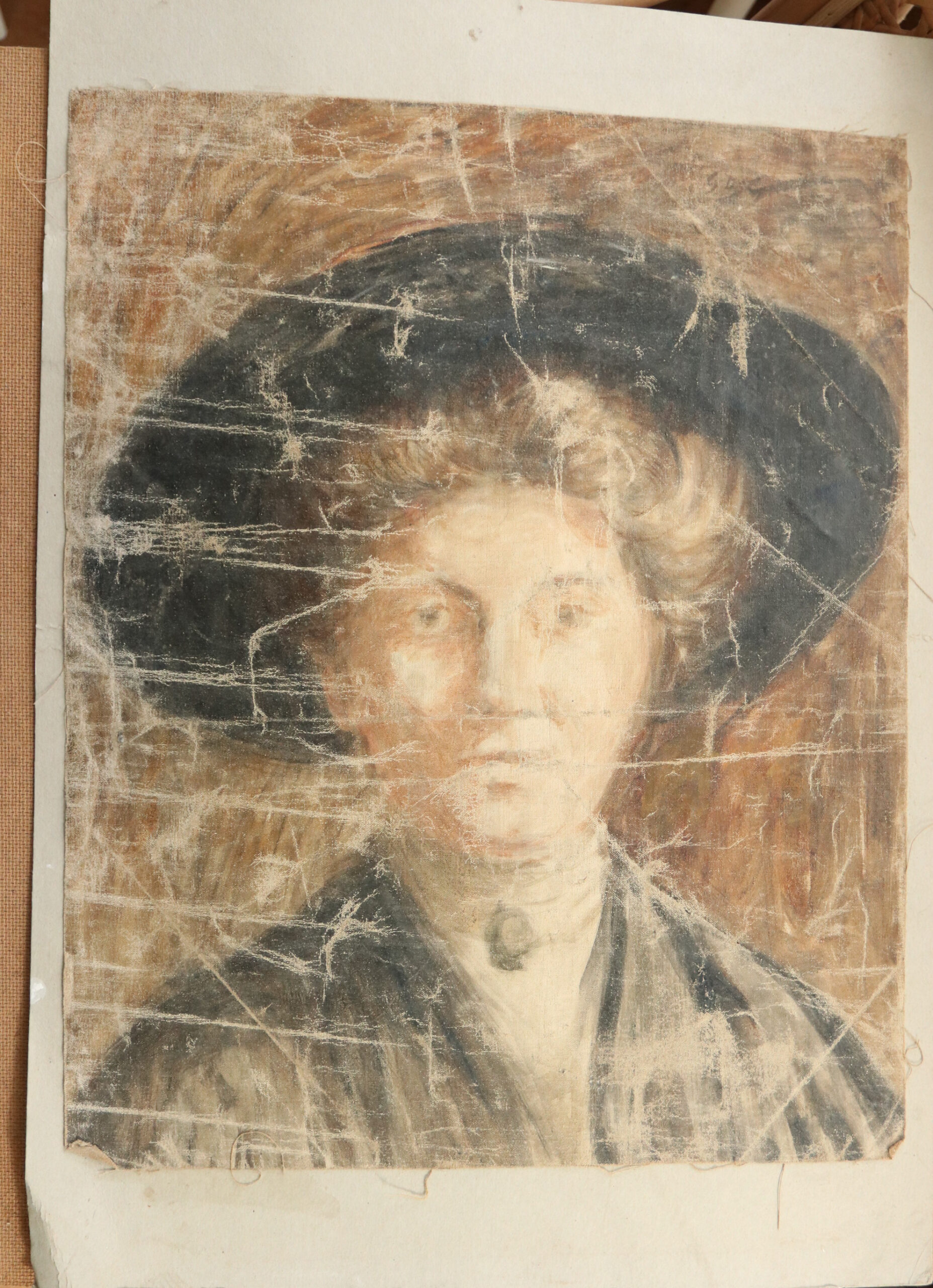 Unknown artist – Portrait of a woman with a large hat, oil on canvas, c. 1905–1915€ 50
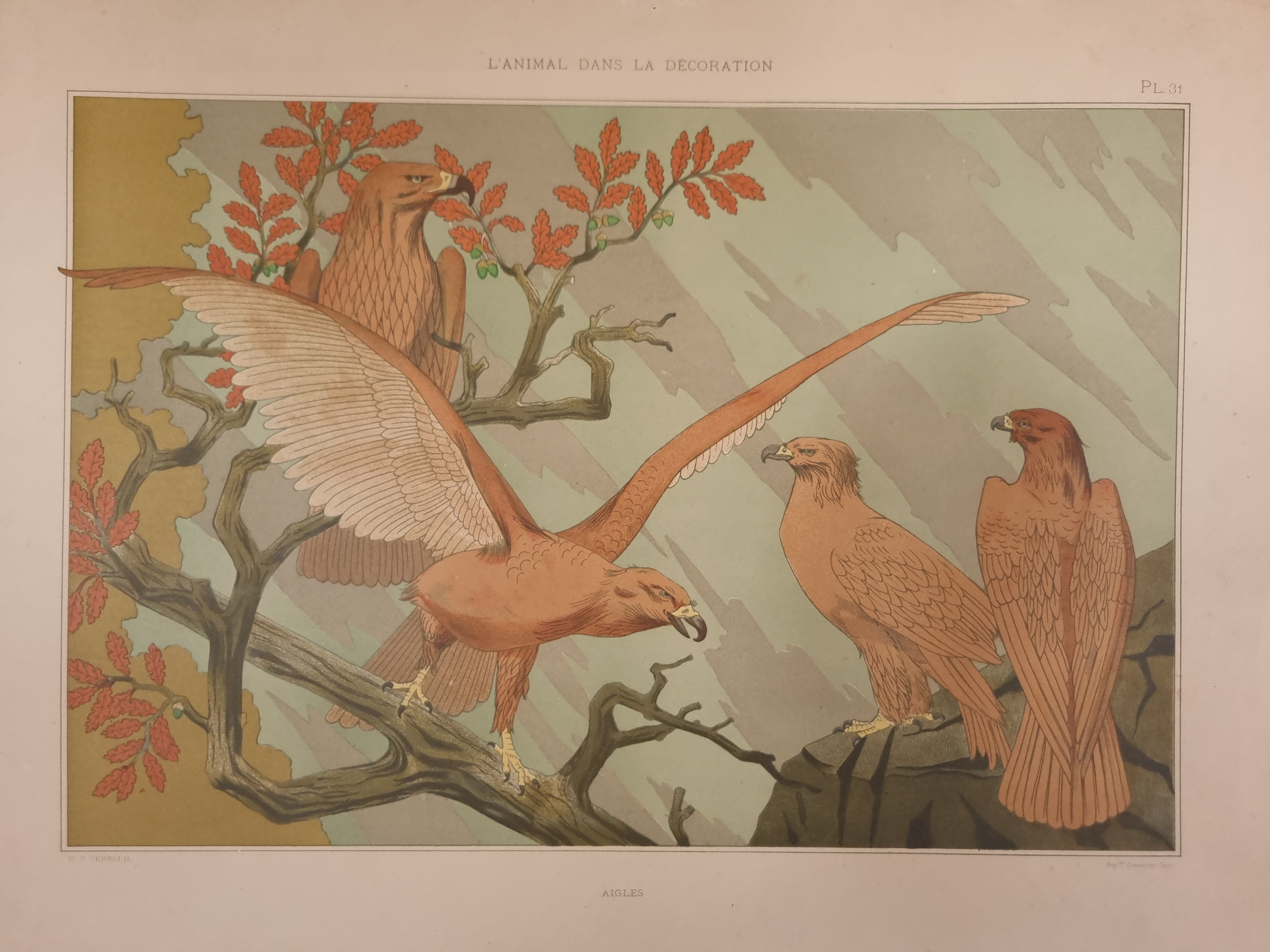 Art Nouveau lithograph ‘Aigles’ – eagles, M.P. Verneuil, L’Animal dans la décoration, 1897€ 65
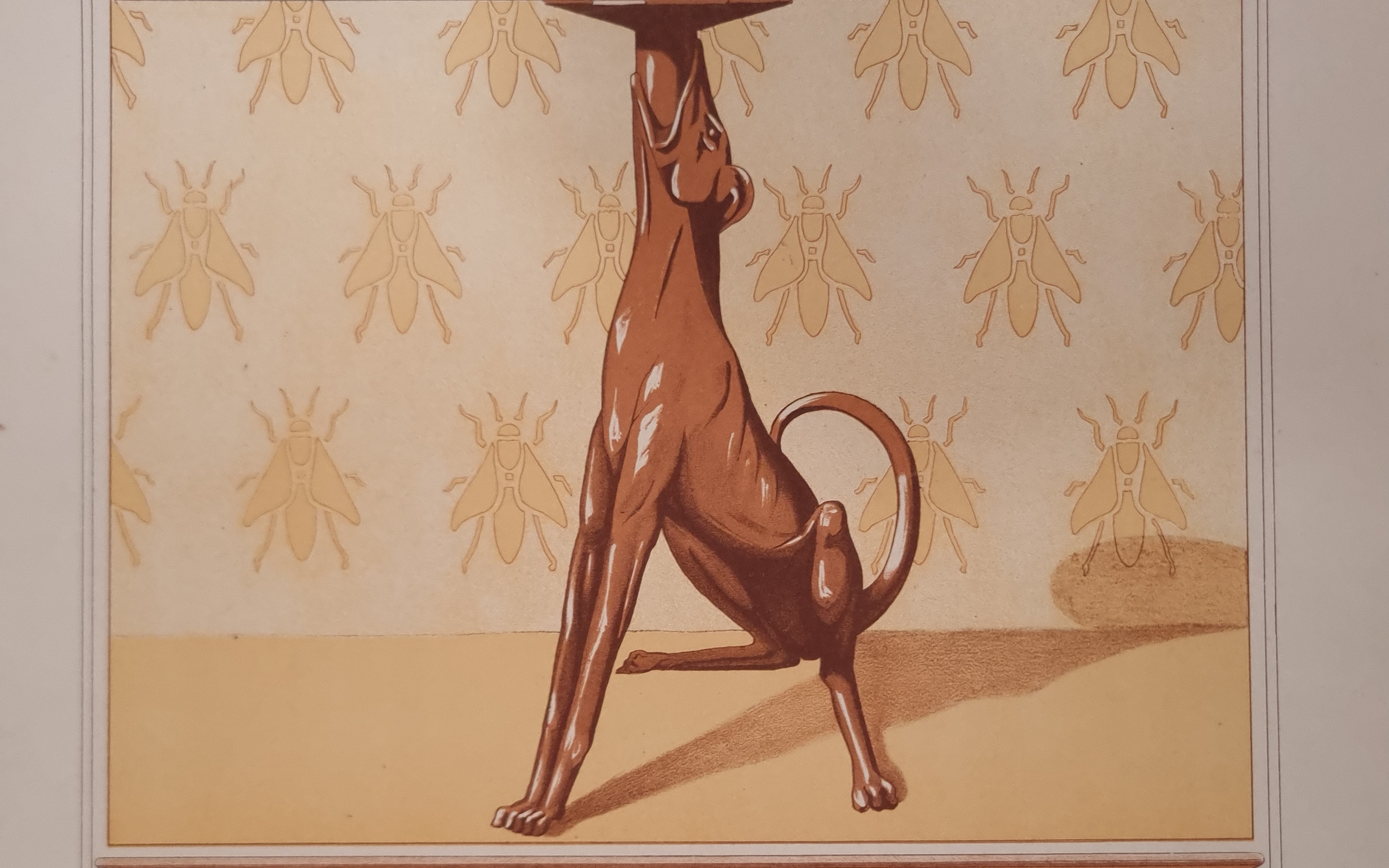 Art Nouveau lithograph with dog candlestick, bees and copper frieze – M.P. Verneuil, 1897€ 85
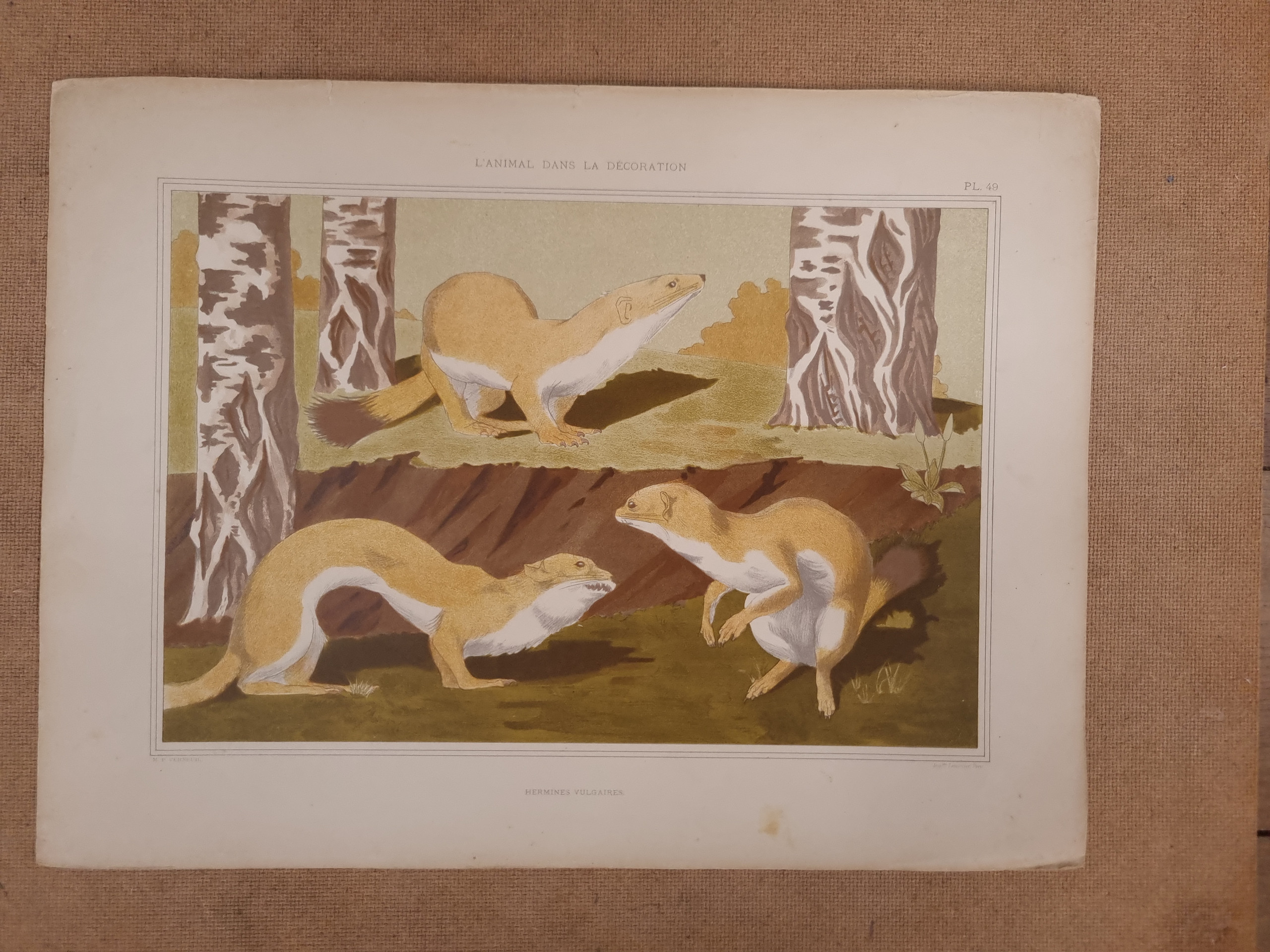 Art Nouveau lithograph ‘Hermines vulgaires’ – M.P. Verneuil, L’Animal dans la décoration, 1897€ 85
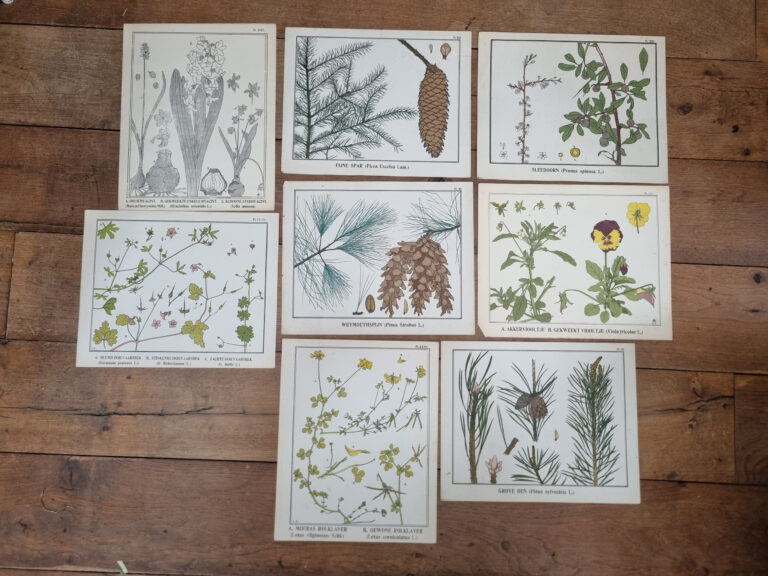 Set of 9 botanical plates – Atlas van Nederlandsche planten, L. Klaver, c. 1905€ 175
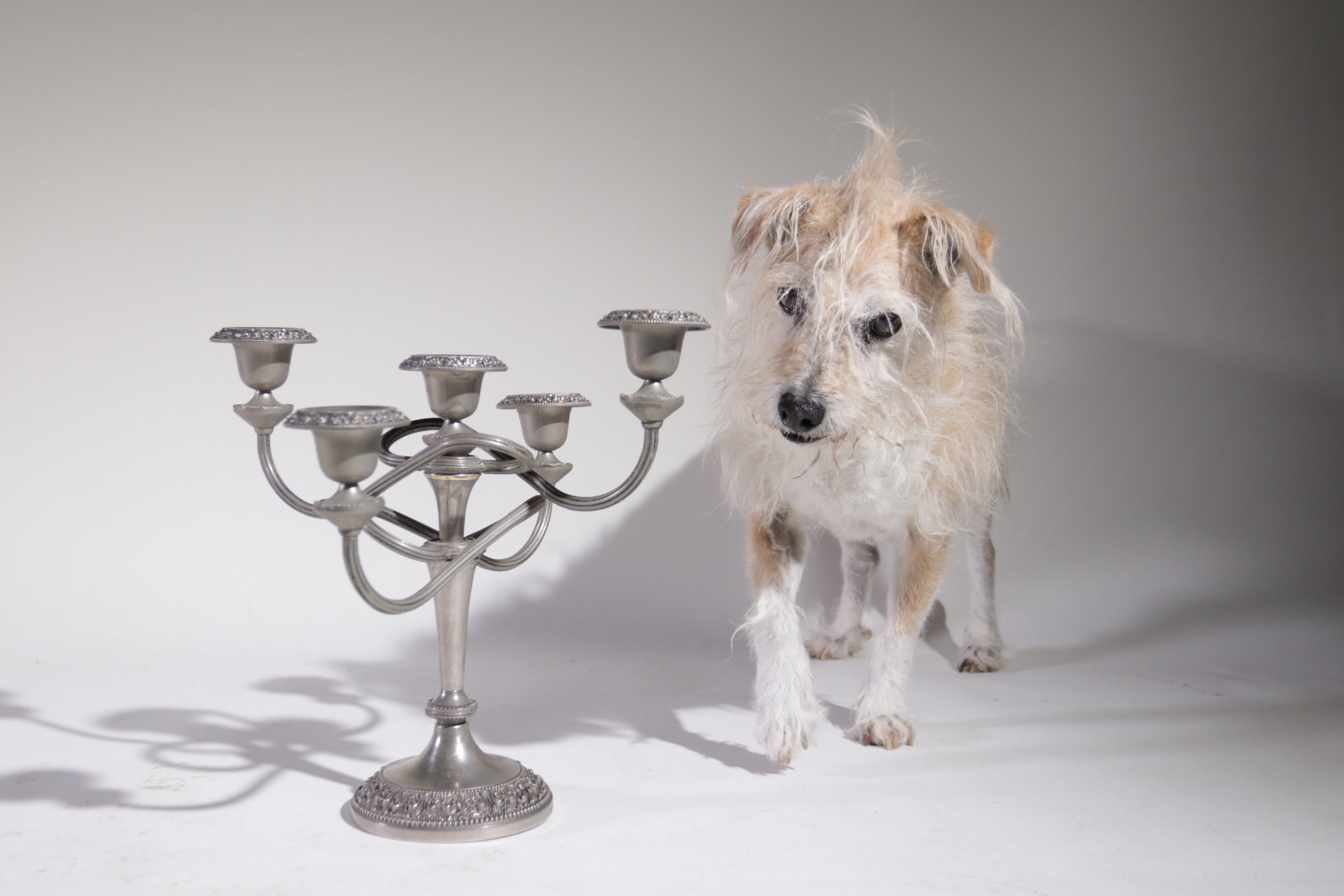 English Art Nouveau candelabrum with 5 arms – silver-plated€ 95
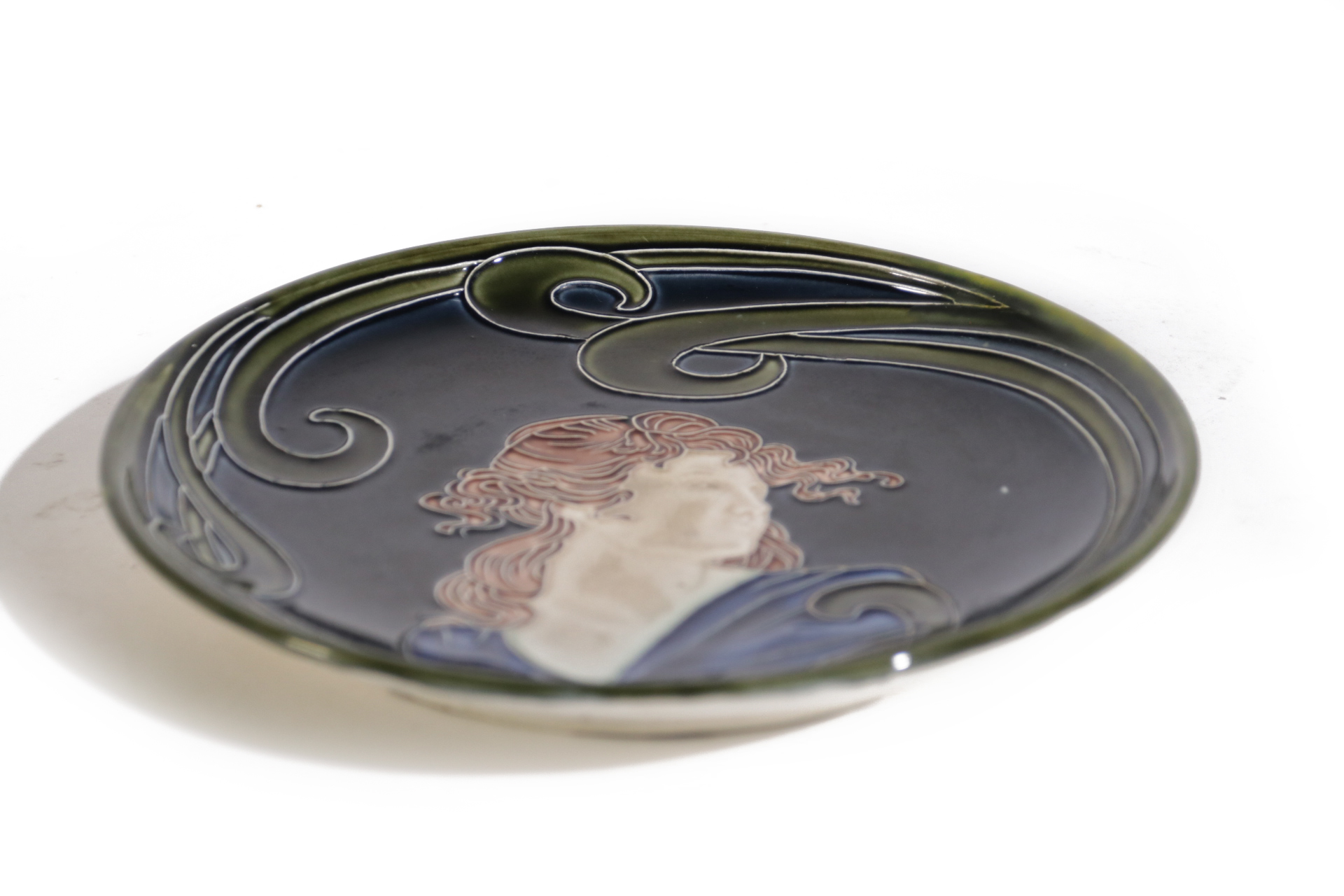 French majolica Art Nouveau wall plate – Jugendstil, circa 1900€ 245
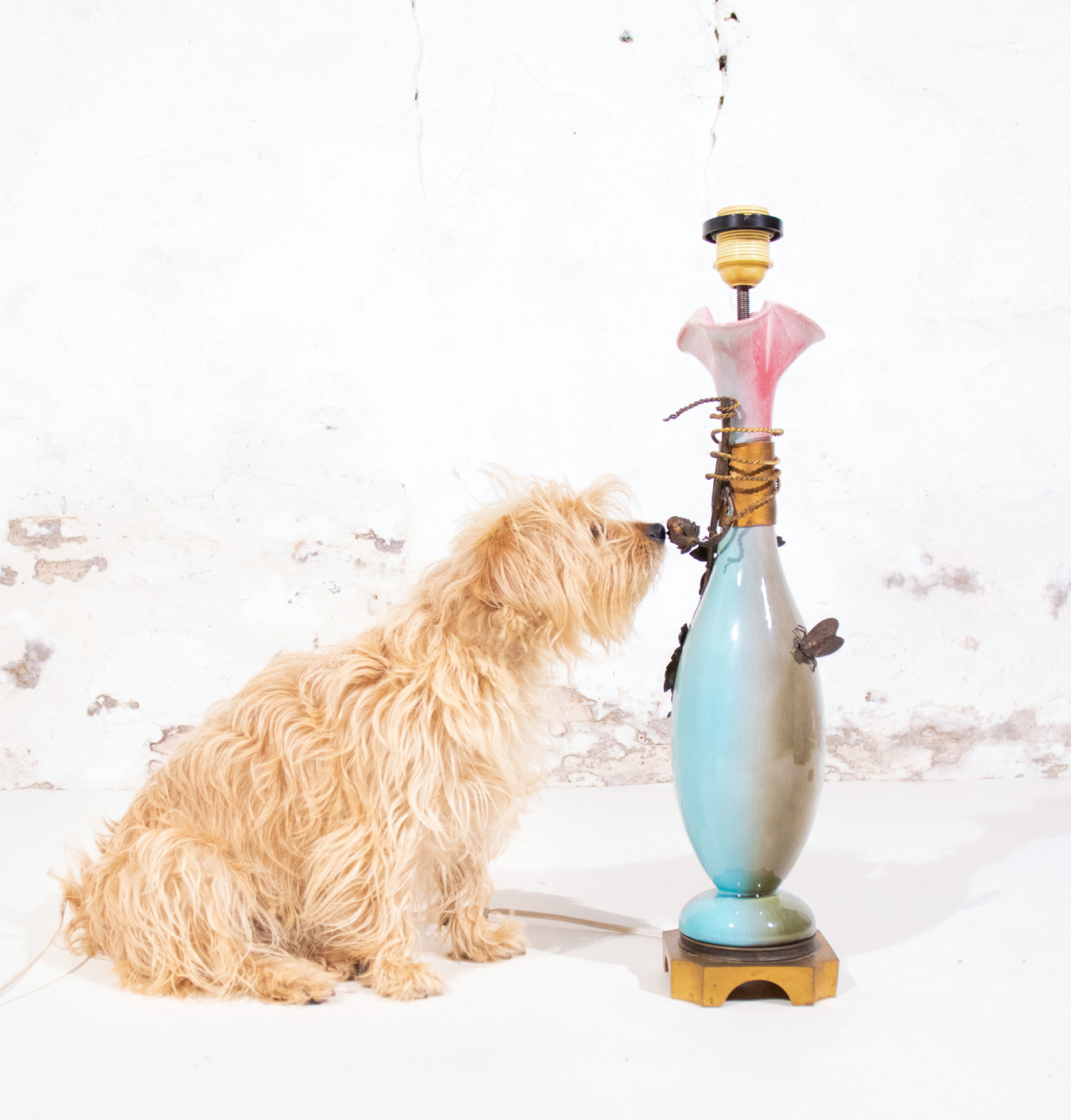 Art Nouveau table lamp with bronze fly and hop leaves – Jugendstil vase lamp€ 495
 Pander desk from circa 1920€ 995
 French Art Nouveau bronze bust ‘Carmen’ by Emmanuel Villanis – circa 1900€ 895
 French Art Nouveau bronze bust ‘Cendrillon’ by Emmanuel Villanis – circa 1900€ 895
Previously in our collection

Read on about other styles
 Scandinavian designScandinavian design at home: light wood, calm and simplicity
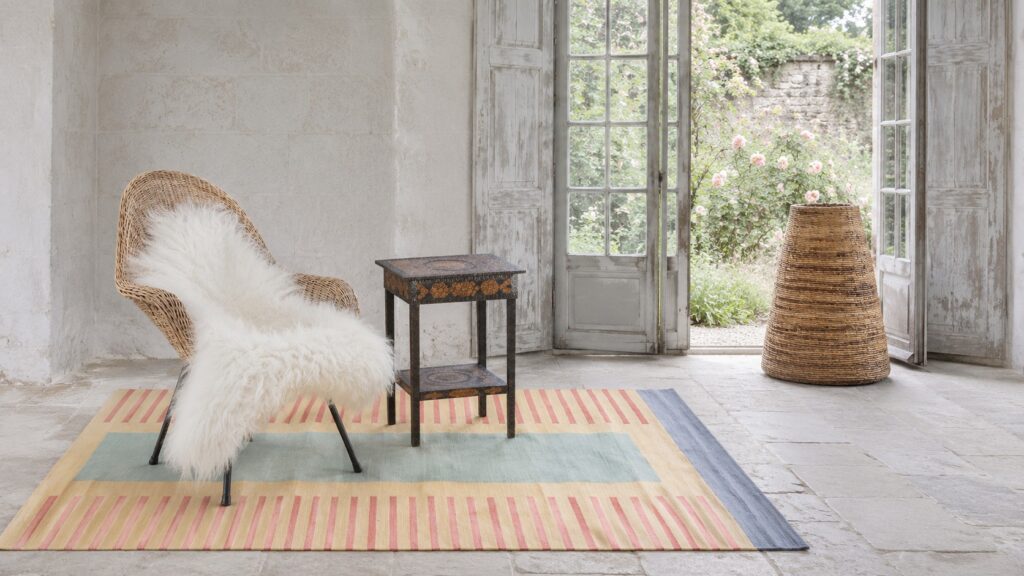 BohemianBohemian at home: free, warm and full of stories
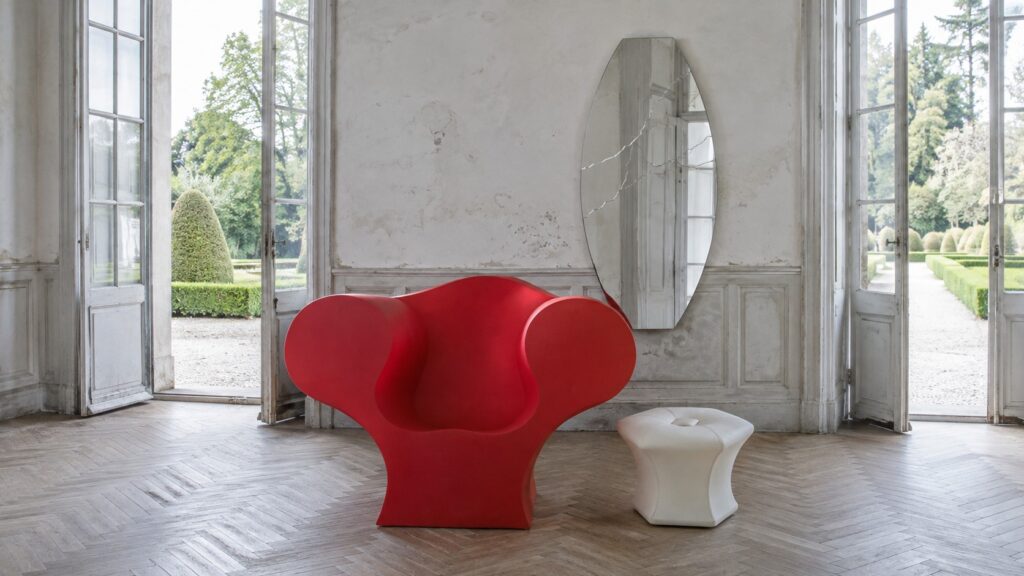 Postmodern & MemphisPostmodern & Memphis at home: colour, form and a wink
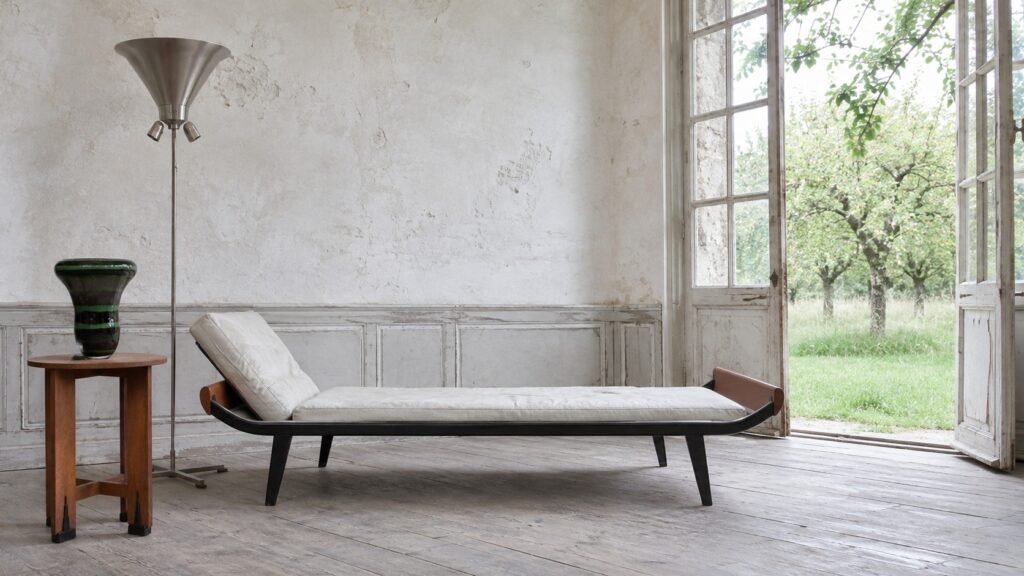 Dutch designDutch design at home: sober, clever and surprisingly warm
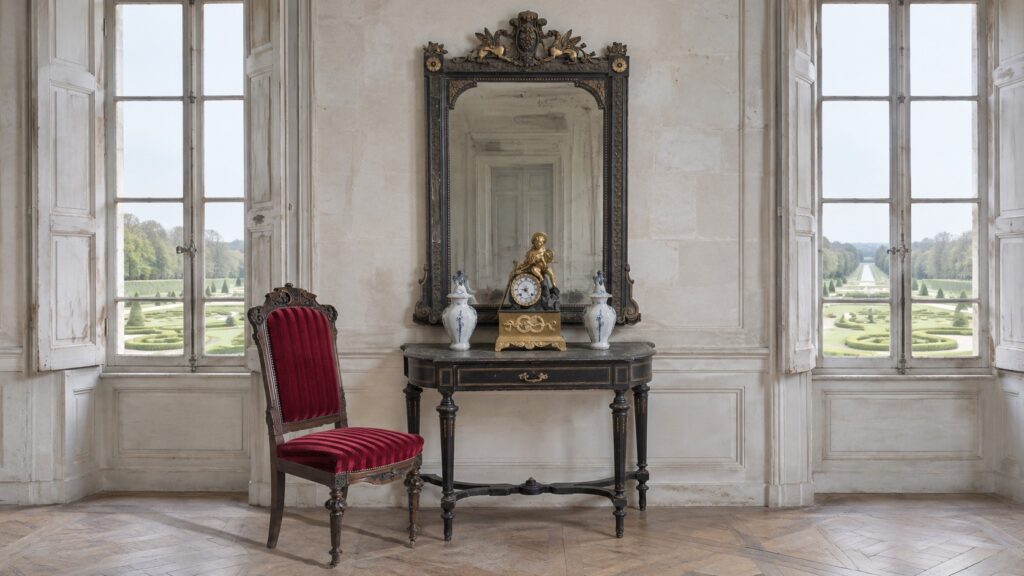 Classic antiquesClassic antiques at home: centuries old, and made to last
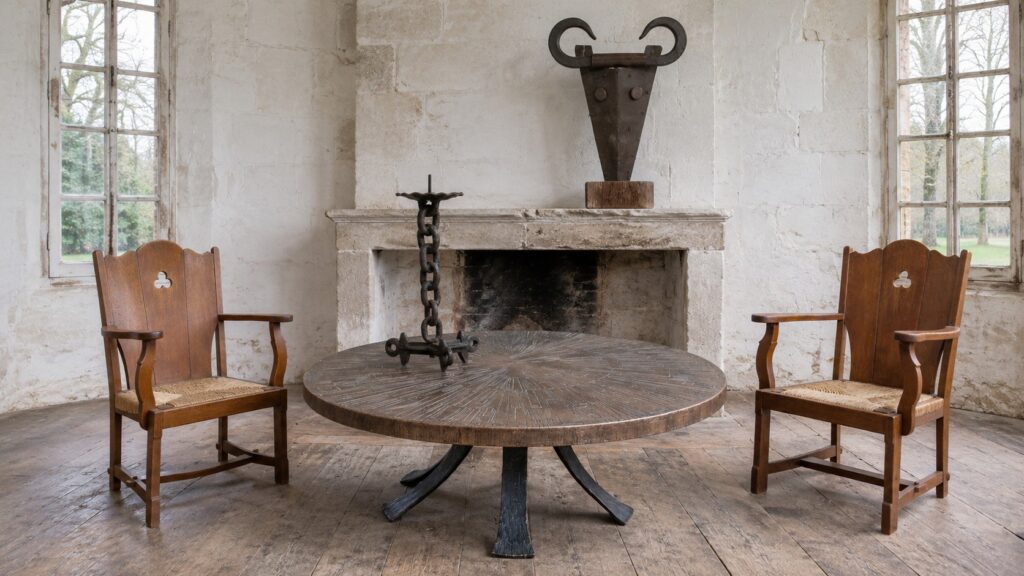 BrutalismBrutalism at home: heavy wood, raw iron and shapes with weight
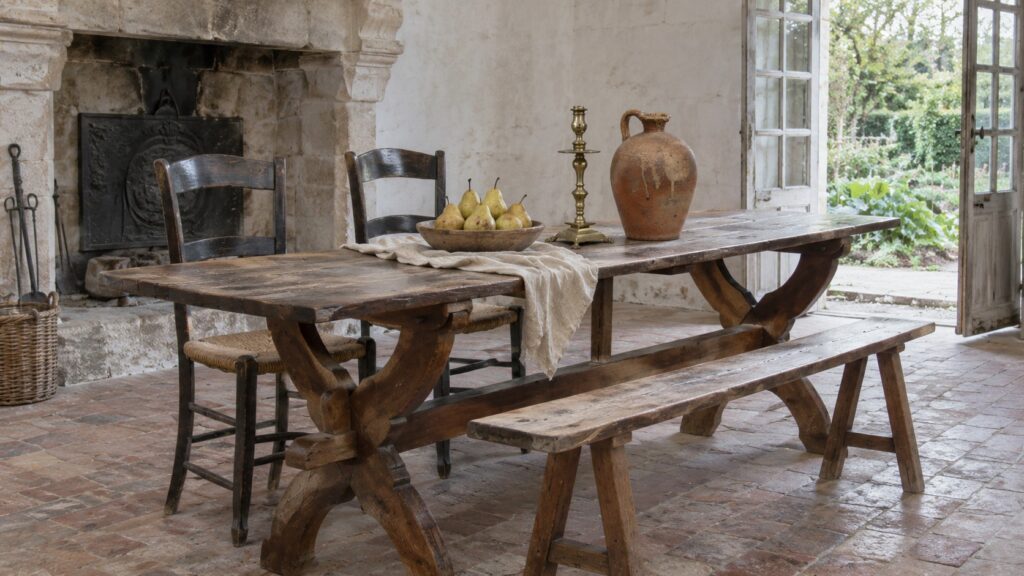 French countryFrench country living: wood, stone and the calm of country life
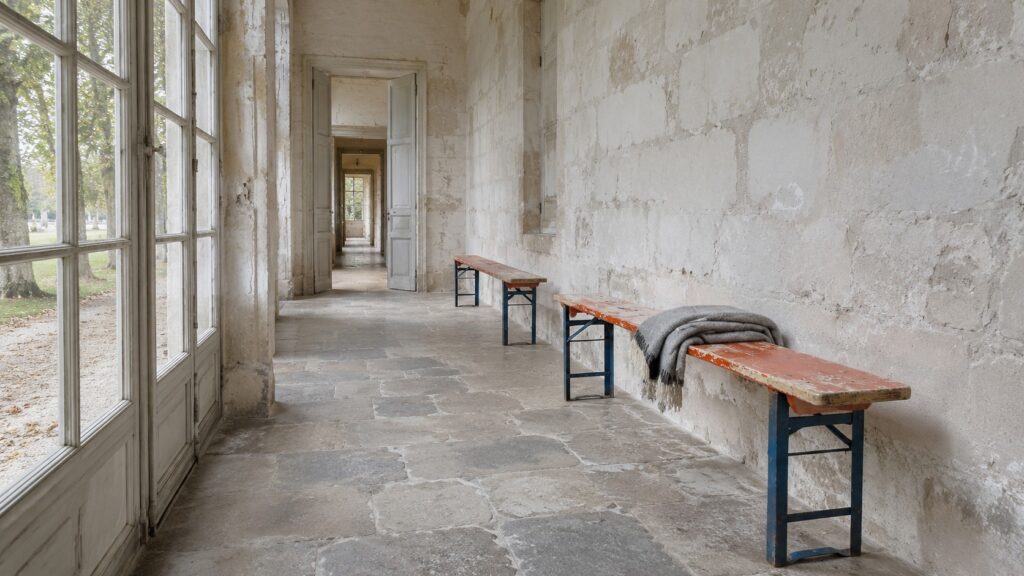 IndustrialIndustrial living: honest materials, clever shapes and a rough edge
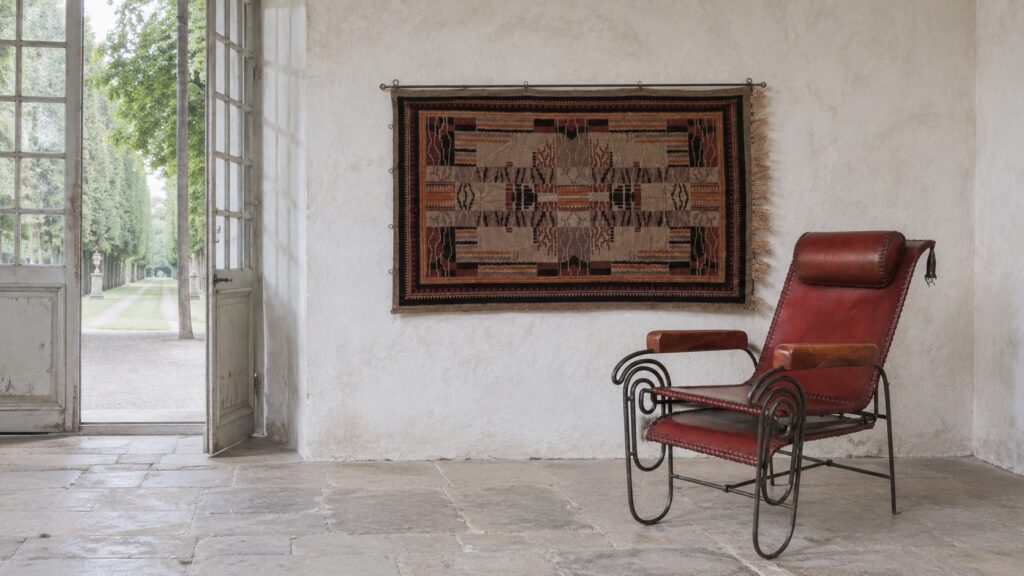 Art decoArt deco: clean lines, warm materials and a touch of daring
 Mid-centuryMid-century design: timeless, warm and still modern
 Wabi-sabiWhat is wabi-sabi living, and why does imperfection make an interior more beautiful?