

Brass is the yellow metal of candlesticks, lamps, door knobs and beds. It is soft enough to cast, to hammer into shape and to turn, and over the years it takes on a deep, warm colour that no new metal has. That is why it is in so many old pieces: from the fittings on a cabinet to the base of a lamp from the 1950s.
What it is
Brass is an alloy of copper and zinc. The old Dutch name is geelkoper, yellow copper. The share of zinc runs from 5 to 45 per cent, and that decides the colour. With little zinc, brass is a reddish gold; tombac, with 10 to 15 per cent zinc, is the well-known example. With 25 to 30 per cent zinc it is a bright yellow. With more than half zinc it turns greyish white and too brittle to use.
Do not confuse it with bronze. Bronze is copper with tin, brass is copper with zinc. Because the names were used interchangeably for centuries, museums today often simply write copper alloy.
Where it comes from
Brass is older than the knowledge of zinc. As early as antiquity it was made by heating copper with zinc ore, calamine. The zinc vapour entered the copper without anyone ever holding zinc as a metal. The Romans struck coins from it. This method stayed in use into the nineteenth century.
In our part of Europe the great centres were Dinant on the Meuse and Stolberg near Aachen, with ore from the mine at Kelmis. Decorative work in brass is still called dinanderie, after Dinant. In 1738 the Englishman William Champion was granted a patent for a way of producing zinc on a large scale, and early in the nineteenth century Jean-Jacques Dony in Liège found a process for pure zinc. From then on copper and zinc could simply be melted together, in any proportion wanted.
Brass in the home: from bed to lamp
In the nineteenth century brass became the metal of the factory. Birmingham in England grew into the city of brassware. The firm of R.W. Winfield made furniture and beds of brass and iron there. The brass bed emerged in those years.
In the Netherlands the architect H.P. Berlage designed a mantel clock with two candlesticks in brass around 1900, now in the Rijksmuseum in Amsterdam. In the trade you see many clocks and lamps of hammered copper and brass from the 1910s to the 1930s in the style of the Amsterdam School, the Dutch expressionist style of those years.
The finest brass lamps come from Scandinavia. The Finn Paavo Tynell (1890–1973) was a co-founder of the firm Taito and ran it from 1918 to 1953. He worked with brass and glass and often decorated his shades with patterns of small holes. His lamps hang in the Finnish parliament, and in the 1950s they sold widely in America. The Swede Hans-Agne Jakobsson (1919–2009) started his own company in Markaryd in 1951. Brass lamps became its signature.
Then there is the glamour. Hollywood Regency is the name for a style from the golden age of American film, from the 1920s to the 1950s, with bold contrasts and accents of metal and glass. In the trade a good deal of French work in brass and glass from the 1960s and 1970s carries that name too, such as the tables and palm lamps attributed to Maison Jansen and Maison Charles.
Solid or brass-plated
Not everything that shines yellow is brass. Many lamps, beds and fittings are iron or steel with a thin layer of brass over them. That is called brass-plated. It is not a deception, simply a cheaper way of making, but it ages differently and you want to know what you are buying.
The test is simple: hold a magnet to it. Brass is not magnetic. If the magnet sticks, there is iron or steel underneath. Do mind where you test. A solid brass lamp can have an iron threaded rod inside or a weight in the base. So test on the shade, the arm or the tube itself.
How to recognise it
Brass is heavy. A solid candlestick weighs more than you expect when you pick it up. Look at places where the piece is worn: edges, knobs, the place where a hand always took hold of it. On solid brass you see the same yellow metal there. On brass-plated iron, grey metal or rust comes through. Rust is always a sign of iron, because brass does not rust.
Look at the inside and the underside too, where nobody has polished. There you see the true colour of the metal and often how it was made as well: cast, turned or raised from sheet.
Lacquered and unlacquered, and patina
Bare brass does not stay bright. In the air it first goes dull and then steadily darker, to a deep brown. That is patina. To prevent this, many lamps were given a coat of clear lacquer at the factory. Lacquered brass keeps its shine, until the lacquer wears with the years. Then you get patches: shiny parts beside dark ones, often with a sharp edge.
Unlacquered brass discolours evenly and can be polished bright again, but the question is whether you should want that. A calm, dark patina is what makes an old piece old. Polish it away and you have a lamp that looks new.
What to look for when you buy
Look for dents in thin sheet work, for small cracks at soldered seams and for parts that were replaced later and are a different shade of yellow. On brass-plated work, look for places where the layer has gone. That layer is thin and every polishing takes a little of it away. Ask whether the piece has been polished or lacquered again.
Care in brief
Only wipe lacquered brass with a soft cloth; polish does not belong on it. Polish unlacquered brass as little as you can. You can read more in the book Caring for brass, copper, bronze and silver on the Care shelf.
Why we love it
Brass gives a room warmth without adding colour. Against a limewashed wall an old brass lamp or candlestick is the one point that catches the light, and in the evening by candlelight no other metal does it so softly. We love brass most when it has gone dull, matt and lived-in. You will find the brass pieces from our collection below, and all of them already have a life behind them. We ship worldwide.
Written by De HuiszwaluwBrass
The Golden Age
The eighteenth century
Empire & Napoleon III
Art deco
Mid-century
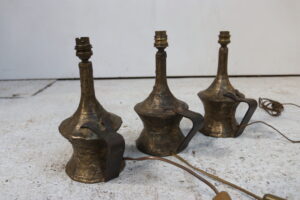
The Golden Age
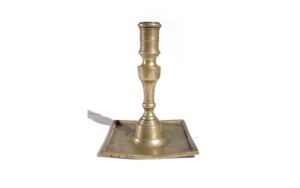
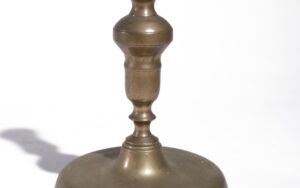
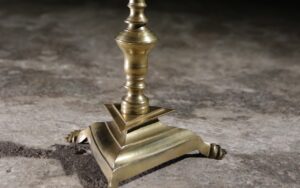
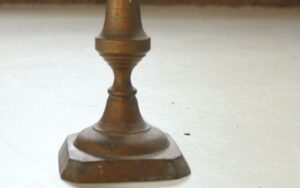
1650 17th-century Spanish brass candlestick with square base € 145 1680 Large Spanish brass candlestick with low bell base € 245 1690 17th-century French brass candlestick € 345The eighteenth century
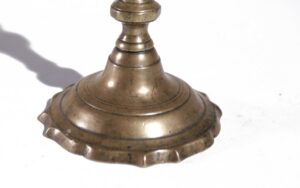
1750 French 18th-century brass candlestick € 195Empire & Napoleon III
1850 Large candlestick € 125Art deco
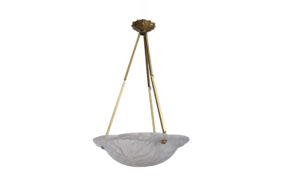
1925 Art Deco pendant lamp by Degué € 395Mid-century
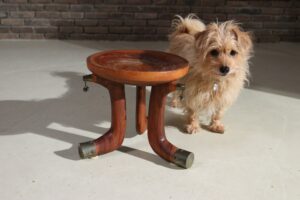
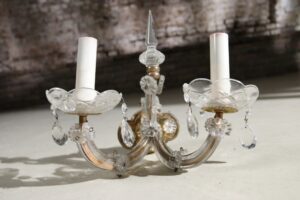
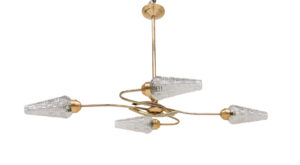
1950 Ethiopian Jimma stool with brass mounts and miniature ornaments € 595 1950 Crystal Wall Sconce in Maria Theresa Style € 65 1955 Vintage brass pendant lamp with four glass shades € 325 1965 Max Bré € 57519 pieces in brass found a new home
 1960s vintage wall lamps with brass detailsSold
 Vintage Design Bedside Tables 1950s Brass FeetSold
 Vintage Design Coffee Table on Brass Feet 1960sSold
 Geometric Old Tiffany Style Opaline and Brass Pendant LampSold
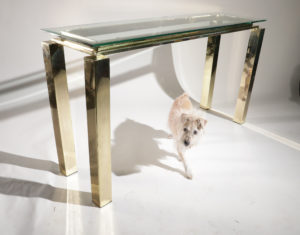 Hollywood Regency Brass Side Table, 1980sSold
 Hollywood Regency Brass Coffee Table, 1980sSold
 Hollywood Regency Coat Rack with 6 Hooks, Solid Brass ’80Sold
 Hollywood Regency Vintage Design Chest of Drawers, Cream / BrassSold
 Vintage Eclectic Coat Rack with Brass HooksSold
 Vintage eclectic design Herda brass table lamp 1970sSold
 Eclectic design coffee table glass Plexiglas brass 1980sSold
 Vintage Eclectic Pendant Lamp, Brass and Green, 1960sSold
 Extremely Eclectic Swan Brass Coffee Table, Maison Jansen StyleSold
 Extremely Eclectic Chair, Brass and Leopard FabricSold
 Chiavari Brass 1950s Eclectic Vintage Design ChairsSold
 Eclectic Retro Vintage Small Sideboard with Brass, 1950sSold
 Large Retro Vintage Brass Greyhound No. 2Sold
 Retro Vintage Brass Bulrush Table LampSold
 Large Sculpture: Retro Vintage Brass Greyhound No. 1Sold
Looking for something in brass?
Let us know. We buy every week and will tell you when something comes in. We ship worldwide.