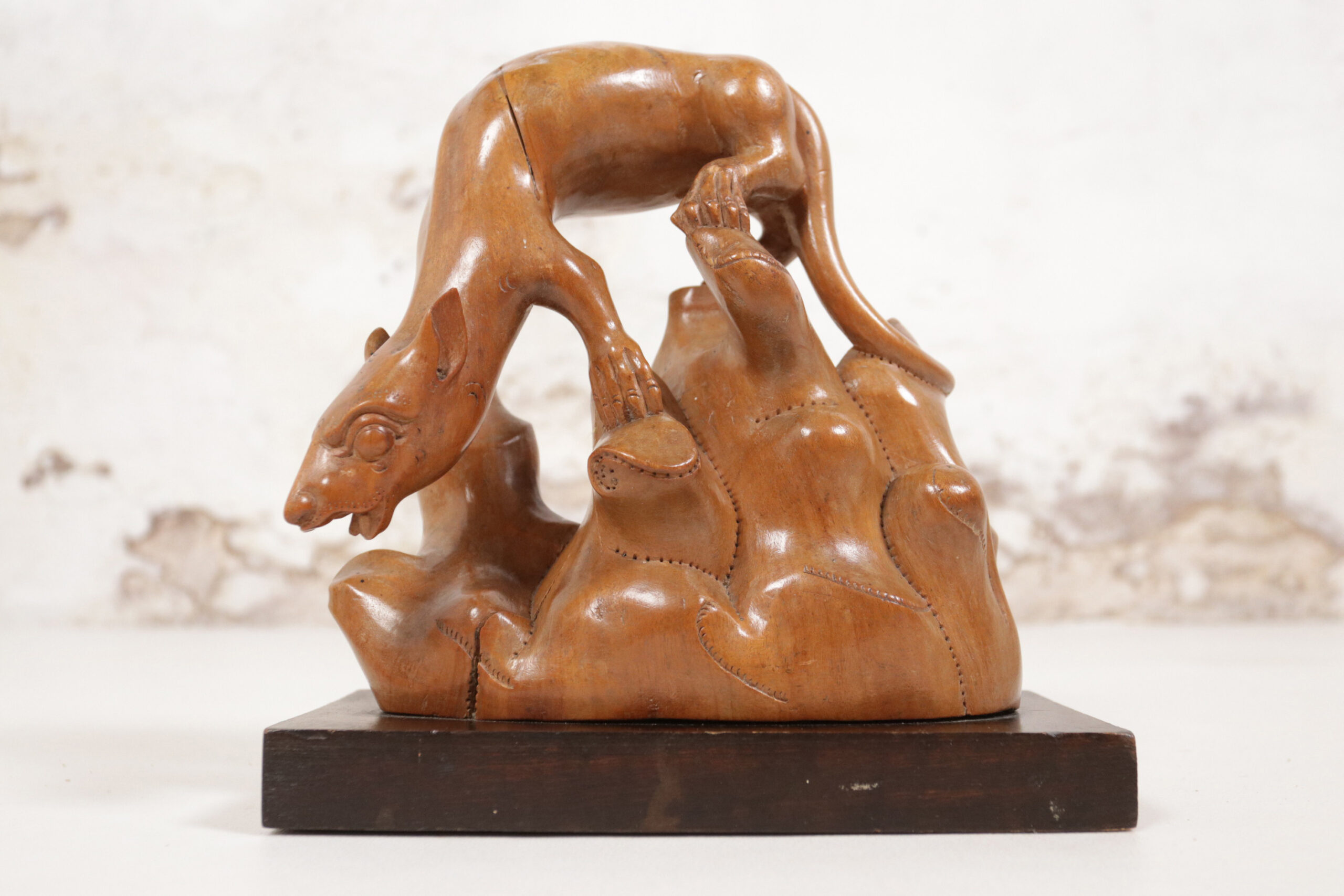
Balinese Art Deco wood carving of a luwak (palm civet) with original sales label – Pita Maha period, 1930s
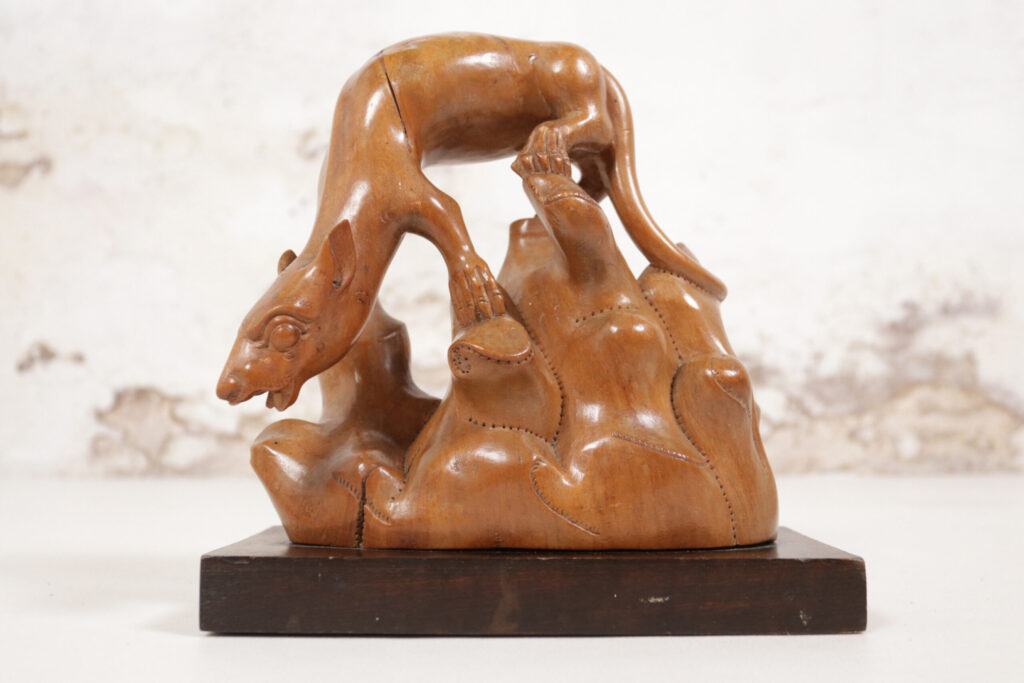
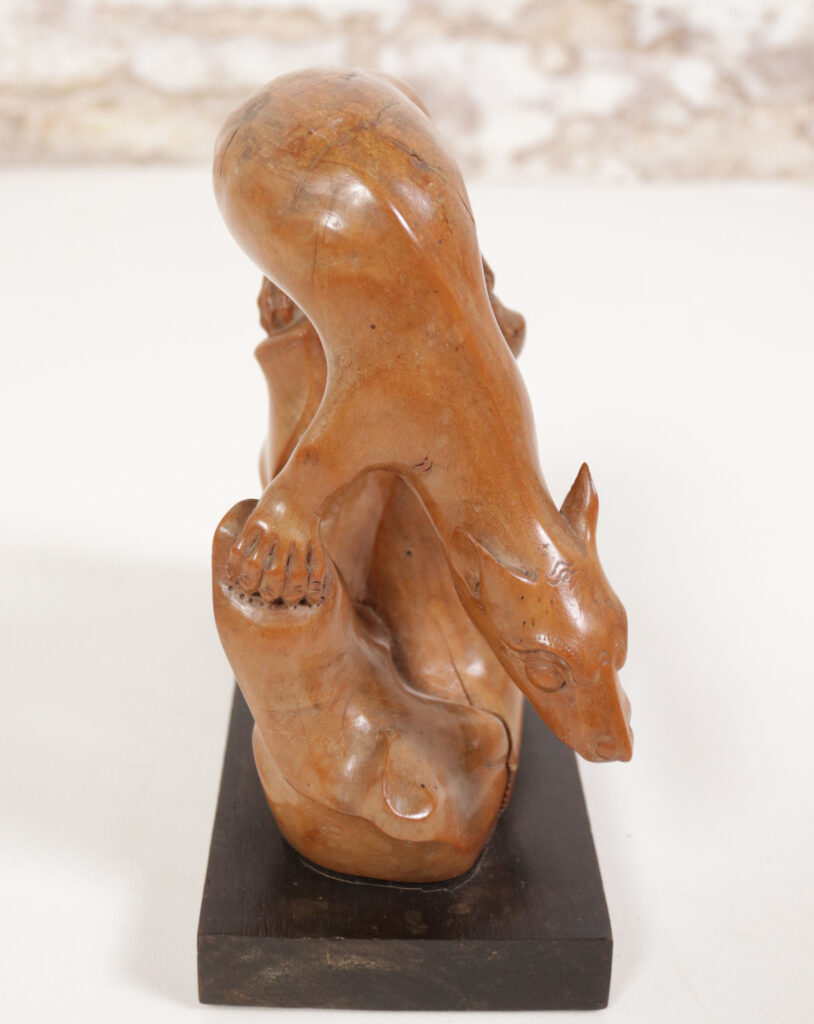
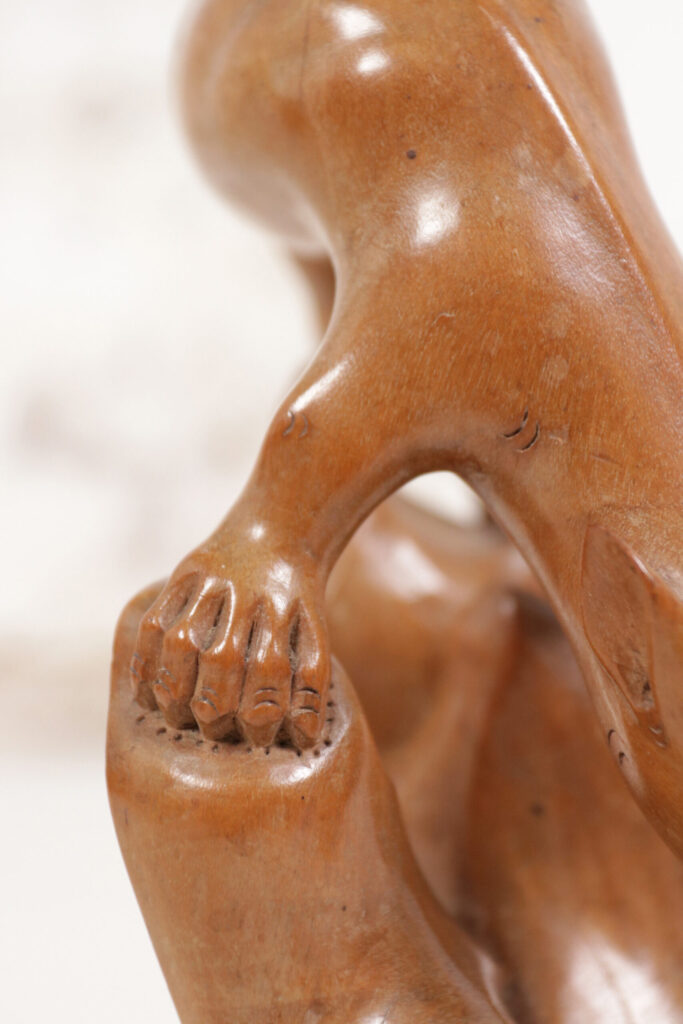
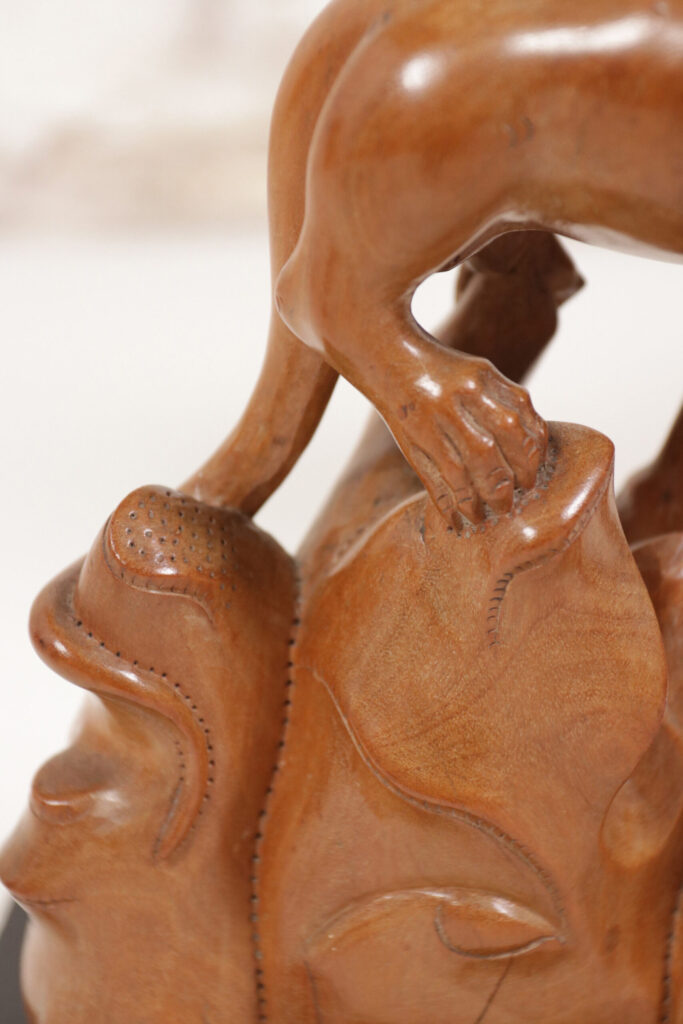
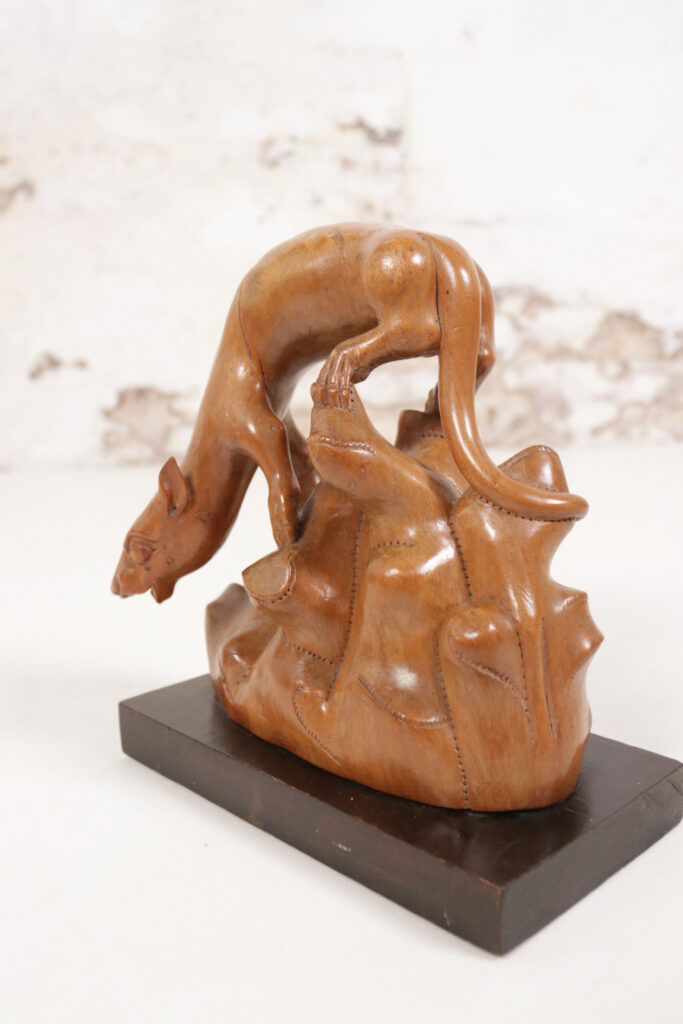
Balinese Art Deco wood carving of a luwak (palm civet) with original sale label – Pita Maha period, 1930s
A remarkable Balinese wood carving of a luwak, also known as musang or Asian palm civet. The animal climbs head-first down a group of large, stylised leaves. The long, slender body, the thin tail curling around a leaf and the long toes gripping the foliage are carved with great precision. The leaves show fine, dotted veins. The sculpture is carved from a single piece of wood and mounted on a black wooden base. The elongated forms, the long ‘fingers’ and the face with almond-shaped eyes and curling brow lines are characteristic of Balinese Art Deco wood carving of the 1930s, the era of the artists’ association Pita Maha. The original sale label under the carving supports this dating (see below).
Why we chose this piece
The tension in the body, the outstretched head and the arc of the tail: this is true sculpture, not a souvenir. A luwak is also far rarer than the familiar deer and herons. Carvings like this came to the Netherlands in the 1930s to 1950s with travellers, soldiers and Indo-Dutch families, and are increasingly sought after by collectors.
Style and interior
A beautiful object for an Art Deco, colonial, eclectic or wabi-sabi interior, on a sideboard, mantelpiece or bookcase. It is attractive from every side, so give it space. Together with the sleeping fawn, which comes from the same source, it makes a lovely pair.
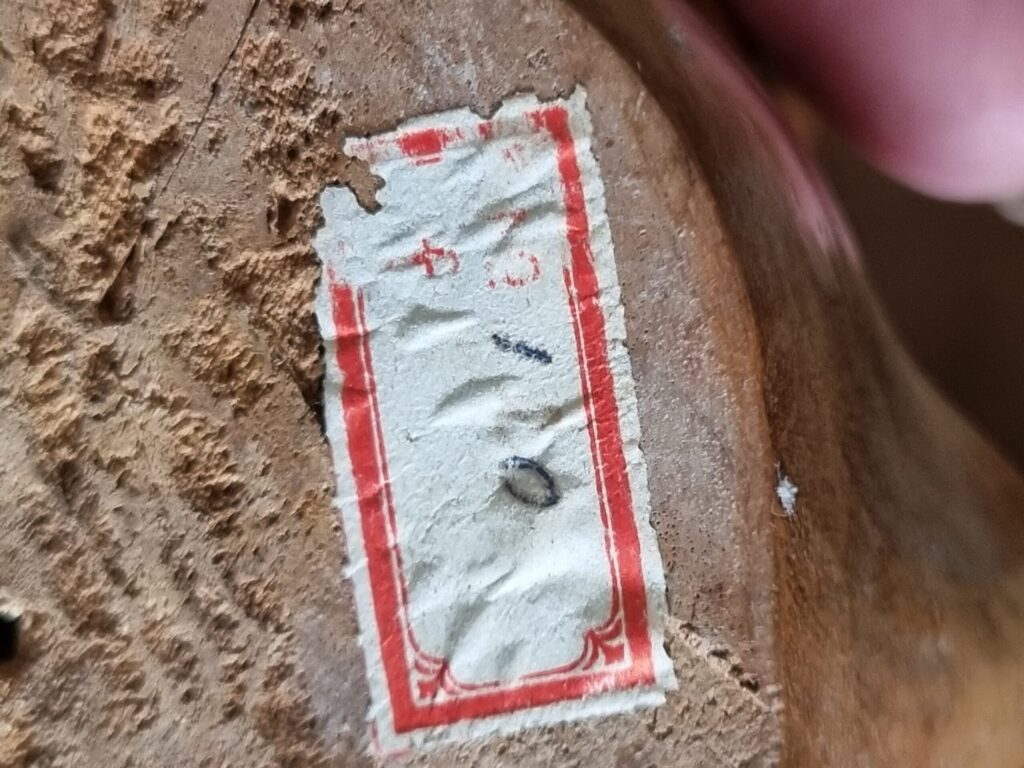
Provenance and label
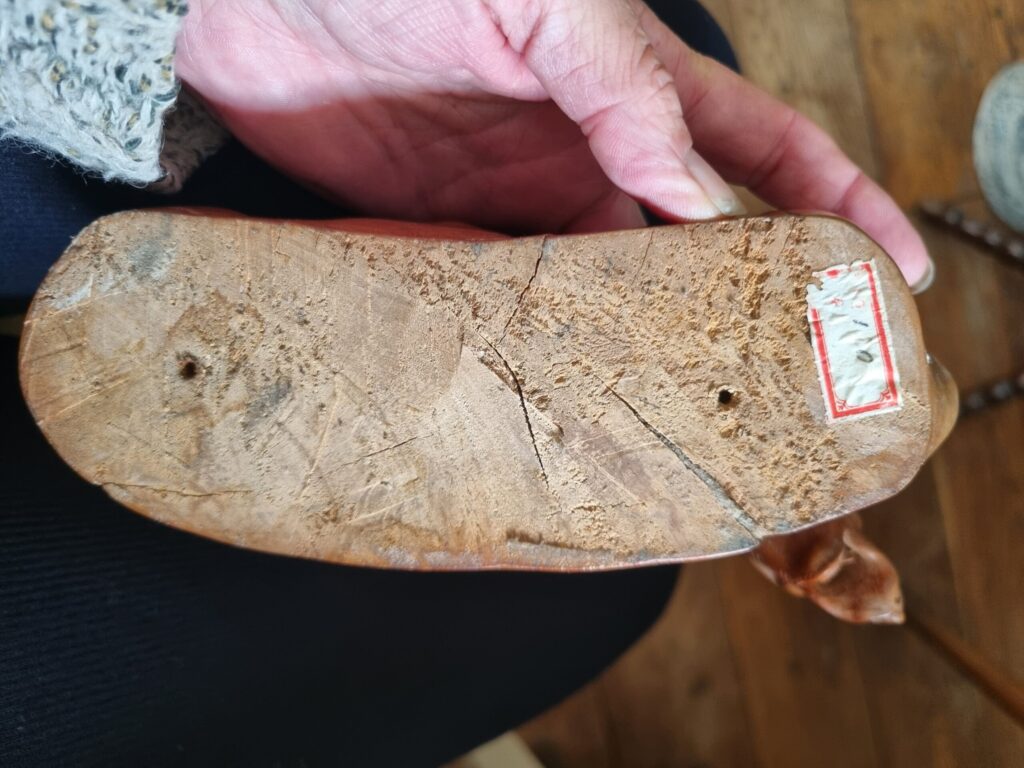
Under the carving the original sale label is still present: a small, red-bordered label with a printed “No.” and “f”, filled in by hand with number 10. The “f” stands for guilder (florin). The label belongs to a system of catalogue number and price. Exactly the same type of label is found on carvings sold at the sales exhibitions of the Balinese artists’ association Pita Maha. These exhibitions were held between 1936 and 1941 in Batavia, Bandoeng and Jogjakarta, among other places, at the local Kunstkring art societies. Each exhibition had a printed catalogue listing, per number, the subject, often the maker, and the price in guilders.
The label therefore indicates that this carving was sold in the 1930s through one of these Pita Maha sales exhibitions. We are still researching in which catalogue number 10 appears. As soon as we know, we will add the exhibition and, if known, the maker here.
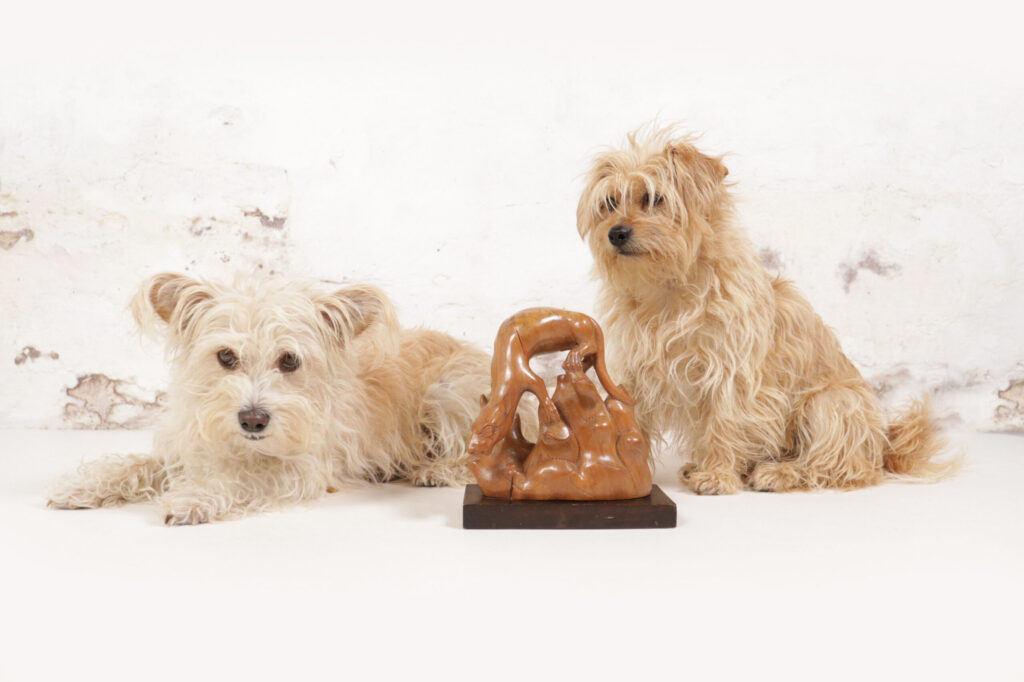
Dimensions: width 19 cm, depth 9.4 cm, height 20.5 cm
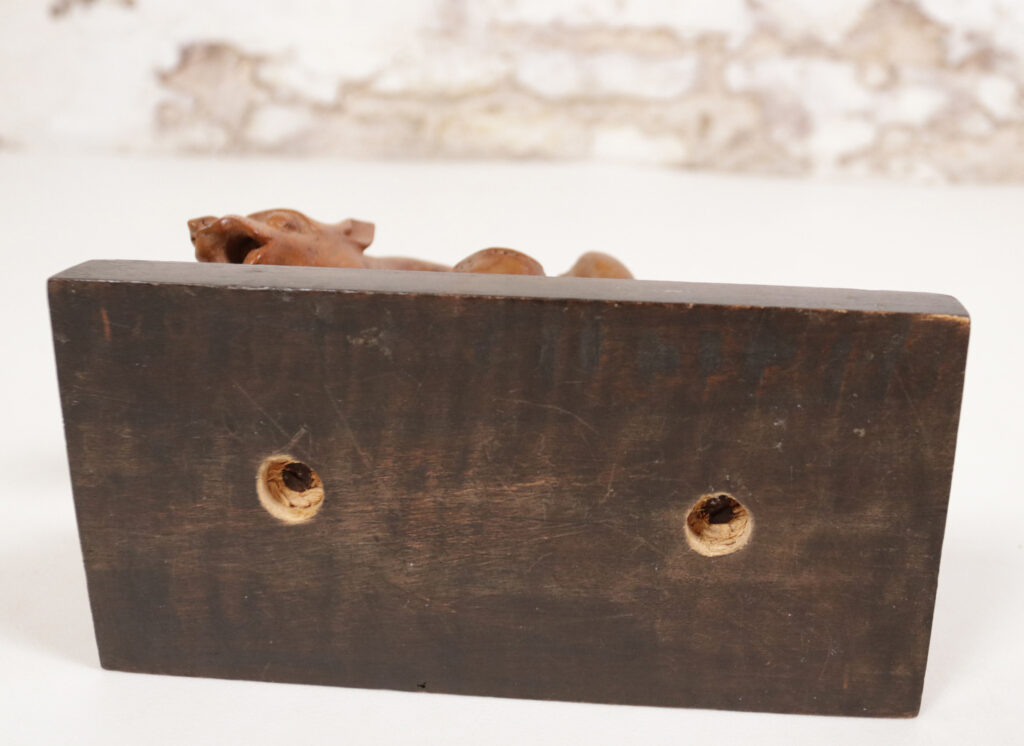
Material: tropical hardwood, black wooden base
Period: 1930s (before 1942)
Origin: Bali, Indonesia; original sale label No. 10, of the type used at the Pita Maha sales exhibitions
Condition: good and stable. There are some drying cracks in the wood: one on the animal’s back and a vertical one in the lower leaf section (see photos). Light signs of use. The base is attached with two screws.
To be auctioned. Please contact us if you would like to be informed about the auction.
More about this style: Art deco: clean lines, warm materials and a touch of daring
Also in this style
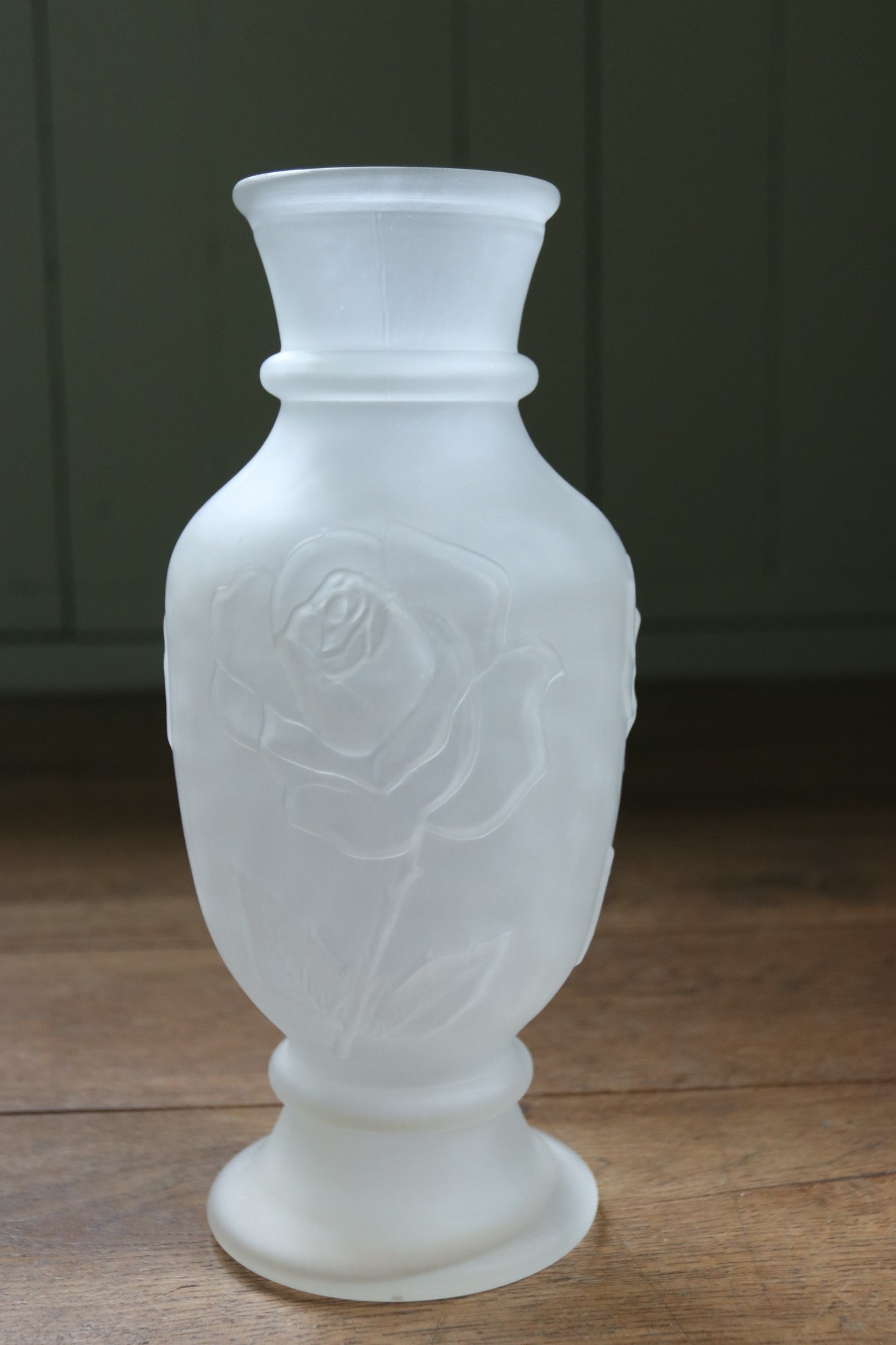 Frosted pressed glass vase with relief roses – Art Deco style, c. 1930–1960€ 65
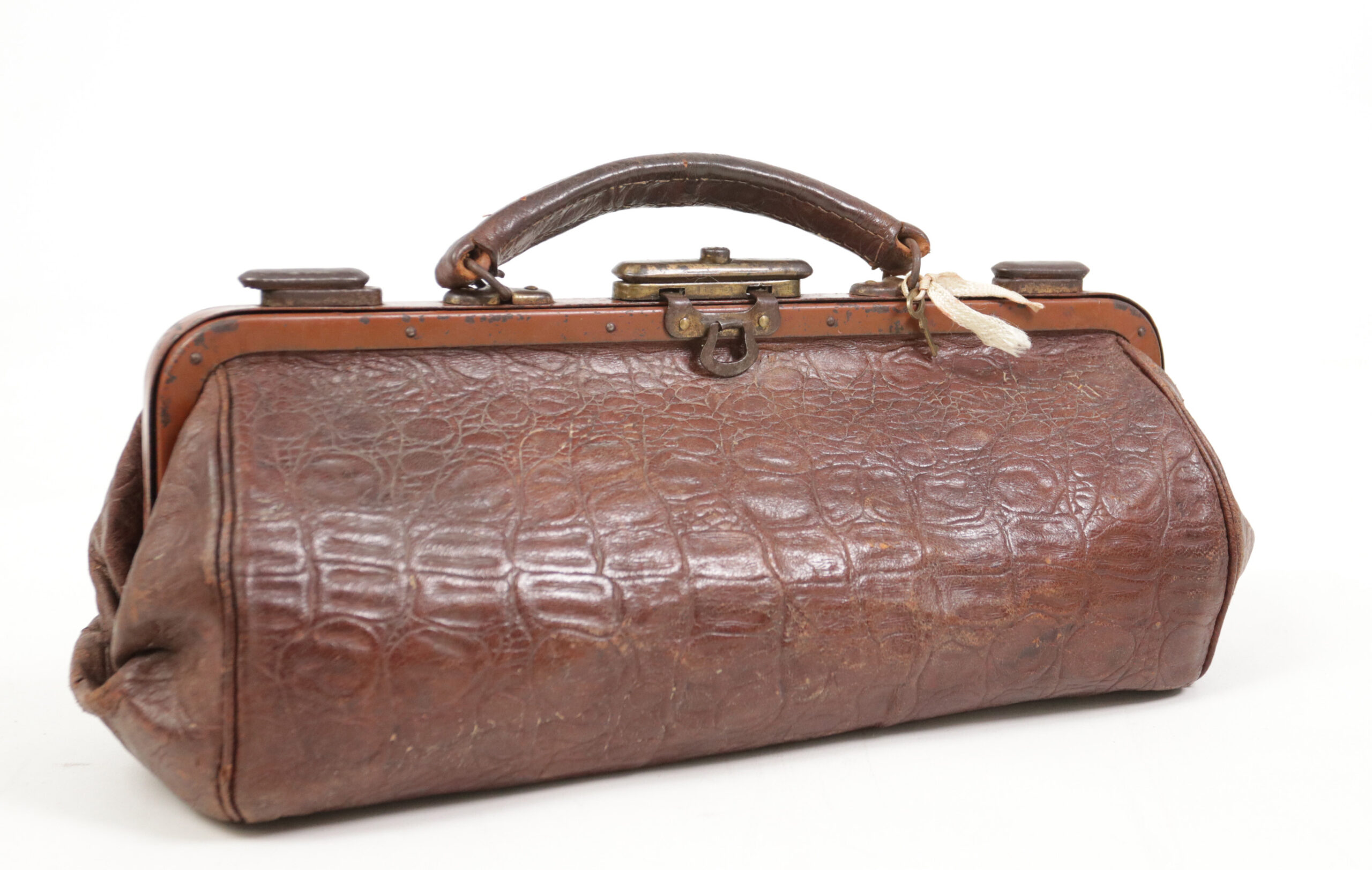 Antique French Art Deco doctor’s bag in crocodile-print leather – circa 1920€ 145
 1930s Extremely Rare Art Deco Black Bakelite and Chrome Umbrella Stand€ 395
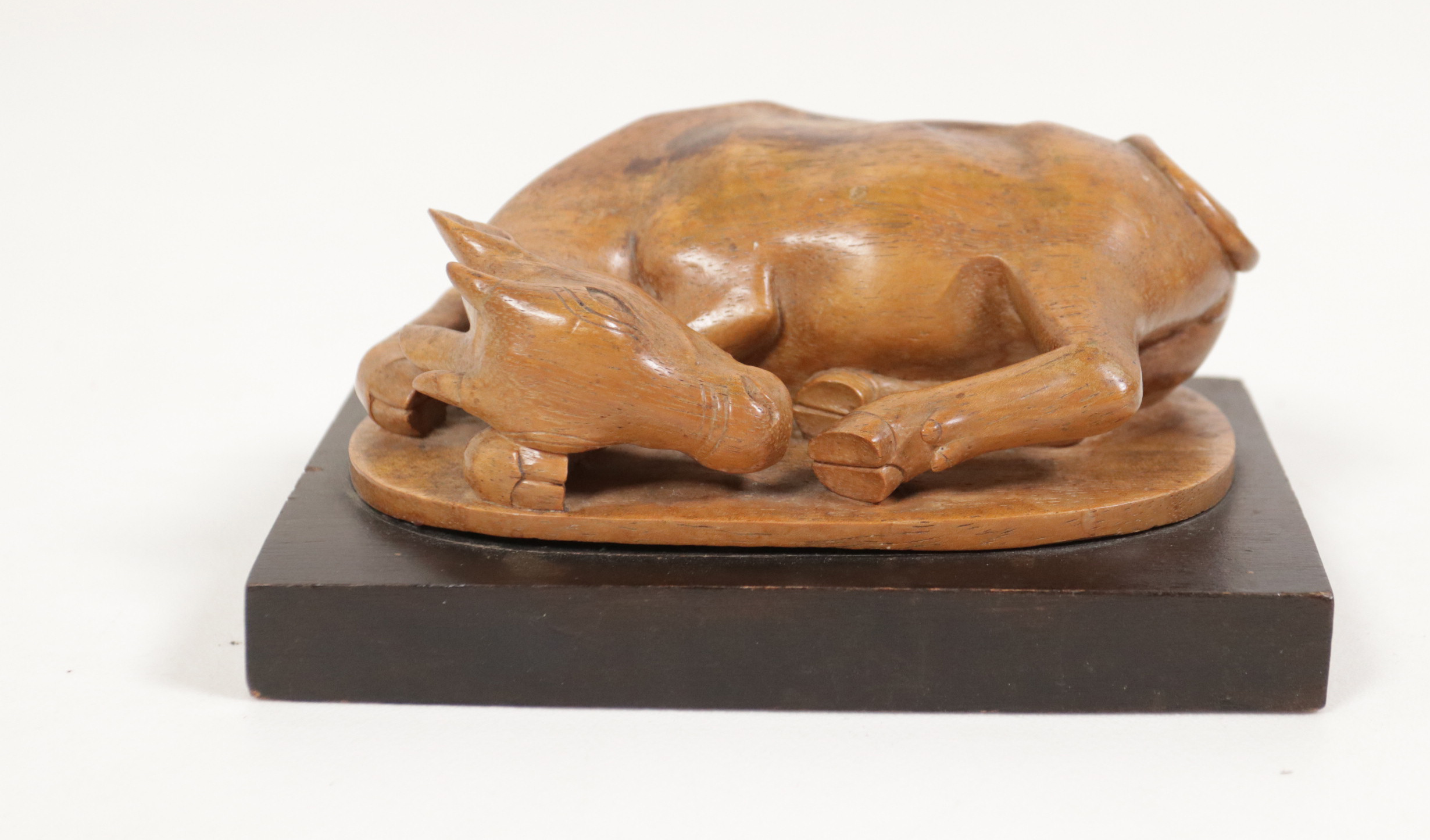 Balinese Art Deco wood carving of a sleeping fawn with original sales label – Pita Maha period, 1930s
A question about this item?
Would you like to know more about this piece, the price, availability or shipping? Feel free to email us. We will see straight away which item your question is about.
Email us about this item →