Brutalism at home: heavy wood, raw iron and shapes with weight
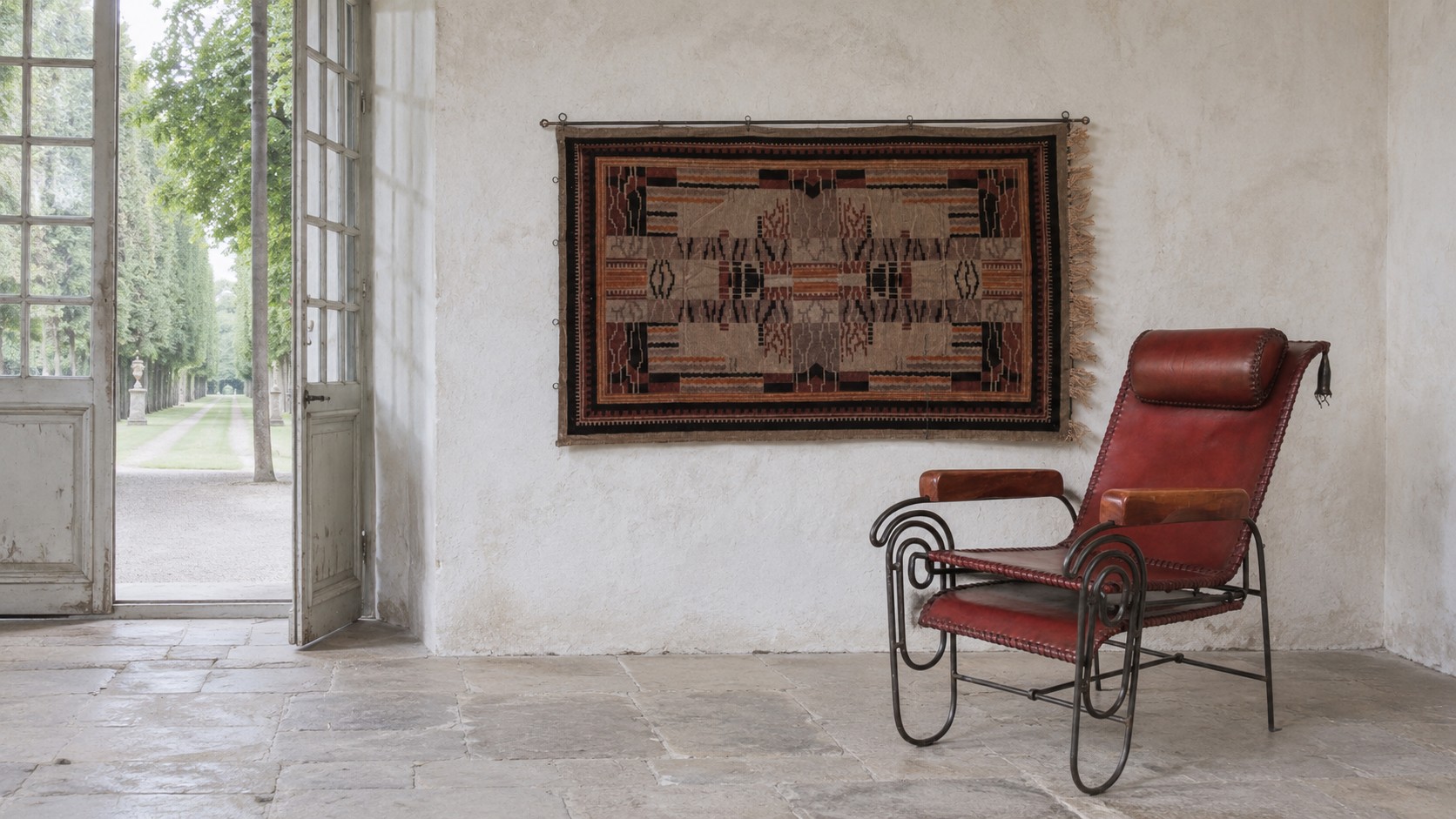
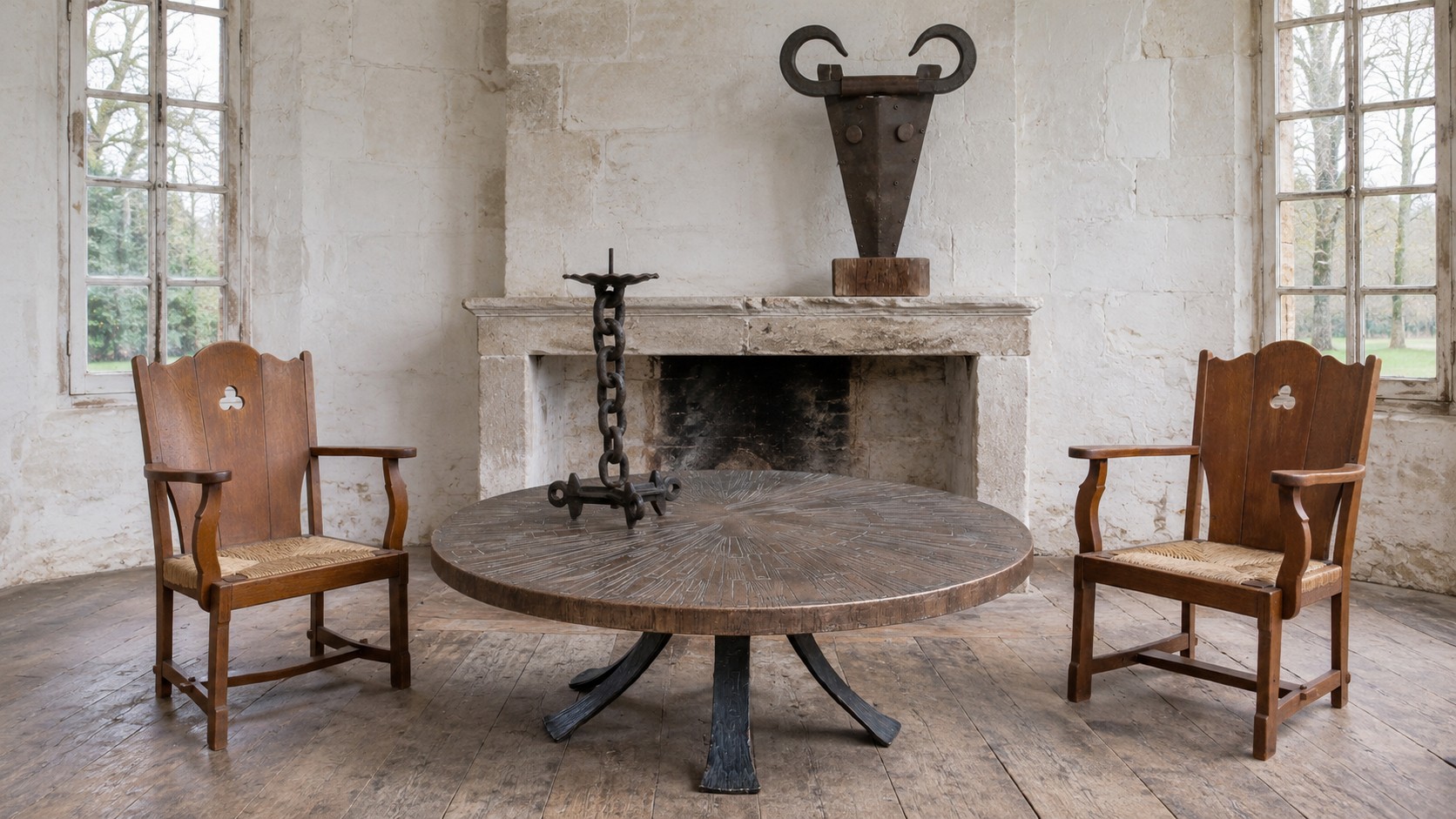
In this photo: Brutalist wrought-iron round coffee table with bronze-coloured top – 1970s (€ 895) · Pair of Brutalist oak lounge chairs with rush seats – the Netherlands, circa 1935 (€ 395) · Raw Brutalist Chain Candlestick, Mid-Century Design (€ 295) · Brutalist bull mask – wrought iron assemblage on wooden base, 95 cm (€ 425)
BRUTALISM
heavy wood, raw iron and shapes with weight
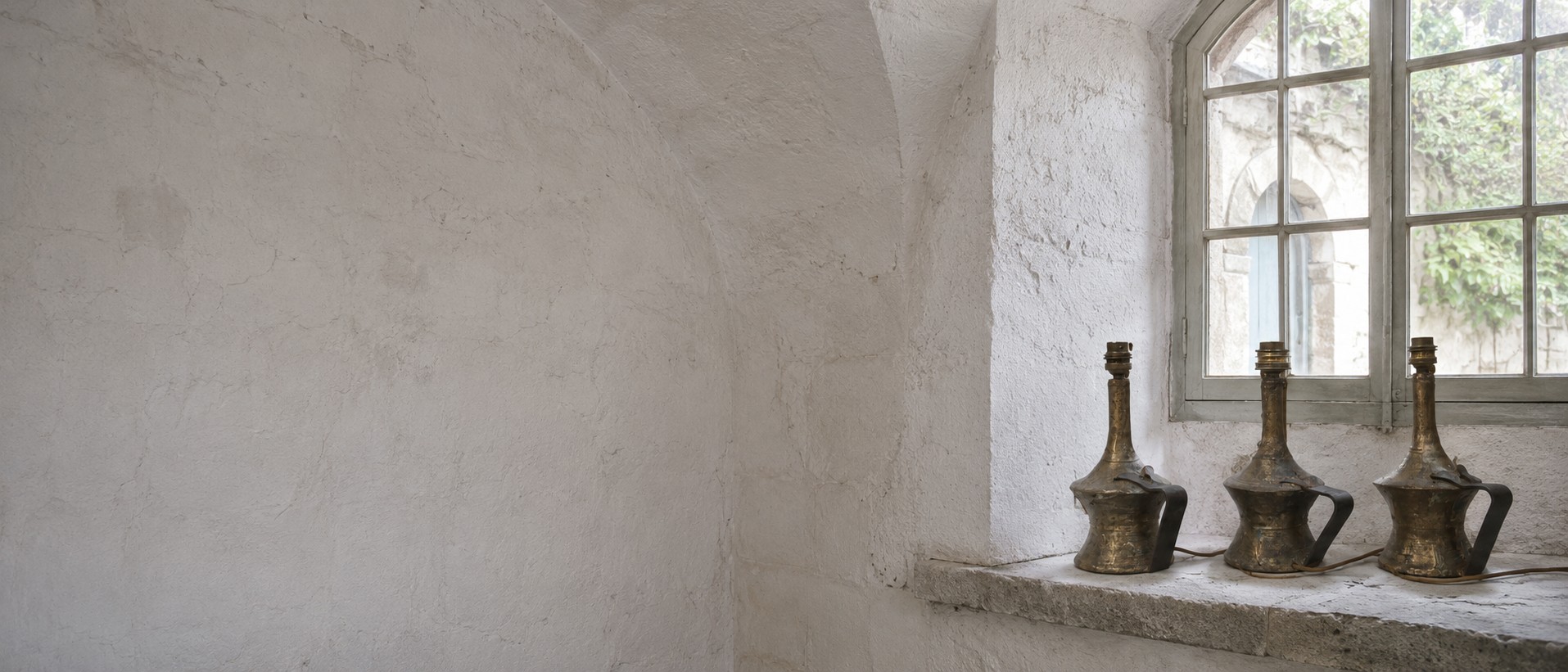
In this photo: Max Bré – set of three Brutalist table lamps, brass and wrought iron, France 1960s–70s (€ 575 voor de set van drie)
Brutalism: heavy wood, raw iron and shapes with weight
Some furniture whispers. Brutalist furniture does not. It stands there, heavy and sure, in solid oak or wrought iron, and shows exactly how it was made.
That sounds harsh, and yet these are often the warmest pieces in a room.
Brutalism is the style of honest weight. No veneer, no thin legs, no smooth finish. Instead: thick boards, visible joints, hammer marks and a shape you understand at a glance.
What is brutalism?
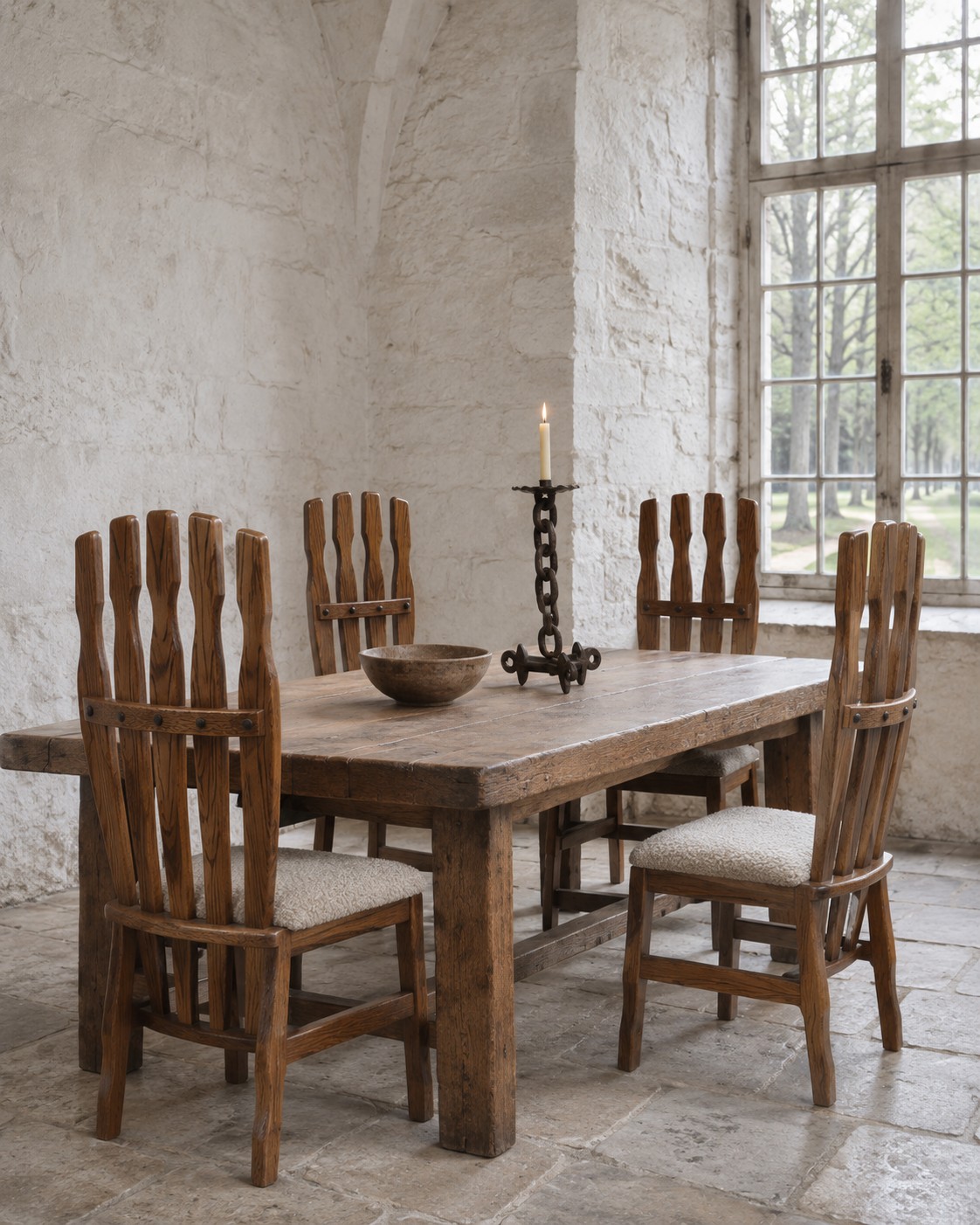
The name comes from architecture. Béton brut is French for raw concrete: concrete that is left unfinished after pouring, so that you can still see the imprint of the formwork. Architects built with it in the 1950s, 60s and 70s, and the word brutalism stuck.
In furniture it means the same, but in wood and metal. Solid oak instead of concrete, wrought iron instead of steel. The material may stay rough and the construction may be seen.
You recognise brutalist furniture by its mass and its rhythm. High backs made of thick spindles, heavy armrests, tops with deep relief. They are built rather than designed.
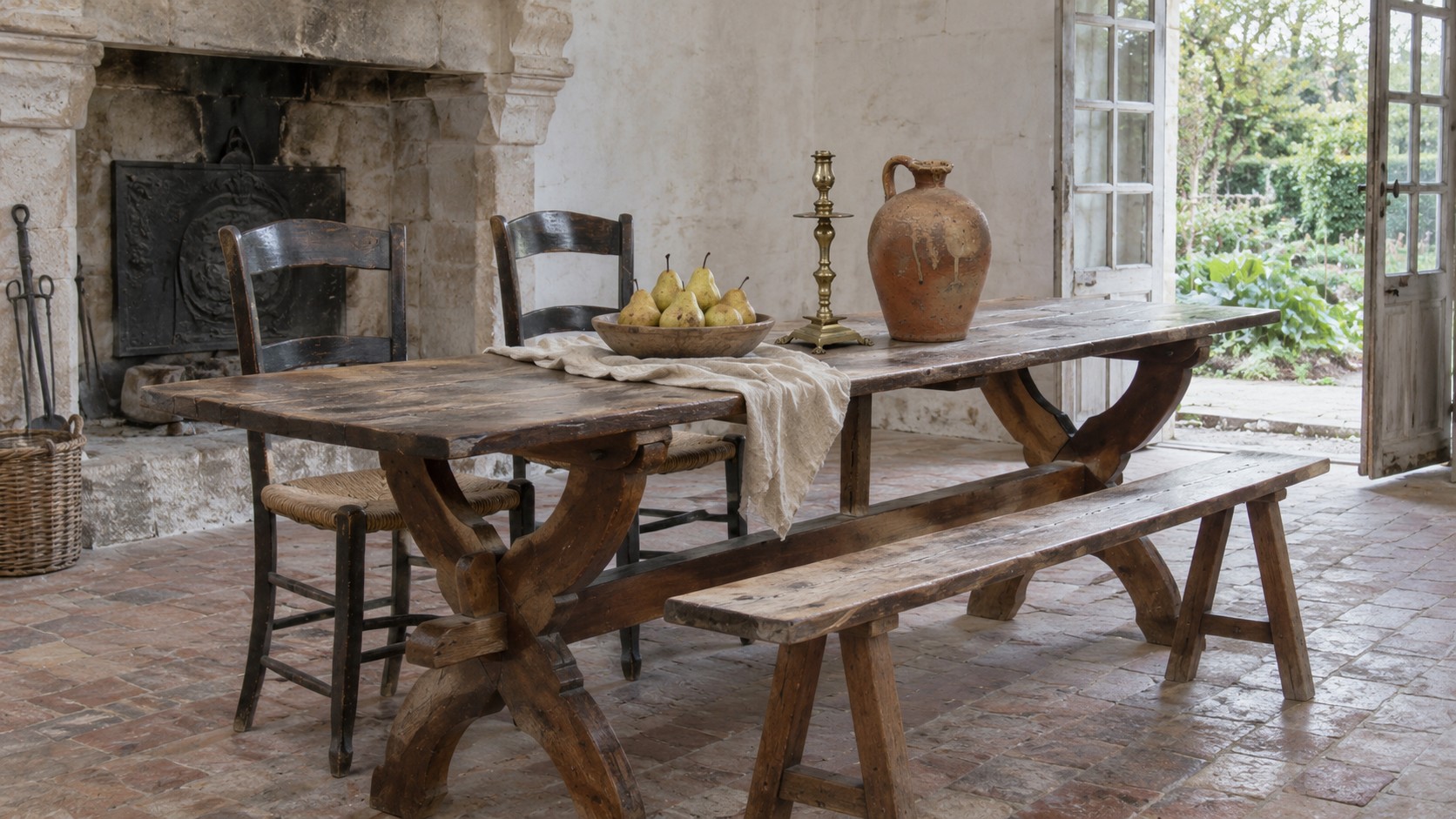
In this photo: Set of 4 Brutalist oak dining chairs with bouclé seats – 1970s (€ 795) · Raw Brutalist Chain Candlestick, Mid-Century Design (€ 295)
Why is brutalism so loved again?
Because it gives character to a calm interior. One brutalist piece in a light room works like a sculpture: your eye goes straight to it.
Because it is made by hand. This is not furniture from a mould. You see the hand of the smith in the iron and the chisel in the wood. No two chairs are exactly alike.
And because it can take a lifetime of use. Solid oak a few centimetres thick does not wear out, it only gets better. A scratch is part of it.
The strength of solid oak and wrought iron
The best thing about brutalism is that the material itself does the work. Oak with a coarse grain, stained dark or left bare. Iron that has been forged, riveted and welded, with a skin that never becomes entirely smooth.
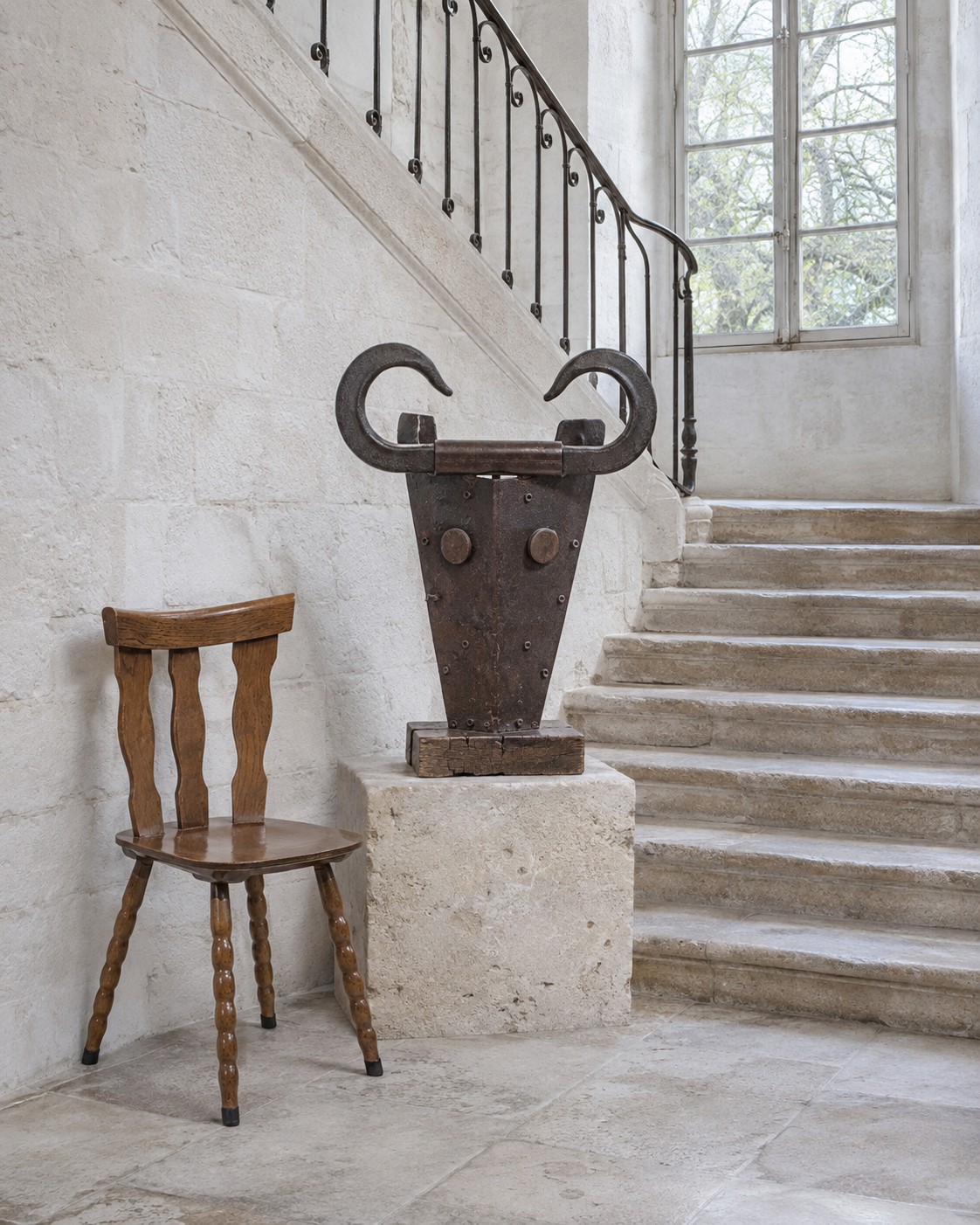
Sometimes that turns a piece of furniture almost into a sculpture, and sometimes it simply is a sculpture. A bull mask of iron plates and curled horns is made of the same material and by the same hand as a coffee table or a candlestick.
Put such a piece on a plinth in a stairwell and nothing else is needed. A single wooden chair next to it is enough.
In this photo: Brutalist bull mask – wrought iron assemblage on wooden base, 95 cm (€ 425) · Set of 3 Brutalist chairs with arched cut-outs and turned legs (€ 245)
How do you combine brutalism without it becoming heavy?
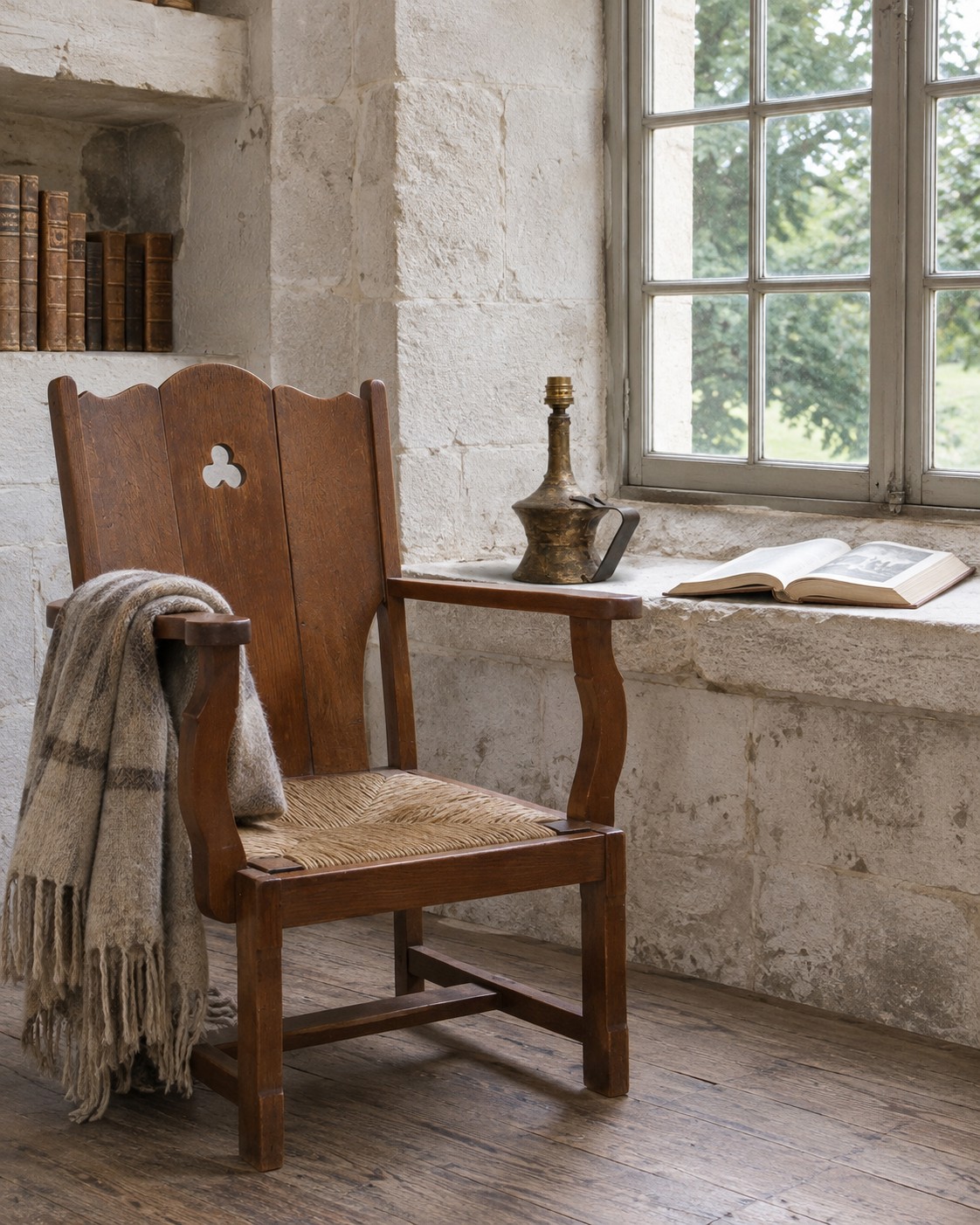
Brutalism needs air. In a dark room full of furniture it becomes oppressive; in a light space with empty walls it comes into its own.
So give each piece room. One lounge chair by the window instead of a whole seating group. A small brass lamp on the windowsill. The heavy wood stands out against the white and the room stays calm.
Combine it with soft things: a woollen throw, linen, a rush seat. And with something light next to it, such as glass or ceramics. The contrast makes the wood warmer.
In this photo: Pair of Brutalist oak lounge chairs with rush seats – the Netherlands, circa 1935 (€ 395) · Max Bré – set of three Brutalist table lamps, brass and wrought iron, France 1960s–70s (€ 575 voor de set van drie)
What to look for when buying brutalist pieces
Lift it, or try to. Real brutalist furniture is solid and therefore heavy. If a chair is surprisingly light, the wood is thinner than it looks.
Look at the joints. Mortise and tenon, wooden pegs and through rails belong to the style and must be tight. With chairs you soon see whether they wobble.
With iron: forged work has small irregularities, hammer marks and weld seams. Surface rust is not a problem and adds colour.
With lamps, always: have old wiring checked by an electrician before you connect the lamp.
And think of the weight in your home. You do not move a round coffee table of 110 centimetres with a wrought-iron base with one hand.
In this photo: Set of 3 Brutalist chairs with arched cut-outs and turned legs (€ 245) · Raw Brutalist Chain Candlestick, Mid-Century Design (€ 295)
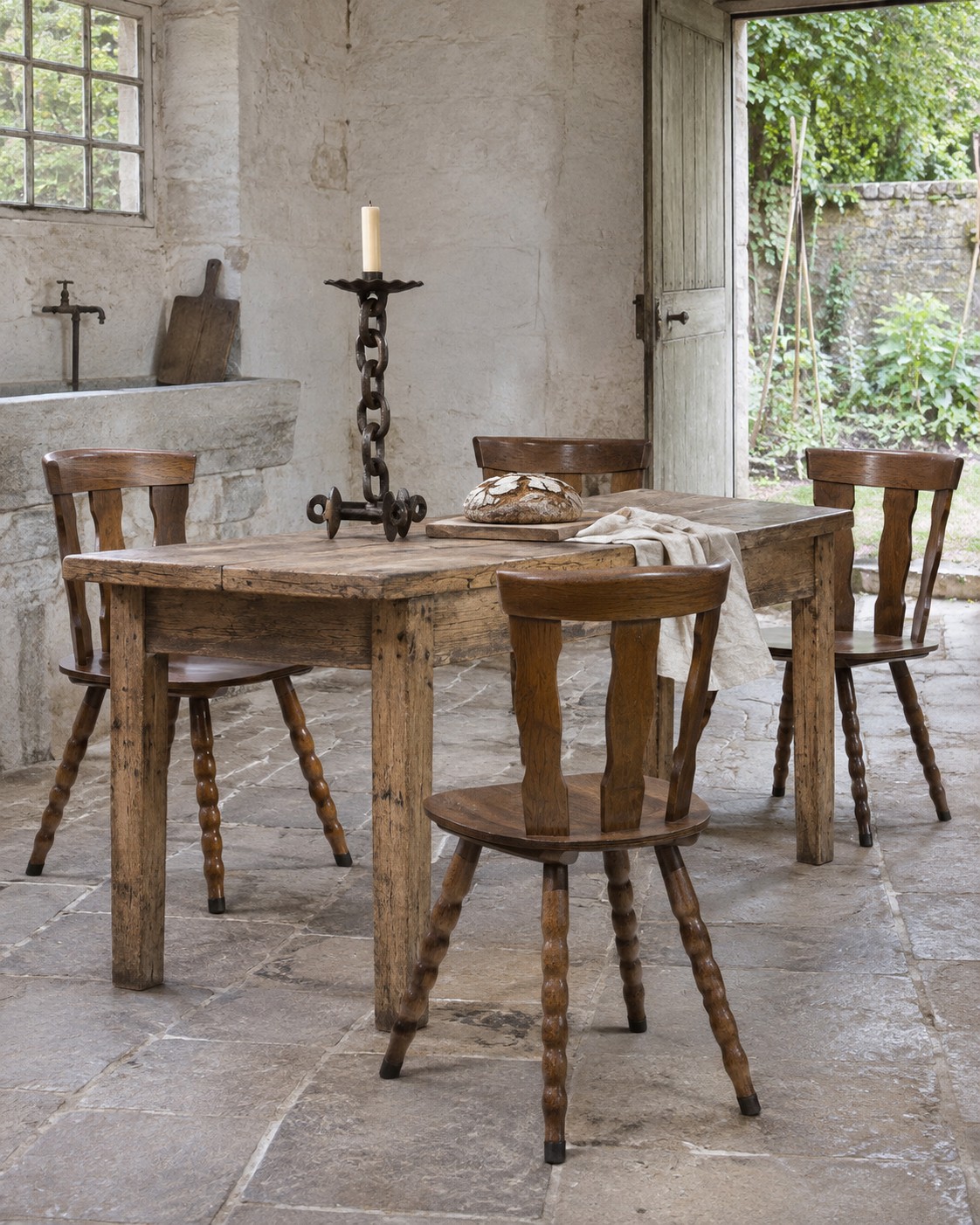
Brutalism in a light, calm interior
At De Huiszwaluw we like to place brutalist pieces in an old, light house. Limewashed walls, a stone floor, tall windows. There the heavy wood does not become gloomy but powerful.
A salon with a round iron table and two oak chairs with rush seats needs almost nothing more. A candlestick made of a stiff chain on the table, an iron mask on the mantelpiece.
Small things belong too. Three brass lamps in the shape of jugs are just as brutalist as a chair of twenty kilos: rough, made by hand and nowhere polished smooth.
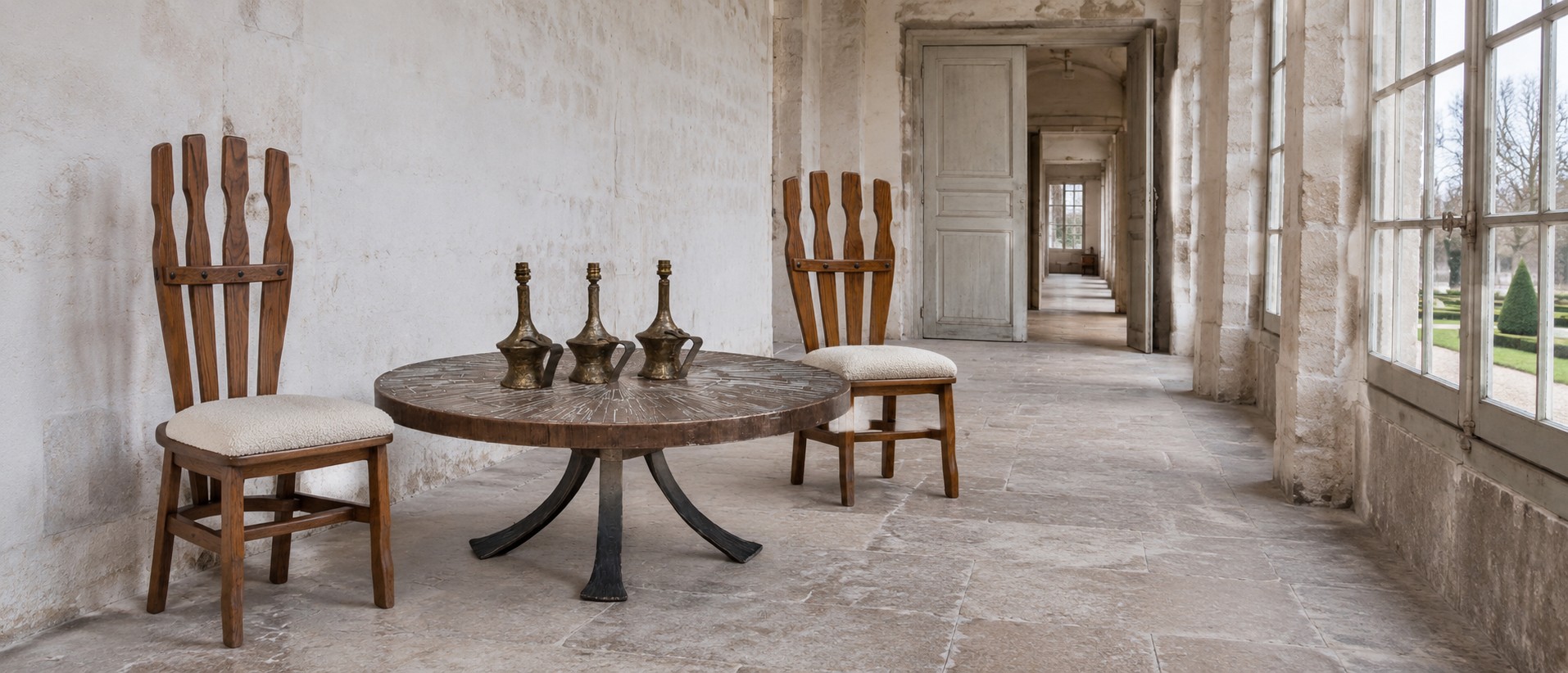
In this photo: Brutalist wrought-iron round coffee table with bronze-coloured top – 1970s (€ 895) · Set of 4 Brutalist oak dining chairs with bouclé seats – 1970s (€ 795) · Max Bré – set of three Brutalist table lamps, brass and wrought iron, France 1960s–70s (€ 575 voor de set van drie)
How would De Huiszwaluw use brutalism?
We would start with one large piece that is allowed to stand out. A table, a pair of chairs with high backs, an armchair.
Then something in iron: a candlestick, a lamp, an object on the wall or on a plinth.
And beyond that, mostly leave things out. Light walls, little colour, plenty of floor.
That way it becomes neither a fortress nor a hunting lodge, but a house in which a few pieces with weight set the tone.
Now in our collection: Brutalism
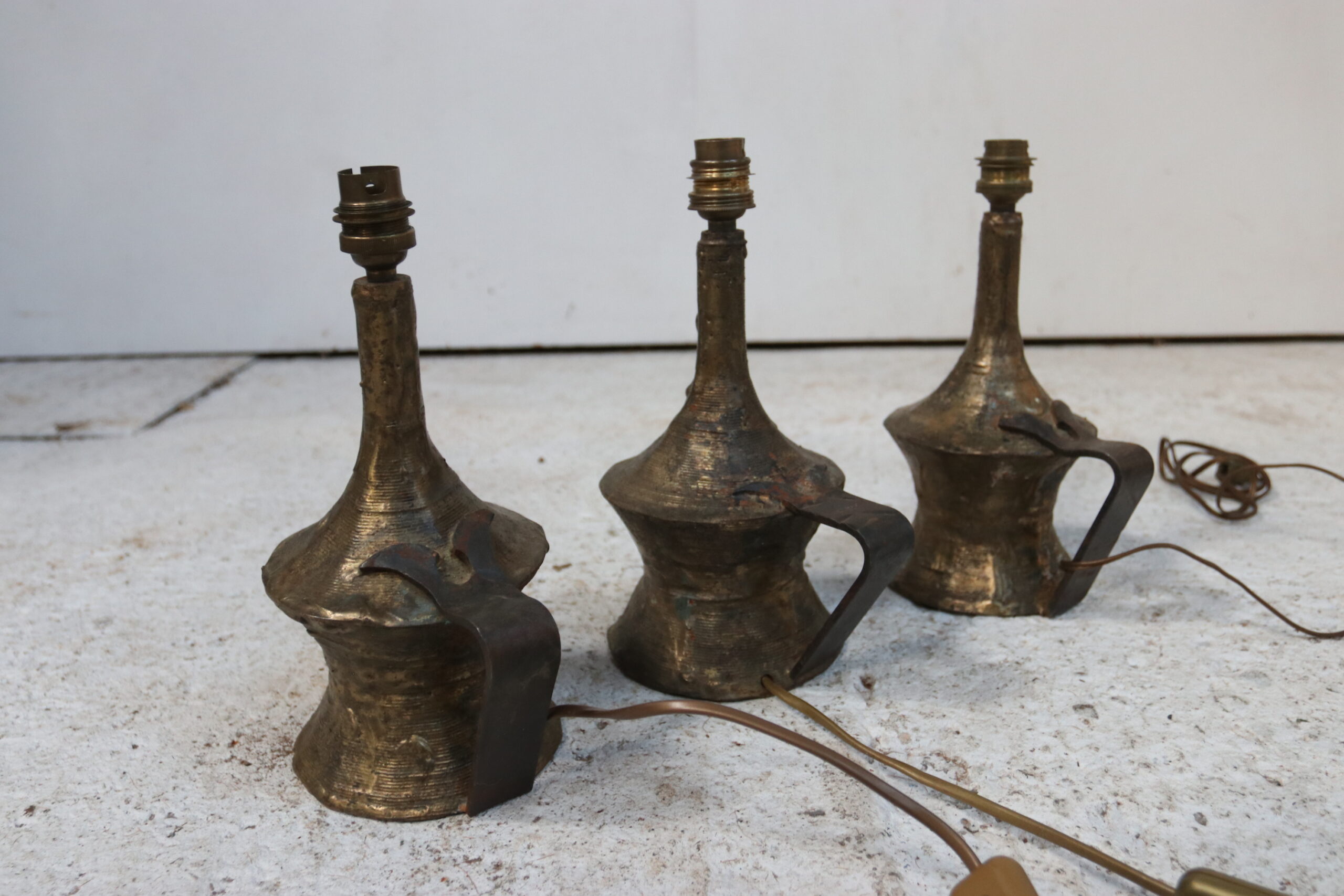 Max Bré – set of three Brutalist table lamps, brass and wrought iron, France 1960s–70s€ 575 voor de set van drie
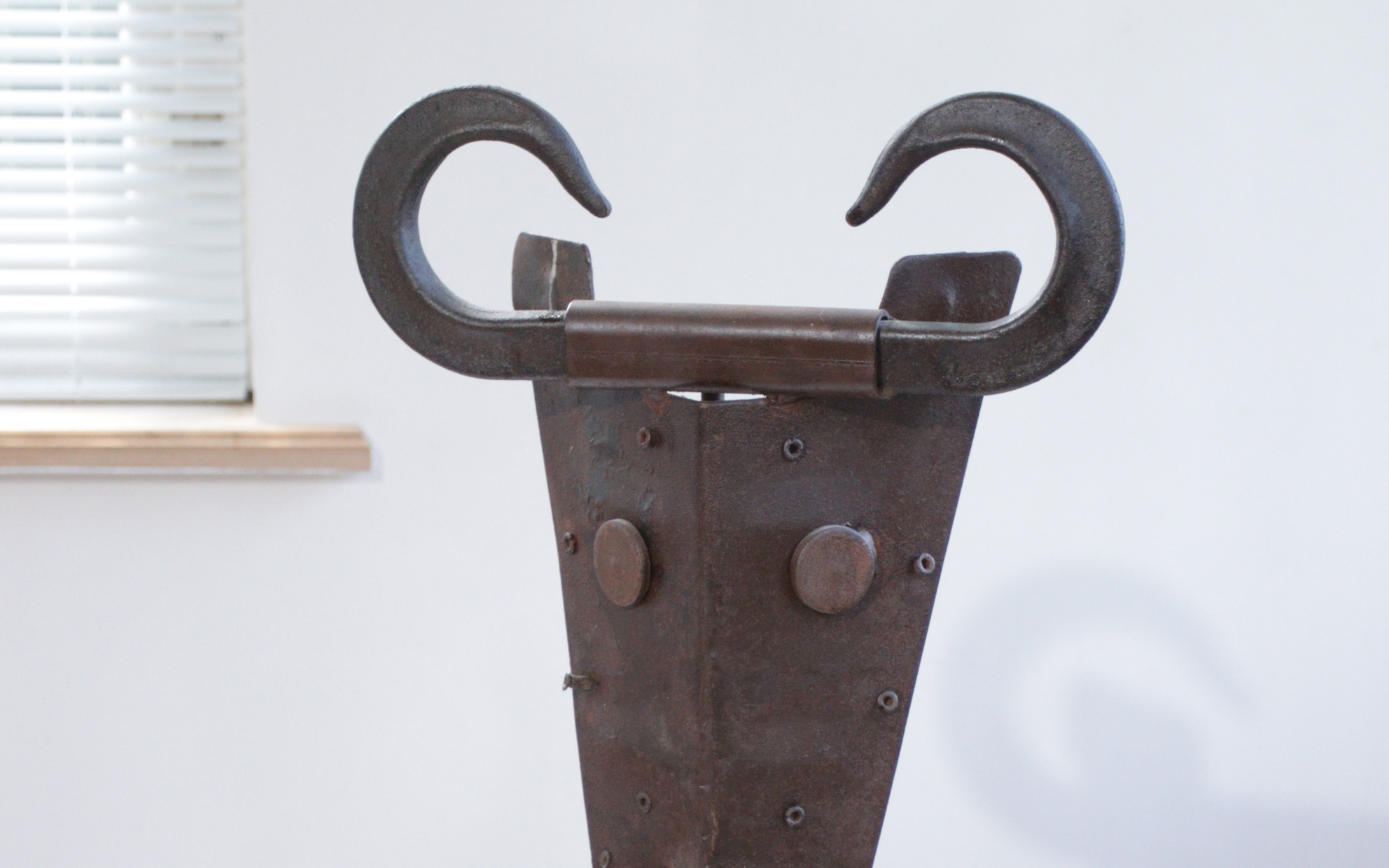 Brutalist bull mask – wrought iron assemblage on wooden base, 95 cm€ 425
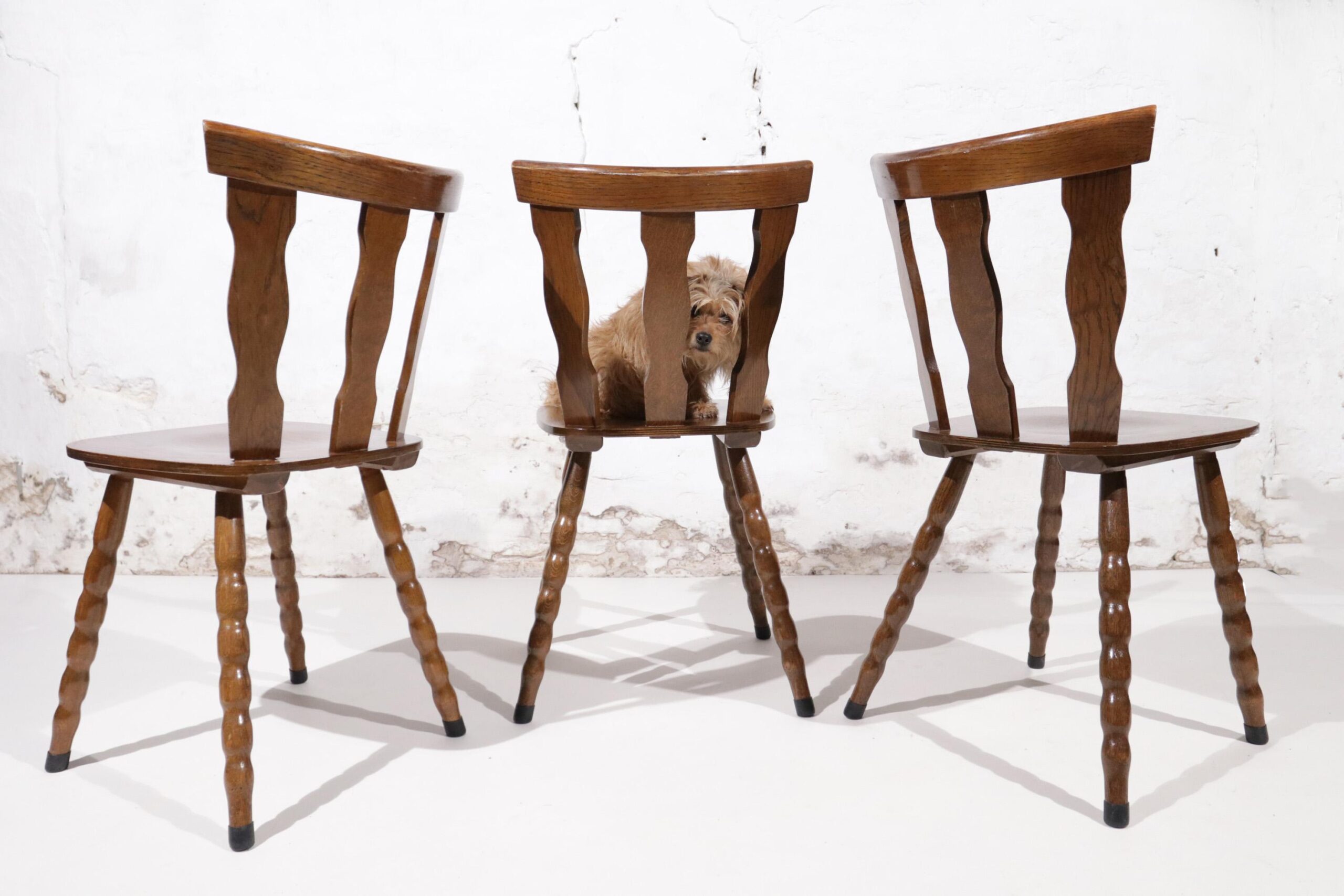 Set of 3 Brutalist chairs with arched cut-outs and turned legs€ 245
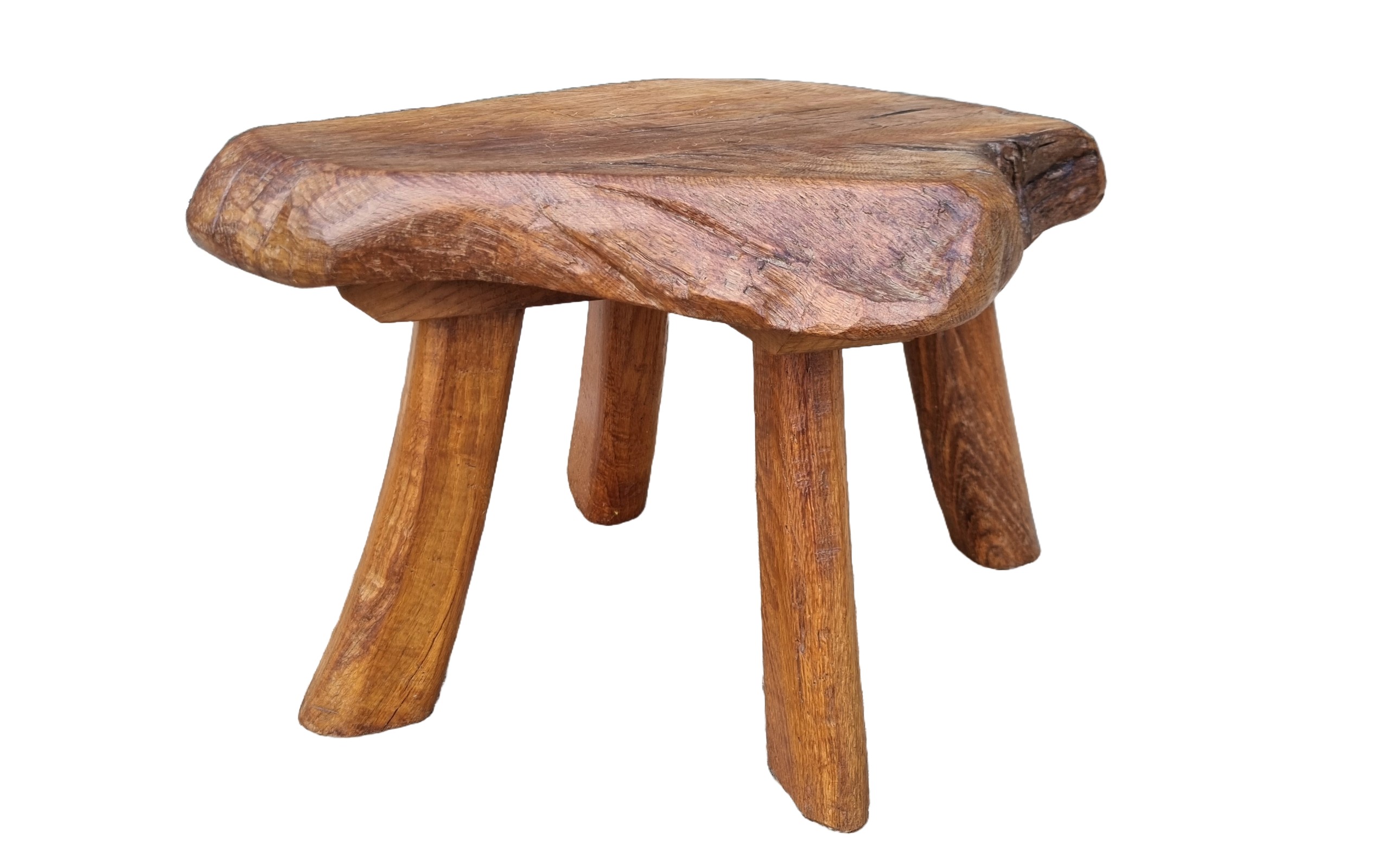 Mid-century hand-carved oak stool with live edge – 1950s€ 245
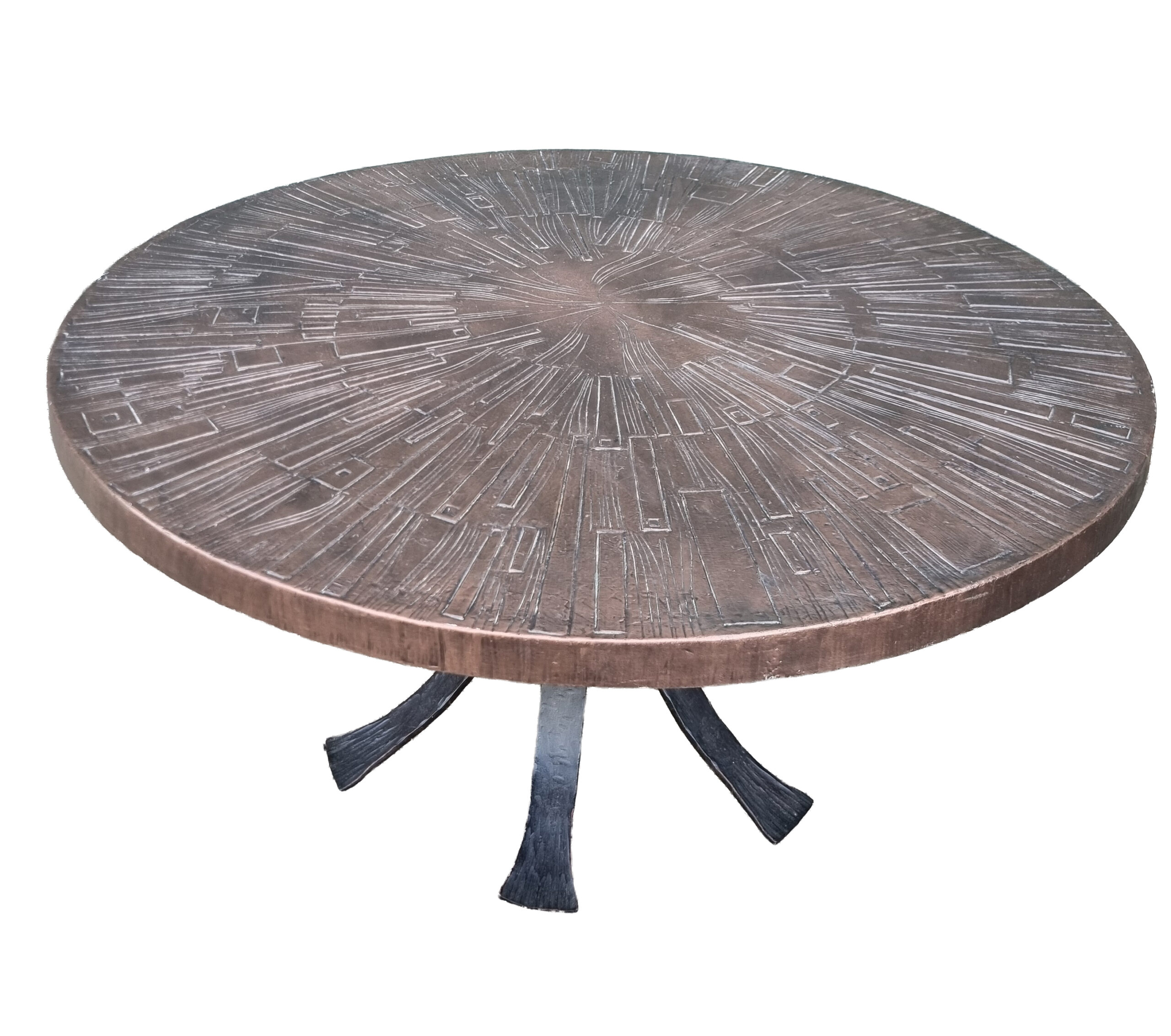 Brutalist wrought-iron round coffee table with bronze-coloured top – 1970s€ 895
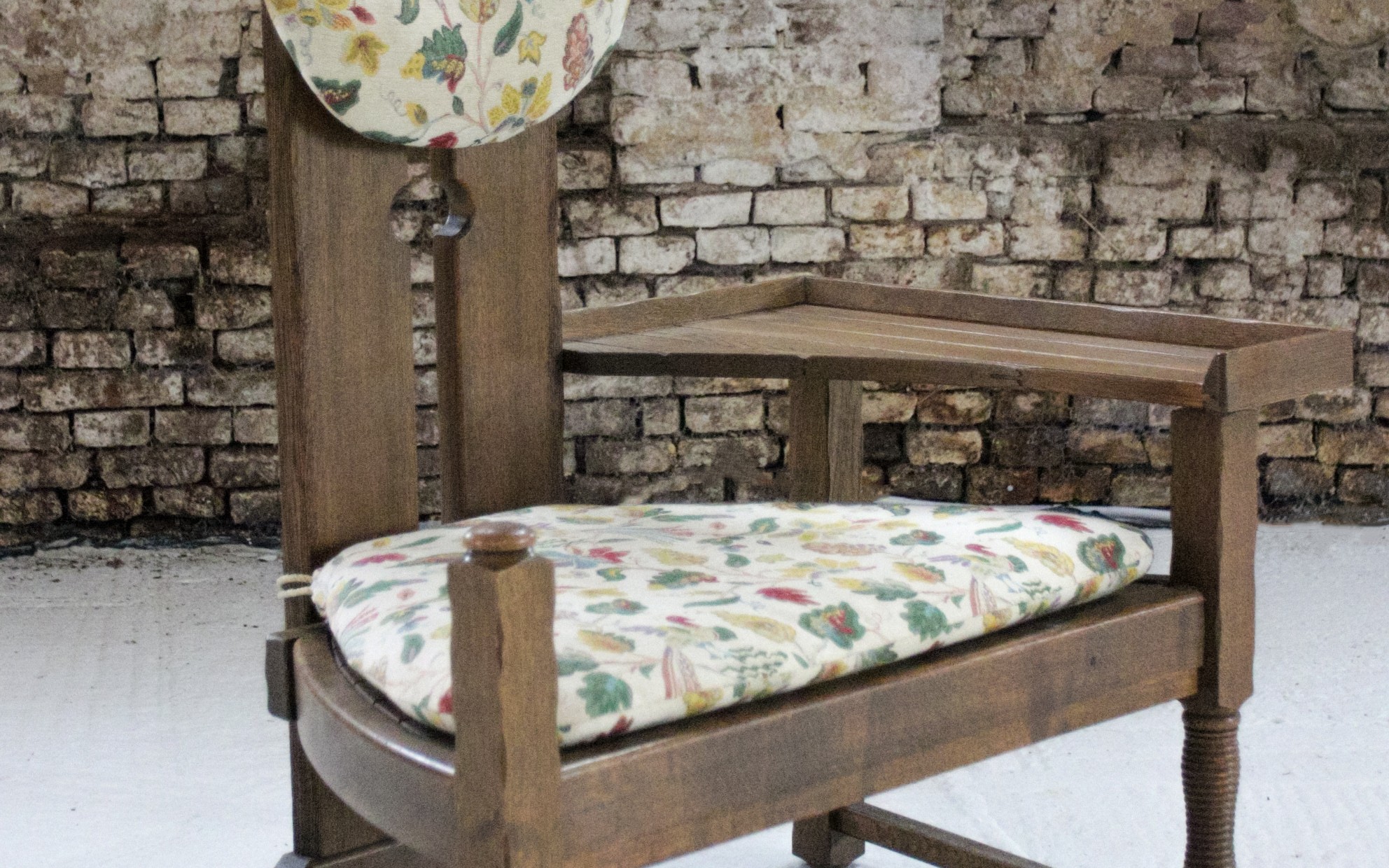 Rare Dutch Brutalist oak armchair with integrated side table – 1950s€ 595
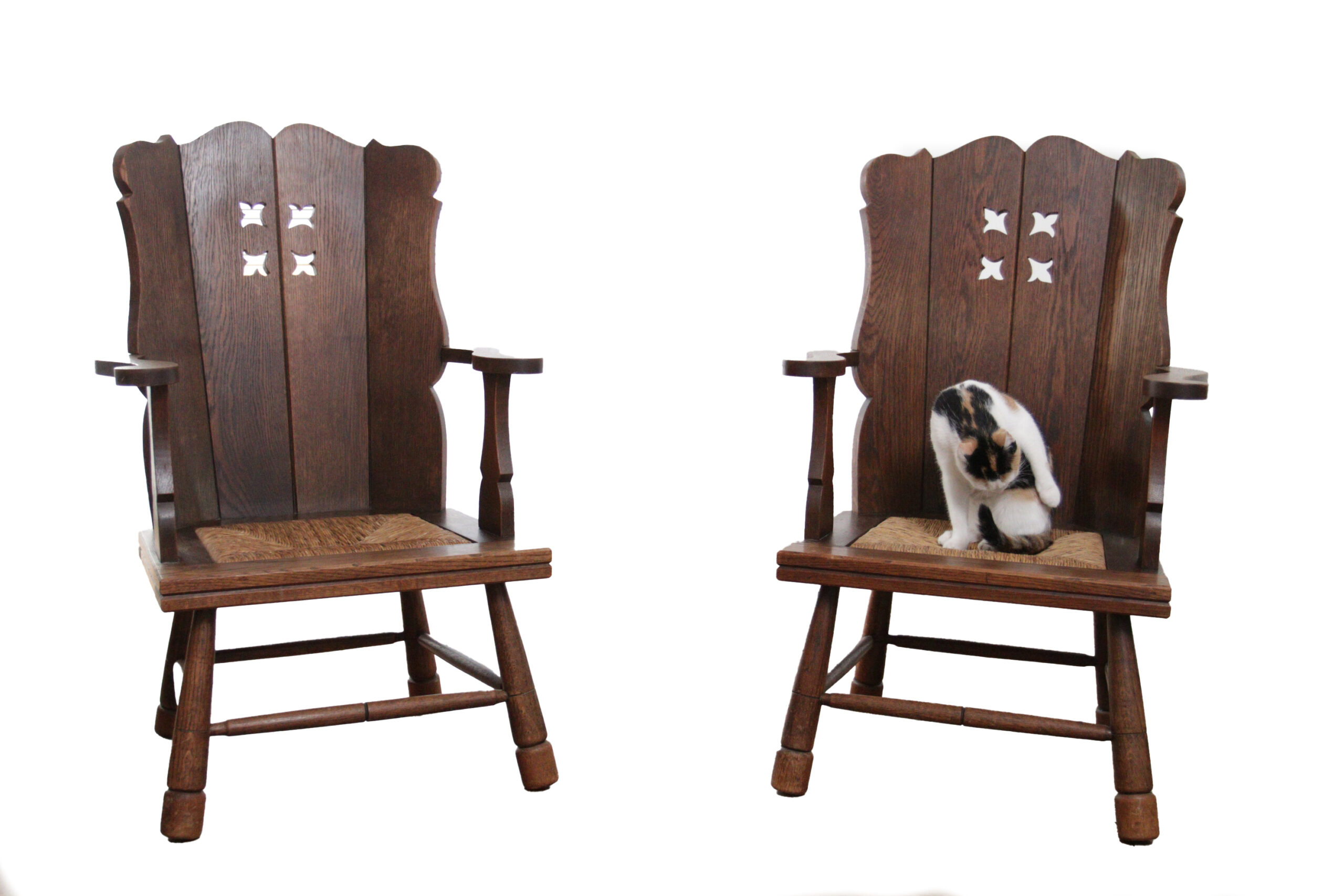 2 Brutalist oak lounge chairs with rush seats, circa 1935€ 645
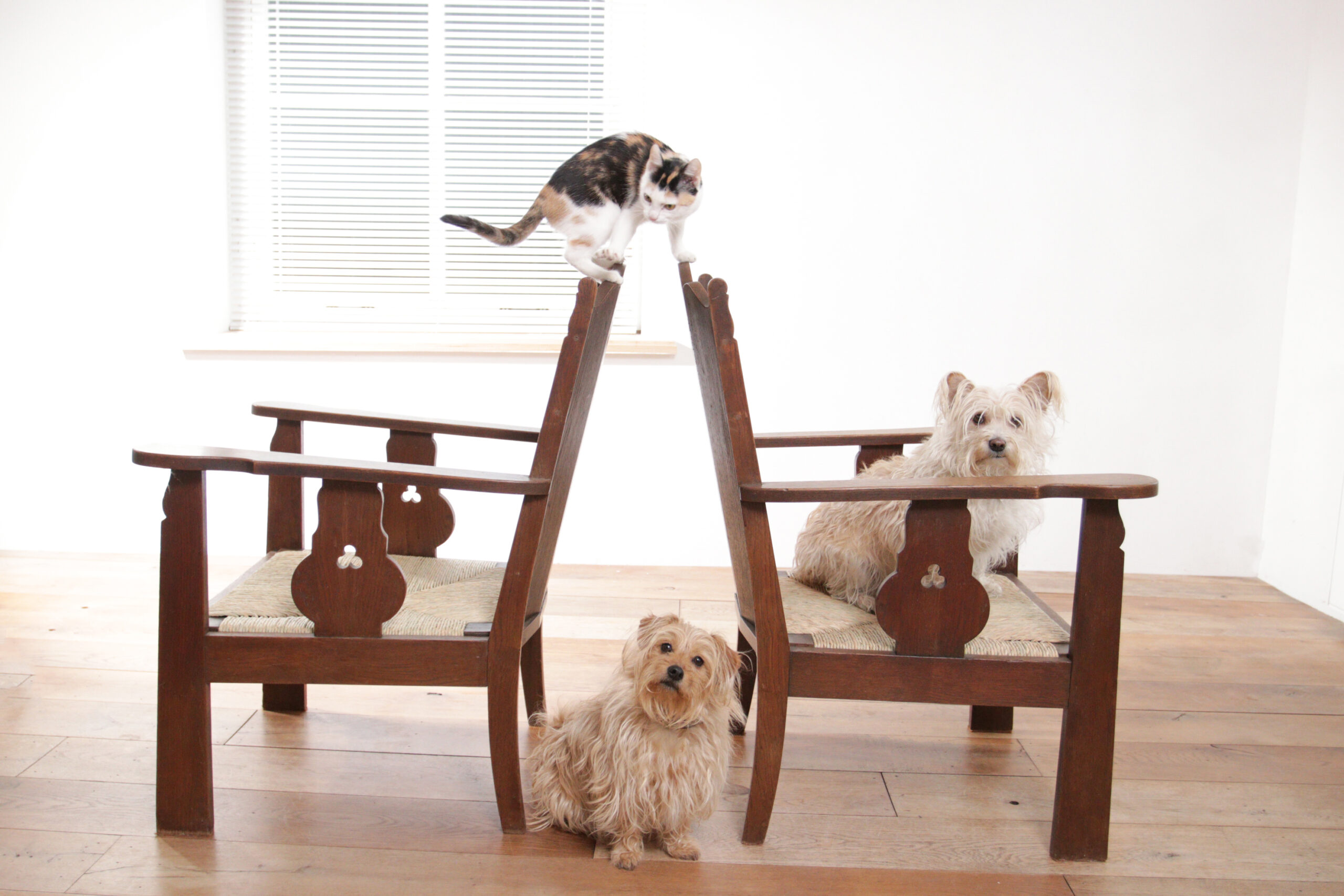 Pair of low Brutalist oak lounge chairs with new rush seats – circa 1935€ 745
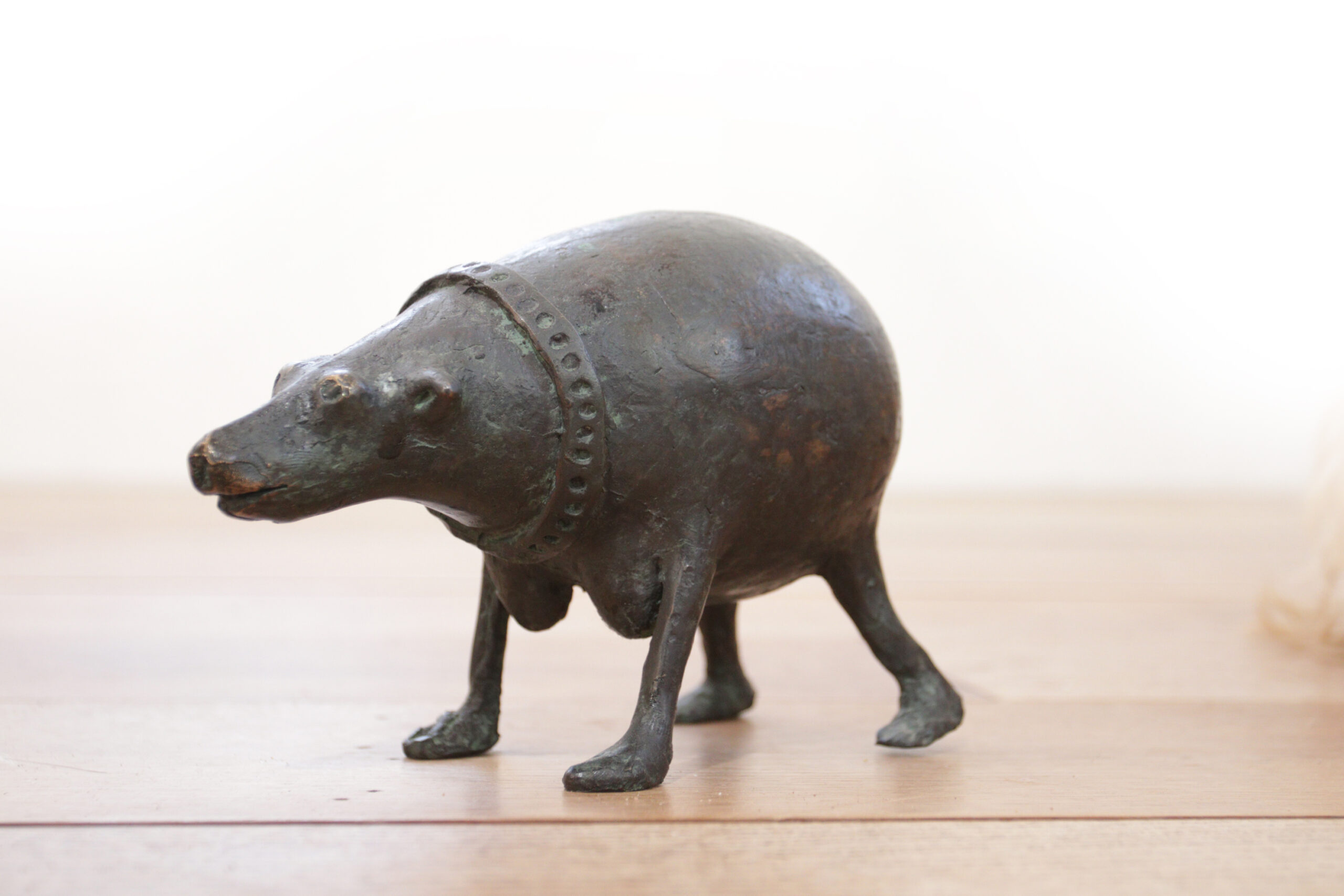 Bert Kiewiet – ‘Het Tietenbeest’, bronze fantasy animal, circa 1980€ 745
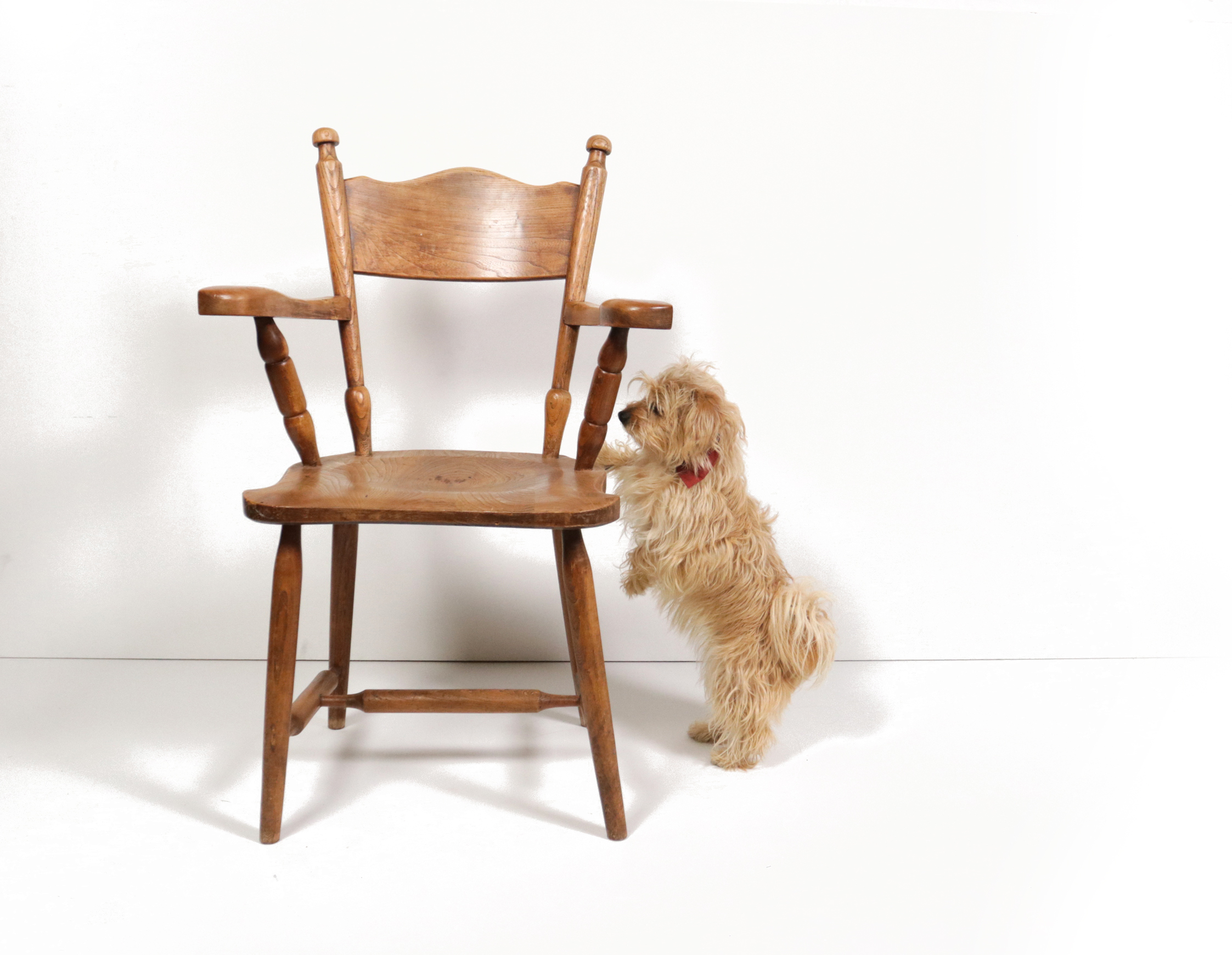 Brutalist oak fireside chair – wabi-sabi armchair€ 245
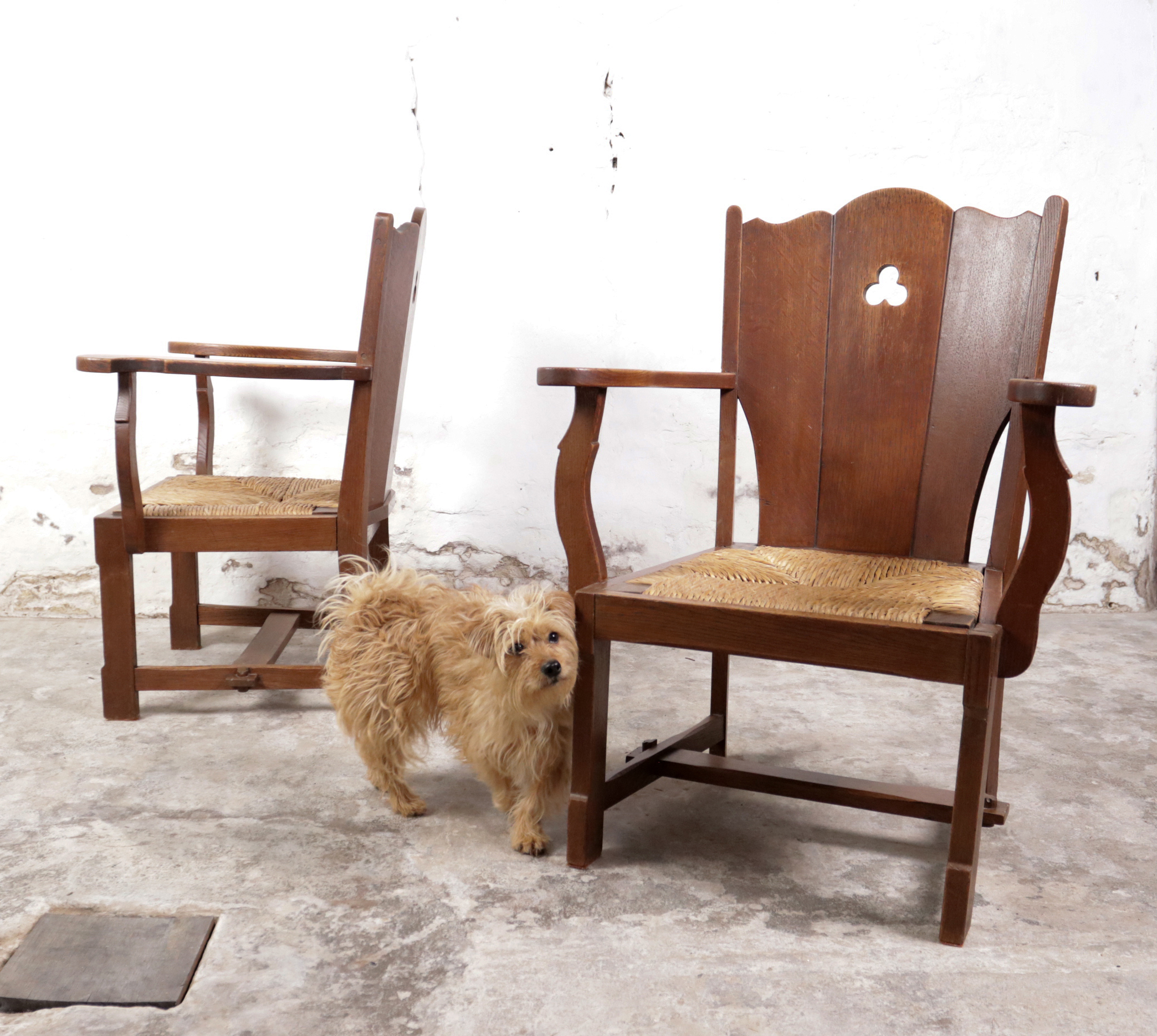 Pair of Brutalist oak lounge chairs with rush seats – the Netherlands, circa 1935€ 395
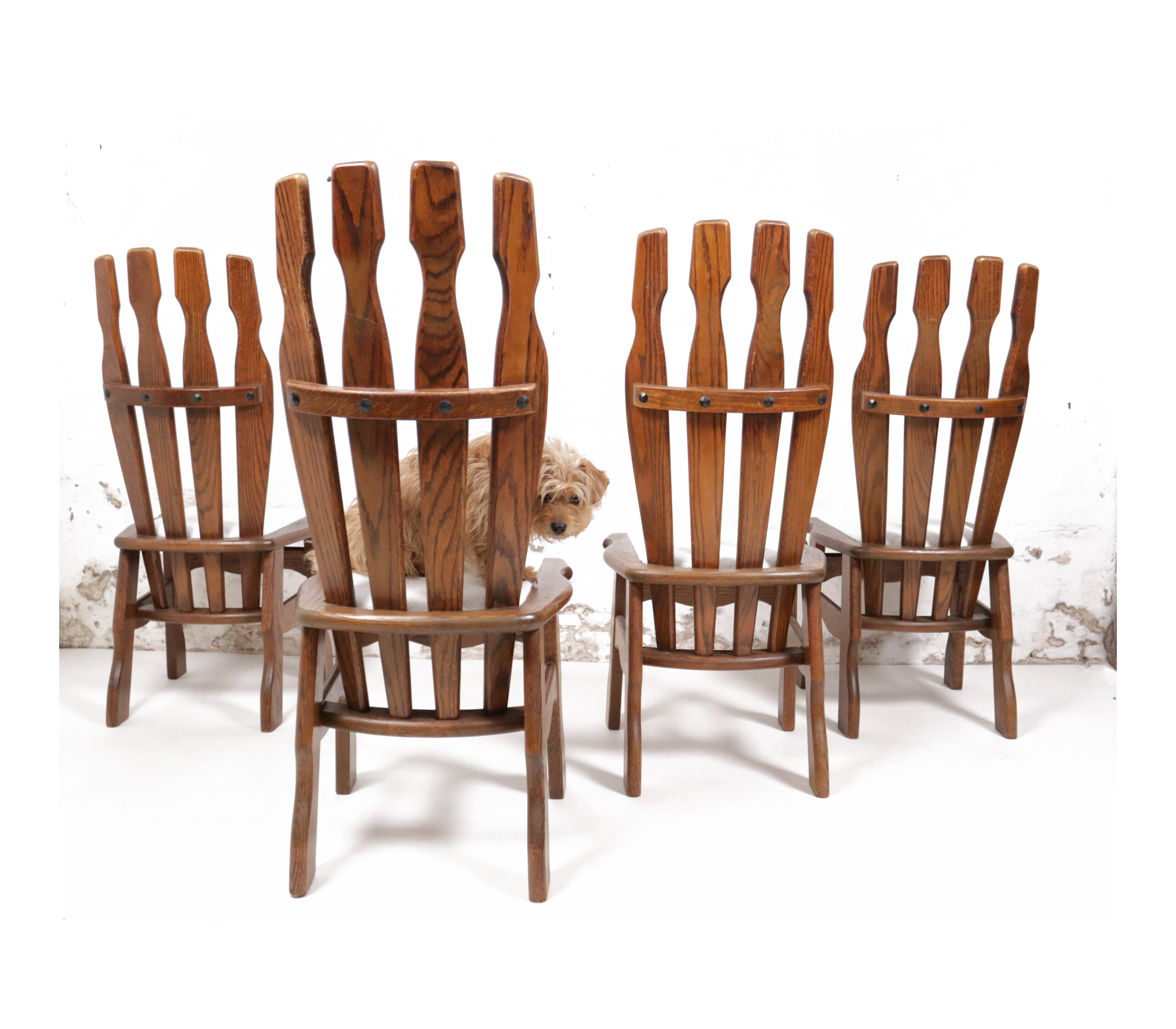 Set of 4 Brutalist oak dining chairs with bouclé seats – 1970s€ 795
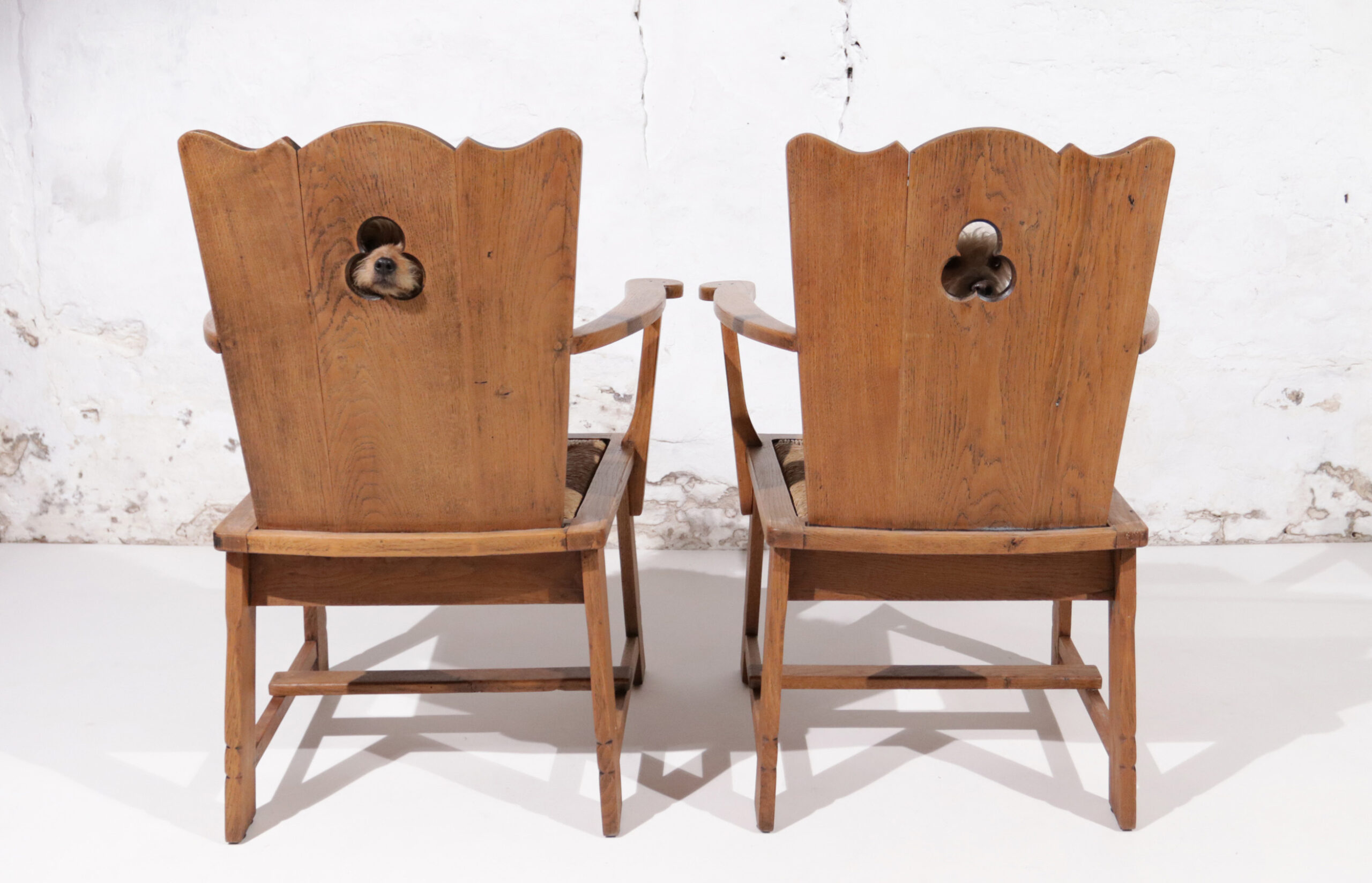 Pair of Brutalist oak throne chairs with rush seats – the Netherlands, 1930s€ 595
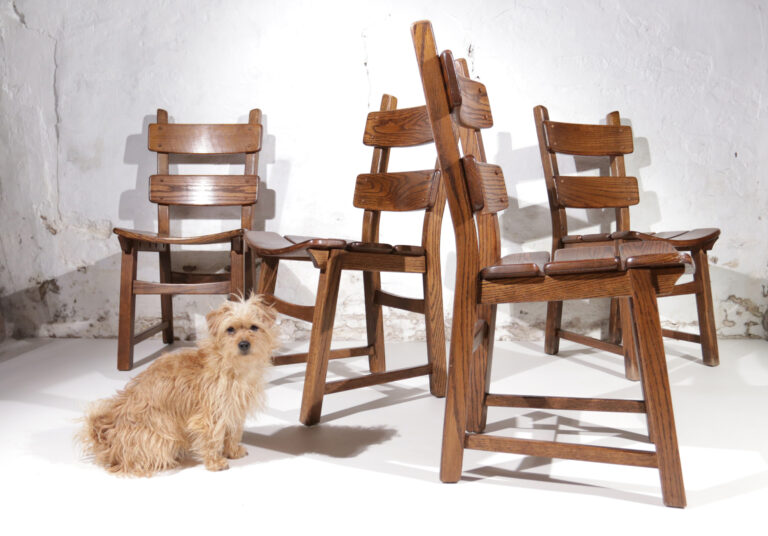 Set of 4 Brutalist oak ladder-back dining chairs – the Netherlands, 1970s€ 895
 Long metal bench with tubular seat€ 85
 Large sculptural burr wood coffee table – circa 1970€ 945
 Van Bennekom Mixed Slate & Oak Coffee Table, Netherlands, 1970s (Paul Kingma Style)€ 695
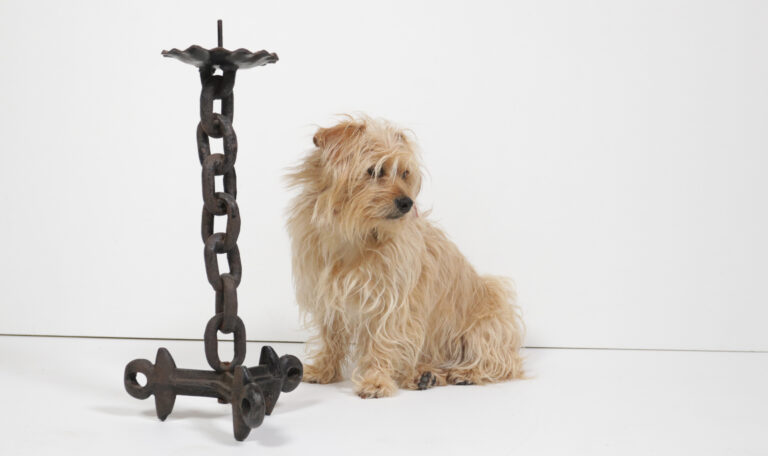 Raw Brutalist Chain Candlestick, Mid-Century Design€ 295
 Story Book Brutalist Wabi-Sabi Oak Fireplace Lounge Chairs€ 395
 Set of 6 Brutalist Chairs, Solid Oak, Spain, 1970s€ 1.250
 Set of 4 Brutalist Fishbone Chairs, Spanish Oak and Bouclé€ 2.095
 Solid wenge heavy Brutalist solid wood coffee table, vintage industrial€ 1.395
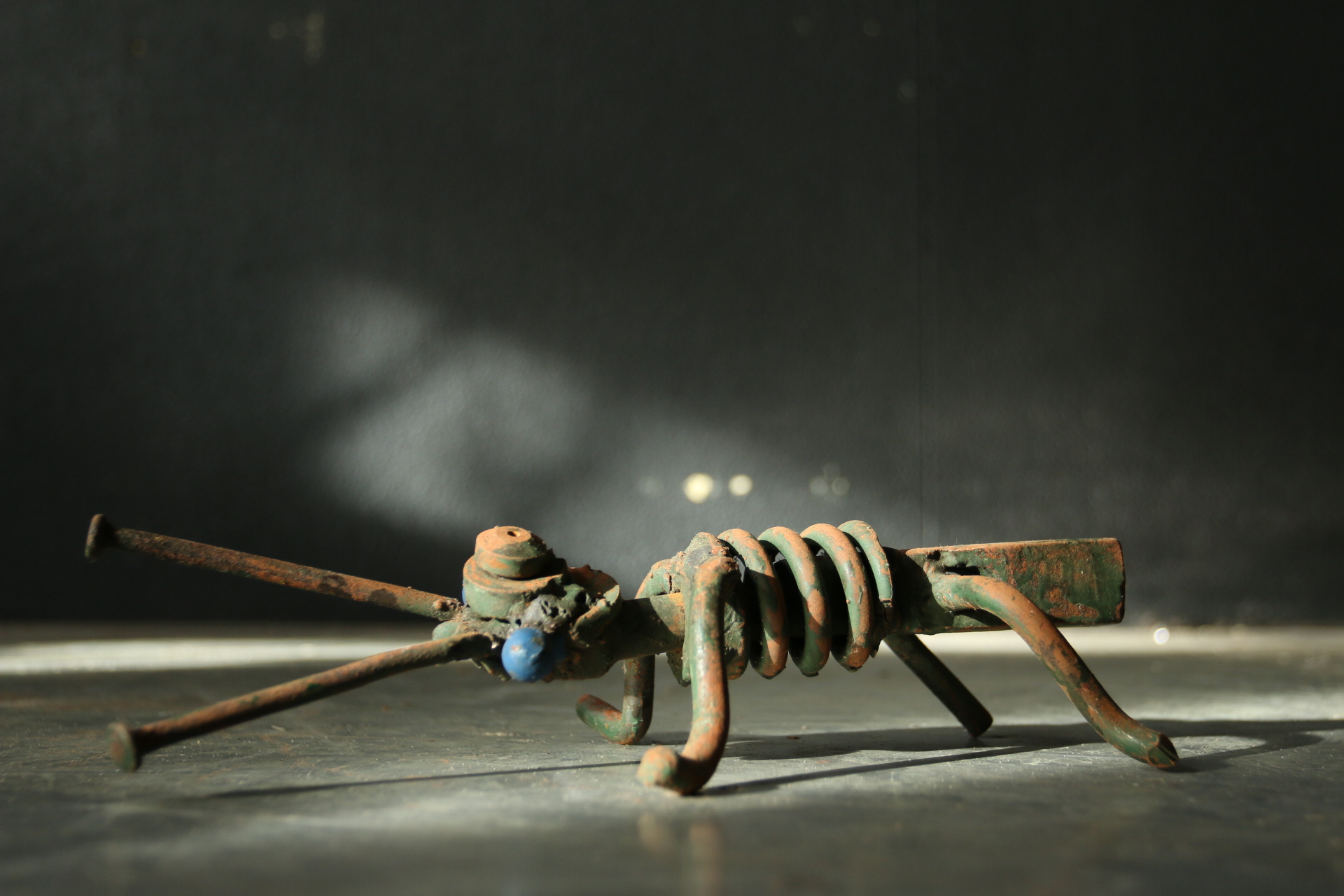 Metal sculpture “Ant” by Maarten€ 100
Previously in our collection
 Brutalist Pierre Chapo Style T-back Dutch Design Beech woodsold
 Set of 6 Brutalist Wabi Sabi Oak Dining room Chairssold
 Set of 6 Brutalist Oak Raw Spanish Dining Chairssold
Read on about other styles
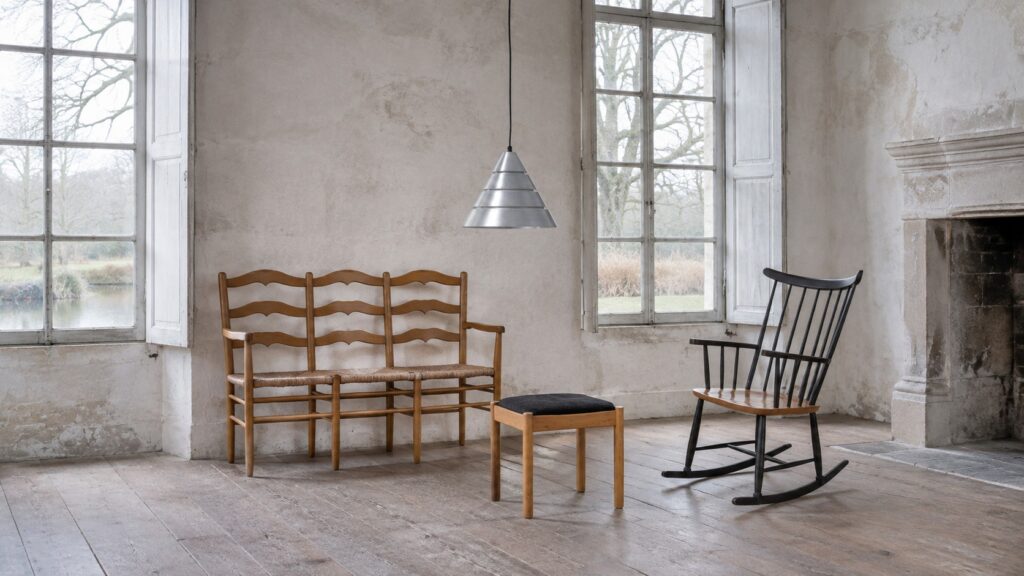 Scandinavian designScandinavian design at home: light wood, calm and simplicity
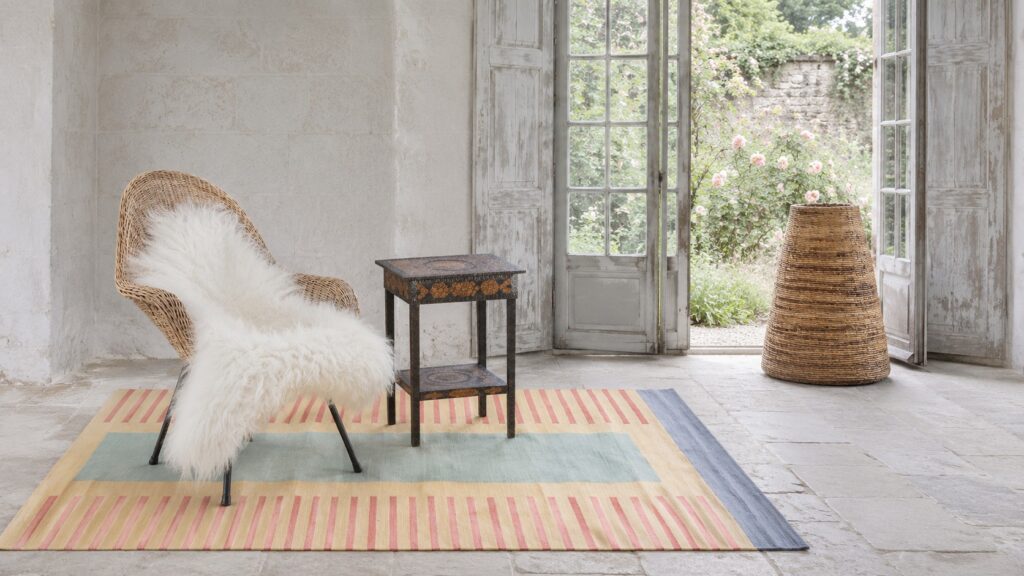 BohemianBohemian at home: free, warm and full of stories
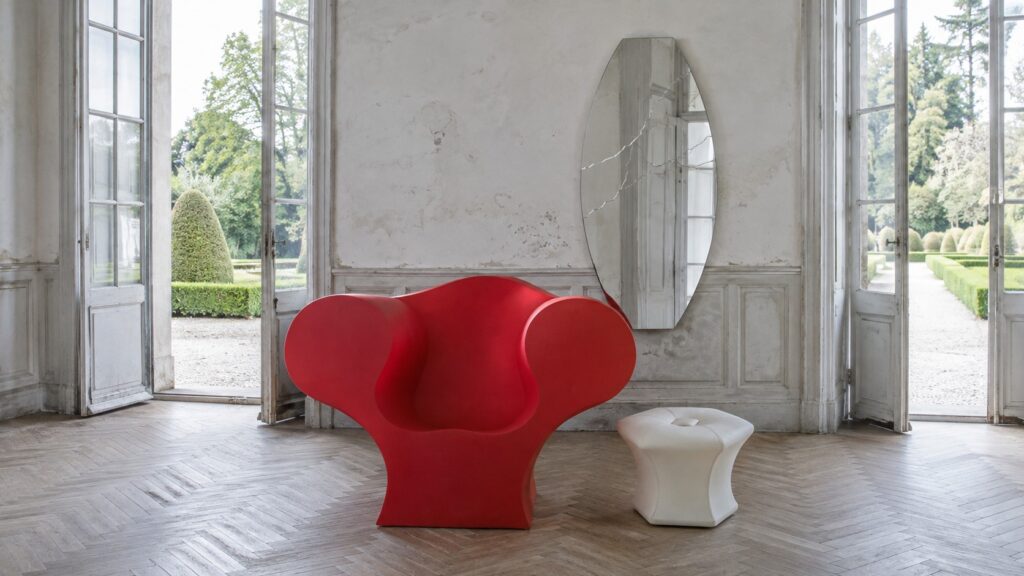 Postmodern & MemphisPostmodern & Memphis at home: colour, form and a wink
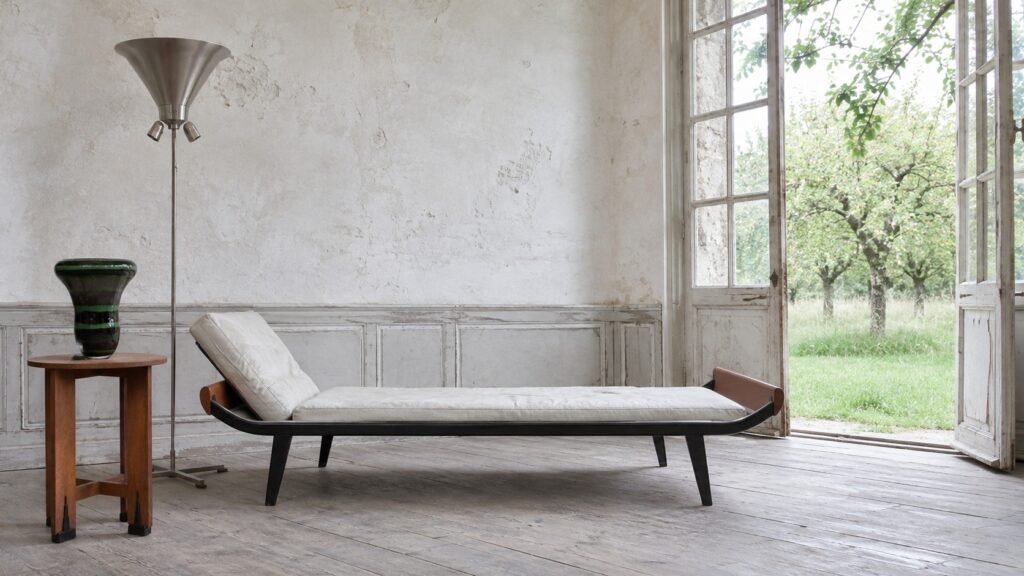 Dutch designDutch design at home: sober, clever and surprisingly warm
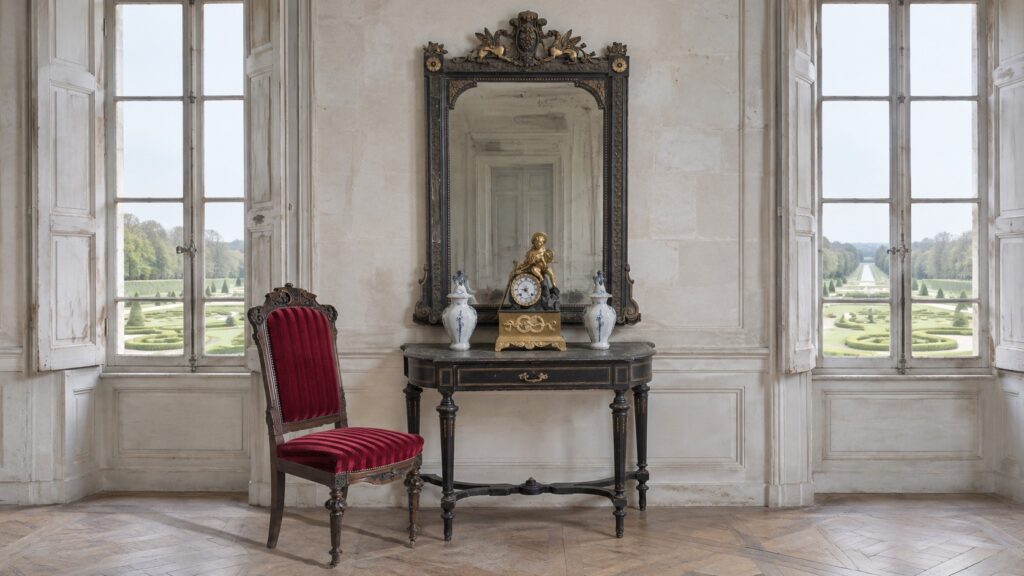 Classic antiquesClassic antiques at home: centuries old, and made to last
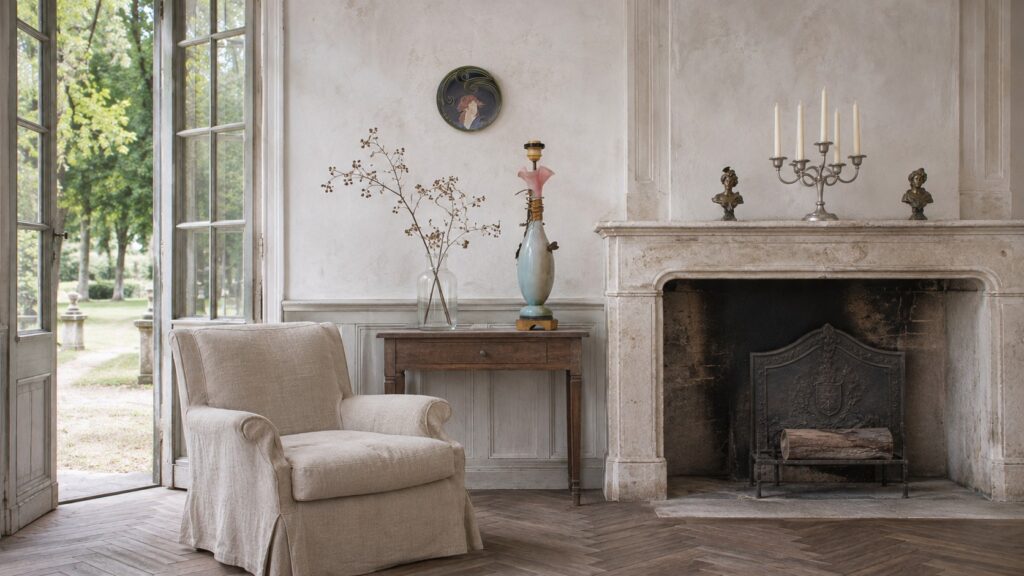 Art nouveauArt nouveau interior: lines that grow like plants
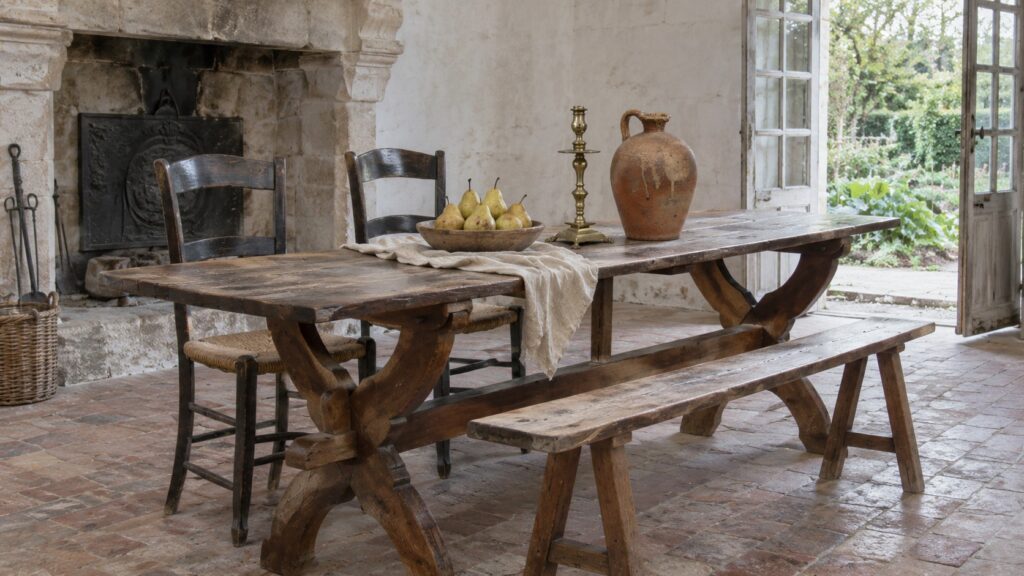 French countryFrench country living: wood, stone and the calm of country life
 IndustrialIndustrial living: honest materials, clever shapes and a rough edge
 Art decoArt deco: clean lines, warm materials and a touch of daring
 Mid-centuryMid-century design: timeless, warm and still modern
 Wabi-sabiWhat is wabi-sabi living, and why does imperfection make an interior more beautiful?