Scandinavian design at home: light wood, calm and simplicity
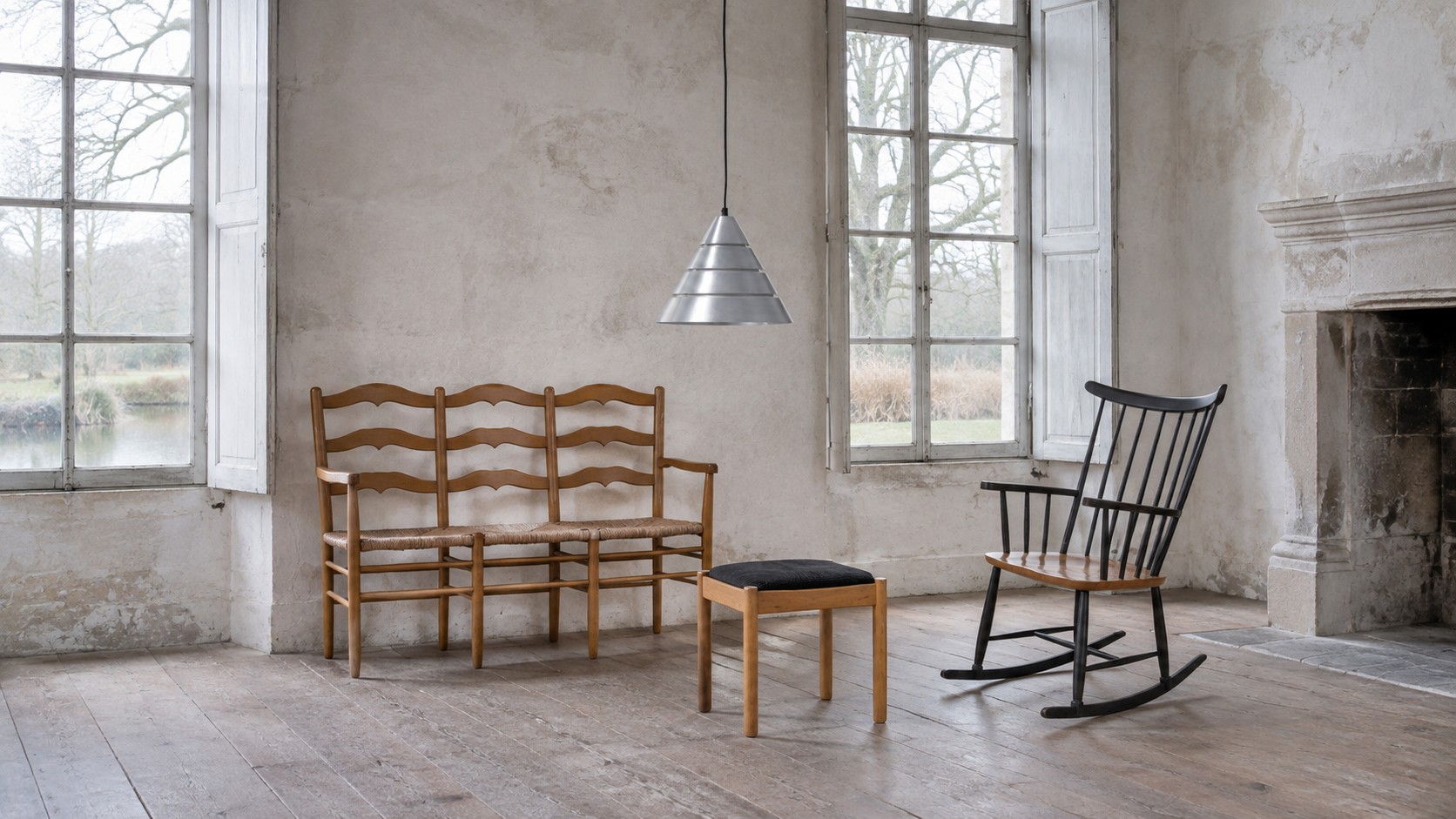
In this photo: Beech three-seater bench with rush seat – 1960s (€ 645) · Danish Design Rocking Chair, Ilmari Tapiovaara Model Fanett, Scandinavian, 1960s (€ 395) · Vintage design beech stools / footstool, 1960s (€ 75 each) · Hans-Agne Jakobsson Cone-Shaped Chandelier (€ 345)
Scandinavian design at home: light wood, calm and simplicity
Chairs, benches and lamps from Denmark, Sweden and Finland: few things, well made, with space around them.
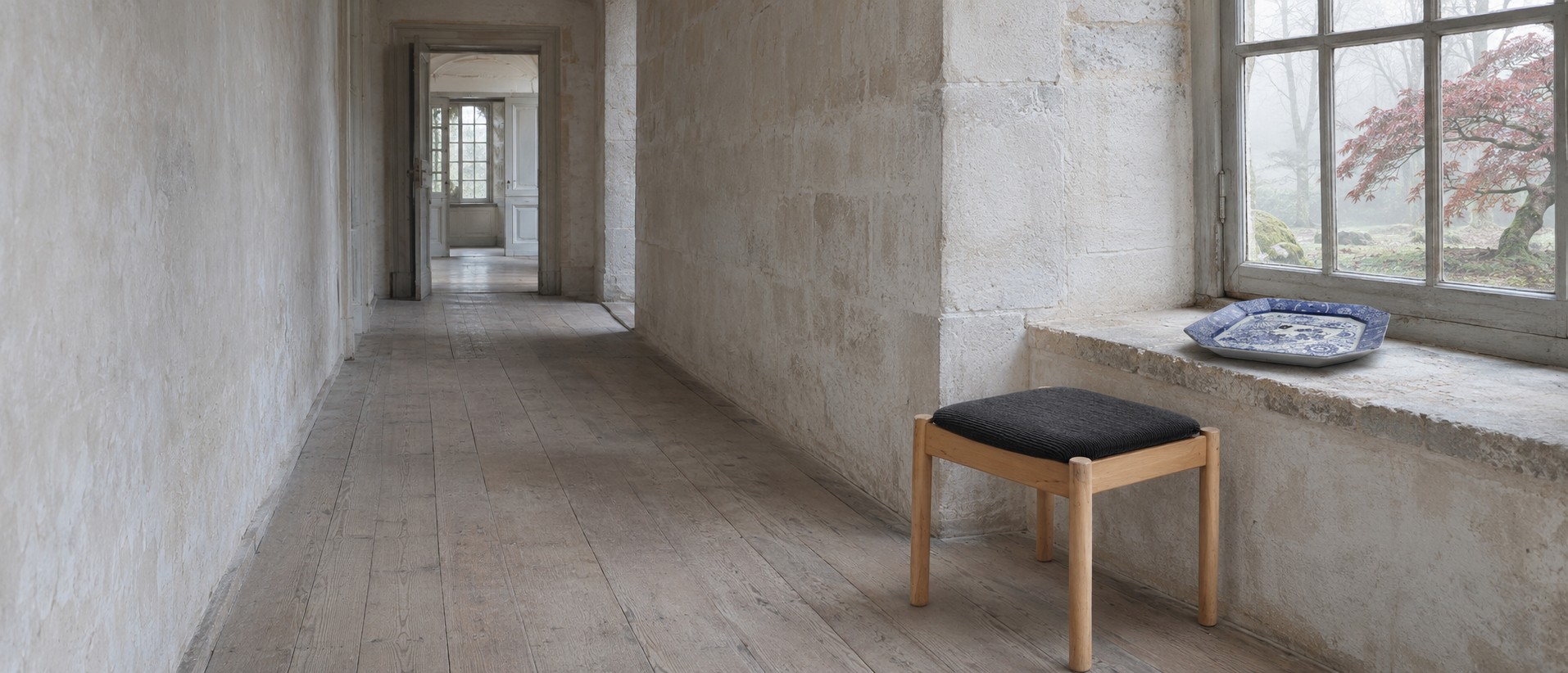
In this photo: Japanese octagonal blue and white inban dish – Meiji, c. 1870–1900 · Vintage design beech stools / footstool, 1960s (€ 75 each)
Scandinavian design: less, but better
Some interiors calm you the moment you walk in. There is little in them, what is there is made of wood, and the light can reach everywhere. That is the core of Scandinavian design.
It is not a bare style. Wood, rush, paper cord and earthenware give warmth; the emptiness between them gives calm. Every piece needs a reason to be there.
In this article you can read where the style comes from, what to look for and how to use it. The images show pieces from our own collection; click on a piece to view it.
What is Scandinavian design?
Scandinavian design flourished between the 1930s and 1960s in Denmark, Sweden and Finland. Designers such as Hans Wegner, Alvar Aalto and Ilmari Tapiovaara made furniture in light wood, without decoration, intended for ordinary homes. Good craftsmanship and simplicity went together.
Related to it is japandi, a more recent word for the mix of Scandinavian and Japanese simplicity. From the late nineteenth century Scandinavian designers looked to Japan and recognised their own preferences there: natural materials, honest construction, attention to emptiness.
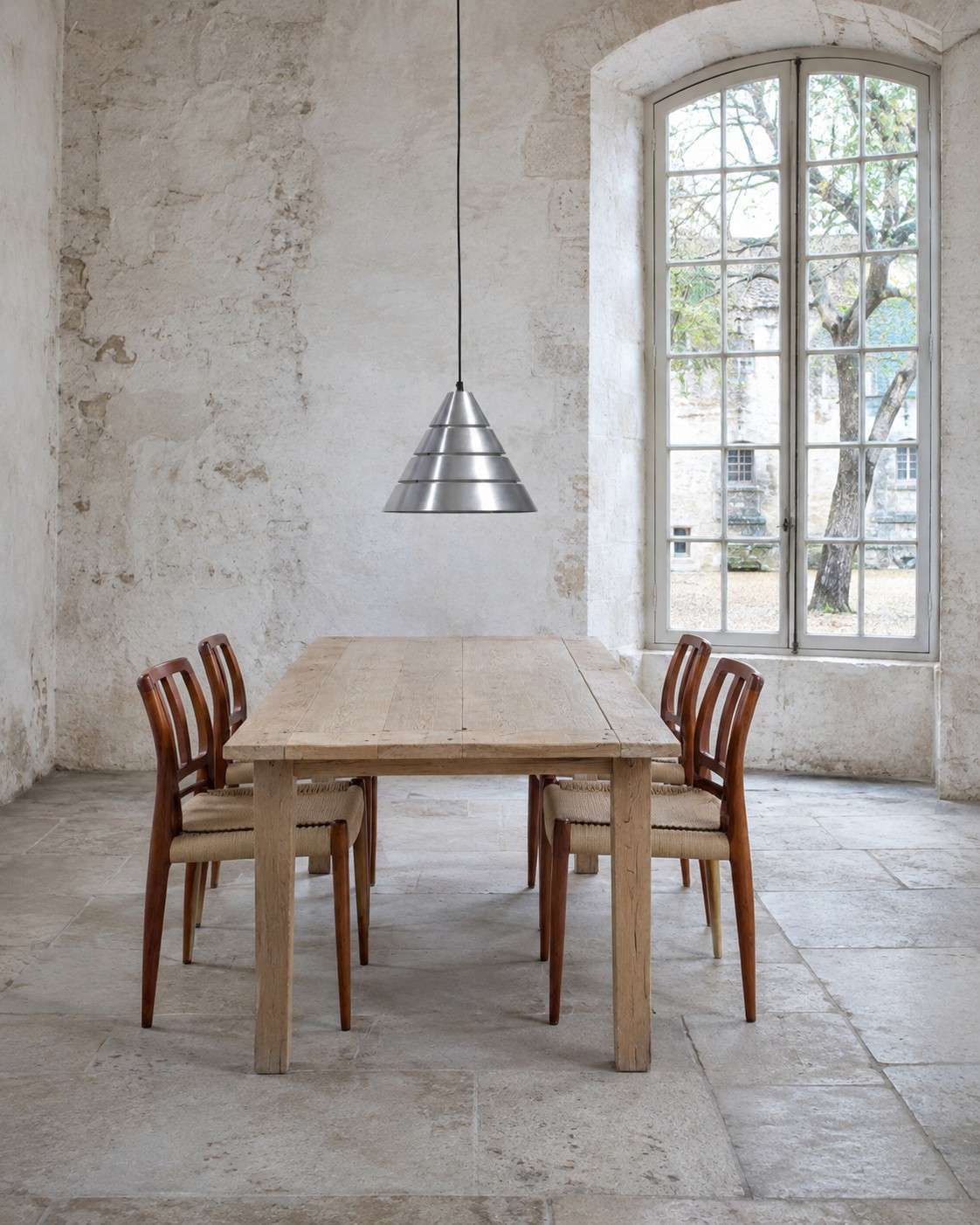
The four dining chairs in the photo are Model 83 by Niels Otto Møller for J.L. Møllers Møbelfabrik in Denmark, with a rosewood frame and a seat of woven paper cord. Above them hangs a cone-shaped aluminium lamp by Hans-Agne Jakobsson for the Swedish firm AB Markaryd. The wiring of the lamp has not been checked; have it inspected by an electrician.
In this photo: Set of 4 Niels Møller Model 83 Rosewood Dining Chairs, Denmark, 1975 (€ 2.395) · Hans-Agne Jakobsson Cone-Shaped Chandelier (€ 345)
Why is this style so loved?
Because our homes are full and so are our days. An interior with few stimuli feels like breathing space. Scandinavian design gives that calm without becoming cold.
The style is practical too. Furniture is light, movable and made for daily use. A chair is a chair; it does not have to be anything else.
And it is durable in the ordinary sense of the word. A good Danish chair from the 1960s or 1970s lasts for generations, and a seat of paper cord or rush can always be rewoven.
The strength of Scandinavian design: wood, weaving and craftsmanship
Look at a Scandinavian chair and you see how it is made. Spindles set into a seat, a back of bent wood, a joint that is allowed to remain visible. The construction is the beauty.
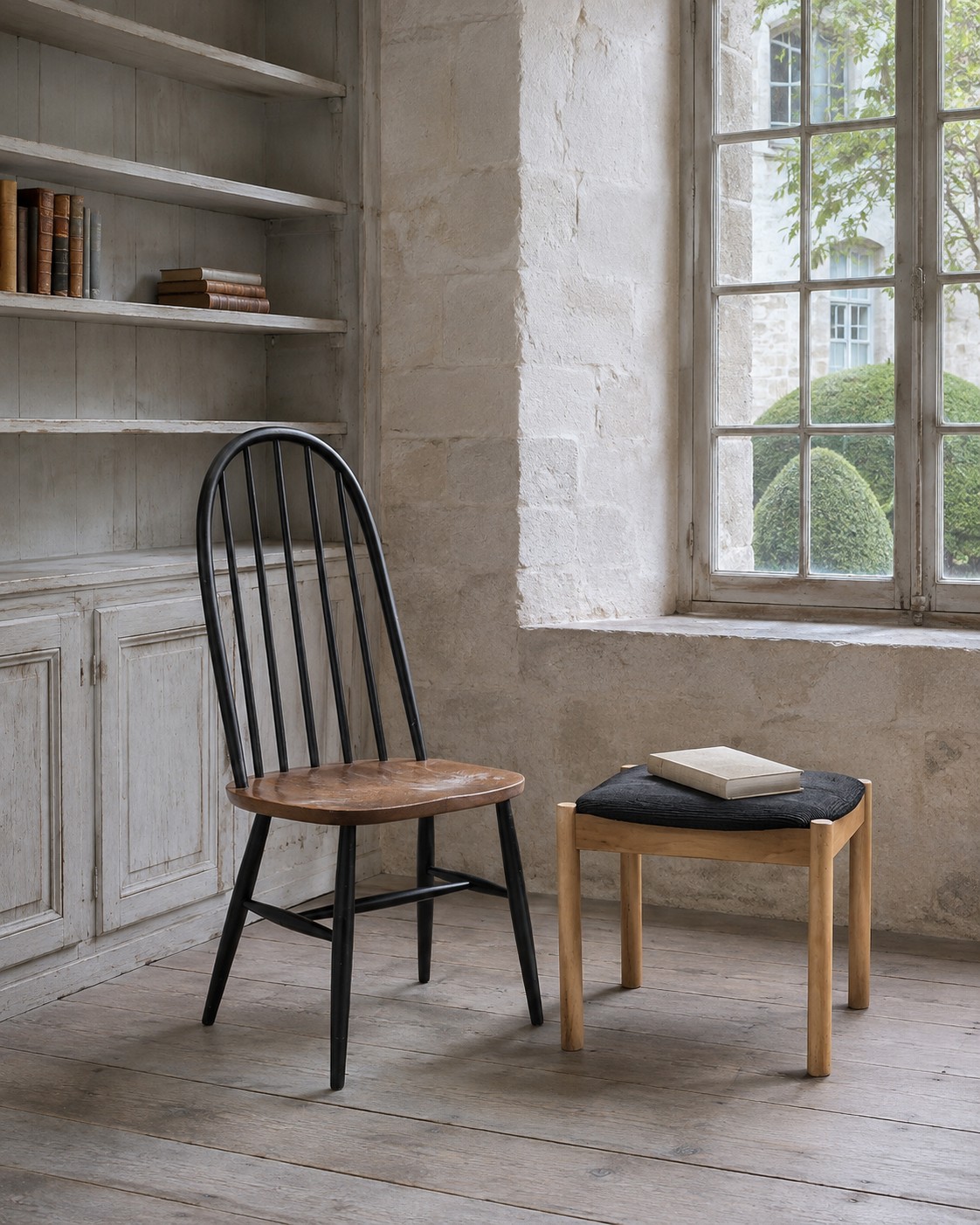
The spindle-back chair in the photo shows this: a wooden seat, curved spindles and a back 98 centimetres high. The design is related to the Fanett chair by Ilmari Tapiovaara.
Next to it stands a beech stool from the 1960s with a seat in black ribbed fabric, 45 centimetres high. As a footstool, side table or extra seat: in this style a piece of furniture may do more than one thing.
In this photo: Vintage spindle-back chair – Scandinavian design classic (€ 75 each) · Vintage design beech stools / footstool, 1960s (€ 75 each)
How do you combine Scandinavian design without it becoming bare?
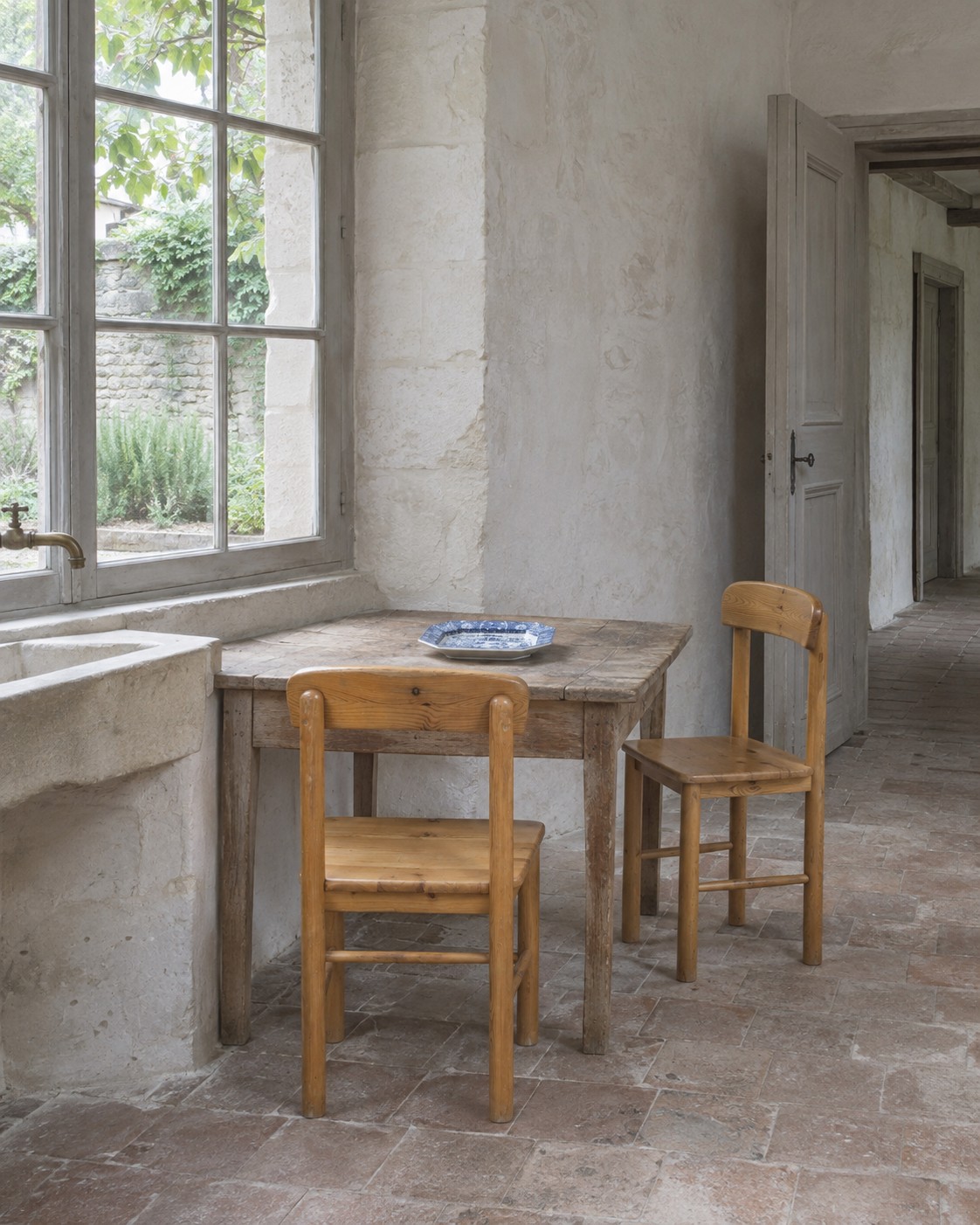
Emptiness is not the same as bareness. A room becomes bare when everything is smooth and new. It becomes calm when the few things in it have texture and age.
So mix wood types and tones. The Danish chairs in solid pine in the photo, in the style of Rainer Daumiller and made around 1975, are sturdy and warm in colour. Next to an old work table and a stone wall they gain something timeless.
Add one object from another world. Japanese work fits in naturally. The octagonal dish in blue and white porcelain is Japanese, from the Meiji period, around 1870–1900. The decoration was applied with paper stencils. One dish on an empty table is enough.
In this photo: Set of 4 Danish pine chairs in Rainer Daumiller style – circa 1975 (€ 595) · Japanese octagonal blue and white inban dish – Meiji, c. 1870–1900
What to look for when buying Scandinavian design
Look at the joints. In good Scandinavian work the back and legs fit tightly and nothing wobbles. Loose joints can be glued, but that should be reflected in the price.
Examine the seat. Paper cord and rush wear at the front edge; a sagging seat has to be rewoven. Ask whether the seat is original.
Mind the type of wood. Rosewood, teak, beech and pine each have their own colour and value. Rosewood has become rare and accounts for a large part of the price of Danish chairs.
Look for a mark or stamp under the seat. Not every good piece is marked, and a seller should say honestly when something is ‘in the style of’ a designer and when it really is by that designer.
And look beyond Scandinavia. The old Dutch bench in the photo, with a high slatted back, wide armrests and a hand-woven rush seat, is 100 centimetres wide and, with its simplicity and dark wood, fits well in a Scandinavian interior.
In this photo: Old Dutch wooden bench with woven seat (€ 395)
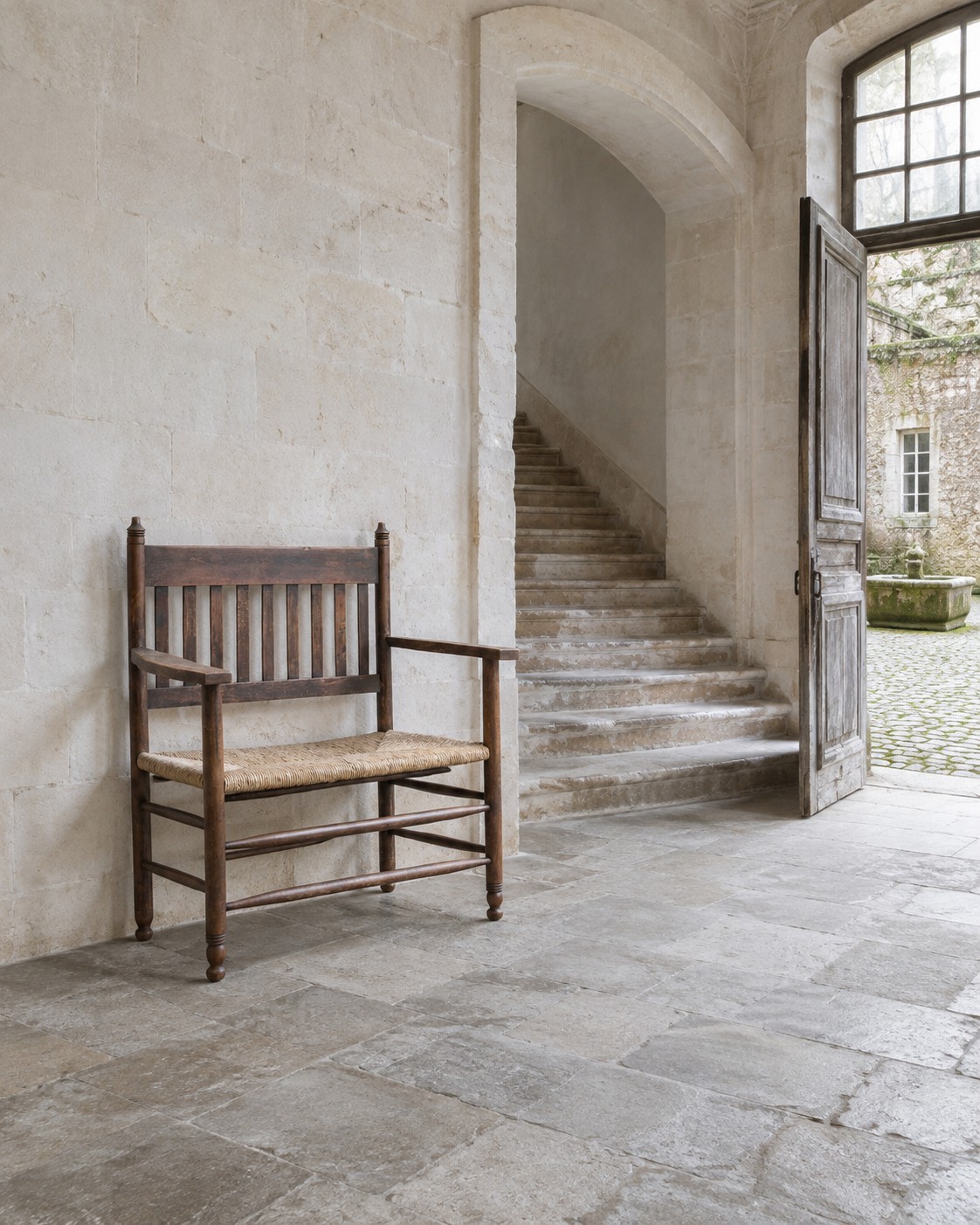
Scandinavian design in a light, calm interior
This style and an old, light room strengthen each other. Limewash, stone and a bleached wooden floor have the same calm as the furniture. Nothing needs to be added to finish it.
Let the light do the work. Place chairs and benches near a window, keep the windowsill empty except for one object, and hang no curtains where they are not needed.
Limit yourself to three tones: light wood, one dark accent and white. The dark accent can be a chair, a seat or a dish. The room needs no more contrast than that.
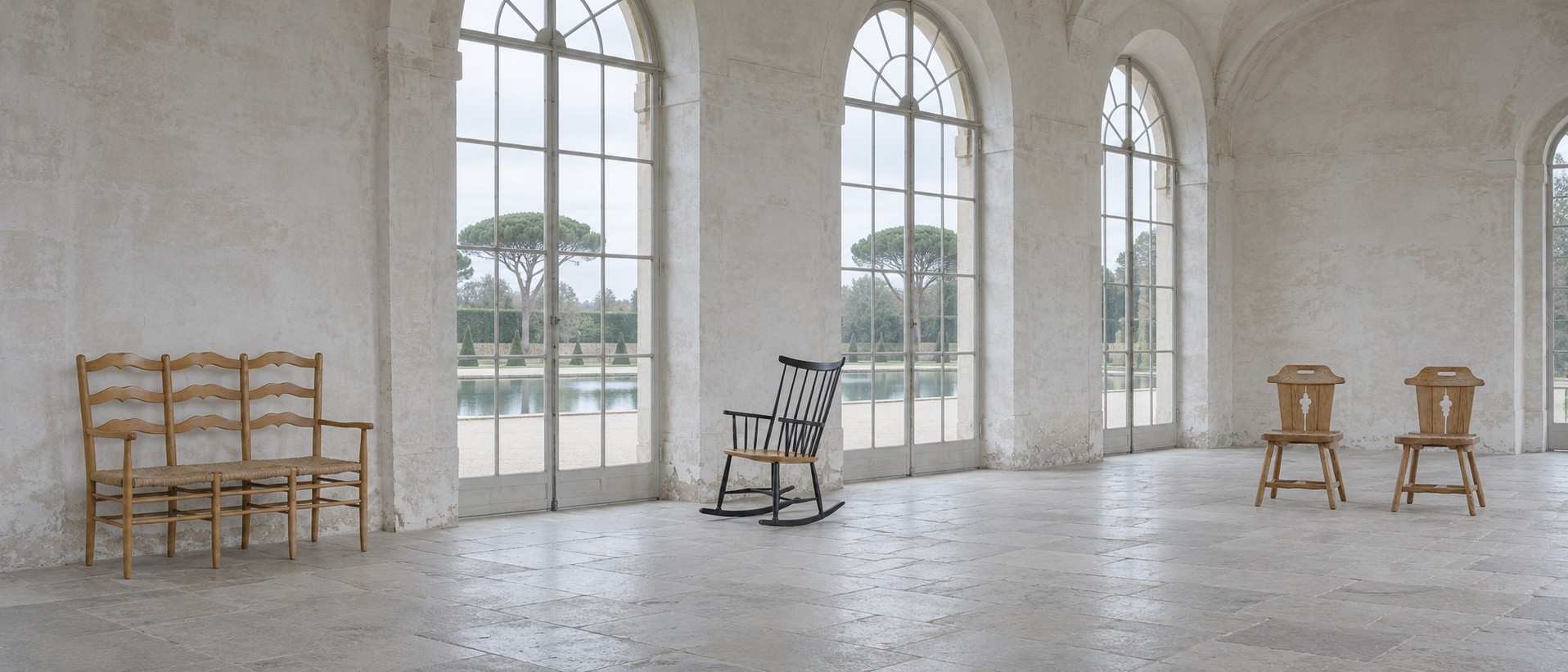
In this photo: Beech three-seater bench with rush seat – 1960s (€ 645) · Danish Design Rocking Chair, Ilmari Tapiovaara Model Fanett, Scandinavian, 1960s (€ 395) · Set of four sculptural pine dining chairs – 1970s (€ 195 voor de set)
How would De Huiszwaluw use Scandinavian design?
We would start with a bench in light wood. The slender three-seater bench in beech from the 1960s, with wavy ladder backs and a woven rush seat, is 123 centimetres wide and looks almost weightless.
Opposite it we would place the Fanett rocking chair by Ilmari Tapiovaara from the 1960s. A rocking chair brings movement into a quiet room, and the spindle back lets the light through.
For the dining area we choose chairs with a shape of their own, such as the four sculptural pine dining chairs from the 1970s with their keyhole-shaped opening in the back. Simple, but not anonymous.
Below you can see the Scandinavian design currently in our collection. Stock changes; pieces that have been sold can be found under ‘Previously in our collection’.
Now in our collection: Scandinavian design
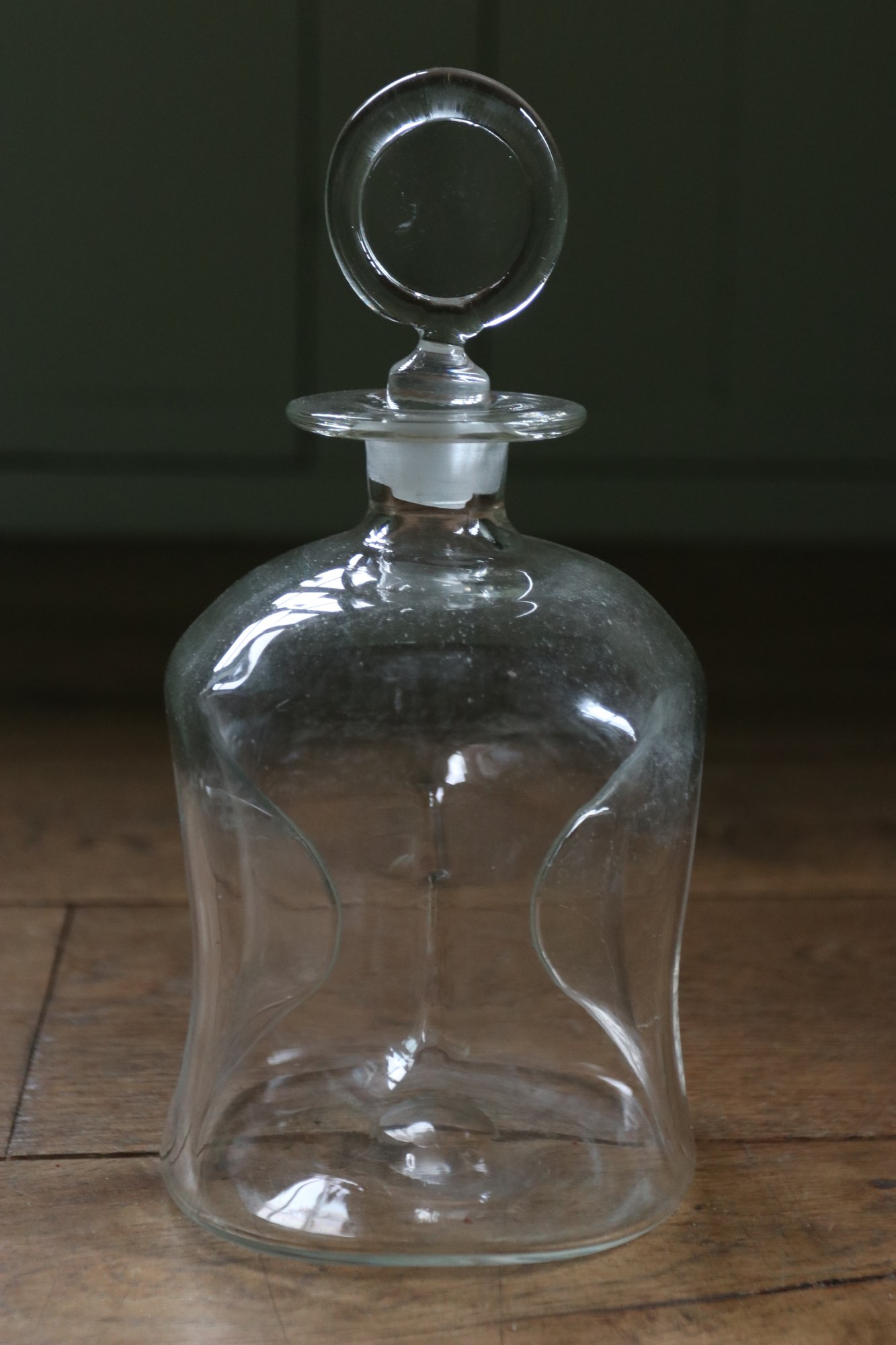 Holmegaard Klemt pinched decanter with ring stopper – Jacob E. Bang, Denmark, mid-20th century€ 79
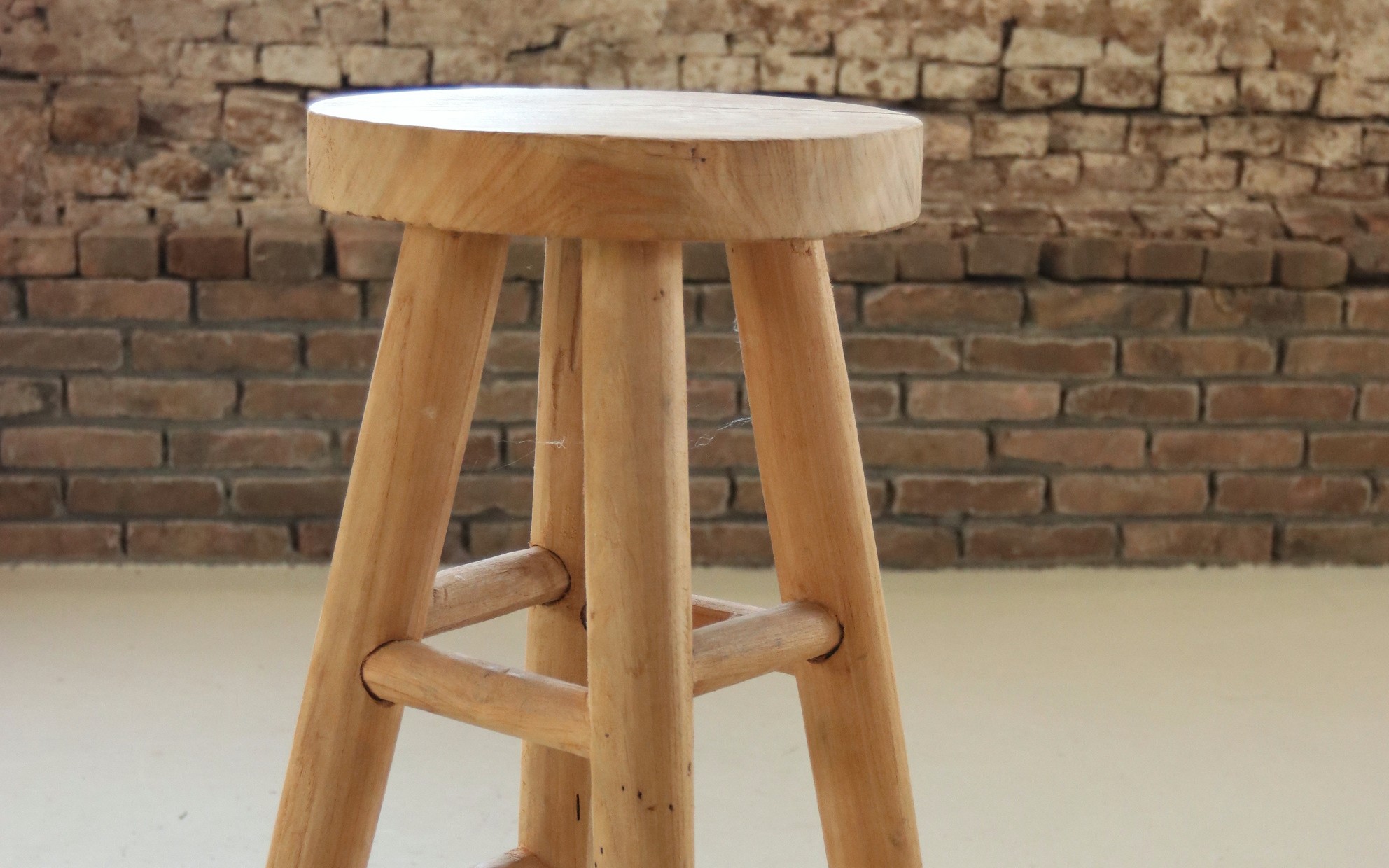 Wooden bar stool with round solid seat – untreated wood, late 20th century€ 55
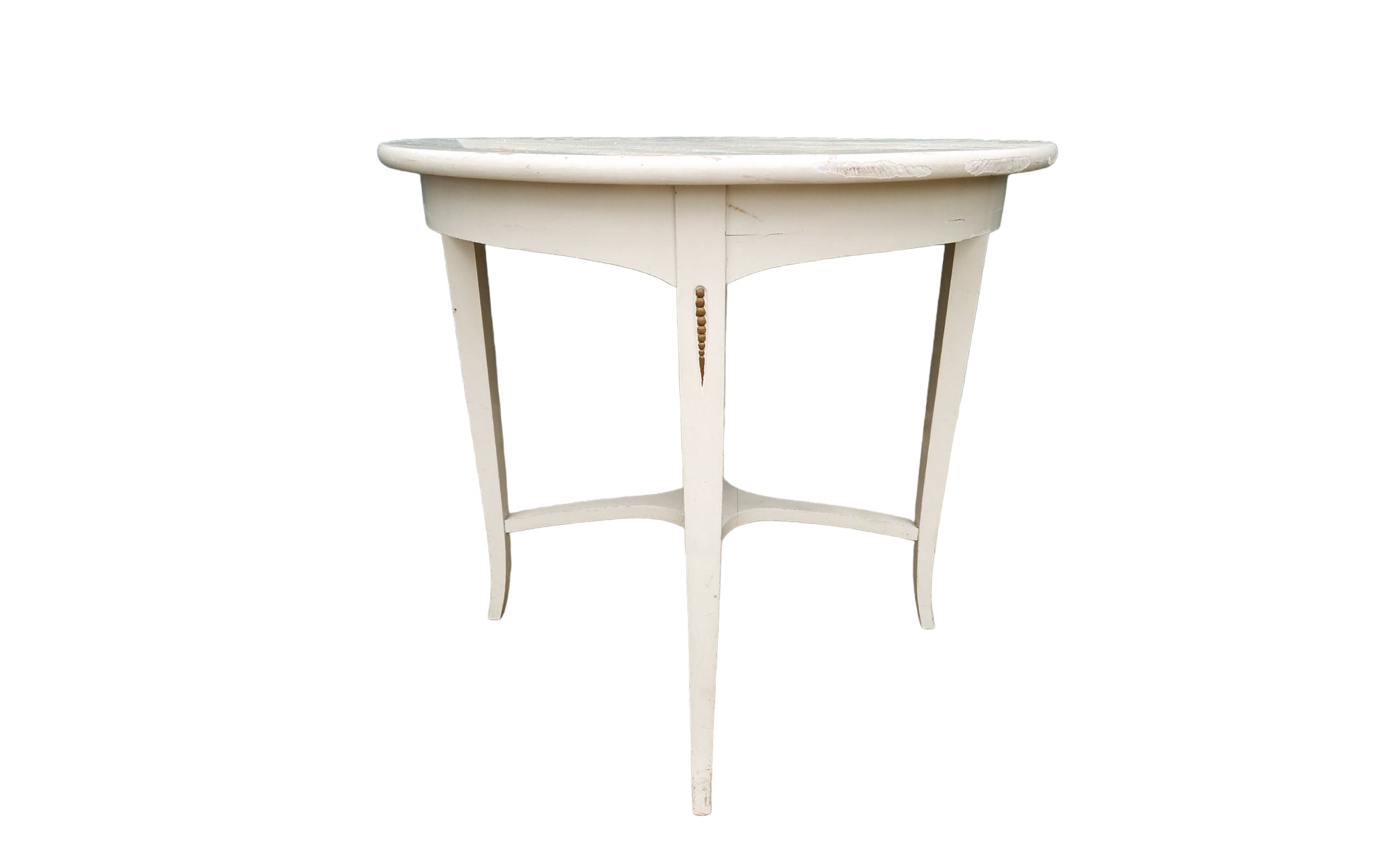 Small round coffee table in Swedish Gustavian style – cream painted, early 20th century€ 225
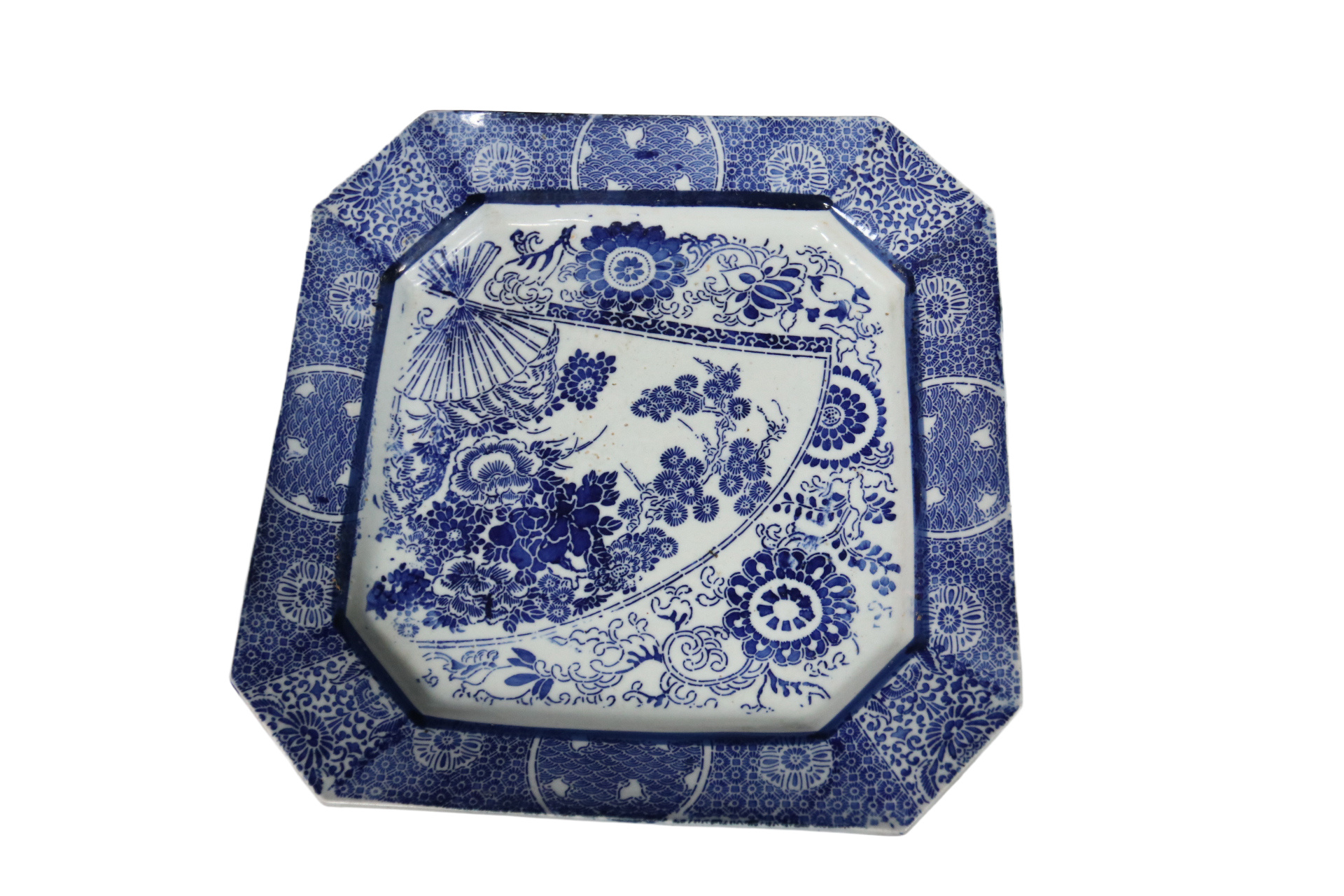 Japanese octagonal blue and white inban dish – Meiji, c. 1870–1900
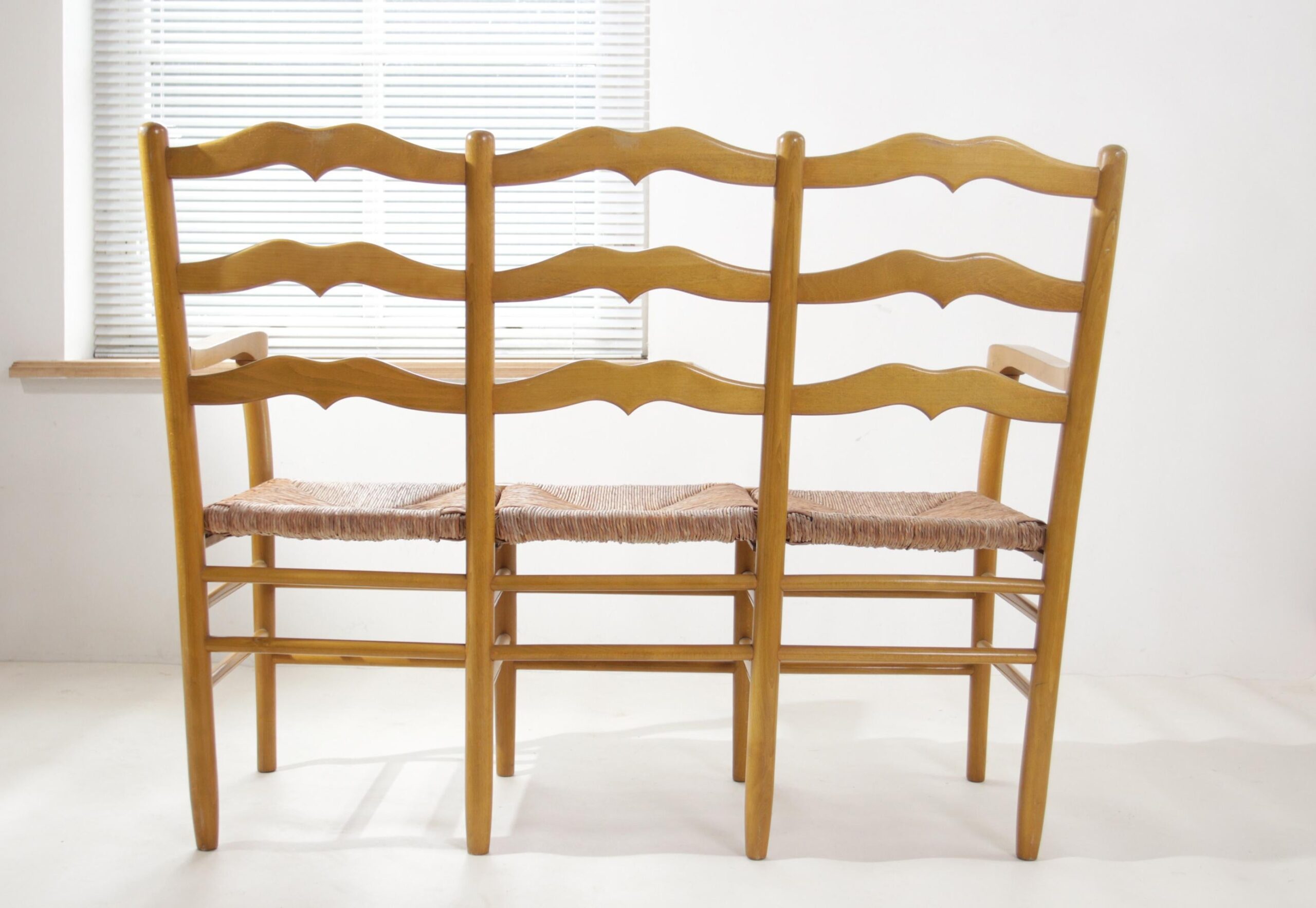 Beech three-seater bench with rush seat – 1960s€ 645
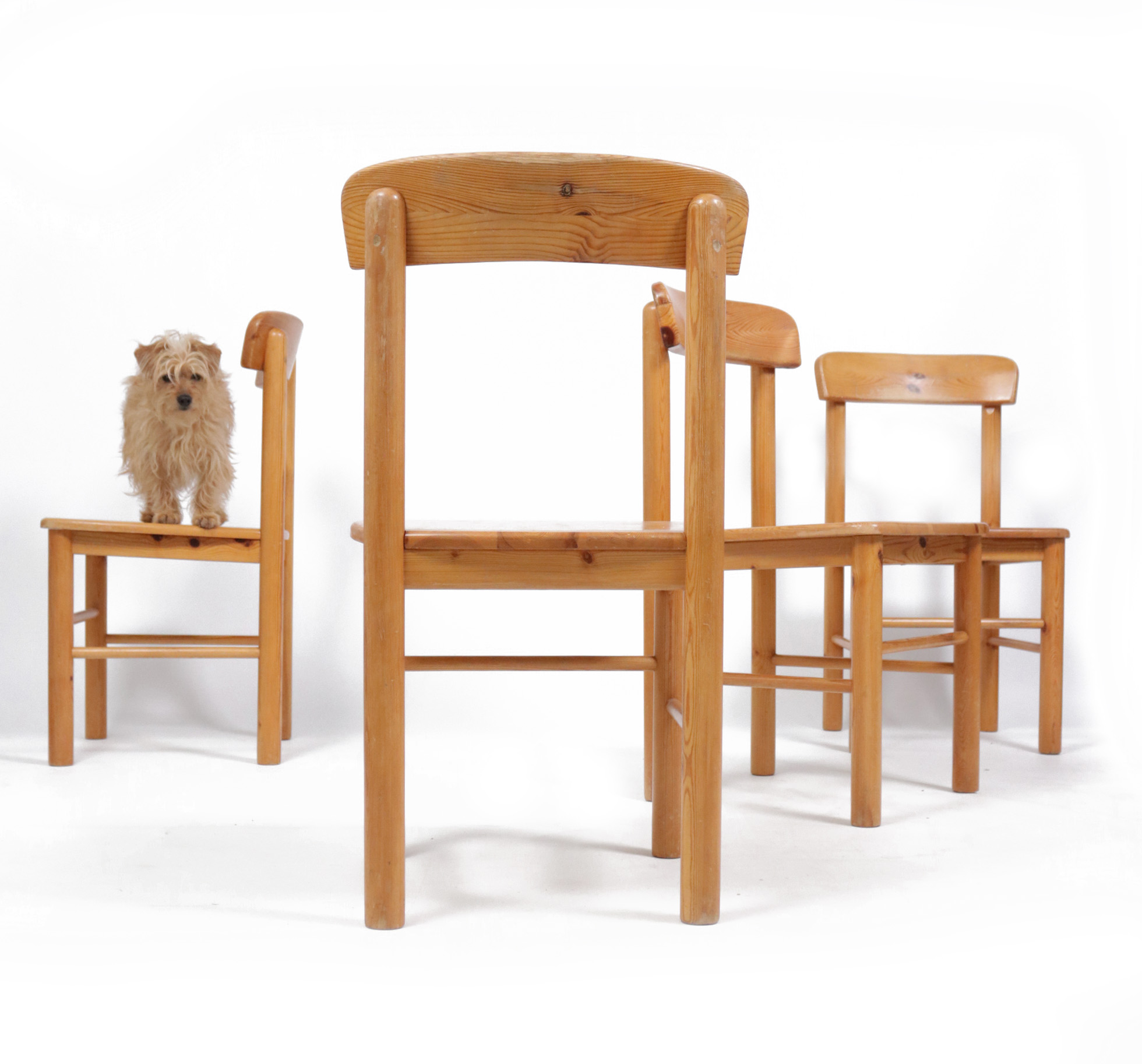 Set of 4 Danish pine chairs in Rainer Daumiller style – circa 1975€ 595
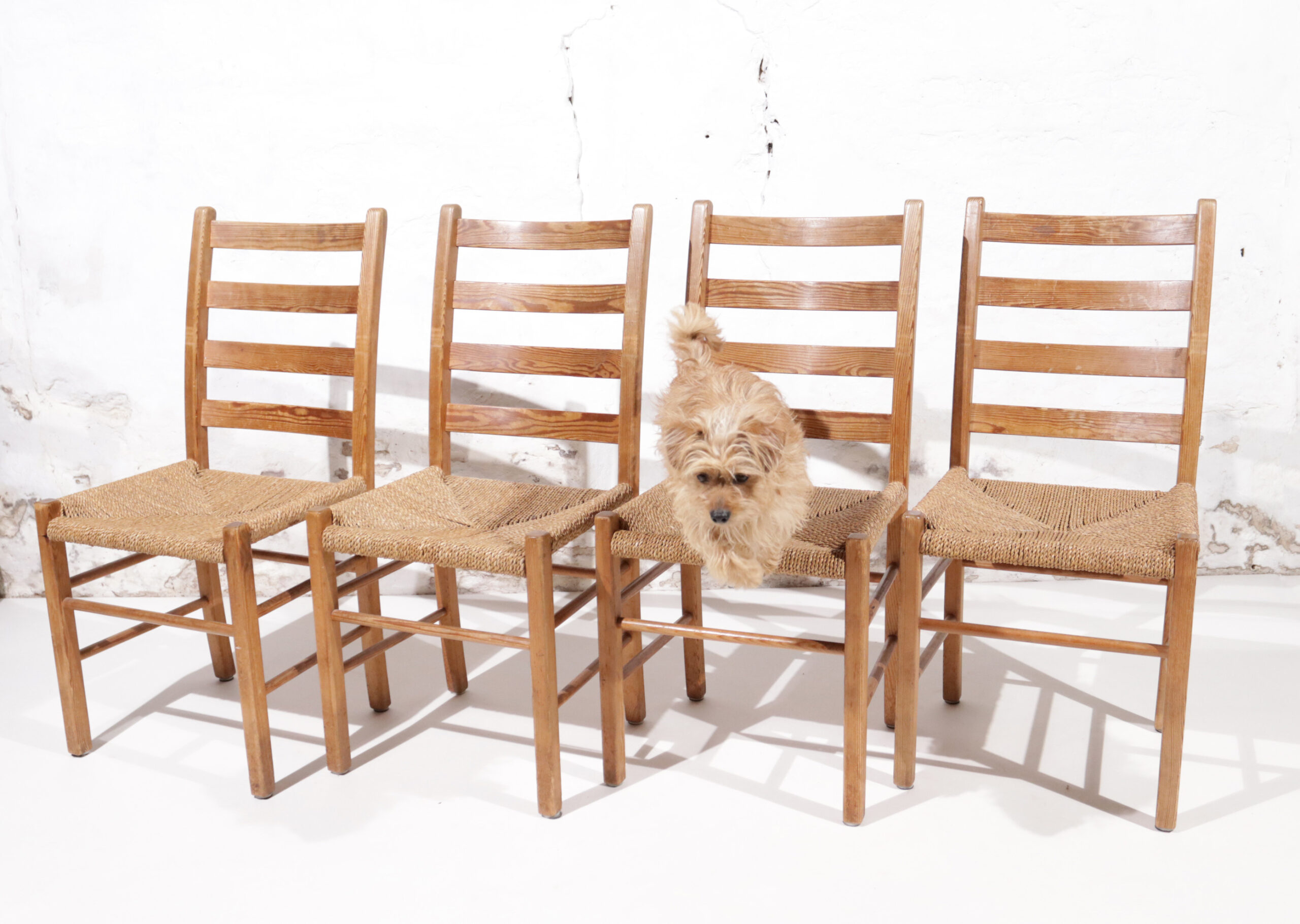 Set of 4 Scandinavian pine ladder-back chairs with seagrass seats – 1960s€ 545
 Set of four sculptural pine dining chairs – 1970s€ 195 voor de set
 Pander desk from circa 1920€ 995
 Old Dutch wooden bench with woven seat€ 395
 Long French wabi-sabi bench in weathered pine – circa 1900€ 595
 Large antique Chinese wooden sculpture with child – wabi-sabi€ 345
 Large sculptural burr wood coffee table – circa 1970€ 945
 Vintage spindle-back chair – Scandinavian design classic€ 75 each
 Vintage design wooden chairs with space for your magazine€ 45 each
 Set of Four Mid-Century Modern Danish Dining Chairs, Papercord and Solid Pine€ 1.195
 Set of 4 Niels Møller Model 83 Rosewood Dining Chairs, Denmark, 1975€ 2.395
 Hans-Agne Jakobsson Cone-Shaped Chandelier€ 345
 Danish Design Rocking Chair, Ilmari Tapiovaara Model Fanett, Scandinavian, 1960s€ 395
 Swedish design bar stool by Börje Johanson, 1970s€ 65
 Set of 16 Erik Magnussen ‘Magnus’ Chairs for Paustian, Stackable€ 295 per stoel
 Vintage design HESTRA Tord Björklund ‘Jeans’ folding chair, 1991€ 445
 Vintage design beech stools / footstool, 1960s€ 75 each
Previously in our collection

Read on about other styles
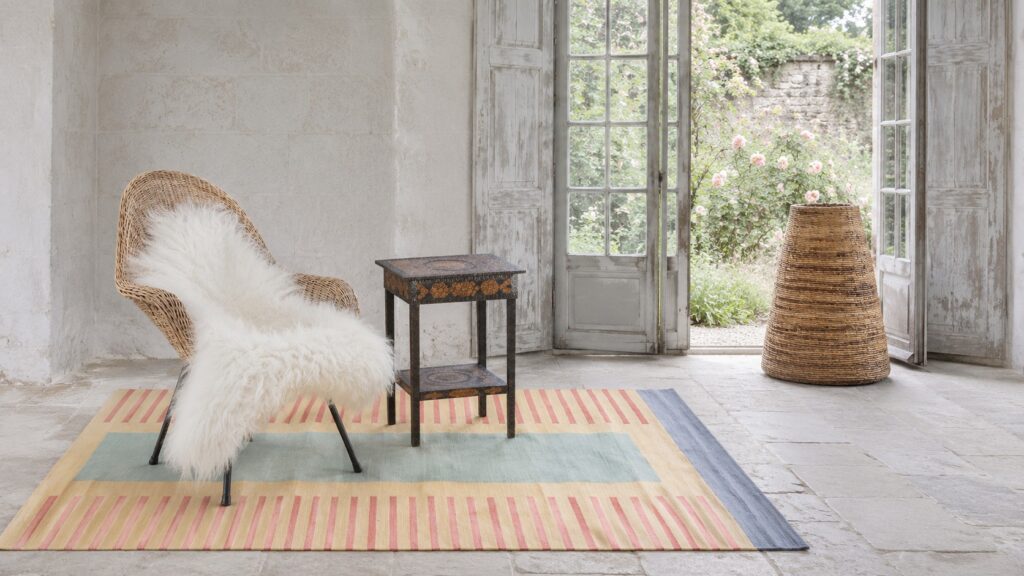 BohemianBohemian at home: free, warm and full of stories
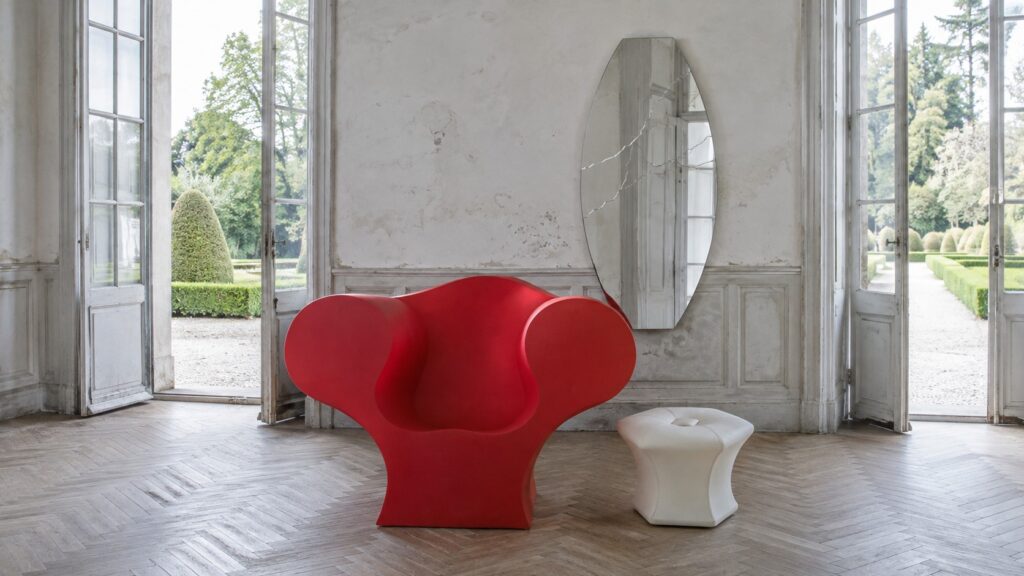 Postmodern & MemphisPostmodern & Memphis at home: colour, form and a wink
 Dutch designDutch design at home: sober, clever and surprisingly warm
 Classic antiquesClassic antiques at home: centuries old, and made to last
 Art nouveauArt nouveau interior: lines that grow like plants
 BrutalismBrutalism at home: heavy wood, raw iron and shapes with weight
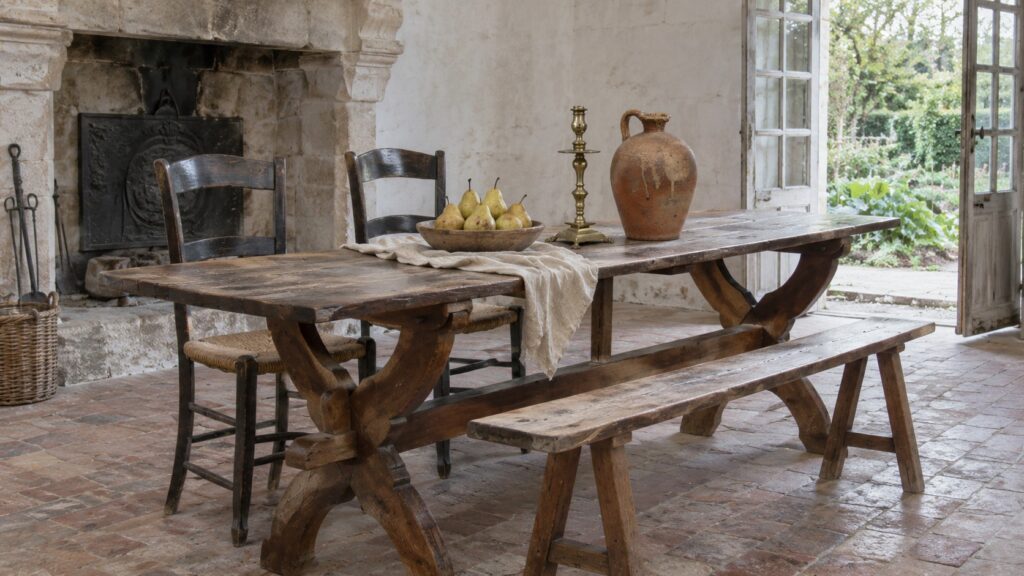 French countryFrench country living: wood, stone and the calm of country life
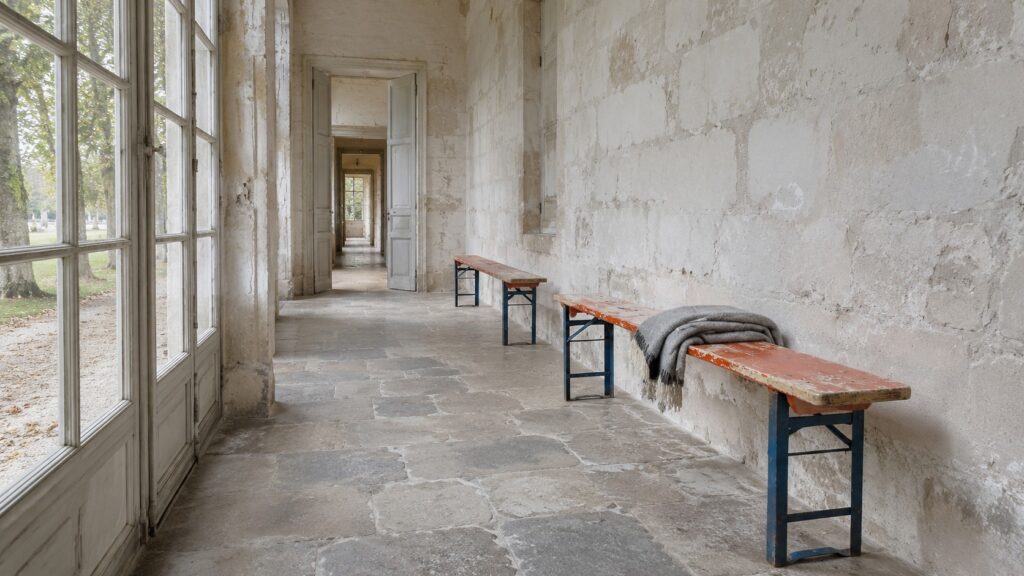 IndustrialIndustrial living: honest materials, clever shapes and a rough edge
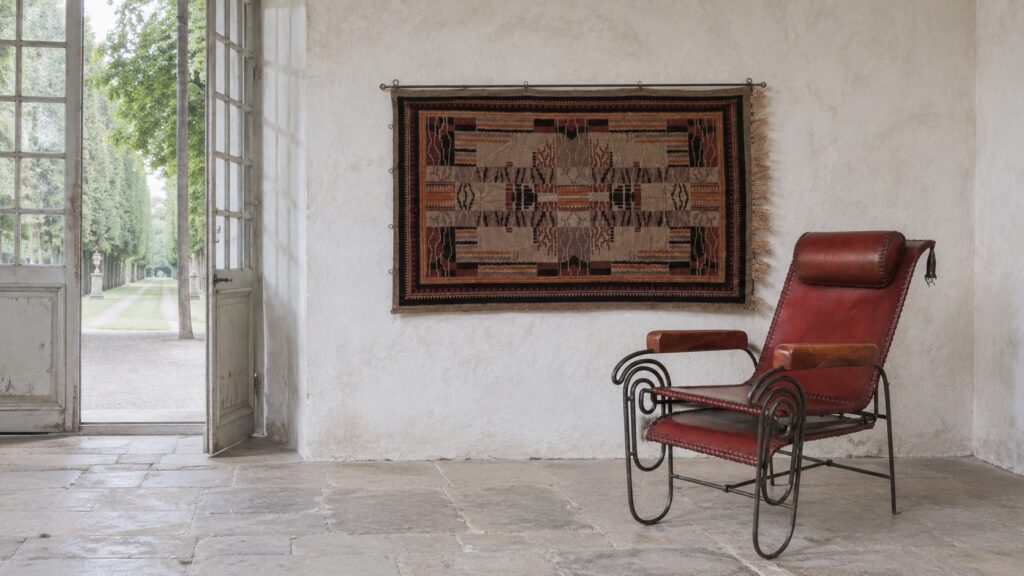 Art decoArt deco: clean lines, warm materials and a touch of daring
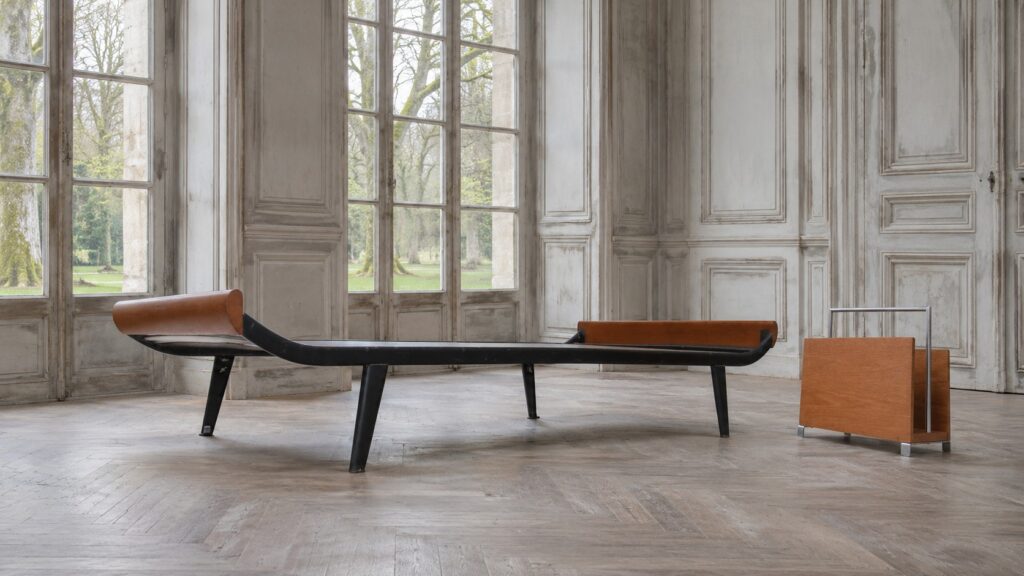 Mid-centuryMid-century design: timeless, warm and still modern
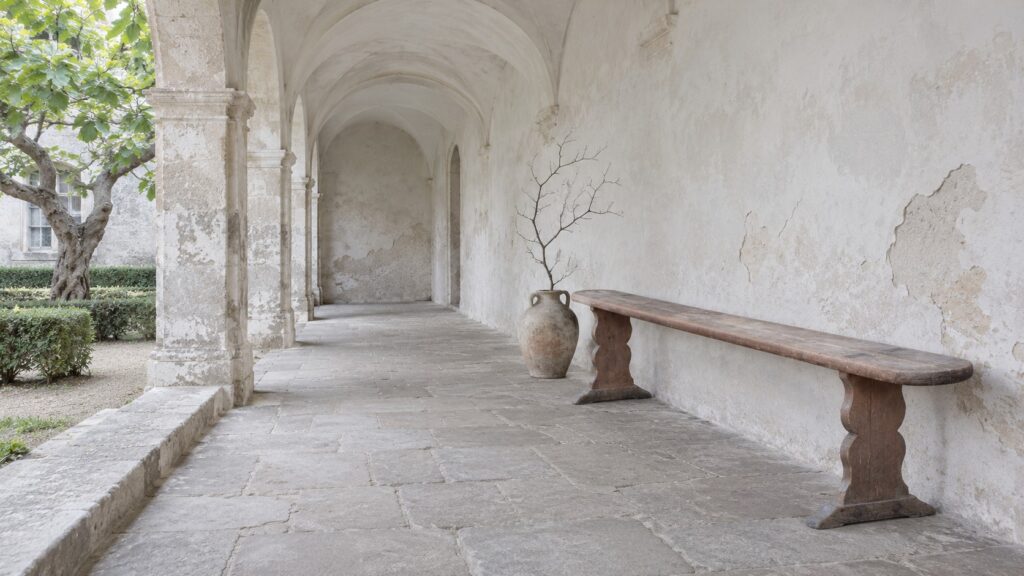 Wabi-sabiWhat is wabi-sabi living, and why does imperfection make an interior more beautiful?