

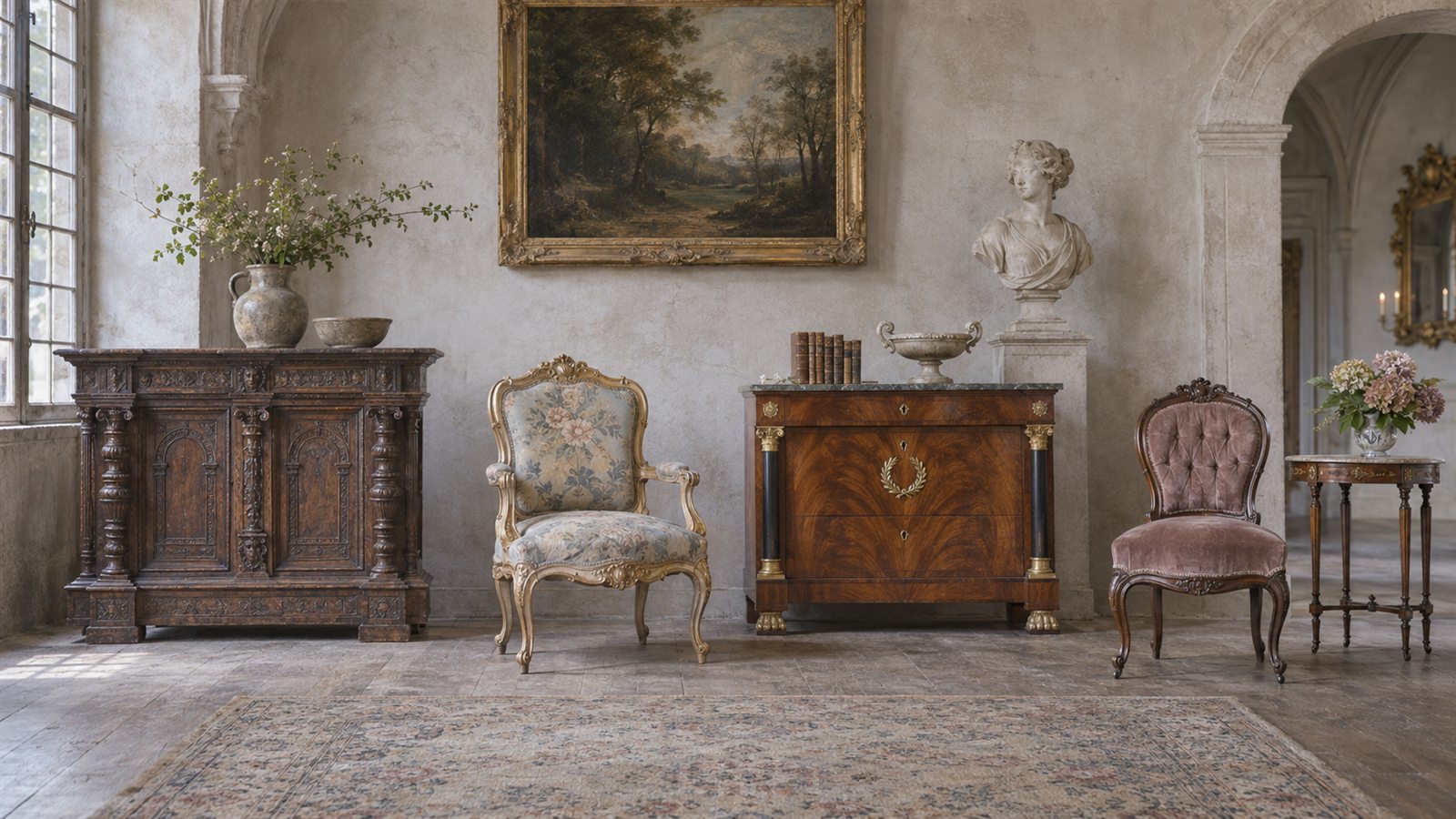
Between 1600 and 1900, European furniture changed from a utilitarian object that was usually made locally into a product that was also shaped by international fashion, factories and large trading networks. Over those three centuries, living habits, materials and production techniques changed profoundly. The familiar names, Baroque, Rococo, Louis XVI, Empire and Biedermeier, offer something to hold on to, but they never tell the whole story.
This book follows the development by way of functions, forms, makers and constructions. It is written for anyone who wants to understand where a piece of furniture comes from and what a reliable dating rests on. That is why the back of a cupboard and the build of a chair receive as much attention as the elegant front.
The descriptions concentrate on the main lines in Western and Central Europe. Countries and regions did not keep to the same calendar. The dates given for styles are a guideline, and many traditions overlapped. A piece of furniture is allowed to be a little unruly; that is exactly where the real history becomes visible.
The chapters are in chronological order, but a new style did not immediately make older designs old-fashioned. Start with the period that comes closest to a piece and then read the chapters before and after it. The final part gives a fixed order for going through construction, wood, fittings, surface and marks.
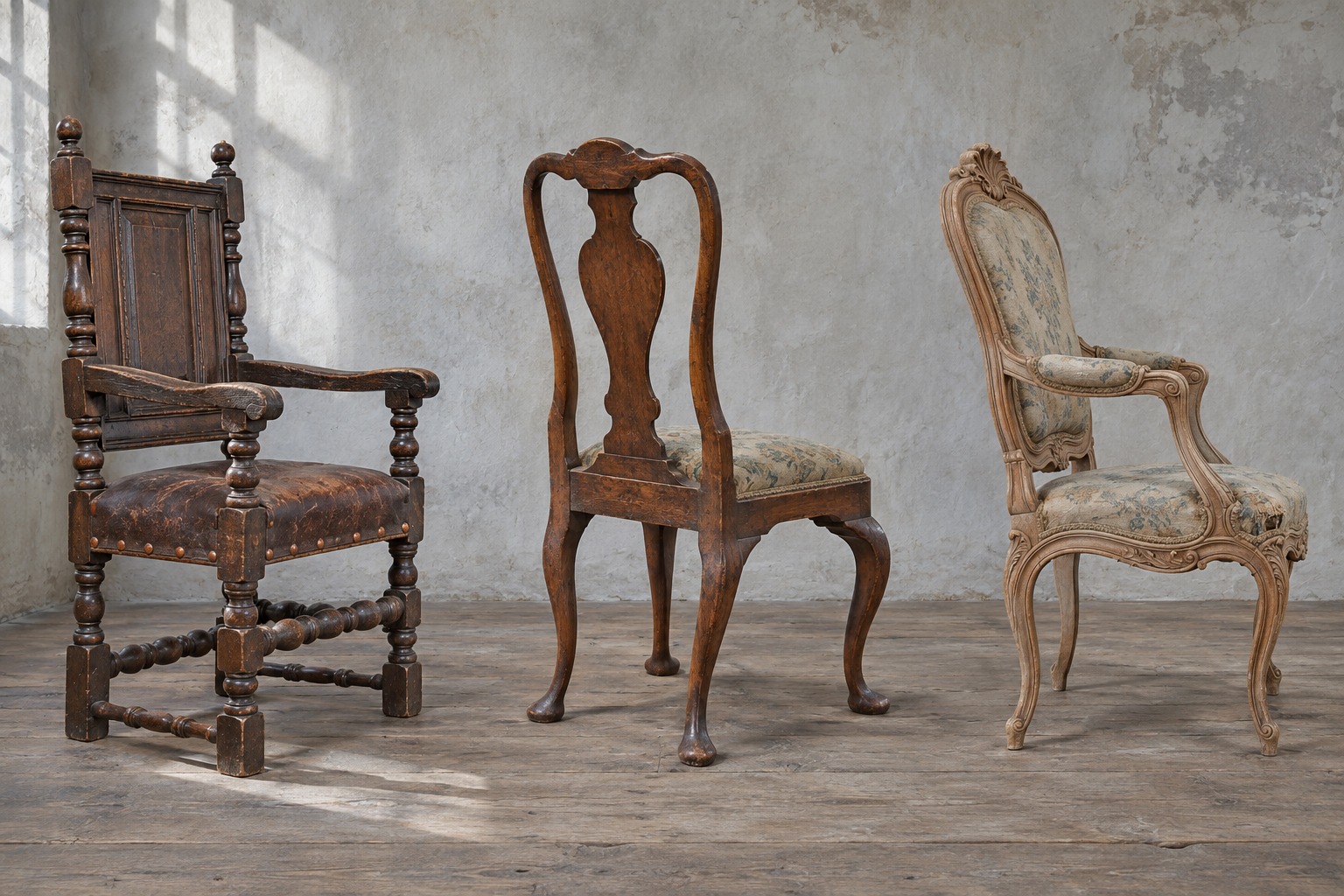
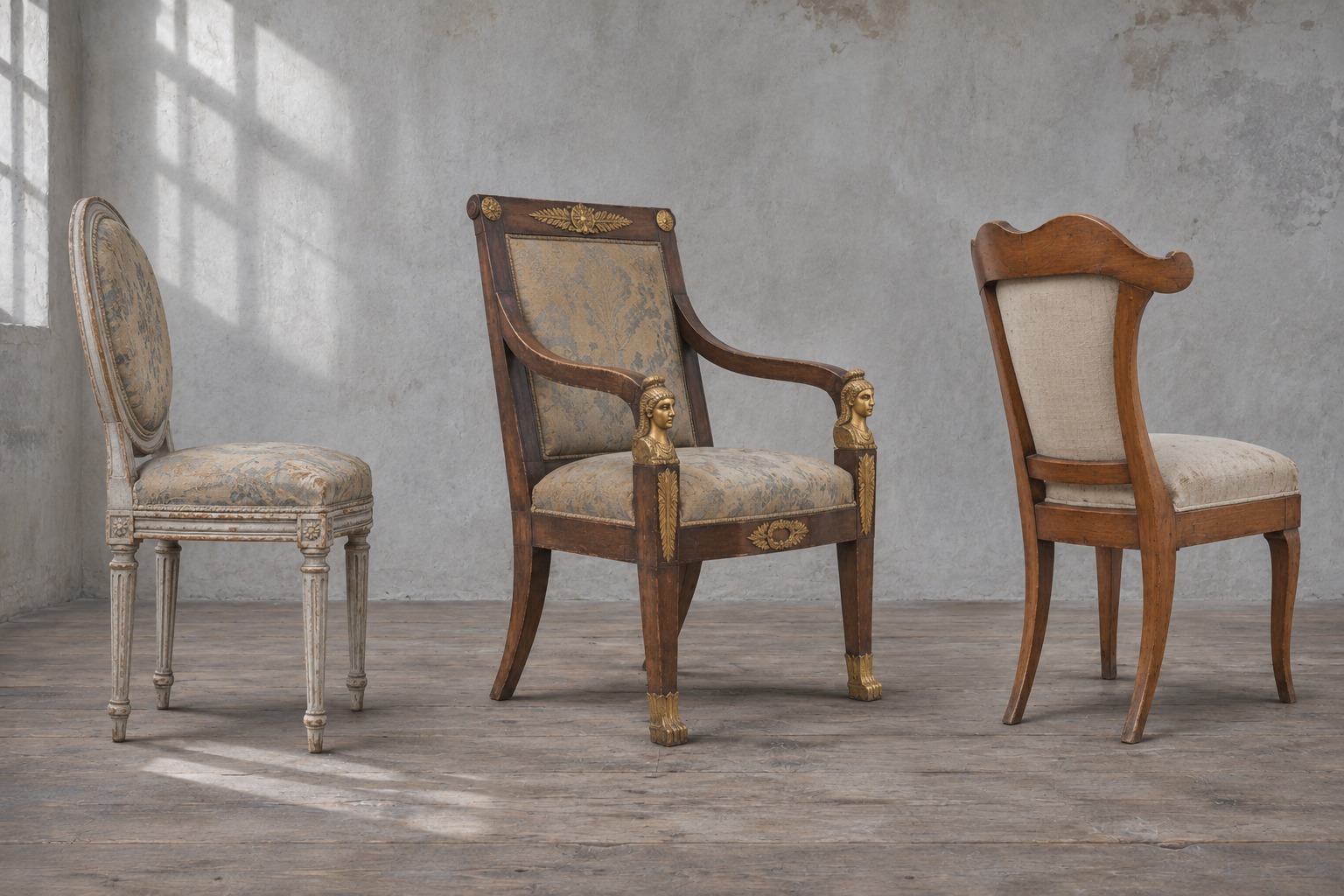
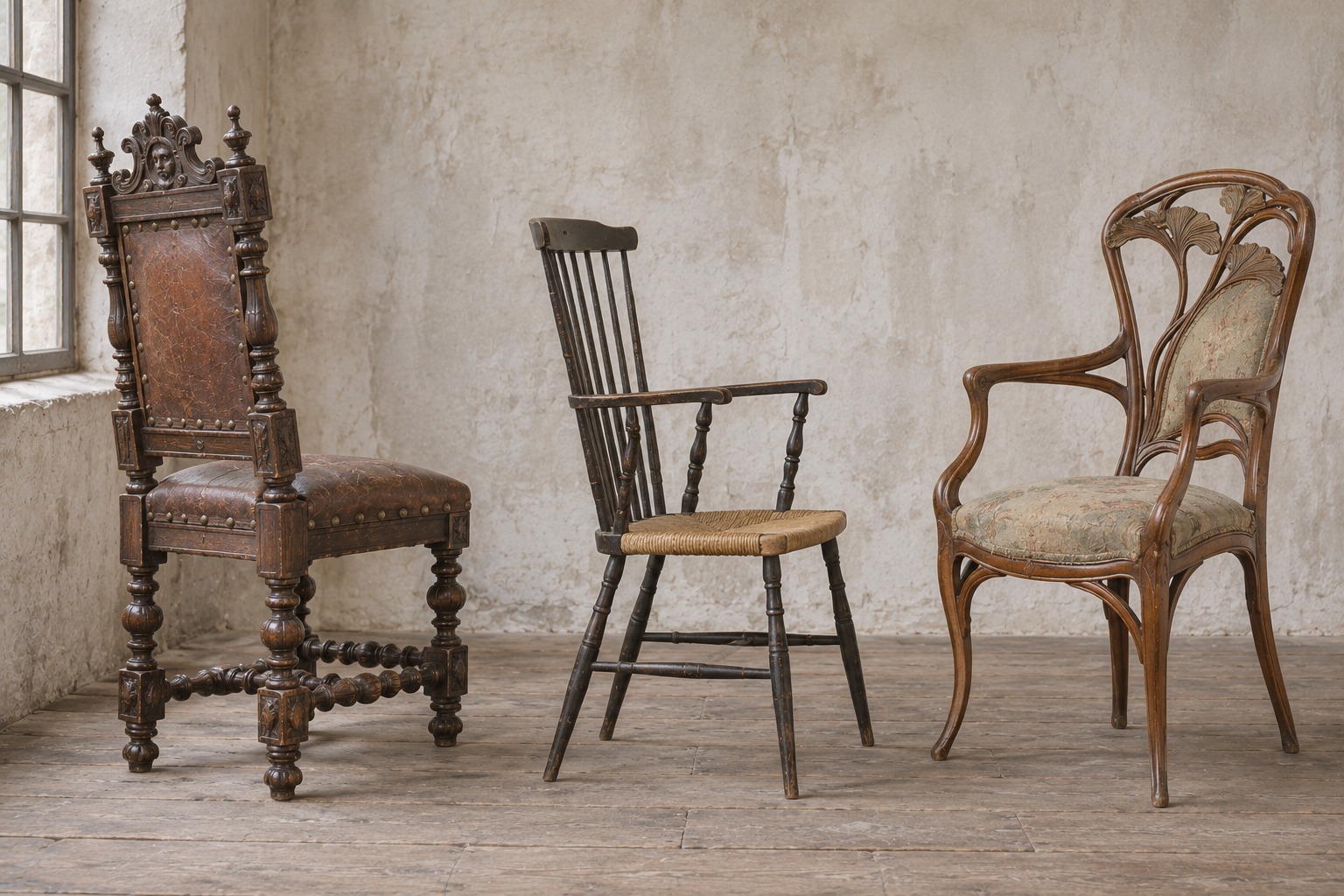
The world of furniture around 1600
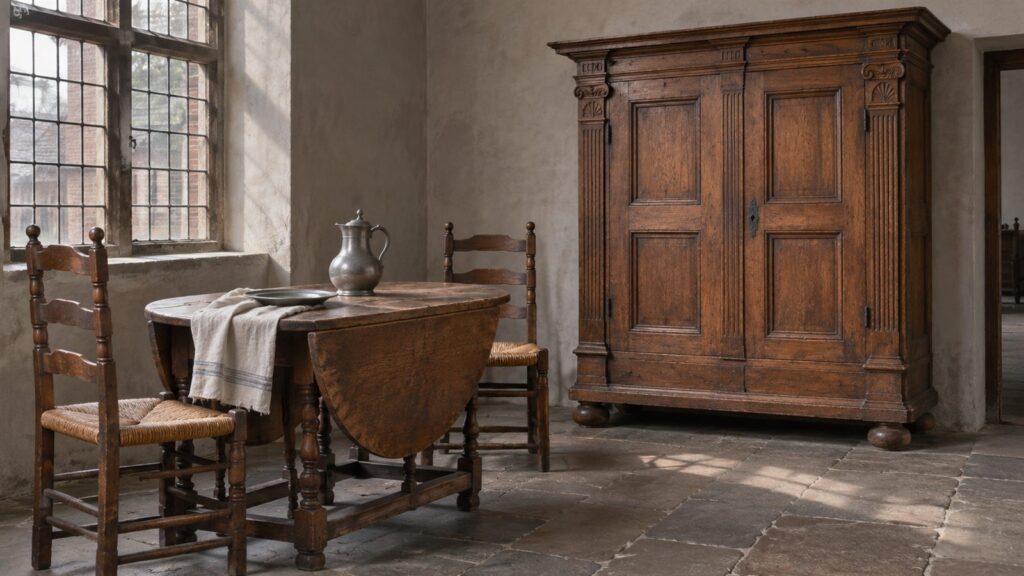
A piece of furniture from 1600 belongs to a different domestic world from one made in 1900. In the house of that time, rooms were not yet as strictly divided by function as they were later. Eating, working, receiving guests and sleeping could all take place in the same room. Chests held clothing, textiles, documents and valuables; benches and tables were moved when the space was needed for something else. A cupboard or chair was therefore not only a utilitarian object, but also a visible sign of property and rank.
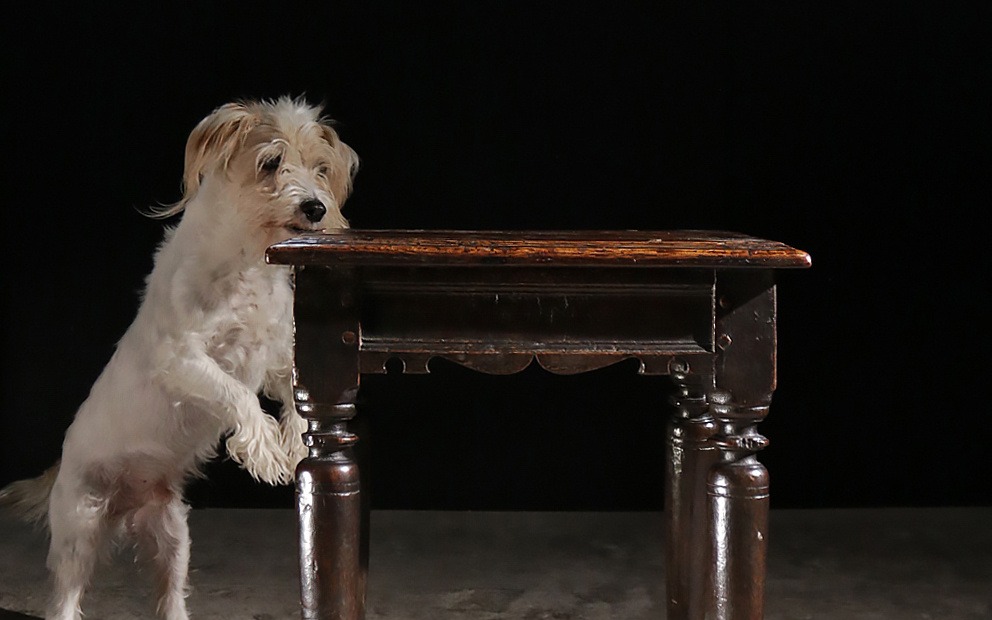 17th-century oak joint stool with turned legs17th century · for sale now
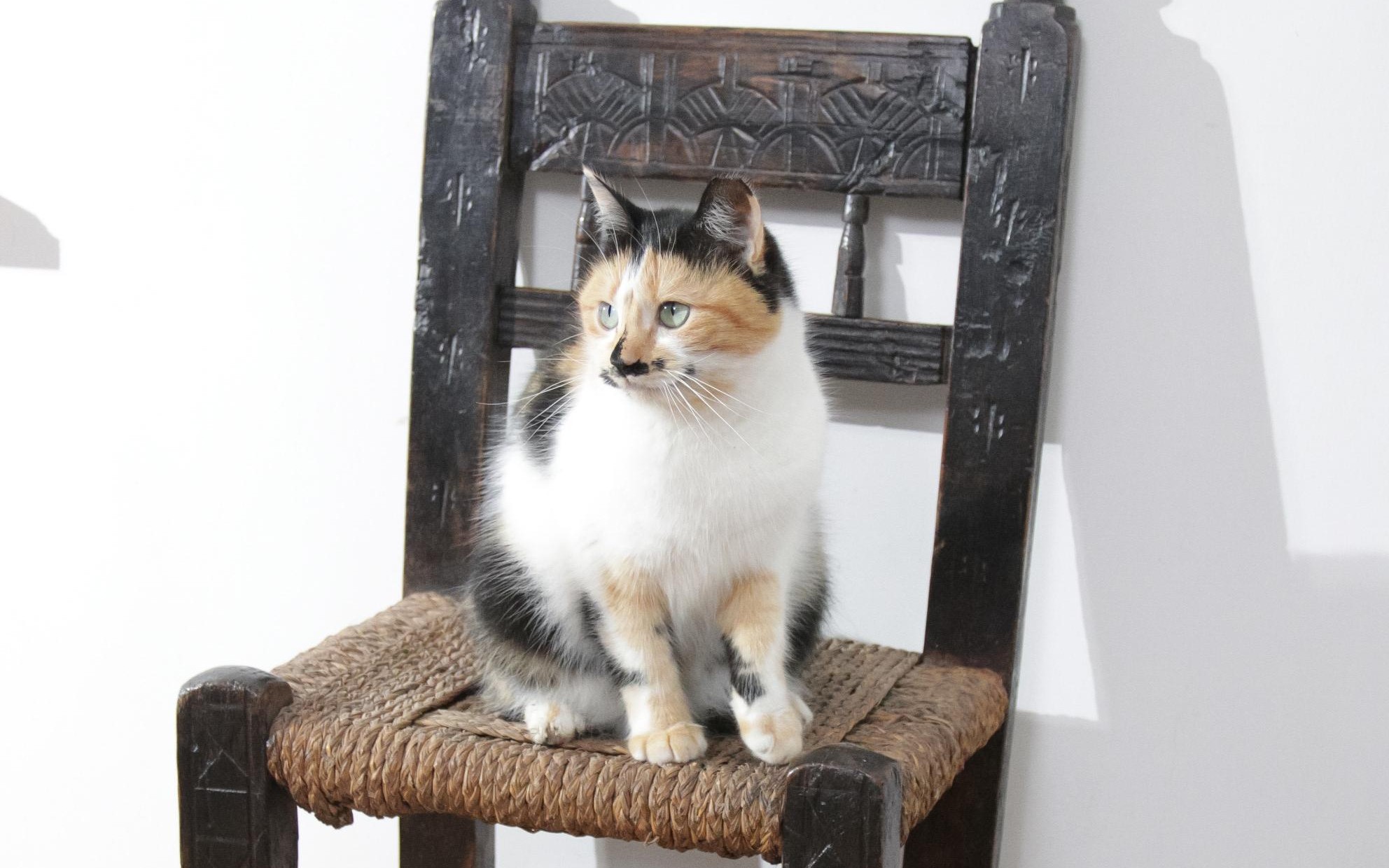 17th-century farmhouse chair with carved motifs17th century · for sale now
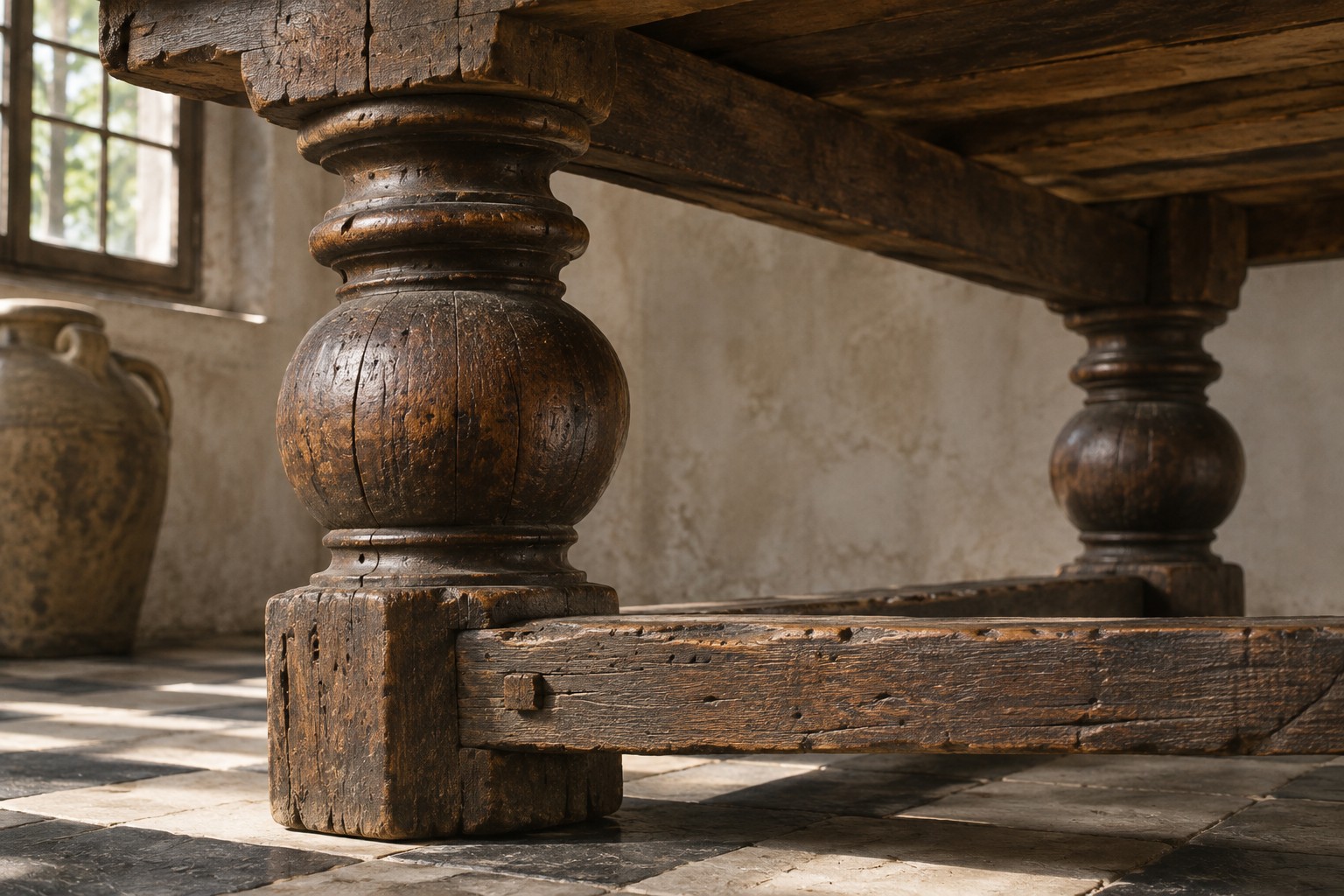
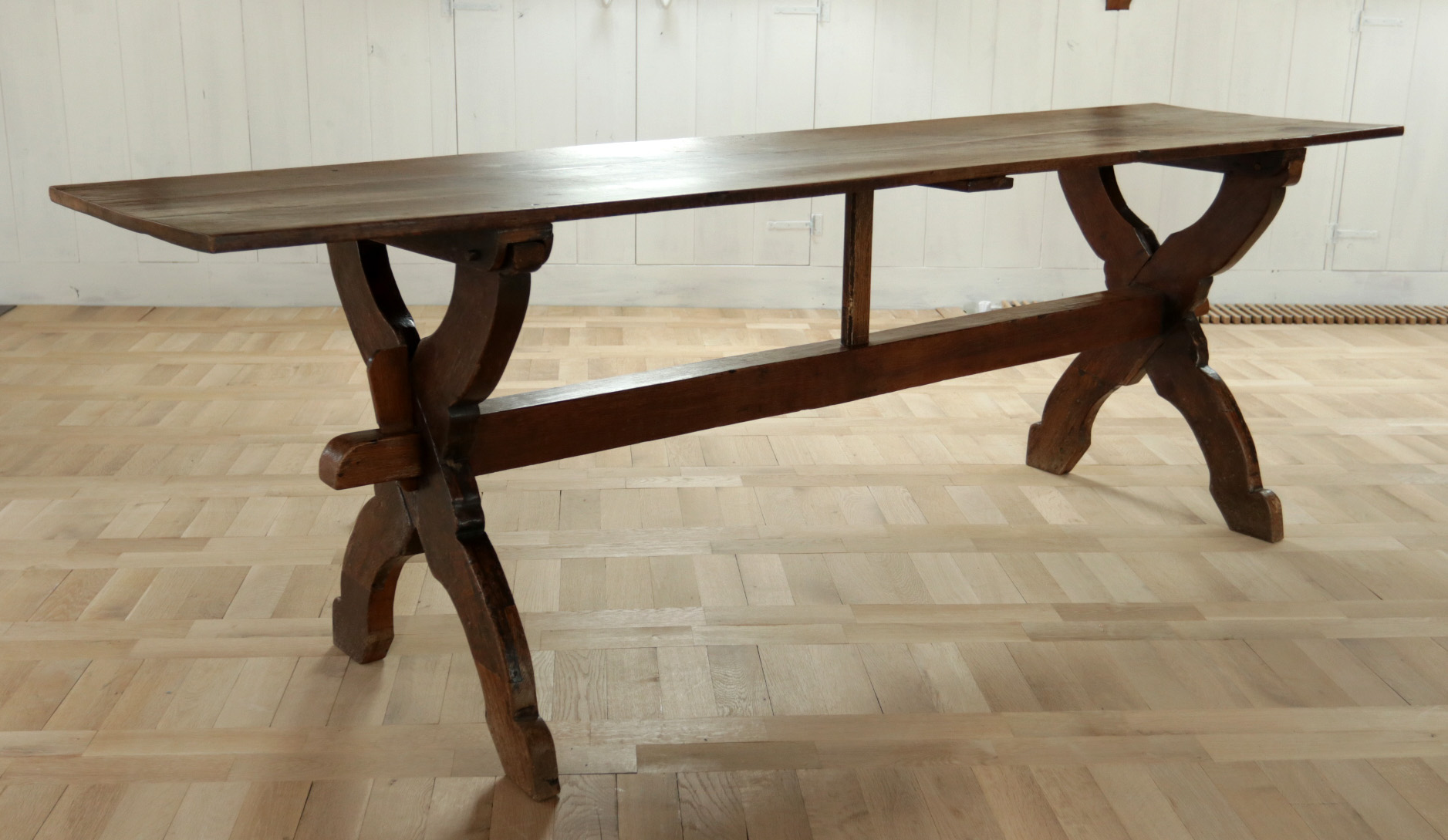 17th-century French oak monastery table / trestle table17th century · for sale now
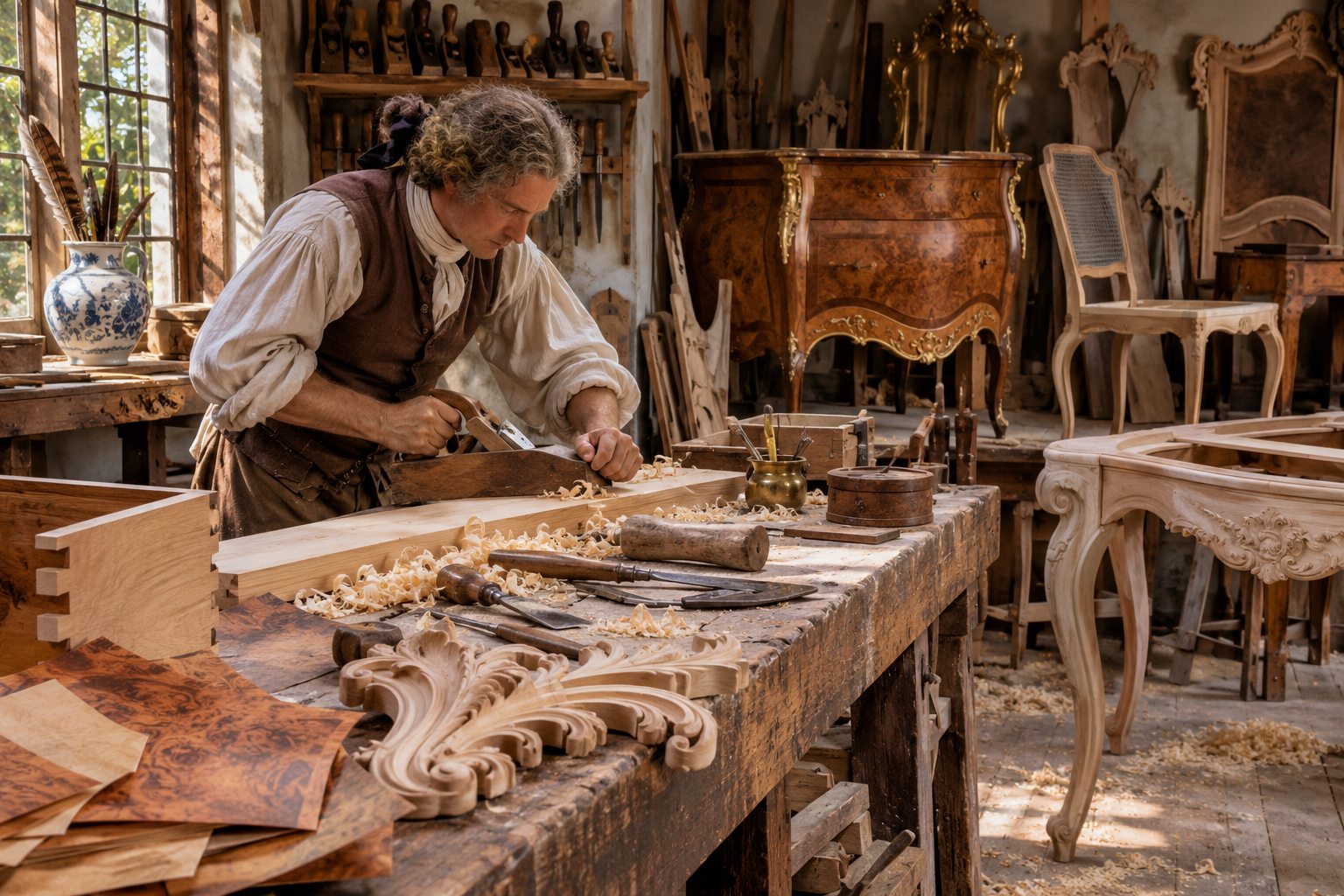
Most European furniture was made within local craft traditions. The trade was organised in workshops, guilds and an apprenticeship, although the rules differed from town to town and from country to country. A master cabinetmaker combined knowledge of wood, measurement, tools and construction with a feeling for local taste. As a result, development did not run at the same pace across Europe: what was already out of fashion at the French court could still be made elsewhere for decades.
In the Northern Netherlands, England and parts of Germany, oak was a familiar construction material. In Italy and southern Europe, walnut and other local woods, among others, were widely used. The appearance could vary from plain and almost undecorated to very richly carved. It is a misconception that all seventeenth-century furniture was dark when it was made: later layers of wax, discolouration, smoke, dirt and treatments have greatly altered many surfaces.
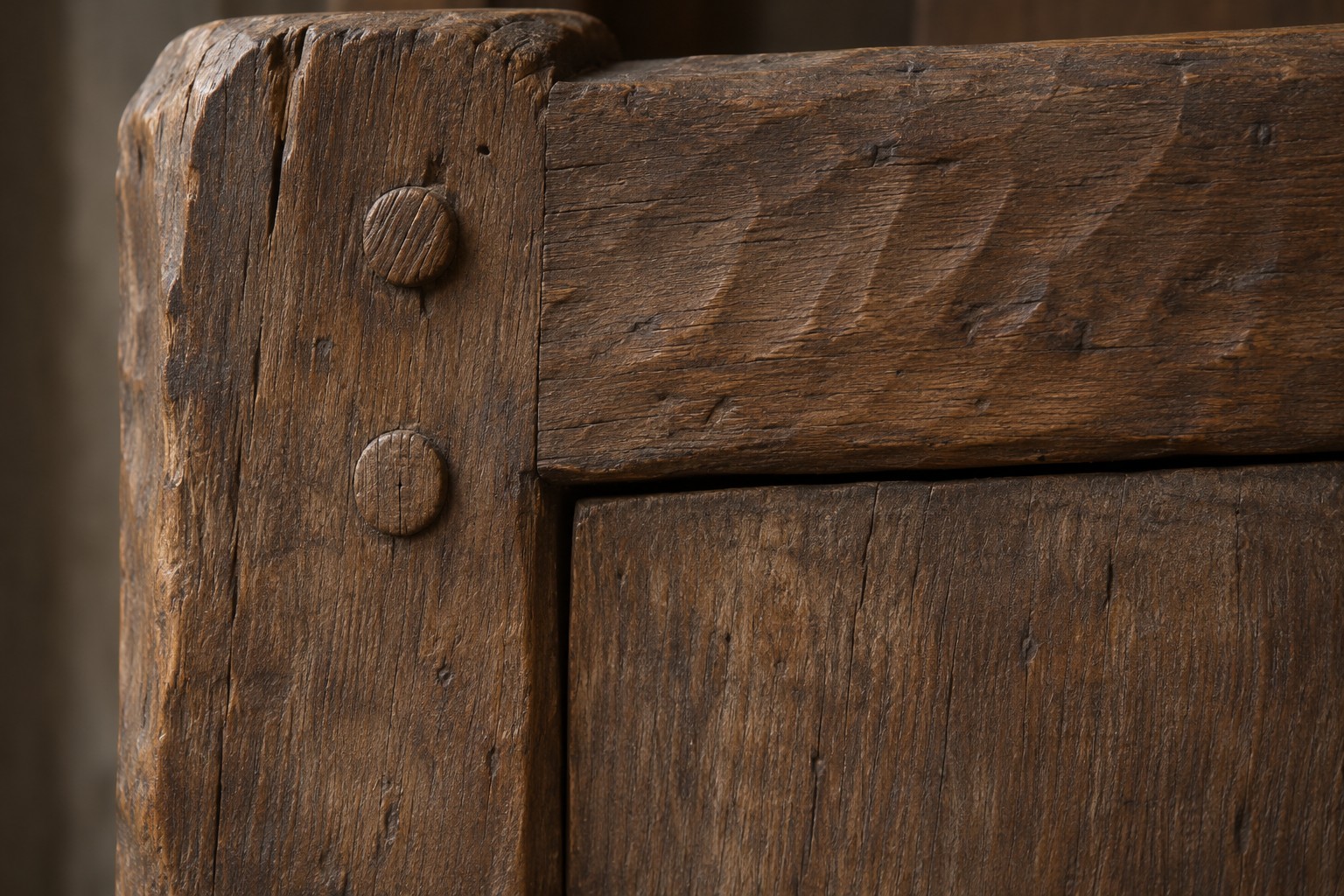
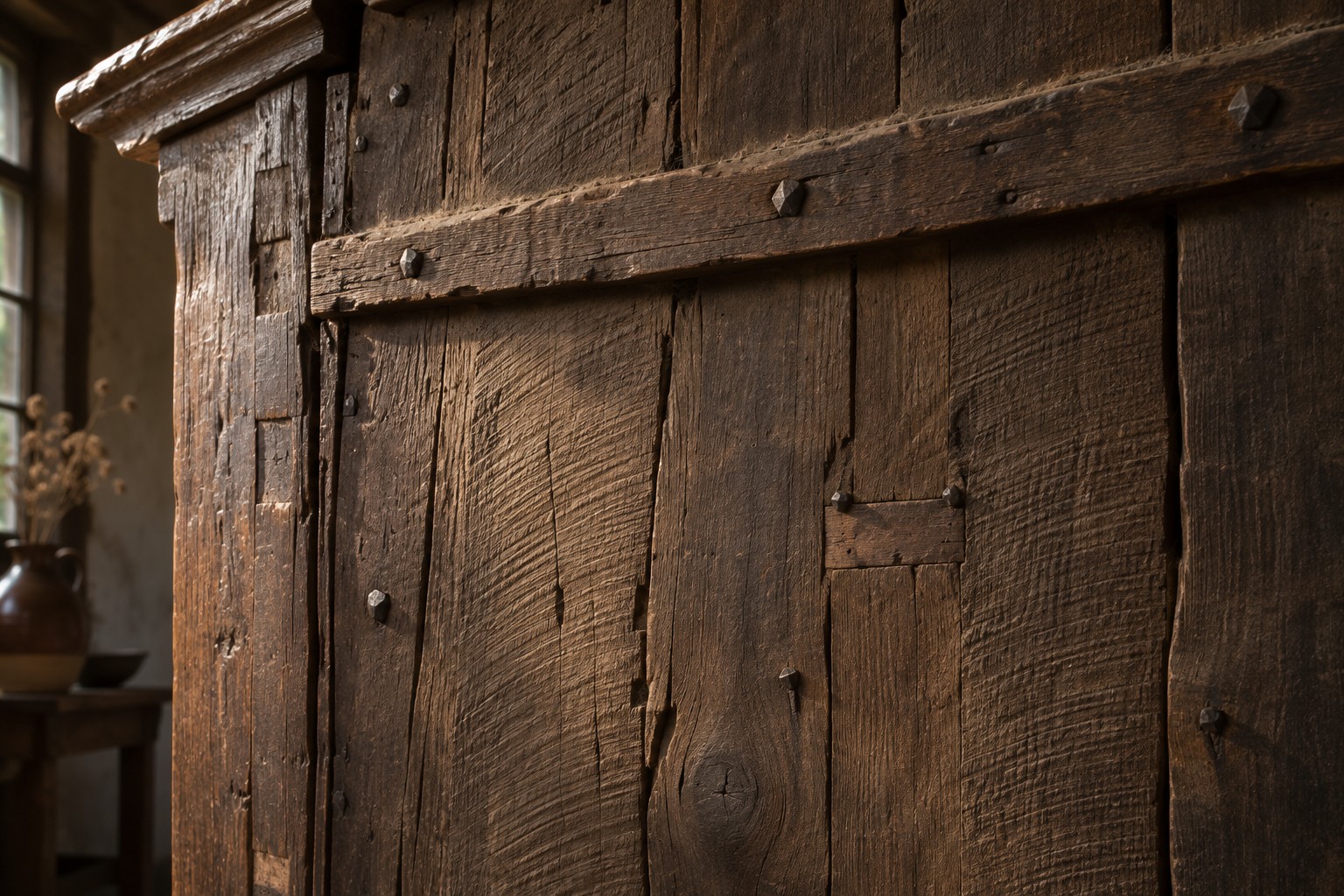
A cupboard was usually built up from stiles, rails and panels. The panels could move when the humidity changed, while the load-bearing frame kept its shape. Mortise-and-tenon joints, wooden pegs and dovetails are among the basic techniques; the way they have been executed tells you more about a piece than one random screw. With large cupboards, moreover, old repairs and replaced parts are the rule rather than the exception.
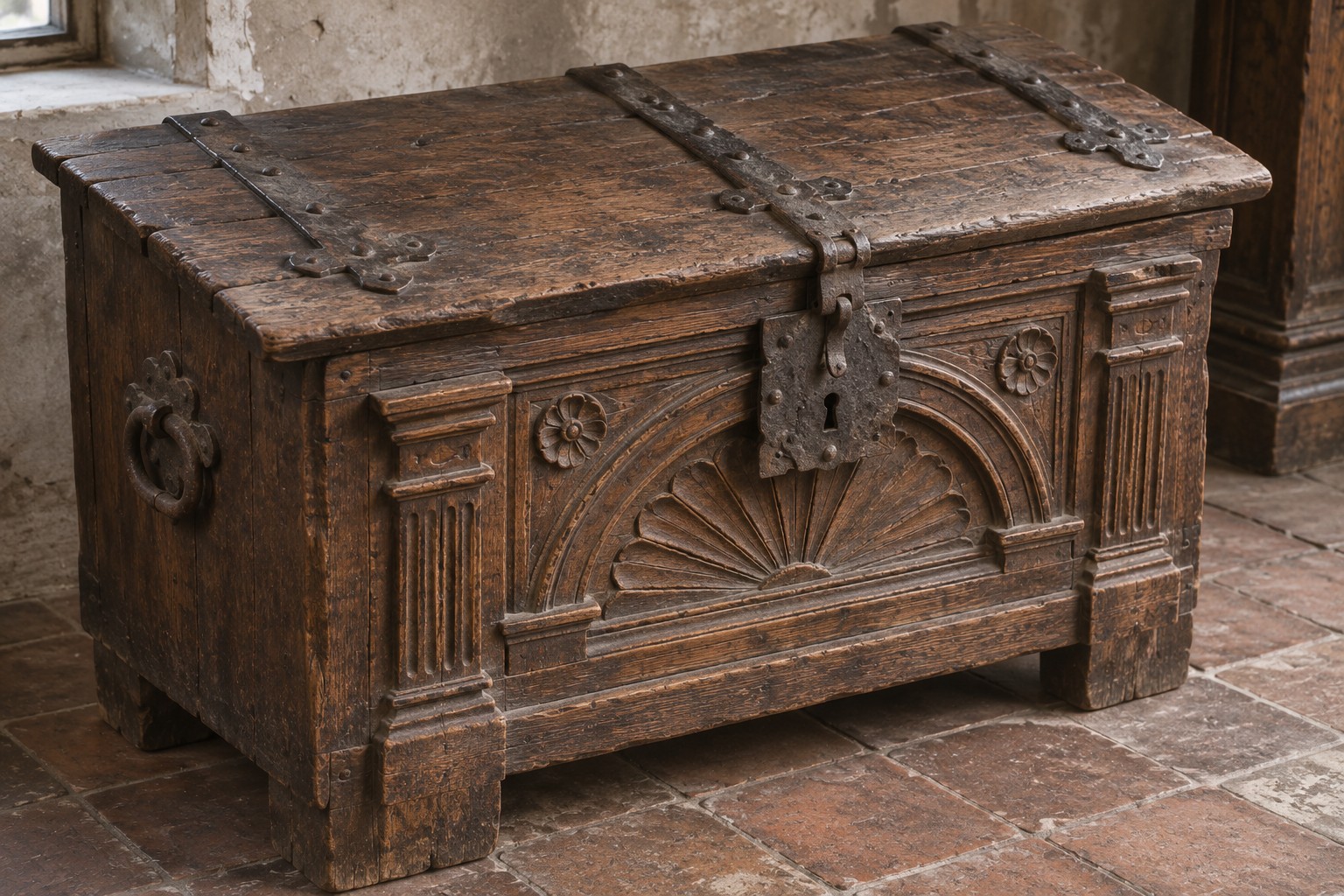
The Renaissance remained influential for a long time. Architectural forms such as pilasters, cornices, pediments and symmetrical divisions of the surface were translated into cupboards, buffets and writing tables. The decoration was derived from classical examples, prints and models from the workshop. In the course of the century, livelier Baroque forms were added. It was not a sudden break, but a gradual shift in proportions and ornament.
The best starting point for an early piece of furniture is therefore not the question ‘is this Baroque?’, but the question of what kind of piece it is exactly: a chest, cupboard, cabinet, table or seat. Then look at the construction, the back, the fittings, the choice of wood and the traces of long use. Only when those facts together give a convincing picture does a style name become a useful part of the dating.
What to look for: a construction of stiles, rails and panels, often in solid, sturdy oak. Architectural ornament and a clear horizontal or vertical division. And always the back, the original bottom boards and the old traces of use and repair.
The Baroque and the European culture of display (circa 1650–1715)
In the second half of the seventeenth century, furniture in princely and wealthy middle-class houses became an ever more emphatic means of showing status. The Baroque worked with contrast, sculptural movement, strong silhouettes and a preference for unusual materials. Monumental cupboards, tables with heavy bases and richly upholstered chairs could form part of a carefully staged interior. The word ‘Baroque’ is useful as the name of a style, but it covers very different versions in Italy, France, Germany, England and the Dutch Republic.
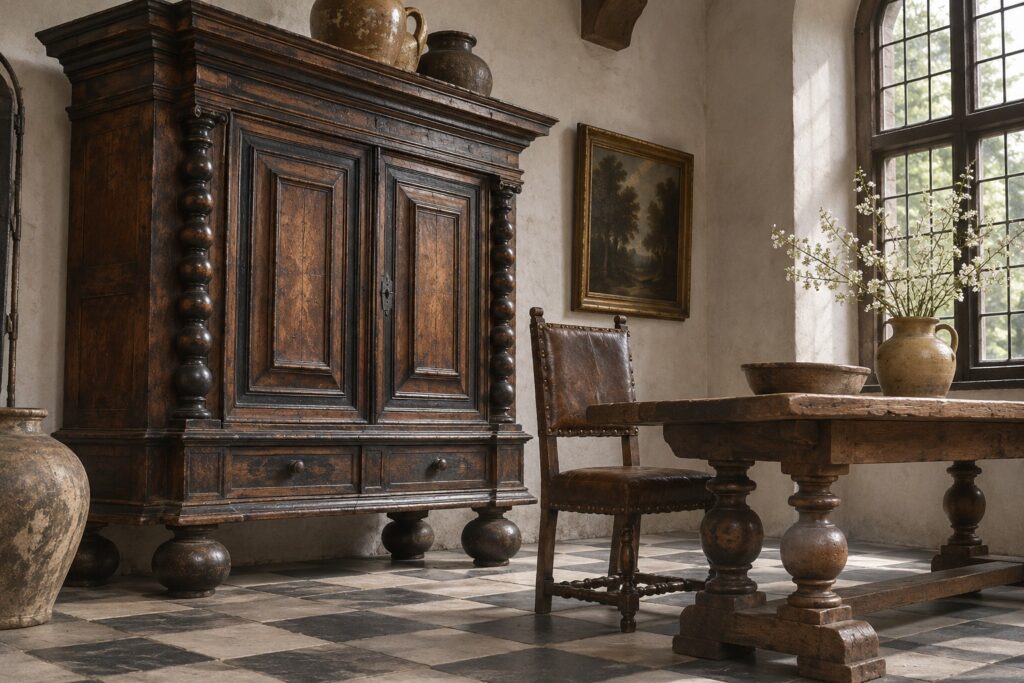
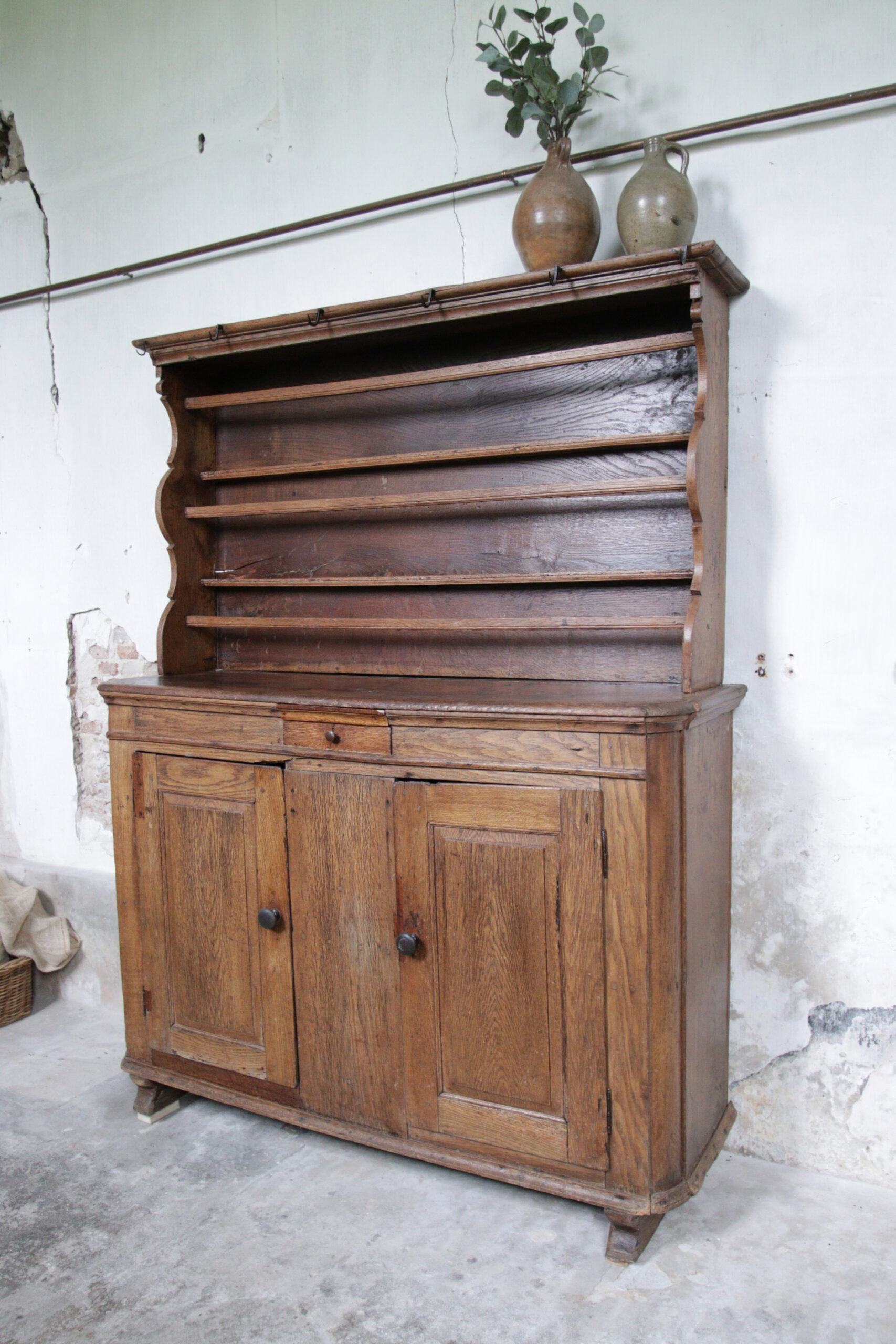 Antique Dutch oak pewter cupboardc. 1700 · for sale now
 Unique 17th Century Cabinet with Portrait and Scallop17th century · for sale now
 Rare Small 17th Century Dutch (Nursery) Cushion Cabinet, Oak, White Painted17th century · for sale now
Under Louis XIV, King of France from 1643 to 1715, court art became an instrument of royal display. The workshops around the Crown made furniture that suited the palace: monumental, costly and often with gilt bronze, exotic veneer or inlay. Furniture did not stand alone; wall panelling, mirrors, tapestries and light fittings formed a single whole. Alongside this, English and Dutch trade had traditions of its own, so that the French court was never the only source of innovation.
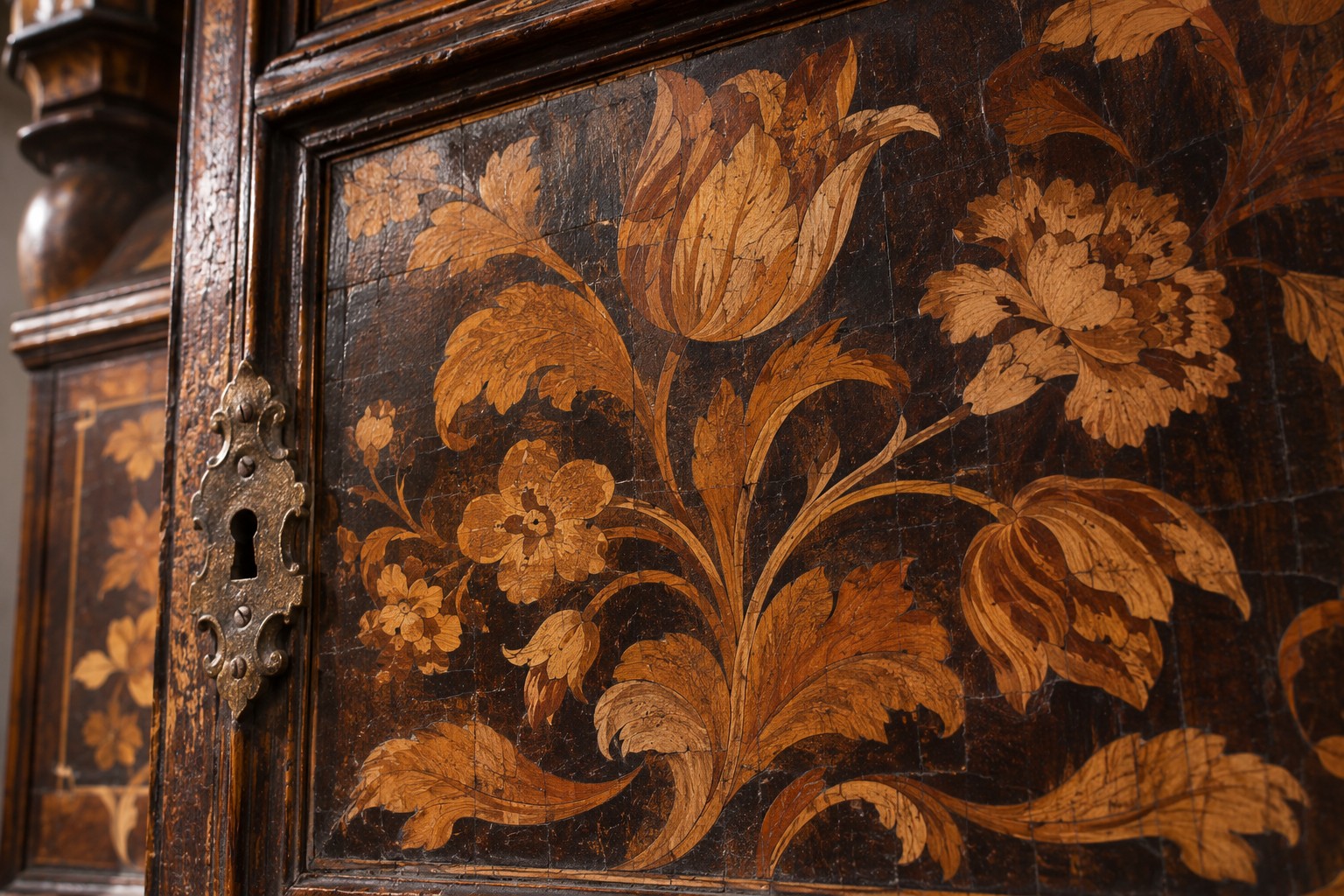
The cabinet, sometimes on a separate stand, became an important type of furniture. Behind two doors there could be smaller drawers, compartments and a niche in the centre. Some cabinets served to keep collections, documents or rare materials. In the Dutch Republic, interest in exotic woods, the black effect of ebony and fine inlay grew along with international trade. Amsterdam workshops built up a reputation of their own; the Rijksmuseum describes Herman Doomer and Jan van Mekeren, among others.
Jan van Mekeren is known for very refined floral marquetry: bouquets and flower patterns composed of different kinds of wood. Behind it lies a load-bearing wooden construction. Decoration and construction must each be examined separately; the same motifs do not make two pieces of furniture the work of the same maker. The Rijksmuseum studies such pieces precisely for their construction technique, materials and conservation.
For French luxury inlay, the name of André-Charles Boulle (1642–1732) has become famous. In what is known as Boulle work, brass and tortoiseshell, among other materials, are combined in contrasting motifs. The technique did not exist with Boulle alone; the term is also used for related work by other makers and from later times. A cabinet with ornament in the manner of Boulle is therefore not automatically seventeenth-century, and certainly not automatically by his hand.
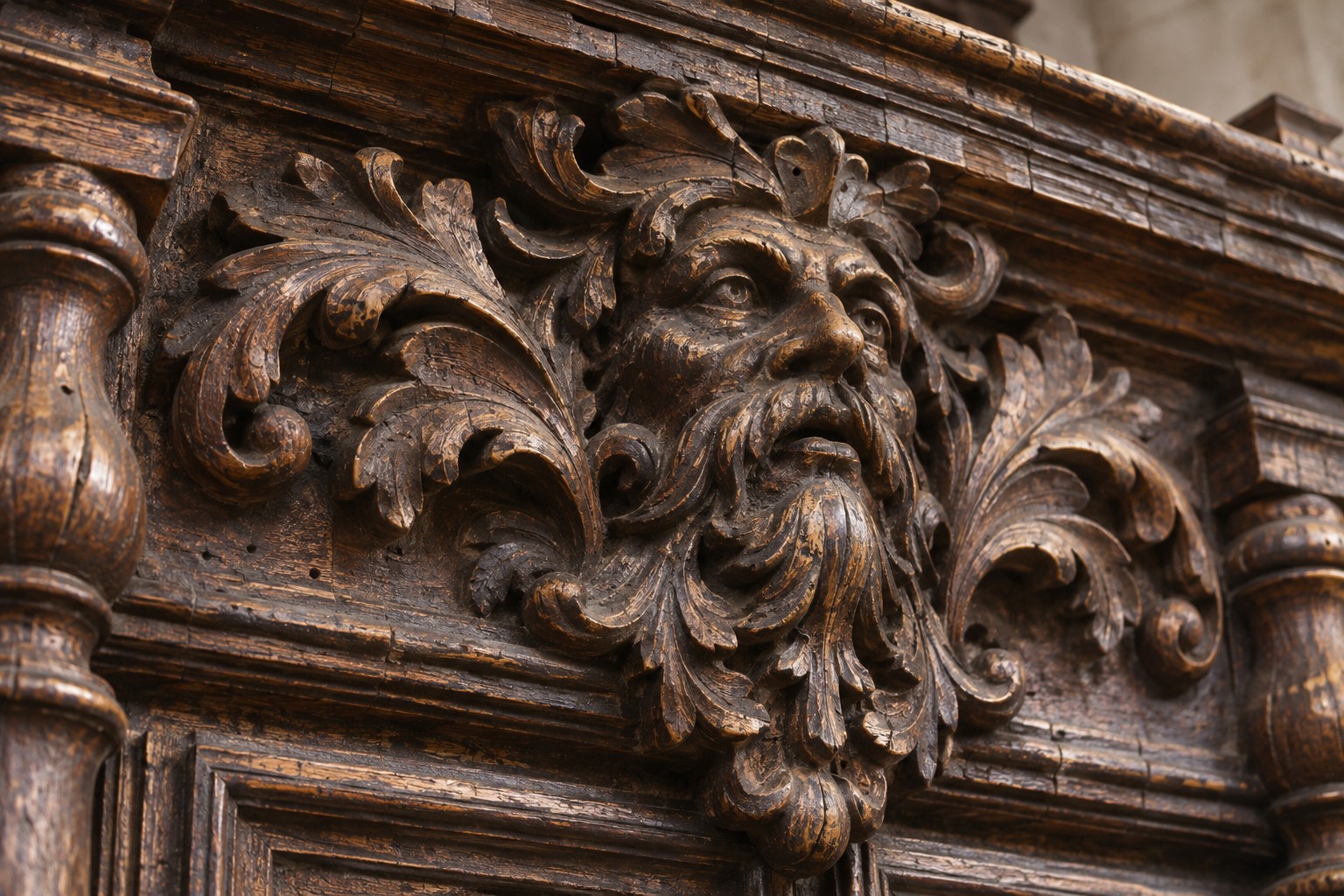
At the same time, the Baroque had simpler middle-class variants. A turned table leg, a heavily moulded cupboard cornice or a carved panel could show a local version of a wider language of form. Anyone who calls a piece of furniture ‘Baroque’ does well to link the style word to a period and a region: for example ‘Northern Netherlandish cupboard, second half of the seventeenth century, with Baroque ornament’ instead of a French attribution without grounds.
Many nineteenth-century repetitions of the Baroque can be found on the international market. They can be excellently made and be genuine antiques in their own right, but they do not date from the time of Louis XIV. Construction, fittings, the ageing of the wood, saw marks and documentation must therefore be considered together. A convincingly old appearance is never in itself proof of an early date.
What to look for: powerful mouldings, turned parts, carving that is like sculpture, and heavy silhouettes. On luxury cabinets, veneer, contrasting inlay and sometimes rich metal mounts. And bear in mind that decoration in the manner of Boulle also occurs in later revival styles.
From stateliness to comfort (circa 1690–1740)
Around 1700, European ways of living changed. In well-to-do circles, interiors became smaller, more comfortable and better suited to conversation. Seat furniture took on a greater role, while tables and cupboards adapted to new uses. New types of furniture also appeared for writing, reading, drinking tea and displaying porcelain. It is tempting to call this change simply ‘from Baroque to Rococo’, but in reality different developments ran through one another from region to region.
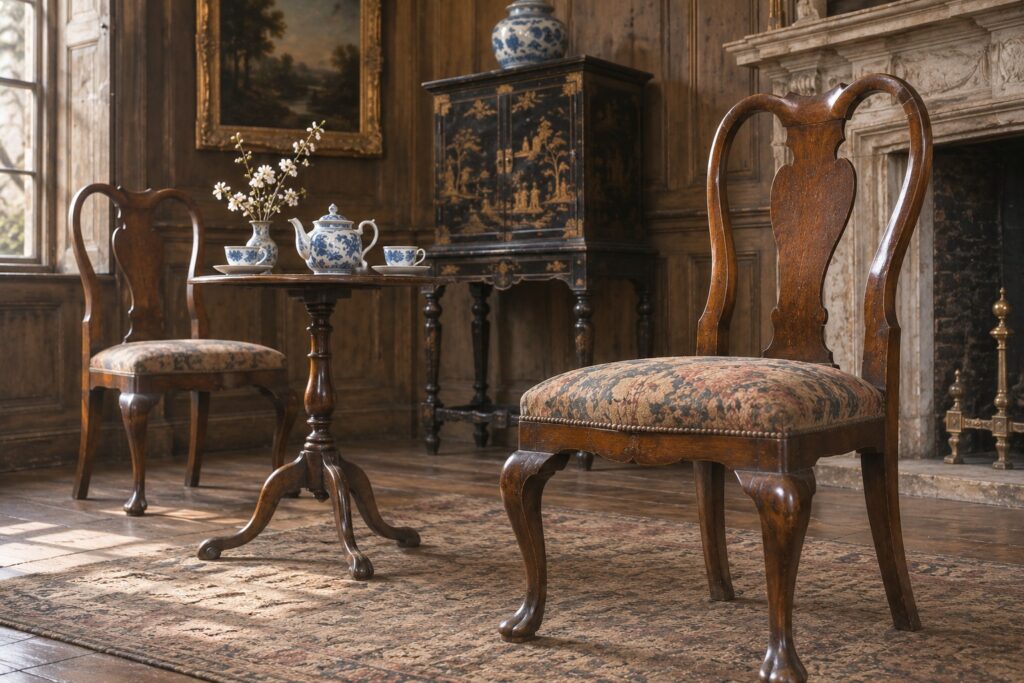
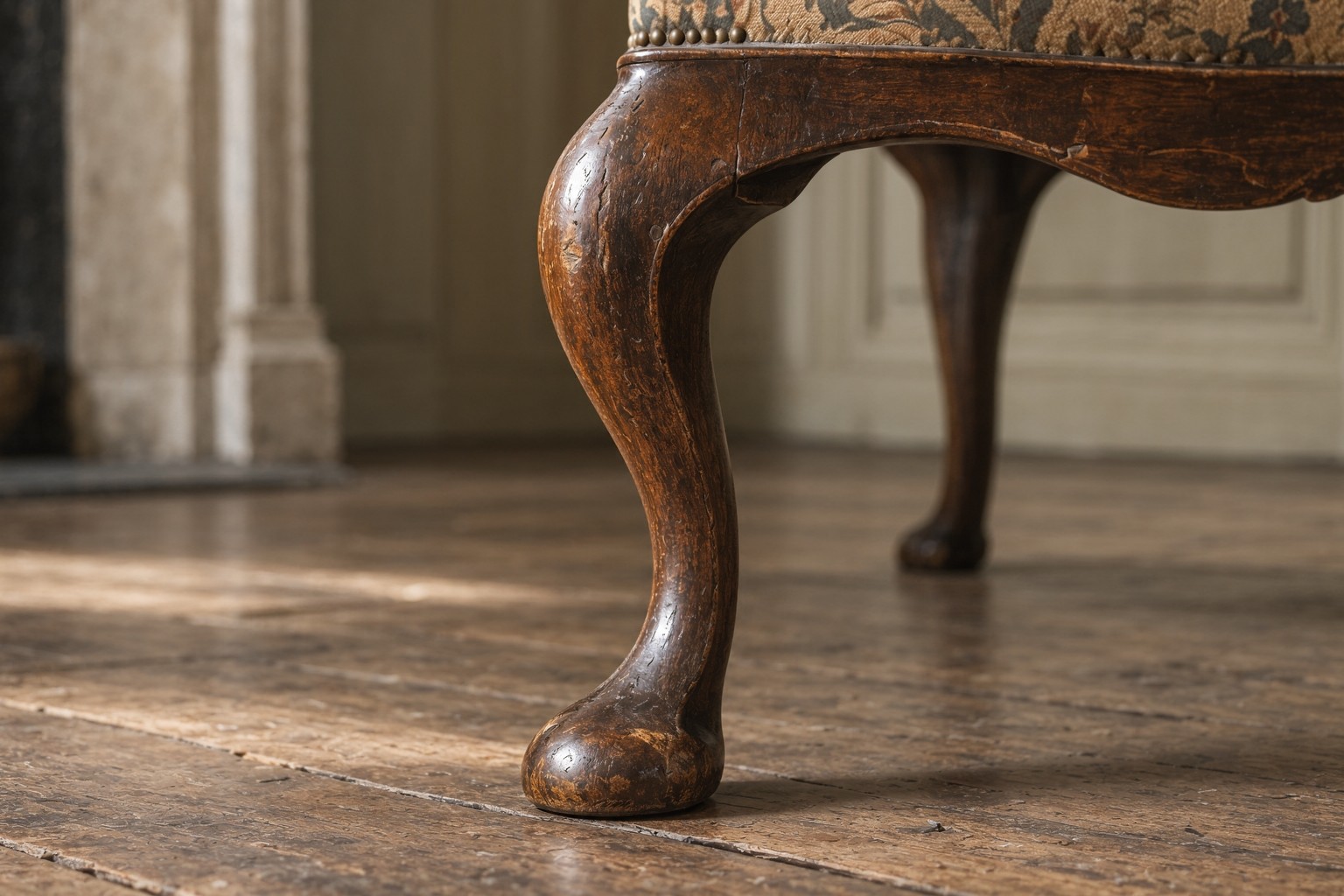
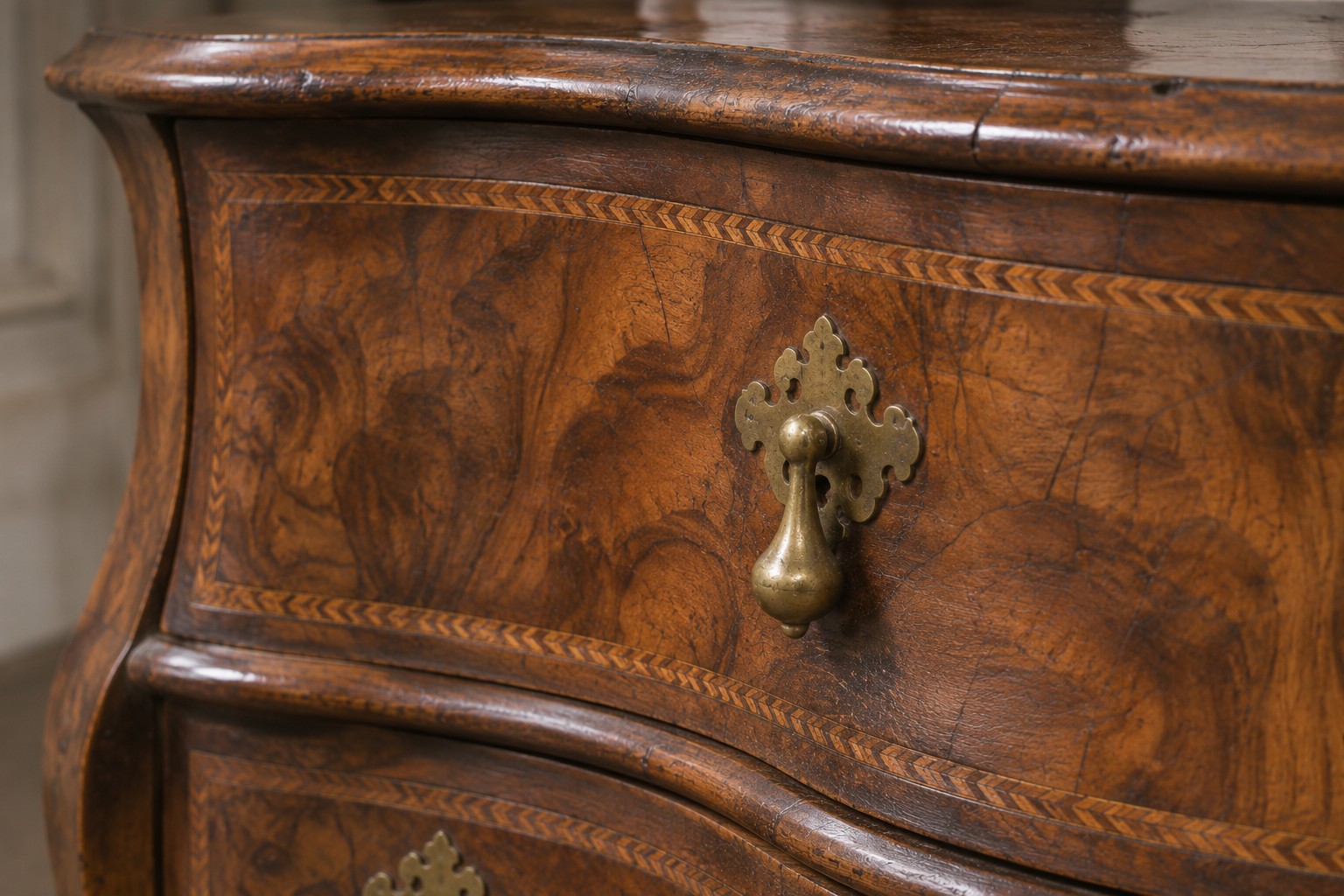
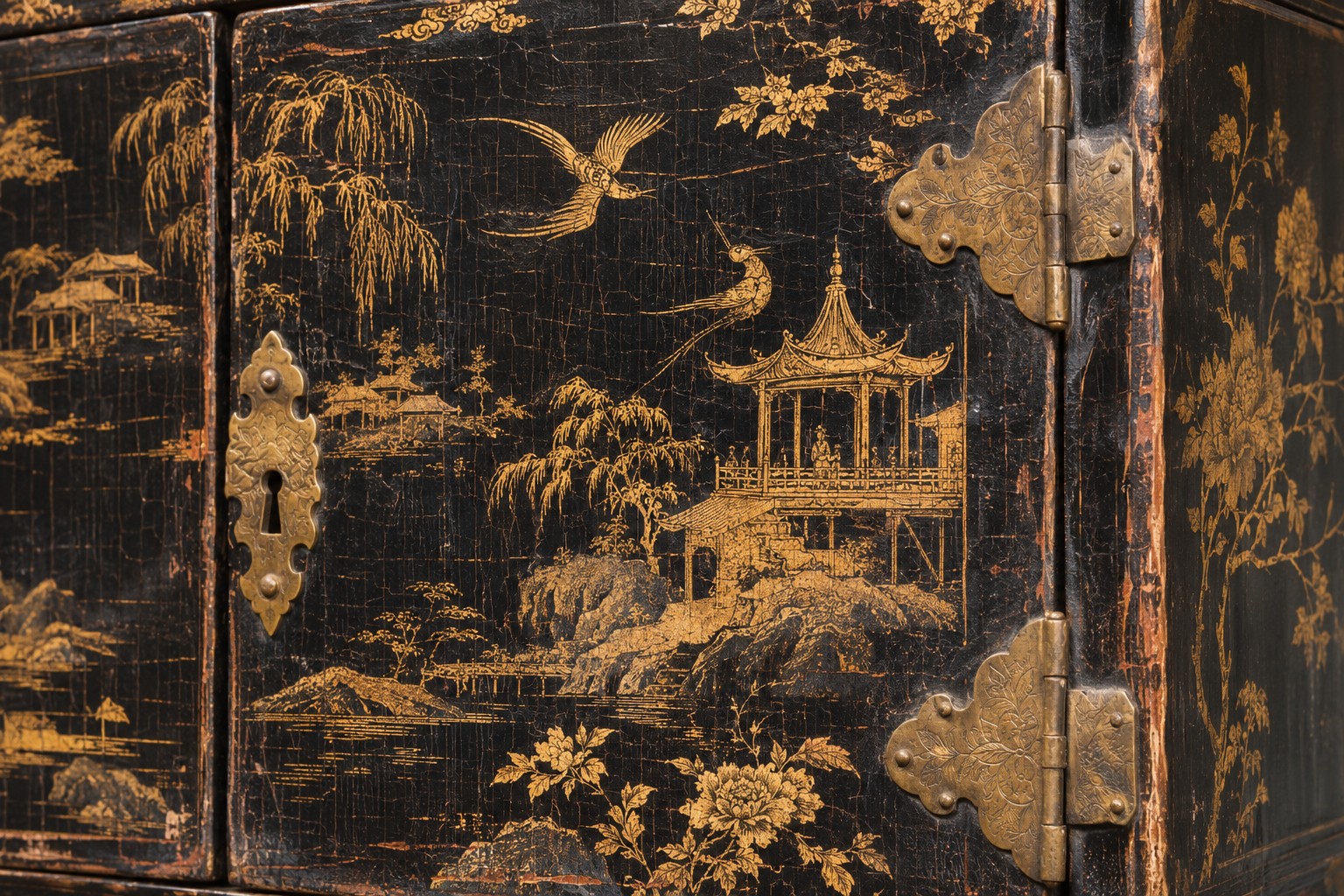
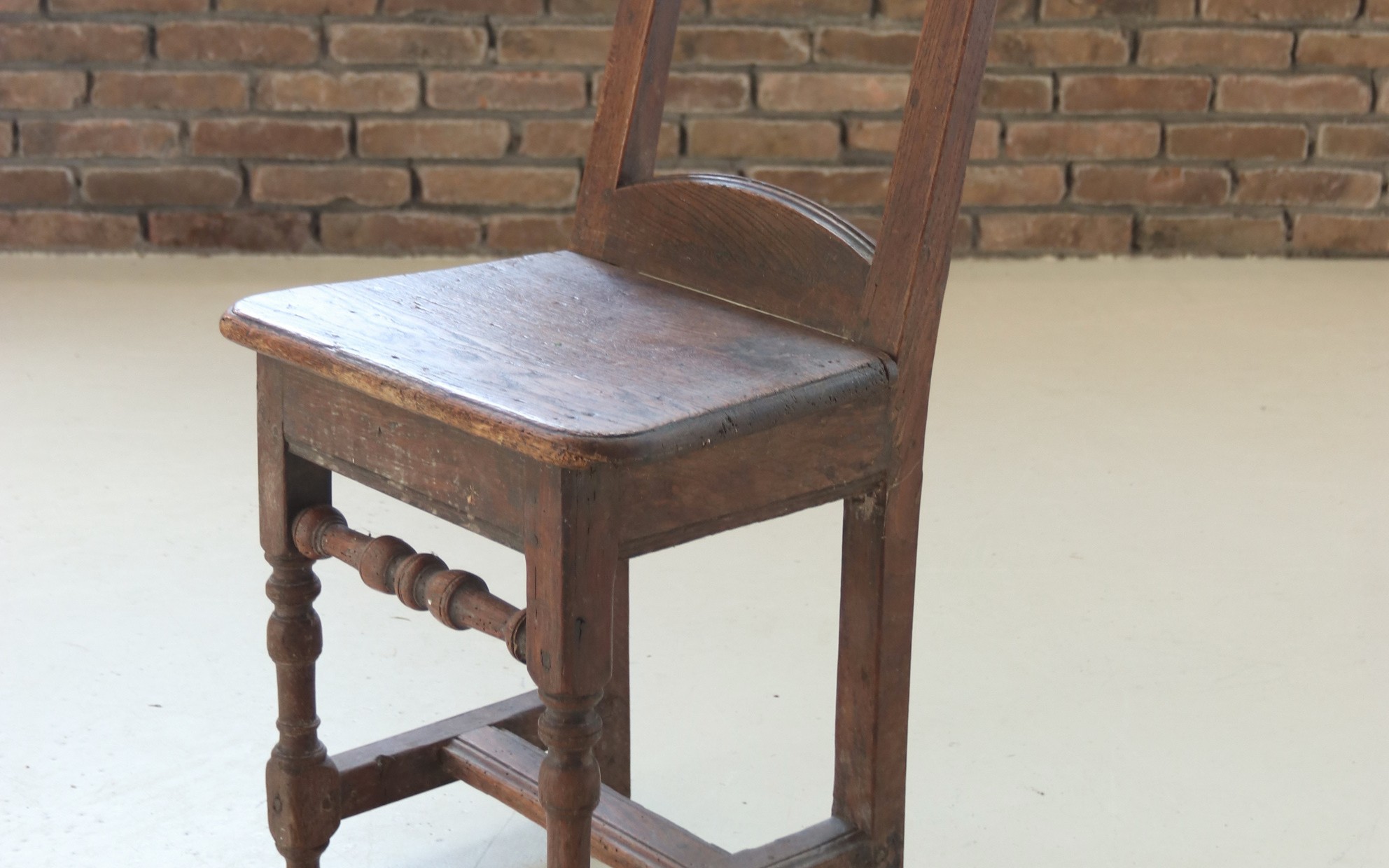 French provincial oak chair from Lorrainefirst half of the 18th century · for sale now
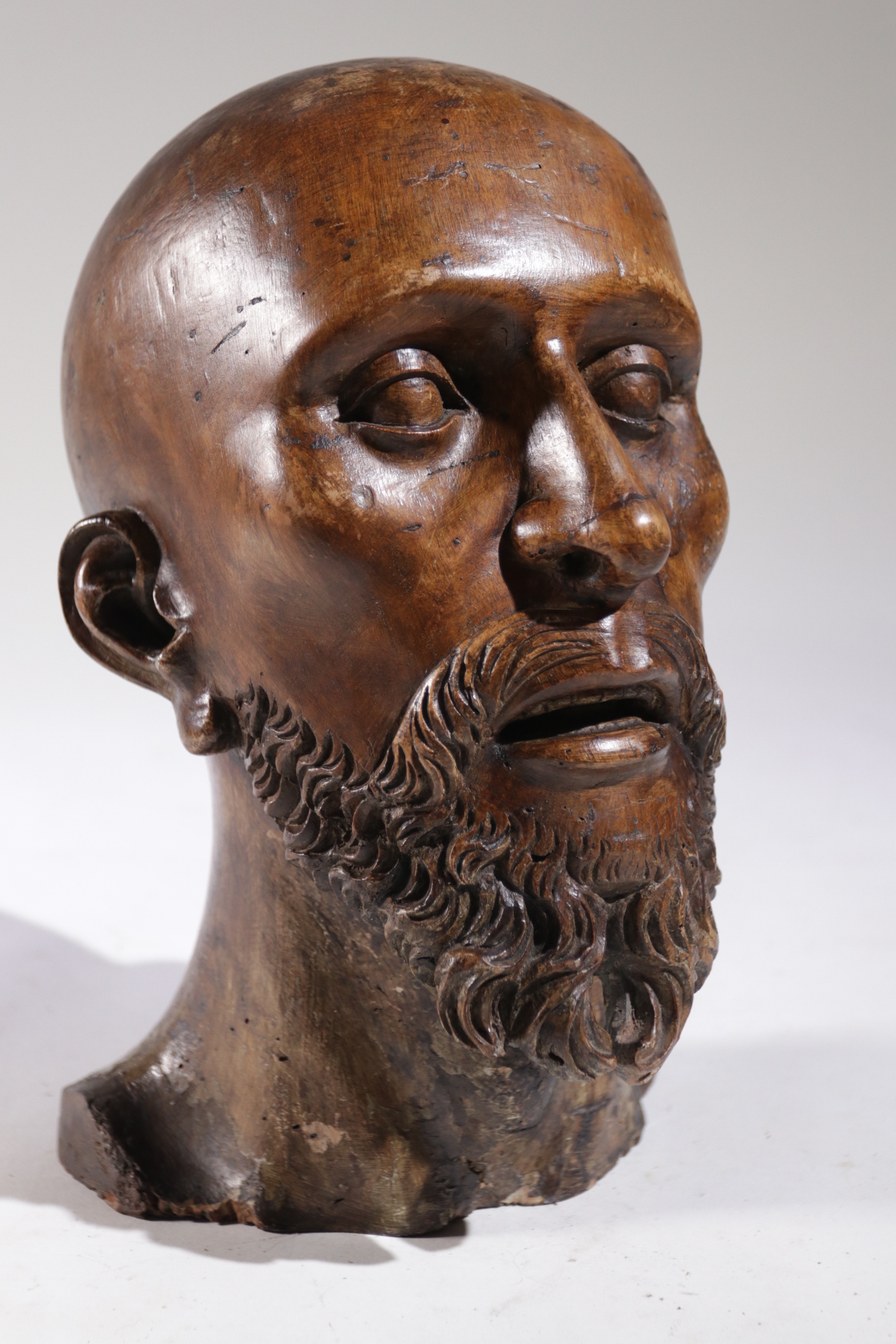 Life-size carved wooden head of a manc. 1700 · for sale now
In France, the term Régence refers in the strict, political sense to the regency of 1715 to 1723. As the name of a furniture style it has wider and less fixed boundaries. In this transitional period much furniture still kept something monumental, but the outline became livelier and the decoration lighter. The curved leg received more and more attention. In this furniture both the work of the preceding generation and the later Rococo can be recognised.
England had a development of its own under William and Mary (1689–1702), Queen Anne (1702–1714) and in the first Georgian decades. Walnut veneer, curved chair legs and forms with a calm elegance are often associated with the Queen Anne taste. A chair with a broad central splat in the back, cabriole legs and a comfortable seat belongs to that world. Yet those features were not exclusively English, and they remained in use for a long time, including in later copies.
Imports from Asia changed taste. Lacquerwork, porcelain and prints aroused interest in East Asian forms and decoration. It is important not to present this as a European invention: European cabinetmakers adopted motifs and materials from existing Asian artistic traditions, often by way of trade and sometimes by imitation. This gave rise to furniture in which a local construction and an international ornament met.
The growing demand for particular woods and luxury finishes made visible the distinction between a load-bearing carcase and a decorative outer skin. With veneer, a rare figure in the wood could be spread over a larger surface than with solid timber. A decorative surface therefore does not mean that the piece consists entirely of that costly wood. Veneer was in fact often a sign of great craftsmanship.
This transitional period is difficult to date, because many features continue deep into the eighteenth century. A curved leg says little when the rest of the piece has not been examined. The proportions, the finish of the back, the choice of wood, the shape of the drawers and the original upholstery together give a far more credible picture than one recognisable ornament.
What to look for: the transition from heavy architectural forms to lively lines and greater comfort. Walnut veneer and cabriole legs occur in different countries and periods. So compare the whole silhouette, not only the shape of a leg or back.
Rococo: movement and refinement (circa 1720–1770)
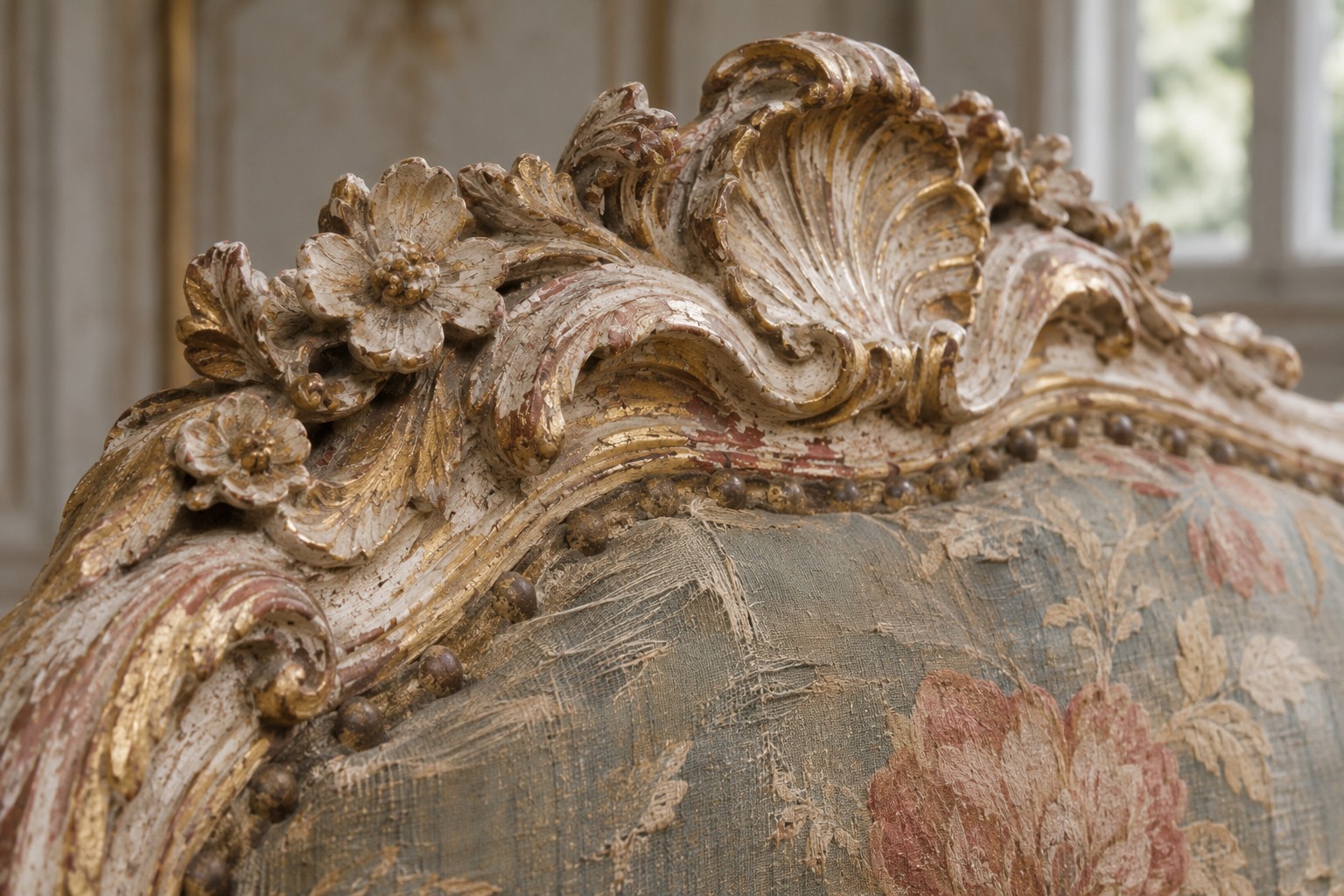
The Rococo developed in France in the 1720s and 1730s and then spread across Europe through court circles, prints, craftsmen and trade. Ornament became livelier, often asymmetrical, and was derived from rocailles, shells, leaves and capricious forms from nature. Instead of the emphatic monumentality of the Baroque, much Rococo furniture puts the lively play between line, surface and ornament first. It was a language of form that lent itself particularly well to seat furniture, tables, commodes and small cabinets.
 18th Century French Provincial Confiturier Cabinet18th century · for sale now
 18th Century or Earlier German Primitive Cabinet on Sledge Feet with Hand-Forged Hardware18th century · for sale now
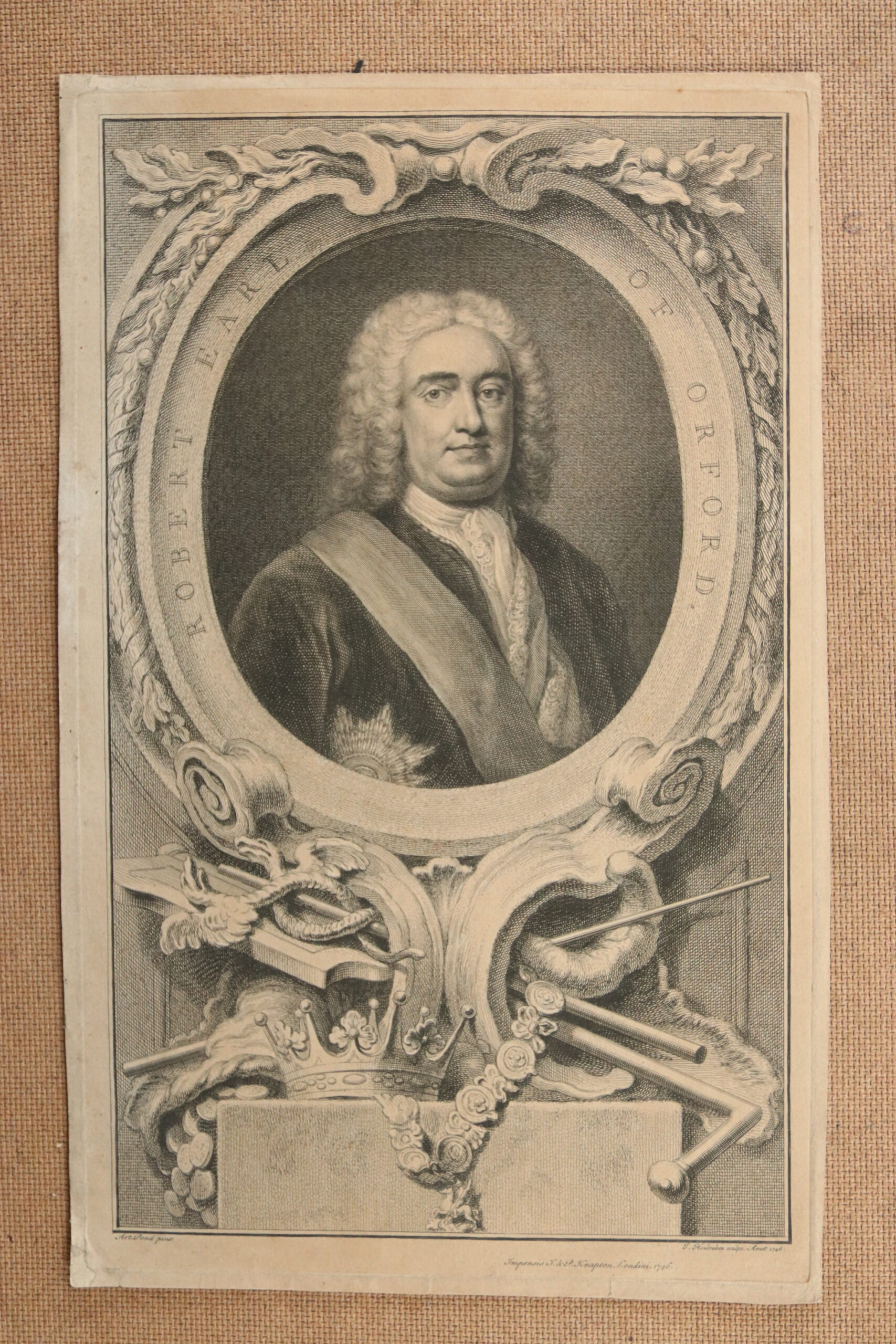 Jacobus Houbrakensecond half of the 18th century · for sale now
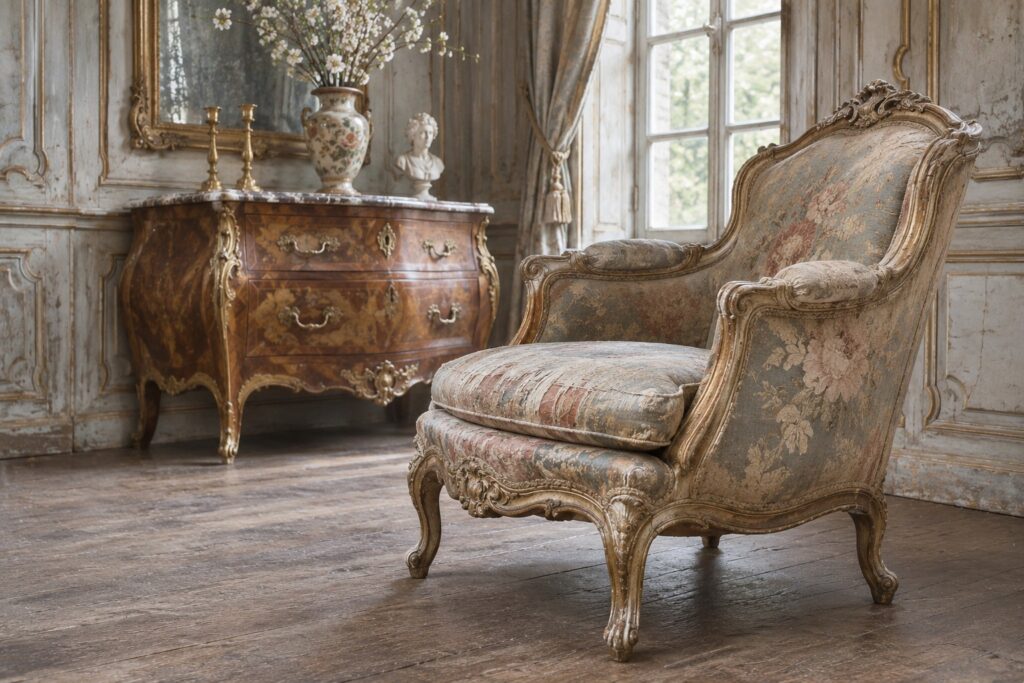
A French fauteuil à la reine has a fairly flat back; in a fauteuil en cabriolet the back encloses the sitter more. Bergères, with closed sides and comfortable upholstery, also gained a fixed place in the salons of the elite. In such an interior, the furniture was part of the social ritual of receiving guests, talking, playing cards and making music. Comfort was no longer subordinate to display.
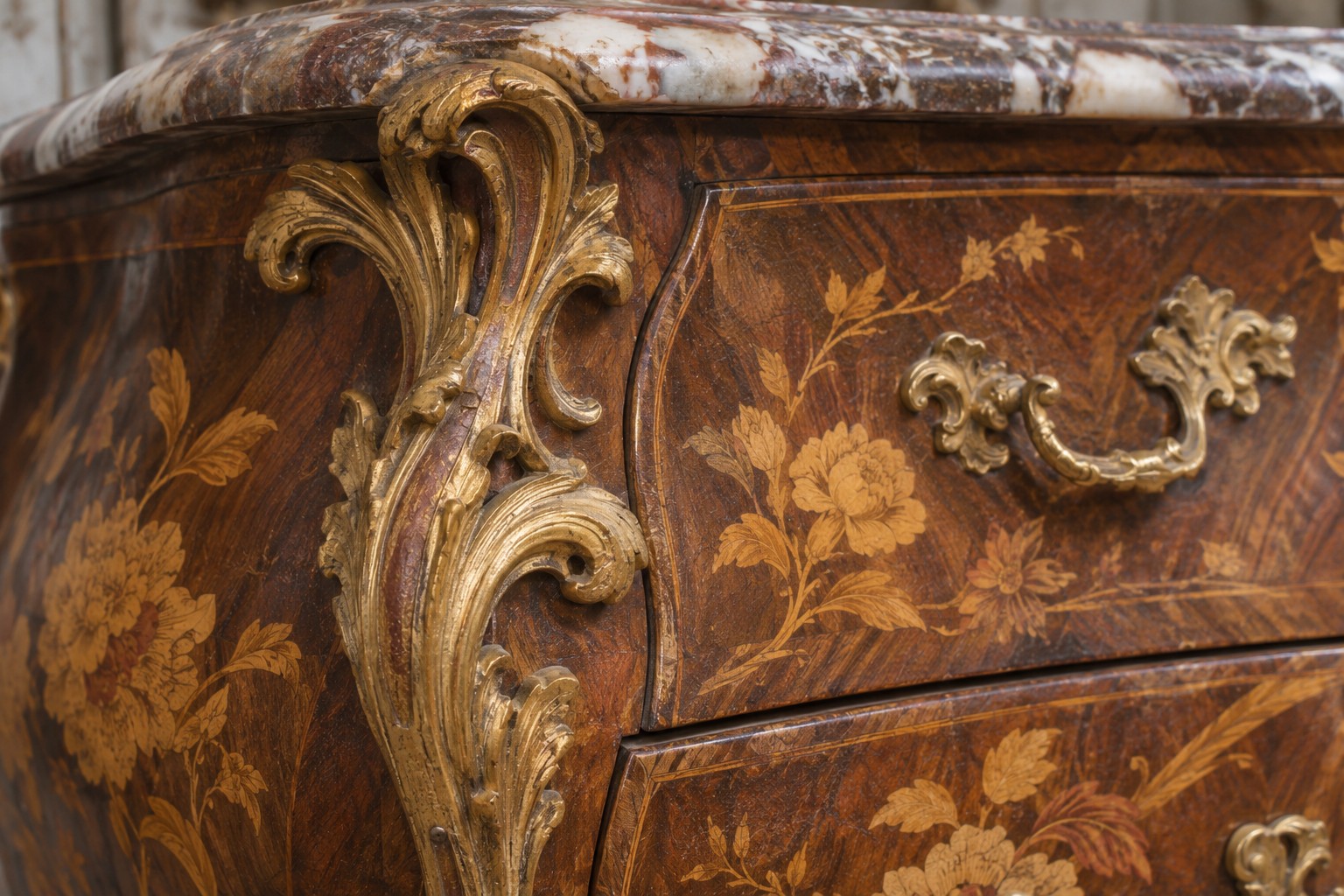
The French commode acquired refined curved fronts, carefully chosen veneer and often richly shaped mounts of gilt bronze. The maker of veneered case furniture, the ébéniste, worked in a network of other specialised craftsmen, among them bronze founders, chasers, marble suppliers and upholsterers. A piece of furniture of high quality was often the work of several workshops, and not of one designer who made everything with his own hands.
Among the best-known Parisian ébénistes of the eighteenth century are Bernard II van Risenburgh, often referred to by his stamp BVRB, and Jean-François Oeben. Their work shows the enormous technical refinement of the time. The Getty Museum has published an in-depth study of French Rococo case furniture from the years around 1735 to 1760. Such museum pieces are a good frame of reference, but a similar form alone is not enough to attribute a piece of furniture to a particular master.
In England a Rococo of its own emerged, in which French ornament mingled with English preferences and with designs after Asian examples. In 1754 Thomas Chippendale published the first edition of The Gentleman and Cabinet-Maker’s Director, an influential pattern book with designs in a variety of tastes. The word ‘Chippendale’ can therefore refer both to the maker’s workshop and to furniture in a wider stylistic tradition. Without convincing evidence, ‘in the style of Chippendale’ is more accurate than ‘by Chippendale’.
In the Netherlands and the German lands, too, Rococo ornament was applied, sometimes exuberantly, sometimes with restraint. There was no single European standard model. A piece of furniture from the region could combine an older construction with new decoration; it could even still be made decades after the arrival of the style. It is exactly these mixed forms that make the history of furniture more fascinating than a row of neatly fenced-off boxes.
When recognising Rococo, you should not look only at gilding or carving. A fairly plain table can be entirely Rococo through its outline, the way the legs spring from the frame and its proportions. Conversely, a richly gilded piece from the nineteenth century can imitate the Rococo without dating from the eighteenth century. The silhouette is the beginning of the examination, not the end.
What to look for: lively and often asymmetrical ornament, shell forms and rocailles. Curved legs, refined mouldings and more variety in seating comfort. Compare with museum pieces, but never attribute a maker on style alone.
Neoclassicism: the return of the straight line (circa 1755–1800)
Halfway through the eighteenth century, interest grew in forms from Greek and Roman antiquity. Excavations, travel, architecture and published designs strengthened the new classical taste. In France, furniture gradually changed from the lively outline of the Rococo to geometric forms, straight legs and more strictly ordered ornament. This development begins before the reign of Louis XVI (1774–1792), although the style is often referred to by his name.
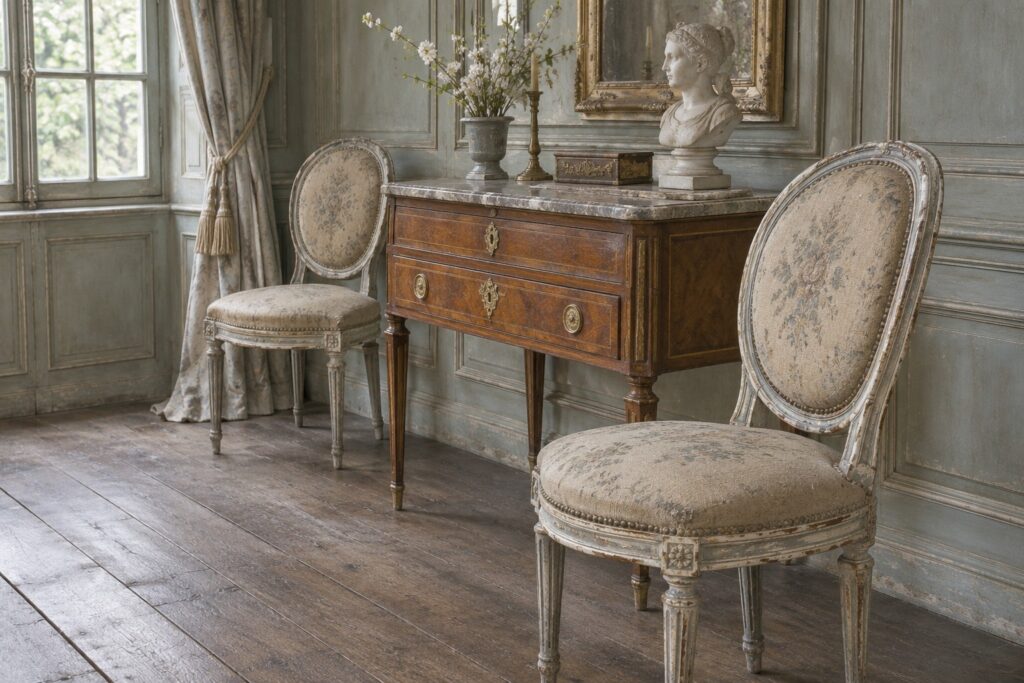
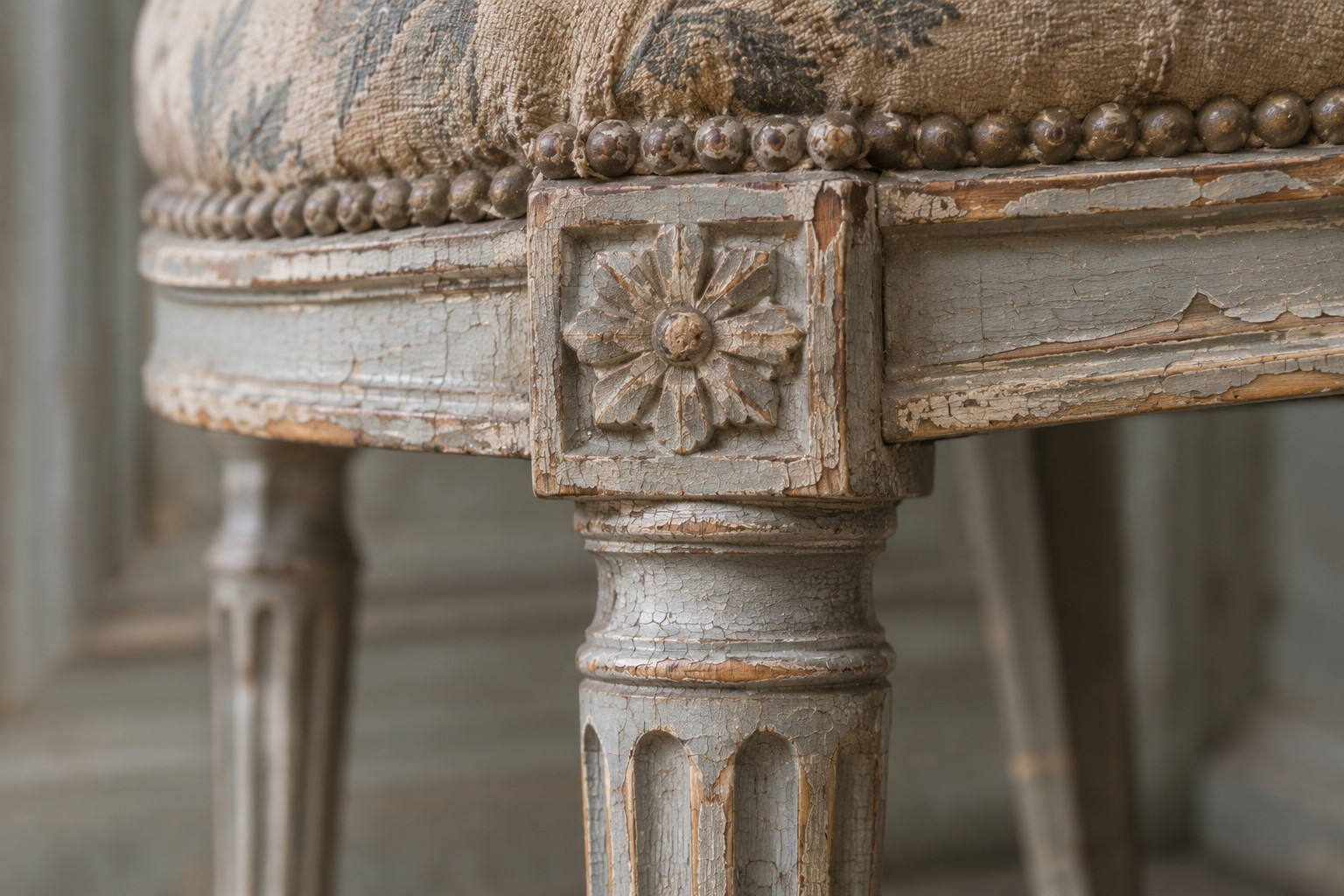
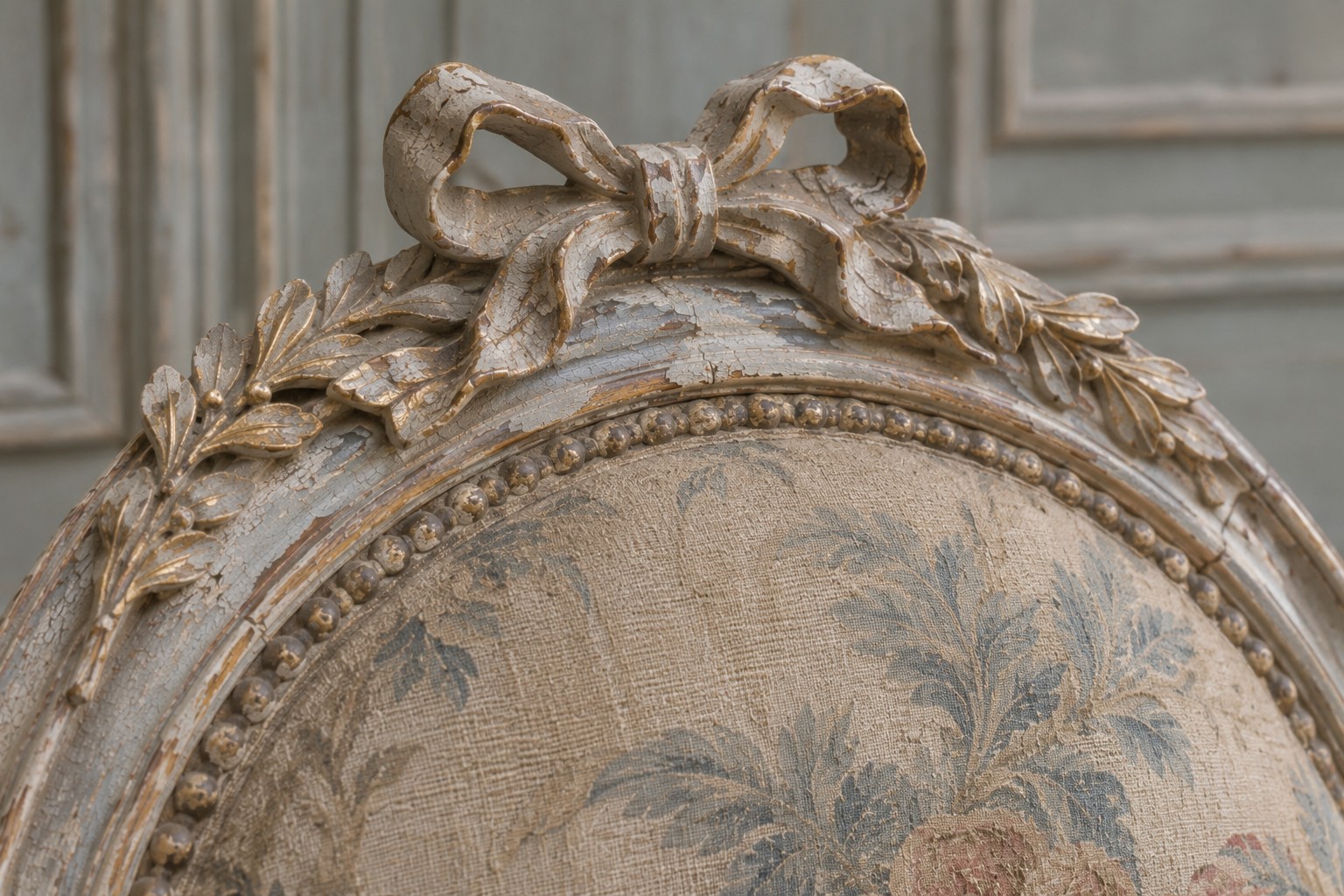
Seat furniture shows that change clearly. Round, oval, square and rectangular backs occurred; legs could be tapered or fluted like a classical column. Ornaments such as laurel wreaths, ribbons, garlands and rosettes were applied in a fixed rhythm. So decoration did not disappear: it was ordered differently. An excellent Louis XVI piece can be just as rich as its predecessor from the Rococo, but the composition is usually more symmetrical.
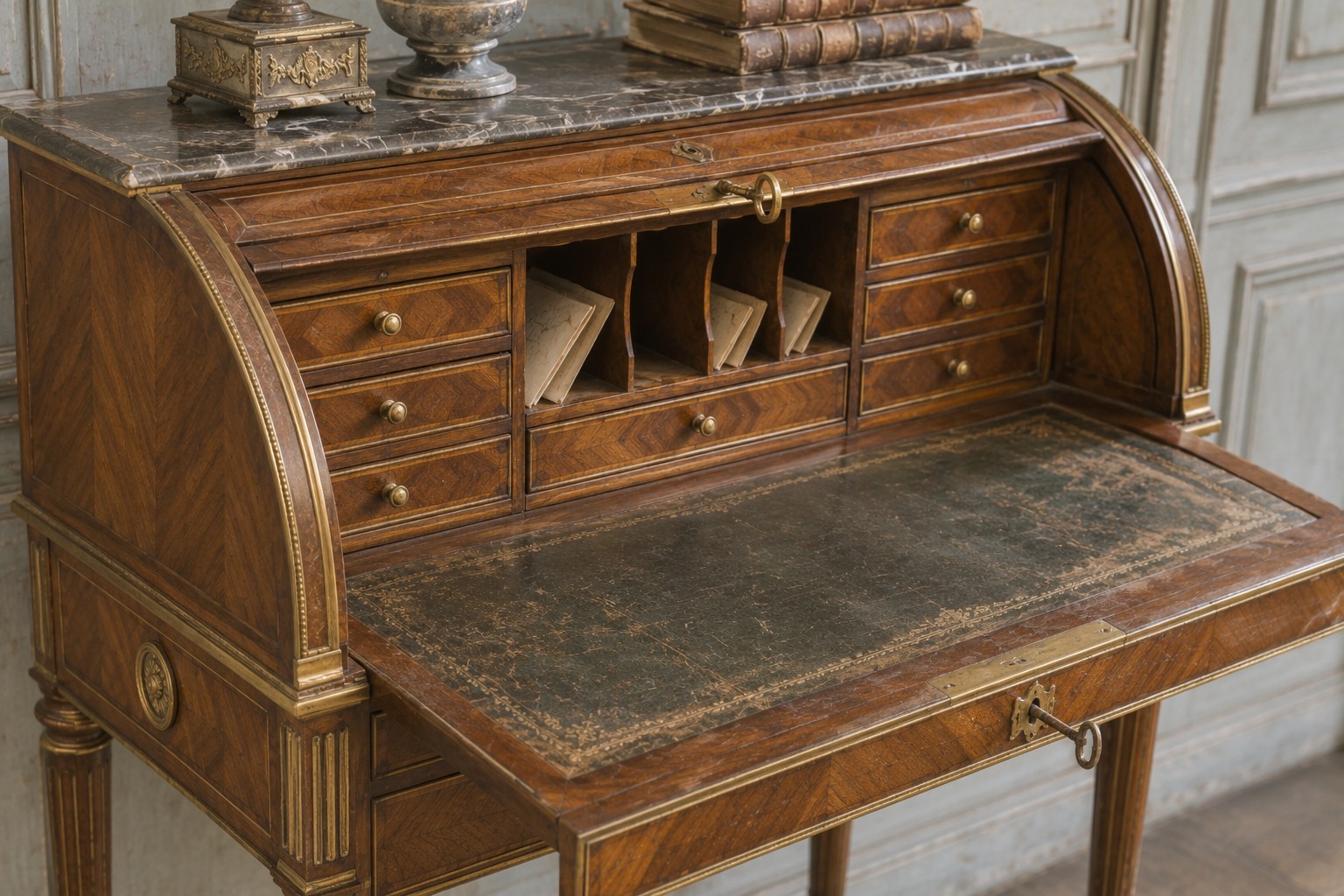
In France the best makers worked for the court and for wealthy private clients. Jean-Henri Riesener, pupil and successor of Oeben, became known for refined constructions and mechanical inventions. In the same period elegant writing desks, secretaires and commodes appeared in which complicated fittings and skilful veneer are hidden beneath an orderly exterior. The demand for specialised furniture was connected with the changing daily use of rooms.
In England the Neoclassical taste did not arise simply as a copy of France. Robert Adam played a major role with coherent interior designs, while George Hepplewhite and Thomas Sheraton influenced furniture design with their designs and publications. In the Dutch Republic classical ornament occurred too, but not every Dutch piece of furniture follows the English or French fashion at the same moment. Trade, local traditions and patrons determined the final appearance.
The choice of material remained international. Mahogany gained an important place in British furniture and was also used elsewhere. In French luxury production, costly veneer, metal mounts and marble tops continued to occur. A rectilinear piece of furniture therefore need not be plain or cheap. Sometimes the most expensive refinement can hardly be seen: fittings that fit exactly, a subtle progression in the veneer or a mechanism that works without any play.
When dating, you must distinguish between the original production of the eighteenth century and much later furniture with classical forms. Louis XVI chairs were made again on a large scale in the nineteenth and twentieth centuries. An oval back and fluted legs do not in themselves yield a date. How the chair is put together, the traces under the seat and the relationship between carving and mouldings are at least as important.
A second pitfall is confusing a severe language of form with one precise period. The Neoclassical taste has variants that continue into Directoire, Empire and Regency. Anyone who first describes a cupboard or chair in neutral features and only then chooses a style name keeps the way open to the correct origin.
What to look for: geometric back shapes and straighter, often fluted legs. Symmetrical ornament: rosettes, garlands, ribbons and laurel wreaths. And remember that Louis XVI as a style name is wider than the years of his reign, 1774–1792.
Revolution, Directoire, Empire and Regency (circa 1790–1825)
The French Revolution of 1789 and the political changes that followed also left their mark on furniture. Classicism remained important, but the decoration acquired other references and meanings. In the time of the Directoire, usually associated with the years 1795–1799, simple classical forms were combined with elements from antiquity. It is not an entirely new language of form that began on a single day: much had already been set in motion in the last decades of the ancien régime.
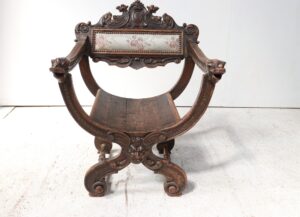
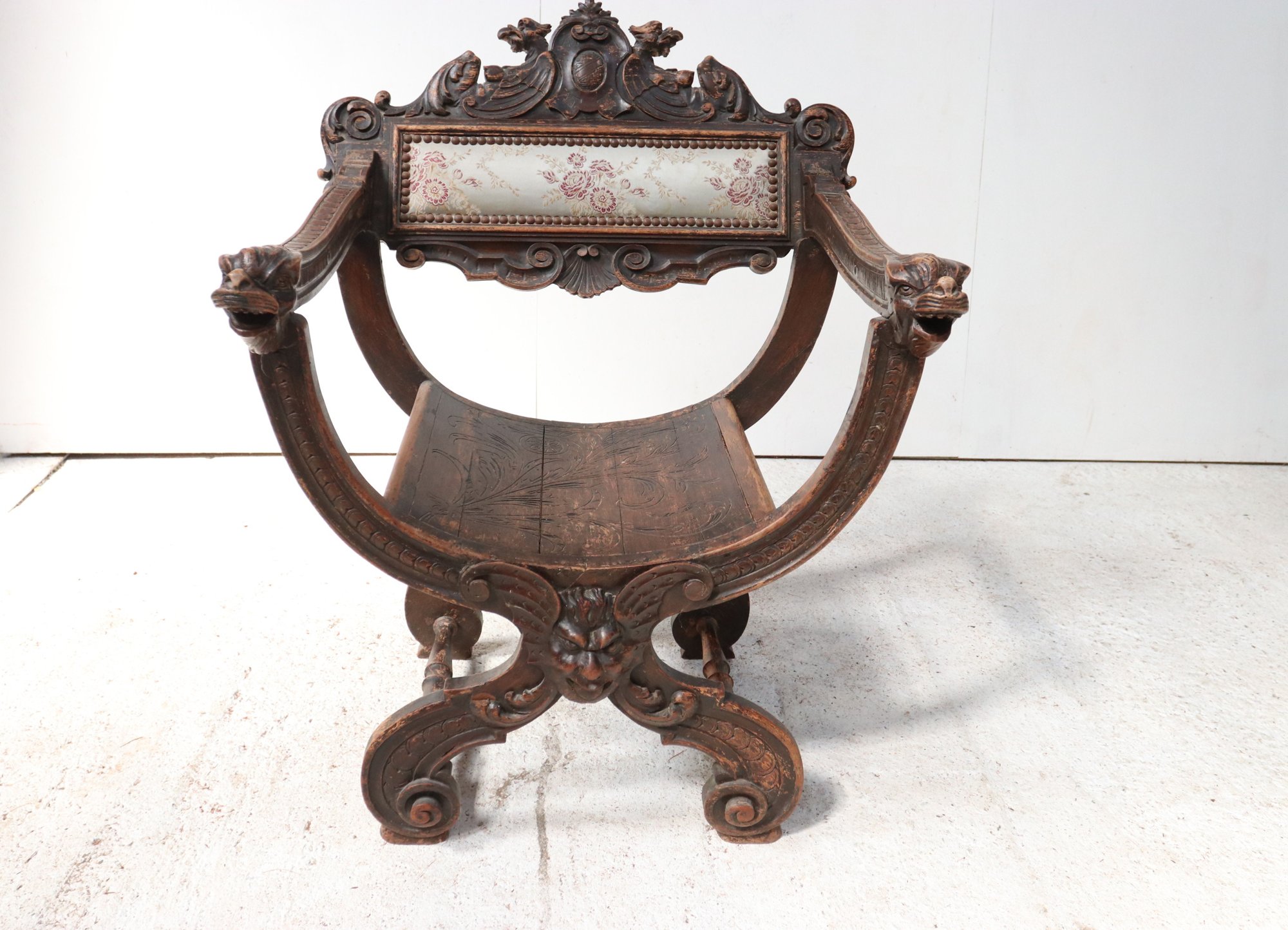 Dantesca chair (Dagobert armchair) with lion heads and mascaronfirst half of the 19th century · for sale now
 Pair of Dutch Neoclassical flower still lifes, signed F.M. de Spaen née de Bylandt1809 · for sale now
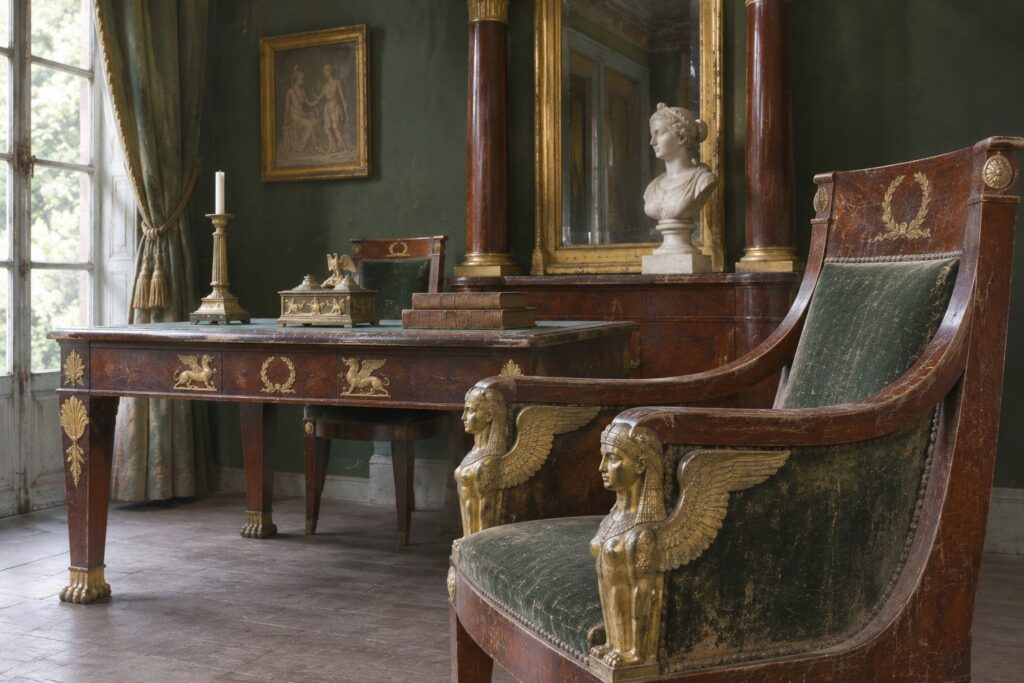
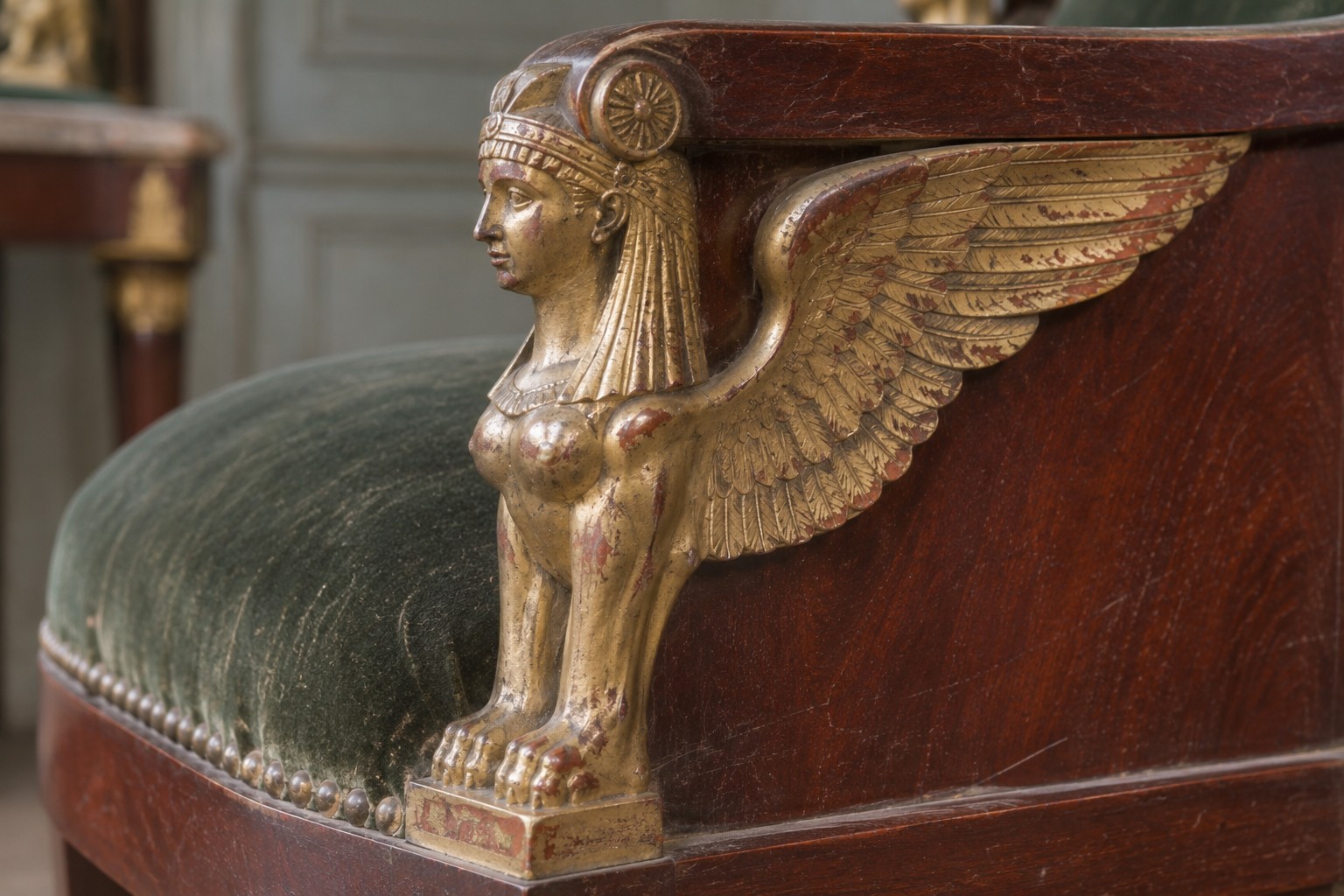
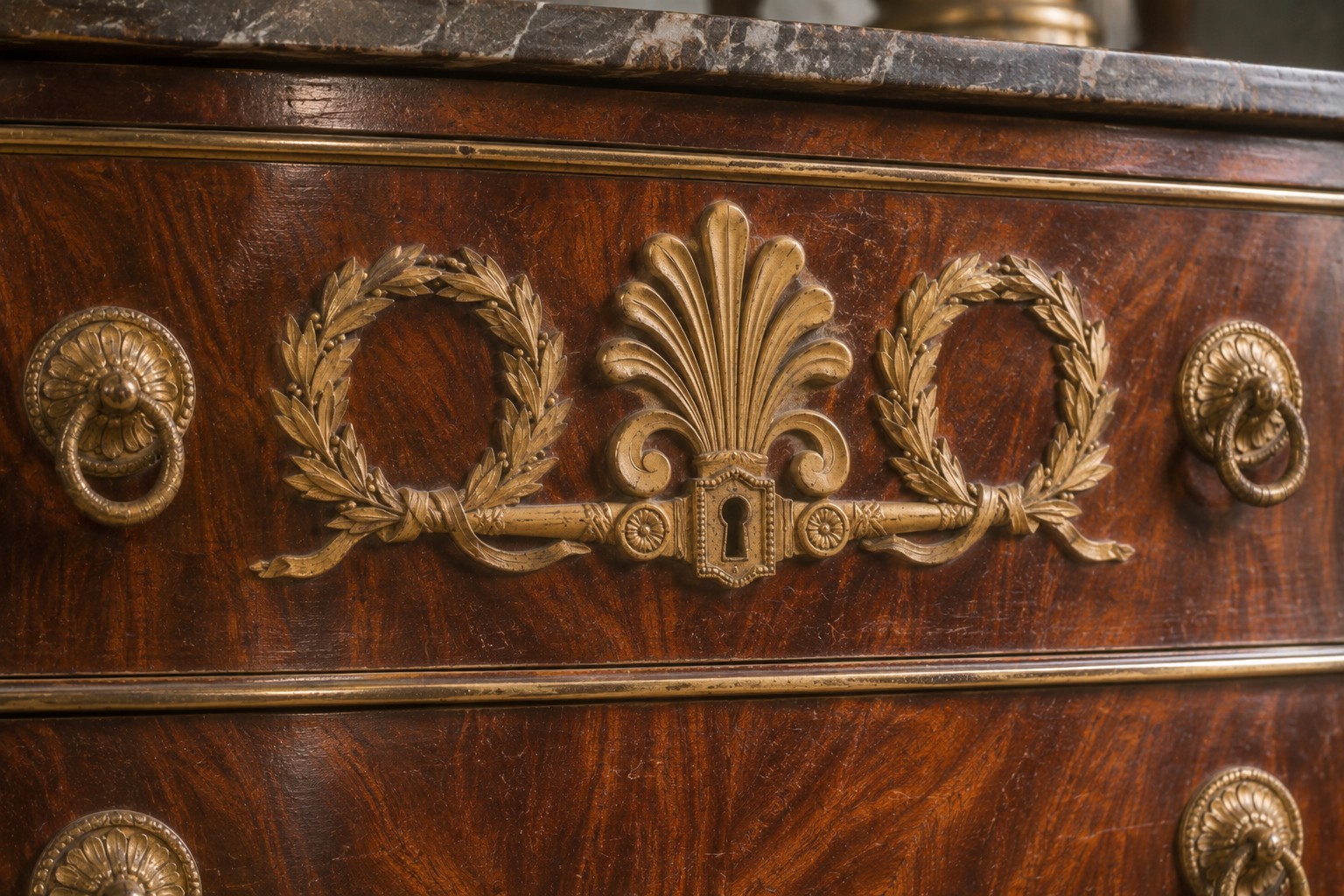
Under Napoleon, the Empire style became a visible style of power and state display. It drew on imperial Rome and on the image people had of Egypt and the classical world. In luxury furniture there appear, among other things, laurel wreaths, palmettes, sphinxes, griffins, winged figures and severely ordered bronze mounts. Mahogany and veneer resembling mahogany were common in the richer production. The Empire taste reached further than Napoleon’s time as emperor from 1804 to 1814/1815.
The French architects Charles Percier and Pierre-François-Léonard Fontaine helped to shape a court taste in which architecture, interior and furniture were closely attuned to one another. Furniture could look like architecture in miniature: columns, plinths, volutes and symmetrical fronts came together in an ordered composition. But simpler versions adopted features as well. Anyone looking for an Empire piece must therefore think both of bronze showpieces and of plainer middle-class variants.
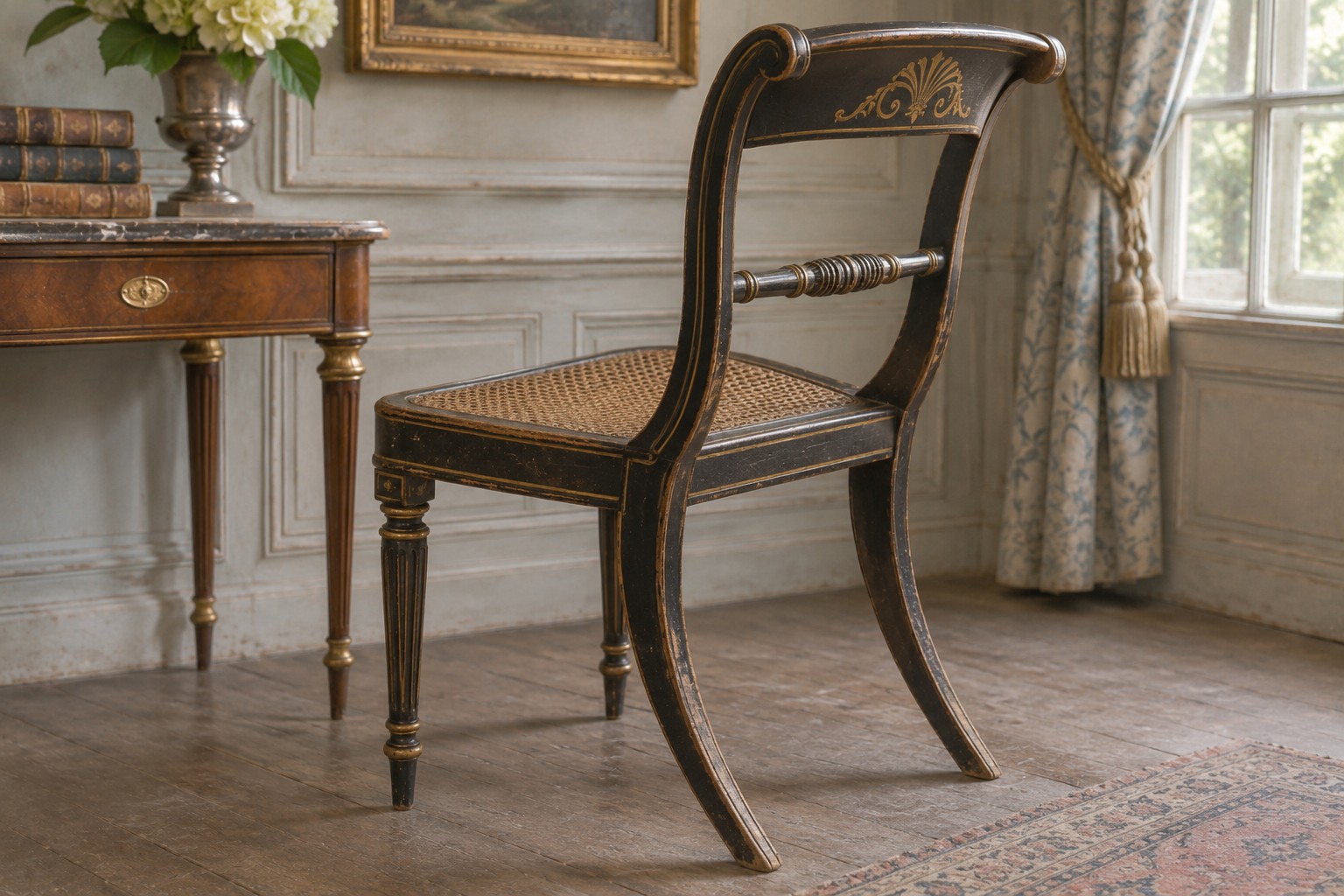
In England the term Regency is often used for the same period. Strictly speaking it refers to the regency of 1811 to 1820; as a style name, Regency is taken more widely, roughly from 1800 to 1830. Classical, Egyptian, Greek and other motifs were used in various combinations. From London, the Amsterdam-born collector and designer Thomas Hope (1769–1831) spread a taste based on antiquity, with his book of 1807 and with his own interiors. Yet an English Regency chair does not automatically have the same proportions as a French Empire chair.
The political borders make the style names complicated. In the Low Countries, Germany, Austria, Italy and Scandinavia, related forms circulated, but they were translated locally. A piece of furniture with an ornament in the form of a swan’s neck or a sphinx was therefore not necessarily made in Paris. Form, technique, material, the history that has come down with the piece and the trade routes of the time should all be weighed in the question of where a piece comes from.
The upholstery also deserves attention. Classical chairs and settees were originally often covered in brightly coloured silk, wool or other fabrics. The dark brown image we now have of much Empire furniture is due in part to the wood that has survived and to later restorations. The original furnishing was often far more colourful than what a museum gallery shows today.
The nineteenth century brought countless new Empire versions and, later, historical interpretations once again. A fine bronze ornamental moulding in particular is tempting as a clue to the date, but it must fit the construction, the back, the technique used and the marked parts, if there are any. A serious description always states what is certain and which comparison supports the dating.
What to look for: severe, symmetrical forms with classical and sometimes Egyptian ornament. Mahogany, palmettes, sphinxes and gilt metal mounts on the luxury versions. Regency and Empire are related, but not the same, and cannot simply be exchanged between countries.
Biedermeier and the middle-class interior (circa 1815–1848)
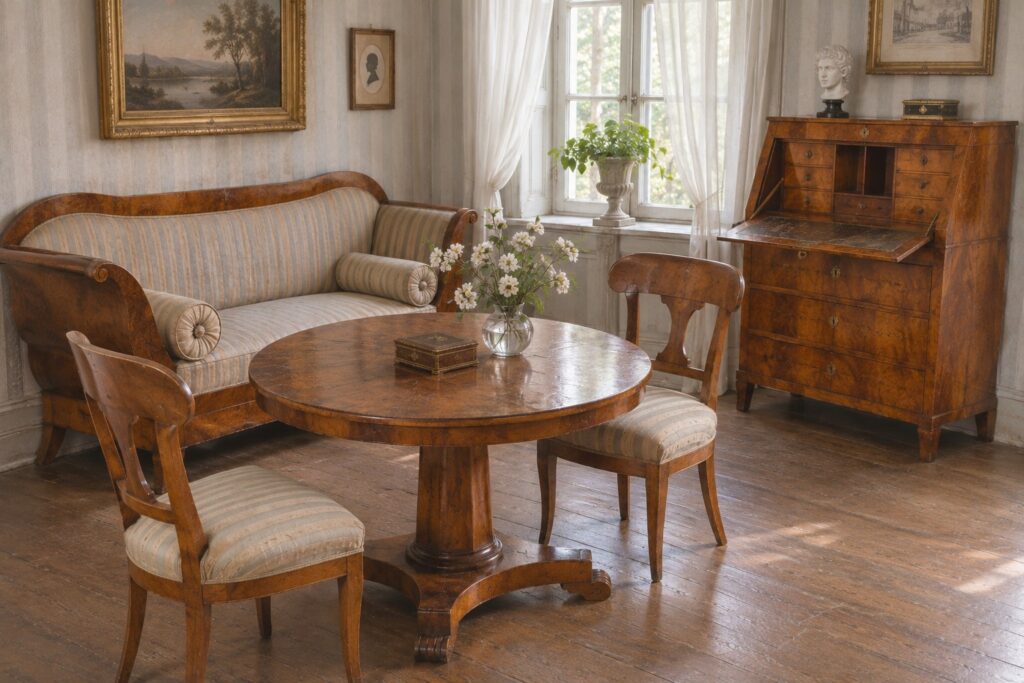
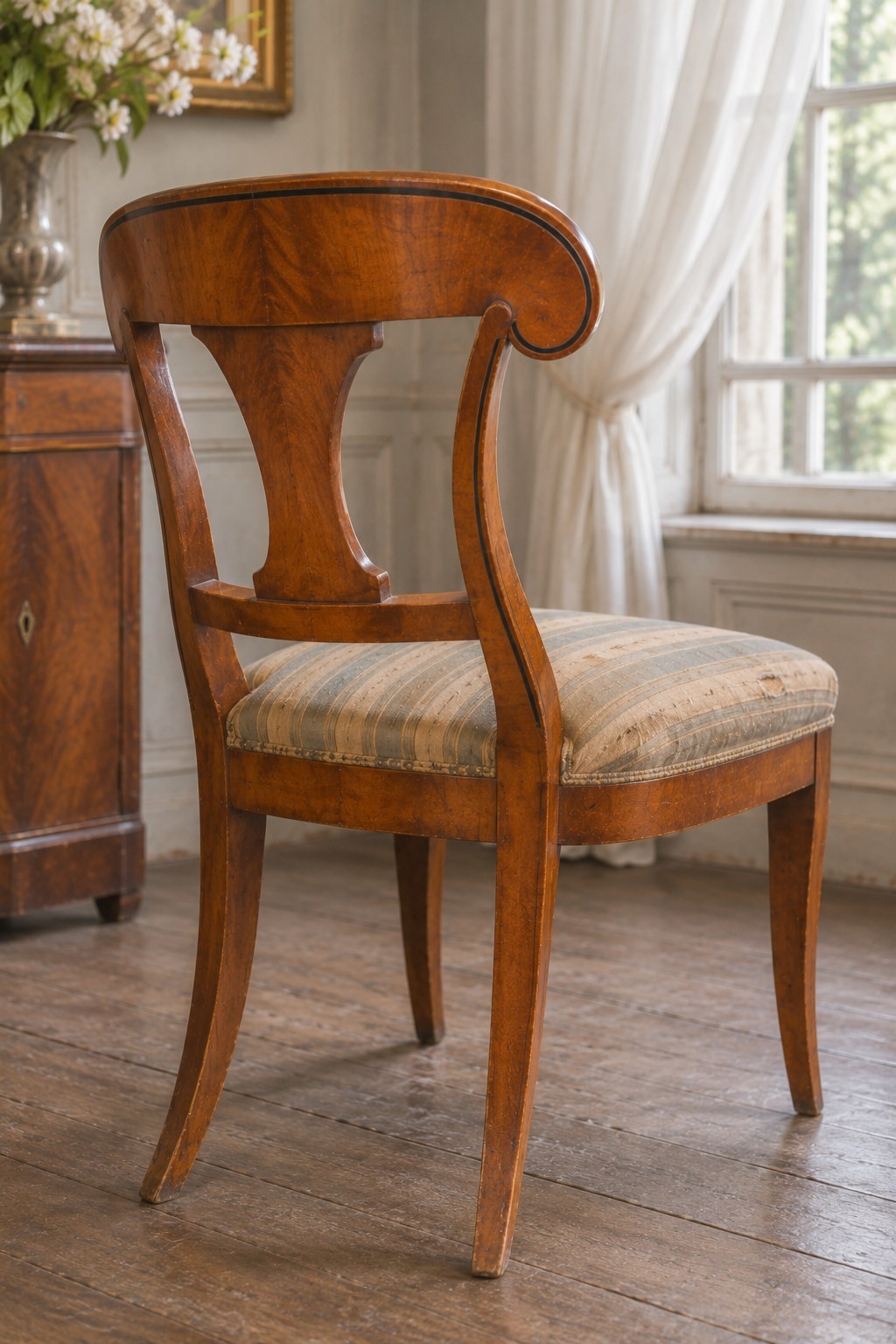
The period after the Congress of Vienna in 1815 is associated in the German-speaking lands with Biedermeier. The name only became established later, but it is useful for recognising the furniture of that time. The everyday interior of the middle classes came to the fore: the sitting room, the reading table, the secretaire and the comfortable chair became symbols of domesticity. You should not forget, however, that the Biedermeier world also had social differences and that richly decorated furniture continued to exist alongside plainer pieces.
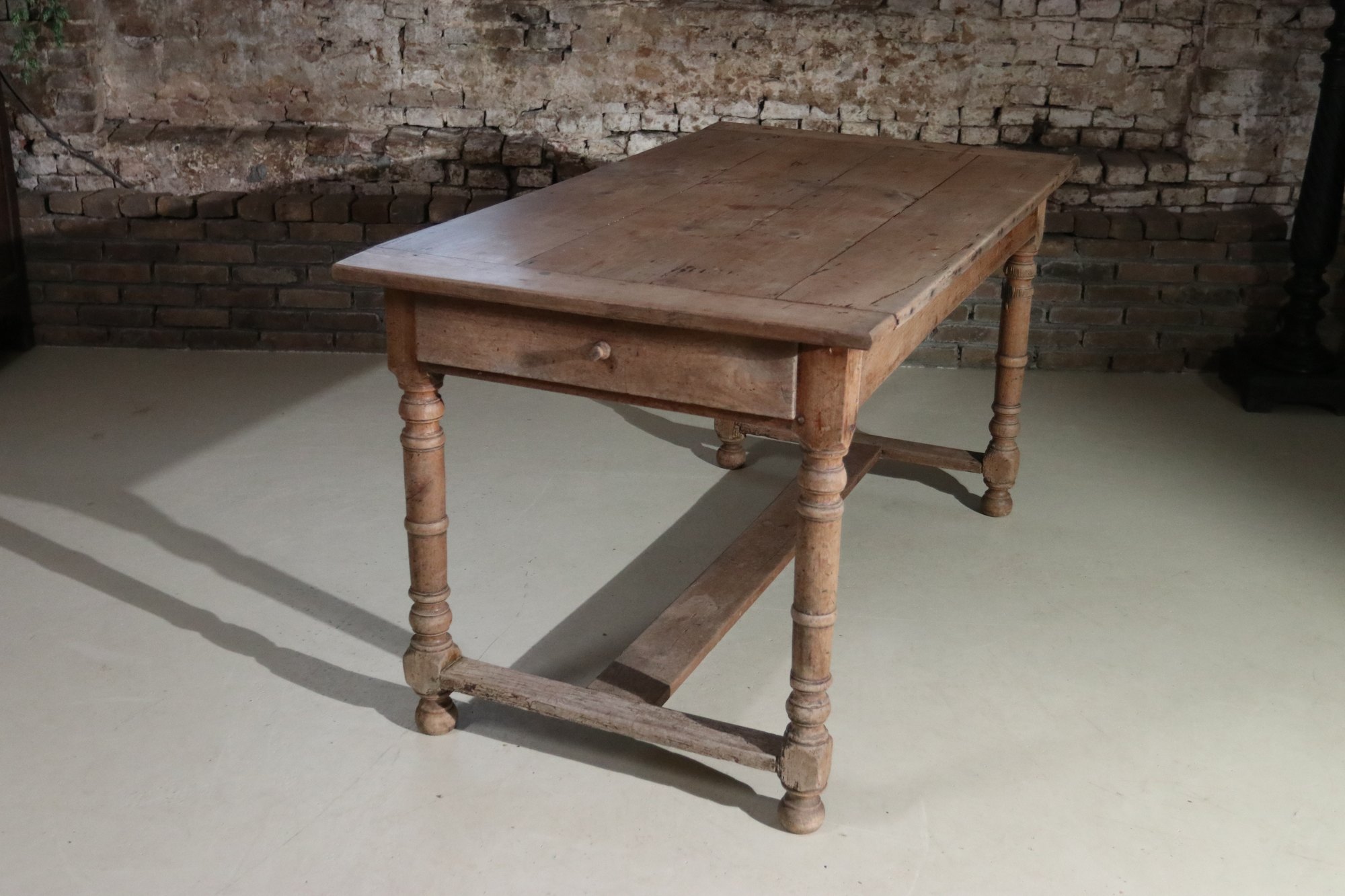 Antique French farmhouse table with drawer and turned legs19th century · for sale now
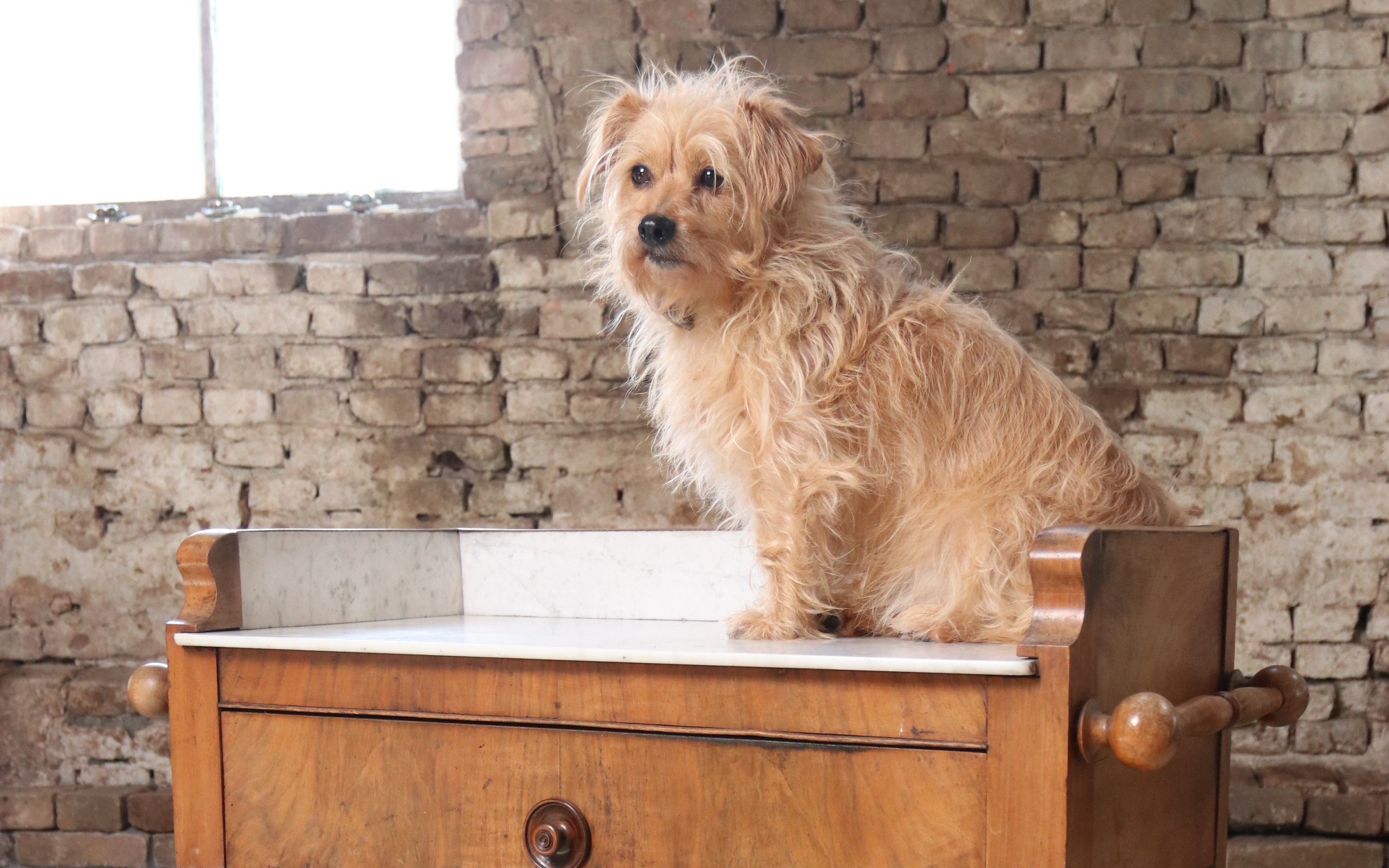 Walnut washstand with white marble top and towel rails1840–1880 · for sale now
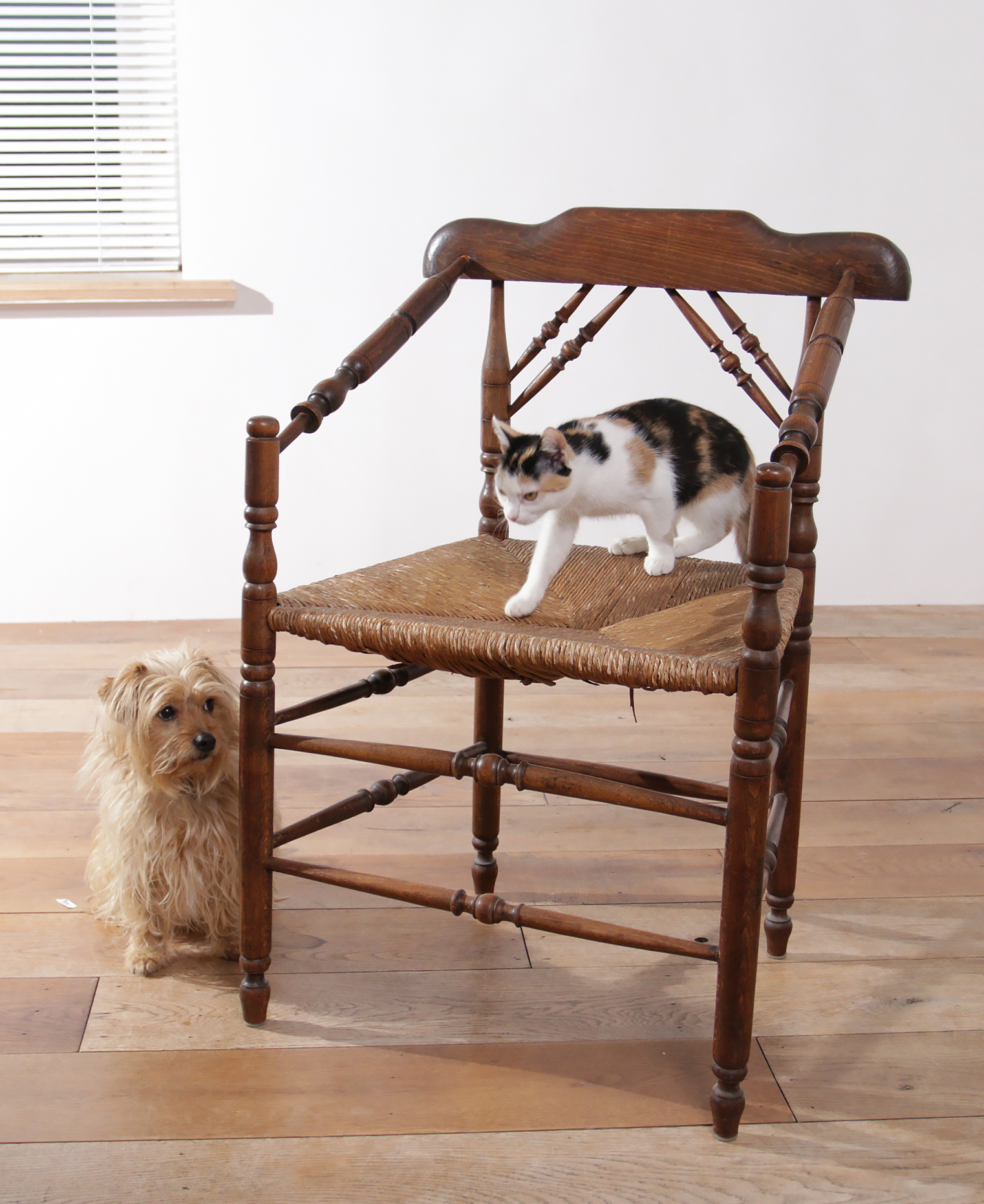 Rare antique Dutch oak armchair with rush seat1850 · for sale now
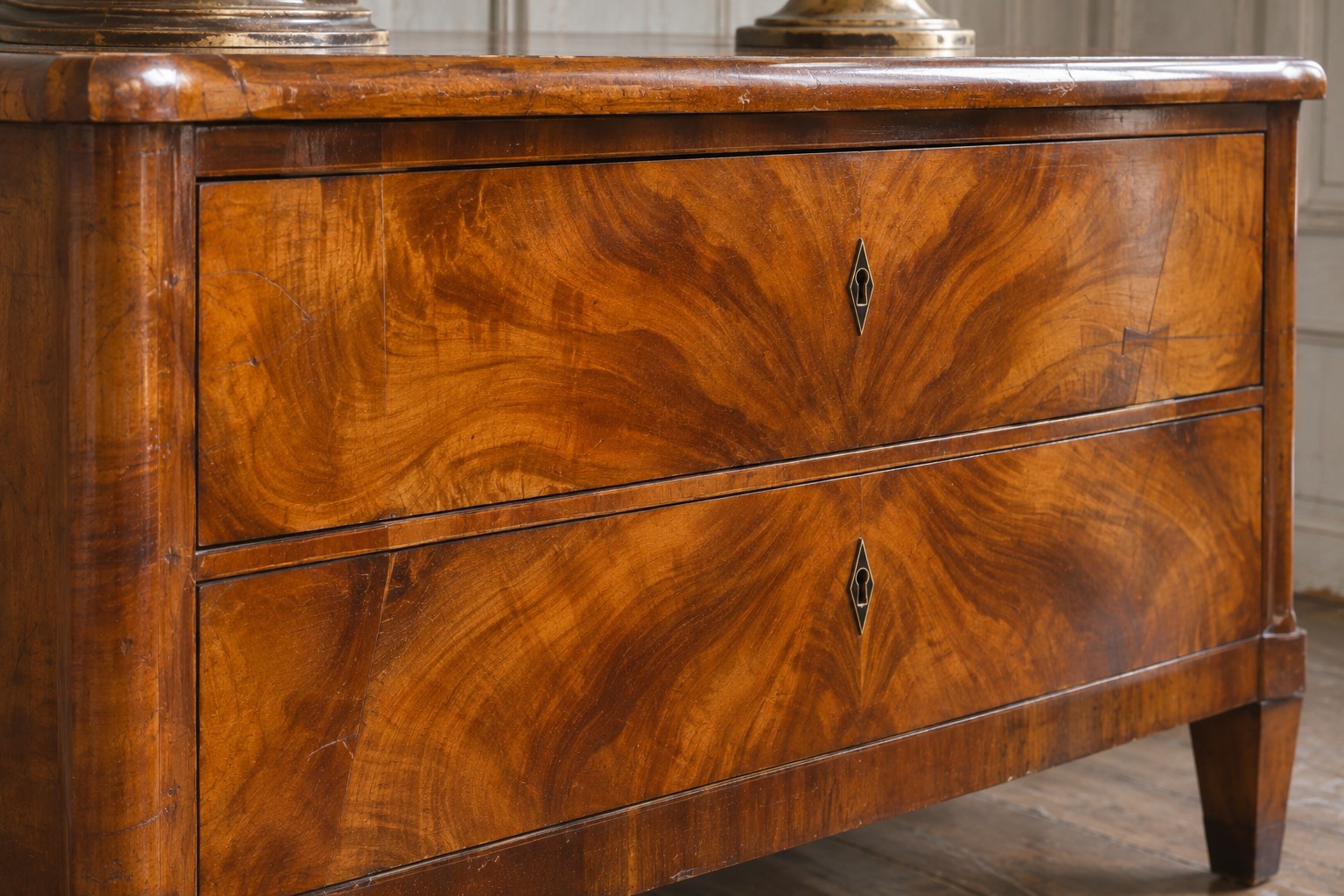
Much Biedermeier furniture has a clear silhouette and a convincing balance between construction and decoration. Beautiful wood figure played the leading part. Walnut, cherry, birch and other local woods were used with carefully book-matched veneer. The quality often lay in the proportions and in small details: a recessed drawer, an elegantly curved back or a modest black accent.
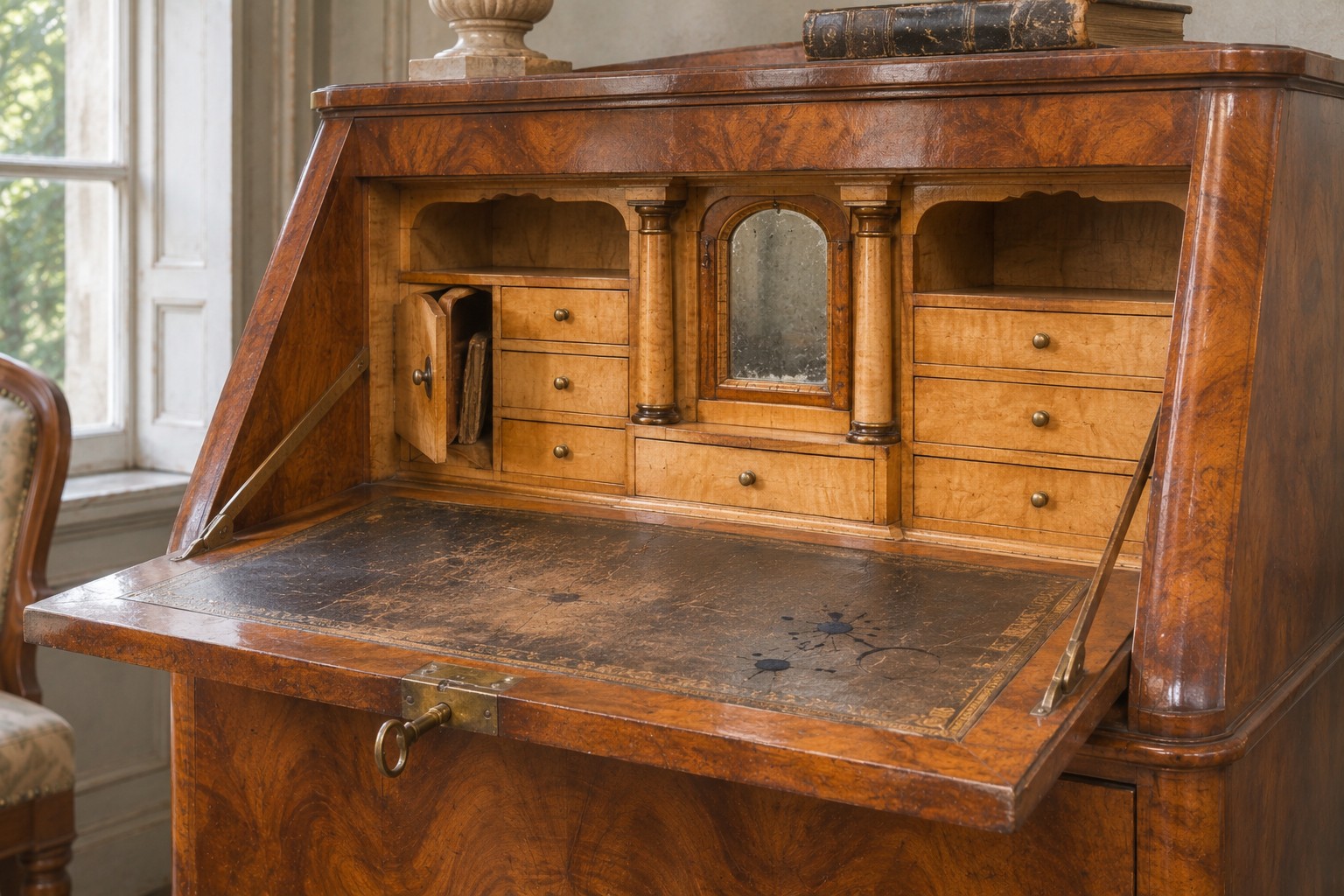
Writing furniture shows the changing interior well. A secretaire with a fall-front writing surface could hold important papers and small possessions. Behind the fall there were sometimes little columns, small drawers and hidden compartments. Such interiors are particularly interesting when examining a piece: they show what a workshop was technically capable of and how the piece was used. It is worth checking whether keys, drawers and interior fittings are complete and original.
Vienna became an important centre of furniture production. The furniture factory of Joseph Ulrich Danhauser, founded in 1804, made refined seat furniture and complete furnishings. The Metropolitan Museum of Art holds a chair from his circle and dates it to around 1815–1820. At the same time, German, Bohemian and other regions had their own styles and makers. ‘Biedermeier’ is therefore a collective name for a culture and a style, not a guarantee of the place where a piece was made.
In France, other lines developed in the same years, among them the Restauration and later the Louis-Philippe taste. Some French furniture shows a related emphasis on domesticity, simplicity and curved forms, but that does not make it Biedermeier. Good technical terms follow the history of the place where a piece was made. Calling a Dutch table of 1835 ‘Biedermeier’ is understandable as a comparison of style, but it really calls for a more precise description.
With this furniture it matters whether the surface is still original. Nineteenth-century veneer can be beautifully old, but it is also vulnerable to aggressive cleaning, sanding or an entirely new coat of lacquer. Because the figure of the wood is so decisive, the wrong treatment can change the character profoundly. With genuine pieces, preserving the old material is usually worth more than an artificially new appearance.
Biedermeier is popular because the furniture fits well into an interior of today. For that very reason it has been reproduced a great deal, and furniture in related nineteenth-century styles is offered under the same name. The language of form gives a first indication; construction, provenance and finish must carry the dating.
What to look for: clear, often calm silhouettes, in which the figure of the veneer is the most important decoration. Comfortable chairs, round tables and refined secretaires. Biedermeier belongs above all to the German-speaking world; be sparing with the name outside it.
Industrialisation and revival styles (circa 1830–1880)
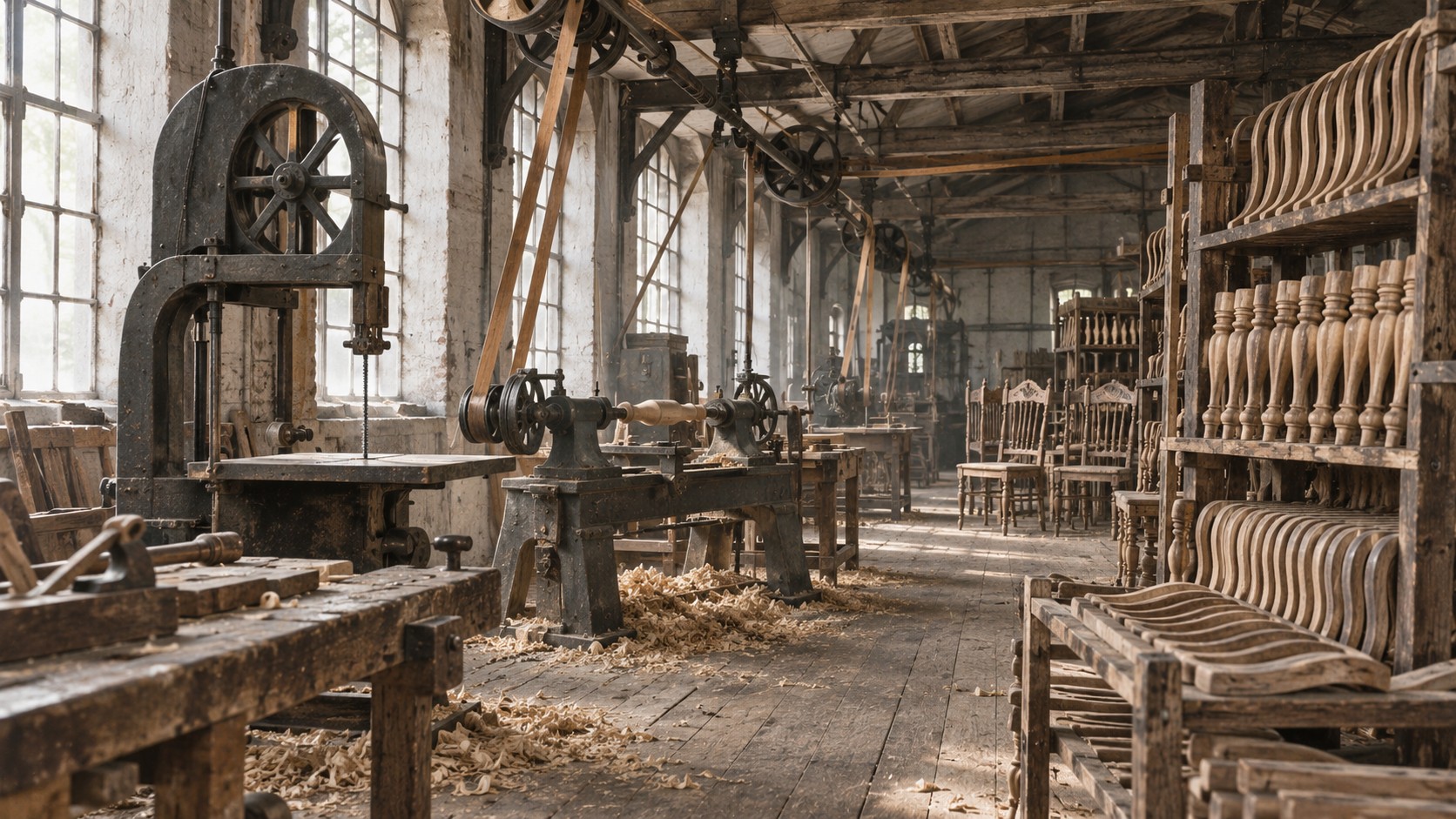
From the second half of the eighteenth century, and above all in the nineteenth century, the making of furniture changed through mechanisation, new trading networks and a growing market in the towns and cities. The traditional workshops did not disappear, but came to stand alongside larger factories and specialised suppliers. With machine sawing and turning, better transport and identical parts, furniture could be offered in larger numbers. That did not mean that all factory furniture was of lesser quality: machine work and high-grade handwork were often combined.
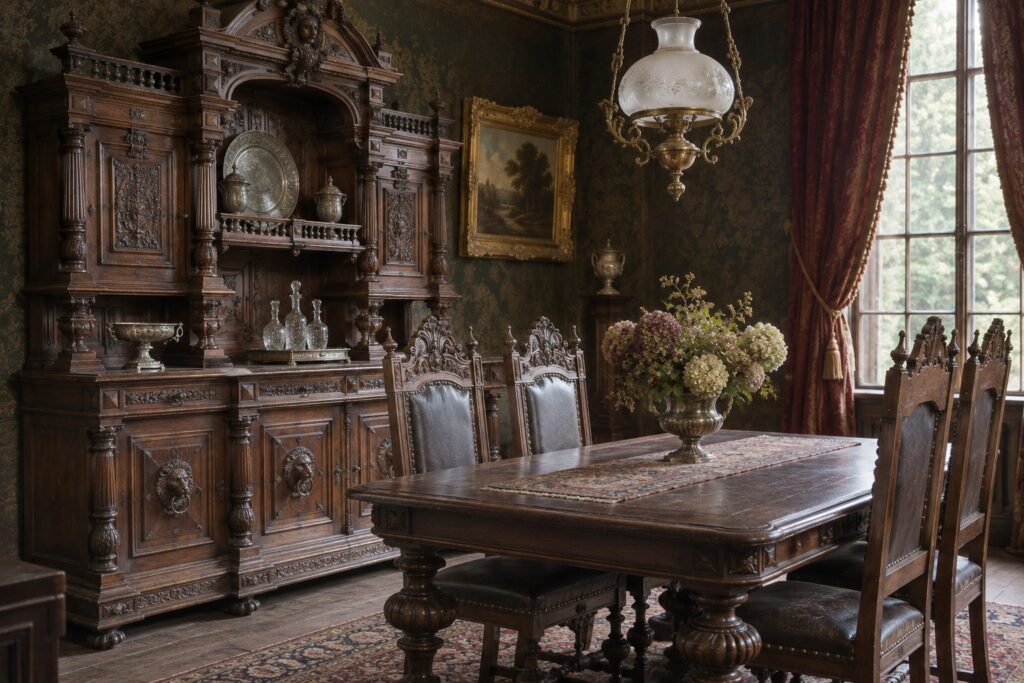
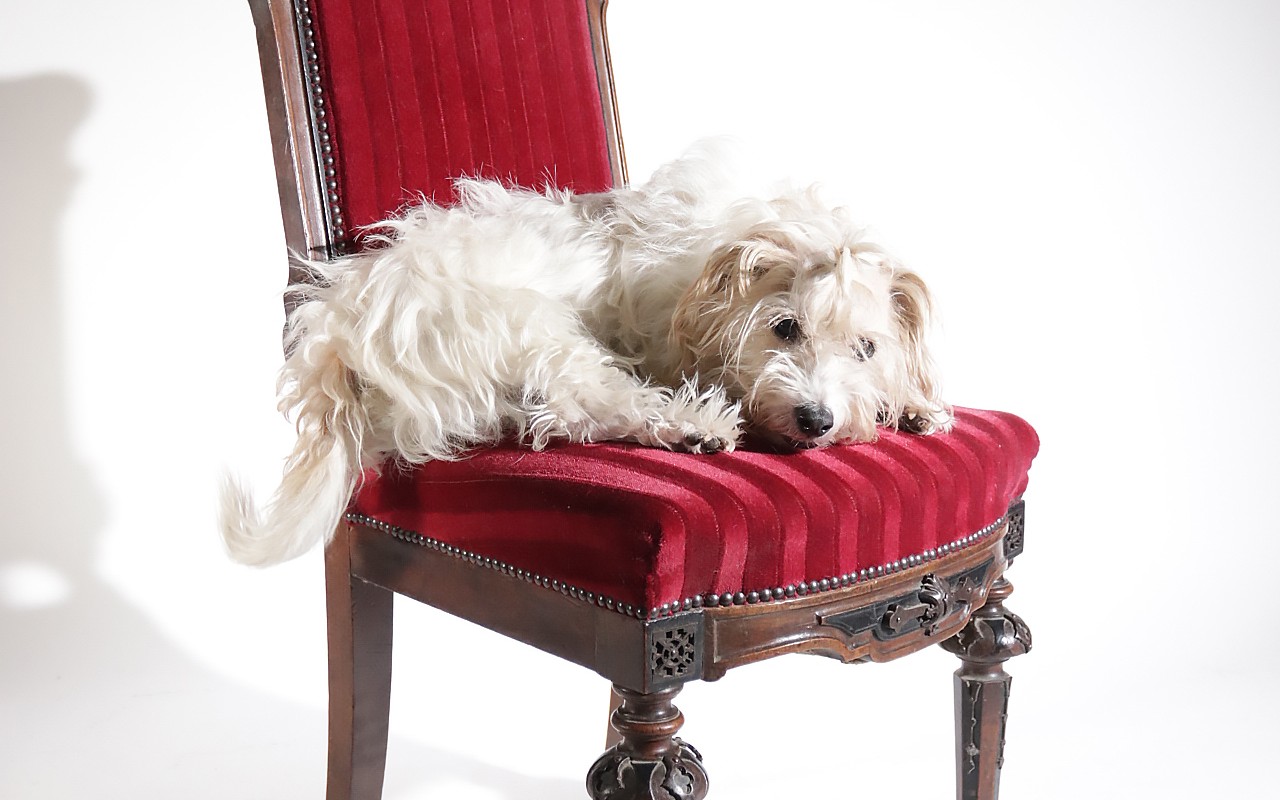 Nineteenth-century French carved chair with red velvetc. 1860 · for sale now
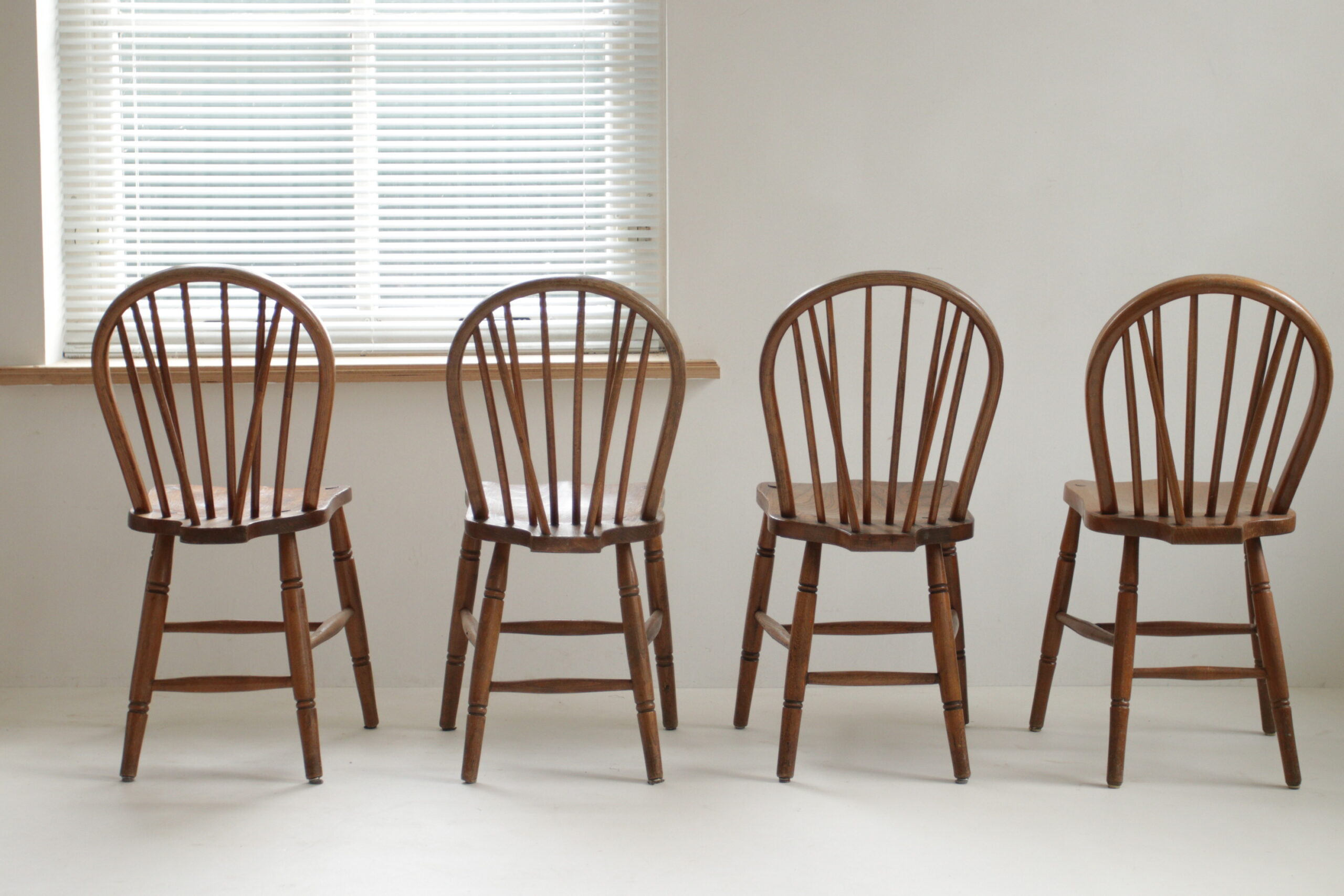 Set of 4 nineteenth-century British military Windsor chairssecond half of the 19th century · for sale now
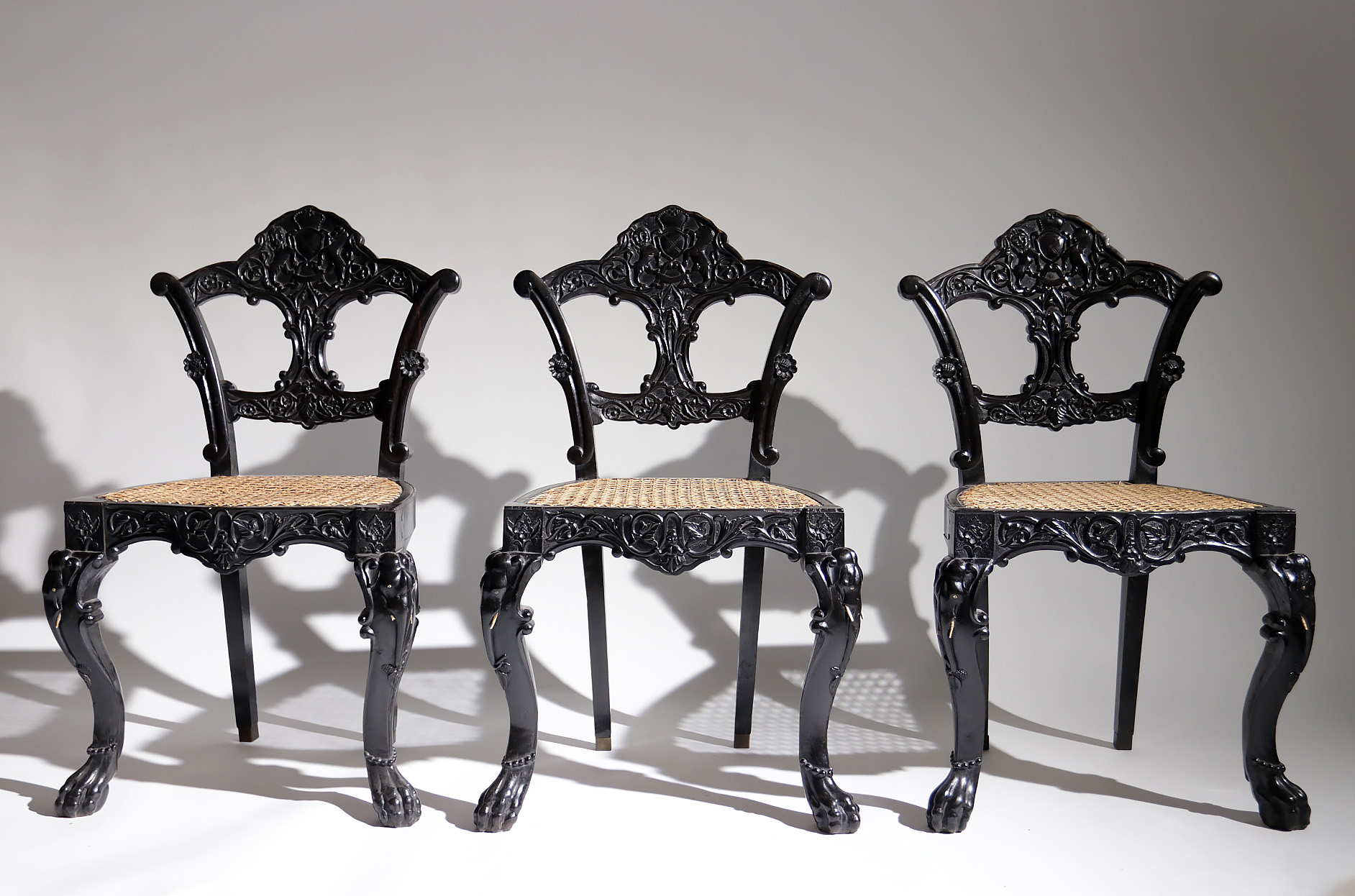 Set of 4 solid ebony Anglo-Indian chairsmid-19th century · for sale now
The great international exhibitions made new materials and forms visible. The Great Exhibition in London in 1851 is regarded as an important expression of industrial self-confidence and international rivalry. Furniture appeared on the market for very different tastes and purses. A richly decorated salon called for different pieces from an office, a restaurant or an ordinary middle-class house.
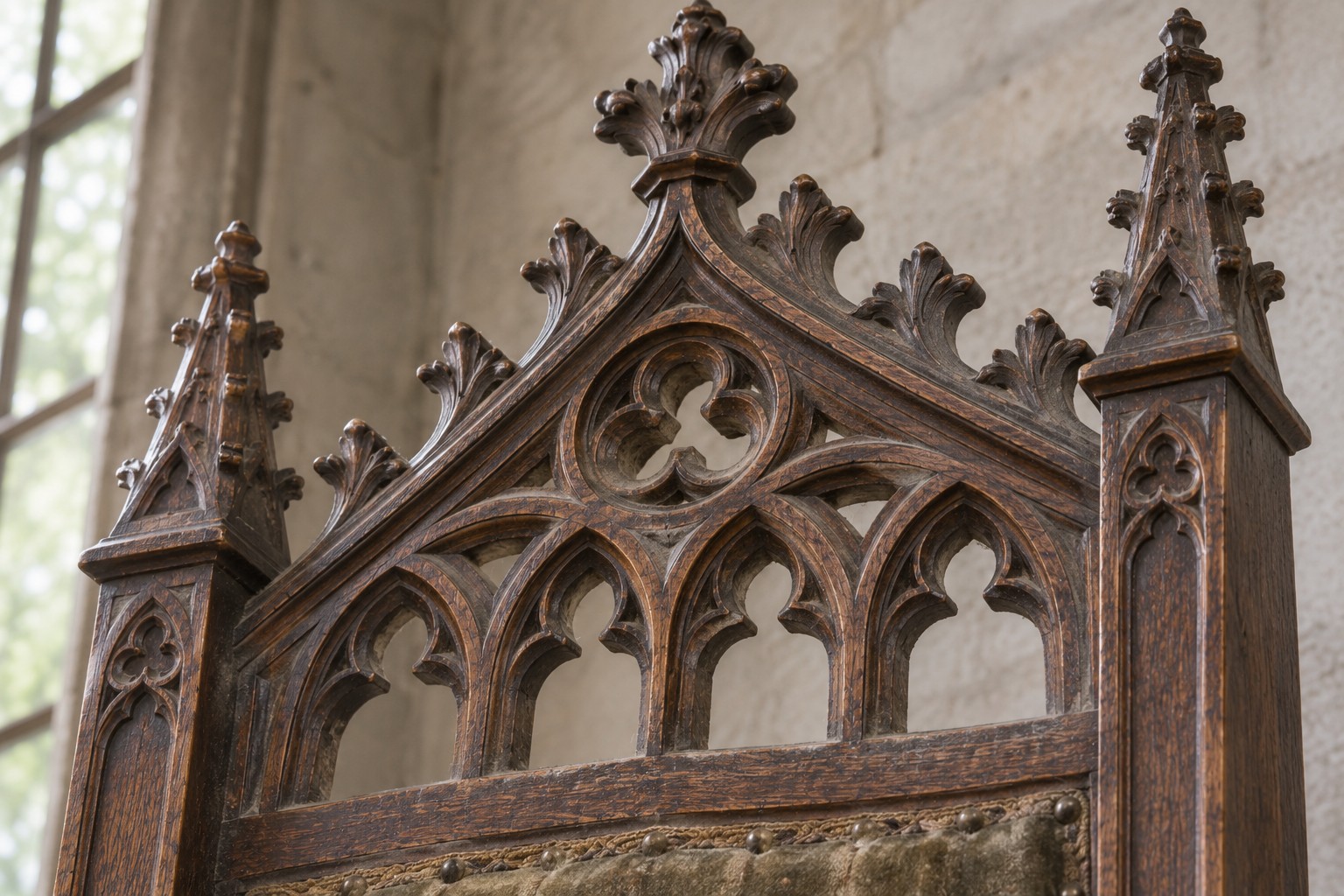
At the same time, a pronounced interest in older styles arose. Gothic, Renaissance, Baroque and Rococo were reinterpreted. The term historicism refers to this deliberate reuse of forms from the past. A Neo-Renaissance sideboard of 1870 is technically nineteenth-century and at the same time quotes a sixteenth-century ornament. That is not a forgery as long as it is understood as a nineteenth-century piece; it becomes a problem when a later imitation is sold as an older original.
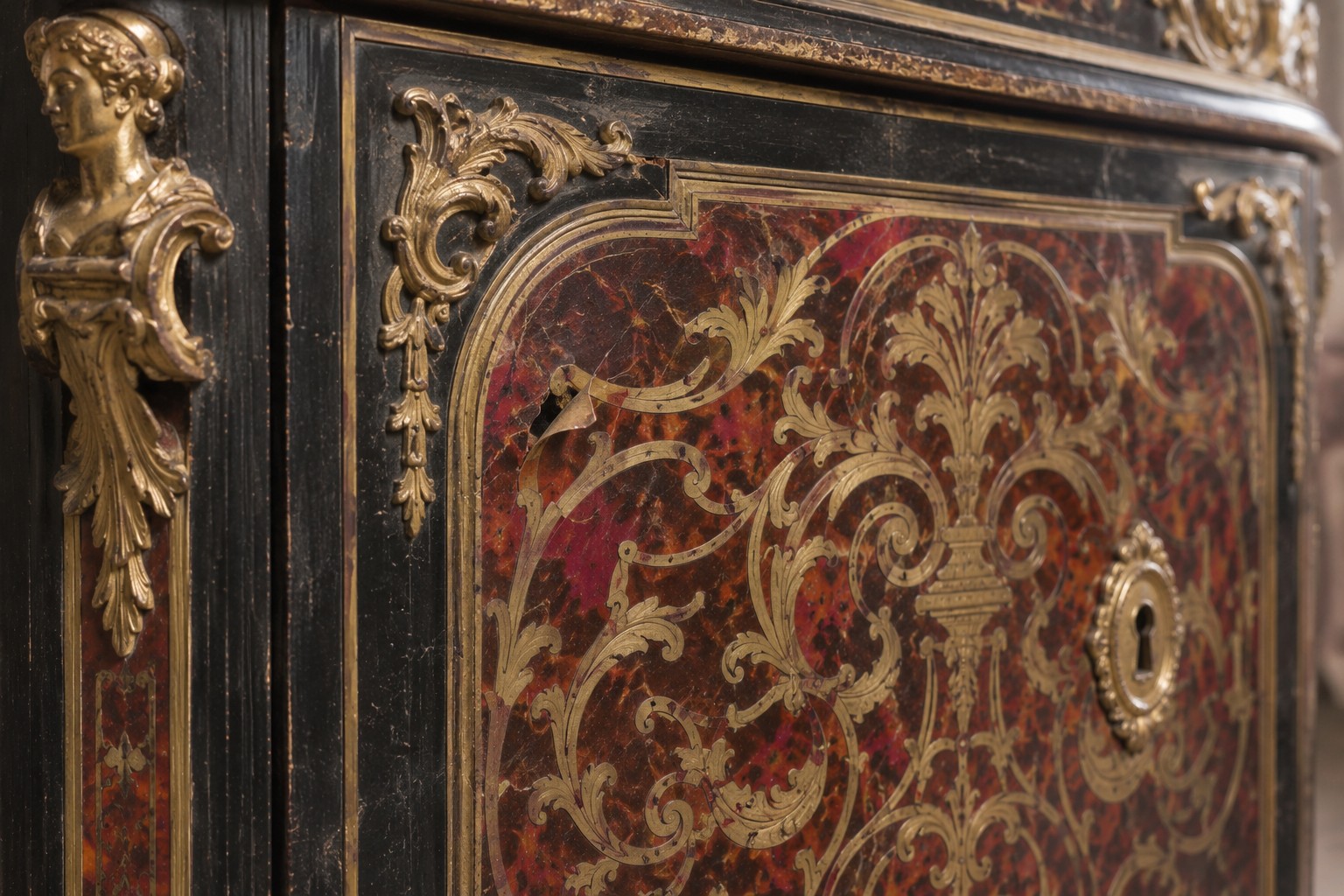
In France, the names Napoleon III and Second Empire gained meaning for the interior and the furniture market. Black surfaces, inlay, gilt mounts, papier-mâché, new Boulle work and neo-styles occurred side by side. French furniture of this period is exceptionally varied. A small salon chair in Neo-Rococo and a black-lacquered cabinet with inlay do not belong to one type, even though they fall within the same broad period.
In England, the Gothic Revival, the Neo-Renaissance and other historical preferences were strongly present. In Germany and elsewhere, regional workshops also responded to the demand for furniture in older styles. Nineteenth-century industry spread pattern books and designs much faster than before. As a result, the same forms can turn up in different countries without a piece having been made by the same maker.
Technique sometimes helps in recognising revival furniture. Sawn ornaments, parts made in series, uniform turning and certain fastenings point to later production. Yet such features are not conclusive: old workshops, too, worked with templates and repeated designs, while exceptional handwork remained common well into the nineteenth century. No single trace may be used as proof in isolation from the rest.
The growth of new shops and international trade also changed the relationship between designer, manufacturer and buyer. Furniture could be assembled from parts supplied by several suppliers. The word ‘original’ thereby takes on a different meaning from the one it has for a unique, handmade cabinet of the seventeenth century. A chair from the factory can be a wholly genuine historical piece, even when thousands of identical ones were made.
What to look for: deliberate references to older styles, such as Neo-Gothic, Neo-Renaissance and Neo-Rococo. A combination of machine manufacture and finishing by hand. And remember that a historical style does not mean the same age as the example being followed.
New forms at the end of the century (circa 1860–1900)
The last decades of the nineteenth century were not a straight road from ornament to simplicity. It was precisely then that different tastes existed side by side: exuberant historicism, refined factory products and movements that wanted to reform design. Furniture became ever more clearly a subject of debate about production, beauty, labour and daily life. Those divergent views prepared the transition to the design of the twentieth century.
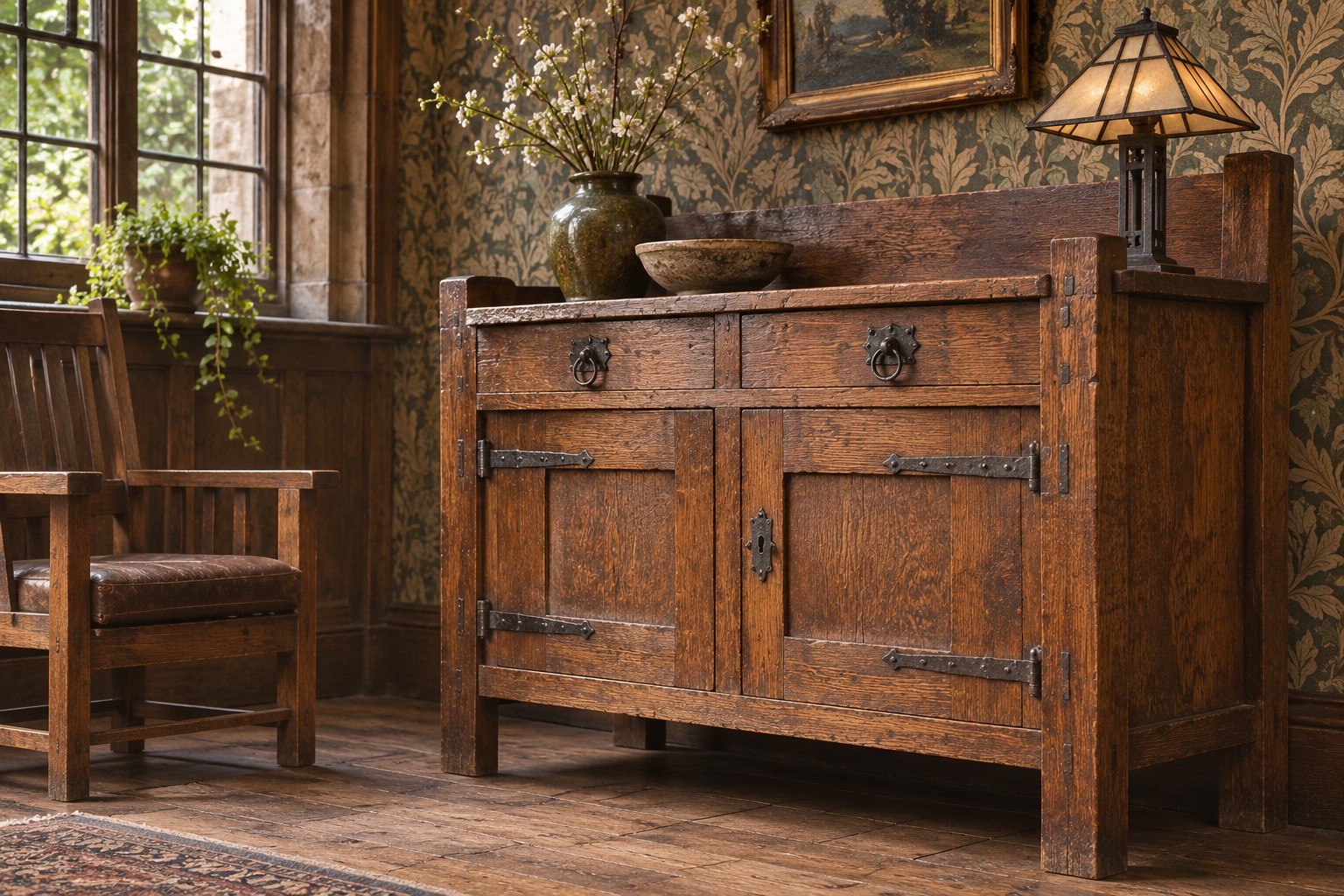
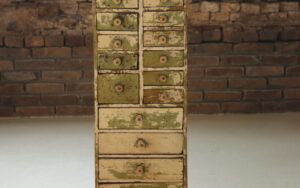
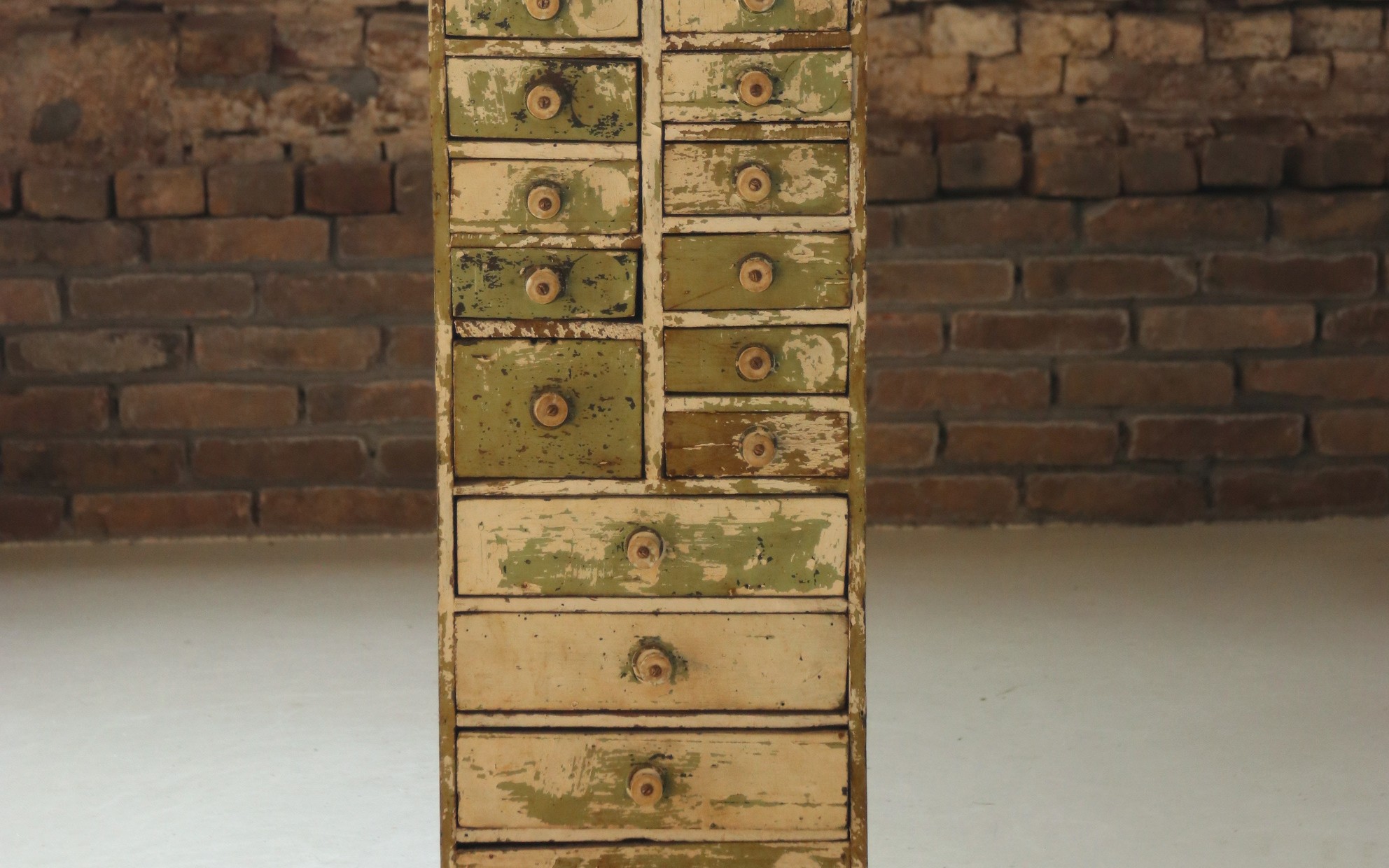 Narrow chest with 18 small drawers1900–1940 · for sale now
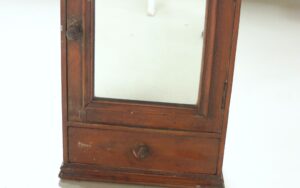
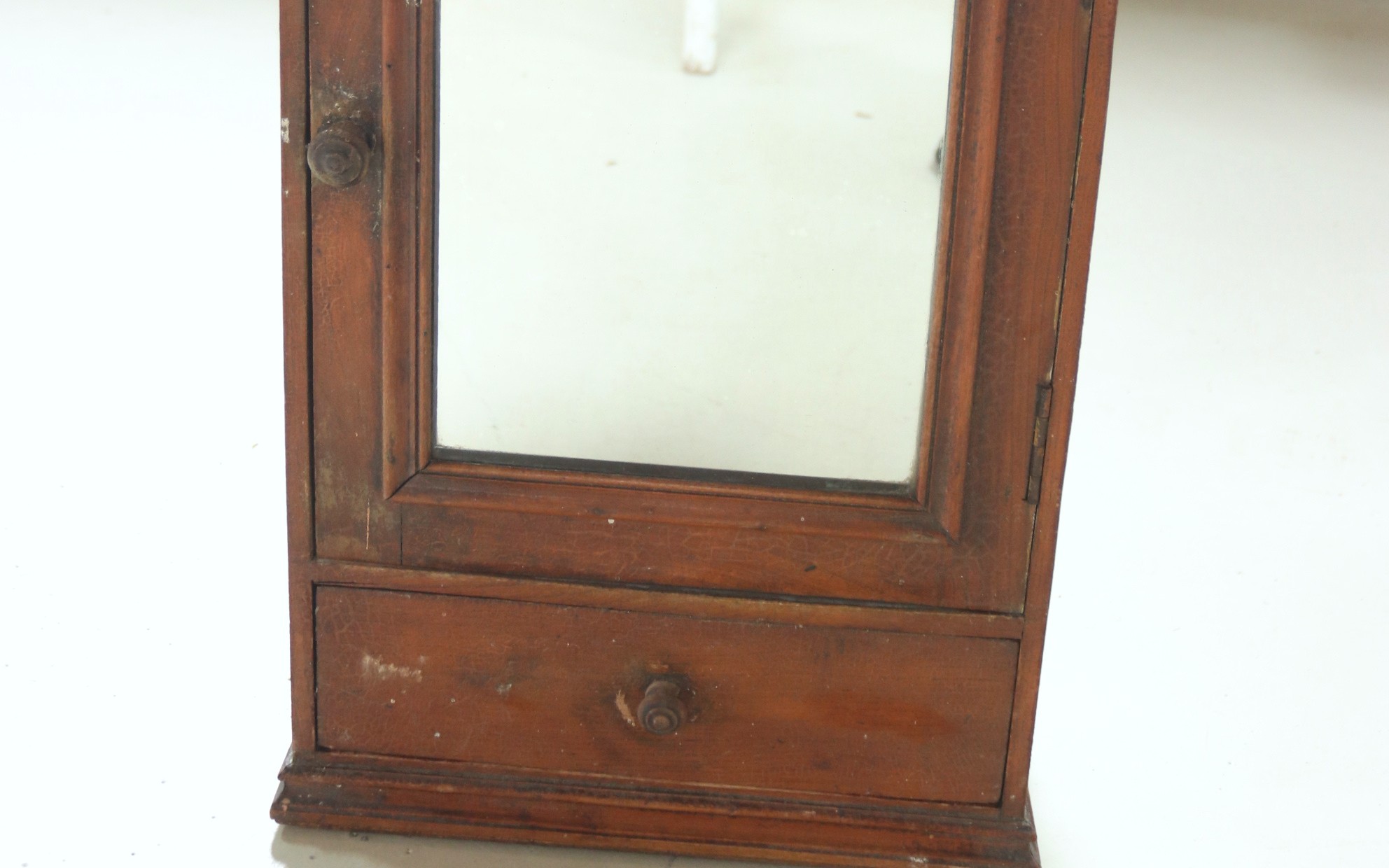 Antique wall cabinet with mirrored door and drawer1900–1930 · for sale now
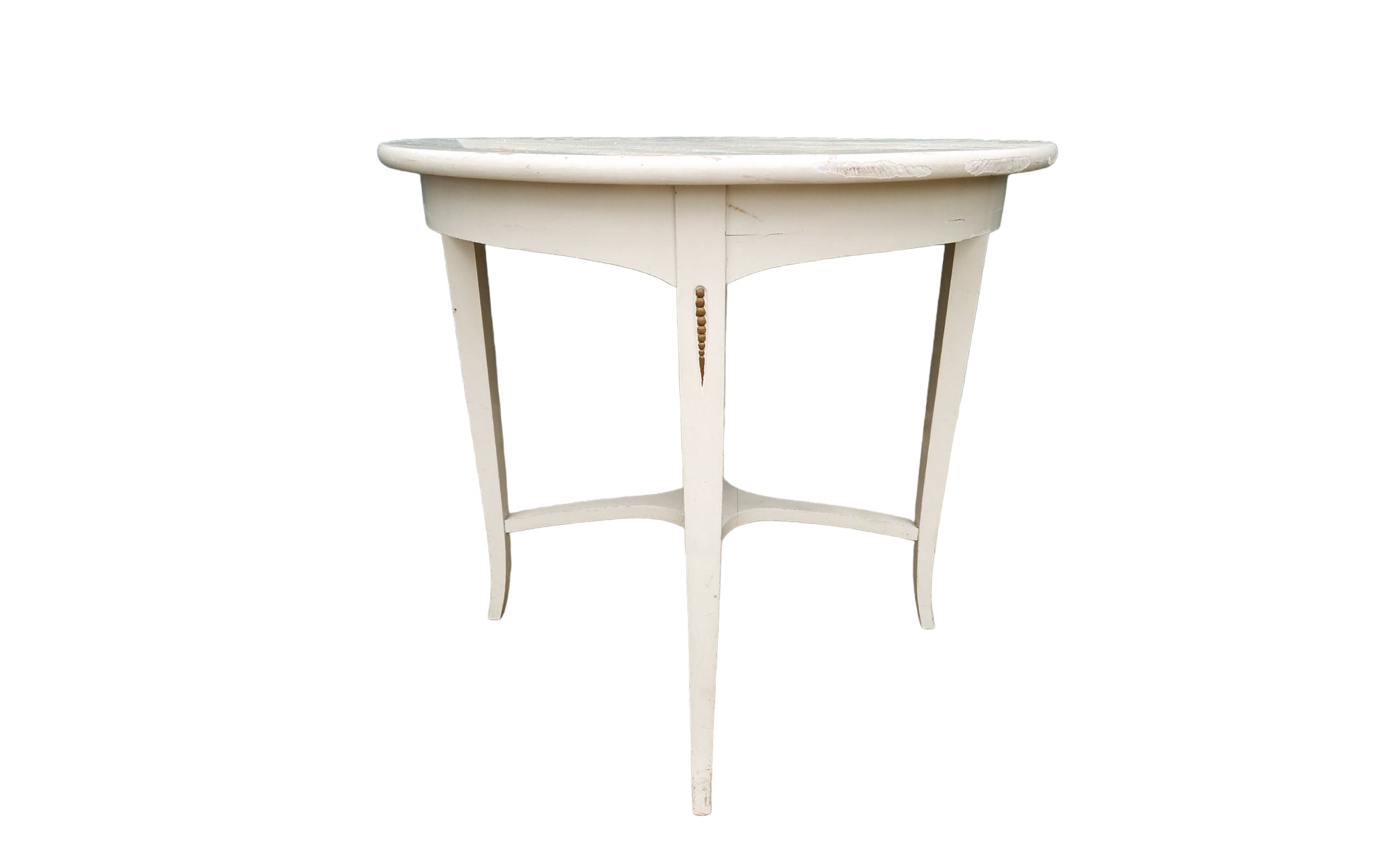 Small round coffee table in Swedish Gustavian style1900–1930 · for sale now
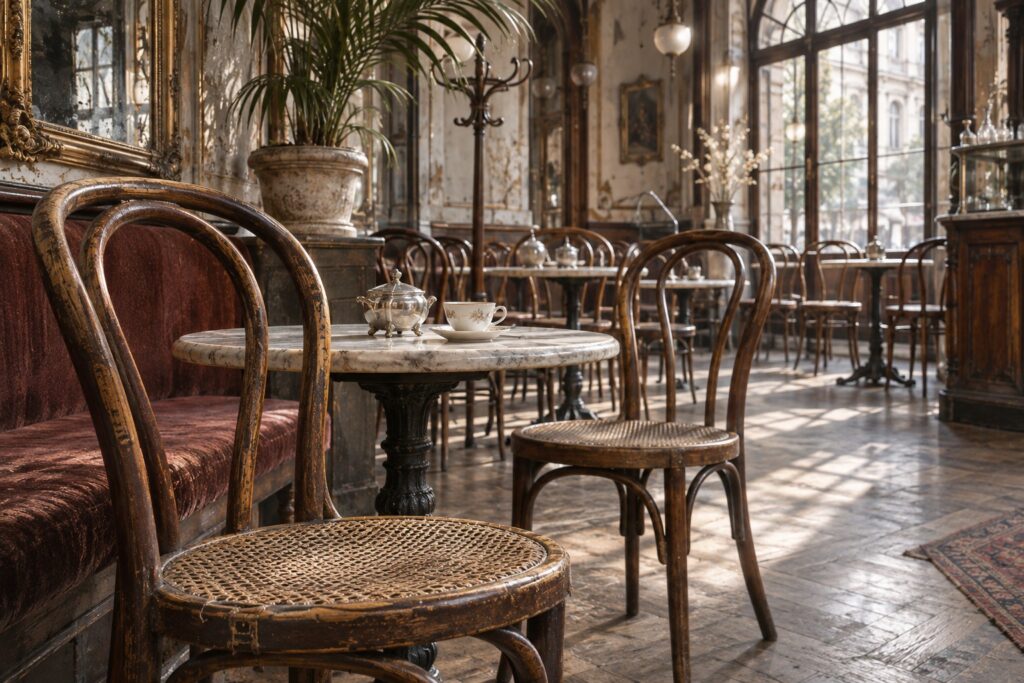
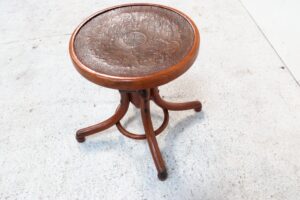
Michael Thonet and his firm are important because they developed the making of bentwood furniture on a large scale. The famous chair No. 14, brought onto the market around 1859, was distributed all over the world. The beech parts could be bent in the factory and were economical to transport and simple to assemble. The familiar image of a café chair with a round seat and an open curved back thus became a symbol of nineteenth-century mass production. There were, however, numerous variants, imitations and later versions.
A silhouette in the manner of Thonet is not enough to attribute a chair to Gebrüder Thonet. There were other producers of bentwood, among them competing factories. Marks, labels, catalogues, construction and the precise details of the model are of great importance for the attribution. Even with a genuine model type, the example need not date from the year of introduction: successful designs were made for years, sometimes for decades.
In Great Britain, thinkers and designers around the Arts and Crafts movement turned against the uncritical admiration of factory goods. William Morris and his circle emphasised meaningful work, good materials and the coherence between utilitarian object and interior. That attitude was not always a rejection of every machine, but it was a criticism of poor working conditions and ill-considered design. Handmade furniture with a visible construction and simple forms could thus become a conscious ideal of beauty.
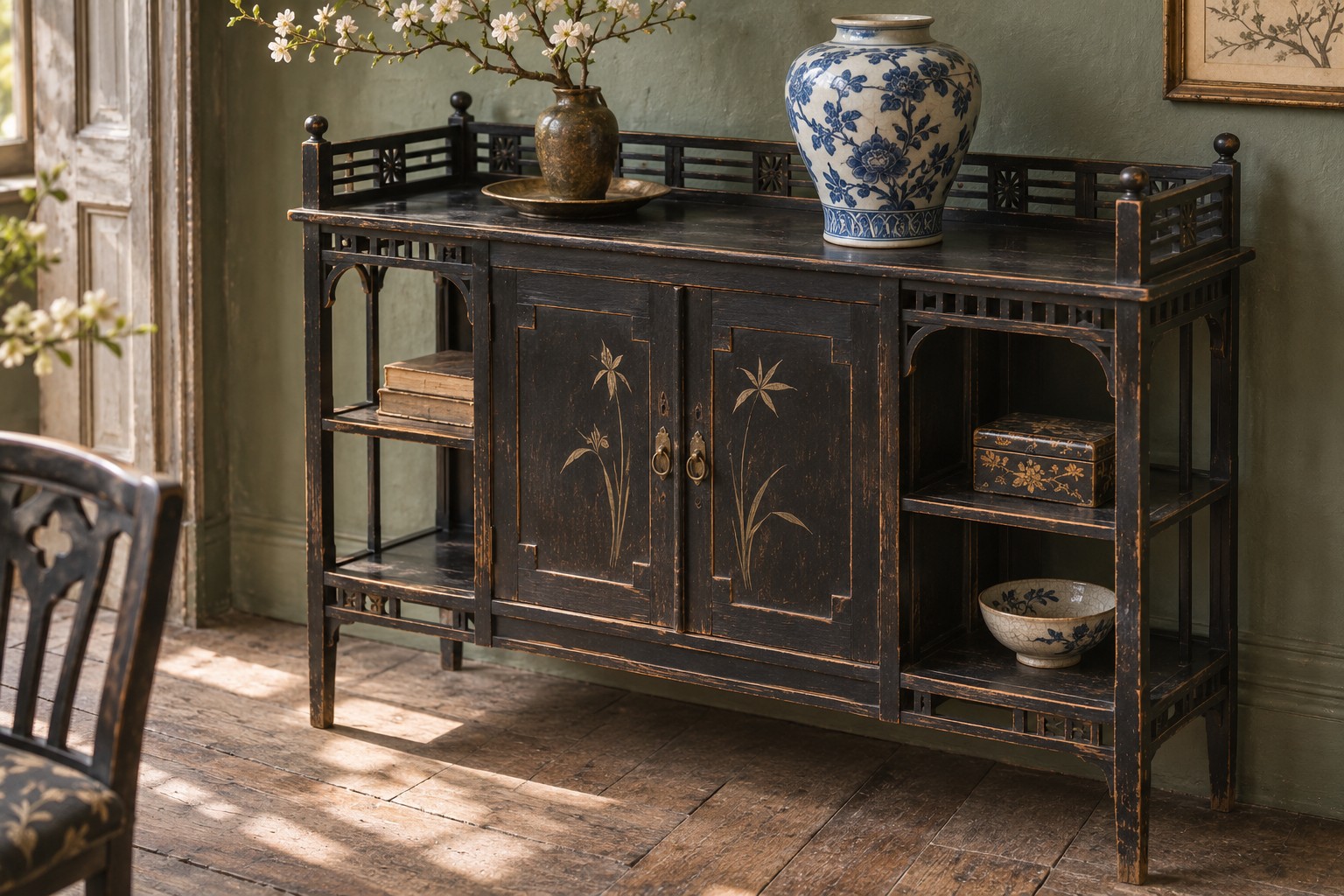
The Aesthetic Movement placed the accent on beauty as a value in itself. Designers such as E.W. Godwin and Christopher Dresser explored new proportions, influences from Japan and a different relationship between decoration and function. Dark-stained or blackened surfaces came together with a light and refined silhouette. For dating, it is important not to equate this movement with the later Art Nouveau; there are connections, but also clear differences.
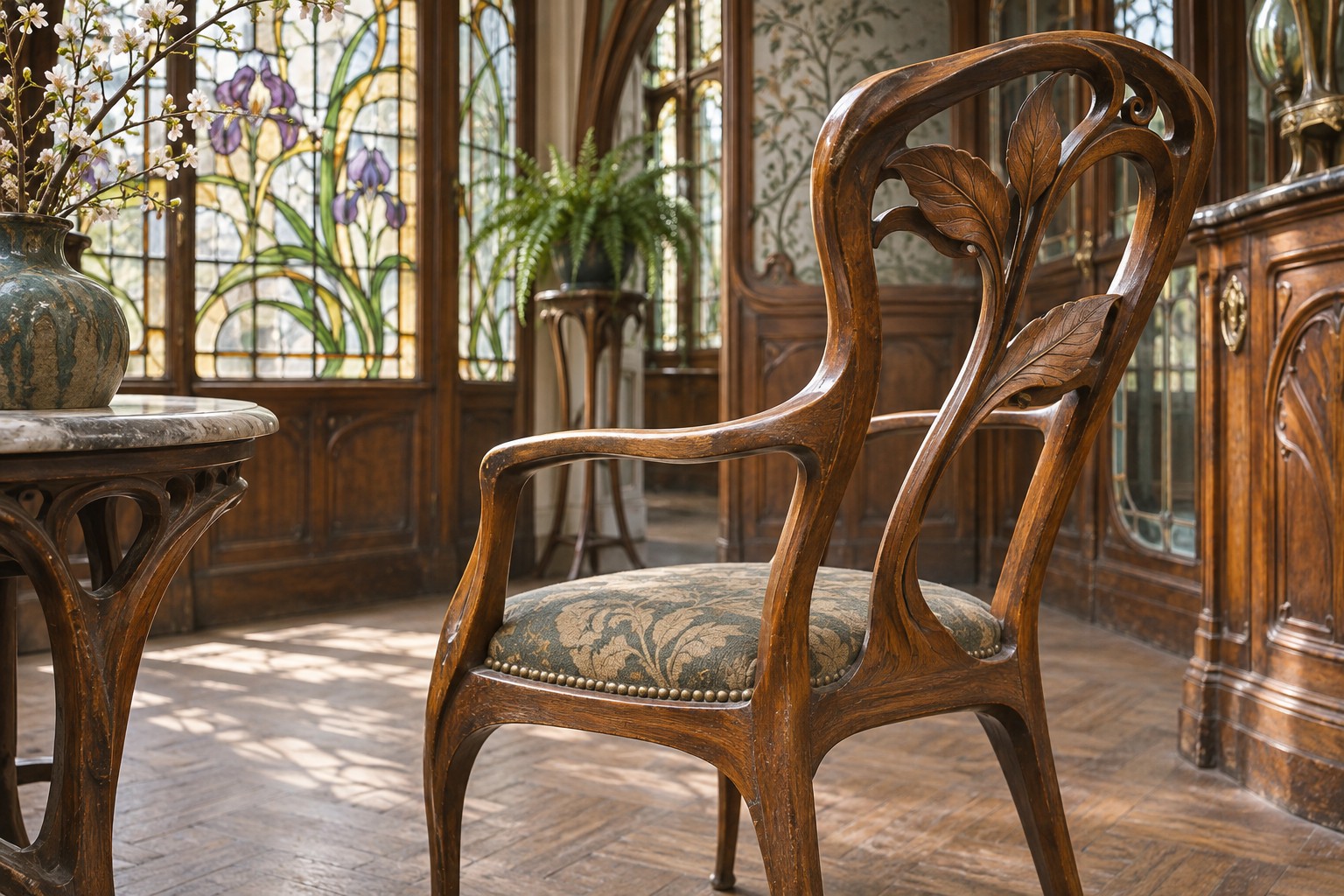
At the end of the century, Art Nouveau developed as an international language of form, with powerful motifs from nature, flowing lines and attention to the coherence between architecture and interior. Important forerunners and early applications arose in Belgium and France. Around 1900 the style became ever more visible internationally. Because this book ends in 1900, Art Nouveau is here a transition to the twentieth century and not a fully treated conclusion.
So the nineteenth century does not close with one dominant style. A simple factory chair, a craftsman-made Arts and Crafts cupboard and an elegant early Art Nouveau piece can have been made at almost the same time. The way in which they were designed, made and sold differs greatly. Anyone who wants to understand the period must therefore not only compare forms, but also think about how a piece was made and for whom it was intended.
What to look for: with bentwood furniture, compare the model and check marks and details of manufacture. Arts and Crafts emphasises considered craftsmanship and the coherence of interior and object. Art Nouveau begins in the 1890s and continues after 1900.
Examining an antique piece of furniture
Good examination begins with looking and describing, not with choosing a well-known name. What is the function of the piece, which parts bear the load, which are decoration and how is it built up? Measure height, width and depth, but also note the proportion between carcase, legs and upper section. A small difference in the shape of the back or the way a leg springs from the frame can make the difference between two variants of a model. With upholstered furniture, the traces under the seat often say at least as much as the visible covering.
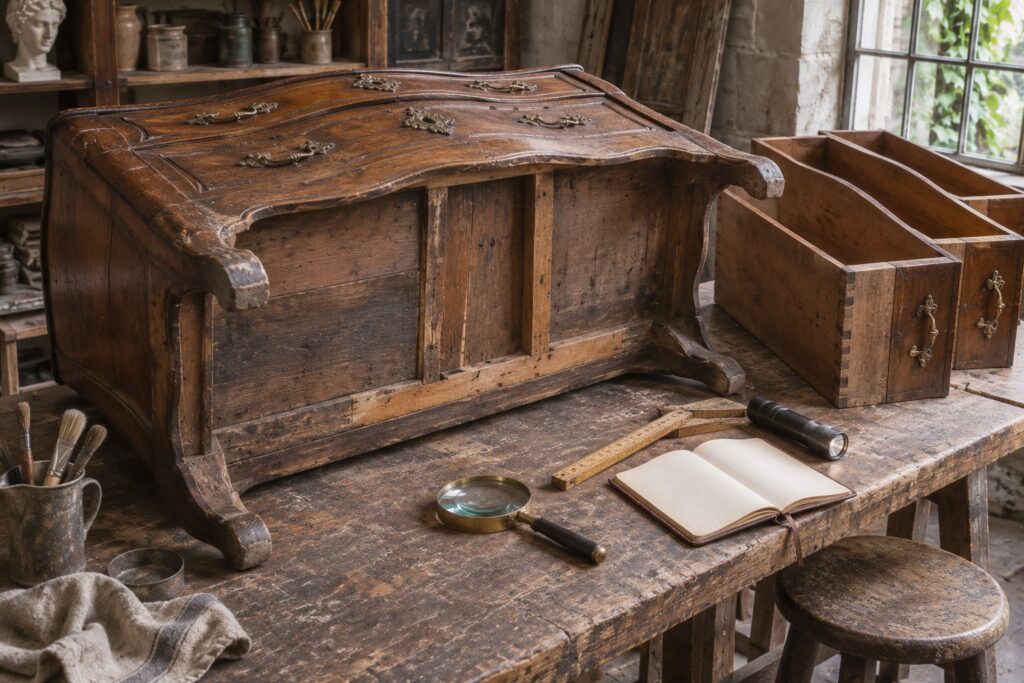
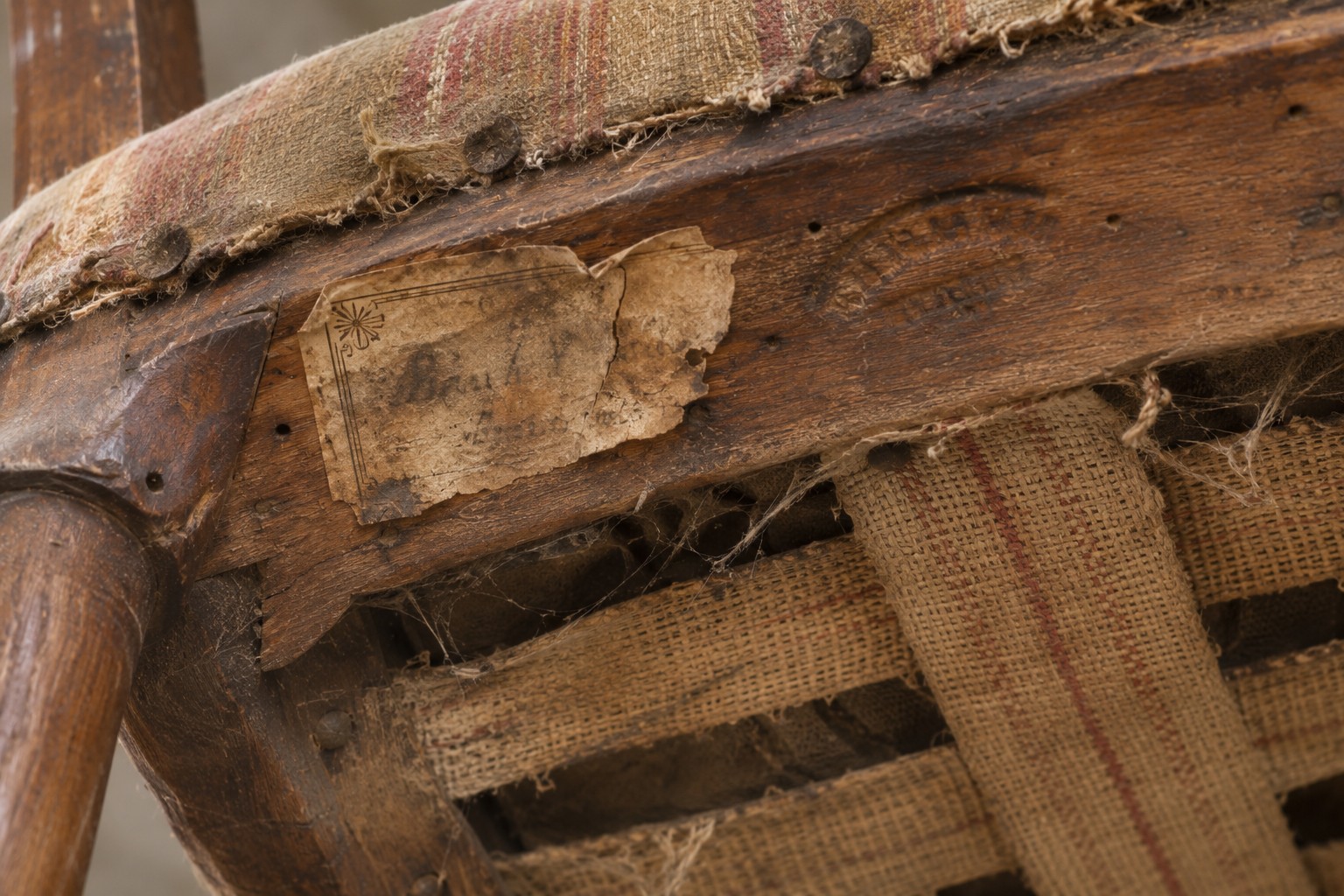
Then look at the material. Solid wood, veneer, plywood and later repair wood do not tell the same story. Try to establish which parts are original and which have been altered by use or restoration. A table can have an old base with a later top; a cupboard can consist of old doors and a new carcase. The age of the oldest part is then not automatically the age of the whole piece.
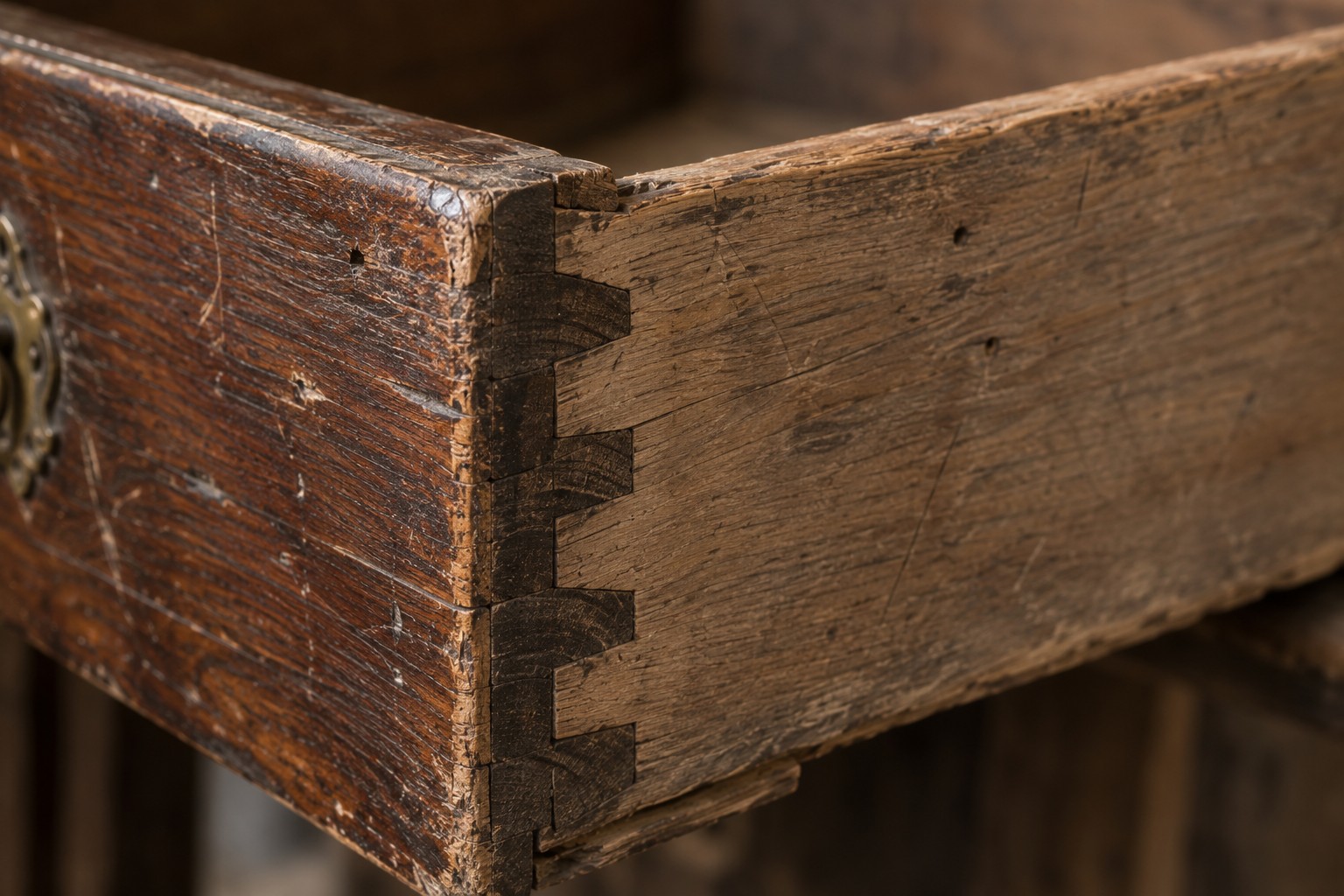
Traces of the construction give clues, but have exceptions. Dovetails have been used for centuries, both by hand and by machine; nails and screws changed gradually in the way they were made. The claim that a hand-cut dovetail always proves an eighteenth-century piece of furniture is not tenable. It is better to examine several joints, the manner of sawing, the pattern of wear and the logic of the construction as a whole.
Pay attention to the finish. Shellac, oil, wax, French polish, paint and varnish were used at different times, but the finish you see now can have been applied later. A dark piece of furniture is not necessarily old; a light wood colour is not necessarily young. Patina arises through oxidation, use, light, touch and maintenance. The concept deserves an accurate description and not a romantic certainty.
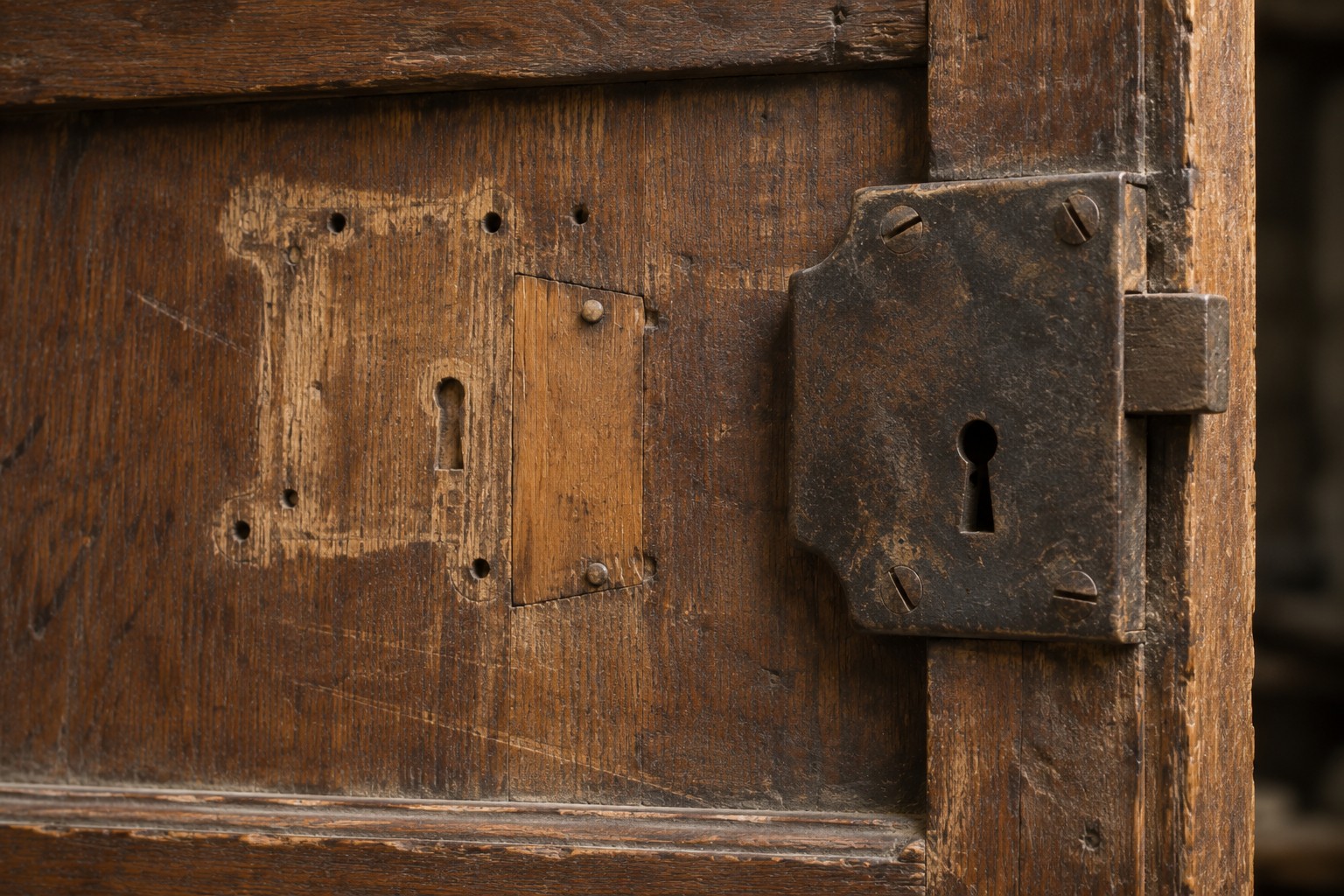
Fittings and locks help with dating, especially when they are in their original place, are logically worn and are of fitting material. But fittings are fairly easy to replace. Extra screw holes, discolouration that does not match and traces of new recesses point to alterations. With gilt bronze, brass and painted iron you must also distinguish between parts that bear a load and parts that only decorate.
Marks, labels and signatures are among the best clues, provided you examine them in their context. A label can confirm the manufacturer, but does not give a precise date of manufacture. A stamp can be that of a seller, importer, timber supplier or later owner. Compare position, typeface, wear and the variants that are known. An attributed maker and a documented maker are not the same thing, not even when the name is presented with great assurance.
The most reliable comparison is often a documented piece in a museum collection, supported by old catalogues, estate inventories or archival documents. In doing so, compare not only the front, but also dimensions, construction and details. Two pieces of furniture that look very much alike in a photograph can in reality have different proportions and a different execution. For furniture made in series, an original catalogue from the manufacturer is worth far more than a pile of advertisements without evidence.
Finally, write down what is established and leave out what you do not know. ‘France, second half of the nineteenth century, Neo-Rococo, with later upholstery’ is more honest than ‘Louis XV, circa 1750’ when that early date cannot be substantiated. If a piece resembles the work of a well-known maker, then write ‘in the style of’. The value of expert knowledge lies not in naming a spectacular name, but in carefully marking out what is known.
A fixed order helps. Photograph the piece straight from the front, from behind, from below and from both sides. Measure height, width, depth, seat height and the most important load-bearing parts. Note all the woods, veneer, upholstery and fittings that you can distinguish. Examine joints, nails, screws, locks, hinges and traces of fixing. Record inscriptions, labels, marks and old inventory numbers word for word. Note restorations, altered parts and traces of a different original use. Compare with documented museum pieces and with old factory catalogues. And keep established facts separate from attributions.
Comparing Europe without confusing styles
The history of European furniture can never be fully described as a series of French styles. In the eighteenth century France played a special role in luxury production and court culture, but other countries had strong traditions of their own. In the seventeenth century the Netherlands acquired important furniture centres and a refined marquetry. England had international influence through its cabinetmakers, pattern books, trade and later its industry. In the German-speaking world, court workshops, Biedermeier centres and factories were of great significance.
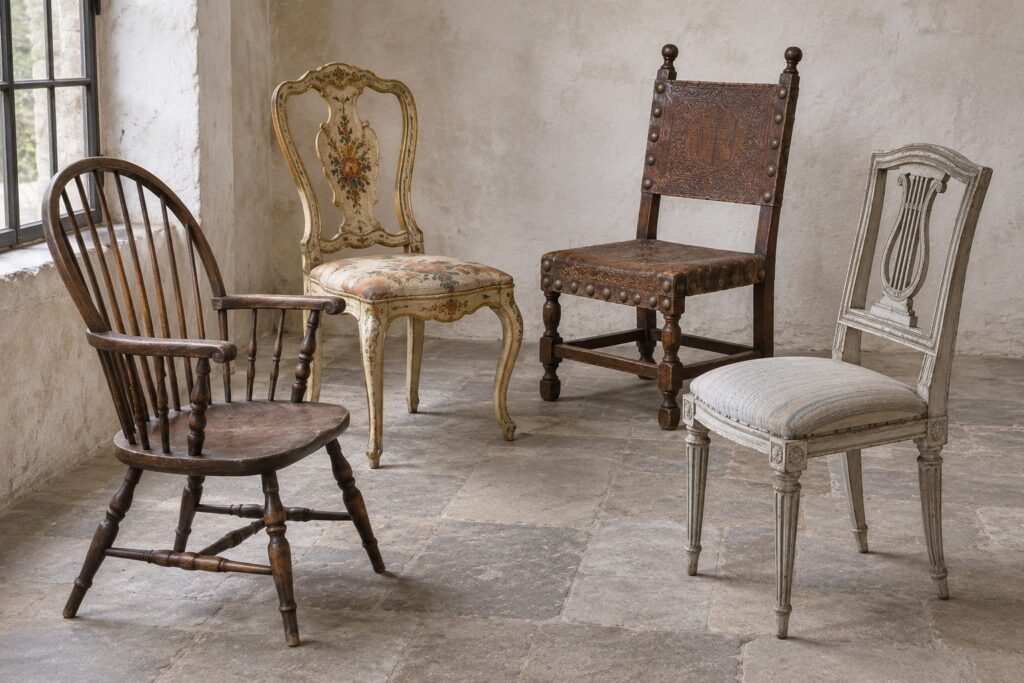
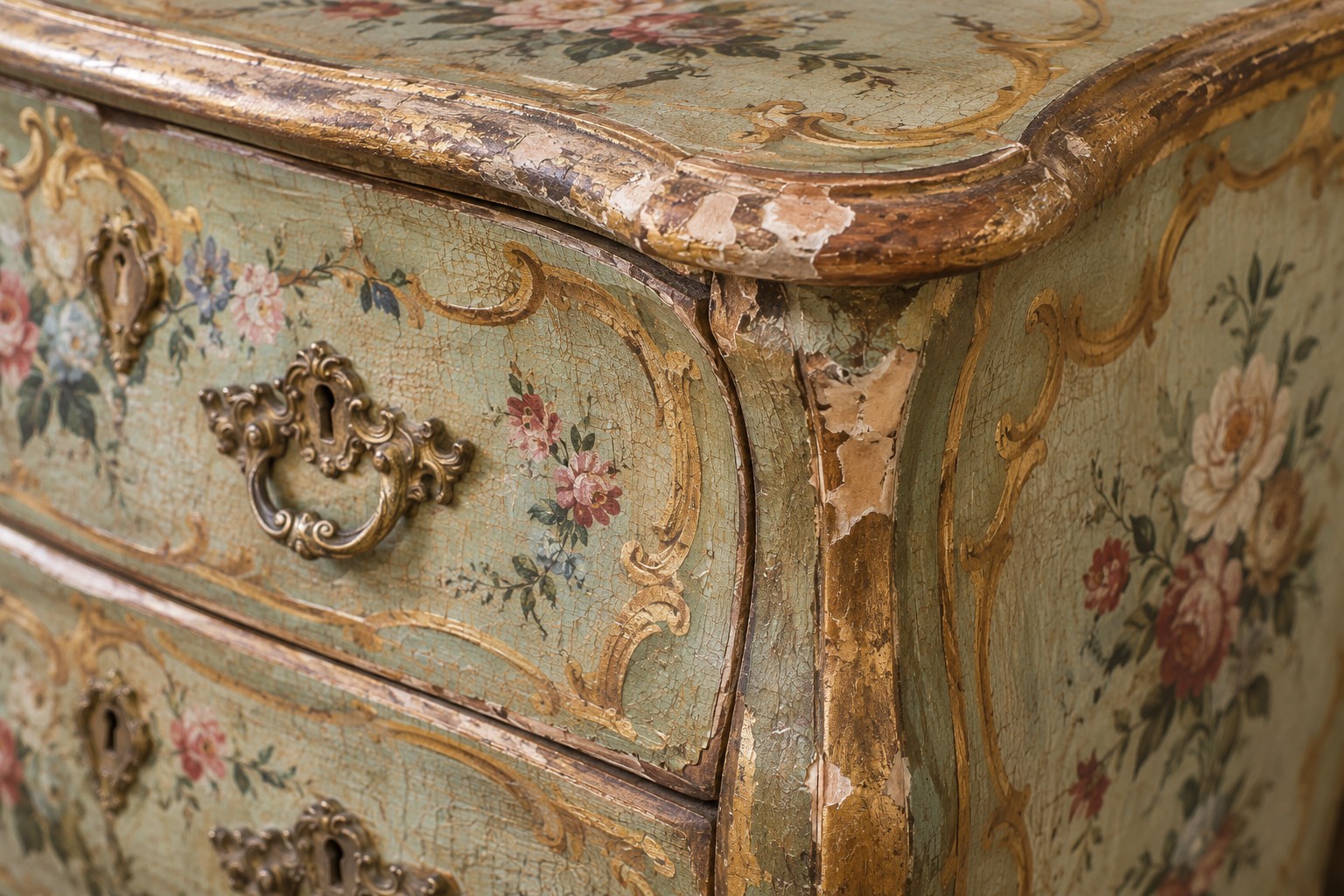
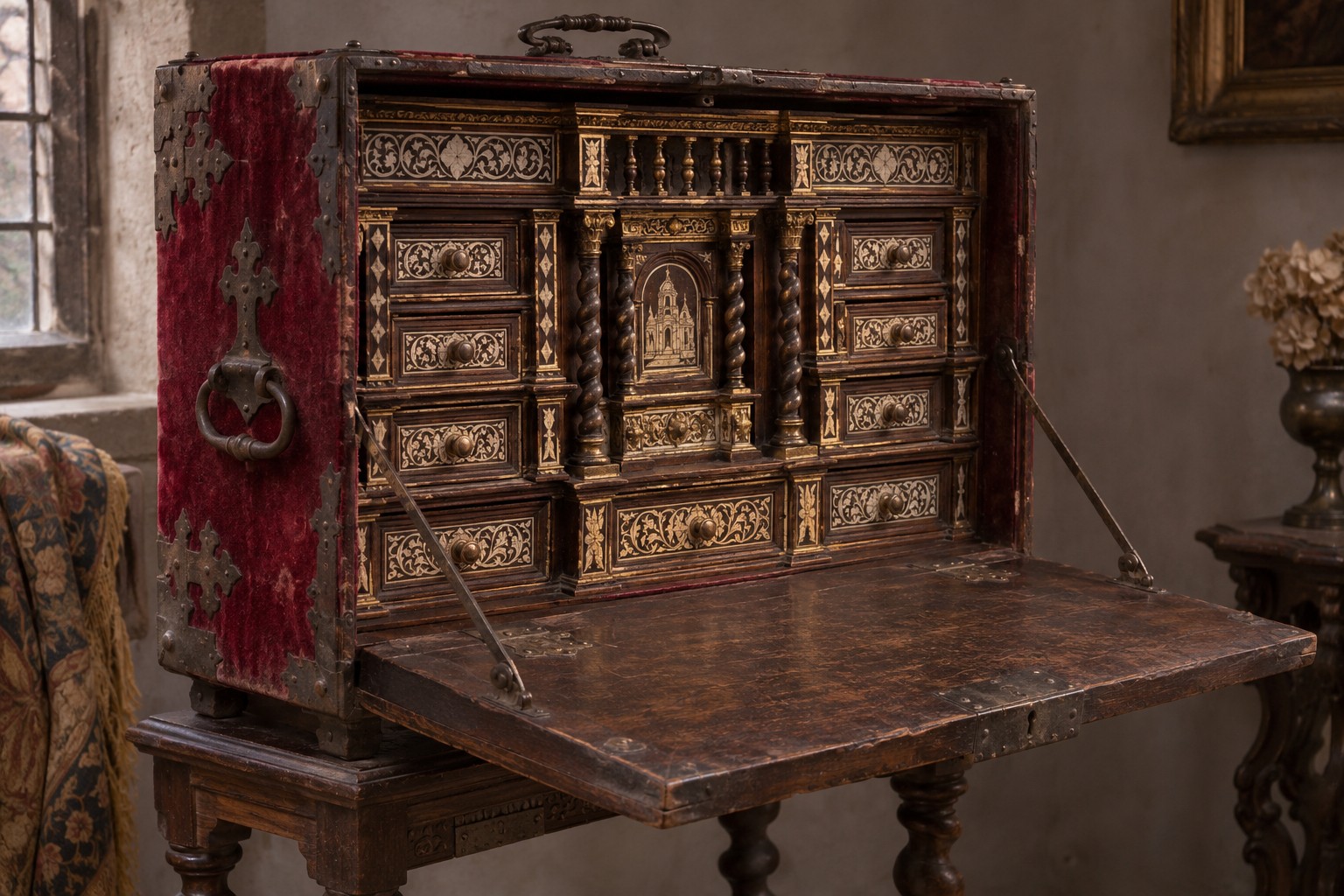
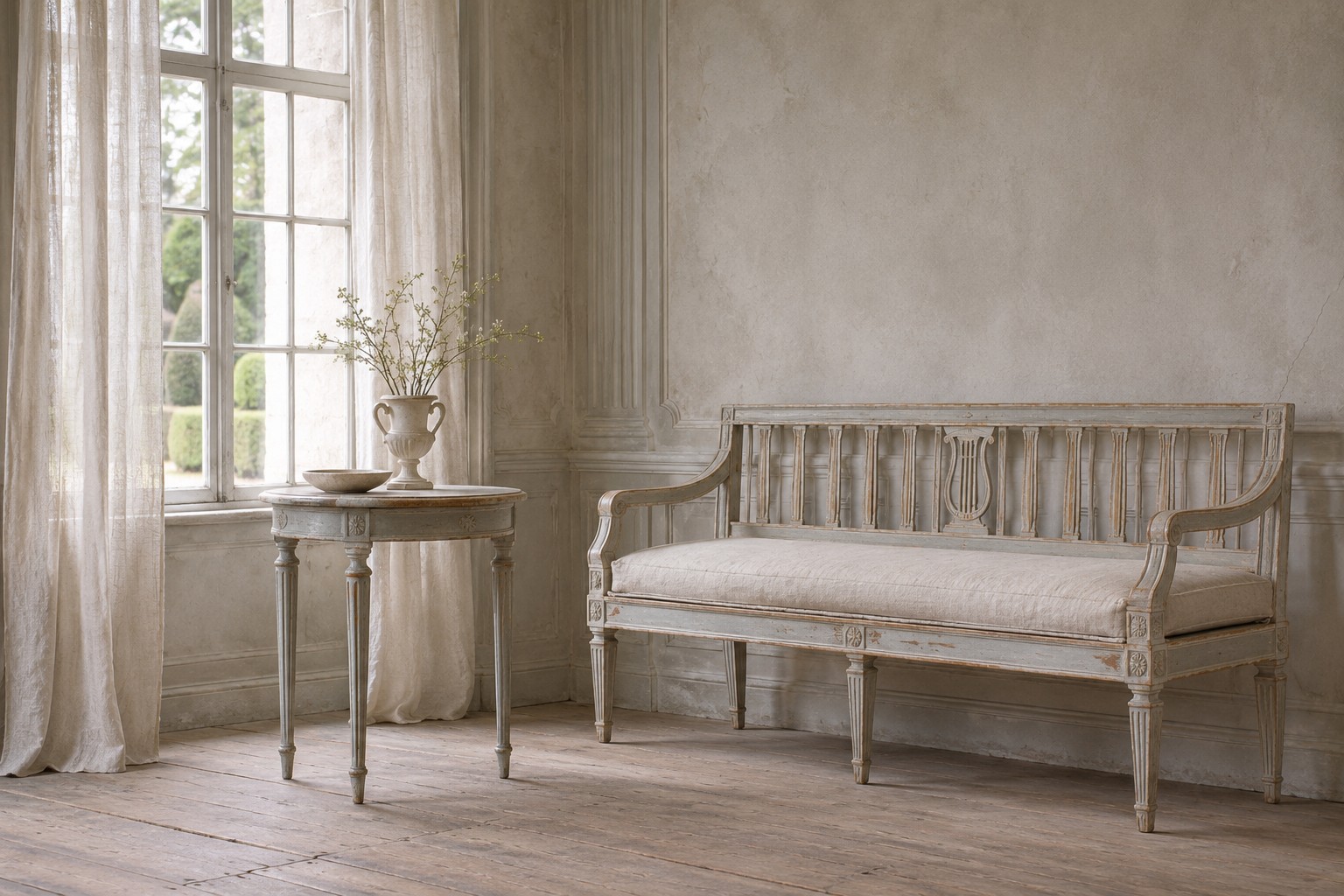
Italy has a long history of furniture forms that differ from region to region, from Florentine and Venetian work to later Neoclassical production. In Spain and Portugal, Iberian constructions and ornament came together with the wider European fashion. Scandinavia had other materials, domestic traditions and translations of international styles. The word ‘European’ must not erase those differences: the same ornament can have been given a different function or execution in different places.
European trade brought together materials and ideas that came from outside Europe. Tropical woods, lacquerwork, motifs from Asian art and new fabrics came to influence furniture. That exchange was not always equal or innocent; colonial trade and working conditions are part of the history. It is therefore more accurate to describe a piece as the outcome of different traditions that circulated than as a purely national invention.
Style names, moreover, often arose after the event. Biedermeier, Baroque and Rococo are now familiar terms in the trade, but the makers themselves did not all use them in that way. A piece of furniture that stands stylistically between two periods is not a mistake. It can be a convincing expression of local taste or of a workshop with a long tradition. Use a style as an aid, not as an unshakeable label.
This book describes the broad lines between 1600 and 1900. It does not replace an in-depth study of one maker, one kind of cabinet from one region or one furniture factory. Anyone who looks further will find that it is above all the combination of documented pieces, knowledge of materials, old sources and personal observation that leads to reliable conclusions.
In short: a style can be executed differently in several countries at the same time. A country as a label requires more evidence than form alone. And the combination of the piece itself, the construction, the source and the history of use is the strongest starting point.
Key terms
Bergère: largely enclosed, comfortably upholstered French armchair; the execution differs from period to period.
Boulle work: inlay with strong contrast, known above all for the combination of metal and tortoiseshell. The term says nothing about the maker.
Cabriole leg: curved furniture leg, which occurs in many regions and periods.
Commode: case piece with drawers, known above all from the French furniture tradition of the eighteenth and nineteenth centuries.
Ébéniste: French furniture maker who specialises in case furniture and fine veneer or inlay work; to be distinguished from the menuisier.
Veneer: thin layer of wood used to cover another, usually load-bearing, substrate.
Historicism: the reuse of older styles of art and furniture in the nineteenth century.
Marquetry: inlay in which woods and sometimes other materials together form a picture or pattern.
Menuisier: French craftsman who made solid woodwork, in the Paris guild chiefly seat furniture.
Ormolu: term used in the art of furniture for gilt bronze, often for decorative mounts.
Patina: the visible result of age, oxidation, use and old surface treatments.
Provenance: the origin and the succession of owners of a piece, in so far as it can be substantiated with documents.
Rocaille: ornament in the form of shells and rocks, characteristic of many Rococo forms.
Secretaire: writing piece with a fall front, a writing surface and built-in storage space.
Dovetail: wood joint with tapering teeth; used for so long that in itself it says nothing about age.
Antiques at De Huiszwaluw
We buy antiques the way this book describes: first look at what a piece is and how it is put together, and only then give it a name. If no maker is given for a piece, we have not been able to find one. If it resembles the work of a well-known name, we write ‘in the style of’. Below you will find antiques from our collection. We ship worldwide.
Sources
- Rijksmuseum: Dutch marquetry, research into seventeenth-century furniture
- The Metropolitan Museum of Art: Furnishings during the Reign of Louis XIV (1654-1715)
- J. Paul Getty Museum: French Rococo Ébénisterie in the J. Paul Getty Museum
- Victoria and Albert Museum: The Rococo style, an introduction
- The Metropolitan Museum of Art: French Furniture in the Eighteenth Century: Seat Furniture
- The Metropolitan Museum of Art: European Revivalism
- The Metropolitan Museum of Art: side chair, circle of Josef Danhauser, Vienna, c. 1815-20
- Victoria and Albert Museum: Thonet and the invention of bentwood furniture
- Victoria and Albert Museum: Arts and Crafts, an introduction
- Victoria and Albert Museum: Art Nouveau, an international style
The images in this book are illustrations made for the book, not photographs of existing pieces.
Written by De HuiszwaluwAntiques from our collection
The time of the Middle Ages and the Renaissance


The seventeenth century
 late Ming dynasty, circa 1600
Chinese Swatow dish with pagoda landscape
€ 395
 17th century
17th-century oak joint stool with turned legs
€ 1.450
 17th century
17th-century farmhouse chair with carved motifs
€ 275
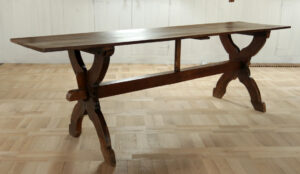 17th century (with 19th-century restorations)
17th-century French oak monastery table / trestle table
€ 4.295
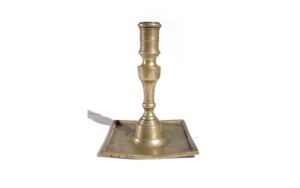 17th century
17th-century Spanish brass candlestick with square base
€ 145
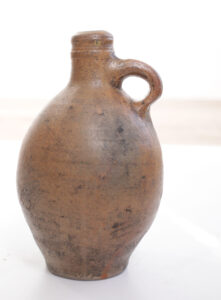 17th century
17th-century salt-glazed stoneware jug
€ 145
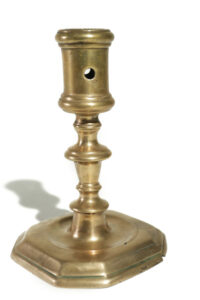 17th century
17th-century French bronze candlestick
€ 110
 17th century
Unique 17th Century Cabinet with Portrait and Scallop
€ 1.245
 17th century
Rare Small 17th Century Dutch (Nursery) Cushion Cabinet, Oak, White Painted
€ 1.795
 1650
17th Century Alpine Carved Walnut Board Armchair (Brettstuhl) with Grotesque Mask
€ 1.115
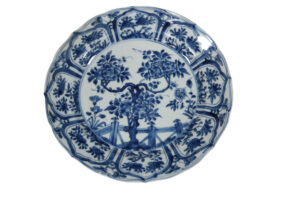 Kangxi (1662–1722), c. 1700–1720
Chinese lobed dish with flowering tree and fence
€ 295
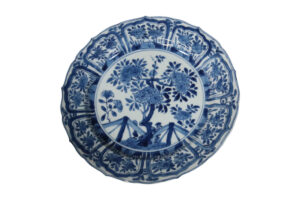 Kangxi (1662–1722), c. 1700–1720
Chinese lobed dish with peony tree and fence
€ 345
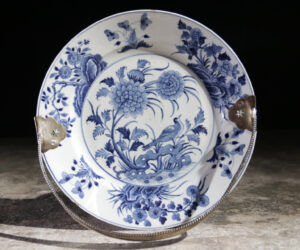 Kangxi (1662–1722), mount later
Chinese Kangxi blue and white plate with silver handle
€ 395
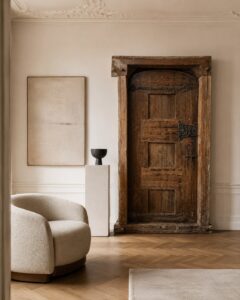 door 16th–17th century (construction in the late Gothic/Rena
Antique oak door with frame and ornate openwork wrought-iron lock
€ 3.995
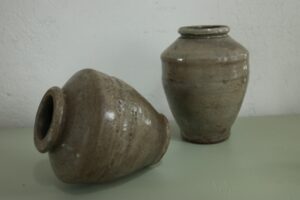 late Ming dynasty, 16th–17th century
Set of 2 Chinese stoneware jars with crackled celadon glaze
€ 275
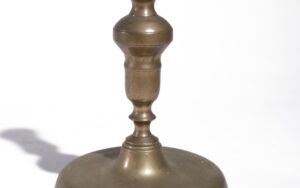 circa 1680-1730
Large Spanish brass candlestick with low bell base
€ 245
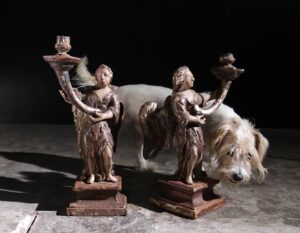 late 17th century, circa 1690
Pair of Spanish 17th-century carved wooden angel candlesticks
€ 1.595
 circa 1690
17th-century French brass candlestick
€ 345
The eighteenth century
 circa 1700
Life-size carved wooden head of a man
€ 1.795
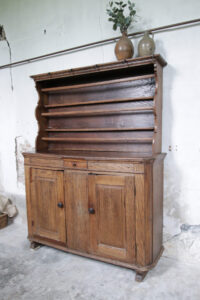 circa 1700
Antique Dutch oak pewter cupboard
€ 3.295
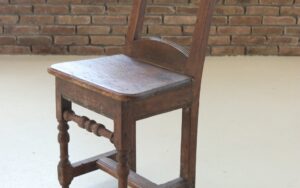 late 17th – early 18th century
French provincial oak chair from Lorraine
€ 245
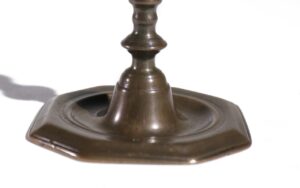 early 18th century
Early 18th-century French bronze candlestick
€ 195
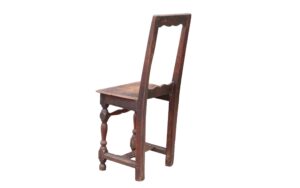 late 17th – early 18th century
French provincial oak chair from Lorraine
€ 245
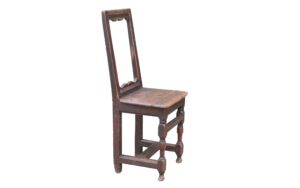 late 17th – early 18th century
French provincial oak chair from Lorraine
€ 245
 late 17th – early 18th century
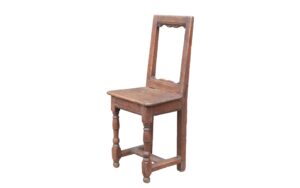
French provincial oak chair from Lorraine
€ 245
 18th century, c. 1730–1780
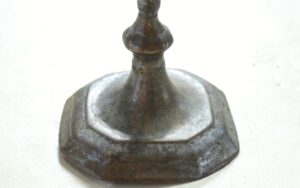
Candlestick
€ 115
 Qianlong (1736–1795), c. 1760–1790
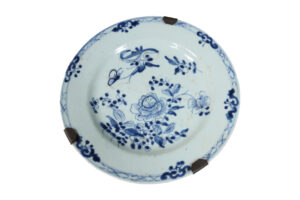
Chinese blue and white plate with peony and butterfly
€ 95
 Qianlong (1736–1795)
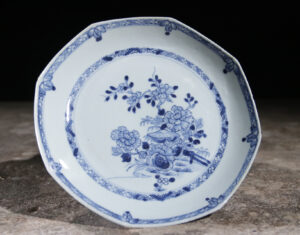
Octagonal Chinese blue and white plate with peonies
€ 145
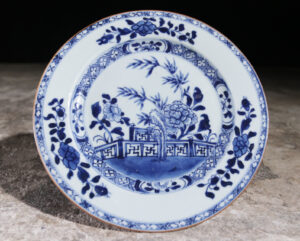 Qianlong (1736–1795)
Chinese blue and white plate with garden fence, peony and bamboo
€ 160
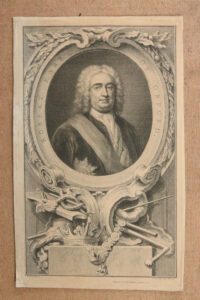 plate dated 1746; impression 18th century
Jacobus Houbraken
€ 120
 18th century and earlier
18th Century or Earlier German Primitive Cabinet on Sledge Feet with Hand-Forged Hardware
€ 795
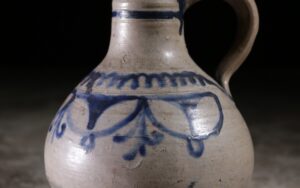 18th century
Small Westerwald stoneware jug with cobalt blue decoration
€ 145
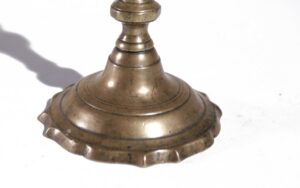 18th century
French 18th-century brass candlestick
€ 195
 circa 1750
18th-century French wooden angel ornament with gilding
€ 845
 18th century
18th Century French Provincial Confiturier Cabinet
€ 795
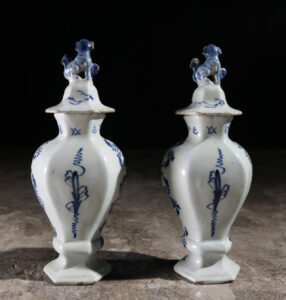 circa 1753-1771
Pair of 18th-century Delft vases
Price on request
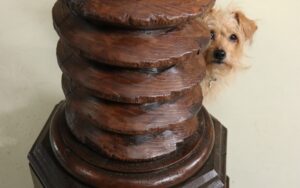 screw 18th century or earlier, later converted into a column
Monumental wooden wine press screw as a column
€ 750
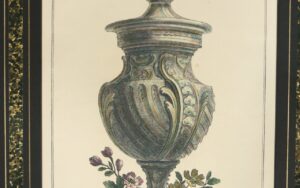 18th century (original impression from the plate, not a repr
Original hand-coloured engraving of an ornamental vase with flowers
€ 145
 c. 1790–1850 (Qing dynasty)
Small Chinese blue and white dish with spiral lotus decoration
€ 49
The time of Empire and Napoleon III
 19th century, c. 1800–1880 (Qing dynasty)
Chinese blue and white plate with shou character and precious objects
€ 110
 1809
Pair of Dutch Neoclassical flower still lifes, signed F.M. de Spaen née de Bylandt
€ 1.195
 circa 1820
Empire Fire-Gilded Mantel Clock, circa 1820
€ 1.495
 second half of the 19th century – early 20th century
Dantesca chair (Dagobert armchair) with lion heads and mascaron
€ 575
 early 19th century
Empire tazza in fire-gilt bronze, marble and glass
€ 845
 19th century, approx. 1840–1880
Walnut washstand with white marble top and towel rails
€ 625
 1849
Lithograph portrait of Maria Manning after a daguerreotype by Laroche
€ 110
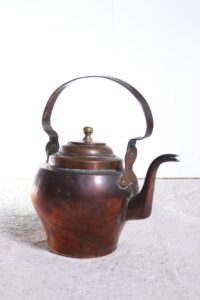 19th century
Antique red copper kettle with dovetailed seam
€ 135
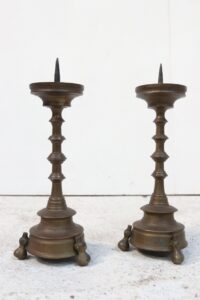 19th century
Pair of bronze pricket candlesticks on three ball feet
€ 195
 19th century
Large candlestick
€ 125
 19th century
Ebony column with fluted shaft
€ 395
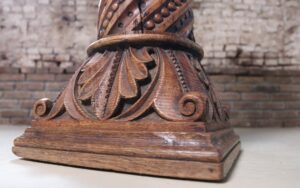 19th century
Carved oak column with twisted shaft, beaded borders and acanthus base
€ 450
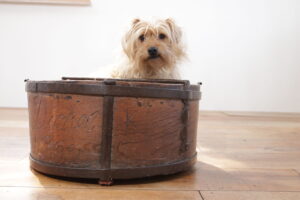 19th century
Antique oak grain measure with iron mounts
€ 295
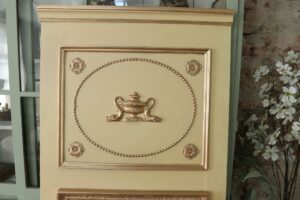 19th century
Trumeau mirror in Louis XVI style with urn and dolphins
€ 495
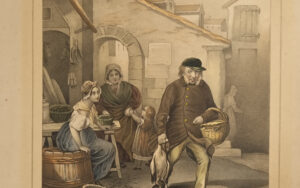 mid-19th century
Hand-coloured lithograph ‘The goodnatured husband’
€ 55
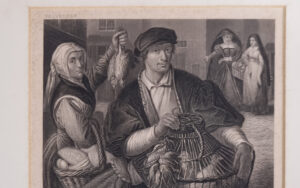 c. 1850–1860
Steel engraving ‘The Game Dealer’
€ 35
 last quarter of the 19th century
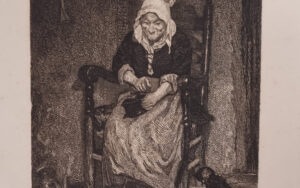
Etching ‘Koffiemalen’ (Grinding coffee)
€ 45
 late Qing dynasty, c. 1850–1910
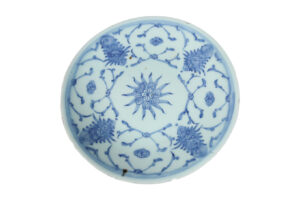
Chinese blue and white dish with lotus scrolls and Jiaqing seal mark
€ 110
 19th century, c. 1850–1910 (late Qing dynasty)
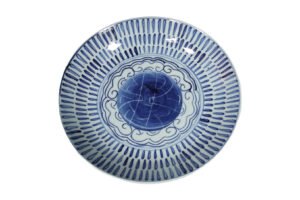
Chinese blue and white plate with radiating motif and mark 永和
€ 145
 18th/19th century
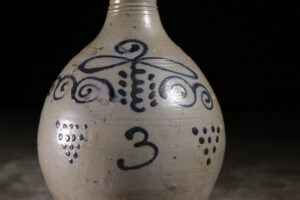
Westerwald stoneware jug with numeral 3 and bunches of grapes
€ 185
 19th century
Brown stoneware jug with handle
€ 75
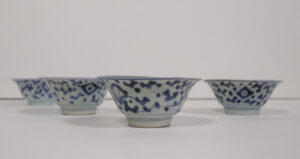 Qing dynasty, 19th century
Set of 4 Chinese blue and white bowls with lotus scrolls
€ 145
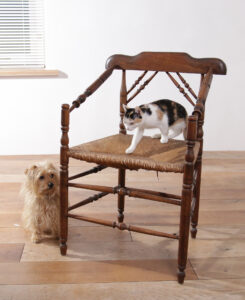 1850
Rare antique Dutch oak armchair with rush seat
€ 345
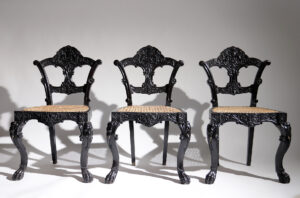 mid-19th century
Set of 4 solid ebony Anglo-Indian chairs
€ 4.795
 19th century
Gilt Bronze Sèvres Style Clock Garniture, 19th Century
€ 1.520
 19th century
Antique 19th-century mirror with griffins and console table
€ 300
 19th century
Heavy Copper Ekonda Anklet Currency, Mongo, 19th Century
€ 195
 19th century
French demijohn in mouth-blown glass with iridescent patina
€ 120
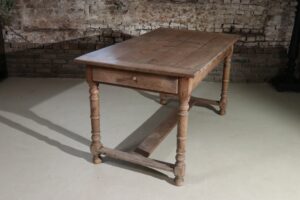 19th century
Antique French farmhouse table with drawer and turned legs
€ 725
 second half of the 19th century (c. 1860–1900)
Bronze tazza with relief
€ 245
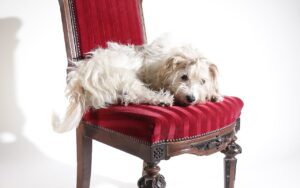 circa 1860
Nineteenth-century French carved chair with red velvet
€ 345
 late 19th century (Meiji period, 1868-1912)
Set of 19th-century Japanese vase lamps with dragons and birds
€ 325
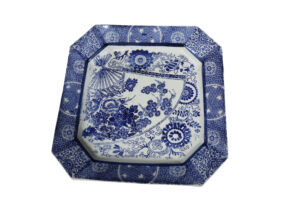 Meiji (1868–1912), c. 1870–1900
Japanese octagonal blue and white inban dish
€ 125
 c. 1870–1910
Curtain tieback with pine cone
€ 65
 second half of the 19th century
Blackened wooden column with turned spiral shaft
€ 295
 late 19th century
Nicolas Lecorney
€ 545
 second half of the 19th century (estimated)
Pencil portrait of a young girl
€ 75
 second half of the 19th century (estimated)
Pencil portrait of a man with a cap
€ 75
 late 19th century
Entomological print of wasps of Madagascar
€ 55
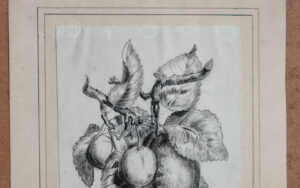 second half of the 19th century
Charcoal and pencil drawing of plums on a branch
€ 65
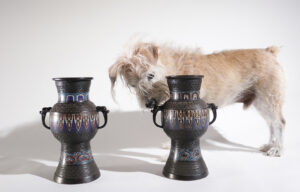 late 19th century
Pair of Japanese bronze cloisonné vases
€ 195
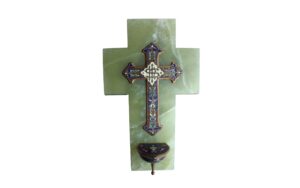 late 19th century
Nineteenth-century French holy water font in green onyx and champlevé enamel
€ 345
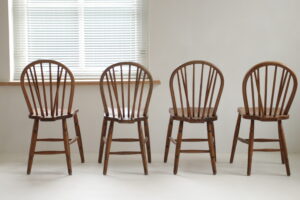 late 19th century
Set of 4 nineteenth-century British military Windsor chairs
€ 895
 late 19th century
Old French wooden plant column with carved grape motifs
€ 495
 circa 1875
Frans Lebret
€ 1.395
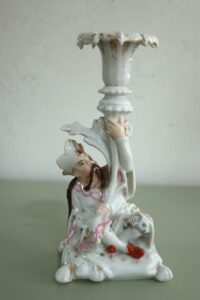 second half of the 19th century
Porcelain figural candlestick with a Chinese figure in chinoiserie
€ 95
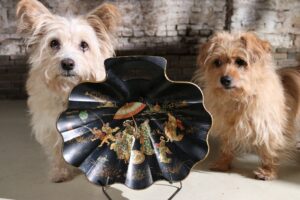 late 19th century
Lacquered Papier-Mâché Crumb Tray in Shell Form
€ 195
 second half of the 19th century
Brass altar candlestick on three lions as a floor lamp
€ 275
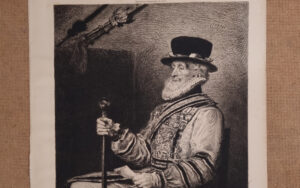 1878
Etching ‘A Yeoman of the Guard’
€ 45
The time of Art Nouveau
 circa 1880
Gold and grey château armchair
€ 225
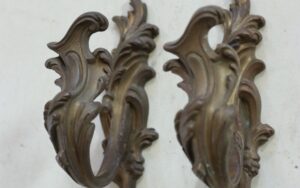 c. 1880–1920
Curtain tiebacks (set of 2)
€ 95
 c. 1880–1920
Old woven basket with red buttoned interior
€ 75
 approx. 1880–1930
Pair of terracotta roof ornaments with palmette
€ 295
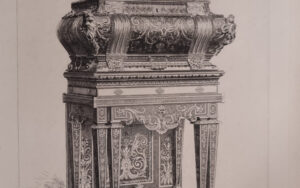 c. 1880
Etching ‘Coffret de mariage’ by Boulle for the Grand Dauphin
€ 35
 circa 1880
French black-patinated pedestal with time-worn patina
€ 345
 around 1880 or older
Wabi-Sabi Perfect Imperfect 19th Century French Horse with Real Horse Skin
€ 495
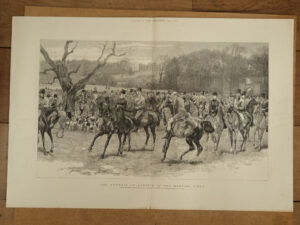 1881
Wood engraving ‘The Empress of Austria in the Hunting Field’
€ 65
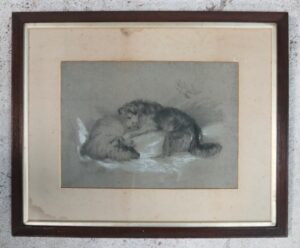 c. 1890–1910
Sheepdog rescuing a sheep from the snow
€ 345
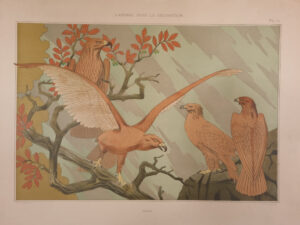 1897
Art Nouveau lithograph ‘Aigles’
€ 65
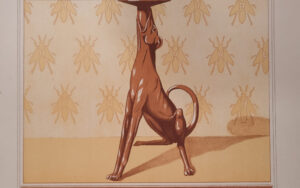 1897
Art Nouveau lithograph with dog candlestick, bees and copper frieze
€ 85
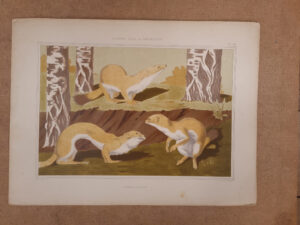 1897
Art Nouveau lithograph ‘Hermines vulgaires’
€ 85
 c. 1900–1920
Antique bentwood piano stool
€ 295
 c. 1900–1930
Faux bamboo towel rail
€ 95
 c. 1900–1940
Narrow chest with 18 small drawers
€ 245
 c. 1900–1930
Antique wall cabinet with mirrored door and drawer
€ 125
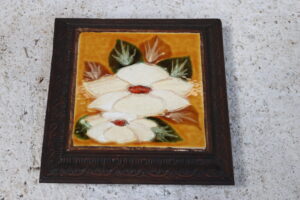 early 20th century (music card after 1900); the tile itself
Trivet with majolica flower tile in carved frame
€ 49
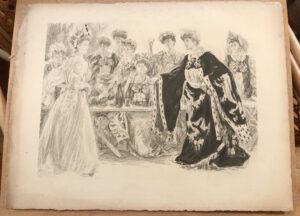 c. 1900–1910
Unknown artist
€ 75
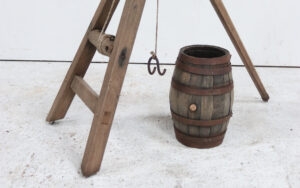 around 1900
Antique French oak barrel hoist with pulley, hook and small cask
€ 180
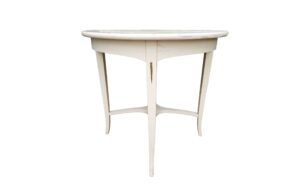 early 20th century (c. 1900–1930)
Small round coffee table in Swedish Gustavian style
€ 225
 circa 1900
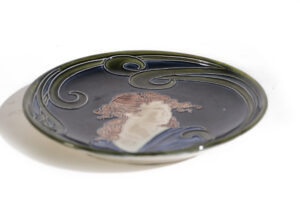
French majolica Art Nouveau wall plate
€ 245
 circa 1900
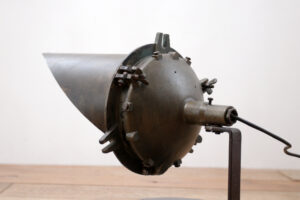
Antique bronze lock lamp with red signal glass
€ 395
 1900
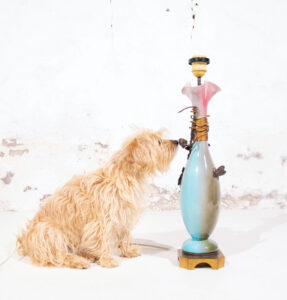
Art Nouveau table lamp with bronze fly and hop leaves
€ 495
 circa 1900
Long French wabi-sabi bench in weathered pine
€ 595
 circa 1900
French Art Nouveau bronze bust ‘Carmen’ by Emmanuel Villanis
€ 895
 circa 1900
French Art Nouveau bronze bust ‘Cendrillon’ by Emmanuel Villanis
€ 895
 around 1900
Neoclassical Torch Lamp with Swans and Eagle, 19th Century
€ 245
 c. 1900–1930
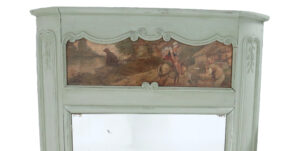
Trumeau mirror with painting signed G. Conrad
€ 1.550